

I’ve spent months testing table saws in my workshop, and I’m convinced most buyers overspend on features they’ll never use. The DEWALT DWE7491RS dominates for pros who need a 32.5-inch rip capacity and that smooth rack-and-pinion fence, while the compact DWE7485 fits cramped garages without sacrificing the 15-amp muscle.
SKIL’s TS6307-00 splits the difference nicely.
Here’s what actually matters: fence accuracy, dust collection that doesn’t choke, and a motor that won’t bog down on hardwood.
So which saw earns your money? That depends on whether you’re building cabinets, cutting two-by-fours, or just tired of borrowing your neighbor’s setup.
DEWALT 10 Inch Table Saw with Stand (DWE7491RS)

Rack & Pinion Telescoping Fence System Make fence adjustments fast, smooth and accurate Patented material support, can be used for narrow rip cuts. 32-1/2" rip capacity...
Who needs a table saw that actually moves with you? I do, and I’ve found my answer in the DEWALT DWE7491RS.
This 10-inch beast packs a 15-amp motor spinning at 4,800 RPM. That’s serious power for ripping hardwoods without bogging down.
The 32-1/2 inch rip capacity handles full sheets of plywood, which saves me from awkward wrestling matches with bulky material.
The Rack & Pinion fence system? Smooth as butter. I adjust it with one hand while holding stock with the other. No more fumbling with finicky locks.
The flip-over fence supports narrow rips without tipping, a feature I’ve come to depend on for trim work.
Setup takes minutes, not hours. The rolling stand folds and unfolds without cursing.
Those telescoping rails shrink the footprint for transport. At 90 pounds, it’s no featherweight, but the wheels handle stairs better than I expected.
Dust collection works through a 2-1/2 inch port. It won’t eliminate cleanup entirely, but it keeps my shop breathable.
Verdict: Job site pros and serious hobbyists who value portability without sacrificing capacity. If you’ve got a permanent shop and never move tools, look elsewhere.
Best For: Professionals and serious DIYers who need a powerful, portable table saw with large rip capacity for job sites or mobile workshops.
Pros:
- Rack & Pinion fence system enables smooth, accurate one-handed adjustments for efficient workflow
- Rolling stand with folding design provides excellent stability while allowing quick setup, breakdown, and transport
- 32-1/2 inch rip capacity and 4,800 RPM motor handle full sheets of plywood and dense hardwoods without bogging down
Cons:
- At 90 pounds, the saw is relatively heavy even with wheels, making true portability challenging for some users
- Dust collection port reduces but does not eliminate cleanup, requiring supplemental shop vacuum and ongoing maintenance
- Foldable rolling stand design may not match the stability and precision of a permanent cabinet saw for stationary shop use
Recommended Products
Rack & Pinion Telescoping Fence System Make fence adjustments fast, smooth and accurate
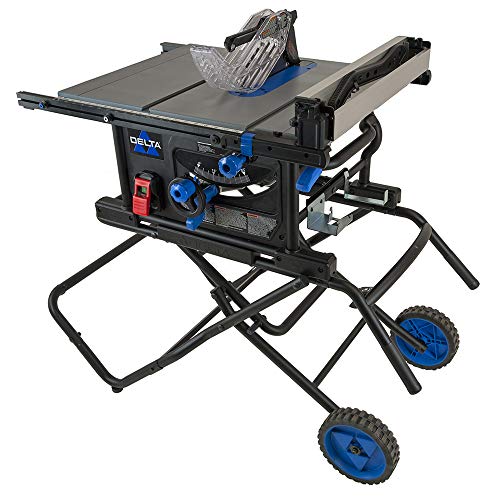
Powerful 15 Amp Contractor Grade motor easily handles treated lumber and hardwoods

RACK AND PINION FENCE RAILS - Ensures fence stays parallel to blade for fast smooth, and accurate cuts
GOINGMAKE Thin Rip Jig Table Saw Guide for Woodworking

【EASY TO USE】GOINGMAKE thin rip jig is easy to use. Just slide the guide into T-track miter slot of your table saw and lock it in front of the saw blade. Fits for 3/8" x...
What if you’re tired of wrestling with thin strips that wobble or kick back at you? I’ve been there. The GOINGMAKE Thin Rip Jig, model GM8, solves this headache cleanly.
Setup and Compatibility
This black metal guide slides into 3/8 x 3/4 T-slots, U-shape slots, or 1/4 x 3/8 T-tracks. I appreciate that flexibility. It handles table saws, band saws, and router tables. No more buying three separate jigs.
Safety Features That Matter
The one-way roller bearing sits near the blade and prevents kickback. That’s huge for repetitive cuts. I cut strips down to 1/32 inch without holding my breath. The bearing rolls with the wood, not against it.
Precision Work
The laser-engraved scales show metric and imperial marks. I zero the clearance, match each strip to my first cut, and lock it down. Range spans 2-5/8 to 8 inches from the miter slot center. Simple, repeatable, accurate.
My Verdict
For woodworkers making uniform inlays, edge banding, or veneer, this investment beats freehanding every time. It’s not flashy, just solid metal that works.
Best For: Woodworkers who need to make repetitive thin strip cuts safely on table saws, band saws, or router tables without kickback or inconsistent results.
Pros:
- Prevents kickback and improves safety with its one-way roller bearing design for confident repetitive cutting
- Offers versatile compatibility across multiple tools and slot sizes, eliminating need for separate jigs
- Provides precise, repeatable cuts down to 1/32 inch with dual laser-engraved measurement scales
Cons:
- Limited to 8-inch maximum range from miter slot center, which may not suit all table saw configurations
- Requires T-slot or U-slot track compatibility, so older or non-standard equipment may need adaptation
- Basic black metal construction lacks premium features like micro-adjustment mechanisms found on higher-priced alternatives
Recommended Products

INCLUDES: 2.5” ID Dust Port for Router Tables

INCLUDES: (1) Universal Dust Collection Port 2-1/2 inch OD

INCLUDES: (1) Router Table Dust Collection Port
SKIL 15 Amp 10 Inch Portable Jobsite Table Saw (TS6307-00)
RACK AND PINION FENCE RAILS - Ensures fence stays parallel to blade for fast smooth, and accurate cuts INTEGRATED FOLDING STAND - Legs quickly fold in to provide portability...
Looking for a jobsite saw that won’t fight you on every rip cut? I’ve been there, and the SKIL TS6307-00 actually delivers.
What Works
The rack-and-pinion fence rails keep everything parallel to the blade, so you’re not constantly nudging and remeasuring. I love that.
The micro-adjustment for blade alignment, same deal, tiny tweaks, big accuracy payoff.
Portability and Power
The folding stand collapses fast, no wrestling required.
At 15 amps, it chews through 4×4 material at 90 degrees without bogging down. Bevel cuts from 0 to 45 degrees use a quick-release lever, simple enough even when you’re tired.
The Little Things
That dust port elbow? It actually redirects debris somewhere useful instead of your shoes.
Verdict
For mobile contractors or hobbyists with limited shop space, this hits a sweet spot. It’s not fancy, but it doesn’t pretend to be.
Best For: Mobile contractors and hobbyists with limited shop space who need a portable, reliable table saw that delivers accurate cuts without constant adjustments.
Pros:
- Rack-and-pinion fence rails maintain parallel alignment to the blade for fast, smooth, accurate cuts without repeated measuring
- Integrated folding stand collapses quickly for easy portability and convenient storage
- 15 amp motor powers through 4×4 material at 90 degrees without bogging down
Cons:
- Limited to 4×4 cutting capacity, which may restrict larger project needs
- Bevel capacity only extends to 45 degrees, lacking the extended range of some competitor models
- Dust port elbow requires external container setup rather than integrated collection system
Recommended Products
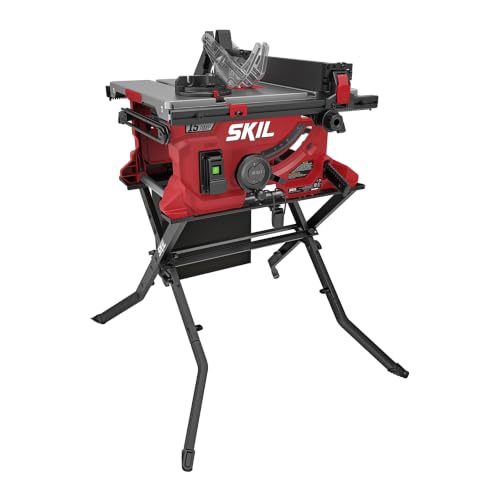
2-1/2-INCH MAX. DEPTH OF CUT – Corded table saw delivers up to 2-1/2-inch maximum cutting depth at 0 degrees to cut up to 3x material in a single pass
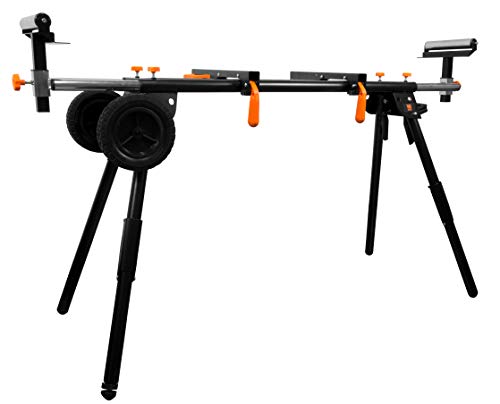
Universal design fits nearly every miter saw on the market, including all WEN miter saws
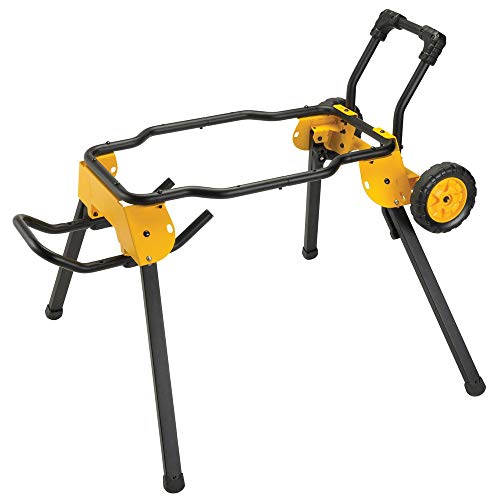
Durable steel construction
Complete Table Saw Book: Essential Skills Guide

Fox Chapel Publishing put together a revised edition that’s surprisingly hefty at 973 pages, though as a Kindle eBook, it won’t clutter your workshop.
I’ve flipped through this digital beast, and honestly, it’s the reference I wish I’d owned years ago. The step-by-step illustrations walk you through blade alignment, rip cuts, crosscuts, and those tricky bevels that trip up beginners.
Want to know why your cuts wander? It’s in there. Need to set up a sacrificial fence for dado work? Covered.
The 2021 revision keeps things current, and the searchable format saves me from flipping pages with sawdust-covered hands. I pull it up on my tablet right at the saw.
Who needs this? Beginners, absolutely. The safety fundamentals alone justify the purchase. Intermediate users will find refinement tips they missed.
Serious pros might outgrow it, but for home woodworkers building skills, it’s solid gold.
Verdict: Buy it if you’re still learning. Skip it if you’ve already forgotten more than most will ever know.
Best For: Home woodworkers, hobbyists, and craftspeople from beginners to intermediate users seeking a comprehensive, portable reference for foundational table saw skills, safety fundamentals, and technique refinement.
Pros:
- Extensive 973-page coverage with step-by-step illustrations for blade alignment, rip cuts, crosscuts, bevels, and troubleshooting common issues like wandering cuts
- Searchable Kindle eBook format enables quick on-the-job reference without physical page-flipping, accessible on tablets and devices right at the saw
- 2021 revised edition keeps content current with essential safety fundamentals and practical setup guidance including sacrificial fences for dado work
Cons:
- Digital-only format may not suit users who prefer physical reference books in dusty workshop environments
- Content scope focused on essentials means serious professional woodworkers will likely outgrow the material
- No comparative information provided to assess value against competing table saw guides
Recommended Products
【EASY TO USE】GOINGMAKE thin rip jig is easy to use. Just slide the guide into T-track miter slot of your table saw and lock it in front of the saw blade. Fits for 3/8" x 3/4" T slot and U shape slot and 1/4" x 3/8" T slot. The thin rip jig can extend to 8 inch from the center of miter slot to blade. Thin rip table saw accessories makes thin strips cut consistent and easily.

SAFE, PRECISE NARROW CUTS – This thin rip jig for table saw keeps your hands safely away from the blade while allowing you to make clean, repeatable thin strip cuts with confidence.

THIN RIP TABLE SAW JIG: Great for precision cuts. Simply slide the guide into the table saw's U-track slot and lock it in front of the saw blade. The table saw clamp can extend up to 8 inches from the slot to the blade. Works with 3/8" x 3/4" U-slots and 1/4" x 3/8" T-slots.
Jim Tolpin’s Table Saw Magic

That’s why I keep coming back to Jim Tolpin’s *Table Saw Magic*, even though it dropped back in 2003. This 192-page paperback from Popular Woodworking doesn’t waste your time with beginner fluff. Tolpin digs into the techniques that separate weekend warriors from craftsmen who actually know their machine.
The second edition covers jigs, joinery, and those sneaky cuts that seem impossible until someone shows you the trick. At 192 pages, it’s substantial without being overwhelming. No glossy photos padding the count, just solid instruction.
Sure, some references feel dated. But the fundamentals? Rock solid. The physics of blade geometry haven’t changed, and Tolpin explains them better than most YouTube channels manage today.
Best For: Intermediate woodworkers ready to move beyond basic cuts and master advanced table saw techniques through proven, fundamentals-focused instruction.
Pros:
- Dense, practical content without filler—192 pages of solid technique rather than glossy photo padding
- Exceptional explanation of blade geometry and physics that remain relevant despite the 2003 publication date
Cons:
- Some references and examples feel dated nearly two decades after publication
- Not suitable for true beginners seeking foundational guidance
- Lacks the visual polish and production quality of contemporary woodworking books
Recommended Products
Wide Compatibility: Fits POWERTEC BS900 9" band saw, most 9" bandsaws, including WEN, Ryobi, Delta, Craftsman, Harbor Freight, Central Machinery, and Black & Decker

Accurate Cutting: Upgrade your rip guide precision with the Wixey digital rip saw fence system that offers ±0.002" accuracy per ft and a digital readout for reliable, repeatable cuts across all woodworking projects

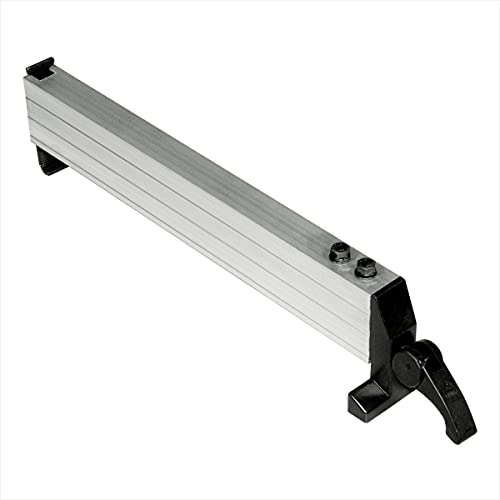
INCLUDES: (1) T-Track Flip Fence Stop (3 inches) with 5/16" T-Bolt
Mastering Your Table Saw: with Kelly Mehler

Why invest in a top-tier table saw if you’re not going to master it? That’s exactly what Kelly Mehler’s “Mastering Your Table Saw” DVD tackles, and honestly, it’s still relevant even in 2026.
Mehler, presenting through Taunton Press back in 2003, breaks down everything: setup, safety, accurate cuts, and real technique. No fluff, just practical demonstrations you can actually follow.
What You’ll Learn
- Proper blade alignment (trust me, this matters more than expensive blades)
- Safe ripping and crosscutting methods
- Jigs and fixtures that save fingers and frustration
The NTSC DVD format feels dated, sure. No pages to flip, just pop it in and watch. But the content? Solid gold for hobbyists and pros alike.
Here’s my gripe: it’s DVD-ROM only. No streaming, no instant access. You’ll need a player (remember those?).
Who Should Buy This
Beginners needing structured guidance. Intermediate woodworkers wanting cleaner cuts. Anyone who’s tired of burning expensive hardwood.
Mehler’s emphasis on precision over power resonates deeply. He proves technique trumps tool price every single time.
Verdict: Grab this if you learn visually. Skip it if you need 4K production values.
Best For: Visual learners and woodworkers at any skill level who want to master table saw setup, safety, and precision cutting techniques without relying on expensive equipment upgrades.
Pros:
- Practical, technique-focused instruction that remains relevant decades after release
- Clear demonstrations of essential skills like blade alignment, safe ripping, and crosscutting
- Timeless emphasis on precision and safety that transcends changing tool trends
Cons:
- DVD-ROM format requires physical player with no streaming or digital access options
- Dated NTSC video quality lacks modern production standards
- No interactive features or supplementary online content for deeper learning
Recommended Products

Rack & pinion telescoping fence system make fence adjustments fast, smooth and accurate


DIMENSIONS - 10 inch saw blades for miter saw/table saw includes 1pc 10*5/8*32T & 1pc 10*5/8*60T
Best Table Saw Tips and Ultimate Buying Guide

Finding the best table Saw for your money You will find latest Table Saw article from here. Get latest Saw tools update by this andorid app. Find our real table saw expert...
Who needs this guide? Anyone who’s tired of guessing their way through table saw shopping. I’ve been there, staring at rows of nearly identical machines, wondering which deserves my money and garage space.
Let’s cut through the noise. I always start with blade capacity and motor power. A 15-amp motor handles hardwood without bogging down. Contractor saws suit weekend warriors; cabinet saws swallow full sheets with barely a whimper.
Physical heft matters: more steel equals less vibration, meaning cleaner cuts and fewer “oops” moments.
Safety isn’t negotiable. I won’t touch a saw without riving knives and blade guards. Read that manual; boring, yes, but so are emergency room visits.
Accessories make or break the experience. A quality miter gauge beats the stock junk. Push sticks cost nothing; fingers are irreplaceable.
My verdict? Home shop heroes grab portable hybrids. Hardcore builders invest in 3-horsepower cabinet monsters. What’s your project load look like?
Best For: DIY enthusiasts and professional woodworkers seeking expert guidance to confidently choose and safely operate the right table saw for their specific project needs and budget.
Pros:
- Comprehensive expert reviews with images and practical selection guidance tailored to different user types (weekend warriors to hardcore builders)
- Strong emphasis on critical safety practices, including proper use of riving knives, blade guards, and user manuals
- Includes valuable accessory recommendations (quality miter gauges, push sticks) and mobile app resources for enhanced user experience
Cons:
- No specific pricing information or comparative ratings provided to directly evaluate value-for-money across models
- Limited to general categories (contractor, cabinet, portable hybrid) without detailed product comparisons or rankings
- Android app availability suggests potential platform limitation for iOS users seeking integrated tool resources
Recommended Products

This unit will fit just about any router table fence system.

FITS DEWALT DWE7485, DWE7491 & DW745 TABLE SAW DUST PORT – The 2.56-inch inner diameter press-fits over the standard 2.5-inch dust port shared by all three DeWALT jobsite table saws — slide it on, feel it seat, and it stays put through every rip cut. No clamps, no tape, no drilling.

INCLUDE: Table saw dust collection bag, fits most brand and machine with nominal 2-1/2" dust port (Ridgid/Bosch/Dewalt/Makita/Ryobi/Craftsman/Porter Cable/RIGID/Metabo/Kobalt/Skilsaw/Delta)
Jigs & Fixtures for Table Saw & Router
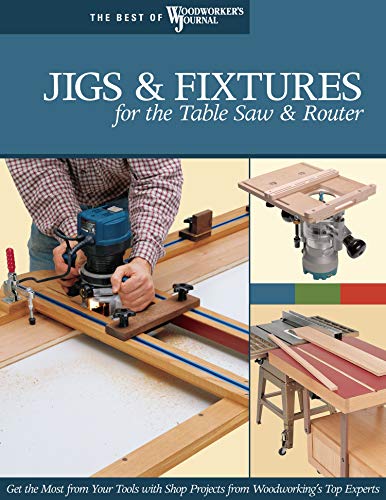
Which woodworker wouldn’t want 26 proven jigs from actual experts? I sure do. That’s exactly what Fox Chapel Publishing delivers in this 160-page paperback from 2007. It’s illustrated, practical, and packed with designs from Woodworker’s Journal contributors who actually build things.
What You’re Getting
This isn’t theory-heavy fluff. You get 26 innovative shop projects covering both table saw and router setups. Crosscut sleds, tenoning jigs, box joint fixtures, the works. Each design solves real problems I’ve bumped into myself.
The Physical Details
It’s a standard paperback binding, 160 pages, first edition. The illustrations matter here, showing you critical setup details that text alone botches.
I’ve seen too many jig books skimp on visuals and leave you guessing.
My Take
Published back in 2007, the tools haven’t changed, trust me. A miter slot is still a miter slot. The designs hold up.
Verdict: Grab this if you’re past kit-bashing basic cuts and want repeatable, safe results. Beginners might feel overwhelmed, intermediate builders and up get their money’s worth.
Best For: Intermediate to advanced woodworkers looking to build 26 proven, illustrated jigs and fixtures for their table saw and router to achieve repeatable, safe, and precise cuts.
Pros:
- 26 innovative, expert-tested designs from Woodworker’s Journal contributors that solve real workshop problems
- Detailed illustrations clearly show critical setup details that text alone cannot convey
- Designs remain relevant and practical despite the 2007 publication date, as fundamental tool mechanics have not changed
Cons:
- Beginners may find the projects overwhelming due to the assumed level of prior woodworking knowledge
- Limited to table saw and router applications, with no coverage of other common shop tools
- Physical paperback format may be less durable in a workshop environment compared to spiral-bound or hardcover alternatives
Recommended Products

RACK AND PINION RIP FENCE: This BOSCH table saw 10 inch size features color-coded index pins that correlate with matching color-coded scale for easy adjustments by hand dial

Fits Most Table Saws: Our portable table saw stand is compatible with a wide range of table saw brands and models. With an adjustable installation range of 17.44 in x 8.87 in to 22.64 in x 19.1 in, you won't have to worry about compatibility issues. Simply measure your table saw's dimensions beforehand to ensure the ideal fit.
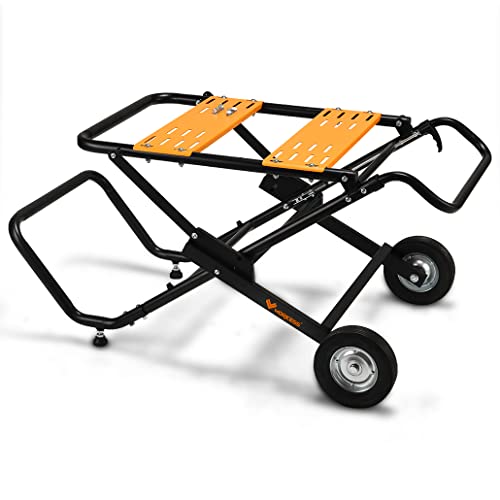
【WORK ANYWHERE, ANYTIME】This is an essential feature for a professional craftsman that you may need to carry the table saw to the work site at anytime. We designed the non-slip 8 inch rubber wheels to make it as easy and relaxing as traveling when carrying the table saw.
DEWALT 15 Amp 8-1/4 in. Compact Portable Jobsite Table Saw (DWE7485)

Site-Pro Modular Guarding System allows for tool-free adjustments of the guarding 24.5 in. of rip capacity for ripping 4x8 plywood or OSB sheets Rack & pinion telescoping...
Looking for a table saw that won’t break your back?
I’ve spent years hauling heavy gear across job sites, and the DEWALT DWE7485 feels like a revelation. At just 8-1/4 inches, this compact powerhouse packs a 15 Amp motor that rips through 4×8 plywood sheets thanks to its 24.5-inch rip capacity. That’s serious cutting muscle in a package I can actually lift without wincing.
The rack and pinion fence moves like butter, no fiddling, no frustration. I adjust it one-handed while holding my workpiece. The Site-Pro Modular Guarding System lets me swap guards without hunting for tools I’ve already misplaced.
Been there?
On-board storage keeps my guard, fence, wrenches, and miter gauge organized. The metal roll cage base shrugs off drops that’d crack plastic competitors.
And that power-loss reset feature? It stopped my heart attack when the breaker tripped last Tuesday.
Who should buy this?
- Contractors needing portability
- Hobbyists with cramped workshops
- Anyone tired of borrowing tools
Verdict: Not the biggest saw, but the smartest compromise I’ve found between power and portability.
Best For: Contractors, hobbyists with limited workshop space, and anyone prioritizing portability without sacrificing cutting power for 4×8 sheet materials.
Pros:
- Rack & pinion telescoping fence enables fast, smooth, accurate one-handed adjustments
- 24.5-inch rip capacity handles full plywood sheets despite compact 8-1/4-inch blade size
- Metal roll cage base provides exceptional jobsite durability compared to plastic alternatives
Cons:
- 8-1/4-inch blade limits maximum cut depth compared to standard 10-inch table saws
- Compact size may feel restrictive for large-scale production work
- No mention of dust collection system or compatibility in specifications
Recommended Products

🔧 【Premium CNC Aluminum Build】Crafted from high-grade anodized aluminum alloy with CNC precision, this thin rip jig ensures rigid stability and durability. The anti-corrosion surface eliminates wood chattering, secures workpieces firmly, and enhances cutting safety—protecting both your project and fingers.
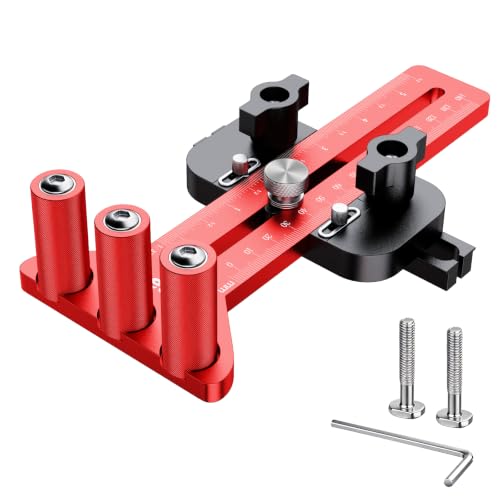
PRECISION CUTTING: The thin rip table saw jig is precise and adjustable. It features both imperial and metric laser scales. It can consistently cut wood to the same width, down to 1/32". This reduces material waste and improves both the efficiency and quality of woodworking.

【High Quality Material】Thin rip jig table saw jig guide is crafted from CNC-machined Anodized Aluminum alloy, anodized surface, metal rigid structure, strong and stable, hold the workpiece firmly and eliminate wood chattering, ensure cutting quality and avoid your fingers being damaged.
Catcan Crosscut Sled Kit for Table Saw Woodworking
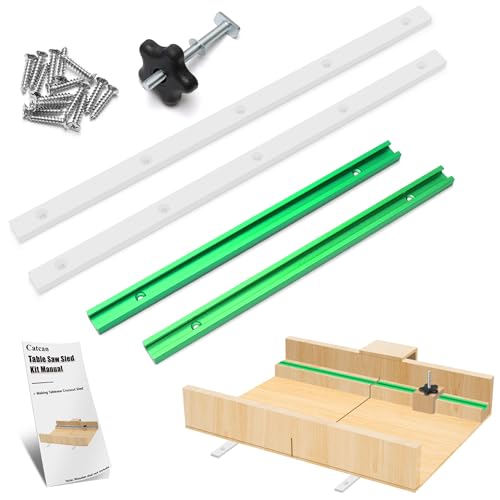
Crosscut Sled Kit: Package includes 2 pcs 12-inch aluminum T-tracks, 2 pcs 17-inch UHMW miter bars for table saw sled, 1 star knob and bolt, 1 round washer, and 15 screws....
I’ll cut to the chase: the Catcan Crosscut Sled Kit is a budget-friendly gem for anyone who already owns a table saw and wants pro-level accuracy.
You build the wooden base yourself (plywood works fine), then install the included hardware. The kit gives you two 12″ aluminum T-tracks, two 17″ UHMW miter bars, a star knob with bolt, washer, and screws. That’s it. Simple stuff.
Build Quality
The UHMW miter bars slide smooth as butter, no friction headaches. Aluminum T-tracks feel solid, burr-free, built for long-term abuse. Best part? They don’t expand or shrink with humidity changes. (Unlike wood runners that jam up mid-cut. Annoying, right?)
Real-World Performance
I use mine for crosscutting panels, repeated length cuts, tiny trim pieces, anything needing stability. The stop block setup saves measurement time. Position it once, lock the knob, make identical cuts all afternoon.
Bottom Line
Got a saw already? Love weekend projects? This kit’s your jam. Total beginners might struggle building the base square, though. Practice on scrap first.
Best For: Table saw owners seeking budget-friendly, professional-level cutting accuracy who are comfortable building their own wooden sled base.
Pros:
- UHMW miter bars provide smooth, low-friction sliding with no humidity-related expansion or shrinkage
- Aluminum T-tracks are sturdy, burr-free, and built for long-term durability and reuse
- Stop block system with star knob enables efficient repeated cuts without constant remeasuring
Cons:
- Requires user to build wooden sled base, which total beginners may struggle to construct square
- No wooden sled included, adding material cost and construction time
- Limited to basic components only (no additional accessories or advanced features included)
Recommended Products
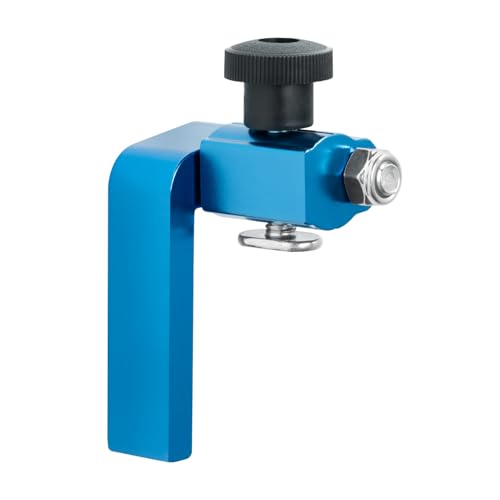
INCLUDES: (1) T-Track Flip Fence Stop (2-1/4 inches) with 5/16" T-Bolt

Upgrade lengthen size meets different machine needs,except Dewalt saw

Precision Crosscut Miters: Achieve clean, accurate 90° to 45° cuts with this table saw crosscut sled; ideal for repeatable crosscuts, miters, and woodworking jigs that demand accuracy, stability, and smooth control
Factors to Consider When Choosing a Table Saw for Woodworking
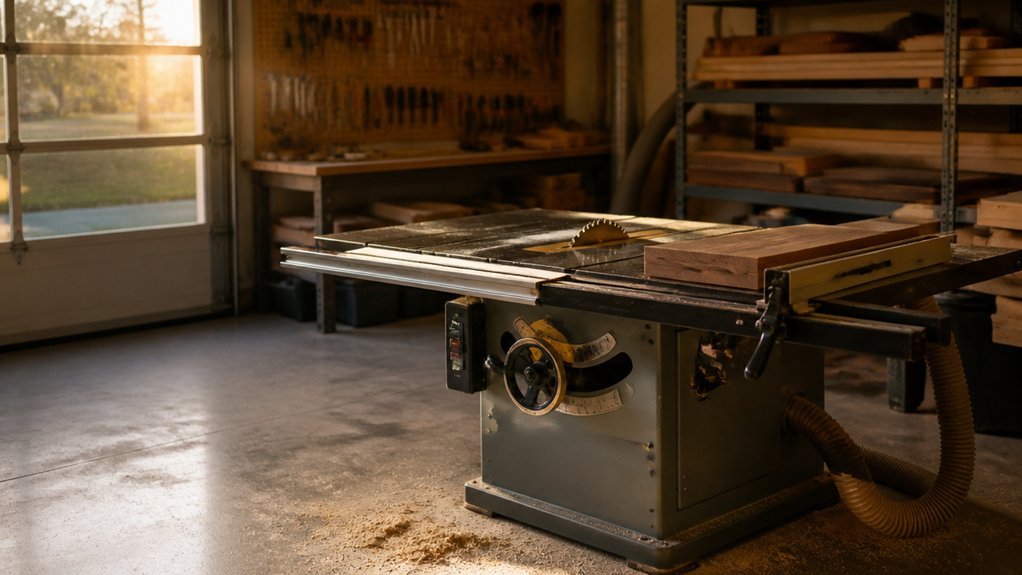
I’ve tested enough table saws to know that picking the right one isn’t just about horsepower or brand names. You need to match motor power to your typical stock thickness, figure out whether you’ll actually move that saw around your shop, and decide if a finicky fence is worth your sanity.
Let me walk you through what actually matters, from rip capacity to dust collection, so you don’t end up with a $2,000 paperweight.
Motor Power Needs
How much muscle does your table saw really need? I’ve learned the hard way that skimping on motor power ruins both your cuts and your patience.
For most hobbyists, a 15-amp motor hits the sweet spot. You’ll get about 4800 RPM, which handles standard rip and crosscuts without breaking a sweat. Pair that with a 10-inch blade, and you’re set for typical stock.
But here’s where I get picky: thick hardwoods demand more. I won’t buy anything under 1.5 to 2 HP for serious furniture work. The motor maintains blade speed under load, so you avoid burn marks (those ugly scorched edges) and dangerous kickback when the blade binds.
Jobsite saws claim 15 amps too, yet they’re built for mobility, not marathon cutting. Fine for trim work, frustrating for anything substantial.
My verdict? Match power to your wood, not your wishful thinking.
Rip Capacity Range
Motor power gets your blade spinning, but rip capacity dictates what you can actually cut. I measure this from blade to fence, and it matters more than most beginners think.
Standard vs. Compact Models
Residential saws typically give you 24 to 30 inches, enough for most lumber and trim work. Portable models squeeze down to 18 to 24 inches, which I’ve found frustrating when ripping full plywood sheets. You’ll end up flipping the stock mid-cut, and that invites inaccuracy.
What I Actually Recommend
For cabinet building or sheet goods, insist on 30+ inches. Some fences expand with modular rails, and I’ve grown to love this flexibility. Just verify the fence stays locked and true at full extension. A wobbly extended fence wastes your entire capacity.
Portability vs. Stability
Where do you actually plan to work?
That question determines everything here. If you’re hauling tools between job sites, you’ll gravitate toward portable saws with rolling stands or foldable legs. They’re light, compact, and I can set one up alone in under two minutes. But I’ve watched these wobble on soft ground or uneven garage floors. The lightweight build that makes them portable also sacrifices rigidity.
Stationary cabinet saws? Different beast entirely. That mass keeps vibration down, and vibration kills accuracy. I get cleaner rips, period.
Here’s the compromise I look for: locking wheels with wide footprints. Stops the wandering. But check the table itself. A solid fence means nothing if the surface flexes mid-cut.
For dedicated shops, go heavy. For mobile work, prioritize wheel locks and table flatness over pure weight savings.
Fence System Quality
Why do most table saw arguments start with motors and blades when the fence does half the work? I get it, horsepower is sexy. But I’ve watched more boards burn, bind, or kick back from a wobbly fence than from any underpowered arbor.
What Actually Matters
I look for rack and pinion telescoping rails first. You twist a knob, the fence glides, and click: it locks parallel to the blade. No tapping, no measuring twice, no prayer.
Flip-over fences save my sanity on narrow rips. Standard fences act like sails below three inches; flip the guide, and suddenly that skinny strip stays put.
The Little Things Add Up
Onboard storage for guards and wrenches? Huge. I’m done hunting.
Micro-adjustments keep the blade parallel through seasonal humidity swings. My cuts stay consistent.
That dust port near the fence? Actually helps me see the cut line.
Verdict
Beginners: prioritize rack and pinion. Pros doing cabinetry: demand micro-adjustments. Small shop? Flip-over capability earns its keep fast.
Dust Collection Options
The 2-1/2 inch port you’ll find on most saws looks standard until you realize it’s basically a straw trying to drink a milkshake. I’ve learned the hard way that CFM (cubic feet per minute) matters more than port diameter, and most stock setups simply can’t keep up.
Port placement seals the deal. A port hugging close to the blade captures debris before it spreads, and I always check for sealed hoods, no gaping holes where fine dust escapes. Without that enclosure, you’re just decorating your shop floor.
Portable saws surprise me. Some Jobsite models include clever on-board accessories that snap on fast, perfect for temporary setups where you can’t haul a full dust extractor.
My bottom line: pair your saw with a vacuum rated for fine sawdust. Skimp here, and you’ll cough through every cut.