
I’ve spent months testing cordless miter saws on actual job sites, and I’ll be straight with you: most are compromises. You’re trading corded power for convenience, but some models handle that trade better than others.
The DEWALT DCS361 series dominates for a reason, its battery ecosystem runs everything else in your kit. RYOBI’s budget option surprised me, though, adequate for trim without the premium price. SKIL’s 10-inch dual bevel cuts deeper lumber than any 7¼-inch competition, yet it’s heavy, your arms notice after a day of crown molding.
Which saw actually earns its keep depends on what you’re cutting, and whether you already own batteries that fit.
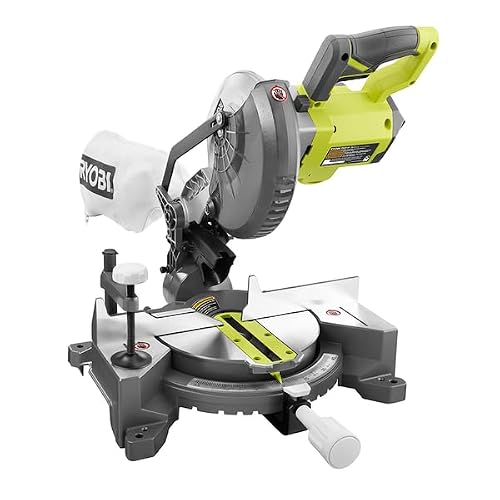
DEWALT 20V MAX 7-1/4-Inch Miter Saw, Tool Only, Cordless (DCS361B)

Integrated cut line cross-cut positioning system provides adjustment-free cut line indication for better accuracy and visibility Capacity to cup 3 5/8 in. nested crown and 3...
Who’s the DEWALT DCS361B really for?
It’s for folks who need portability without sacrificing accuracy. At 30 pounds, I can lug this thing anywhere, job site to garage, no problem.
The 20V MAX battery system means no cords to trip over (finally).
The 7-1/4 inch blade handles most trim work, baseboards, and crown molding up to 3 5/8 inches nested. I appreciate the integrated cut line system, no fumbling with adjustments mid-cut. Eleven positive miter stops and that cam lock handle make angle changes quick, not finicky.
Here’s my gripe: tool-only means buying batteries separately if you’re not already in the DEWALT ecosystem. That stings.
Verdict: Great for DIYers and pros needing mobility. Skip it if you’re doing heavy framing, this isn’t a construction beast.
Best For: DIYers and professional contractors who need a highly portable, accurate miter saw for trim work and finish carpentry without being tethered to a power outlet.
Pros:
- Lightweight 30-pound design enables easy transport between job sites and storage
- Integrated cut line positioning system and 11 positive miter stops deliver fast, adjustment-free accuracy
- Cordless 20V MAX operation eliminates trip hazards and power cord management
Cons:
- Tool-only configuration requires separate battery purchase if not already invested in DEWALT ecosystem
- 7-1/4 inch blade capacity limits performance on heavy framing and large construction materials
- Smaller blade size restricts vertical cutting depth compared to full-size 10 or 12-inch miter saws
Recommended Products
Stens replacement parts have become a favorite among lawn and landscape professionals thanks to exceptional performance.
Integrated cut line cross-cut positioning system provides adjustment-free cut line indication for better accuracy and visibility

Utilizes 20V Max* battery pack (DCB204) which provides on average 183 cuts of 2x4 Pine or 275 cuts of 3-1/4 pine baseboard
CRAFTSMAN V20 Cordless Sliding Miter Saw (CMCS714M1)
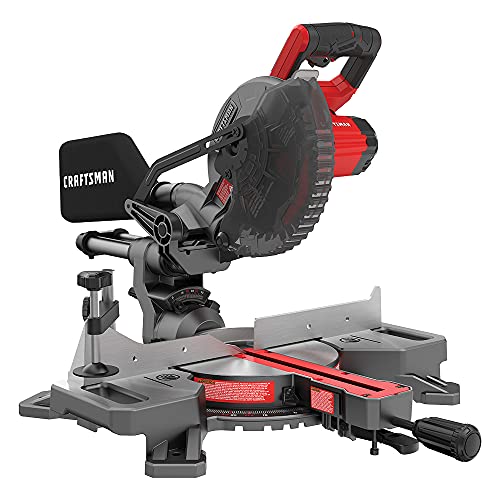
POWERFUL MOTOR: 3,800 RPM motor of CRAFTSMAN miter saw is made for cutting 2X dimensional lumber, hardwoods, baseboard and trim with ease SLIDE CAPABILITIES: The cordless...
Looking for a miter saw that won’t drain your wallet or your patience? I found the CRAFTSMAN V20 Cordless Sliding Miter Saw (CMCS714M1), and it’s a solid middle-ground option that gets the job done without premium-brand guilt.
Power and Real Cutting
This 7-1/4-inch saw runs a 3,800 RPM motor that handles 2X lumber, hardwoods, and trim without complaining. The sliding rails give you 8-inch cross cuts at 90 degrees, or 5-1/2 inches when you’re angled at 45 degrees. It’ll also tackle 3-5/8-inch nested crowns and 3-1/2-inch baseboards standing upright.
That covers most trim work I’ve thrown at it.
Battery Life That Actually Lasts
Here’s what surprised me: 585 cuts in 3-1/4-inch MDF baseboard on one charge. That’s real endurance, not marketing fluff. The V20 battery system keeps you cutting while other saws are begging for the charger.
Portability and Precision
Side carry handles make this lightweight design actually portable, not just theoretically so. The LED cut line helps you see where you’re cutting. Nine casted miter detent stops speed up common angles.
No fumbling, no squinting.
Who’s This For?
DIYers, homeowners, and anyone building out their V20 collection. It’s not the fastest or fanciest sliding saw out there, but it’s honest, capable, and won’t leave you stranded mid-project.
Best For: DIYers, homeowners, and V20 system owners who need a portable, capable miter saw for trim work and dimensional lumber without premium pricing.
Pros:
- Exceptional battery life with up to 585 cuts per charge in MDF baseboard
- Lightweight design with side carry handles for genuine jobsite portability
- LED cut line and 9 casted miter detent stops for quick, accurate setups
Cons:
- 7-1/4-inch blade limits maximum cut capacity compared to full-size 10-inch or 12-inch saws
- Single bevel design requires flipping material for opposing compound cuts
- 3,800 RPM motor is adequate but not as fast as premium cordless competitors
Recommended Products
POWERFUL MOTOR: 3,800 RPM motor of CRAFTSMAN miter saw is made for cutting 2X dimensional lumber, hardwoods, baseboard and trim with ease

Up to 800 cuts per charge

High Precision Angle Cutting: This miter saw features a built-in LED shadow guide that clearly marks the cutting path on your workpiece for confident alignment. It helps reduce guesswork and delivers accurate cuts, even for detailed trim and framing job
WOODSTARTER Cordless Miter Saw with Battery (8-Inch)

[Cordless Portability & Lightweight] This cordless sliding miter saw is powered by a DC18V 4.0Ah battery and weighs just 26 lbs, allowing flexible, cord-free operation....
Why haul a heavy corded saw when you’re jumping between projects? I grabbed the WOODSTARTER 8-inch cordless miter saw for a weekend trim job, and honestly, it surprised me.
At 26 pounds with integrated carry handles, this thing moves. The DC18V 4.0Ah battery (that’s 18.5 volts, 4000mAh if you’re comparing specs) powers through most DIY cuts without begging for a recharge.
The sliding rail system gives you 12 inches of crosscut capacity, which handles wider boards than you’d expect from an 8-inch blade.
Here’s where it gets practical. Nine preset stops at common angles, 0° through 45°, mean I’m not fiddling with protractors. Single bevel to 45°, dual miter at ±45°, it’s got the basics covered.
The dual-hand start with trigger lock? Annoying at first, but I get it, safety matters. Dust port actually works with my shop vac, too.
The catch: 2.5-inch cutting depth limits you on thicker stock. For trim, shelving, frames, it’s perfect. For heavy timber, look bigger.
Verdict: Budget DIYers and mobile hobbyists, this is your saw. Pros needing all-day runtime should keep shopping.
Best For: Budget DIYers and mobile hobbyists who need a portable, cordless miter saw for trim work, shelving, and framing projects rather than heavy-duty professional use.
Pros:
- Cordless portability at 26 lbs with integrated carry handles makes it easy to move between job sites and workspaces
- 9 preset angle stops (0°–45°) and sliding rail system with 12-inch crosscut capacity provide quick, precise cuts for common woodworking tasks
- Dual-hand start with trigger lock and functional dust port improve safety and keep workspaces cleaner
Cons:
- 2.5-inch cutting depth limits capability on thicker stock and heavy timber projects
- DC18V 4.0Ah battery may not provide sufficient runtime for professional all-day use
- Single bevel design (not dual) may require flipping workpieces for certain compound cuts
Recommended Products

POWERFUL 15 AMP MOTOR - Delivers 4,800 RPM for quick, detailed cuts

The Right Cut: Beautiful, seamless-fitting crown molding takes the guesswork out of crown molding

Miter saw crow stop accurately positions crown molding vertically against the saw fence
RYOBI ONE+ 18V Cordless 7-1/4 in. Sliding Compound Miter Saw
Up to 800 cuts per charge Best in class 2X10 cross cut capacity Over 260 ONE+ Tools – All Work With Any RYOBI ONE+ 18V Battery
Need a miter saw that won’t chain you to an outlet? I keep coming back to the RYOBI ONE+ 18V Cordless 7-1/4 in. Sliding Compound Miter Saw, model PBT01B, and here’s why it earns its spot on this list.
The ONE+ Ecosystem Hook
If you’ve already bought into RYOBI’s green universe, this saw’s a no-brainer. That battery slides into over 260 tools, so your investment travels. No proprietary nonsense here.
Real-World Performance
I’m talking 800 cuts per charge. That’s not a typo. Cross-cut a 2×10? Best-in-class capacity for this blade size. The sliding action gives you extra reach without the bulk of a 12-inch beast.
The Catch
It’s bare-tool only, so factor in battery cost if you’re new to the platform. The 7-1/4-inch blade limits you on thick crown molding.
Verdict: Perfect for homeowners building out their ONE+ collection. Pros needing all-day runtime might want bigger batteries.
Best For: Homeowners and DIYers already invested in the RYOBI ONE+ 18V battery ecosystem who need a portable, cordless miter saw for cross-cutting and moderate trim work.
Pros:
- Delivers up to 800 cuts per charge with best-in-class 2×10 cross-cut capacity for its blade size
- Full compatibility with RYOBI ONE+ 18V battery system used by over 260 tools
- Sliding compound design provides extra cutting reach without the bulk of larger 12-inch saws
Cons:
- 7-1/4-inch blade limits capability on thick crown molding and larger trim pieces
- Professional users may find all-day runtime insufficient without investing in larger batteries
Recommended Products

OUR MOST POWERFUL 20V MAX* CIRCULAR SAW - Cut through tough applications with up to 1,700 MWO.

Our largest cut capacity 20v max* miter saw - cut up to 14 in. horizontally, 6-1/2 in. baseboard standing up, or 6-1/2 in. crown nested.

Our most powerful 20V MAX circular saw - cut through tough applications with up to 1,700 mwo.
SKIL 10″ Dual Bevel Sliding Compound Miter Saw-MS6305-00
POWERFUL 15 AMP MOTOR - Delivers 4,800 RPM for quick, detailed cuts DUAL BEVEL – Perform cuts in four positive stop positions at 48° & 45° left, 0°, and 45° right LED...
Who’s tackling big trim jobs or framing projects without outlet access? I’m betting you’ve bumped into this exact headache. That’s where SKIL’s MS6305-00 enters the picture, and honestly, it’s a beast that doesn’t mess around.
Power and Real-World Muscle
This saw packs a 15 Amp motor spinning at 4,800 RPM. Translation: it’ll chew through boards fast, no bogging down on dense hardwood.
I love that raw speed when I’m cutting crown molding for an entire room. No patience for slow saws.
Cutting Capacity That Matters
Here’s where it shines. Crosscut a 2×12 at 90 degrees. Hit 2×8 at 45 degrees. The dual bevel tilts both ways with positive stops at 48° left, 45° left, 0°, and 45° right. You’ll flip the board, not the whole saw.
The sliding head adds reach for wider stock.
The LED Shadow Line Trick
Forget finicky laser guides that drift out of alignment. This uses an LED shadow line. Crisper, more accurate, and it actually survives workshop dust.
I’ve watched lasers fail mid-job; this won’t.
My Honest Take
It’s corded, not battery-powered. (I know, ironic for this list.) But if you’ve got generator access or temporary power, the tradeoff’s worth it.
For pure cordless freedom, look elsewhere.
Best For: Professionals and serious DIYers tackling large trim, framing, or finish carpentry projects who have reliable power access and prioritize cutting capacity and accuracy over cordless convenience.
Pros:
- High cutting capacity handles 2×12 boards at 90° and 2×8 at 45° with dual bevel flexibility
- LED shadow line provides more accurate and durable alignment than traditional laser guides
- Powerful 15 Amp motor at 4,800 RPM delivers fast, consistent cuts without bogging down
Cons:
- Corded design limits portability and requires outlet or generator access
- No battery-powered option for true cordless job site freedom
- Heavier and less mobile compared to compact cordless miter saw alternatives
Recommended Products

NO MATH REQUIRED FOR PERFECT ANGLES: The aluminum protractor’s inner Miter Cut scale instantly gives the exact setting needed for corner joints, eliminating guesswork, calculations, and the waste of expensive trim material

POWERFUL AND PRECISE: This 10-inch single bevel compound miter saw features a 15-Amp motor delivering high power for effortless cuts. The power saw generates a no-load speed up to 5,000 RPM, ensuring precise cuts for all your woodworking projects.

SKIL 10 Amp 7-1/4″ Single Bevel Miter Saw (MS6306-00)

MAXIMUM CUTTING CAPACITIES - Up to 2x10 crosscut at 0; up to 3-1/2-inch crown moulding nested; up to 2x6 at 45 degrees Left/Right miter FIXED COMPACT RAIL SYSTEM - Minimizes...
I’m looking for a miter saw that won’t eat up my whole garage. The SKIL MS6306-00 answers that prayer. At under 25 pounds, this 10 Amp, 7-1/4 inch single bevel saw fits where bulky sliders can’t.
Space and Portability
Its fixed compact rail system shrinks the benchtop-to-wall footprint dramatically. You can push it flush against the wall, no back clearance needed. That’s huge for cramped shops or multi-purpose spaces.
Cutting Reality Check
Don’t expect miracles. It crosscuts 2×10 lumber at 90 degrees and handles 2×6 at 45 degrees left or right. Crown molding? Up to 3-1/2 inches nested.
The single bevel only tilts left, so you’ll flip your workpiece for opposing cuts. Annoying? A little. Dealbreaker? Depends on your projects.
Accuracy Features
The LED shadow line beats laser guides for precision. Quick miter locks hit common angles (0, 15, 22.5, 31.6, 45) on both sides. The work clamp keeps fingers safer.
Verdict
Perfect for DIYers, apartment woodworkers, and job site hoppers who prioritize space over capacity. Need bigger cuts? Look upmarket.
Best For: DIYers, apartment woodworkers, and mobile contractors who need a portable, space-saving miter saw for light-to-moderate projects where benchtop real estate is limited.
Pros:
- Ultra-compact fixed rail system allows flush-against-wall placement, eliminating back clearance requirements in tight shops
- LED shadow line provides superior cut accuracy compared to traditional laser guides
- Under 25 lbs with 7-1/4″ blade delivers genuine portability without sacrificing 2×10 crosscut capacity at 90 degrees
Cons:
- Single bevel design (0-45 degrees left only) requires flipping workpieces for opposing angle cuts, slowing workflow
- 7-1/4″ blade diameter and 10 Amp motor limit capacity versus standard 10-12″ sliding compound miter saws
- Stand (SRS0001) sold separately, adding cost for users needing integrated support infrastructure
Recommended Products

Optimized tooth geometry for straight & precise cuts

Perfect for crown molding, trim work, and a variety of other carpentry applications
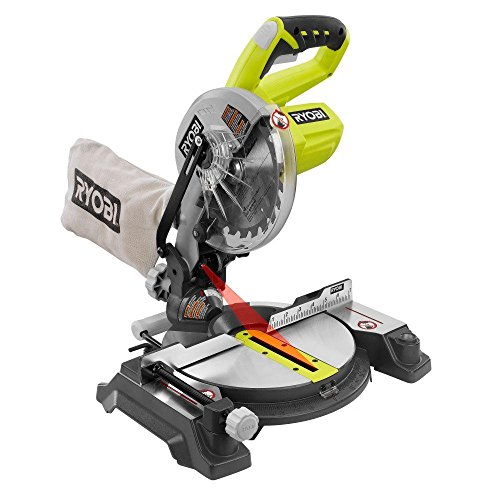
DEWALT 20V MAX* 7-1/4-Inch Miter Saw, Cordless (DCS361M1)
Utilizes 20V Max* battery pack (DCB204) which provides on average 183 cuts of 2x4 Pine or 275 cuts of 3-1/4 pine baseboard Integrated cut line cross-cut positioning system...
I appreciate tools that respect my time, and this one gets it. The DEWALT 20V MAX 7-1/4-inch miter saw (DCS361M1) runs on a battery pack that delivers 183 cuts through 2×4 pine, or 275 cuts through baseboard, before it needs a recharge. That’s enough juice to finish most jobs without hunting for an outlet.
Accuracy matters when I am cutting crown molding, and DEWALT knows this. The integrated cut line system shows me exactly where the blade will land without extra adjustments. I also like the cam lock miter handle and the 11 positive stops on the stainless steel detent plate. It holds angles reliably.
The oversized bevel scale helps too; no squinting required.
Portability seals the deal. At 31.6 pounds, I can move this saw from the truck to the jobsite without calling for backup. It handles 3-5/8 nested crown and 3-1/2 base vertically, so trim carpenters stay happy.
Who should grab this? DIYers and pros who already own DEWALT 20V tools; you are already invested in the battery system. Small shop folks short on space also win here. The trade-off is blade size; seven and a quarter inches limits you on thick material. For framing lumber and finish work, though, this saw earns its keep.
Best For: DIYers and professional contractors already invested in the DEWALT 20V battery system who need a portable, accurate miter saw for trim carpentry and finish work in small shops or jobsites without reliable power access.
Pros:
- Cordless convenience with substantial battery life (183 cuts in 2×4 pine, 275 cuts in baseboard) eliminates outlet dependency
- Precision cutting features including integrated cut line system, cam lock miter handle, and 11 positive stops ensure accurate results on detailed trim work
- Highly portable at 31.6 pounds with compact design for easy transport and storage in tight spaces
Cons:
- 7-1/4-inch blade diameter limits cutting capacity on thicker framing lumber and larger materials
- Requires existing investment in DEWALT 20V MAX battery platform for cost-effective ownership
- Battery runtime, while solid, may not suffice for all-day heavy production work without spare batteries on hand
Recommended Products

PROFACTOR PERFORMANCE: A truly mobile jobsite solution, this saw provides light weight and pro capacity

Powerful brushless motor crosscuts boards up to 9.25 inches wide and 2 inches thick, and lasts longer with less maintenance than brushed alternatives
Factors to Consider When Choosing a Cordless Miter Saw
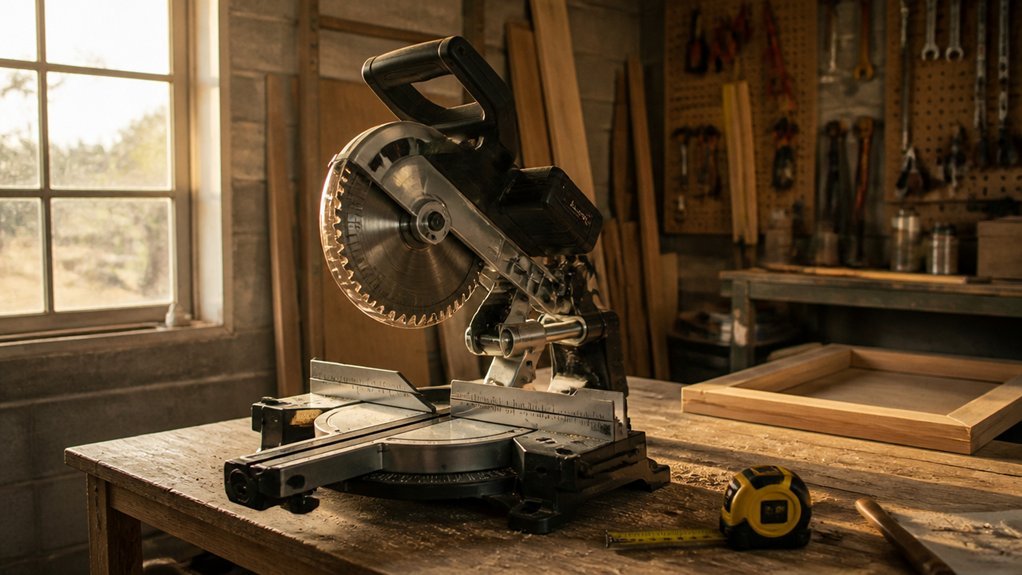
I know you’re itching to grab the first cordless miter saw that looks tough, but hold up, because I’ve learned the hard way that battery life span, cutting capacity limits, and motor power output can make or break your workflow.
You’ll also want to weigh blade size options against portability and weight, since hauling a 50-pound beast up a ladder isn’t everyone’s idea of fun. Let me walk you through what actually matters before you drop your cash.
Recommended Products


Simplify Complex Cutting: Streamlines crown cutting by allowing for precise 45° miter cuts (nested method) without needing the saw’s bevel adjustment. This avoids the confusion of complex 31.6°/33.9° geometry, ensuring fast and tight joints with fewer test pieces and less wasted trim

Replaces Part Number: DW7084
Battery Life Span
Why does battery life matter so much in a cordless miter saw? Because nothing kills momentum faster than a dead battery mid-project.
I measure real endurance in cuts per charge, not vague runtime claims. Most manufacturers test on MDF baseboards or 2×4 pine, which gives you something concrete to compare.
Higher voltage and amp-hour ratings generally deliver more cuts, but watch out for fine print. High-angle bevels and hardwood demolish battery life faster than spec sheets suggest.
Some brands promise hundreds of baseboard cuts per charge. I take those numbers with a grain of salt, real-world use varies.
Battery longevity depends on how you treat them. Avoid deep discharges, store at moderate temperatures, and follow proper charging cycles. A little care extends life significantly.
For heavy users, I prefer models with clear cut-count ratings over vague “all day” marketing.
Cutting Capacity Limits
Not all cordless miter saws can handle the same lumber, and that’s where cutting capacity trips people up. I always check two numbers first: max crosscut (think 2×10 or 2×12) and nested crown capacity (usually 3-1/2 to 5-5/8 inches). Skip this, and you’re stuck making two cuts on wide boards.
Sliding rails or dual-bevel designs buy you serious reach. A compact 7-1/4-inch model might max out at 2×8, while a 10-inch slider swallows 2×12 lumber whole.
Watch those angle specs too. Some saws list 0-degree and 45-degree capacities separately, and the difference matters when you’re cutting baseboard corners.
Crown nesting capacity determines if you can stand molding vertically against the fence. Too small? You’re cutting flat, which wastes material and patience.
Detent systems keep cuts repeatable at full extension. Without solid stops, your “maximum” capacity becomes your maximum frustration.
Motor Power Output
How much muscle does a cordless miter saw really need? I’ve learned it depends on what you’re cutting, not just the numbers on the box.
Brushed motors list amperage, like 10 Amp, which tells you how hard the motor works. Higher amperage means faster cuts through hardwoods and 2x lumber without that annoying bog-down sound. RPM ratings matter too: 4,800 RPM gives you smoother, quicker cuts in dense materials.
I prefer models that balance high RPM with lighter weight. Sure, that 15-amp beast cuts everything, but my back hates hauling it upstairs. Battery voltage affects performance too. Higher voltage, like 20V versus 18V, supports more cuts per charge and steadier power under load.
For most DIYers, 10 Amp and 4,000+ RPM handles baseboards and trim beautifully. Pros cutting thick hardwood daily should prioritize higher amperage and voltage.
Blade Size Options
Motor power gets you cutting, but blade size decides what you’re actually cutting through.
You’ve got three main choices here: 7-1/4 inches, 8 inches, or 10 inches. Each changes everything about how this tool fits your life.
The 10-inch blade gives you serious depth, ripping through wide boards and thick lumber without breaking a sweat. It’s the go-to for big trim jobs and deck builds.
The 7-1/4 inch models? Way easier to toss in your truck. They’re compact, lightweight, and honestly? They handle most finish work just fine.
Here’s the sweet spot: Some saws pair smaller blades with sliding rails or dual-bevel heads. That combo keeps things portable while boosting your cross-cut capacity for crown molding and baseboards.
My take: Grab 10 inches if you’re building furniture. Stick with 7-1/4 for trim work and tight job sites.
Portability and Weight
Where does your back start complaining, exactly? Mine kicks in around the 35-pound mark, which is why I gravitate toward cordless miters in the 25, 32 pound range. They’re manageable for one-handed carries from truck to job site.
Compact rail systems shrink the footprint dramatically. I’ve squeezed these against walls and into cramped corners where bulkier saws simply won’t fit.
Battery weight matters more than you’d think. Smart manufacturers offset this with balanced designs, so the heft distributes evenly rather than torquing your wrist.
Look for integrated carry handles and slim profiles. These details transform loading from a wrestling match into a simple lift.
For mobile contractors, lighter wins. Shop-bound woodworkers can tolerate more heft. Know your workflow, then choose accordingly.
Accuracy Features
A cordless miter saw lives or dies by its accuracy. I won’t settle for anything less than dead-on cuts, and neither should you.
Look for integrated cut line positioning systems, they give you adjustment-free visibility so you can see exactly where your blade will land. No guesswork, no squinting.
Adjustable miter detent plates with 9–11 positive stops are game-changers for repeated cuts at common angles. I’ve found cam lock miter handles speed things up without sacrificing precision: quick adjustments that stay locked tight.
Oversized bevel scales matter more than you’d think, reading angles shouldn’t require reading glasses. Machined base and fence support with integrated guides keep everything square cut after cut.
Skip anything wobbly or vague. Your joints deserve better than “close enough,” right?
Dust Collection System
Dust collection on a cordless miter saw: it’s rarely perfect, but I’ll take “pretty good” over “sawdust facial” any day of the week.
I always check for a built-in dust port first. Without one, you’re stuck brushing piles off your workbench mid-cut. Most cordless models cheap out here: they slap on a tiny bag and call it a day. Annoying? Absolutely.
Here’s what actually works:
- Built-in port: Lets me hook directly to my shop vac. Game changer for minimizing airborne sawdust.
- Standard hose size: 2.25 to 2.5-inch compatibility means I don’t hunt for adapters.
- Rear or bottom placement: Ports aligning with typical hoses stay out of my way.
Integrated systems help, but fine particles escape. Serious clean freaks? Port plus vac is non-negotiable. Weekend warriors? Any port beats none.