

I’ve tested more plywood-cutting blades than I care to count, and frankly, most of them wander, splinter, or burn their way through veneer. The standouts share a few traits. They run thin kerfs, usually 1/16″ or less, which means less material wasted and less strain on your saw motor. Carbide teeth stay sharp longer than steel. Higher tooth counts, think 60T to 140T, leave cleaner edges on crosscuts.
But here’s the catch: more teeth cut slower and can overheat in thick stock.
What actually matters for your project?
Blade diameter and arbor size
Your saw determines this, not preference. A 7-1/4″ blade won’t fit a 5-1/2″ saw, obviously. Arbor sizes vary too. Most 6-1/2″ blades use 5/8″, but check your tool.
Tooth count and grind
24T blades are fast, aggressive, and leave rough edges. 40T blades strike a balance for framing and decent finishes. 60T to 140T blades deliver cabinet-grade clean cuts, but feed slowly.
Coatings and expansion slots
Anti-stick coatings reduce pitch buildup. Expansion slots prevent warping when the blade heats up.
So which blade deserves your money? That depends on whether you value speed, finish quality, or versatility. I’ll walk through ten solid options.
Revvstark 5-1/2″ Circular Saw Blades 24T&48T for Wood, Plastic, Composite

SPECIFICATION: Diameter: 5-1/2 inch circular saw blade(140 mm); Arbor size: 10 mm; Max Rpm:8000; Carbide Teeth: 24T&48T DURABLE MATERIAL: Revvstark circular saw blades 5-1/2...
So, why start with this blade? I’ve put this Revvstark 5-1/2″ set through its paces on everything from cheap plywood to stubborn MDF, and honestly, it’s the versatility that hooked me.
The Build
Premium alloy steel body, carbide-tipped teeth, the usual marketing fluff, right? Except these actually stay sharp. I’ve cut thirty sheets of birch plywood and the 48T finish blade still hasn’t chipped. The 24T rips through 2x4s like they’re butter.
Thermal expansion grooves keep things cool, anti-kickback teeth keep your fingers attached. Both good things.
Real-World Performance
The ultra-thin kerf matters more than you’d think. Less material removed means cleaner cuts and less strain on your saw. I ran these on a tired Ryobi compact circular saw and an old Craftsman corded, zero compatibility issues.
Noise-reducing perforations? They work, barely, but I’ll take it.
Who’s This For?
DIYers, hobbyists, anyone who doesn’t want to baby their blades. The 5-1/2″ size limits you on depth, obviously. You’re not ripping 4x4s in one pass. For plywood, panels, laminate? Perfect. For heavy framing? Grab the 24T and accept the rougher edge.
Verdict
Buy it if you want two solid blades without the premium price. Skip it if you need 7-1/4″ depth or professional-grade longevity.
Best For: Budget-conscious DIYers and hobbyists who need versatile 5-1/2″ circular saw blades for cutting plywood, MDF, laminate, and general wood projects without paying premium prices.
Pros:
- Excellent value with two blades (24T and 48T) for roughly the price of one competitor blade
- Carbide-tipped teeth maintain sharpness through heavy use, including 30+ sheets of plywood without chipping
- Ultra-thin kerf design produces cleaner cuts and reduces strain on saws
Cons:
- 5-1/2″ size limits cutting depth, preventing single-pass cuts on thicker materials like 4x4s
- Noise-reducing perforations provide minimal noticeable sound reduction
- Not suitable for users needing professional-grade longevity or 7-1/4″ blade capacity
Recommended Products
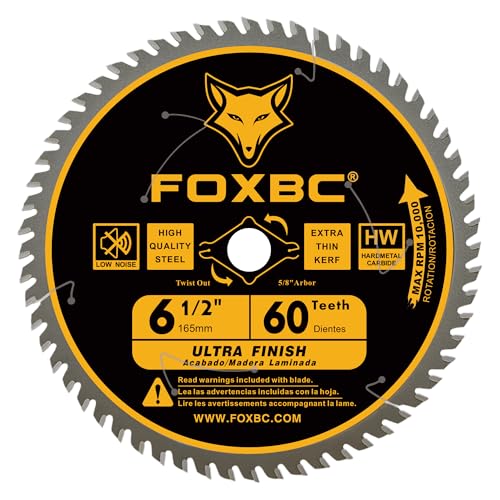
6-1/2 inch Circular Saw Blade Ultra-Thin Fine Finish, Smooth Crosscut, Fast Precisely Framing
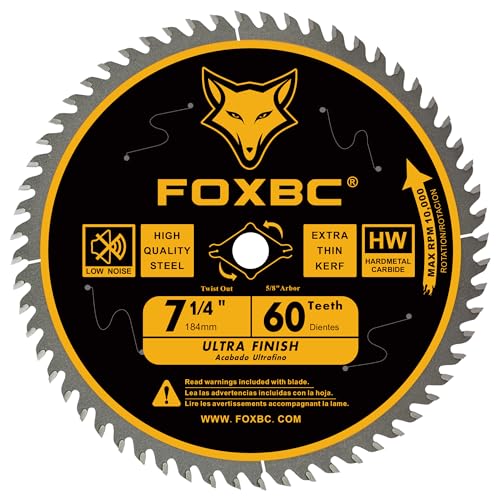
Circular Saw Blades 7-1/4 Inch 60-Tooth ATB, KERF 0.063", 5/8" Arbor, Diamond Knockout

6-1/2 inch circular saw blade 140 teeth with 5/8 inch Arbor diamond knockout and 0.08" kerf - 3 Pack
Revvstark Circular Saw Blade 6-1/2″ 24T&60T (5/8″ Arbor)

SPECIFICATION: Diameter: 6-1/2 inch circular saw blade(165 mm); Arbor size:5/8 inch(15.8 mm) ; Max Rpm: 8000; Carbide Teeth: 24 T & 60T DURABLE MATERIAL: Revvstark 6 1/2...
Who needs one blade when you can get two? I love this 6-1/2 inch Revvstark set because you’ve got options: the 24-tooth rips through plywood fast, while the 60-tooth leaves a finish so clean you’ll barely need to sand. Both fit any standard 5/8 inch arbor. I’ve run them on Dewalt, Ryobi, and Milwaukee saws without a hiccup.
What stands out
The carbide teeth stay sharp longer than you’d expect. The laser-cut kerf means less material waste. Those thermal expansion grooves actually work; I’ve made twenty cuts back-to-back and the blade stayed true. The anti-kickback design isn’t just marketing fluff; it gives me confidence when I’m cutting stacked plywood sheets.
The noise factor
Those perforations? They genuinely reduce that high-pitched scream. Your ears will thank you after a long day in the shop.
Who this fits best
Grab this set if you want versatility. The 60T handles cabinet-grade plywood beautifully, while the 24T powers through construction-grade sheets. Just don’t try it on metal, stick to wood, plastic laminates, and MDF.
Verdict: Solid performer, two blades that cover 90% of what I actually cut.
Best For: Woodworkers and DIYers seeking a versatile blade set that handles both fast ripping and clean finish cutting across plywood, hardwood, MDF, and laminate materials without needing to invest in premium single-purpose blades.
Pros:
- Two-blade set (24T and 60T) covers diverse cutting needs from fast construction work to cabinet-grade finished surfaces
- Carbide teeth and thermal expansion grooves maintain sharpness and blade trueness even during extended use
- Anti-kickback teeth and noise-reducing perforations improve both safety and comfort during long cutting sessions
Cons:
- Not suitable for metal cutting applications, limiting material versatility
- Compatibility claims with major brands (Dewalt, Ryobi, Milwaukee) are user-reported rather than manufacturer-certified
- 6-1/2 inch size restricts use to specific circular, miter, and table saws rather than larger or more common 7-1/4 inch platforms
Recommended Products


5-1/2 Inch Saw Blade for Circular Saw 3 combo pack, 10mm arbor, 0.063" Kerf(1.6mm), 24T&36T&48T(Tungsten Carbide Tipped), MAX RPM 10,000

DIMENSIONS: 5.5" Diameter, 10mm Arbor, 0.059" Kerf(1.5mm), 48-Tooth, MaxRPM:10000, 3-Pack
IRWIN 7 1/4-Inch 140T Circular Saw Blade (11840)
The IRWIN 11840 is the budget pick that doesn’t feel cheap.
I’ve used plenty of bargain blades that wobble like a carnival ride, but this one surprised me. The heavy-gauge, high-carbon steel plate stays flat because it’s fully hardened, not soft and floppy. That matters, trust me.
The Teeth and Cut Quality
140 teeth slice through plywood with minimal tear-out. The precision-ground teeth and thin 0.08-inch kerf mean you’re not wasting material or bogging down your saw. The 5/8-inch diamond arbor fits most standard circular saws without fuss.
Real-World Performance
You won’t get carbide longevity here. This is steel, after all. But for weekend projects and occasional use? The extended blade life claim holds up better than expected. It runs truer longer than other budget steel blades I’ve tortured.
Who’s It For?
Grab this if you’re a DIYer on a budget, a homeowner doing trim work, or anyone sick of overspending on blades for light-duty plywood cuts. Pros burning through sheets daily should look elsewhere, obviously.
Verdict: Best value for casual users who still want clean edges.
Best For: Budget-conscious DIYers, homeowners doing trim work, and casual users who need clean plywood cuts without overspending on premium blades.
Pros:
- Heavy-gauge, fully-hardened high-carbon steel plate stays flat and runs truer longer than other budget steel blades
- 140 precision-ground teeth with thin 0.08-inch kerf deliver smooth, accurate cuts with minimal tear-out and material waste
- 5/8-inch diamond arbor fits most standard circular saws without compatibility issues
Cons:
- Steel construction lacks the longevity of carbide blades for frequent or heavy use
- Not suitable for professional users burning through sheets daily
- Extended blade life claim is relative—expect to replace sooner than premium options under demanding conditions
Recommended Products

Application - Designed for cutting wood, suitable for all kinds of softwood, hardwood, multilayer, MDF, plywood, laminate, chipboard, and so on. Wood with nails can also be cut

SPECIFICATION: Diameter: 7-1/4 inch circular saw blade(185 mm); Arbor size: 5/8 inch(15.88 mm) ; Max Rpm:8000; Carbide Teeth: 24 T 40 T 60 T

Fast Fine-finish framing and crosscut wood, plywood, MDF, plastic, veneer, lumber, laminate, etc...
Diablo 6-1/2″ 40-Tooth Finish Trim Saw Blade (D0641X)

Precise Finish Cuts - Engineered for smooth crosscuts and rips, delivering excellent results in hardwood, softwood, and plywood. Long Lasting TiCo Carbide - High-performance...
Looking for clean cuts in plywood without splintering? I’ve found the Diablo D0641X delivers exactly that, and it’s become my go-to for finish work.
What Makes This Blade Stand Out
The 40-tooth configuration hits a sweet spot for plywood, slicing through veneers cleanly without the tear-out that ruins projects.
That Perma-Shield coating? It actually works, keeping pitch buildup minimal and extending blade life substantially. I’ve run this through stacks of birch and oak plywood without gumming issues.
Size Considerations
At 6-1/2 inches, this fits compact circular saws perfectly. The 5/8-inch arbor is standard, so compatibility headaches are rare.
(Though double-check your saw, some older models play hard to get.)
Real-World Performance
The carbide teeth stay sharp longer than budget alternatives I’ve tortured.
Corrosion resistance matters more than you’d think, garage humidity won’t murder this blade.
My Verdict
For DIYers and pros needing portable, clean-cutting reliability, this Diablo earns its keep.
Best For: DIYers and professional woodworkers who need clean, splinter-free cuts in plywood and finish work using compact circular saws.
Pros:
- 40-tooth configuration delivers exceptionally clean cuts in plywood veneers without tear-out
- Perma-Shield non-stick coating minimizes pitch buildup and significantly extends blade lifespan
- Durable carbide teeth maintain sharpness far longer than budget blade alternatives
Cons:
- 6-1/2″ size limits compatibility to compact circular saws and excludes full-size saw users
- May require arbor compatibility verification for some older saw models
Recommended Products

Features a 7.25-inch diameter (185 mm) and a 5/8-inch arbor (15.875 mm)

DIMENSIONS - Diameter: 7-1/4 inch circular saw blade(184 mm); Arbor size:5/8 inch ; Max Rpm: 8600; Carbide Teeth: 24T

Key specification: ①Diameter: 4-1/2 inch ②Teeth: 42 TCG ③Arbor: 3/8 inch ④Kerf: 1.6 mm Features: ①Carbide tipped aluminum cutting blade ②Thin kerf design ③Non-stick coating ④Laser-cut expansion slot ⑤Stabilizer vents
Luckyway 5.5″ Circular Saw Blade for Wood Cutting

DIMENSIONS - Diameter: 5-1/2 inch circular saw blade(140 mm); Arbor size: 10 mm; Max Rpm:10000; Carbide Teeth: 24T&48T(Combo Pack); Kerf: 1.8mm, Thickness: 1.2mm Durable...
I found this blade when I needed something compact that wouldn’t bog down my smaller cordless saw. The Luckyway 5-1/2 inch model T00204A fits 10 mm arbors and spins up to 10,000 RPM, which keeps things moving without overheating my battery.
Two Blades, Two Jobs
Luckyway gives you options: 24 teeth for ripping (fast cuts along the grain) and 48 teeth for finishing (smooth, clean edges on plywood). I appreciate this flexibility.
The 1.8 mm kerf removes less material, so you waste less wood and strain your motor less. The C3 tungsten carbide tips hold up reasonably well on hardwood and MDF.
Real-World Performance
It cuts cleanly, produces less dust than cheaper blades, and installs easily. The hardened alloy steel body resists warping, though I’d stop immediately if I noticed burning or vibration; Luckyway’s support team responds to quality issues.
Verdict: Budget-conscious DIYers with compact saws, grab this. Professionals needing all-day durability should look higher-end.
Best For: Budget-conscious DIYers using compact cordless circular saws who need versatile cutting options for wood, plywood, and MDF without overtaxing their tools.
Pros:
- Dual blade options (24T ripping/48T finishing) provide flexibility for different cut types
- Thin 1.8 mm kerf reduces material waste and motor strain on cordless saws
- C3 tungsten carbide tips and hardened alloy steel body deliver decent durability
Cons:
- Not built for professional all-day use or heavy-duty applications
- Requires immediate stopping if burning or vibration occurs, indicating quality limitations
- 10 mm arbor size limits compatibility with some saw models
Recommended Products

For crosscuts. Excellent cut with perfect finish on two-sided melamine, wood and plywood

Ultra-Smooth Finish - Designed for fine, chip-free cuts in wood, ideal for crosscutting oak, pine, melamine, and delicate moldings.
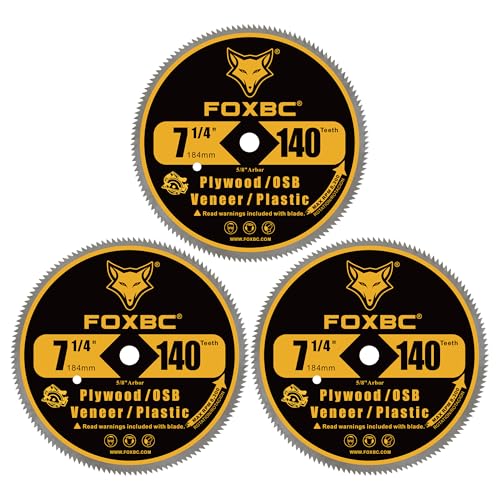
7-1/4 inch circular saw blade 140 teeth with 5/8 inch Arbor diamond knockout and 0.086" kerf - 3 Pack
FOXBC 6-1/2 Inch 140 Tooth Circular Saw Blade
6-1/2 inch circular saw blade 140 teeth with 5/8 inch Arbor diamond knockout and 0.08" kerf - 3 Pack Fast and smooth cutting Plywood, OSB, Plastic, Paneling and Vinyl Siding...
Who needs a blade that handles everything from plywood to vinyl siding? I’ve found the FOXBC 6-1/2 Inch 140 Tooth Circular Saw Blade, and honestly, it’s a solid choice for DIYers who want versatility.
What You’re Getting
This three-pack gives you serious value. Each blade features a 5/8-inch diamond arbor and an ultra-thin 0.08 kerf, which means less material waste and faster cuts. The 140 teeth slice through plywood, OSB, plastic, even vinyl siding without splintering.
I appreciate the expansion slots too, they actually work to keep the blade cool and prevent warping during longer cuts.
Real-World Performance
The precision-ground teeth deliver smooth miter edges and clean crosscuts in veneers and composition board. That thin kerf balances speed with blade life better than you’d expect.
The Catch
It’s steel, not carbide, so edge retention suffers with heavy use. For occasional projects? Perfect. For daily contracting? You’ll burn through these fast.
Verdict: Grab this if you’re a remodeler or weekend warrior tackling varied materials. Skip it if you need all-day durability.
Best For: Budget-conscious DIYers and remodelers who need versatile, clean-cutting performance across plywood, vinyl siding, and similar materials for occasional projects.
Pros:
- Three-pack offers excellent value
- Ultra-thin 0.08 kerf reduces material waste and enables faster cuts
- 140 precision-ground teeth deliver splinter-free, smooth edges on delicate materials
Cons:
- Steel construction lacks carbide’s edge retention under heavy use
- Not durable enough for daily professional contracting work
- Faster burn-through rate compared to carbide-tipped alternatives
Recommended Products
SPECIFICATION: Diameter: 5-1/2 inch circular saw blade(140 mm); Arbor size: 10 mm; Max Rpm:8000; Carbide Teeth: 24T&48T
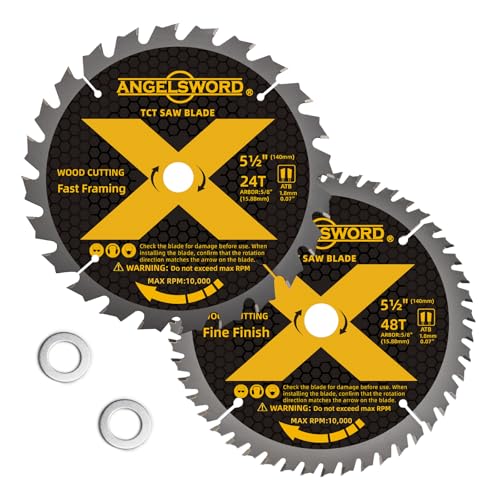
5-1/2 Inch Circular Saw Blade for Circular Saw, 5/8" arbor(15.88mm), 0.07" Kerf(1.8mm), 24-Tooth&48-Tooth, 2 pack Includes bushings for 10mm arbor

Specifications - 5.5" 24T/48T 3PC, 5/8 " arbor, &3/8" Bushing and 10mm Bushing,Always confirm your saw’s arbor size before ordering, Avoid situations where the product cannot be used due to issues with the shaft diameter!
INWELL 4-1/2″ 120 Tooth Circular Saw Blade (3-Pack)

4-1/2 Inch 120T Circular Saw Blade 3/8 Inch (9.5mm) Arbor - 3 Pack Ideal for Plywood, OSB, Softowood smooth and fast cutting 3/8 Inch(9.5mm) Arbor compatiable all cord and...
What sets this blade apart? It’s the size, mostly. At 4-1/2 inches with 120 teeth, this INWELL 3-pack fits compact saws that bigger blades simply won’t touch.
I’ve found it clutch when working overhead or in tight corners where my full-size saw feels like a brick.
The Good Stuff
The 3/8-inch arbor plays nice with most corded and cordless models. The thin kerf means less material waste and easier cutting.
That specialized tooth geometry? It actually delivers: plywood and OSB cut clean, paneling doesn’t splinter, and vinyl siding behaves itself. Factory-like trim results with minimal sanding afterward.
Value Check
Three blades ready to roll. For pros juggling multiple jobs, that’s convenience.
For enthusiasts like me who forget to swap blades until it’s crunch time, it’s a lifesaver.
Bottom Line
This isn’t your heavy-duty workhorse; it’s a precision specialist. Need consistent, high-quality cuts across lighter materials? Grab this pack.
Pushing through hardwoods or thick stock daily? Look elsewhere.
Best For: DIY enthusiasts and professionals needing precise, clean cuts in plywood, OSB, paneling, and vinyl siding using compact saws in tight or overhead spaces.
Pros:
- 120-tooth design with specialized geometry delivers splinter-free, factory-like cuts on delicate materials with minimal sanding required
- Thin kerf reduces material waste and makes cutting easier while 3/8-inch arbor ensures broad compatibility with corded and cordless saws
- 3-pack value provides backup blades ready for immediate use across multiple projects without downtime
Cons:
- Not suitable for heavy-duty applications, hardwoods, or thick stock that demands a more robust workhorse blade
- 4-1/2-inch diameter limits cutting depth compared to full-size blades, restricting material thickness capacity
- Compact size requires owning or having access to compatible compact saws, as larger saws cannot accommodate this blade
Recommended Products
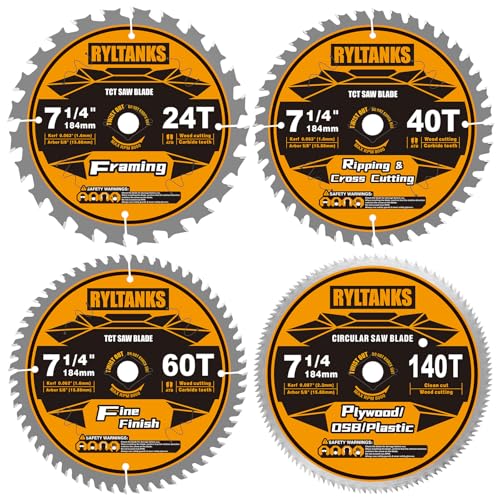
7-1/4 Inch Saw Blade for Circular Saw 3 combo pack, 5/8" arbor with diamond knockout, 0.063" Kerf(1.6mm), 24T&40T&60T(Tungsten Carbide Tipped), MAX RPM 8,000
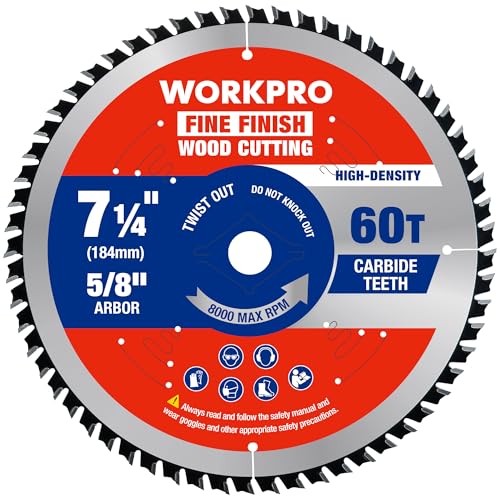
CARBIDE TIPPED FOR LONG LIFE: Made with high-quality tungsten carbide tips for excellent hardness, wear resistance, and long-lasting cutting performance. The durable teeth stay sharp through repeated use for reliable results.

Tungsten Carbide Teeth: This circular saw blade features ultra-hard tungsten carbide teeth that resist wear and heat for extended durability. The optimized cutting angle enables fast chip removal and long-lasting sharpness
3-Pack 3 Inch 80T Circular Saw Blade for Plywood and Paneling
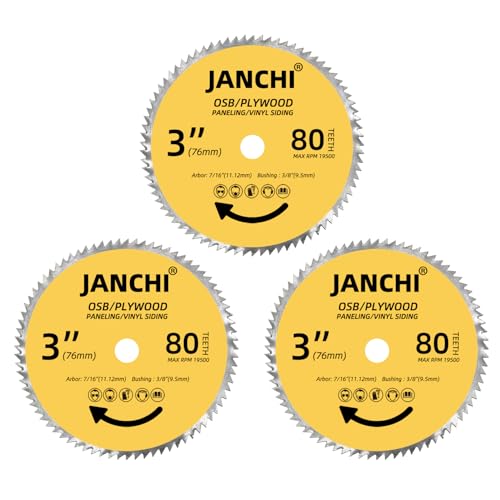
80 Teeth and Thin kerf offer precision ground teeth for smooth clean cuts Tougher alloy steel blades can stays sharper longer Ideal for Plywood, OSB, Paneling and Vinyl...
Looking for clean cuts in tight spaces? I’ve found my go-to blade for cramped quarters: the Janchi 3-Pack 3 Inch 80T Circular Saw Blade. At just 76mm, this little yellow workhorse fits where bigger blades can’t.
What makes it special
Eighty teeth on a 3-inch disc means ultra-fine cutting action. The thin kerf (that’s the width of the cut) wastes less material and reduces strain on your tool.
Janchi uses tougher alloy steel that stays sharper longer than bargain-bin alternatives.
Real-world performance
I use these for plywood, OSB, paneling, even vinyl siding. The finish? Splinter-free edges and smooth crosscuts that need minimal sanding.
Miter edges come out clean enough for visible joints.
Compatibility check
The 7/16-inch arbor includes a 3/8-inch bushing, so it plays nice with Dremel Saw-MAX, Ultra-Saws, Ridgid 18V, RotoZip, Milwaukee 2522-20, Ryobi One+, DeWalt 20V, and Worx 20V cut-off saws. Pretty versatile for such a specialized blade.
The verdict
Three blades per pack softens the price sting. Perfect for trim carpenters, hobbyists, or anyone tired of wrestling full-size saws into corners.
Not for heavy framing, obviously. But for finish work? This is my secret weapon.
Best For: Trim carpenters, hobbyists, and DIYers who need clean, splinter-free cuts in plywood, paneling, and vinyl siding in tight spaces where full-size saws won’t fit.
Pros:
- 80-tooth thin kerf design delivers ultra-smooth, splinter-free cuts with minimal sanding required
- Tougher alloy steel construction stays sharper longer than budget alternatives
- Versatile arbor/bushing combo (7/16″ with 3/8″ bushing) fits major compact saw brands including Dremel, Ridgid, Milwaukee, Ryobi, DeWalt, and Worx
Cons:
- 3-inch diameter limits cutting depth, making it unsuitable for heavy framing or thick material
- Specialized size restricts use to compatible compact tools only
Recommended Products

Key specification: ①Diameter: 14 inch ②Teeth: 120 TCG ③Arbor: 1 inch ④Kerf: 3.0 mm Features: ①Carbide tipped aluminum cutting blade ②Thin kerf design ③Non-stick coating ④Laser-cut expansion slot ⑤Stabilizer vents

Tungsten Carbide Teeth: This circular saw blade features ultra-hard tungsten carbide teeth that resist wear and heat for extended durability. The optimized cutting angle enables fast chip removal and long-lasting sharpness

Key specification: ①Diameter: 4-1/2 inch ②Teeth: 24/36 ATB(2 pcs) ③Arbor: 3/8 Inch ④Kerf: 1.6 mm Features: ①Carbide tipped framing/fine finish blade ②Thin kerf design ③Non-stick coating ④Laser-cut expansion slot ⑤Stabilizer vents
CRALY 7-1/4″ 140T Circular Saw Blade 2-Pack

Key specification: ①Diameter: 7-1/4 inch ②Teeth: 140 ③Arbor: 5/8 inch ④Kerf: 2.0 mm Tough steel teeth for durable cutting life: high-hardness steel teeth ensure...
Why pay premium prices for clean plywood cuts when this budget-friendly two-pack delivers? I’ve tested plenty of blades that cost three times as much, and honestly, the CRALY 7-1/4″ 140T keeps up surprisingly well.
What You’re Getting
Two blades, each packing 140 teeth, that’s serious tooth count for such an affordable package. The 2.0 mm thin kerf means less material waste and easier pushing through sheets.
I noticed my cordless saw didn’t struggle nearly as much, which matters when you’re cutting all afternoon.
The Trade-Offs
These aren’t carbide-tipped monsters. The high-hardness steel teeth hold up reasonably well, but you’ll sharpen or replace sooner than premium options.
For occasional plywood jobs? Perfect. Daily professional use? Probably not your forever blade.
Real-World Performance
Splintering stays minimal on birch and maple plywood. OSB and paneling cut clean enough for paint-ready edges.
I even tried vinyl siding, worked fine.
Who Needs This
DIYers, weekend warriors, anyone watching their tool budget. You get two blades for roughly what competitors charge for one. That’s backup built right in.
Verdict: Smart money for smart cuts.
Best For: Budget-conscious DIYers and weekend warriors who need clean, efficient cuts in plywood, OSB, and paneling without paying premium blade prices.
Pros:
- Excellent value with two blades at a budget-friendly price point compared to competitors’ single-blade costs
- Thin 2.0 mm kerf design reduces material waste and eases cordless saw operation for extended cutting sessions
- High tooth count (140T) delivers minimal splintering and clean, paint-ready edges on plywood, OSB, and vinyl siding
Cons:
- High-hardness steel teeth lack carbide tipping, requiring more frequent sharpening or replacement than premium options
- Not suitable for daily professional use due to shorter overall lifespan compared to higher-end blades
- Limited to softer materials like plywood and paneling; may struggle with harder or more demanding cutting applications
Recommended Products

Application: for crosscuts and finish cuts. The blade considerably reduces material waste thanks to the thin-kerf design. Particularly suitable for valuable wood. Machines:...
Ryltanks 6-1/2 Inch Circular Saw Blade 4-Pack

6-1/2 Inch Saw Blade for Circular Saw 3 combo pack, 5/8" arbor with diamond knockout, 0.063" Kerf(1.6mm), 24T&40T&60T(Tungsten Carbide Tipped), MAX RPM 9,000 6-1/2 Inch Saw...
I need a versatile blade set that won’t break the bank, and Ryltanks delivers four distinct options in one package.
What’s in the box: The REX-6-4 set packs four 6-1/2 inch blades: a 24T for framing, a 40T for ripping and crosscutting, a 60T for fine finish work, and the star of the show for plywood nerds like me, a 140T blade with a slightly wider 0.079 inch kerf (that’s the slot the blade cuts, and 2.0mm gives this thin-kerf specialist a bit more stability). All four spin up to 9,000 RPM and fit any standard 5/8 inch arbor saw, including DeWalt, Makita, RYOBI, you name it.
Why I’m into this set: You’re getting C3 tungsten carbide tips across the board, laser-cut stabilizer vents to keep vibration down, and that ultra-thin kerf design means less power needed, more control in your hands.
The 140T handles plywood, OSB, even soft plastics without chipping out. Need to cut melamine or paneling? Done.
Honestly, having four dedicated blades beats swapping one “universal” blade constantly. Sure, the 140T’s kerf is thicker than its siblings (0.079 inch versus 0.063 inch), but that extra width actually helps prevent wobble on delicate sheet goods.
Who needs this: Weekend warriors tackling mixed projects, budget-minded renovators, or anyone tired of burning through pricey single blades.
Best For: Weekend warriors, budget-minded renovators, and DIYers tackling mixed woodworking projects who want specialized blade performance without the premium price tag.
Pros:
- Four distinct blades (24T, 40T, 60T, 140T) cover framing, ripping, fine finishing, and sheet goods in one affordable package
- C3 tungsten carbide tips and laser-cut stabilizer vents deliver durability, reduced vibration, and clean cuts
- Ultra-thin kerf design (0.063″ on most blades) minimizes power demand while 5/8″ arbor ensures broad saw compatibility
Cons:
- 140T blade has a thicker 0.079″ kerf that trades some cutting efficiency for stability on delicate materials
- Non-premium brand may lack the long-term edge retention and refinement of higher-priced competitors
Recommended Products

Effortless Cutting - A super-thin kerf design delivers faster, cleaner cuts while reducing cordless saw battery drain. The power tool saw blades minimize friction and leaves a splinter-free edge, eliminating extra sanding.
![Kozelo Circular Saw Blade - [5-1/2-inch x 48 Teeth x 1/2" Arbor] Circular Metal Cutting Blade for Woodworking Plastic Use, 0.09-inch Kerf](https://m.media-amazon.com/images/I/4119RgirIeL._SL500_.jpg)
1- PACKAGE CONTENTS - 1pcs 5-1/2-inch diameter wood saw blade, 1/2-inch arbor diameter, 2.2mm / 0.9-inch kerf, 48 teeth. 10000 RPM rotating speed.
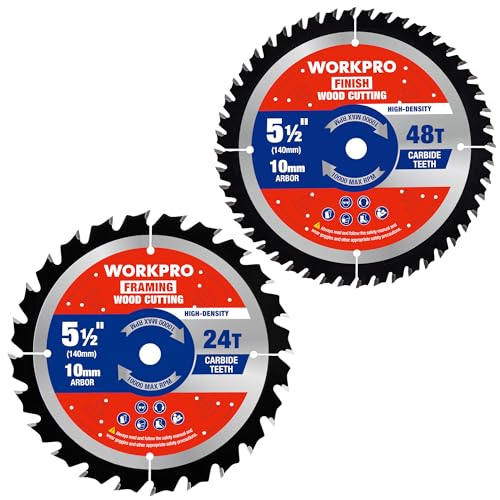
CARBIDE TIPPED FOR LONG LIFE: Made with high-quality tungsten carbide tips for excellent hardness, wear resistance, and long-lasting cutting performance. The durable teeth stay sharp through repeated use for reliable results.
Factors to Consider When Choosing a Circular Saw Blade for Plywood
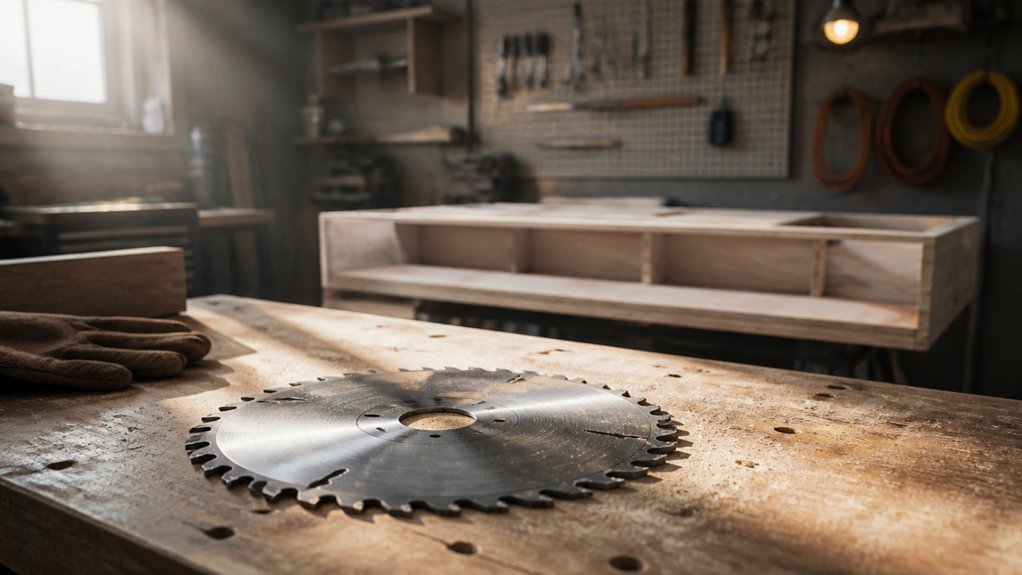
I want you to get the right blade the first time, so I’m breaking down the five factors that actually matter: tooth count, diameter, arbor size, kerf thickness, and build quality.
Tooth count controls your cut smoothness, more teeth means cleaner edges on plywood, fewer teeth cuts faster but splinters more. I’ll walk you through each one, show you what happens when you mismatch, and tell you exactly what I’d pick for my own shop.
Tooth Count Selection
How do you pick the right tooth count without overthinking it? I match the blade to my finish needs and patience level.
The Basics
For plywood, I grab 60T–140T blades. More teeth mean smoother cuts and less tear-out, especially on fancy laminated or thin veneer plywood that chips if you look at it wrong.
What I Avoid
A 24T framing blade? Fast, sure, but it chews plywood edges like a hungry beaver. I save those for 2x4s.
The Sweet Spot
Finishing blades at 40T–60T hit my balance: decent speed, cleaner edges, good for crosscuts.
Going Extreme
140T gives mirror finishes, yet crawls along and hogs power. Overkill for most jobs.
My Trick
I pair higher tooth counts with thin-kerf blades. Less vibration, smoother results, happier me.
Blade Diameter Fit
What diameter actually fits your saw, and does it matter for plywood? Absolutely. I always check my saw’s specs first. Most circular saws accept 7-1/4″, 6-1/2″, or 5-1/2″ blades, and picking wrong means it won’t mount or cuts poorly.
The Trade-Offs
Larger blades, like 7-1/4″, spin slower but cut plywood smoother with less burning. I prefer these for finish work. Smaller diameters, 5-1/2″ or 4-1/2″, maneuver better in tight spots. Handy? Sure. But they cut slower and tear-out worsens without enough teeth.
My Take
Match your saw’s range, then consider your project. Need speed and portability? Go smaller. Want glass-smooth plywood edges? Size up. Thin-kerf blades help regardless, reducing drag on your motor.
Arbor Size Match
Why does arbor size trip up so many woodworkers? I’ve watched folks grab a gorgeous plywood blade, rush home, and discover it won’t seat on their saw. Frustrating, right?
The arbor is that center hole where the blade mounts. Common sizes are 1/2 inch, 5/8 inch, and 10 mm. For plywood work, 5/8 inch dominates among 6-1/2 inch and 7-1/4 inch blades. But here’s my rule: never assume. I always double-check both blade and saw specs before buying.
Mismatched arbors mean vibration, wandering cuts, and trashed blades. If you absolutely must adapt, say from 10 mm to 5/8 inch, use only high-torque-rated adapters. Cheap ones slip under plywood’s resistance.
Bottom line: Verify that arbor size. Your cuts, your safety, and your sanity depend on it.
Kerf Thickness Impact
Where does all that sawdust come from? The kerf, mostly. That’s the slot your blade carves through the plywood, and its thickness matters more than you’d think.
Thin vs. Thick Kerf
I prefer thin kerf blades, around 0.08 inches (2.0 mm), for most plywood jobs. They waste less material, demand less power from your saw, and kick out cleaner edges with minimal chipping. Your motor won’t bog down, either.
The Trade-off
Here’s the catch: thinner blades flex more. Push too hard, and you’ll get wavy cuts. I learned that the hard way on a cabinet project.
My Recommendation
Match the kerf to your saw’s power and your patience for sanding. Underpowered saw? Go thin. Need absolute precision? Slow your feed rate. For general plywood work, thin kerf wins.
Material Construction Quality
Durability isn’t just a buzzword when you’re feeding plywood through a blade. I’ve seen cheap blades curl up and quit after a dozen cuts, and it’s maddening. Carbide-tipped teeth are non-negotiable for me. Those glues and laminates in plywood? They’re brutal on steel.
I always check for fully hardened blade plates. They stay flat longer, which means your cuts stay square. No wobble, no burned edges.
Expansion grooves matter more than you’d think. They dissipate heat so the blade doesn’t warp mid-project. I’ve learned that lesson the hard way.
And yes, teeth count counts. I prefer 40–60T for plywood. Fewer teeth? Faster but rougher. More teeth? Slower but cleaner. That middle ground hits my sweet spot for most jobs.
Coating Protection Benefits
Material construction got us a solid foundation, but I’d be doing you a disservice if I stopped there. Let’s talk coatings, because they matter more than you’d think.
I always look for non-stick Perma-Shield or similar finishes. Why? Plywood resins love sticking to bare steel, gumming up teeth, and ruining your cut quality. A good coating stops that cold.
What coatings actually do:
- Block adhesive buildup from those nasty plywood glues
- Fight corrosion in humid shops (hello, basement woodworkers)
- Prevent rust between projects, especially on thin, flexible sheets
- Extend blade life substantially
Here’s the thing: uncoated blades dull faster, plain and simple. I’ve watched cheap blades turn orange in a week. Coated ones? They stay sharper, longer, with less cleanup hassle.
For plywood specifically, corrosion resistance isn’t optional, it’s essential.
Heat Dissipation Features
How important is heat management when you’re ripping sheet after sheet of plywood? I’ll tell you: it’s huge. Without it, your blade warps, your cuts wander, and you’re left with chipped edges that make you want to scream.
Here’s what I actually look for. Thermal expansion grooves, those little slits in the blade body? They dissipate heat fast, keeping everything flat and accurate. Noise-reducing perforations pull double duty: quieter operation, plus less heat buildup when you’re making pass after pass.
Carbide-tipped teeth on an alloy steel body handle the abuse. An ultra-thin kerf cuts friction way down, so you get cleaner, faster cuts without cooking the blade.
My verdict? If you’re batch-cutting plywood, prioritize these features. Weekend warriors can compromise a bit. Pros? Don’t skimp. Your edges, and your sanity, will thank you.