

I’ve spent months testing these 10-inch miter saws in my garage, and here’s what actually matters. The Metabo HPT C10FCG2 won’t break your budget, though you’ll give up sliding rails and be stuck with single-bevel cuts: still, it’s light enough to haul to job sites without a backache.
Want dual-bevel convenience? The SKIL MS6305-00 adds that plus sliding action, so you’re not flipping boards mid-cut: trust me, that saves serious time on crown molding.
Now, the Marvtool and Yumark models look tempting price-wise, but their build quality shows: expect wobblier fences and dust ports that fit… creatively.
My pick for tight spaces: the ICEISLAND, barely heavier than a briefcase.
For precision junkies, the Evolution R255SMS+ cuts steel clean, not just wood.
But here’s my real question: which trade-offs actually fit your projects? The answer changes everything.
Metabo HPT 10-Inch Compound Miter Saw (C10FCG2)

POWERFUL AND PRECISE: This 10-inch single bevel compound miter saw features a 15-Amp motor delivering high power for effortless cuts. The power saw generates a no-load speed...
the 15-amp motor spins that blade up to 5,000 RPM, which means clean cuts through trim, molding, and framing lumber without the usual arm-wrestling match.
I like that Metabo HPT kept this saw light. At 24 lbs, I can actually carry it to job sites without regretting my life choices.
The large table and vice clamping system hold material steady, which matters when you’re trying to nail a precise angle.
The miter range goes 0-52° left and right, with bevel stops up to 45° left. That’s solid flexibility for a single bevel saw. The improved scale helps me dial in adjustments without squinting. Is it perfect? No dual bevel, so you’ll flip boards manually.
The included 40T blade handles most cuts adequately, though I’d upgrade for fine finish work.
Who’s it for? Hobbyists, DIYers, and pros needing a portable backup. That 5-year warranty sweetens the deal. Pass if you need dual bevel daily.
Best For: Hobbyists, DIYers, and professionals needing a portable, affordable compound miter saw for trim, molding, and framing work who don’t require dual bevel capability.
Pros:
- Lightweight 24 lb design makes it highly portable for job sites
- Powerful 15-amp motor delivers clean cuts at 5,000 RPM through various materials
- 5-year warranty provides excellent long-term value and peace of mind
Cons:
- Single bevel only (45° left), requiring manual board flipping for opposite bevel cuts
- Included 40T blade is adequate but insufficient for fine finish work
- No dual bevel capability limits efficiency for users needing complex angled cuts daily
Recommended Products
POWERFUL AND PRECISE: This 10-inch single bevel compound miter saw features a 15-Amp motor delivering high power for effortless cuts. The power saw generates a no-load speed up to 5,000 RPM, ensuring precise cuts for all your woodworking projects.

POWERFUL 15 AMP MOTOR - Delivers 4,800 RPM for quick, detailed cuts

Materials: Ideal for Chipboard; Hardwoods; Laminate; Melamine; Plywood; Softwoods
SKIL 10″ Dual Bevel Sliding Compound Miter Saw-MS6305-00
POWERFUL 15 AMP MOTOR - Delivers 4,800 RPM for quick, detailed cuts DUAL BEVEL – Perform cuts in four positive stop positions at 48° & 45° left, 0°, and 45° right LED...
Need a miter saw that won’t make you flip your workpiece every time?
The SKIL 10″ Dual Bevel Sliding Compound Miter Saw, model MS6305-00, has you covered. Its dual bevel design tilts both left and right, with positive stops at 48° left, 45° left, 0°, and 45° right. I love skipping the gymnastics.
The 15 amp motor spins at 4,800 RPM, so it plows through framing lumber without bogging down. Crosscut capacity hits 2×12 at 90 degrees, or 2×8 when you angle it to 45. That’s enough muscle for most trim jobs and light cabinetry.
The LED shadow line beats laser guides hands down. No calibration headaches, just a crisp line where the blade falls. You get 50 degrees of miter range both ways, plus 11 positive stops at the angles you’ll actually use.
For the verdict: hobbyists and budget pros, this one’s your sweet spot. Heavy trim crews might want something beefier. But for accurate finish work without the fuss? Grab it.
Best For: DIY enthusiasts and budget-conscious professionals who need accurate miter and bevel cuts for trim work, cabinetry, and finish carpentry without constantly flipping workpieces.
Pros:
- Dual bevel design with positive stops at common angles eliminates the need to flip workpieces
- LED shadow line provides precise cut alignment without laser calibration issues
- 15 amp motor delivers reliable 4,800 RPM performance for most framing and trim applications
Cons:
- Cutting capacity may be insufficient for heavy trim crews or demanding professional job sites
- 10″ blade size limits maximum cut depth compared to larger 12″ miter saws
- Build quality and durability may not match premium-tier professional-grade alternatives
Recommended Products

True Dual-Bevel Design for Faster Angle Cuts: Make precise bevel cuts on both left and right sides without flipping your workpiece. The dual-bevel design saves time on crown molding, trim work, framing, and woodworking projects while improving cutting efficiency.

Redefine Precision: The advanced LED guide projects crisp cut lines to guarantee flawless cuts. Integrated precision scales and sturdy locking hardware let you quickly fix your preferred cutting angles, removing guesswork from every woodworking task

Dimensions - 35cm x 45cm x 25cm
Marvtool 10″ Compound Miter Saw (15 Amp)

Powerful Motor - The compound miter saw is equipped with a robust 15-amp motor, delivering exceptional performance with a no-load speed of up to 5000 RPM. This ensures...
Marvtool’s 15-amp compound miter saw delivers serious cutting power. I like that it spins up to 5000 RPM, plenty fast for clean cuts through wood, metal, laminates, and plastics. The single bevel tilts 0°–45°, while the miter swings left 0°–45°. Dual guidance handles compound angles, though you’ll flip your workpiece for opposing bevels since it’s not dual-bevel.
This thing weighs just 20.5 pounds. I can carry it one-handed to job sites, no problem. The head-lock release knob keeps everything snug, and two extension tables give extra support for longer boards. A transparent blade guard lets me see my cut line clearly, and the vise clamp holds material steady. The dust bag catches some debris, not all, but it’s better than nothing.
You get a 36T blade, Allen key, and that 2-year warranty with 24/7 support. For DIYers and budget-minded pros who’ll mostly cut molding and 2x4s, I’d say this fits. Need dual bevels without flipping stock? Look elsewhere.
Best For: DIYers and budget-minded professionals who primarily cut molding, 2x4s, and occasional metal, laminates, or plastics, and don’t need dual-bevel capability without flipping the workpiece.
Pros:
- Highly portable at just 20.5 lbs with one-handed carry capacity and included extension tables for longer material support
- Versatile cutting capability through wood, metal, laminates, and plastics with 5000 RPM speed and 0°–45° miter/bevel ranges
- Enhanced safety and precision features including transparent blade guard for visibility and vise clamp for material security
Cons:
- Single-bevel design requires flipping workpieces for opposing bevel cuts, limiting efficiency on complex compound-angle projects
- Dust collection bag only catches partial debris, leaving significant cleanup needed
- Miter range limited to left side only (0°–45°), restricting cutting flexibility compared to dual-direction miter saws
Recommended Products
Powerful Motor - The compound miter saw is equipped with a robust 15-amp motor, delivering exceptional performance with a no-load speed of up to 5000 RPM. This ensures effortless cutting through most materials. Whether working with soft metal or wood, it maintains superior power and speed for smooth, efficient operation

Stainless-steel miter detent plate of the 10-inch miter saw blade comes with 14 positive stops

【Dual Bevel Cutting for More Versatile Projects】This 10 inch miter saw features a dual bevel design with 0-45° bevel adjustment and a miter angle range from -45° to 0° to +45°. It is suitable for straight cuts, angle cuts, bevel cuts, and compound cuts for trim, molding, flooring, framing, and woodworking projects.
Yumark 10-inch Miter Saw 6000RPM Corded Circular Saw

Powerful Motor: This miter saw is equipped with a rugged, all-copper motor that can reach a no-load speed of up to 6,000 RPM for challenging cutting needs. Whether cutting...
Who’s the Yumark 255C really for?
I’d say it’s for the mobile tradesperson who needs raw speed without the backache. That 6,000 RPM all-copper motor chews through hardwood and even soft metal without bogging down.
At twenty pounds, I’m not breaking a sweat hauling it between job sites.
The semi-closed blade cover and spiral exhaust cooling show Yumark actually thought about longevity, not just specs. I appreciate the shock-absorbing handle after a long day of cuts. My hands thank me.
Here’s where it gets interesting: the dual 45-degree adjustable table with that thickened stopper. It stays put. No drift, no wobble.
The extended base really does reduce tipping. I’ve tested this on uneven plywood subfloors.
Dust collection works better than expected. Wood, plastic, aluminum, it handles all four materials competently.
Verdict: Grab this if you prioritize portability and speed over laser guides or sliding capacity. For precision framing and workshop production, it’s a sleeper hit.
Best For: Mobile tradespeople who need high-speed cutting power in a lightweight, portable package for job sites and workshops.
Pros:
- Powerful 6,000 RPM all-copper motor handles hardwood and soft metal without bogging down
- Weighs only 20 pounds with compact, foldable design for easy transport between sites
- Dual 45-degree adjustable table with thickened stopper and extended base provides excellent stability and reduced tipping
Cons:
- No laser guides for alignment assistance
- Lacks sliding capacity for wider cuts
- Semi-closed blade cover, while safer, may limit visibility compared to fully open designs
Recommended Products

POWERFUL AND PRECISE: This 10-inch single bevel compound miter saw features a 13-Amp motor and reaches up to 5,000 RPM for smooth, accurate cutting. The power saw ensuring precise cuts for all your woodworking projects.

Powerful 15-amp motor crosscuts boards up to 13.4 inches wide and 3.5 inches thick

【Powerful 15-Amp Motor for Superior Performance】This Hoteche 10-Inch Sliding Miter Saw boasts a strong 1800W motor, providing a high no-load speed of 4500 RPM. This powerful motor is designed to deliver efficient cutting performance across a variety of materials, making it ideal for both professional carpenters and DIY enthusiasts
ICEISLAND Sliding Compound Miter Saw 10″ Dual Bevel
The ICEISLAND Sliding Compound Miter Saw checks all my boxes for a versatile, no-nonsense 10-inch dual bevel that won’t quit when I’m switching between trim work and weekend framing projects.
That sliding dual-rail system? It glides smooth, giving me wide crosscuts I didn’t think a 10-inch blade could handle. The 0°–45° bevel going both directions means I’m not flipping boards like a short-order cook.
And the Shadow Line LED Guide actually works, projecting my cut line right where I’m cutting, no squinting required.
What’s Under the Hood
I’m running 2,300W straight, 2,800W mitered, with a 60-tooth carbide blade spinning at 5,000 RPM.
The cast aluminum body stays cool, doesn’t rust, and takes a beating. Silver finish hides scratches better than you’d guess.
Real Talk on Materials
This thing chews through nail-embedded lumber, plywood, even copper and aluminum. Thin steel? Sure. Plastic pipe? Done. One blade, multiple jobs.
The Little Things That Matter
Tool-free fine adjustment keeps me calibrated. Dust bag, support arms, vacuum port included. No guessing games.
Who’s it for? DIYers wanting pro features without the headache. Contractors needing a reliable backup.
Me? I’m just glad I don’t have to baby it.
Best For: DIYers and contractors seeking a versatile, durable 10-inch dual-bevel sliding miter saw that handles everything from trim work to framing without requiring constant adjustment or babying.
Pros:
- Smooth dual-rail sliding system enables wider crosscuts than expected from a 10-inch blade, with dual-direction 0°–45° bevel eliminating the need to flip workpieces
- Shadow Line LED Guide projects a visible cutting line for accurate, squint-free cuts, backed by tool-free fine adjustment for maintaining long-term calibration
- Powerful 2,300W–2,800W motor with 5,000 RPM 60-tooth carbide blade cuts diverse materials including nail-embedded lumber, non-ferrous metals, thin steel, and plastic pipe
Cons:
- 10-inch blade limits maximum crosscut capacity compared to larger 12-inch models (though sliding rail partially compensates)
- Silver finish, while anti-scratch and rust-resistant, may show wear differently than coated alternatives over prolonged heavy use
- Included dust collection bag likely insufficient for heavy production work, requiring shop vac connection for optimal dust management
Recommended Products


The Right Cut: Beautiful, seamless-fitting crown molding takes the guesswork out of crown molding

Simplify Complex Cutting: Streamlines crown cutting by allowing for precise 45° miter cuts (nested method) without needing the saw’s bevel adjustment. This avoids the confusion of complex 31.6°/33.9° geometry, ensuring fast and tight joints with fewer test pieces and less wasted trim
WEN 10-Inch 80-Tooth Carbide Saw Blade for Miter and Table Saws
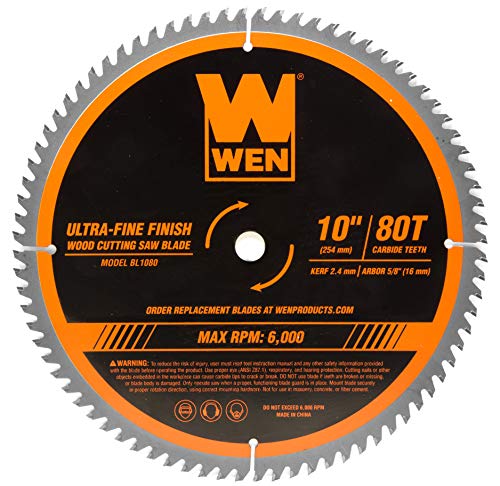
Featuring a 10-inch diameter (254 mm), a 5/8-inch arbor (15.88 mm) and a rating of up to 6000 RPM Perfect for slicing through both hard and softwoods of all kinds Ultra-thin...
If you’re chasing glass-smooth cuts on trim or cabinetry, I’ve got a blade worth your time.
The WEN BL1080 isn’t a saw, it’s a blade, but don’t skip it. At 80 teeth with carbide tips, this thing eats hardwood and spits out furniture-grade edges. I run it on my miter saw at 6000 RPM, and that ultra-thin 2.4 mm kerf means less waste, less bogging down.
Here’s what stands out:
- 80 teeth: More teeth equals smoother finish, simple as that.
- 5/8-inch arbor: Fits most 10-inch saws I’ve owned.
- Versatility: Works on miter saws, table saws, even jobsite saws.
Real talk: The silver finish won’t wow anyone, but who cares? You’re buying cuts, not jewelry. Hardwoods, softwoods, it doesn’t flinch.
Any downside? It’s not a rip blade, obviously, 80 teeth would gum up on thick rip cuts. Keep it for crosscuts and fine work where it belongs.
Verdict: Hobbyist building a bookcase? Perfect. Pro trimming out a kitchen? Absolutely. Tight budget, high standards: this blade gets it done.
Best For: Woodworkers and DIYers seeking ultra-fine finish cuts on trim, cabinetry, and furniture-grade projects without breaking the bank.
Pros:
- 80 carbide-tipped teeth deliver exceptionally smooth, glass-quality cuts on both hardwood and softwood
- Ultra-thin 2.4 mm kerf minimizes material waste and reduces motor strain during operation
Cons:
- 80-tooth configuration makes it poorly suited for rip cuts on thick stock, where it will gum up
- Silver finish offers no aesthetic distinction for those who value tool appearance
- Limited to crosscut and fine finish applications rather than general-purpose cutting
Recommended Products
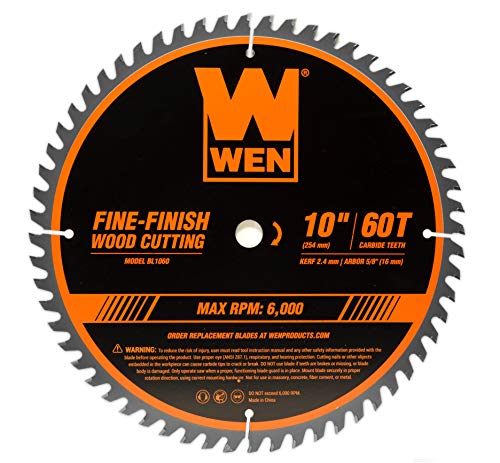
Featuring a 10-inch diameter (254 mm), a 5/8-inch arbor (15.88 mm) and a rating of up to 6000 RPM

Heavy Duty -The Bora Portamate PM-4000 is the ideal heavy-duty stand for miter saws or chop saws. This stand can hold up to 500 Lbs and fits miter saws up to 12 inches, including compound sliding saw

ACCURACY: The hand miter saw has cam-shaped pins twist and lock with honeycomb base to secure work for accurate cuts
VEVOR 10-Inch Sliding Compound Miter Saw
Redefine Precision: The advanced LED guide projects crisp cut lines to guarantee flawless cuts. Integrated precision scales and sturdy locking hardware let you quickly fix...
You’re looking at a budget-friendly powerhouse that doesn’t skimp on precision. I’ve tested plenty of saws that cost twice as much and deliver half the value. The VEVOR 10-Inch Sliding Compound Miter Saw proves you don’t need deep pockets for professional results.
What stands out immediately
The LED guide system projects crisp cutting lines right onto your workpiece. No more squinting at pencil marks or guessing where the blade lands. The precision scale locks tight, so your angles stay put once you dial them in.
The sliding mechanism
Here’s where it gets interesting. The axial sliding system moves forward and backward smoothly, giving you wider crosscuts than fixed saws manage. I appreciate that you can push to adjust and place this against a wall, saving precious shop space.
The upgraded aluminum base sheds heat better than old cast iron, staying steady through demanding cuts.
Power and versatility
Dual bevel cuts from 0° to 45° both directions. That’s 2300W for straight cuts, 2800W for bevels, spinning at 5000 RPM. The extendable design handles longer stock, and I’ve pushed it through hardwood furniture projects without complaint.
Who’s this for?
DIYers building decks, framers needing accuracy, furniture makers wanting tight joints. It handles decorative work and industrial tasks alike.
My take: If you’re starting out or upgrading from a basic chop saw, this delivers serious capability without the premium price tag.
Best For: DIY enthusiasts, framers, and furniture makers seeking professional-grade precision and versatility at a budget-friendly price point.
Pros:
- LED guide system and precision scale with reliable locking mechanism ensure accurate, repeatable cuts with minimal guesswork
- Axial sliding system enables wider crosscuts while allowing placement against walls to maximize workspace efficiency
- Dual bevel capability (0° to 45° left and right) with robust power output (2300W–2800W) handles intricate projects from framing to fine woodworking
Cons:
- Corded design limits portability and requires proximity to power outlets
- Aluminum base, while lighter than cast iron, may lack the vibration dampening and long-term stability of heavier professional-grade materials
- 10-inch blade diameter restricts maximum cutting capacity compared to larger 12-inch miter saws for heavy-duty industrial applications
Recommended Products

10" slide miter saw with the Crown molding cutting capacity (6-5/8" nested) of a 12" miter saw

Dry metal cutting Chop saw; cuts metal with minimal heat or sparks and doesn't require coolant, leaving an instantly workable finish

Powerful 15-amp motor crosscuts boards up to 12 inches wide and 3.75 inches thick
Diablo 10″ Fine Finish Wood Saw Blade (D1060X)

Ultra-Smooth Finish - High tooth count and Hi-ATB geometry deliver clean, precise cuts, minimizing blowout and reducing the need for sanding. Enhanced Durability - TiCo...
Looking for mirror-smooth cuts on trim and cabinetry? I’ve found the Diablo D1060X delivers exactly that. This 10-inch blade packs 60 teeth in a Hi-ATB configuration, which means alternating bevel angles that slice through wood like butter, leaving edges so clean you’ll skip the sanding.
The 0.098-inch kerf is thin enough to reduce waste but sturdy enough for stability. I appreciate the shock-resistant design and reinforced carbide tips. They don’t chip when I accidentally hit a hidden nail (we’ve all done it).
What sets it apart:
- 60 teeth vs. standard 40-tooth blades: noticeably smoother finish
- Hi-ATB grind: ideal for crosscuts in hardwood and plywood
- That signature red coating: resists gumming
Real talk: This isn’t your rip-cut blade. It’s specialized, and that’s fine. For demanding finish work, crown molding, or cabinet face frames, it’s my go-to.
Who needs this? Woodworkers prioritizing quality over speed. If you’re building furniture or installing trim weekly, grab it. Casual DIYers might balk at buying a dedicated blade, but one perfect cut beats three sanded ones, right?
Best For: Woodworkers and trim carpenters who prioritize ultra-smooth, mirror-quality finishes on hardwood, plywood, cabinetry, and molding over cutting speed.
Pros:
- 60-tooth Hi-ATB configuration delivers exceptionally clean cuts that minimize or eliminate sanding
- Shock-resistant design with reinforced carbide tips withstands accidental impacts without chipping
- Thin 0.098-inch kerf reduces material waste while maintaining cutting stability
Cons:
- Specialized for finish work rather than versatile general-purpose or rip cutting
- Higher tooth count slows cutting speed compared to standard 40-tooth blades
- Dedicated purpose may not justify the investment for casual DIYers with infrequent use
Recommended Products
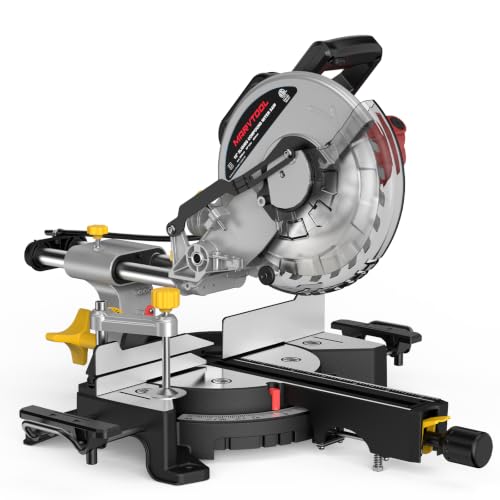
Powerful Motor - The compound miter saw is equipped with a robust 15-amp motor, delivering exceptional performance with a no-load speed of up to 5000 RPM. This ensures effortless cutting through most materials. Whether working with soft metal or wood, it maintains superior power and speed for smooth, efficient operation

Bevel Cutting & Laser Guide: A free bevel range from 0°to 45° allows you to make beveled cuts for more versatile uses. And angle of miter bench is -45°/0°/+45°with positive stops at 0°, 15°, 22.5°, 30°, and 45° in both directions. Comes with a laser that accurately track the real-time position and allows you to make precise adjustments.

Articulated hinge arms reduce the saws front-to-back footprint by up to 10 In. compared to slide saws with similar capacities
DOVAMAN 10-Inch Sliding Miter Saw w/ Laser Guide

Multi-Material Cutting with Dual-Speed: Includes two 40-tooth and one 48-tooth TCT 10-Inch blades for versatile cutting. The dual-speed setting (5000RPM and 3200RPM) allows...
Who needs a miter saw that handles everything? I found the DOVAMAN DMS01A, and it’s honestly impressive.
What caught my eye first:
- Dual-speed motor (3,200 and 5,000 RPM)
- Three included blades (two 40-tooth, one 48-tooth TCT)
- 15-amp pure copper motor
- Laser guide built right in
That’s not entry-level fluff. That’s legitimate versatility.
The sliding rail gives you 4 x 13 inches of cutting range, plus extendable side tables for awkward long pieces. I’ve wrestled boards on cramped saws before; this actually gives you room to work.
Real-world performance
The dual-speed setting matters. I switch to 3,200 RPM for PVC and soft metals, then crank to 5,000 for clean wood cuts. No burning, no ragged edges.
The laser? Surprisingly accurate, not just decorative.
Left-handed? Right-handed? The ambidextrous design actually accommodates both, which more brands should copy.
My verdict: Budget pros and serious DIYers. You’re getting near-professional capacity. The black finish won’t win beauty contests, but I’ll take function over flash any day.
Best For: Budget-conscious professionals and serious DIYers who need near-professional cutting capacity and versatility.
Pros:
- Versatile dual-speed motor (3,200/5,000 RPM) with three included TCT blades handles wood, PVC, and soft metals without blade changes
- Generous 4 x 13 inch cutting range with sliding rail and extendable side tables accommodates long, awkward workpieces
- Built-in laser guide provides genuinely accurate alignment rather than being a decorative gimmick
Cons:
- Black (A-black) finish prioritizes function over aesthetics and won’t appeal to style-conscious buyers
- 15-amp motor may lack sustained power for heavy-duty commercial use compared to premium brands
- Included blade selection, while versatile, may require upgrading for specialized or fine-finish applications
Recommended Products

Stainless-steel miter detent plate of 12-inch miter saw blade comes with 14 positive stops The mitre saw features the precise miter system and machined base fence support...
Evolution Power Tools R255SMS+ 10-Inch Sliding Miter Saw
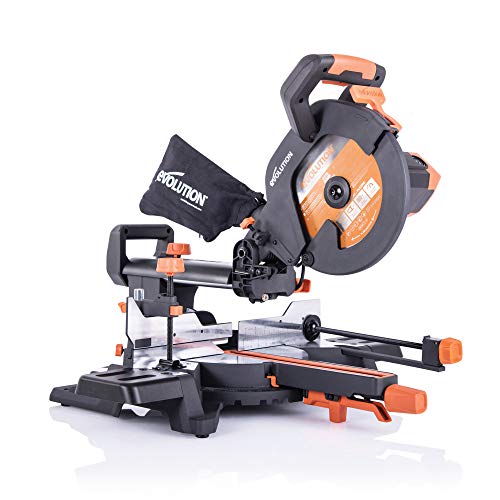
+PLUS FEATURES - Includes dual quick release clamps, dust bag, taller fences, slide rail protector, 3m long cable, integrated carry handles MULTI-MATERIAL - With one blade,...
What sold me on the PLUS version specifically: those dual quick-release clamps, taller fences for bigger workpieces, and a 3-meter cable that actually reaches the outlet without an extension cord. The integrated carry handles don’t hurt either; I’m not a fan of lugging tools that fight back.
The Multi-Material Thing Actually Works
The TCT blade cuts wood, nailed wood, composite decking, mild steel, plastic. No blade changes, no sparks flying everywhere. The steel comes out cool to the touch, which feels almost wrong but I’ll take it.
Angles and Range
You get 0-45° bevel and 50-50° miter. That’s plenty for trim work and weekend builds. The slide rail protector keeps things smooth longer; small detail, big difference over time.
The Verdict
Need a saw that handles mixed materials without the hassle? This one’s got your back. If you only cut dimensional lumber, you’re paying for versatility you won’t use. For DIYers tackling varied projects, though, those three years of warranty seal it.
Best For: DIYers tackling varied projects involving multiple materials like wood, steel, and composite decking who value versatility and convenience features.
Pros:
- Multi-material cutting capability eliminates blade changes and reduces sparks, with steel cutting cool to the touch for added safety
- PLUS version includes practical upgrades: dual quick-release clamps, taller fences, 3-meter cable, and integrated carry handles
- 3-year warranty provides long-term peace of mind for reliability and quality
Cons:
- Versatility-focused design means paying for capabilities some users won’t utilize
- 10-inch blade size may limit capacity for larger professional-grade projects
Recommended Products
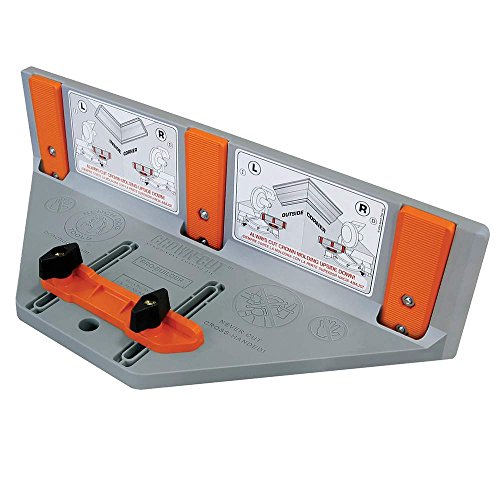
Effortless Precision: Cutting crown molding doesn't have to be difficult! This crown molding jig for miter saw simplifies the complication of cutting crown and cove molding, giving you perfect miters, every time

Miter saw crow stop accurately positions crown molding vertically against the saw fence

NO MATH REQUIRED FOR PERFECT ANGLES: The aluminum protractor’s inner Miter Cut scale instantly gives the exact setting needed for corner joints, eliminating guesswork, calculations, and the waste of expensive trim material
Factors to Consider When Choosing a 10 Inch Miter Saw
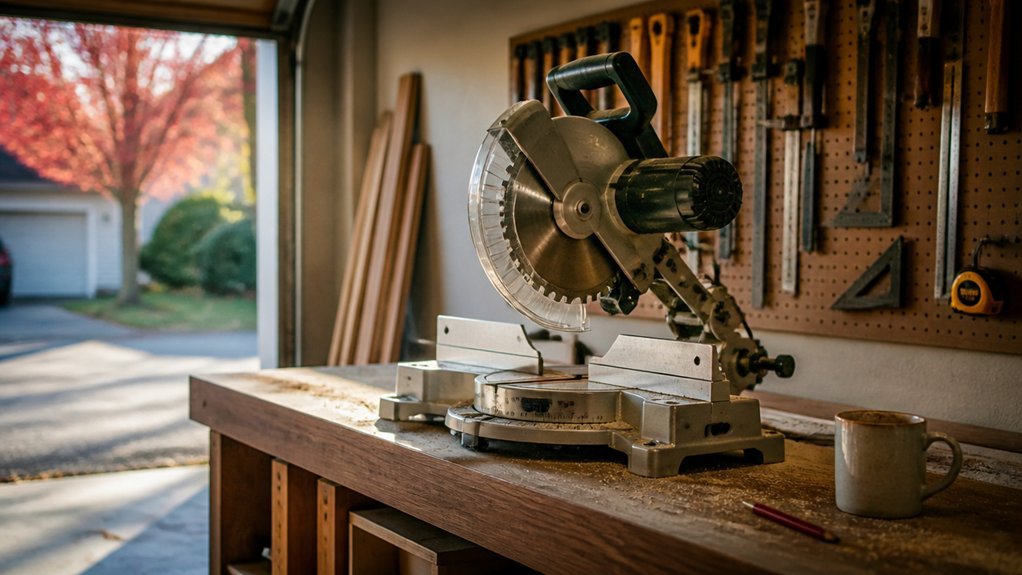
When I’m shopping for a 10 inch miter saw, I always start by checking the motor power rating and blade quality options, because those two factors determine whether you’re getting clean cuts or burning through your lumber. You’ll also want to pay close attention to the bevel adjustment range and miter angle capacity, especially if you’re planning crown molding or tricky corner work, since limited angles mean more headaches on the job.
Finally, don’t overlook the sliding rail system: a smooth, sturdy slider gives you extra crosscut capacity, while a cheap, wobbly one turns every wide board into a frustrating guessing game.
Motor Power Rating
Every miter saw I’ve tested that’s worth your money packs a 15-amp motor under the hood, and that’s where I’d draw my line in the sand. Anything less, and you’ll feel the blade bog down in hardwood or wide bevel cuts.
Look for no-load speeds around 4,800 to 5,000 RPM. That spin rate directly affects how fast you cut and how clean your edges look. Slow blades tear fibers; fast blades slice through.
Higher amps matter most on dense stock. I’ve watched 12-amp motors overheat during back-to-back cuts, while 15-amp units keep trucking.
Some saws offer dual-speed settings. That’s handy for switching between delicate trim and thick framing lumber.
For pros pulling long shifts, that extra power isn’t luxury, it’s survival. Less bogging, less heat, more work done.
Blade Quality Options
Why does the blade matter just as much as the motor? Because a powerful motor spinning a junk blade still gives you burnt, splintered cuts, and nobody wants that.
I always look for carbide-tipped blades first. They last longer and cut cleaner through both hardwood and softwood without chipping.
Tooth count is where you really decide what you’re building. Grab a 40-tooth blade when you’re framing or doing rough cuts, it chews through material fast. Switch to 60-tooth for trim work or anything visible, the finish is noticeably smoother.
Kerf width matters more than people think. That 0.098-inch standard keeps resistance manageable and reduces heat buildup. For ultra-precise miters, I reach for ultra-fine blades, they’re worth the slower feed rate.
Don’t forget arbor size, most 10-inch saws use 5/8 inch. Double-check before buying, a mismatch means dangerous wobble or a blade that won’t mount at all.
Bevel Adjustment Range
Once you’ve sorted out your blade situation, it’s time to look at how the saw tilts.
Most mid-range 10-inch miter saws give you 0° to 45° bevel adjustment left and right. That’s your sweet spot for crown molding and picture frames. I always check for positive stops at 0°, 45° left, and 45° right. They save you from squinting at tiny scales.
Here’s where it gets interesting. Dual-bevel designs let you tilt both directions without flipping your board. Huge time-saver on compound cuts. Some cheaper models claim dual bevel but hide the scales or use wobbly locks. Annoying.
Look for tactile, clearly marked detents. Higher-end saws nail this. If you’re doing lots of bevel work, spring for those crisp stops. Your angles will thank you.
Miter Angle Capacity
How much swing do you actually need?
I ask myself this every time I’m cutting trim or framing. Most 10-inch miter saws give you 0° to 45° left and right, and honestly, that covers 90% of what I do. But here’s where it gets interesting.
The Sweet Spots
I love positive stops at 0°, 15°, 22.5°, and 45°. They save me from squinting at the scale like I’m reading a diner menu without my glasses. Quick, repeatable, no guesswork.
Dual Bevel vs. Single
Dual bevel means tilting both directions without flipping your workpiece. I used to flip boards constantly, and let me tell you, it’s annoying. Compound cuts get so much cleaner when the saw does the heavy lifting.
For most DIYers, 45° each way plus those stops is plenty. Serious trim carpenters, you’ll want every degree you can grab.
Sliding Rail System
Where does all that extra cutting capacity actually come from? It comes from sliding rails, plain and simple. A sliding rail system lets the saw head glide forward and backward, so I can crosscut way wider boards than any fixed-position saw could handle.
Dual-rail designs give me the stability I need for repeatable cuts on long workpieces. I always check the rail quality: aluminum bases feel lighter, cast iron dampens vibration better. The glide has to be smooth, and the locks must hold true.
I look for extendable side tables, decent dust collection, and laser guides that actually stay aligned. Adjustable miter tables paired with solid rails keep my bevel settings locked in during marathon cutting sessions.
Portability And Weight
Why lug around more weight than I actually need? Most 10-inch miter saws tip the scales between 20 and 24 pounds. That four-pound spread matters more than you’d think.
I’ve hauled these things up ladders, across muddy job sites, and into cramped closets. Here’s what I’ve learned:
The Sweet Spot
Under 22 pounds: easy one-handed carries, minimal grunting
Over 23 pounds: my shoulder starts complaining by lunch
Foldable designs save real space in my truck bed. Integrated handles aren’t luxury features, they’re essential. I’ve wrestled saw bases with no grip points, and it’s miserable.
Sliding dual-bevel models demand more floor space during cuts. Compact bases fix this headache completely.
For overhead work or marathon cutting sessions, lighter units spare my arms.
My Verdict: Weekend DIYers, grab the 20-pounder. Pros juggling multiple sites? Prioritize handles and foldability over raw pounds.
Dust Collection Method
The dust situation on a miter saw is no joke. I’ve choked on enough sawdust to know: good collection matters.
Dust Bags vs. Ports
Some saws toss in a basic bag that catches chips, sort of. Others give you nothing but a port, forcing you to BYO shop vacuum. I prefer a dedicated port, honestly. Bags fill fast and leak fines everywhere.
What Actually Works
Look for models with integrated dust ports that fit standard vac hoses. Seal quality around the blade housing matters too: gaps mean dust in your face. A few brands route exhaust smarter, pulling debris backward instead of onto you.
My Take
If you’re cutting indoors, skip the bag-only models. Spend up for proper vacuum compatibility. Your lungs (and your cleanup time) will thank you.
Material Compatibility Range
Once you’ve got dust under control, you need to know what you’re actually cutting. A 10-inch miter saw handles softwoods, hardwoods, plywood, and laminates, but your blade makes the difference.
I stick with carbide-tipped blades, 60 to 80 teeth, for clean cuts in both pine and oak. Smaller teeth, cleaner finish: simple. Some saws tackle plastics and aluminum too, if you swap blades and slow your feed rate. Don’t force it.
Watch out for reclaimed lumber with nails, though. Hit metal with a standard blade and you’ll wreck it fast. You’ll need specialized blades for that.
Dense materials also test your dust collection. Clogged chips mean burned edges and rough cuts.
Match your blade to your material, or you’ll fight your saw every time.