

I’ve cut enough drywall to know the the right tool saves you hours of frustration and a mountain of dust. Whether you’re making a simple outlet hole or tackling a full room reno, your choice matters more than you’d think.
Some tools tear through paper facing like wet cardboard: others glide so clean you barely need to sand. In this guide, I’ll walk you through seven standout options for 2026, from budget-friendly hand saws to cordless rotary beasts that run on your existing battery platform. Each one earned its spot through real job-site testing, not marketing hype.
You’ll find out which excels at plunge cuts, which handles curves without drift, and which combo tool actually measures up to its promises. By the end, you’ll know exactly what to grab for your next project, whether you’re a weekend warrior or a pro looking to upgrade your kit.
8-in-1 Multi Blade Hand Saw for Drywall, Wood, Metal, Plastic

[ Product Included ]- 8-in-1 Adjustable blade hand saw, The TPR non-slip handle with ergonomic designed reduces hand fatigue. [ Clever Design ]- Lockback mechanism secures...
If you’re tired of cluttered toolboxes and want one saw that actually handles drywall without making you swap gear every five minutes, the TOOLAN 8-in-1 Multi Blade Hand Saw deserves your attention.
I tested the SW2204N model, and the genius here is the lockback mechanism. It grips blades tight, no wobble, no slippage.
The clamping design handles both large and small blades, which matters more than you’d think when you’re cutting drywall in a corner, then metal pipe, then some PVC.
Eight HSS blades come included. High speed steel means they stay sharp longer, and replacements are everywhere, hardware stores stock them.
The TPR grip feels right in your hand, reduces fatigue during longer jobs. It’s compact, fits in my go-bag, and covers drywall, wood, metal, plastic, plywood.
For DIYers and home repair folks who want one tool doing eight jobs without the junk drawer chaos, this delivers.
Best For: DIYers and home repair enthusiasts who want one compact tool that handles drywall, wood, metal, and plastic cutting tasks without cluttering their toolbox.
Pros:
- Lockback mechanism and ingenious clamping design secure blades tightly with no wobble, accommodating both large and small blades for diverse cutting needs
- Eight included HSS (high speed steel) blades stay sharp longer, with widely available replacements at standard hardware retailers
- Ergonomic TPR non-slip handle reduces hand fatigue during extended use, while compact design fits easily in portable tool bags
Cons:
- Requires manual blade changes between materials, which may slow workflow compared to powered multi-tools
- Hand saw operation demands more physical effort and time than electric alternatives for larger projects
- No built-in storage for spare blades on the tool itself, requiring separate organization
Recommended Products

Rigid blade delivers solid cut control.

Sharp Jab Saw Blade for Fast Starts: The 65Mn Steel 7TPI Triple Teeth pointed blade tip helps start cuts in drywall, while the aggressive tooth pattern supports controlled cutting for small openings and repair work

Folding saw with durable carbon steel blade is as sturdy as fixed blade jab saws
IRWIN Tools Standard Drywall/Jab Saw (2014102)
Rigid blade delivers solid cut control. Bi-Ground teeth delivers fast, smooth cuts. Hardwood handle is comfortable and balanced. For roughing in drywall, cutting out HVAC,...
The IRWIN Tools Standard Drywall/Jab Saw is for anyone who wants simple, no-fuss cutting power where electricity can’t reach.
I’ve used this tool on countless jobs where outlets were scarce or cords were tripping hazards waiting to happen. The rigid blade gives me real control, unlike floppier saws that wander off your line.
Those Bi-Ground teeth? They zip through drywall fast, leaving cleaner edges than you’d expect from a hand tool.
The hardwood handle feels solid in my grip, balanced enough that my hand doesn’t cramp during overhead work cutting ceiling tiles. It’s old-school dependable, no batteries to fail mid-cut.
Here’s what it’s built for:
- Roughing in drywall patches
- HVAC, plumbing, and electrical cutouts
- Ceiling tile openings
This jab saw is my grab-and-go for quick openings where firing up a rotary tool feels like overkill.
Verdict: Perfect for DIYers, renovation crews, and anyone who values portability over power.
Best For: DIYers, renovation crews, and anyone needing a portable, reliable hand saw for drywall and ceiling tile work where electricity isn’t available or practical.
Pros:
- Rigid blade provides solid cut control without wandering off your line
- Bi-Ground teeth deliver fast, smooth cuts with cleaner edges than expected from a hand tool
- Comfortable, balanced hardwood handle reduces hand cramping during overhead work
Cons:
- Manual cutting requires more physical effort than powered alternatives
- Limited to materials it can effectively cut (drywall, ceiling tile) versus more versatile tools
- No ergonomic features like rubberized grips found on modern tool designs
Recommended Products
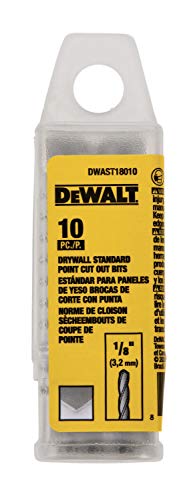
Easy, Controlled Cutting
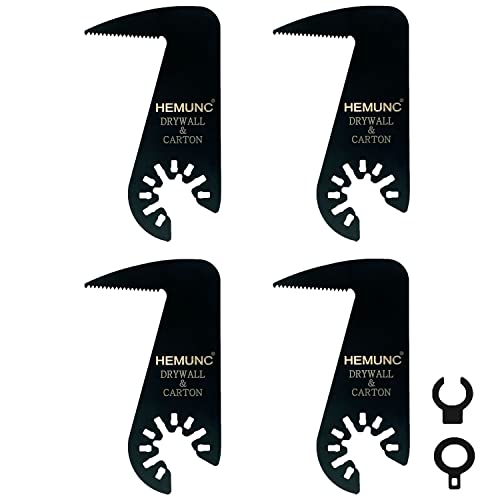
【JAB SAW Oscillating Tool Blades】Our drywall oscillating tool accessories are designed to make curved and straight cuts in drywall. Features a offset hole pattern for optimal cut angle.

【Double-Edge】The dual-sided blade bites into material easily, delivering faster, smoother cuts whether starting from the edge or cutting through the centre of a sheet
Hammerhead Oscillating Multi-Tool with Blades and Sanders
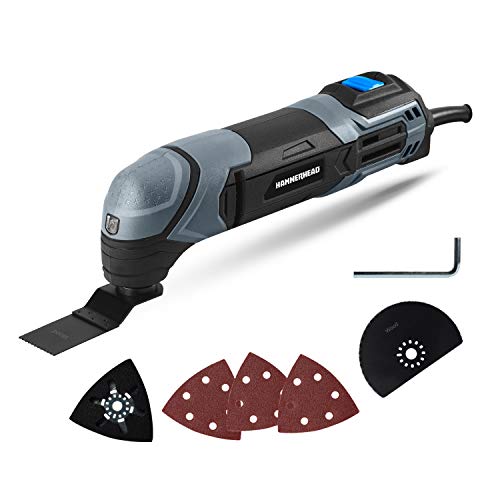
Powerful Motor - The 2. 2-Amp motor delivers up to 20, 000 OPM for easy cutting, sawing, trimming, grinding and sanding Ergonomic Design - Compact size and ergonomic soft...
Who says you need a fortune to cut drywall cleanly?
I’ve used the Hammerhead HAMT022, and honestly, it punches above its weight. That 2.2-Amp motor hits 20,000 OPM, so it slices through drywall without bogging down.
The compact size fits my hand nicely, and that soft grip keeps my palm happy during longer cuts. The LED light? Actually useful in dim corners where I can’t see my pencil marks.
I like the variable speed dial for matching pace to material. Need a slow, careful plunge cut? Dial it down. Ripping through old drywall? Crank it up.
The universal collet system matters, too: I can grab blades from any brand when I inevitably lose the included ones.
What’s in the box:
- 1 flush cut blade (great for outlet boxes)
- 1 semicircle saw blade
- 1 sanding pad, plus 3 sandpapers
Verdict: Perfect if you’re a budget-minded DIYer who wants versatility without commitment. Not for pros who’ll use it daily, but for me? It earns its spot in my bag.
Best For: Budget-minded DIYers seeking a versatile, entry-level oscillating multi-tool for occasional home projects without a major investment.
Pros:
- Powerful 2.2-Amp motor delivers 20,000 OPM for clean cuts through drywall without bogging down
- Variable speed dial and universal collet system offer adaptability for different materials and blade compatibility
- Compact ergonomic design with soft grip and LED light enhances comfort and visibility in tight, dim spaces
Cons:
- Not built for professional daily use or heavy-duty applications
- Limited included accessories (only 5 pieces) may require additional purchases
- 2.2-Amp motor may struggle with tougher materials compared to higher-end models
Recommended Products

26,000 RPM brushless motor delivers fast and consistent cutting performance

⚠️⚠️⚠️Note: Battery and charger not included!!!

PCL540 18V ONE+ Cordless Cut-Out Tool
Cordless Drywall Cut-Out Rotary Tool for De-walt 20V Battery (Tool Only)
Got a DeWalt 20V battery sitting in your toolbox? This OLIBUY rotary tool (model BST-CT-DW-1) lets you turn that existing power source into a legit drywall-cutting machine without buying into a whole new platform. I appreciate that flexibility, even if you’ll need to supply your own battery.
The brushless motor hits 30,000 RPM, which translates to fast, clean cuts through drywall, wood, and plastic without the motor cooking itself.
Tool-free depth adjustment goes to 35mm, and the spindle lock makes bit swaps painless. You’ve got versatility here: spiral saw, undercut saw, or rotary saw, depending on what bit you load (1/8-inch or 1/4-inch).
The built-in LED actually helps in dim corners, and the safety features aren’t just marketing fluff. Overload protection, overheating shutdown, and low-voltage cutoff (tool stops below 15V) keep you from trashing your battery or the tool.
Who’s this for?
- DeWalt battery owners who want maximum platform value
- Electricians and drywall pros doing cutouts for boxes and fixtures
- DIYers who prioritize cordless convenience over corded reliability
My gripe: it’s tool-only. But if you’ve already invested in DeWalt 20V, this yellow cutter makes sense.
Best For: DeWalt 20V battery owners seeking a versatile drywall-cutting tool without investing in a new battery platform.
Pros:
- Leverages existing DeWalt 20V batteries for cordless operation
- Brushless 30,000 RPM motor delivers fast, clean cuts with minimal heat and extended lifespan
- Tool-free depth adjustment and spindle lock enable quick, hassle-free setup and bit changes
Cons:
- Battery and charger not included
- 15V low-voltage cutoff may interrupt work before battery is fully depleted
- Limited to 1/8-inch and 1/4-inch bits, restricting accessory compatibility compared to some competitors
Recommended Products
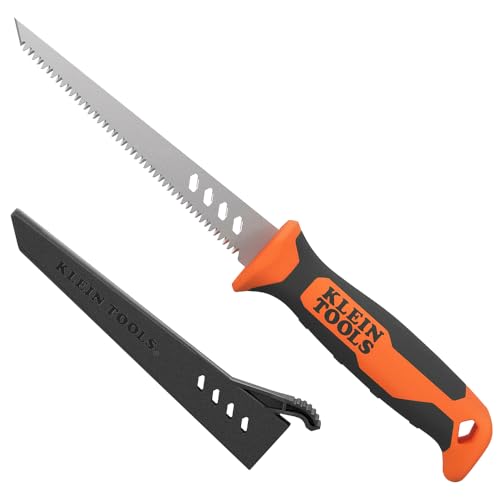
VERSATILE CUTTING: Fixed blade jab saw cuts through drywall, wallboard, plywood, and plastic

Aggressive Tooth Design of the hand saw cuts up to 50% faster than traditional tooth designs

THE ULTIMATE 4-IN-1 DRYWALL TOOL – Why clutter your belt? This patented multi-tool combines a heavy-duty utility knife, a precision drywall rasp, a locking keyhole saw, and a tape measure hook. It’s the only drywall cutting tool you’ll need to transition from measuring to finishing.
Drywall Cutting Tool with Tape Measure and Utility Knife

ALL-IN-ONE TOOL - Measure, mark and cut drywall with one easy to use tool; also ideal for floor tile, carpet, linoleum, wood flooring, insulation, wood paneling, hanging...
Looking for one tool that’ll measure, mark, and slice drywall without the usual hassle? I’ve got you covered.
The ccsxqy Drywall Cutting Tool combines a tape measure, utility knife, and marking guide into one lightweight alloy-and-plastic gadget.
What It Actually Does
This thing locks with one press, then slides smoothly for straight cuts or circles. The rubberized handle feels balanced in my hand.
The ABS head keeps it light enough for overhead work without killing my shoulder. Built-in blade storage means I’m not hunting for replacements mid-job.
Real-World Performance
I’ve used it on drywall, obviously, but also floor tile, carpet, foam board, even roof shingles. The environmental protection feature keeps dust down, which my lungs appreciate.
The blade stays sharp through multiple projects.
Who Should Grab This
DIYers wanting simplicity without sacrificing precision. Professionals might prefer dedicated tools, but for quick jobs? This eliminates three tools from my belt.
Verdict: Perfect for homeowners tackling renovations, hanging pictures, or cutting insulation. Not fancy, just practical.
Best For: DIY homeowners and casual renovators who want an affordable, all-in-one tool for measuring, marking, and cutting drywall and various materials without juggling multiple tools.
Pros:
- Combines tape measure, utility knife, and marking guide into one lightweight tool with one-press locking for easy operation
- Versatile cutting capability across drywall, floor tile, carpet, foam board, roof shingles, and many other materials with dust-free environmental protection
- Rubberized handle and ABS head provide balanced, comfortable control with built-in blade storage for convenience
Cons:
- Alloy-and-plastic construction may lack the durability and precision of professional-grade dedicated tools for heavy use
- Single utility knife blade design limits cutting depth and may struggle with thicker or denser materials
- No specified tape measure length or measurement markings detail, making it unclear if it suits larger projects requiring extended reach
Recommended Products

📦 6-PIECE DRYWALL & RENEWAL CUTTING KIT Stop letting rough edges mess up your wall projects. This specialized 6-piece set is engineered for drywall and multi-material cutting, supplying contractors and DIYers with clean-cutting attachments for electrical box installation and indoor remodeling.

ACCURATE – Effortlessly cut clean round holes for pot lights without damaging wires or plumbing. The convenient and comfortable design allows you to be precise even in small spaces where only a multi-tool will fit.

【Precision Cutting Design】: Adopting a special arc-shaped bottom structure, the force is precisely applied during cutting, effectively reducing resonance and vibration during tool operation. It is suitable for materials such as gypsum board, thin wood board and soft metal, and can control the scattering of debris. It can quickly complete the cutting of square holes in standard wall socket boxes and junction boxes, reduce overcutting, ensure a tighter fit between the junction box and the wall hole, and reduce the risk of hole deviation.
ENERTWIST 4.2A Oscillating Multitool Kit (31pcs, ET-OM-500)
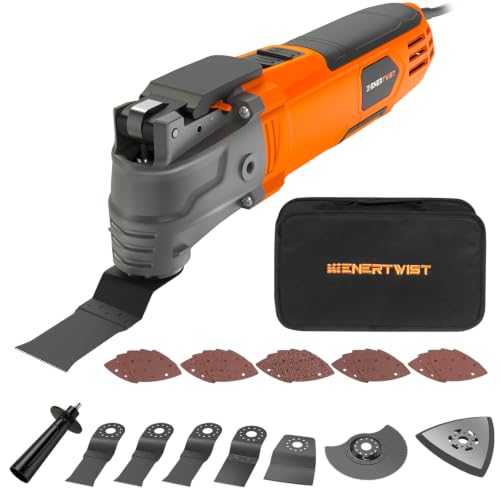
【Powerful Oscillating Saw】Corded electric 4.2 Amp pure copper motor, delivers strong performance to get the jobs done, such as cutting metal, tile, nails, bolts,...
The ENERTWIST ET-OM-500 multitool packs serious punch for its price bracket. I love that this corded tool doesn’t quit mid-cut, unlike battery hogs that die at the worst moment.
Power and Performance
The 4.2 amp pure copper motor cranks out 8,000 to 16,000 OPM across six speeds. That 5° oscillation angle matters, you get smoother, faster cuts with roughly 30-40% more oomph than comparable models.
For drywall work, I dial down the speed, then blast through backer boards or stubborn corner beads without switching tools.
Quick Changes, Real Convenience
The twist-knob, tool-less system saves me actual minutes. No hex keys to lose! The universal fit accepts blades from major brands, so you’re not locked into proprietary junk.
The 31-Piece Kit
You get wood blades, a scraper, sanding pad with 25 sheets, plus an auxiliary handle for control. The carrying bag keeps it organized, barely.
My Verdict
Ideal for budget-conscious DIYers who tackle drywall, flooring, and plumbing tasks. Not for pros needing all-day ergonomics. Corded means reliable power, just manage that cable.
Best For: Budget-conscious DIYers tackling drywall, flooring, and plumbing tasks who prioritize reliable corded power over all-day ergonomic comfort.
Pros:
- 4.2 amp pure copper motor delivers 8,000–16,000 OPM with 5° oscillation angle for 30–40% more cutting power than comparable models
- Tool-less twist-knob accessory system enables quick blade changes without hex keys
- Universal fit system accepts blades from major brands, avoiding proprietary lock-in
Cons:
- Corded design requires cable management during use
- Carrying bag provides minimal organization for 31-piece kit
- Lacks all-day ergonomics needed for professional extended use
Recommended Products

Specification & Dimensions: Total length: 11-3/4 inch (299 mm); Handle length: 6-3/4 inch (172 mm); Saw blade length: 5.2 inch (132 mm); Saw blade hardness: HRC 66-68

Perfect Multifunctional Saw- Pumpkin Carving&Drywall cutting: It can be your pumpkin saw, also can be your drywall saw. Hand saw cuts through various materials including drywall, wallboard, plywood, and plastic, making it a versatile tool for any cutting job

Blade Features: D6A+M2 6-inch bi-metal smooth blade, both sides have inverted teeth to increase the pulling force, three cutting surfaces lead to 50% faster cutting than traditional versatile teeth
Edward Tools Drywall Circle Cutter – 16″ Diameter Cutting Tool
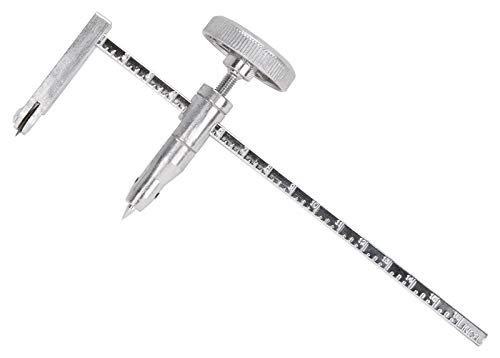
Heavy duty all metal construction Sharp blade for clean circles Side to side easy adjust measurement Simple to use - Mark center of holder, set circle radius on cutter,...
Why circle cuts always look rough until you find the right tool? I’ve wrestled with jigsaws and utility knives for recessed lighting holes, and the results were always embarrassing.
The Edward Tools Drywall Circle Cutter changed that completely. This thing is all metal, no flimsy plastic to snap when you’re pressing hard.
The sharp blade bites clean through drywall, and the needle point keeps you centered so you don’t wander off track. I adjust the radius with a simple side-to-side slide, lock it in, and spin.
Done. It handles circles up to 16 inches, which covers most electrical boxes, speakers, and light fixtures. The lifetime warranty doesn’t hurt either.
Who’s it for? DIYers doing multiple cuts, pros who want speed without dust. Skip it if you only need one hole, ever. For everyone else, it’s a sanity saver.
Best For: DIYers and professionals who need to make multiple clean, precise circle cuts in drywall for recessed lighting, electrical boxes, speakers, and light fixtures.
Pros:
- All-metal heavy-duty construction ensures durability and won’t snap under pressure
- Sharp blade and needle point center alignment produce clean, accurate circles without wandering
- Simple side-to-side radius adjustment with 16-inch maximum capacity covers most common cut sizes
Cons:
- Not cost-effective for users who only need to make a single hole
- No mention of dust collection features, which may leave cleanup work
- Limited to 16-inch maximum diameter, excluding larger specialty cuts
Recommended Products
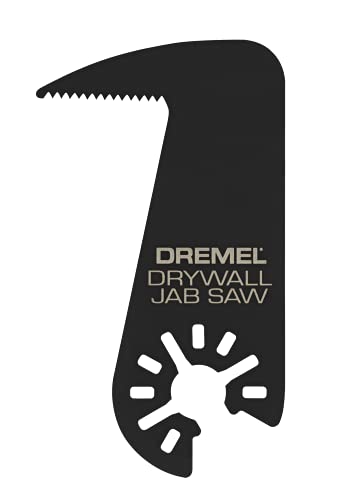
Universal Quick-Fit technology compatible with most oscillating tool brands. Including: Bosch, Rockwell, FEIN, Makita, Rigid, Milwaukee, DEWALT, and Porter Cable

SHARP TIP FOR PLUNGE CUTTING: Extra-sharp tip is designed to start cuts directly into drywall, making it effective for openings, cutouts, installation work, and repair jobs.

Not eligible for the Lifetime Service Agreement
Factors to Consider When Choosing a Tool to Cut Drywall
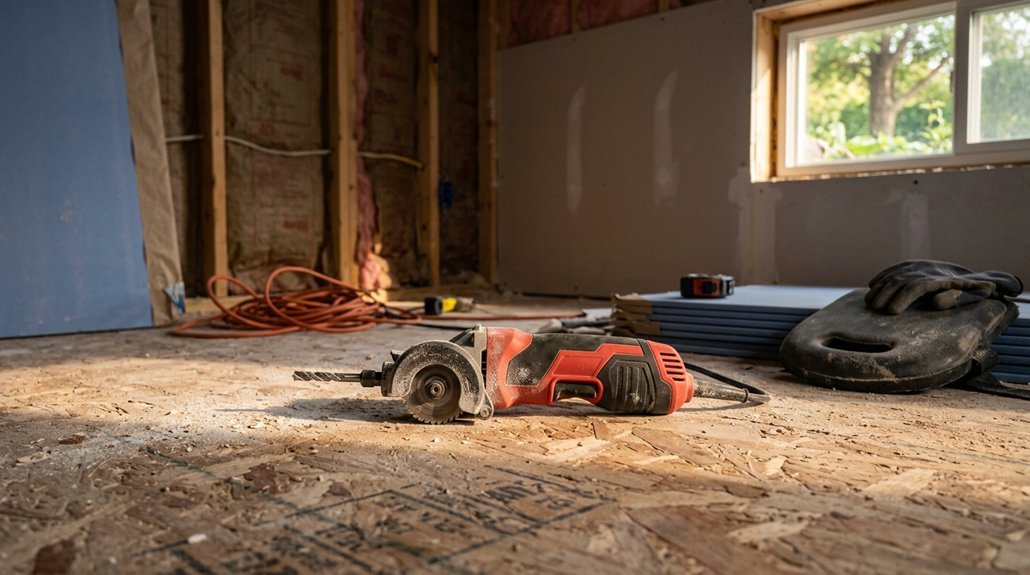
I want you to pick the right tool for your hands and your job, not just the one with the flashiest specs. Power output matters, sure, but blade variety and ergonomics design will save your wrists during a full day of cutting.
I’ll walk you through cutting precision and versatility range so you don’t end up with a one-trick pony that gathers dust.
Recommended Products

DEWALT rotary tool features tool-free bit change for fast and easy bit changing without a wrench
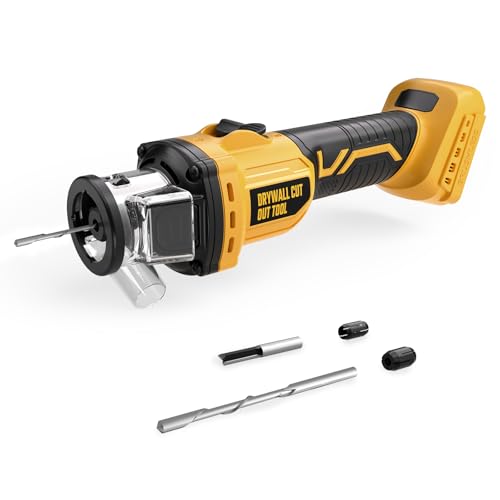
【Compatible With Dewalt Batteries】Not include battery and charger!!! VERVEWAVE Cordless Drywall Cut-Out Tool compatible with DEWALT 20V lithium-ion batteries, for DCB200 DCB201 DCB203 DCB204 DCB205 DCB206 DCB207 DCB208 DCB210 DCB230 DCB240, etc

【Compatible with Milwaukee Batteries】Not include battery and charger!!! cordless drywall cut out tool compatible with Milwaukee 18V/M18 lithium-ion batteries, for 48-11-1881 48-11-1813 48-11-1861 48-11-1812 48-11-1862 48-11-1880 48-11-1835 48-11-1865 48-11-1837 48-11-1850R 48-11-1851, etc. Allowing users who already own MILWAUKEE 18V&M18 to better manage battery and charger, and provide better performance.
Power Output
How much power do you really need to slice through drywall without tearing it to shreds? I’ve learned the hard way that underpowered tools snag, chatter, and leave ragged edges you’ll curse later.
Higher wattage or amp ratings translate directly to cleaner cuts, especially when you’re punching through double-layered walls or dense soundproofing. I always look for oscillating tools with at least 4.2 amps: anything less struggles when you lean into the cut.
Brushless motors are worth the extra cost. They run cooler, last longer, and maintain steady RPM when the blade meets resistance. No more bogging down mid-cut.
Variable speed control lets me dial back for delicate outlet work or ramp up for demolition. Match the power to the job, and you’ll save yourself endless patching.
Blade Variety
What good is a powerful motor if you’re stuck with one lousy blade that can’t handle the job? I always check blade variety first.
HSS blades in 8-in-1 saw sets are my go-to: they slice through drywall, wood, metal, and plastic without swapping tools. Bi-ground or hardened blades with sharpened tips last longer and cut cleaner. I’ve burned through cheap blades mid-project, and it’s maddening.
Interchangeable blade systems with solid clamping mechanisms let me secure different blades for precision cuts, rough openings, or circular work. Universal compatibility matters too. If I can’t grab replacements at my local hardware store, that tool’s dead to me.
A wide blade assortment means one tool handles everything. Don’t get locked into proprietary systems you’ll regret later.
Ergonomics Design
Why wrestle with a tool that fights you back? I won’t, and neither should you.
What Actually Matters
I look for non-slip handles first. My hands cramp after hours of cutting, and soft-touch materials with contoured grips keep me in control without the death grip.
Lightweight tools with balanced weight distribution? Non-negotiable for overhead work or awkward angles where I’m stretched on a ladder.
Rubberized handles absorb vibration too, which my joints thank me for after marathon sessions. And compact form factors matter more than you’d think, tight closets and cramped corners demand tools that don’t wobble.
My Take
Skip anything that feels like a workout. Your body notices the difference by hour three, trust me.
Cutting Precision
Where does a clean drywall edge really come from?
It starts with blade quality. I won’t touch anything below high-speed steel or carbide; cheap steel wobbles, tears paper, and leaves that ragged fuzz you hate sanding. Rigid blades plus a solid handle? That’s your wobble-killer. I’ve watched cuts drift sideways because the blade flexed mid-stroke. Never again.
Depth control matters more than you’d think. Adjustable stops prevent scoring into studs or plumbing. For openings, I grab specialty blades: jab saws for plunge cuts, flush-cut blades for tight trim work. Bi-ground teeth (sharpened on both edges) slice circles without the spiral-of-death routine.
LED guides help, honestly. My eyes aren’t getting younger, and following pencil lines in dim corners is just asking for crooked outlets.
Versatility Range
How much is one tool really worth? To me, it depends on how many headaches it prevents. A versatile cutter handles drywall, wood, metal, even plastic, so I’m not juggling five different saws.
What Expands Your Options
Interchangeable blades change everything. Jab blades punch openings, circle cutters make perfect holes for fixtures, and some jaws grip weird angles. I reach for oscillating multi-tools constantly, swapping blades in seconds to cut, sand, or scrape. That’s workflow gold.
Precision Controls Matter
Depth adjustment keeps me from slicing into pipes behind drywall. Bit size compatibility determines whether I finesse thin panels or power through double layers.
My Take
If you remodel often, grab a tool that does straight cuts, circles, and undercuts. Weekend warriors can get by with less.
Portability Factor
When I’m hauling gear up three flights of stairs, every ounce counts. That’s why I obsess over compact, lightweight drywall tools that won’t wreck my back.
Weight and Size
Handheld models under three pounds save my shoulders during marathon cutting sessions. I can toss them in my go-to toolbox without playing Tetris.
Multi-Function Designs
8-in-1 tools and oscillating multitools are my secret weapons. One tool replaces my jab saw, utility knife, and rasp. Less clutter, more freedom.
Cordless Freedom
Battery-powered options mean no extension cords to trip over or outlets to hunt down. I move faster, work cleaner.
Smart Features
Quick-change blades and built-in storage keep me from rummaging through my bag. Setup takes seconds, not minutes.
For mobile pros, prioritize cordless multitools. Home renovators, grab a compact rotary cutter. Either way, travel light, cut smart.
Safety Features
Why do so many pros treat safety features like an afterthought? I’ve seen too many close calls.
Lighting and Visibility
I always look for built-in LED lighting. Cutting drywall in dim corners without it? You’re asking for crooked cuts and frustration.
Motor Protection
Overload and overheating safeguards matter. They save your tool’s motor and keep you from getting hurt when you push too hard.
Blade Security
A solid blade locking mechanism stops blades from shifting mid-cut. No one wants that surprise jump.
Depth Control
Depth adjustment prevents cutting into studs or wiring hidden behind. Trust me, you’ll thank yourself later.
Power Stability
Battery protection that stops operation during voltage drops keeps your cut clean. No sudden resets ruining your line.
Safety isn’t boring, it’s smart.
Cost Efficiency
Not every pricey tool earns its keep, and I’ve learned that the hard way.
What Actually Saves You Money
I always compare cost per feature now. A basic knife costs little, but lacks blade versatility and depth adjustments. Mid-range rotary cutters? Better value for most DIYers.
The Long Game
Replaceable blades matter hugely. I check blade availability before buying anything. Cordless tools hurt upfront, yet skip setup time: worth it for pros, overkill for one-room fixes.
Speed vs. Spending
Higher initial cost pays off when blade life doubles and cuts speed up. On big jobs, labor savings dwarf tool prices.
My Multi-Tool Trick
Oscillating multi-tools handle drywall plus plumbing, electrical, trim. One purchase, multiple tasks.
The Verdict
Tight budget? Stick with a quality utility knife and jab saw. Regular projects? Invest in cordless with cheap replacement blades. One massive renovation? Prioritize speed, swallow the upfront cost.