
I’ve tested dozens of sanders over the years, and 2026’s lineup finally nails what woodworkers actually need: tools that don’t fight you on every curve. The HYCHIKA and WEN palm sanders fit where your fingers can’t reach. SKIL’s orbital beast chews through tabletops without the swirl marks that ruin your weekend.
But here’s what stopped me cold: the TOVPADE kit’s grit range, 80 to 800, means you’re not running to the store mid-project. Hook-and-loop paper changes in seconds. No wrestling with clamps or torn sheets.
Still, raw specs lie. A 14,000 OPM motor sounds impressive until vibration numbs your hand at hour two. I’ve been there. So which one earns bench space? That depends on whether you’re restoring a dresser or just smoothing a windowsill. Let me break down what actually matters.
TOVPADE 54PCS Micro Sander Kit with 80-800 Grit Sandpaper
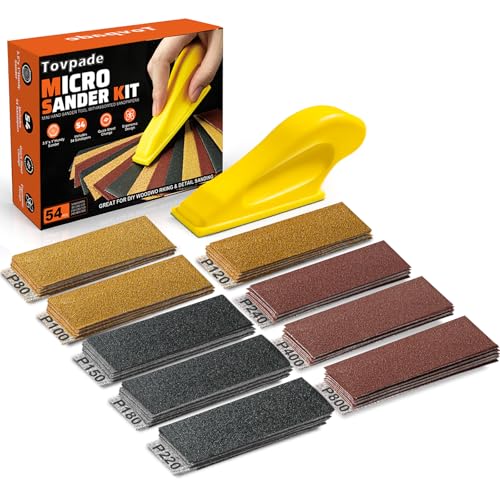
All-in-One Sanding Kit for Every Detail: Includes a compact sanding block and 54 sandpapers in 9 grit types (80/100/120/150/180/220/240/400/800) – perfect for detail...
Who needs a full-sized sander when you’re wrestling with trim, toy parts, or that awkward corner inside a cabinet? I’ll tell you: nobody.
That’s where the TOVPADE 54PCS Micro Sander Kit earns its keep.
This thing is tiny, just 3.5 by 1 inches, but Tovpade packed serious versatility into the package. You get 54 sandpapers across nine grits, from aggressive 80-grit stripping to silky 800-grit finishing. The color-coded system saves me from squinting at numbers. Coarse, medium, fine, done.
The hook-and-loop backing means I’m swapping papers in seconds, no tools, no cursing. The ergonomic grip actually fits my hand without cramping during long detail sessions.
Where does it shine? Cabinet interiors, curved furniture legs, craft projects, any tight spot my random orbital sander mocks from my toolbox. It’s not fast, it’s precise.
For DIYers and hobbyists who value control over power, this micro sander delivers. Professionals needing speed should look elsewhere.
Verdict: Essential for detail work, pointless for floors.
Best For: DIYers and hobbyists who need precise control for detail sanding in tight spaces, corners, and small craft projects rather than large surface areas.
Pros:
- Compact 3.5 x 1 inch size fits easily into tight corners, cabinet interiors, and curved furniture legs that full-sized sanders cannot reach
- Color-coded grit system (coarse, medium, fine) allows quick identification without reading numbers
- Hook-and-loop backing enables tool-free sandpaper changes in seconds for uninterrupted workflow
Cons:
- Not suitable for large surface areas or floor sanding due to small size and lack of power
- Slower than power sanders, making it impractical for professionals needing speed
- Requires manual effort and time commitment compared to electric sanding tools
Recommended Products
All-in-One Sanding Kit for Every Detail: Includes a compact sanding block and 54 sandpapers in 9 grit types (80/100/120/150/180/220/240/400/800) – perfect for detail sanding, micro finishing, and hard-to-reach areas.

【PREMIUM MATERIAL】: Our sandpapers are well known for its materials. This sander paper Made from A+ grade aluminum oxide abrasives, so it’s durable, great flexibility and anti- static. We guarantee you would like to use this sanding tools to finish your sanding work. The A+ Premium material sandpapers can create a consistent “scratch” pattern and smoother result.

You Will Get: 80 grit x 100 pcs.Size: 90 x 30 mm / 3.5 x 1.2".
SKIL 5″ Random Orbital Sander (SR211601)

POWERFUL - With a 2.8 amp motor and 13,000 orbits per minute, it's able to deliver a smooth performance over a variety of sanding applications. EASY TO CLEAN DUST CONTAINER -...
Looking for a sander that won’t break your wrists? I’ve found it. The SKIL 5″ Random Orbital Sander delivers serious value.
Power and Performance
This little beast packs a 2.8 amp motor spinning at 13,000 orbits per minute. That’s fast enough to chew through old paint or gently smooth delicate veneers.
The variable speed control lets me dial back the aggression when I’m working on softer woods like pine. No more accidental gouges.
Dust Management That Actually Works
The X-flow cyclone dust collector genuinely impresses me. The transparent container shows when it’s full, and emptying it takes seconds.
The dust-sealed on/off switch? Smart engineering. I’ve killed cheaper sanders when dust infiltrated their switches.
Comfort and Control
Low vibration design plus soft rubber grip means I can sand for an hour without my hands going numb. The counterweight balance actually works.
I can maneuver into tight corners thanks to the compact 5-inch size.
Who Should Buy This?
DIYers and weekend warriors, mostly. If you’re refinishing furniture or prepping cabinets, this handles it beautifully.
Professionals might want something beefier for daily abuse, but for home use? It’s tough to beat.
Best For: DIYers and weekend warriors who need an affordable, comfortable random orbital sander for furniture refinishing, cabinet prep, and home sanding projects without professional-grade daily demands.
Pros:
- Effective dust management with X-flow cyclone collector and transparent easy-to-empty container prevents switch damage and keeps workspace clean
- Comfortable extended use thanks to low vibration design, soft rubber ergonomic grip, and counterweight balance that reduces hand fatigue
- Versatile performance from 2.8 amp motor with variable speed control handles both aggressive material removal and delicate finishing work
Cons:
- Not robust enough for professional daily use or heavy-duty commercial applications
- Fixed 5-inch size may limit efficiency on larger surface areas compared to bigger sanders
- Multicolor brand styling lacks the refined aesthetic premium of higher-end tool manufacturers
Recommended Products

【PREMIUM MATERIAL】: Our sandpapers are well known for its materials. This sander paper Made from A+ grade silicon carbide abrasives, so it’s durable, great flexibility and anti- static. We guarantee you would like to use this sanding tools to finish your sanding work. The A+ Premium material sandpapers can create a consistent “scratch” pattern and smoother result.

Dura-Gold Micro Hand Sanding Block Kit with 40 Assorted Grit Sandpaper Sheets. Premium quality small 3.5" x 1" size soft polyurethane foam sander with a hook & loop backing. 5 Sheets each of 8 different sanding grits: 60, 80, 120, 180, 220, 320, 400, and 600. High-performance, multipurpose sanding sheets with a hook & loop backing enable them to be quickly and securely attached to this sander's hook & loop backing.

HOOK-AND-LOOP SANDING PAD: The hook and loop face design functions to provide easy closure for removing disc without wearing out overall strength for convenience and easy install/removal on an orbital or dual action DA sander.
SKIL Corded Detail Sander with Attachments (SR232301)
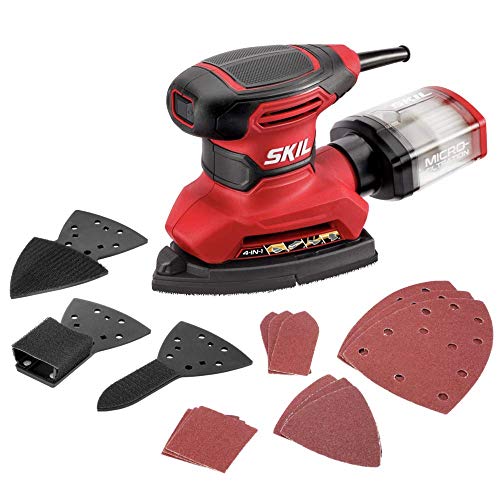
POWERFUL - With a 1. 2 amp motor and 13,500 orbits per minute, it's able to deliver a smooth performance over a variety of sanding applications. VERSATILITY ON THE QUICK -...
I’ve got to hand it to SKIL, they really thought about versatility with this one.
The SR232301 packs a 1.2 amp motor hitting 13,500 orbits per minute, which sounds modest but handles detail work surprisingly well. Where this sander shines is its 4-in-1 design: three tool-free attachments tackle fine finishing, large flat surfaces, tight corners, and curved contours. Swapping them takes seconds, no hex keys required.
The ergonomics rescue what could’ve been a fatigue-inducing tool. Soft rubber grips, counterweight balancing, and genuinely low vibration let you sand longer without that tingly-hand syndrome. Hook-and-loop sheet changes keep momentum going.
The micro-filtration dust box actually works, plus there’s a vacuum port when things get serious.
Real talk: corded means no battery anxiety, though you’re tethered to outlets. For furniture restoration, cabinetry, or trim work, this fills gaps your bigger sander misses. It’s not built for heavy stock removal, and that’s fine. This is your precision player, the detail specialist. Who needs a full sander fleet when attachments handle this much ground?
Best For: DIY enthusiasts and woodworkers tackling furniture restoration, cabinetry, trim work, and detail sanding where precision and versatility matter more than heavy stock removal.
Pros:
- Tool-free attachment system with three swappable heads for fine finishing, large surfaces, corners/edges, and contours
- Ergonomic design with soft rubber grip, counterweight balance, and low vibration reduces hand fatigue during extended use
- Effective dust management via micro-filtration system plus 1-1/4″ vacuum port for cleaner workspace
Cons:
- Corded design limits mobility and requires proximity to power outlets
- 1.2 amp motor and 13,500 OPM optimized for detail work, not suitable for heavy material removal
- No battery option available for cordless convenience on remote job sites
Recommended Products

Comfort Grip: For enhanced control and reduced fatigue with the ergonomically designed comfort grip
POWERFUL - With a 1. 2 amp motor and 13,500 orbits per minute, it's able to deliver a smooth performance over a variety of sanding applications.
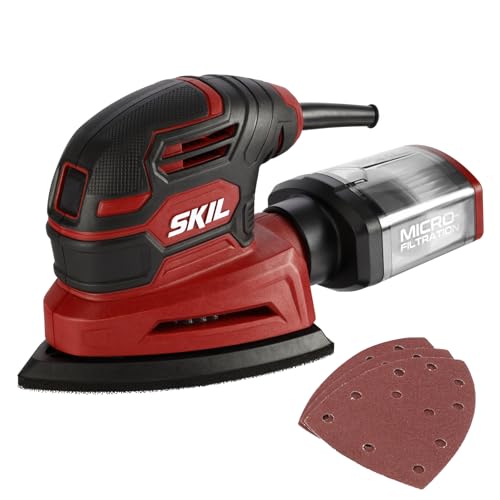
Powerful– With a 1 amp motor and 12, 000 orbits per minute, it’s able to deliver a smooth performance over a variety of sanding applications.
WEN 6301 Electric Detailing Palm Sander

Features a 3.75 x 5.5 inch pad with an angled tip for precision work Powerful one-amp motor provides 13,500 OPM Lightweight design weighs in at a mere two pounds Dust...
Want something you can actually maneuver in tight corners? I’ve been reaching for the WEN 6301 Electric Detailing Palm Sander lately, and at just two pounds, it barely registers in my hand.
The 3.75 by 5.5 inch pad hits that sweet spot: small enough for precision, big enough that I’m not sanding forever. That angled tip? genuinely useful for getting into window frames and furniture legs where bulkier sanders simply surrender.
The 1-amp motor pushes 13,500 OPM, which isn’t going to rip through heavy stock, but that’s not the point. This is a finesse tool.
I appreciate the dust collection port (nobody loves breathing sawdust), and the Velcro base makes paper changes almost pleasant.
Compared to the SKIL I mentioned earlier, this WEN skips the attachment gimmicks and doubles down on straightforward handling. Sometimes that’s exactly what I need.
Verdict: Grab this if you prioritize lightweight control over raw power. Perfect for hobbyists tackling detailed restoration work.
Best For: Hobbyists and DIYers who prioritize lightweight maneuverability and precision control for detailed restoration work in tight corners and intricate furniture pieces.
Pros:
- Ultra-lightweight at just 2 pounds, reducing hand fatigue during extended use
- Angled tip design enables access to tight spaces like window frames and furniture legs that bulkier sanders cannot reach
- Velcro base pad allows for quick, hassle-free sandpaper changes
Cons:
- 1-amp motor with 13,500 OPM lacks the power for heavy stock removal
- No attachments or accessories included beyond basic functionality
- Dust collection port may be less effective than more robust dust management systems on competing models
Recommended Products
POWERFUL - With a 2.8 amp motor and 13,000 orbits per minute, it's able to deliver a smooth performance over a variety of sanding applications.
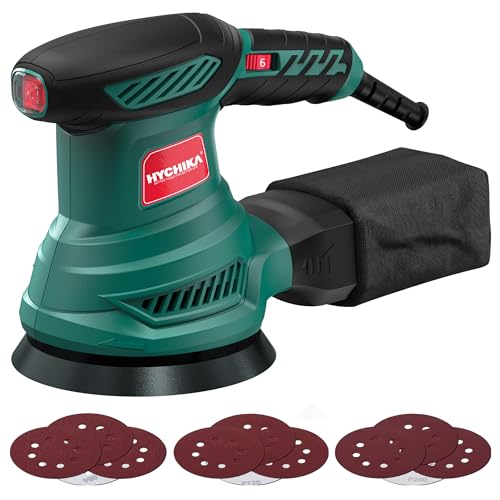
【13000 RPM & 6 VARIABLE SPEED】This electric random orbital sander is driven by a high-performance 300W motor and equipped with 6-speed control, delivering a maximum output of 13,000 RPM. It is 30% more efficient than other standard hand orbital sanders, making it suitable for polishing and sanding all types of materials.

【165 PCS Sandpaper Assortment】This set comes with both coarse and fine sandpapers to meet your various needs. sandpaper discs grit 20X60,80,120,150,240,320,400,600,and extra 5 pcs of 40 grit.
HYCHIKA Compact Electric Detail Sander (14,000 OPM)

🍀[Quiet and Efficient] - HYCHIKA detail sanders run at 1.6 amps and up to 14,000 orbits per minute; ideal for polishing metal and plastic in small corners, stripping paint...
Who needs a sander that disappears into tight corners? The HYCHIKA Compact Electric Detail Sander does exactly that.
At 14,000 OPM, this little green machine packs more speed than you’d expect from its 1.6-amp body. I’ve wrestled with bulky sanders that couldn’t reach cabinet edges or trim details. This one, with its soft rubber head and compact frame, slips right in.
The hook-and-loop system lets me swap grits quickly: coarse P80 for stripping, fine P240 for finishing. The 6-hole dust collection actually works. Sawdust still escapes, but the included bag catches enough to keep my workspace breathable.
The 2-meter cord limits movement slightly, so I grab an extension cord for bigger rooms. Twelve included sheets (P80/P120/P240) cover most projects. I wouldn’t touch drywall with it, as the manufacturer warns.
For interior woodworking though, it’s solid. For DIYers needing detail work, I’d grab this. Professionals might want cordless freedom. Me? I’m keeping mine for furniture touch-ups and craft projects.
Best For: DIY enthusiasts and hobbyists working on interior woodworking projects like furniture refinishing, cabinet edges, trim details, and craft projects who need an affordable, compact sander for tight spaces.
Pros:
- Compact design with soft rubber head easily reaches corners, edges, and tight spaces that bulky sanders can’t access
- Hook-and-loop sandpaper system enables quick grit changes, with 12 included sheets (P80/P120/P240) covering coarse stripping through fine finishing
- Functional 6-hole dust collection with included bag helps maintain cleaner, more breathable workspace
Cons:
- 2-meter cord restricts movement and requires extension cord for larger work areas
- Not suitable for drywall or cement plaster, limiting versatility for some home renovation projects
- Corded design may frustrate professionals or users wanting cordless freedom for unrestricted mobility
Recommended Products

【POWERFUL PERFORMANCE】DEKOPRO 2.5A Orbital Sander is assembled with a powerful DEKO motor that can reach speeds of up to 14,000 RPM, allowing it to provide smooth performance in a variety of sanding applications.

SMOOTH FINISH: pad dampening system designed to eliminate swirl marks on both flat and contoured surfaces

3-Amp motor spins the pad at 8,000 - 12,000 OPM
Factors to Consider When Choosing a Sander for Wood
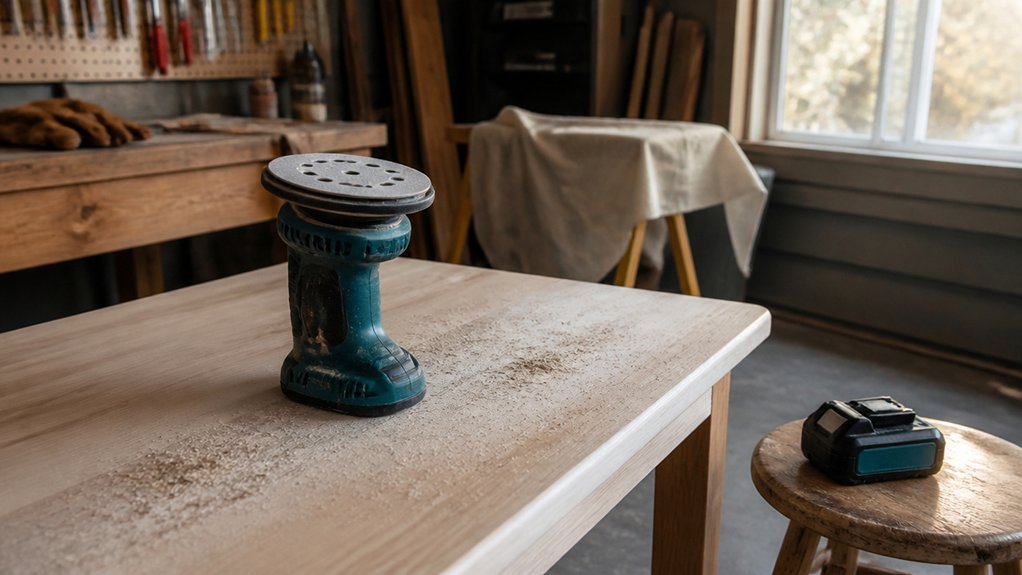
I’ve tested enough sanders to know that picking the right one isn’t just about grabbing the cheapest tool on the shelf. You’ll want to weigh power source options, sanding speed control, dust collection systems, ergonomic grip design, and pad size selection before you commit.
Let me walk you through what actually matters in each category, and where I’ve seen manufacturers cut corners that’ll cost you later.
Recommended Products

【PRO - GRADE PRECISION SANDING KIT】1 Compact Sanding Block + 100PCS 10 Grit Sandpapers (60/80/120/150/180/240/320/400/600/800), covering coarse - to - fine sanding (rough shaping to precise finishing). Ideal for detail work, micro finishing & hard - to - reach areas, compatible with wood, crafts, plastic, resin & metal—meets most DIY and professional sanding needs.

Comfortable To Hold: POLIWELL detail mini sander sanding fits snugly under your index finger, tough polyurethane foam (PU) made, soft, light weight and good feels on hand. This little sander can flexibly get into tight spaces and do larger areas quickly.
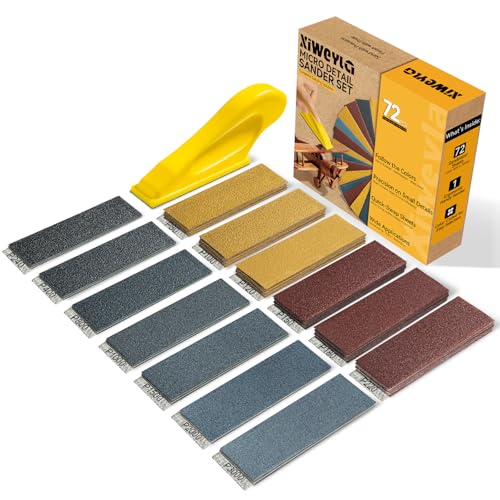
Wide Grit Range – 13 Levels from 80 to 3000: This premium sandpaper assortment pack includes 13 grit levels (80/100/120/150/180/220/240/400/800/1000/1500/2000/3000), covering everything from rough shaping to ultra-fine finishing. Works across multiple materials including wood, plastic, resin, and metal.
Power Source Options
Why does power source matter so much when you’re standing in the tool aisle, staring at two nearly identical sanders? It decides where you’ll work, how long you’ll last, and whether you’ll trip over cords.
Corded: Plug in, sand forever. I love the steady torque for big jobs. No battery swaps, no fading power. The downside? You’re tethered.
Cordless: Freedom! I grab mine for tight corners or yard projects where outlets don’t exist. But batteries add weight, shift the balance, and they’ll quit mid-stroke if you forget to charge.
So who wins? If you’re in a shop doing marathon sessions, go corded. If you chase projects around the house, cordless saves your sanity.
Me? I own both. You probably should too.
Sanding Speed Control
How much control do you actually need over your sander’s speed? I learned the hard way: too much power on pine, and you’re looking at gouges that’ll make you cry.
Variable speed saves your project. Crank it high for aggressive material removal, dial it low for delicate corners. I switch between coarse shaping and fine finishing without grabbing a second tool.
Hardwoods demand patience. Lower RPM keeps me from burning the surface, while higher orbits chew through stock faster on initial passes.
Grit matters too. I run 80–240 grit at moderate speed, then drop to whisper-quiet for 400–800 final passes.
Consistent speed means less vibration, steadier edges, and surfaces that don’t need do-overs. Trust me, your elbows and your sanity will thank you.
Dust Collection Systems
Once you’ve got your speed dialed in, there’s another battle waiting: the dust. I’ve learned the hard way that a good dust collection system isn’t optional, it’s essential for visibility and your lungs.
Look for cyclone or micro-filtration boxes. They trap big particles first, so your filter lasts longer and suction stays strong. A vacuum-compatible port is even better: continuous cleanup, no bag wrestling.
For detail work, I prefer 6-hole or multi-vent systems. They grab dust from corners where fine particles love to hide.
Don’t ignore low-dust design features. Sealed switches and dust-sealed housings keep grit out of the motor, which means your sander actually survives past the warranty.
Cleaner air, clearer sightlines, longer tool life. Worth every penny, right?
Ergonomic Grip Design
Ever spent an hour sanding crown molding and felt like your hand turned into a claw? That sting means the grip failed you.
What Actually Matters
I always check three things. First, the shape: a contoured grip keeps my wrist straight, no awkward bending. Second, the material: soft rubber beats hard plastic every time. It grips wet, grips gloved, just grips.
Weight bites too. Around two pounds, I can maneuver into tight corners without fighting the tool. Heavy sanders? They wander, leave snipes, annoy me.
Vibration: The Hidden Thief
Counterweight balance isn’t marketing fluff. It redirects vibration away from my palm. Less buzzing, less numbness, more accurate passes. Without it, I get that tingly reboot feeling for hours.
The Verdict
Small hands? Adjustable grips save you. Big hands? Skip narrow barrels. Comfort controls quality, always.
Pad Size Selection
Why does pad size matter so much? It controls how fast you work and where you can reach. I’ve learned this the hard way.
The Size Breakdown
Larger pads blast through flat tabletops. Smaller pads save you in corners and grooves. For detail work, I grab 3-4 inch pads. They balance reach with control.
The sweet spot? A 3.75 x 5.5 inch rectangle (like some palm sanders). You get more working area without losing precision.
For tight spots, go under 3 inches. Mini sanders with tiny pads access recessed areas you’d otherwise sand by hand.
My Recommendation
Match your pad to your project surface. Wrong size means uneven removal and poor finish quality. Simple as that.
Grit Range Availability
After locking in the right pad size, I turn my attention to grit. Grit range availability determines everything about your finish quality.
I look for sanders supporting a full spectrum: rough 80–120 grit for material removal, mid-range 150–220 for smoothing, and fine 400–800 grit for that glass-like hardwood finish. Limited grit options frustrate me, frankly. You need gradual progression to eliminate scratches properly.
Quick-swap hook-and-loop systems save serious time here. No one wants to fumble with clamps between stages.
My take: Skip sanders restricting you to standard 80–220 grit. For furniture-grade results, demand access to those higher 400–800+ options. Your oak tabletops will thank you. What’s your usual finishing nightmare? Mine’s visible swirl marks from rushing the grit sequence.
Versatility of Attachments
Several sanding jobs later, I have learned one thing: a single attachment is never enough.
That is why I gravitate toward 4-in-1 detail sanders. You get multiple heads for corners, contours, flat surfaces, and fine finishing, all in one tool. Tool-free attachment changes are a game changer, I swap heads in seconds without hunting for hex keys. The hook-and-loop sheet system makes grit changes equally painless.
I look for 3- or 4-attachment configurations. These let me jump from aggressive material removal to delicate final passes without switching tools. Coarse sheets tear through rough stock, while fine grits polish the surface smooth.
For most woodworkers, versatility beats specialization. One adaptable sander clears clutter from my bench and handles whatever curve, edge, or face I throw at it.