
I’ve spent more hours than I’d like to admit wrestling with warped boards and uneven edges, and let me tell you: the right planer doesn’t just save time, it saves sanity. Whether you’re a weekend warrior building a coffee table or a serious woodworker flattening rough-sawn lumber, picking the wrong tool means tear-out, frustration, and redoing work you thought was finished.
That’s why I tested seven standout planers for 2026, from battery-powered portability beasts to old-school hand planes that force you to slow down and actually feel the wood. Some surprised me. One genuinely annoyed me. And a couple I’d buy again tomorrow without hesitation. Here’s what actually matters when you’re standing in the aisle (or scrolling at midnight) trying to decide where your money goes.
MtiolHig Cordless Handheld Planer for DeWalt 20V Battery
I’ll start with the obvious: if you’ve already bought into DeWalt’s 20V battery system, this planer feels like a no-brainer. The MtiolHig 30000 CPM Cordless Handheld Planer runs on your existing batteries, which saves you money and hassle. No charger clutter, no new ecosystem to learn.
What stands out:
- Brushless motor hitting 15,000 RPM with 3-1/4 inch cutting width
- Depth control from 0 to 2mm, adjustable in 0.01mm increments
- Dual-switch safety system (both triggers must engage, so accidental starts are unlikely)
- Quick blade changes without fighting tiny screws
At under typical job-site weight, it handles extended use without murdering your wrists. I appreciate the ergonomic grip during long passes on door edges or stubborn high spots.
The catch? Battery and charger sit separately in your cart. Annoying if you’re starting fresh, irrelevant if your DeWalt collection already overflows your garage shelf.
Verdict: Perfect for DIYers and pros already swimming in yellow batteries. Everyone else should compare total investment carefully.
Best For: DIYers and professional woodworkers who already own DeWalt 20V batteries and want a cost-effective, portable planer without investing in a new battery ecosystem.
Pros:
- Leverages existing DeWalt 20V batteries, eliminating additional battery and charger costs for users already in that ecosystem
- Brushless 15,000 RPM motor with precise 0.01mm depth adjustment enables controlled, accurate material removal
- Dual-switch safety system and quick blade changes enhance user safety and maintenance convenience
Cons:
- Battery and charger not included, making it a poor value for buyers starting fresh without DeWalt tools
- 2mm maximum planing depth is relatively shallow compared to some corded competitors
- Brand recognition and long-term reliability less established than major manufacturers like DeWalt or Makita
Recommended Products

POWERFUL MOTOR: Powered by a 7.5A motor with 16,000 RPM, this electric planer delivers fast, smooth cuts on any wood. A reliable wood planer for pros and DIYers alike—the go-to hand planer for wood that makes every job easier.

【High-Power Brushless Motor】Equipped with a powerful brushless motor delivering up to 15,000 RPM for fast and efficient material removal. Designed to handle hardwood, softwood, doors, boards, and woodworking projects with smooth and consistent performance.
WEN 6530 6-Amp Electric Hand Planer, 3-1/4-Inch
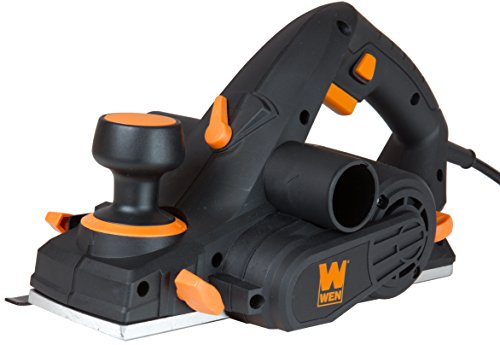
6 Amp motor provides up to 34,000 cuts per minute 16 positive stops adjust the cutting depth anywhere from 0 to 1/8 inches Make rabbets up to 1 inch in size with the 5/16...
Looking for a budget-friendly planer that doesn’t feel like a toy? I’ve found the WEN 6530, and honestly, it’s a pleasant surprise.
This orange workhorse packs a 6-amp motor that delivers 34,000 cuts per minute. That’s serious speed for smoothing rough boards or shaving doors that stick. At just 6 pounds, I can use it for hours without my arm turning to jelly.
The depth adjustment offers 16 positive stops from 0 to 1/8 inch. No guessing, no slipping, just click and go. Need rabbets? The included 5/16-inch guide handles cuts up to 1 inch deep. Perfect for shelf joints or picture frames.
WEN throws in useful extras: a dust bag (it actually catches debris), a kickstand to protect your blades, and a parallel fence for straight edges. The 2-year warranty beats most competitors.
Is it perfect? No. The cord limits mobility, and the dust bag fills fast. But for beginners building their first workbench or homeowners fixing sticking doors, this planer delivers real value.
Best For: DIY enthusiasts, beginners building their first projects, and homeowners needing an affordable, lightweight planer for occasional smoothing and rabbet work.
Pros:
- Powerful 6-amp motor delivers 34,000 cuts per minute for fast, efficient material removal
- Lightweight 6-pound design reduces fatigue during extended use
- Includes useful accessories (dust bag, kickstand, parallel fence) and a 2-year warranty that exceeds competitors
Cons:
- Corded design limits mobility and requires nearby power outlet
- Dust bag has small capacity and fills quickly during use
- Maximum 1/8-inch depth per pass may require multiple passes for thicker material removal
Recommended Products
6 Amp motor provides up to 34,000 cuts per minute

Efficiency at Its Best: Our electric handheld planer boasts a powerful 710W, 6A high-performance all-copper motor running at an impressive 16,500 RPM, delivering highly efficient and smooth planing results.

Brushless Efficiency - Experience outstanding woodworking performance. Our cordless electric wood planer for wood is equipped with an advanced brushless motor, which can provide up to 15000 revolutions per minute of powerful power, enabling fast and efficient material removal while effectively reducing wear and extending the tool's lifespan. It operates more quietly and coolerly, and has a longer service life than traditional brushed motors
JORGENSEN No.101 Mini Wood Planer
Who’s after precision in tight spaces? I’ve found my go-to in the JORGENSEN No.101 Mini Wood Planer. This little orange workhorse fits my palm like it was made for it.
Built to Last
The body is ductile iron, so when I drop it, I don’t panic. The blade? Professional O1 tool steel, the kind that holds an edge through serious work. Zinc alloy lever cap, stainless steel bits, all of it screams quality.
How It Handles
I turn the knob, set my depth, and go. The flat bottom’s polished smooth, so it glides instead of grabs. Sharpen the blade when it dulls, adjust when it needs tweaking. Simple.
Real Talk on Use
I’m talking detail work, trimming, deburring, surface prep. DIY projects, craft builds, even pro jobs where finesse beats force. It’s small, handheld, no cord to fight.
My Verdict
If you need muscle, look elsewhere. For precision in tight spots, this one’s staying in my kit. Watch that blade though, it’s sharper than my comeback after coffee.
Best For: Woodworkers, DIY enthusiasts, and crafters who need precise handheld planing for detail work in tight spaces.
Pros:
- Durable ductile iron body with drop-tested construction withstands jobsite wear and tear
- Precision-adjustable cutting depth with polished flat bottom enables smooth, controlled cuts
- Professional O1 tool steel blade stays sharp longer and can be resharpened for extended service life
Cons:
- Small handheld size limits capacity for large-scale material removal
- No powered operation requires manual effort for sustained use
- Exposed sharp blade poses significant injury risk without guards or careful handling
Recommended Products

Direct Replacement: Circlip Gaskets Fits Portable planer knife setting gauge ,replacement for Delta 22-540 type 1 & 2 & the TP300,this will work on the 48mm diameter heads

Portable planer knife setting gauge compatible with Delta 12 in portable planers for 22-540 Type 1&2 and TP300 Planer Pals, this planer blades setting gauge will work on the 48mm diameter heads. Portable planer knife setter gage is a high-quality tool designed for precision blade setting on 22-540 planers. With a cutting depth of 48mm and a user-friendly design, it ensures accurate positioning and enhances productivity in woodworking projects

Product Overview: Portable Planer Knife Setting Gauge with 1343868 Knife Lifting Spring, Only Fit for Delta 12 inch portable planers (22-540) type 1 & 2 & 22-547&TP300
Saker Chamfer Plane Woodworking Edge Trimming Tool
Need a compact edge trimmer that won’t hog your toolbox? I’ve found my go-to in the Saker Chamfer Plane. This little black workhorse fits in my palm but packs six interchangeable cutter heads for whatever edge I’m attacking.
What sets it apart? Those horizontal and vertical bubbles, honestly. I level my cuts by eyeballing built-in vials, no guesswork. The cutting depth adjusts to match soft pine or stubborn oak, and the carbon steel blades stay scary sharp.
That black retaining edge? It’s saved my knuckles more than once.
I swap cutter heads in seconds, disassemble for cleaning just as fast. It’s not a bench plane, obviously. It’s for quick chamfers, corner rounding, edge cleanup on the fly.
Who’s it for? Hobbyists tight on space, trim carpenters needing portability, anyone tired of dragging out full-size gear for five-minute jobs.
Verdict: Buy it if you value speed and small-shop storage. Skip it if you’re milling rough lumber daily.
Best For: Hobbyists with limited workshop space, trim carpenters needing portable edge-trimming solutions, and woodworkers seeking quick chamfering and corner rounding without full-size equipment.
Pros:
- Six interchangeable cutter heads provide versatile edge-trimming options for various woodworking tasks
- Built-in horizontal and vertical bubble levels enable precise, guesswork-free leveling during operation
- Compact palm-sized design with quick disassembly makes it highly portable and easy to store
Cons:
- Not suitable for heavy-duty applications like milling rough lumber on a daily basis
- Limited to quick edge work rather than functioning as a full bench plane replacement
- Carbon steel blades, while sharp, may require more frequent maintenance compared to premium blade materials
Recommended Products
HEAVY-DUTY PERFORMANCE – The My PB Series Edge 2 planer board is built for anglers pulling bigger baits and heavier presentations. Its 10" powder-coated aluminum body delivers corrosion resistance and durability while weighing only 8 ounces for responsive, dependable tracking.
A pair.Left & Right sides.

PRECISION FLATTENING FOR WIDE PANELS - 18" sole with 60mm cutter makes quick work of table tops, workbench surfaces, and wide boards; sized for maximum versatility in hand tool woodworking
3-1/4 Inch Electric Hand Planer for Woodworking
Why settle for a bulky bench planer when you’re working on edges and trim? I’ve been reaching for this 3-1/4 inch electric hand planer from Masitke more often than I’d expected, and here’s why.
The 16,000 RPM motor chews through hardwood and softwood alike. That’s fast, folks. You get smooth finishes plus quick material removal, which matters when I’m trimming doors or leveling surfaces on a Saturday project.
Depth control impresses me. The scale-adjustable knob dials from 0 to 2mm, so I can switch between fine finishing and hogging off material. Consistent cuts? Check. I’ve used this for countertop fabrication, and it holds the line.
Now, accuracy features. The edge guide keeps my cuts straight, no wavering. The V-groove design, built right in, handles clean wood joints and decorative edge details. Handy.
Ergonomics matter when you’re planing all afternoon. The rubber anti-slip handle reduces fatigue. The safety lock prevents accidental startup. Thank goodness, I’ve had tools fire up unexpectedly, and it’s not fun.
The kit includes edge guide, carbon brushes, gloves, dust chute. Ready to roll. Portable power for house construction, daily woodworking, whatever you’ve got.
Verdict: Professional carpenters get reliable performance. DIY enthusiasts get forgiving control. I’d recommend this for anyone needing mobility without sacrificing capability.
Best For: Professional carpenters and DIY enthusiasts who need a portable, versatile electric hand planer for edge work, trim, leveling surfaces, and detailed woodworking tasks without the bulk of a bench planer.
Pros:
- Powerful 16,000 RPM motor delivers fast material removal and smooth finishes on both hardwood and softwood
- Precise 0-2mm adjustable depth control with scale-adjustable knob enables consistent cuts from fine finishing to heavy material removal
- Built-in accuracy features including edge guide for straight cuts and V-groove design for clean joints and decorative details
Cons:
- Limited 2mm maximum cutting depth may require multiple passes for thicker material removal
- No mention of dust collection efficiency or compatibility with external vacuum systems
- 3-1/4 inch cutting width may be insufficient for larger surface planing tasks compared to wider bench planers
Recommended Products

Precision Wood Planing: Features a 2‑inch (51 mm) high‑quality steel blade and an adjustable mouth and depth gauge, allowing for accurate smoothing, trimming and finishing of wood surfaces.
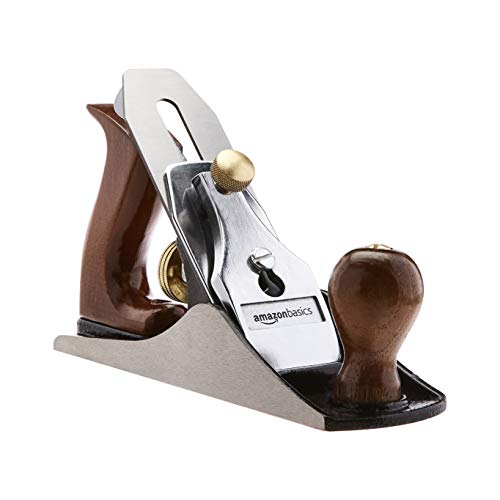
No. 4 adjustable precision smoothing bench hand plane for woodworking and carpentry projects
Amazon Basics Woodworking Hand Planer – No.4 Bench Plane
Precision Wood Planing: Features a 2‑inch (51 mm) high‑quality steel blade and an adjustable mouth and depth gauge, allowing for accurate smoothing, trimming and...
Looking for solid performance without draining your wallet? I’ve tested the Amazon Basics No.4 Bench Plane, and it’s surprisingly capable for the price.
What You Get
This plane features a 2-inch steel blade, adjustable mouth, and depth gauge. The cast-iron body keeps vibration down, which means cleaner cuts.
I appreciate the front and rear grips; they give me real control during long smoothing sessions.
The Catch
Here’s the thing: the sole flatness depends on you. The manual guides you through lapping (that’s sanding the base flat), so budget some setup time.
Don’t skip this step, or you’ll fight tearout forever.
Who’s It For?
DIYers starting out, professionals needing a backup, anyone reselling refurbished furniture. It handles edge smoothing, door trimming, and cabinetry work without complaint.
My Take
The adjustment screws work fine, nothing fancy.
Best For: DIYers starting out, professionals needing a backup plane, or anyone reselling refurbished furniture who wants solid performance without spending a lot.
Pros:
- Cast-iron body reduces vibration for cleaner cuts and improved stability during use
- Front and rear grips provide excellent control during extended smoothing sessions
- Highly affordable, making it accessible for beginners and budget-conscious buyers
Cons:
- Requires manual lapping of the sole to achieve flatness, adding setup time before first use
- Adjustment screws are functional but basic, lacking the refinement of premium planes
- Blade alignment and sole flatness depend entirely on user effort and skill
Recommended Products

[Protection & Compatibility] compatible with DeWalt 20V/60V batteries (Battery and Charger NOT included). Built-in Low-Voltage Protection (Not affiliated with DeWalt)
WEN 6528 3.8-Amp Electric Hand Planer, 2-3/8-Inch
The WEN 6528 is your go-to when you want power without the heft. At 4.3 pounds, this thing won’t tire your arms out during long edging sessions. I appreciate that.
The 3.8-amp motor pushes 32,000 cuts per minute, which translates to smooth, fast material removal on softwoods and manageable hardwoods. The 2-3/8-inch width hits a sweet spot: narrow enough for control, wide enough for efficiency.
Nine positive stops let you dial depth from 0 to 1/16-inch precisely. No guessing, no slop.
The onboard wrench storage saves me from hunting through my toolbox mid-project, and that kickstand? Small detail, huge frustration-saver. It keeps the blade off your workpiece when you set it down.
Two-year warranty backs it up.
Best For: DIY woodworkers and hobbyists who need a lightweight, affordable electric hand planer for quick edging and smoothing tasks on softwoods and manageable hardwoods.
Pros:
- Ultra-lightweight 4.3-pound design reduces arm fatigue during extended use
- 32,000 cuts per minute with 9 positive depth stops for precise, fast material removal
- Thoughtful convenience features including onboard wrench storage and protective kickstand
Cons:
- 2-3/8-inch cutting width may be too narrow for larger surface planing jobs
- 3.8-amp motor may struggle with dense or figured hardwoods
- Limited 1/16-inch maximum depth of cut requires multiple passes for deeper material removal
Factors to Consider When Choosing a Planer for Woodworking
I’ll pick a planer by weighing what’s actually going to matter in my shop, and I’ve learned the hard way that specs on paper don’t always match real life. Power source options, cutting width capacity, depth adjustment range, motor strength rating, and portability and weight, these five factors can make or break my daily workflow, so let’s break them down.
I’m going to walk you through what I’ve found works, what doesn’t, and where I’ve personally compromised versus gone all-in.
Power Source Options
When I’m picking out a planer, the first thing I wrestle with is how I’m going to power the thing.
Cordless vs. Corded: The Eternal Debate
Cordless planers run on battery packs, like DeWalt’s 20V system. I love the portability, no doubt. But here’s the catch: you’ll need spare batteries for extended work. Nothing kills my groove faster than waiting for a charge mid-project.
Corded planers, meanwhile, plug into your shop power and just keep going. Continuous performance, no swaps required.
Motor Matters
Higher amperage or RPM means faster cuts and deeper passes. Brushless motors? Worth the extra cash, they run cooler and last longer than brushed designs.
The Real Tradeoffs
Your power choice affects weight, balance, and whether you’re tethered to an outlet or chasing battery levels. Cordless for job sites, corded for the shop. Simple as that.
Cutting Width Capacity
How much width do you actually need? Cutting width capacity determines how much wood your planer removes in one pass, and I think this spec trips people up constantly.
Common widths run 2-3/8 inches, 3-1/4 inches, and beyond. Here’s my breakdown:
2-3/8 to 3-1/4 inches: Perfect for edge trimming and narrow stock. I reach for these when I need control over precision work.
Wider capacities: Essential for flattening panels or wide boards efficiently. Fewer passes saves serious time.
But here’s the catch: wider means heavier. I wrestled a bulky 6-inch model once, and keeping edges square felt like steering a boat. For narrow boards, smaller planers offer better maneuverability and finer control.
Match width to your typical projects. Panel builders need girth; furniture makers often prefer nimble.
Depth Adjustment Range
Why does depth adjustment matter so much? It controls how much wood you shave off per pass, and that changes everything about your workflow.
Most planers offer ranges from 0 to 1/8 inch or 0–3 mm. I prefer wider spans because they let me switch between light trimming and aggressive stock removal without babysitting the machine. Who wants ten passes when three will do?
Look for positive stops at fixed depths. They lock in repeatability, so your eighth board matches your first.
Fine-grain control down to 0.01 mm matters too, especially for final fitting and mold work where “close enough” isn’t.
Knob-style adjustments feel smoother to me than discrete stops, though both work. Test the mechanism in-store if you can: a sticky dial ruins the experience fast.
Motor Strength Rating
What separates a planer that purrs through oak from one that chokes on pine? I’ve learned it’s all about motor strength, and I don’t mess around with weak tools anymore.
What Actually Matters
Here’s what I look for: amperage and horsepower tell the real story. A 6-amp corded planer won’t quit on deep cuts where a 4-amp would overheat and whine. I’ve watched cheaper motors stall mid-pass, leaving ugly ridges I’d spend hours fixing.
Brushless motors, in my experience, run cooler and longer, especially on battery models. Speaking of cordless: don’t bother with low-voltage systems. I’ve found 20V batteries actually deliver when I’m hogging off serious material.
The RPM Myth
No-load speed numbers look flashy, but it’s torque under load that counts. A 15,000 RPM planer means nothing if it bogs down on maple.
My Take
For hardwood work, I want horsepower and proven amps. For weekend softwood projects, you can ease up, somewhat.
Portability And Weight
Where does a planer earn its keep? Often, it’s wherever you need it, not just chained to your bench.
Weight matters more than you’d think. I grab a 4- to 6-pound portable unit for delicate trim work, my wrist thanking me after hour three. Heavier models? They stay put.
Cordless vs. corded: pick your poison. I love ditching the cord for job sites, no tripping hazards, no hunting outlets. But I’ll admit, corded planers never quit mid-pass. Battery swaps kill momentum.
Little details add up. Kickstands prevent blade-dinging disasters. Onboard wrench storage means I’m not digging through my truck. These aren’t luxuries, they’re sanity savers.
Verdict: Go cordless and light if you’re mobile. Tether up for marathon sessions. Your back, and your project timeline, will notice the difference.
Blade Quality Material
How much does blade material actually matter? It matters a lot, actually. I’ve burned through cheap blades in hours, and it’s maddening.
Here’s what I look for:
Steel Types That Last
- O1 tool steel: My go-to. It holds an edge well, and I can sharpen it again and again. Great value for hobbyists.
- Ceramic or carbon steel: Worth the extra cost if you’re planing hardwoods daily. They resist wear that would trash lesser blades.
What Else Counts
Ductile iron bodies paired with sharp blades cut vibration, so you get smoother surfaces. Quick-change blade systems? Non-negotiable for me. I hate downtime.
The Geometry Factor
Blade width and tooth shape determine your cut quality. Wider blades cover more ground; proper tooth geometry means fewer tear-outs.
My verdict: Start with O1 steel, upgrade if you’re production-minded.
Safety Features Included
Once I’ve got a blade I trust, I’m thinking about what keeps my fingers attached, you know?
I look for dual-switch systems first. Both switches, on/off plus safety, stop those heart-stopping accidental starts.
Blade guards matter too. Some guards flip up easy, others fight you. Quick-change mechanisms, that’s where premium models shine: less fumbling, less exposure.
Depth stops deserve more love. Set your maximum cut, forget about going too deep. Metal stops click positive, plastic ones feel mushy.
Kickstands seem small until you’re mid-project. They keep the cutterhead off your work and your hands clear.
Lighter planers fatigue me less. Fatigue causes slips. Slips cause stitches.
Skip the bare-bones models. Spend forty more dollars on guards that stay put and switches that make sense.
Accessory Compatibility Check
Every planer I’ve bought taught me one hard lesson: the tool itself is only half the battle. You’ve got to check accessory compatibility, or you’re stuck with a paperweight.
Start with the base width. A 2-3/8″ base handles small trim jobs, but 3-1/4″ covers wider boards without multiple passes. Match it to your typical workpiece, or you’ll curse the extra steps.
Power matters too. Got a battery system already? Stick with it, or you’re buying into a whole new platform. Corded? Make sure your shop can handle the draw.
Blades are where manufacturers get sneaky. Check replacement availability before you buy. Can you sharpen them, or are you locked into proprietary cartridges? Dust bags, fences, edge guides: verify they’re included, not hidden upsells.
Finally, check rabbeting depth stops. Incompatible stops mean your jigs won’t fit. Frustrating, and expensive to fix.