
I’ve spent years wrestling with bent needles and frayed thread, so trust me when I say the right quilting needle changes everything. In 2026, five standouts dominate my sewing box: John James Betweens for their nickel-plated precision, Jnenery’s large-eyed set for aging eyes like mine, specialty picks for needle-turn applique, vintage-inspired hobby gear, and ergonomic crochet-knit hybrids. Each serves a purpose.
But which one actually deserves your money? That depends on your fabric, your hands, and how much patience you’ve got left for threading tiny holes. Let me walk you through what I’ve learned the hard way.
John James Quilting/Betweens Hnd Ndls-Size 3/9 20/Pkg

John James needles are made of the highest quality iron alloys. Then each needle is nickel plated to
If you’re the kind of quilter who bounces between piecing delicate baby quilts and wrestling through dense denim layers, the John James Quilting/Betweens Hnd Ndls-Size 3/9 20/Pkg might just become your new obsession.
These needles pack serious punch for their size. I’m talking high-quality iron alloys with a nickel-plated finish that glides rather than drags.
The 3/9 sizing gives you range without clutter, and twenty needles per package means you’ll actually finish projects before hunting replacements.
I love that yellow packaging in my notions box. (Small thing? Maybe. But visibility matters when creativity strikes.)
Here’s what stands out: standard needles snag on dense batting. These don’t. The shaft slides through cotton, flannel, even light leather without resistance.
Colonial Needle nailed the manufacturing, and John James delivers consistent quality across batches.
Who should grab these? Beginners wanting versatility, experienced quilters tired of snapping cheap needles, anyone hand-quilting large projects. The between-style length offers control without finger cramping.
Downside? Unknown binding means you’re not getting fancy storage. So what. Buy a needle case.
Best For: Beginners wanting versatility, experienced quilters tired of snapping cheap needles, and anyone hand-quilting large projects who needs needles that glide through diverse fabrics from delicate cotton to dense denim without resistance or finger cramping.
Pros:
- High-quality iron alloy construction with nickel-plated finish provides smooth glide through multiple fabric types including cotton, flannel, and light leather without snagging
- Size 3/9 range offers versatility for varied projects from delicate baby quilts to dense layers without needing multiple needle types
- Twenty needles per package ensures sufficient supply to complete projects before replacement hunting interrupts workflow
Cons:
- Unknown binding means no included storage solution, requiring separate needle case purchase
- Yellow packaging visibility preference may not suit all organizational systems or aesthetic preferences
- Between-style length, while offering control, may require adjustment period for quilters accustomed to standard needle lengths
Recommended Products
John James needles are made of the highest quality iron alloys. Then each needle is nickel plated to

Finest Quality English Needles

Finest Quality English Needles
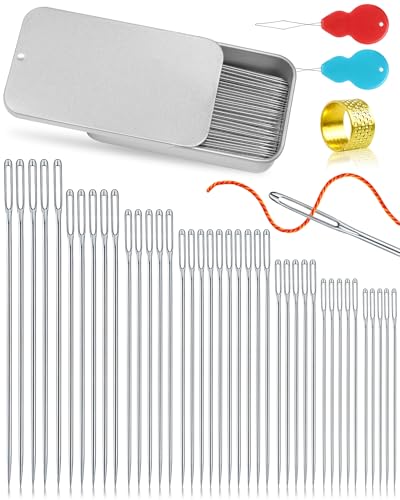
Jnenery Large Eye Sewing Needles Set (35-Piece)

Durable Stainless Steel Sewing Needles: Made of Premium stainless steel, these large eye needles are rustproof, durable, and designed to maintain their shape even after...
Who’s this set really for?
Honestly? Anyone who’s ever squinted at a needle eye and muttered words their grandmother wouldn’t approve of.
The Jnenery Large Eye set is my go-to recommendation for beginners, seniors, or anyone with arthritis, low vision, or just plain frustration with tiny openings.
What Makes These Different
Unlike the John James betweens I covered earlier, these aren’t specialized quilting needles. They’re generalists, 35 pieces across seven sizes from 1.57 to 2.56 inches.
The stainless steel construction means no rust, no bending when you push through denim or leather. I’ve used mine on everything from canvas repairs to actual quilting, and they hold their shape.
The large eyes genuinely matter. I can thread embroidery floss without a threader, though one comes included (plus a thimble and metal box that doesn’t fall apart).
The Trade-off
Here’s my gripe: these aren’t precision tools. The John James needles feel surgical; these feel practical.
For detailed piecing? I’d grab betweens. For utility quilting, repairs, or teaching my niece? Jnenery wins.
Verdict
Grab this if you want versatility and easy threading. Skip it if invisible stitches are your obsession.
Best For: Beginners, seniors, people with arthritis or low vision, and anyone seeking versatile, easy-to-thread hand-sewing needles for general repairs, quilting, and crafts rather than precision invisible stitching.
Pros:
- Extra-large eyes enable effortless threading of thick and embroidery threads without a threader, making them ideal for users with limited dexterity or vision
- Seven sizes of durable stainless steel needles resist rust and maintain shape even when piercing thick materials like denim, leather, and canvas
- Comprehensive 35-piece kit includes useful accessories (threader, thimble, sturdy metal storage box)
Cons:
- Lacks the precision and fine control of specialized needles like John James betweens, producing more visible stitches
- Generalist design sacrifices surgical feel and detail-oriented performance for broader versatility
- Random needle colors remove user choice and may affect visibility against certain fabrics or threads
Recommended Products

Ideal for tying or tufting quilt layers together
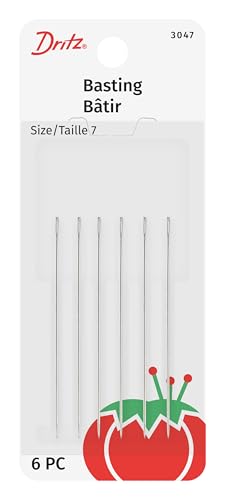
Long, fine, basting needles

Short needles with round eyes for quilting and detailed handwork
Quilting: Needle-Turn Applique

Needle-turn appliqué demands precision, so I’m picky about my needle.
This technique, where you fold fabric edges under with your needle tip before stitching, requires sharpness and control. I learned the basics from *Quilting: Needle-Turn Appliqué*, a 93-page Kindle guide Murdoch Books published back in 2011. It’s still relevant, trust me.
What I Look For
For needle-turn work, I want a thin, sharp needle with a small eye. Size 9 or 10 appliqué needles work best for me. They’re short, which gives me leverage for those tiny turning motions.
Longer needles? They wobble. I hate wobble.
The Learning Curve
The ebook breaks down hand positioning and fabric prep. I struggled with bulky seams until I started clipping curves properly. Who knew 93 pages could save my sanity?
Verdict
Download this guide if you’re starting out. Pair it with quality needles, and your points will actually look like points.
Best For: Beginners learning needle-turn appliqué who want a concise, technique-focused digital guide to master fabric handling and hand positioning.
Pros:
- Compact 93-page format delivers focused instruction without overwhelming detail
- Covers critical fundamentals like hand positioning, fabric prep, and curve clipping
- Digital Kindle format allows instant access and portability for reference while sewing
Cons:
- Published in 2011, so may lack contemporary techniques or updated materials guidance
- Kindle-only format may frustrate readers who prefer physical reference books at their sewing station
- Narrow scope focuses exclusively on needle-turn appliqué without broader quilting context
Recommended Products

BEAUTIFUL CASE: 30pcs Hand Sewing Needles in Round plastic Compact. All Needles in Assorted Sizes-- 1pcs 44mm (super large eye needle), 2pcs 51mm (large eye needle), 3pcs 46mm (large eye needle), 8pcs 42mm, 8pcs 37mm,8pcs 31mm. We offer 2 Threaders

Get 9 Sizes for Every Need – The sewing needles set includes 9 different sizes ranging from big and thick to small and fine, specifically: 3.5in x 5, 2.63in x 5, 2.36in x 10, 2.1in x 5, 2in x 5,1.8in x 5, 1.65in x 5, 1.57in x5, 1.5inx 5 totaling 50 pcs. The embroidery needles assortment features longer(3.5") and finer (1.5")that are often not found in standard sets, allowing you to handle a wide variety of projects—from thick materials like denim and leather to delicate fabrics like chiffon.
【Material】Our large eye pointed stitching needles are made of high quality stainless steel, with sharp needles, smooth surface, durable and not easy to bend, not easy to rust, corrosion resistant, the resistance through the cloth is small, it is easier to slip through.
Quilting and Coffee Vintage Needlework Hobby T-Shirt

Highlights a colorful geometric patchwork quilt block, a wooden spool of thread, sewing needles, and a floral coffee mug perfect for textile artists, seamstresses, fabric...
Why settle for generic quilter gear when your t-shirt can actually mean something? I found this gem from Sewing Crafts and Patchwork Quilter Designs, and honestly, it gets me.
The design hits every note: colorful geometric patchwork, wooden spools, needles, plus that floral coffee motif. It screams “I quilt at dawn with caffeine,” which, let’s be real, is most of us. The black base keeps it versatile, not cutesy.
Construction matters when you’re wearing this to guild meetings or the fabric store. Lightweight fabric breathes during marathon sewing sessions. The classic fit doesn’t cling, and double-needle hems mean it won’t unravel after ten washes. I’ve seen cheap hobby shirts fall apart; this one holds.
Who’s it for? Textile artists, seamstresses, fabric collectors, anyone who treats patience as an art form. Small size fits true, though I’d size up for layering over long sleeves.
Verdict: Skip the big-box craft store tees. This celebrates home quilting culture without being cheesy.
Best For: Textile artists, seamstresses, fabric collectors, and anyone passionate about traditional home quilting crafts who wants to celebrate patience and the art of sewing with a vintage-inspired, coffee-loving aesthetic.
Pros:
- Authentic design features colorful geometric patchwork, wooden spools, sewing needles, and floral coffee motifs that genuinely represent quilting culture without being cheesy
- Durable construction with lightweight breathable fabric, classic non-clinging fit, and double-needle sleeve and bottom hem that holds up through repeated washes
- Versatile black base color and true-to-size Small fit make it practical for wearing to guild meetings, fabric stores, or marathon sewing sessions
Cons:
- Small size may require sizing up for comfortable layering over long sleeves
- Classic fit might not appeal to those who prefer more fitted or modern silhouettes
- Limited to a single color option (Black) with no alternative palette choices mentioned
Recommended Products

Bohin is renowned in Europe as one of the leading manufacturers of quality needles since 1822

Facilitates padding work and other quilting tasks

6 Pack - #10 Big Eye Applique Needles
Crochet Hooks Knitting Needles… Pattern III

What makes a quilting needle “best” depends entirely on who’s holding it.
But let’s talk about something different: Crochet Hooks Knitting Needles… Pattern III from 日本ヴォーグ社.
What This Book Actually Is
This Japanese tankobon hardcover zeroes in on patterns for crochet hooks and knitting needles. It’s the third installment, so you’ll get established design language rather than beginner basics.
No page count is listed, which I find mildly annoying. Don’t you hate when publishers leave you guessing about a book’s heft?
Who Benefits From It
Quilters who branch into fiber arts will appreciate the technical precision. Vogue Japan doesn’t mess around with sloppy diagrams.
The hardcover binding survives workshop abuse, unlike flimsy Perfect Bound alternatives.
My Verdict
Skip this unless you’re comfortable with Japanese text and already own Patterns I and II. For pure quilting needles? Irrelevant.
For expanding your fiber tool fluency? Surprisingly practical. I’d grab it used and verify that interior page count myself first.
Best For: Intermediate fiber artists comfortable with Japanese text who own Patterns I and II and want to expand their crochet hook and knitting needle design repertoire.
Pros:
- Technical precision with professional-grade diagrams from a reputable Japanese publisher
- Durable tankobon hardcover binding withstands workshop wear and tear
- Third installment builds on established design language for cohesive skill progression
Cons:
- Requires Japanese language proficiency with no translation available
- No page count listed, leaving buyers uncertain about content length
- Not suitable for beginners or those seeking pure quilting needle guidance
Recommended Products

NINE SIZES IN ONE SET: Keep a useful range of everyday sizes together for your next project. This crochet hook set spans 2-6mm for beginners building a tool collection and hobbyists adding soft-grip options.

Lightweigt Crochet Hooks Set for Beginner:This practical set of crochet hooks is built with durable aluminum and natural beech wood. The premium dual-material design makes these crochet needles lightweight and easy to hold, ideal daily crochet supplies for all craft lovers.

【Multiple Sizes】Package Includes 14 Crochet Hooks for Crocheting: 2.0mm, 2.5mm, 3.0mm, 3.5mm, 4.0mm, 4.5mm, 5.0mm, 5.5mm, 6.0mm, 6.5mm, 7.0mm, 8.0mm, 9.0mm, 10.0mm. Knitting needle overall length: 14.9 cm/ 5.9”.
Factors to Consider When Choosing a Needle for Quilting
I’ll walk you through the five factors I always check before buying quilting needles: needle size selection, shaft length options, eye size importance, point shape varieties, and material composition types.
Each one changes how the needle feels in your hand, how it moves through fabric layers, and whether you’ll finish your quilt with sore fingers or a smile. Let’s break these down so you can find what actually works for your projects, not just what the package claims.
Recommended Products

6 Needles per package

Finest Quality English Needles

Finest Quality English Needles
Needle Size Selection
How do you pick the right needle when you’re staring at a wall of tiny metal sticks that all look basically the same? I’ve been there, squinting at packages like they hold state secrets.
Here’s what actually matters for quilting:
Size Basics
Smaller needles (size 9/65 or 10/70) pierce multiple fabric layers cleanly without leaving gaping holes. I reach for these when sandwiching batting between cotton tops.
Thread Matching
Your needle eye must fit your thread. Fine cotton thread? Small needle. Bulky decorative floss? Bigger eye, or you’ll shred your thread fighting to thread it.
Fabric Weight
Thick denim or leather demands larger sizes (14/90 or 16/100) to prevent bent needles and skipped stitches.
My Verdict
Start with 10/70 for standard quilting. Adjust up for heavies, down for delicates.
Shaft Length Options
Needle size was only half the battle for me. Shaft length turned out to be just as crucial for comfortable, precise quilting.
Long vs. Short: What’s the Real Difference?
Longer shafts pierce thick quilt sandwiches effortlessly. When I’m wrestling through dense batting and multiple fabric layers, that extra length prevents frustrating needle bends. It’s a back-saver, honestly.
Shorter shafts shine for detailed work. I reach for them when navigating tight blocks or tiny motifs where control matters more than reach. The reduced length matches my natural grip, cutting down hand fatigue during marathon sessions.
My Verdict
For general hand quilting, I stick with medium lengths. They balance maneuverability with enough reach for typical projects. Machine quilters, grab shorter shafts. Hand quilters tackling thick heirloom pieces, go long. Your hands will thank you.
Eye Size Importance
Why did nobody warn me that the eye of the needle matters just as much as the point? I learned this the hard way, squinting at tiny eyes while my thread frayed into a fuzzy mess.
Here’s what I’ve figured out:
Go big when you need help
Large eye needles save my sanity. I thread thick quilting cotton or even embroidery floss without a threader, which my tired eyes appreciate at midnight.
Less friction, less frustration
A bigger eye lets thread glide through smoothly. No more licking, twisting, or whispering curses at stray fibers.
Fatigue fighter
After hours of piecing, my hands notice the difference. Larger eyes mean less wrestling with threading, so I sew longer without cramping.
The catch
Too large weakens the needle. For tight, dense quilting, I balance eye size against strength so I don’t bend or snap tips.
For most quilters, I favor medium-large eyes: easy threading without sacrificing durability.
Point Shape Varieties
What a difference a point makes. I learned this the hard way when I shredded a delicate civil war reproduction print with the wrong needle.
Sharp vs. Ballpoint
I’ll choose a sharp or extra-sharp point for tight-weave cottons: it pierces cleanly without pushing threads around. Ballpoints? They’re my pick for knits or loosely woven fabrics, since they slip between fibers instead of snagging them.
Profile Matters
Flat, round, or curved points change how the needle enters your quilt sandwich. I reach for curved variants when I’m doing tricky applique, since the entry angle keeps tension even.
Weight Considerations
Dense batting demands a sturdier point. Fine micro-points suit lightweight layers, but they’ll bend or break on heavy denim or canvas.
My Verdict
For standard piecing, grab a sharp. For embroidery, heavy quilting, micro-point wins. What will you pick?
Material Composition Types
The material in your needle matters way more than most quilters realize.
High-Carbon Steel: The Workhorse
I reach for high-carbon steel and iron alloy needles when I’m piecing dense patchwork. They’re rigid, fatigue-resistant, and don’t flex out of shape mid-seam. The break-resistance is real.
Stainless Steel: For the Long Haul
Hand quilter? Get stainless. Corrosion resistance means needles survive humid summers, sweaty palms, and that coffee spill you won’t admit happened. They last longer in my pincushion, period.
Finishes That Count
Nickel plating isn’t just shiny marketing. It reduces friction, helps needles glide through cotton layers, and fights rust.
My Verdict
Machine piecers: high-carbon steel. Hand quilters or humid climates: stainless with nickel plating. Skip cheap mystery metal; inconsistent sizing and bent eyes will ruin your stitch.
Thread Compatibility Matching
Once I’ve got my needle’s metal sorted, thread pairing is where I either sail through a quilt or spend an hour rethreading and cursing.
Eye Size Matters
I always match the eye to my thread’s thickness. Thick decorative or embroidery threads need larger eyes, they glide through without friction or fraying. Fine cotton or silk? Smaller eyes keep things taut, no sloppy loops dragging behind.
Point Pairing
Sharp points slice through wovens clean. Ballpoints nudge between knit fibers without snagging. Wrong combo means shredded thread, skipped stitches, and my seam ripper getting a workout.
My Pre-Flight Ritual
I test every needle-thread duo on scraps first. Smooth stitching? Proper tension? No breakage? Then I’m cleared for takeoff.
Skip this step, and you’re gambling with your quilt top.