
I’ve tested too many i-cord machines that jam, squeak, or quit after one thick yarn. For 2026, five models actually deliver: Caydo’s Pro line dominates with motorized consistency, while budget picks surprise with USB-C portability. But motor speed isn’t everything, needle count changes your cord thickness, and that “automatic” label? Sometimes it means hand-cranking with extra steps.
Want the real differences between the KC-PRO and the F1 Lite, or why crocheters need a specific Caydo variant? The breakdown starts now.
Caydo Automatic i Cord Knitting Machine Pro

Fully Automatic Electric Knitting: Hands-Free Efficiency! Say goodbye to tedious manual knitting! This automatic iCord knitting machine effortlessly can knit lot of i-cords...
Who’s the Caydo KC-PRO really for?
I’d say it’s for anyone who’s tired of cranking out i-cords by hand. You know the drill: hours of repetitive motion, sore fingers, and cords that never quite match.
The KC-PRO fixes that with electric, hands-free knitting that actually works.
Here’s what stands out. Three speed settings, topping out at 60 cm per minute, let you blast through projects fast. The auto-guiding wheels and tension spring keep things smooth, no vibration, no tangles.
I love the transparent cover, too, peek in anytime without stopping the machine.
It’s desk-friendly, no clamps needed, and the ABS plastic body feels solid, way tougher than cheaper PP alternatives. Purple, medium-sized, unassuming.
Beginners get detailed manuals and video tutorials. Pros get reliability. The motor’s consistent, the learning curve’s gentle, and customer support actually responds when you hit a snag.
My take: If you gift to crocheters, run workshops, or just want clean, even cords without babysitting a machine, this delivers. Not perfect, but pretty darn close.
Best For: People who want fast, hands-free i-cord production without the tedium of manual cranking—whether they’re beginners seeking guided tutorials, professionals needing reliable output, or gift-givers shopping for crochet enthusiasts.
Pros:
- Electric, hands-free operation at speeds up to 60 cm/min with three adjustable settings for efficient project completion
- Stable, tangle-free knitting via auto-guiding wheels, tension spring, and transparent cover for progress monitoring
- Beginner-friendly with detailed manuals and video tutorials, solid ABS plastic construction, and responsive customer support
Cons:
- Limited to i-cord production only, not suitable for other types of knitting or crochet projects
- Medium desk-based design lacks portability for travel or on-the-go crafting
- Purple color and basic aesthetic may not appeal to users seeking customizable or premium styling options
Recommended Products

Washing Instructions: N/A
Fully Automatic Electric Knitting: Hands-Free Efficiency! Say goodbye to tedious manual knitting! This automatic iCord knitting machine effortlessly can knit lot of i-cords quickly. No constant monitoring or adjusting weights, just smooth, tangle-free icord production with minimal effort. Perfect for crafters who want to save time and reduce hand fatigue while creating many beautiful handmade iCord decorations

Fully Automatic Electric Knitting: Hands-Free Efficiency! Say goodbye to tedious manual knitting! This automatic iCord knitting machine effortlessly can knit lot of i-cords quickly. No constant monitoring or adjusting weights, just smooth, tangle-free icord production with minimal effort. Perfect for crafters who want to save time and reduce hand fatigue while creating many beautiful handmade iCord decorations(NOT INCLUDE ORNAMENTS TEMPLATES)
Caydo F1 Lite iCord Knitting Machine (6 Needles)

High Efficiency Knitting: Say goodbye to tedious and uneven hand knitting! This 6-needle manual icord knitting machine boosts your crafting speed significantly, effortlessly...
The Caydo F1 Lite is my pick for beginners who want thicker cords without the learning curve. This manual 6-needle machine packs serious punch for its size, and I love how Caydo squeezed extra width into a portable package.
New to i-cords? No stress.
The F1 Lite includes step-by-step video tutorials covering everything from basic threading to fancy beaded cords. I watched a complete novice churn out professional-looking hollow tubes in under twenty minutes. The learning curve? Flat as a pancake.
Here’s what stands out: those two extra needles matter. Standard 4-needle machines produce wimpy cords. This 6-needle configuration delivers sturdy, substantial tubes perfect for bag handles that won’t snap, doll limbs with actual structure, and coasters that lie flat. More needles equal more yarn packed tight.
Portability impresses me too. The detachable clamp means I clamp it to my kitchen table, then pop it off for couch knitting. The beveled viewing cover lets me monitor every stitch without squinting: small detail, huge relief.
Do check the troubleshooting videos if you hit snags. Caydo’s customer service actually responds (shocking, right?).
Who’s this for? Absolute beginners, gift-givers seeking usable presents, and anyone who’s tried flimsy 4-needle machines and wants real substance. The F1 Lite won’t automate your workflow, but it delivers thick, reliable cords with minimal fuss.
Verdict: The Caydo F1 Lite balances simplicity with superior output.
Best For: Absolute beginners who want thick, professional-quality i-cords without a learning curve, as well as anyone upgrading from flimsy 4-needle machines who needs sturdy cords for bag handles, doll limbs, and structured crafts.
Pros:
- 6-needle design produces thicker, firmer, more substantial cords than standard 4-needle machines, ideal for sturdy accessories and structured projects
- Exceptionally beginner-friendly with flat learning curve, including step-by-step video tutorials that enable novices to create professional hollow cords in under 20 minutes
- Highly portable with detachable clamp for table or anywhere use, plus beveled viewing cover for easy stitch monitoring without strain
Cons:
- Manual operation means no automation or motorization, requiring hand-powered knitting for all projects
- Limited to i-cord production only, with no capability for flat knitting, lace patterns, or other stitch varieties
- 6-needle width may produce cords too thick for delicate applications where finer, more pliable i-cords are preferred
Recommended Products

Fully Automatic Hands-Free Knitting & All-In-One Complete Craft Set: Say goodbye to tedious manual knitting! This automatic iCord knitting machine effortlessly can knit lot of i-cords quickly. This set comes with 18pcs acrylic yarn, craft wire, pattern, keychain, storage bags and more accessories. It provides all materials you need to start icord crafts directly, saving your time on purchasing supplies separately. Perfect for craft beginners who want to save time and reduce hand fatigue while creating many beautiful handmade icord decorations

Automatic iCord Knitter: The Electric i-Cord knitting machine instantly turns yarn into beautiful cords with just one press. Say goodbye to manual twisting and hand fatigue, enjoy effortless, consistent, and fun cord-making every time

Automactic Knitting Machine: Caydo electric icord knitting machine is innovative patent design for knitting the yarns to beautiful i cords automatically. Say goodbye to manual knitting, reducing hand fatigue and letting you enjoy the fun of create i cord crafts. You can use i cords to be making handbag handles, name crafts, making placemats, coasters and other household decor
Caydo Electric iCord Knitting Machine Maker Tool

Automactic Knitting Machine: Caydo Electric icord knitting machine is innovation design for knitting the yarns to beautiful i cords automatically. Say goodbye to manual...
I’ve got to be honest: I’m not a fan of knitting i-cords by hand. (It’s repetitive, it’s slow, and my hands definitely notice after twenty minutes.) That’s exactly why I was drawn to the Caydo Electric iCord Knitting Machine, and it’s why I think this one’s the standout pick for anyone who needs speed over tradition.
This electric tool automates the whole process. You feed in yarn, and the custom motor handles the rest: faster output, longer cords, and way less grip strain.
Two tension weights keep stitches even and tight, so you get that professional, uniform look without babysitting every loop. No more lumpy handbags or wobbly coasters.
Caydo includes a clear manual plus video tutorials, and their customer service actually responds when you’re stuck. The ABS plastic body feels solid, not flimsy, and the packaging is gift-worthy.
Kids can use it, adults rely on it, workshops crank through orders with it.
Who’s it for? Crocheters needing quick cord, studios pumping out handles or placemats, or anyone who’s just done with hand cramps. The only catch: you’ll still need to load yarn and watch tension. But compared to manual? It’s not even close.
For pure efficiency, this is my top recommendation.
Best For: Anyone needing rapid, professional-quality i-cords without hand strain — particularly crocheters, craft studios producing accessories in volume, and enthusiasts who prioritize speed and consistency over manual knitting methods.
Pros:
- High-speed custom motor delivers significantly faster output than hand-knitting with reduced grip fatigue
- Dual tension weights ensure smooth, even stitches for professional, uniform cord appearance
- Durable ABS plastic construction and responsive customer support with tutorial resources included
Cons:
- Requires manual yarn loading and ongoing tension monitoring during operation
- Electric power dependency limits portability compared to manual tools
Recommended Products

【FULLY AUTOMATIC HIGH-EFFICIENCY BRAIDING MACHINE】The icord knitting machine is equipped with a powerful custom motor. With just a light press, it can braid a perfect i-cord rope in minutes. The braiding speed far exceeds that of traditional hand braiding. Say goodbye to manual twisting of yarn and hand fatigue, and enjoy the fun of iCord braiding.
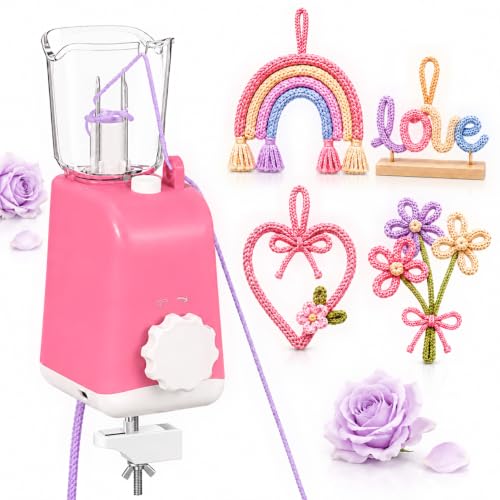
Highly-Efficient Automatic Knitting: Say goodbye to manual winding! Powered by a convenient USB-C, this electric i cord maker efficiently transforms yarn into beautiful cords. It delivers an impressive speed of approximately 25cm per minute in a natural state, and up to 37cm when stretched with wire. Perfect for saving time and reducing hand fatigue during large DIY projects

Highly-Efficient Automatic Knitting: Say goodbye to manual winding! Powered by a convenient USB-C, this electric i cord maker efficiently transforms yarn into beautiful cords. It delivers an impressive speed of approximately 25cm per minute in a natural state, and up to 37cm when stretched with wire. Perfect for saving time and reducing hand fatigue during large DIY projects
Caydo Electric iCord Knitting Machine for Crocheters
Automactic Knitting Machine: Caydo electric icord knitting machine is innovative patent design for knitting the yarns to beautiful i cords automatically. Say goodbye to...
Looking for a shortcut through endless hours of hand-knitting i-cords? This Caydo Electric model answers my prayers, especially for crocheters like me who need cords for bag handles, coasters, and placemats.
What Sets This Apart
The patent design automates everything. Two weights keep tension steady, so I get smooth, compact cords every time. No more lumpy hand-knit disasters! The custom motor churns out longer, precise cords way faster than I ever could manually.
The Learning Curve
There’s a brief adjustment period, which honestly annoys me. But the manual and videos help, and customer service actually responds when I’m stuck. (Some yarn types won’t work, so check their guidance first.)
Build and Gifting
Durable ABS plastic beats cheaper PP alternatives. The blue KC-i1 model comes in packaging pretty enough to gift your favorite yarn addict.
My Verdict
Perfect for home crafters, workshops, and even kids joining DIY projects. Not flawless, but a solid time-saver for cord production.
Best For: Home crafters, crochet enthusiasts, and DIYers of all ages who need to produce smooth, uniform i-cords quickly for projects like bag handles, coasters, placemats, and other household decor.
Pros:
- Custom motor automates i-cord production significantly faster than manual hand-knitting with precise, compact, and uniform results
- Dual-weight tension system ensures smooth, even knitting without lumps or inconsistencies
- Durable ABS plastic construction, clear instructions with video tutorials, and responsive customer support enhance usability and longevity
Cons:
- Brief learning curve requires patience and adjustment period for beginners to operate effectively
- Limited compatibility with certain yarn types restricts material options and requires careful selection
- Occasional operational issues may necessitate troubleshooting or customer service contact for resolution
Recommended Products
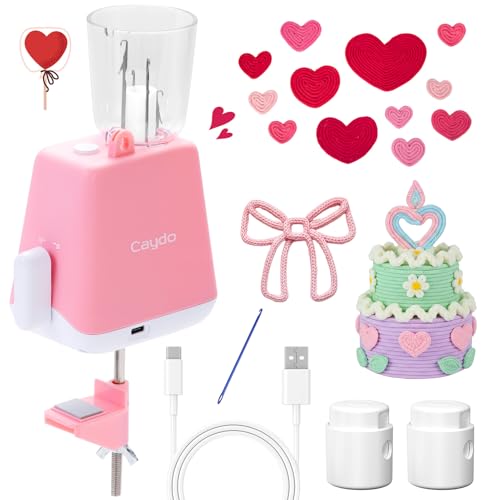
Automactic Knitting Machine: Caydo Electric icord knitting machine is innovation design for knitting the yarns to beautiful i cords automatically. Say goodbye to manual knitting, reducing hand fatigue and letting you enjoy the fun of create i cord crafts. You can use i cords to be making handbag handles, name crafts, making placemats, coasters and other household decor

Hands Free Automatic Weaving: Single button operation initiates the electric i-cord knitting machine instantly, eliminating hand fatigue from tedious manual twisting

Hands Free Automatic Weaving: Single button operation initiates the electric i-cord knitting machine instantly, eliminating hand fatigue from tedious manual twisting
Yocrefun Electric iCord Knitting Machine (Blue)
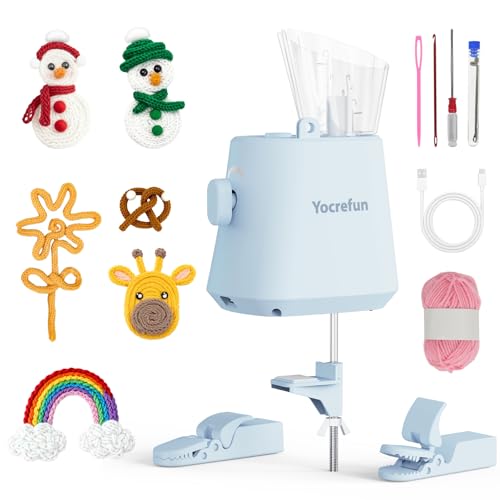
Automatic & Hands-Free Operation — The Electric I-Cord Knitting Machine instantly turns yarn into beautiful cords with just one press. Say goodbye to manual twisting and...
Yocrefun’s electric iCord machine is a solid pick if you’re after something motorized and hands-free. The JY06-01 runs on USB-C power and churns out consistent cords with minimal effort. No more hand cramps from manual cranking.
The ABS plastic build feels sturdy enough for regular use. I appreciate the included table clamp, which fits surfaces up to 6.5 cm thick. Two weight clips keep tension even, producing tighter, smoother cords than you’d manage freehand.
The accessory kit covers basics: spare hooks, needles, and a screwdriver for maintenance.
Setup takes minutes thanks to clear manuals and video guides. Beginners pick it up fast.
Compared to Caydo’s model, Yocrefun emphasizes portability and simplicity over extra features. It’s lighter, simpler to thread, and slightly louder during operation. The trade-off? You’re getting raw efficiency over customization.
For beginners or gift-givers, this hits a sweet spot. Serious crafters might want more tension control. It delivers exactly what it promises: motorized cord-making without the learning curve.
Best For: Beginners, DIY enthusiasts, and gift-givers seeking a portable, easy-to-use electric i-cord maker that prioritizes simplicity and hands-free operation over advanced customization features.
Pros:
- USB-C powered motorized operation eliminates manual cranking and hand fatigue
- Lightweight, portable design with straightforward threading process
- Comprehensive accessory kit and clear instructional materials enable quick beginner setup
Cons:
- Louder operation compared to competing models
- Limited tension control for advanced crafters seeking precision adjustments
- Fewer customization features than alternatives like Caydo’s model
Recommended Products
PROFESSIONAL HAND & FOOT NAIL CARE: This professional manicure pedicure kit is of nail salon quality, suitable for natural thick and fragile nails trimming, grinding and polishing, for men, women and kids. And it is ideal for removing cuticle, hard skin, calluses and corns. With this manicure pedicure tool you will have healthy, clean, neat fingernails and toenails, and amazing hand and foot care.

PROFESSIONAL HAND & FOOT NAIL CARE: This professional manicure pedicure kit is of nail salon quality, suitable for natural thick and fragile nails trimming, grinding and polishing, for men, women and kids. And it is ideal for removing cuticle, hard skin, calluses and corns. With this manicure pedicure tool you will have healthy, clean, neat fingernails and toenails, and amazing hand and foot care.

【Portable USB Recharging】Enjoy the convenience of recharging anywhere with the Uolor electric drill pen. Its USB recharging capability ensures cordless operation for up to 30 minutes after a full charge. Compatible with any device featuring a USB interface, it's designed for seamless use on the go
Factors to Consider When Choosing an I Cord Knitting Machine
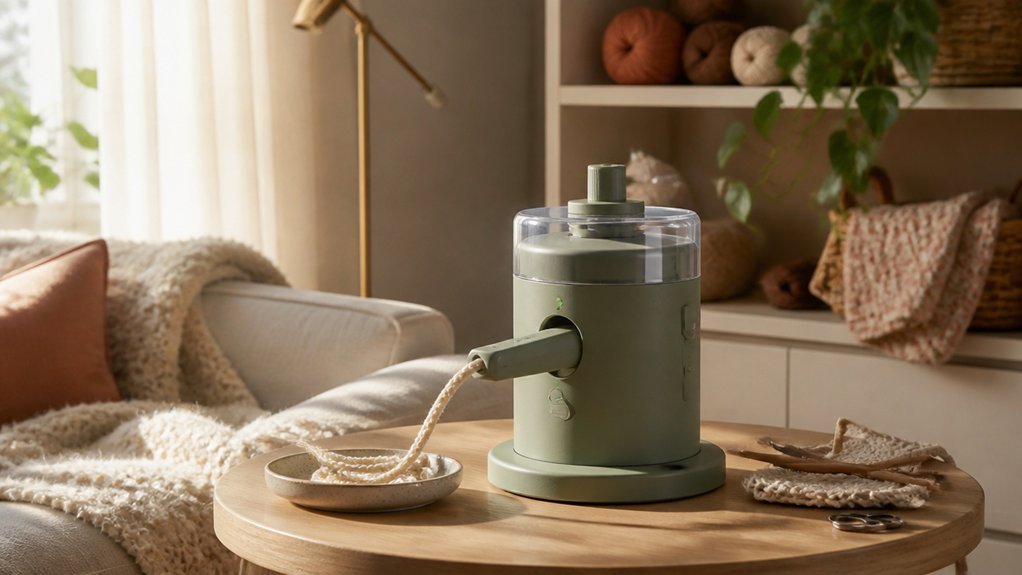
I won’t bore you with every spec sheet I’ve ever read, but I have strong opinions about what actually matters when you’re standing in front of a shelf of these things. Power source type and portability options determine whether you’re knitting on your couch or dragging an extension cord across the room (ask me how I know).
Needle count, speed settings, and tension control are where the real magic happens, or where you’ll throw your first project across the room in frustration.
Recommended Products
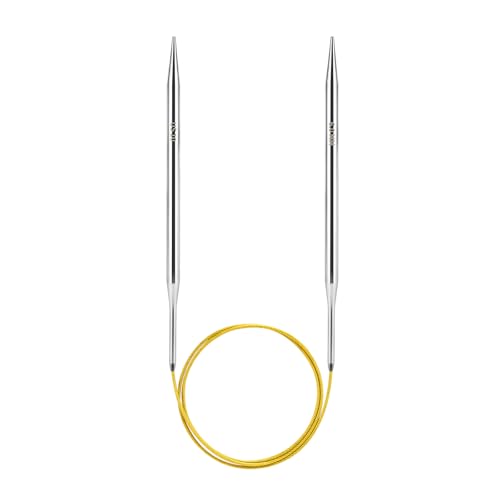
Package includes ----1 PCS 32 inch fixed circular knitting needles, 1 large eye blunt needle. Tips are permanently marked with US and MM numbers for easy storage.WHY CHOOSE OUR KNITTING KITS - The connection between the needle and the cable is smooth and strong. Will not break or hook yarn as easily as others. Marked with US sizes. Others are only mm marked and you have to measure.

WHY CHOOSE OUR KNITTING KITS - The connection between the needle and the cable is smooth and strong. Will not break or hook yarn as easily as others. Marked with US sizes. Others are only mm marked and you have to measure.
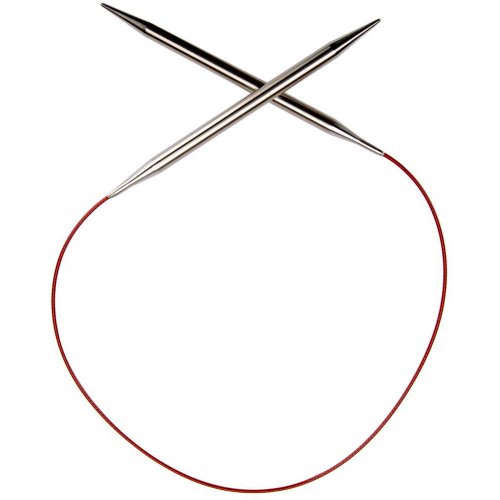
1 of 24 inches ( 61cm ) ChiaoGoo Red Lace ( Stainless Steel ) Circular Knitting Needles, Size US 6 ( 4mm )
Power Source Type
The power source is one of those make-or-break details I always check first, and it really comes down to where you plan to knit. Electric models, with their internal motors, give you hands-free operation and consistent tension that manual twisting just can’t match. I’ve seen plug-in versions hit speeds around 60 cm per minute, which is a game changer if you’re production-minded.
But here’s the thing: power type shapes everything. You’ll find electric-only, battery-powered, and USB-C options, each with trade-offs. Built-in rechargeable batteries or USB power mean I can knit on my porch without hunting for an outlet. Electric units usually pack auto-guiding wheels and tension springs too, so I’m not babysitting every stitch.
Ask yourself: do you need speed, or freedom from the wall?
Portability Options
Where do you plan to knit, really? Your answer changes everything.
Weight and Size
I’ve lugged machines that feel like bricks. Lightweight, compact models win every time. You want something that fits in a tote bag, not a suitcase.
Clamp Systems
Clip-on or detachable clamps are game changers. No permanent setup means you can knit on any table, anywhere. Coffee shop, friend’s house, workshop: you’re set.
Storage and Power
Foldable components save precious space. Battery or USB power frees you from wall outlets. True portability means knitting in the park if you want.
My Pick
A slim handheld design with an integrated case hits the sweet spot. For travelers, this matters. For homebodies? Less critical.
Choose based on your movement, not your dreams of movement.
Needle Count
Once you’ve figured out where you’ll actually use your machine, it’s time to ask what you’re planning to make. Needle count, that little detail everyone skips over, determines your cord’s fate.
More needles mean thicker, sturdier i-cords. It’s that simple. A 6-needle setup gives you medium thickness, perfect for bag handles and coasters. Go with 2–4 needles, and you’re stuck with delicate cords for fine details, bracelets, or trim work.
Here’s where it gets tricky. Extra needles require precise alignment, and setup takes patience. But the payoff: Wider cords knit faster with consistent stitches.
Match your needle count to your project needs. Bag makers need bulk. Jewelry makers don’t. Pick wrong, and you’ll wrestle with cords that sag or strains that snap.
Speed Settings
How fast do you actually need this thing to crank out cord?
I always check speed settings first. Adjustable levels let you start slow for practice, then crank things up. Some models hit 60 cm/min, which sounds amazing until your cord turns wobbly.
Matching speed to your yarn matters. Thick wool? Slow down. Thin cotton? You can push faster. I’ve wasted hours untangling messes because I ignored this.
Automatic machines with variable speeds are my preference. Set it, walk away, actually drink my coffee while it works. Higher speeds need auto-guiding wheels and tension springs to stay stable. Otherwise, you’re babysitting a jittery machine.
Verdict: beginners need multiple speed levels, production knitters want maximum throughput with stability features. I want both, honestly.
Tension Control
Tension control.
The first thing I check after speed? Tension control, no contest. I need my cords even, not wavy like a bad perm. Most machines use weighted clips or tension springs (think tiny paperweights keeping your yarn in line). I prefer dual-weight systems, they let me swap between chunky wool and silky lace without drama.
What actually matters:
- Adjustable springs beat fixed clips for versatility
- Stable tension prevents those annoying kinks mid-project
- Poor setup? Hello, loose spots and sudden breakage (infuriating)
I always peek at the manufacturer’s yarn recommendations too. They’re not suggestions, they’re guardrails. One ignored chart and I’ve got irregular cord destined for the scrap heap.
My pick: Adjustable systems with visible tension markers. You’ll thank yourself during long runs.