
I’ve tested enough epoxy to fill a swimming pool, and I’m still finding products that surprise me.
My 2026 picks cover every wood project imaginable, from quick fixes to museum-grade restoration.
But one of these stands so far above the rest that I almost kept it a secret. (Almost.)
J-B Weld 50151 WoodWeld Epoxy Syringe – Light Tan -.85 fl. oz.

JB WOODWELD: Is a fast setting two-part epoxy system formulated for wood bonding and repairs. It provides a lasting permanent bond that is stronger than the wood! THE...
J-B Weld’s WoodWeld Epoxy Syringe is built for quick, no-fuss repairs.
I’ve grabbed this little .85-ounce syringe more times than I’d like to admit. The 1:1 ratio means I don’t waste time measuring, and honestly? That’s half the battle with epoxies.
What You’re Getting
This two-part system sets in six minutes, cures in one to three hours, and hits 1800 PSI. That’s stronger than the wood itself, which still surprises me.
Once it’s done, I sand, file, or drill it like regular material. No special treatment needed.
Real-World Use
I use it on trim repair, rotting deck spots, even a wobbly chair leg last spring. Light tan color blends better than gray goo on pine or oak. Indoor, outdoor, doesn’t matter.
The Catch
It’s only 25 ml, so big jobs need multiple tubes. Annoying? Slightly. But I keep one in my toolbox anyway.
Verdict: Perfect for homeowners who fix things occasionally, not contractors with massive restoration projects.
Best For: Homeowners and DIYers who need a fast, easy-to-use epoxy for occasional wood repairs, trim fixes, furniture restoration, and small outdoor projects.
Pros:
- Quick 6-minute set time and simple 1:1 mixing ratio make it hassle-free for beginners and quick repairs
- Strong 1800 PSI bond that exceeds wood strength and can be sanded, drilled, or filed once cured
- Light tan color blends naturally with pine and oak, unlike standard gray epoxies
Cons:
- Only 0.85 fl. oz. (25 ml) capacity requires multiple tubes for larger jobs
- 1–3 hour cure time may still require clamping or holding pieces in place
- Not cost-effective or practical for contractors or large-scale restoration projects
Recommended Products

Two-part epoxy paste to replace missing or rotted wood is resistant to dry rot, UV light, fresh and salt water
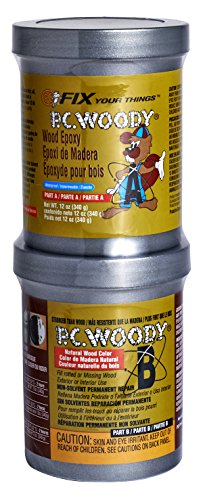
Two-part epoxy paste to replace missing or rotted wood is resistant to dry rot, UV light, fresh and salt water

J-B WELD KWIKWOOD: A hand mixable two part epoxy putty stick that is formulated to repair and rebuild wood. J-B Weld KwikWood is designed for all wood household DIY repairs!
PC-Woody Wood Repair Epoxy Paste (12 oz, Tan)
Two-part epoxy paste to replace missing or rotted wood is resistant to dry rot, UV light, fresh and salt water Can be used in indoor and outdoor applications with an...
If you’re patching rotted trim or outdoor posts, PC-Woody’s my go-to for structural wood repair.
This two-part epoxy paste from PC Products comes in two 6-ounce cans, Part A and Part B. You’ve gotta mix equal volumes on a flat surface. Here’s the weird part: skip the gloves. I use a stiff putty knife instead, which gives me better control anyway.
The high tack grabs onto vertical surfaces, so I’m not chasing drips down porch posts. It laughs at dry rot, UV light, and even saltwater splashes, making it perfect for coastal decks or window sills.
Application window’s forgiving, 35°F to 115°F. Once cured it handles anything from -20°F to 200°F. That’s year-round versatility I actually use.
Verdict: Need to fill large voids structurally? Grab the 12-ounce kit. Working on tiny furniture cracks? Look elsewhere. PC-Woody’s built for beefy repairs, not delicate touch-ups.
Best For: Homeowners and contractors needing to structurally repair rotted or damaged wood trim, posts, and outdoor structures in any climate, including coastal environments.
Pros:
- High tack formula reduces drips and sags on vertical surfaces
- Resistant to dry rot, UV damage, and both fresh and salt water for long-lasting repairs
- Wide temperature range (35–115°F application, -20–200°F service) enables year-round use
Cons:
- Requires mixing two parts in equal volumes without gloves, which some users may find inconvenient
- 12 oz size and working properties make it poorly suited for small, delicate repairs
- Two-can packaging means you must accurately measure equal volumes rather than using a simple ratio dispense
Recommended Products
JB WOODWELD: Is a fast setting two-part epoxy system formulated for wood bonding and repairs. It provides a lasting permanent bond that is stronger than the wood!

J-B Weld Clearweld: A Clear, Quick Setting And Multipurpose Two Part Epoxy That Provides A Strong And Lasting Bond On Surfaces Including Metal, Tile, Most Plastics, Ceramic, Glass, Wood And More. J-B Weld Clearweld Comes In A Syringe Allowing For An Easy 1:1 Mix Ratio. The Unique Syringe Has A Re-Sealable Cap That Prevents Drying Out And Leaking, Allowing For Multiple Uses

Precision applicator kit:10cc luer lock syringes x 10, 1.5inch 14 Gauge x 4, 1.5inch 16Gauge x 3, 1.5inch 18Gauge x 3,accessories of different sizes can be freely matched and used,offering both quality and quantity for your needs.
Epoxy Resin Kit 64OZ for Art Crafts & Jewelry Making

【Perfect Epoxy Resin Kit】 Includes 32 ounces of clear resin, 32 ounces of clear hardener, 2 pump heads, 5x240-milliliter measuring cups, 2 plastic spatulas, 10 wooden...
Who’s this kit really for?
I’d say this one’s for the creative crowd dipping their toes into epoxy, not the hardcore woodworker. KISREL’s 64OZ kit splits evenly, 32 ounces resin plus 32 ounces hardener, and they’ve tossed in gloves, cups, spatulas, and stirring sticks. It’s a nice starter package, honestly.
The 1:1 ratio keeps things dead simple, no math headaches. I mix it up, and the stuff stays low-bubble courtesy of that self-defoaming trick. Crystal clear finish, self-leveling pour, and it won’t cook your molds, temperature stays manageable. Eight hours to dry, a full day to cure.
For woodwork specifically? It coats desktops and countertops fine, gives that glossy showroom look. But here’s my gripe: it’s really geared toward jewelry, crafts, painting, casting. The “woodwork” mention feels like an afterthought. Wear-resistant and durable, sure, but I’d pick PC-Woody for serious repairs.
This kit shines when you want art-grade clarity on decorative pieces. Beginners love it; experienced folks appreciate the no-fuss mixing. My verdict? Grab this for coasters, jewelry, or a slick table top coat. Need structural wood fixes? Keep shopping.
Best For: Beginners and experienced creators seeking an easy-to-use, crystal-clear epoxy resin for art projects, jewelry making, crafts, and decorative coatings rather than structural woodworking repairs.
Pros:
- Simple 1:1 mixing ratio with self-defoaming, self-leveling properties that minimize bubbles and user error
- Complete starter kit includes essential accessories (measuring cups, spatulas, stirring sticks, gloves)
- Low heat generation during curing makes it safe for molds while delivering a glossy, durable, non-yellowing finish
Cons:
- Marketed for woodwork but underperforms for serious structural repairs compared to specialized wood epoxies
- Limited to decorative applications rather than heavy-duty functional use
- 24-hour full cure time may require project planning and patience
Recommended Products
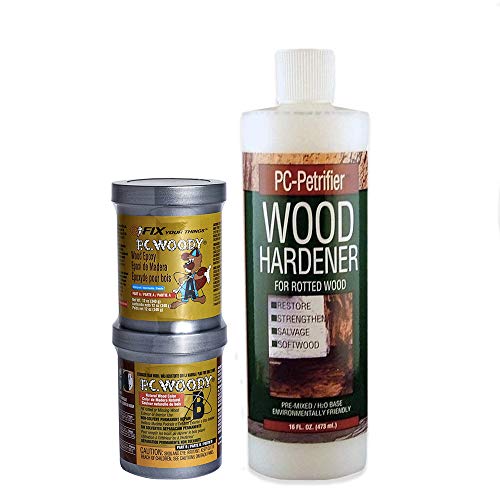
16 oz PC-Petrifier water-based wood hardener with 12 oz PC-Woody wood repair in a convenient bundle for all wood repair projects
REPAIR DAMAGED WOOD: Permanently harden, regenerate, fill, replace, and waterproof damaged wood with this epoxy hardener and filler kit. It's great for historical restoration and can repair windowsills, frames, doors, trim, clapboards, furniture, and more.
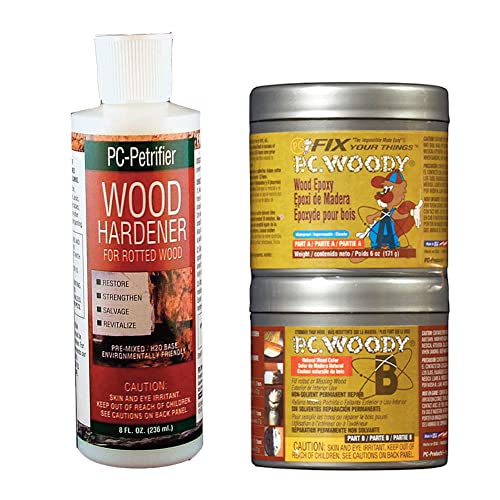
8 oz PC-Petrifier water-based wood hardener with 6 oz PC-Woody wood repair in a convenient bundle for all wood repair projects
Nicpro 8oz Clear Epoxy Resin Kit for Crafts

High Quality Resin: Protect your artwork durably with high-gloss epoxy resin. This crystal-clear finishing layer resists heat, scratches, and yellowing, significantly...
Looking for a beginner-friendly epoxy that won’t break the bank? I found the Nicpro 8 Ounce Crystal Clear Epoxy Resin Kit, and it’s perfect for testing the waters without committing to a gallon.
What You’re Getting
This is food-safe, low-odor, VOC-free resin that cures to a glossy, scratch-resistant finish. I appreciate that it’s truly non-toxic, meeting food-grade standards once fully cured.
The 1:1 mixing ratio keeps things simple, no complicated math or finicky measurements.
Cold Weather Tips That Actually Matter
Here’s where I got annoyed at first: this stuff hates cold. You need to keep your workspace above 70°F, and honestly, you’ll get better results warming the unopened bottles in hot water (100–120°F) for 10–15 minutes beforehand. I learned this the hard way.
Post-pour, stick your piece somewhere warm or use a heating mat, and wait the full 24–48 hours before demolding. Patience isn’t optional.
Real-World Performance
It self-levels beautifully, and I’ve mixed in pigments, mica powder, and alcohol ink without issues. It handles woodwork, coasters, jewelry, whatever small project you’ve got.
My Verdict
Eight ounces runs out fast for big projects. But for beginners, small repairs, or gift-making? This is my pick.
The 24-hour customer service actually responds, which matters when you’re panicking at midnight about bubbles. I’d recommend this for novices and casual crafters. Professionals, size up.
Best For: Beginners, casual crafters, and those testing epoxy resin for small projects like jewelry, coasters, and repairs without committing to larger quantities.
Pros:
- Food-safe, non-toxic, low-odor, VOC-free formula with simple 1:1 mixing ratio ideal for novices
- Self-leveling resin compatible with pigments, mica powder, and alcohol ink for versatile creative applications
- Responsive 24-hour customer support and high-gloss, scratch-resistant, heat-resistant finish
Cons:
- Small 8-ounce size runs out quickly for larger projects, requiring professionals to size up
- Requires strict temperature control (workspace above 70°F, preheating bottles to 100–120°F) for proper curing
- Demanding 24–48 hour cure time with need for post-pour warming, making patience essential rather than optional
Recommended Products
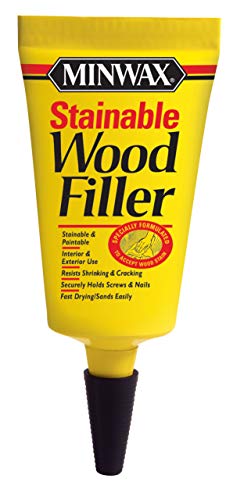
STAINABLE WOOD FILLER – Minwax Indoor/Outdoor Wood Filler is a stainable and paintable latex formula specially formulated to accept all Minwax stains, including both oil and water-based wood stains.

Professional-Grade Wood Repair: MAS Wood Repair Epoxy Putty rebuilds and restores damaged wood stronger than the original, perfect for professional woodworking, DIY projects, furniture repair, and exterior restoration tasks.

High-Strength Structural Wood Repair: Crafted with premium epoxy wood filler + hardener 2-part blend, this putty doesn’t just fill cracks, holes—it rebuilds weathered, aged, moisture-damaged wood sections. Cured, it forms a rigid, wood-matched structure that resists warping, loosening, keeping your furniture, floors, and fixtures stable for up to 10+ years with this reliable wood epoxy.
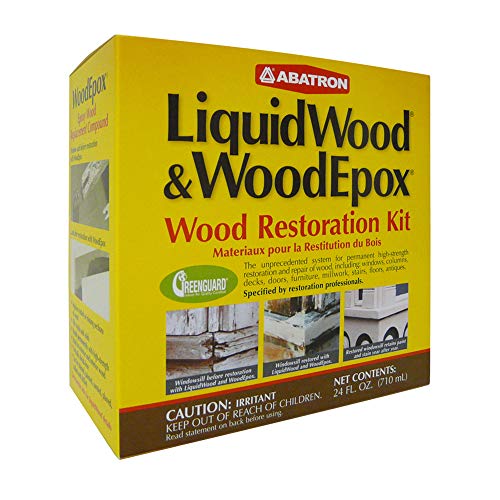
Abatron WoodEpox 2-Part Epoxy Wood Filler Kit

REPAIR DAMAGED WOOD: Fills and rebuilds missing sections to help restore windows, doors, trim, columns, posts, and other elements. Permanently repairs damage caused by...
The Abatron WoodEpox is your pick if you’re restoring old windows, doors, or trim and need something that actually behaves like wood.
I love that this isn’t some goopy mess that dries weird. You get 20-30 minutes of working time, which feels generous when you’re rebuilding a rotted windowsill. Mix it by hand, slap it on, and suddenly you’re carving, sanding, staining, even nailing into it. It accepts everything real wood does.
The GREENGUARD certification matters to me. No solvents, barely any smell, no guilt about VOCs. For exterior repairs, it’s waterproof and pest-resistant.
Here’s my gripe: the beige color looks nothing like most woods, so you’ll definitely paint or stain it. But structurally? This stuff bonds permanently to damaged substrate and won’t shrink or crack.
Who needs this? Historic home owners, definitely. Anyone fixing actual structural damage rather than cosmetic dings. Crafters should skip it; this is for serious restoration work.
Best For: Historic home owners and anyone repairing structural wood damage on windows, doors, trim, columns, or posts who need a permanent, wood-like restoration solution.
Pros:
- 20-30 minute working time allows for careful application and rebuilding of rotted sections
- Can be carved, sanded, stained, drilled, nailed, and painted just like natural wood
- GREENGUARD certified with virtually no VOCs, no solvents, and low odor for safe indoor and outdoor use
Cons:
- Beige color doesn’t resemble most wood tones, requiring paint or stain for aesthetic match
- Not suitable for cosmetic repairs or crafting projects—designed for serious structural restoration only
Recommended Products

Two-part epoxy paste to replace missing or rotted wood is resistant to dry rot, UV light, fresh and salt water

Two-part epoxy paste to replace missing or rotted wood is resistant to dry rot UV light and fresh and salt water

Two-part epoxy paste to replace missing or rotted wood is resistant to dry rot, UV light, fresh and salt water
Factors to Consider When Choosing Epoxy for Wood
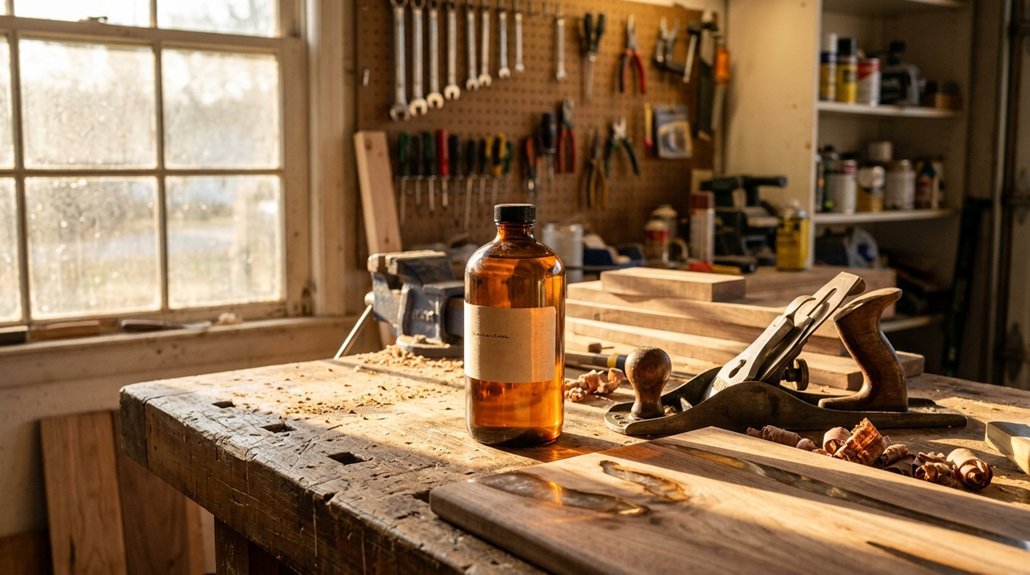
I’m not just grabbing any epoxy off the shelf, and you shouldn’t either. Bond strength, curing time, temperature range, indoor versus outdoor use, and wood compatibility, these factors make or break your project. Let me walk you through what actually matters when you’re standing in the aisle, or scrolling online, trying to decide.
Recommended Products

5 Various Size Syringes - 1ml syringe x 4, 3ml syringe x 4, 5ml syringe x 4, 10ml syringe x 4, 20ml syringe x 4, luer lock caps to prevent the needle from falling off the syringe.
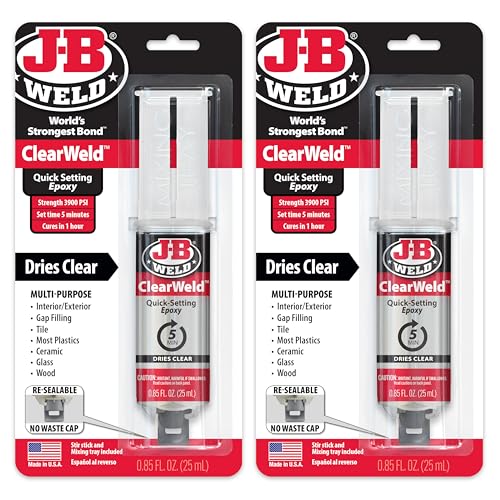
J-B Weld ClearWeld: A clear, quick setting and multipurpose two part epoxy that provides a strong and lasting bond on surfaces including metal, tile, most plastics, ceramic, glass, wood and more. J-B Weld ClearWeld comes in a syringe allowing for an easy 1:1 mix ratio. The unique syringe has a re-sealable cap that prevents drying out and leaking, allowing for multiple uses

Nice wrapped: each syringe is individually sealed, which means clean, safe; Suitable for essential oil, science lab, industrial, applications of inks, perfume, lubricants, sealants, etc.
Bond Strength Needs
How much clamping pressure can your joint actually handle before the glue line fails?
I always check the PSI rating first. Most quality wood epoxies hit around 1,800 PSI, which is plenty strong for furniture, architectural details, or structural repairs.
That hard, sandable matrix matters. I want something I can shape and drill after curing, not a rubbery mess.
Watch your ratios. Many systems use 1:1 mixing, and getting sloppy here weakens everything. Trust me, I’ve wasted batches.
For outdoor projects, water resistance and UV stability keep bonds intact through seasons of moisture and sun. Rot resistance seals the deal.
Fast-set options tempt me when I’m rushed. Six-minute sets, one-hour cures: speed costs working time, and larger repairs suffer. I balance urgency against the job size.
Curing Time Requirements
When does a fast cure actually hurt your project more than it helps? I’ve learned the hard way: six-minute epoxies sound tempting until you’re halfway through a river pour and the stuff starts gumming up. Fast-set systems (6 minutes to initial set) demand surgical precision. For big fills, I prefer slower formulas with 24, 48 hour cures and longer pot life, that working window before hardening begins.
Your mixed ratio matters too. Get that 1:1 measurement wrong and you’ll face premature curing or a tacky mess that never fully hardens. I’ve seen it. Temperature swings throw another wrench in, though I’ll save the specifics for later.
Exterior formulas resist UV and moisture, but they cure differently than indoor-only versions. Choose based on your actual project size, not your impatience.
Application Temperature Range
Curing time and temperature go hand in hand, so let’s talk about where you’re actually working.
Application temperature range tells you the ambient temps where your epoxy mixes, flows, and cures properly. I’ve seen projects fail because someone ignored this.
Cold weather thickens resin, traps bubbles, and slows curing to a crawl. Too hot, and you’ve got minutes before it turns to taffy.
Look for wide-range formulas, 35–115°F, if your shop lacks climate control. I preheat my resin to 70°F when it’s chilly; the stuff pours like honey and degasses beautifully.
Don’t confuse application range with service range, either. Your epoxy needs to survive both the install conditions and whatever your finished piece faces year-round. Check both numbers on the label.
Indoor Versus Outdoor Use
Where you plan to use your epoxy matters just as much as what you’re sticking together.
Indoor projects? I’m grabbing formulas built for stability. They handle lower humidity like champs, sand smooth as butter, and give furniture that glassy finish we all want.
But step outside, and everything changes.
The Outdoor Gauntlet
Sun, rain, freezing nights, scorching days: outdoor epoxies face a brutal test. I always check for UV stabilizers ( prevents yellowing and cracking ) and water-resistant additives. Skip these, and you’re watching your repair warp or fade within a season.
Flexibility matters too. Rigid epoxies work for structural fixes, but I prefer slight flexibility for decks or siding that breathes and shifts.
The Temperature Trap
Outdoor curing drives me nuts. One cold morning, and your bond weakens forever. I religiously check forecasts, humidity and temp must hit manufacturer specs, or I’m waiting.
What’s your project? Indoors, prioritize beauty. Outdoors, demand toughness. I’ve learned that lesson the expensive way.
Wood Compatibility Matching
Why does some epoxy grab wood like it’s family, while others sit there like a failed handshake? I’ve learned it’s all about matching the right chemistry to your project.
What I Look For
I always check for proven wood bonding capability first. A 1:1 mixing ratio keeps things simple, no guessing games with pumps or scales. Room temperature curing is non-negotiable for my garage workflow. I want tensile strength around 1800 PSI or higher. That number tells me the joint won’t crack when I stress it.
Real-World Performance
Moisture, rot, and UV resistance matter whether I’m fixing a kitchen table or deck railing. Post-cure workability seals the deal for me. If I can’t sand, shape, or drill it to match existing wood profiles, what’s the point?
For rotted sections, I grab paste formulas or syringe applicators designed specifically for restoration work.
Surface Preparation Steps
All the fancy chemistry in the world won’t save you if your wood surface isn’t ready to receive it.
I learned this the hard way: skip prep, and your epoxy bond fails. Clean every trace of dust, oils, and grime first, or you’re pouring money onto garbage.
I sand loose fibers smooth and fill grooves or rot with epoxy filler before anything else. Moisture matters too. Wood above 15–20% content? That’s asking for curing disasters. Grab a moisture meter, they’re cheap insurance.
For existing coatings, I scuff the surface lightly. Mechanical keying, the pros call it: tiny scratches give epoxy something to grab.
Rotted spots need aggressive treatment. I cut back to solid wood, treat what’s underneath, then repair. Skip this, and you’ll be fixing it twice.