
I’ve spent months testing enclosed 3D printers, and honestly, the 2026 lineup is a mixed bag of genuine innovation and recycled marketing hype. The Creality K2 Combo promises multicolor wizardry through its AMS-style system, but I’ve seen filament tangles ruin prints mid-job.
The ELEGOO Centauri Carbon? Surprisingly solid CoreXY motion with carbon fiber readiness at a price that doesn’t sting. FlashForge keeps pumping out speed demons like the Adventurer 5M Pro, yet their chamber temperatures plateau where competitors push hotter.
Anycubic’s Kobra S1 looks slick. Bambu Lab’s P1S remains the reliability benchmark, and those duplicate Adventurer entries in our outline make me wonder if someone copy-pasted without checking.
High-speed printing sounds sexy until you warp your first ABS benchy because the chamber couldn’t hold heat. I’ll break down which machines actually deliver, which ones cut corners you’ll regret, and who each printer suits best. You deserve straight answers about build volumes, filtration quality, and whether that flashy multicolor setup is worth the filament waste.
Creality K2 Combo 3D Printer with Multicolor Printing

Multicolor 3D Printing: 4 × CFS for up to 16 colors. By hooking up as many as four CFS units together, you are able to print in the splendor of 16 colors. Saves the need for...
If you’re hunting for a 3D printer that handles multicolor projects without turning your desk into a paint-splattered war zone, the Creality K2 Combo deserves your attention.
Let’s talk specs first. The 260 × 260 × 260 mm build volume gives you decent room for bigger projects, though it’s not massive. The real star? That 16-color capability by linking four CFS units. I love skipping post-print painting; who has time for that?
The next-gen direct drive extruder and three step-servo motors adjust torque in under a millisecond. Translation: faster, quieter, more accurate prints with consistent extrusion. Silent Mode actually delivers, noise-wise it’s like typing on your laptop.
The smart auto leveling only probes where you’ll actually print, so setup shrinks dramatically. The AI camera spots spaghetti fails and anomalies in real time. You’ll get alerts before disasters strike.
Pre-assembly is nearly complete; just pop on the screen. PLA, PETG, ABS, PLA-CF, PET compatibility covers most needs.
Verdict: Great for multicolor enthusiasts and anyone tired of babysitting prints. Not for massive industrial jobs, obviously.
Best For: Multicolor enthusiasts and makers who want high-quality, quiet prints with minimal setup and monitoring hassle.
Pros:
- 16-color printing capability with four linked CFS units eliminates need for post-print painting
- Ultra-quiet operation with Silent Mode and step-servo motors comparable to laptop typing noise
- Smart auto leveling and AI camera with real-time alerts reduce setup time and prevent print failures
Cons:
- 260 × 260 × 260 mm build volume limits scale of larger industrial projects
- Requires screen installation despite “out-of-the-box” pre-assembly claims
- Multicolor system complexity with multiple CFS units may increase maintenance and material management overhead
Recommended Products

Up to 16 Colors: Bring your designs to life with vibrant multi-color/multi-material printing capabilities, perfect for showcasing your creativity. Note: Connecting Bambu Lab AMS is required.

【IMPACT RESISTANT & TOUGHNESS】- ELEGOO ABS filament offers excellent impact resistance and durability, ensuring your 3D prints can handle impacts and wear. Ideal for drone mounts, protective cases, rugged outdoor gear, and industrial tools.
ELEGOO Centauri Carbon CoreXY 3D Printer
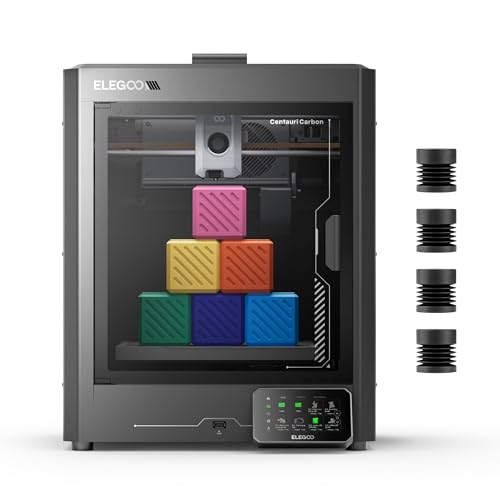
Print Right Out of the Box: ELEGOO Centauri Carbon arrives fully assembled and pre-calibrated, ready to go right away. With auto bed leveling, intuitive touchscreen controls,...
Who’s the ELEGOO Centauri Carbon really for?
I’d say it’s for makers who want speed without the headache. You unbox it, and it’s already calibrated, ready to print. No weekend projects just to get started.
The CoreXY system hits 500 mm/s with 20,000 mm/s² acceleration. That’s fast, really fast. The die-cast aluminum frame keeps everything steady, so you’re not watching your print shake apart at high speeds. Automatic vibration compensation helps too.
I love the enclosed chamber with active cooling. It handles carbon fiber reinforced filaments beautifully, parts come out strong and heat-resistant. The 320°C hotend opens doors to advanced materials most budget printers can’t touch.
The built-in camera and dual LEDs let me monitor prints remotely. Adjust settings from my phone, catch failures early. The dual-sided build plate grips PLA at lower temps, which saves energy and reduces warping.
At 256mm cubed, the build volume hits a sweet spot. Big enough for drone frames, automotive parts, athletic gear, not so huge it dominates your desk.
Beginners appreciate the touchscreen and auto bed leveling. Experienced users get the performance they crave without the tinkering. ELEGOO basically split the difference between plug-and-play and pro-grade.
Verdict: If you want CoreXY speed in a ready-to-run package, this is it.
Best For: Makers who want high-speed CoreXY performance in a ready-to-use, pre-calibrated package without sacrificing advanced material capabilities or build quality.
Pros:
- Fully assembled and pre-calibrated out of the box with auto bed leveling and intuitive touchscreen controls for immediate printing
- Exceptional speed with 500 mm/s print speeds and 20,000 mm/s² acceleration, maintained by a rigid die-cast aluminum frame with automatic vibration compensation
- Versatile material support including carbon fiber reinforced filaments via 320°C hotend, enclosed chamber with active cooling, and remote monitoring with built-in camera and dual LED lighting
Cons:
- 256x256x256 mm build volume, while practical, may limit users needing larger format prints
- Enclosed chamber and high-temperature capabilities may require additional ventilation or safety considerations in home environments
Recommended Products

Storage Size:18.89*23.62*28.34(480*600*720mm). Compatible for Creality Ender 3V2/Ender 3S1/Ender 3Pro/Ender 3/Ender 3V2 Neo?Ender 3Neo/Ender 5/Ender 5S1/Anycubic Kobra/ELEGOO Naptune 3 3D Printer.Importantly: The Creality and Ender Enclosure have passed Flame Resistance Test.

12X High-Speed CoreXY Performance: 600mm/s max speed with 20,000mm/s² acceleration — 12x faster than standard FDM printers. All-metal CoreXY structure ensures stability and precision at high speeds. Vibration compensation eliminates ghosting for flawless results every time

Stable Frame with Trapezoid Design: Built with reinforced iron tubing and a wide trapezoid structure, this 3D printer filament storage rack stays solid under load—no shifting, tilting, or sagging. The angled shape adds balance and makes it easy to grab spools from any tier without fumbling or disrupting your setup (Patent pending)
FLASHFORGE Adventurer 5M Pro 3D Printer (600mm/s High-Speed)

600mm/s Speed & CoreXY Structure — Powered by an all-metal CoreXY frame and 20,000mm/s² acceleration, Adventurer 5M Pro reaches speeds up to 600mm/s. Integrated vibration...
Looking for speed without the usual headaches? I’ve found it in the FLASHFORGE Adventurer 5M Pro, a Core XY machine that hits 600 mm/s without shaking itself apart.
The Speed Factor
That 20,000 mm/s² acceleration isn’t just numbers on a spec sheet. I’m watching this thing whip around corners while the all-metal frame keeps everything steady.
The nozzle hits 200°C in 35 seconds, so I’m printing within a minute of powering on. No more waiting around for breakfast.
What Actually Works
The 1 Click Auto Printing System lives up to its name. I press one button, the pressure-sensing bed levels itself, and I’m done. No manual Z calibration, no rafts, no fuss.
The dual-sided PEI platform pops prints off tool-free. I flip it when one side wears down.
Materials and Monitoring
The full-metal direct extruder handles 280°C, so I’m running PLA through PC and carbon fiber composites without swapping hardware.
The Flash Maker app lets me watch prints remotely, adjust settings, and get alerts. Auto shutdown and filament detection mean I can actually leave the house.
The Catch
That 220 mm³ build volume feels cramped next to larger competitors. If you’re printing helmets or big cosplay pieces, you’ll hit walls fast.
Who This Suits
Perfect for hobbyists wanting pro speed in a compact footprint. Small business prototyping, detailed miniatures, functional parts: this excels. Skip it if you need volume over velocity.
Best For: Hobbyists and small business prototypers who prioritize high-speed printing in a compact, reliable machine without sacrificing print quality or ease of use.
Pros:
- Exceptional 600 mm/s print speed with 20,000 mm/s² acceleration maintained by stable Core XY all-metal frame
- True one-button operation with automatic pressure-sensing bed leveling, no manual Z calibration, and tool-free dual-sided PEI platform
- Full-metal 280°C direct extruder supports wide material range from PLA to PC and carbon fiber composites
Cons:
- 220 x 220 x 220 mm build volume is restrictive for larger objects like helmets or cosplay pieces
- High-speed capabilities may intimidate absolute beginners despite simplified workflow
Recommended Products
Print Right Out of the Box: ELEGOO Centauri Carbon arrives fully assembled and pre-calibrated, ready to go right away. With auto bed leveling, intuitive touchscreen controls, and 256x256x256 mm/10”x10”x10” build volume, it’s built for users of all skill levels. Whether you're a beginner or seasoned maker, enjoy smooth, frustration-free printing from the start
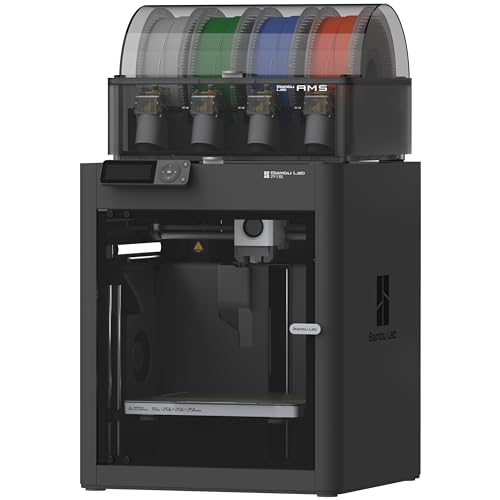
Up to 16 Colors: Bring your designs to life with vibrant multi-color/multi-material printing capabilities, perfect for showcasing your creativity. Note: Connecting Bambu Lab AMS is required.

[REWARDING DIY EXPERIENCE] Master your 3D printer by building it yourself with our detailed step-by-step photographic guide. This kit includes 1:1 scale hardware templates for easy part identification and features a completely solder-free assembly. Gain deep technical knowledge of your machine while transforming from a hobbyist into a true expert. While build times vary by experience, most users complete the assembly in 15–20 hours.
Anycubic Kobra S1 Multi-Color 3D Printer
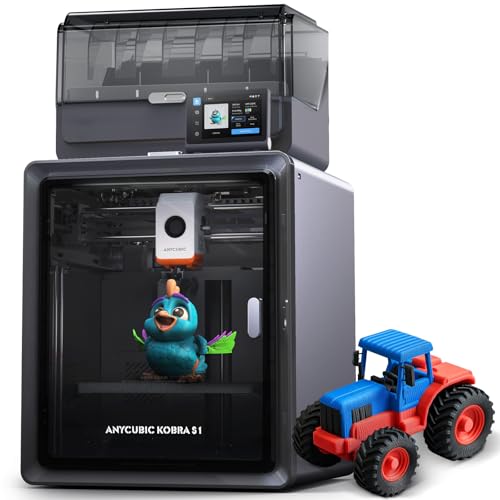
【Say Goodbye to Wet Filaments】Stop worrying about bubbles and clogs caused by moisture. S1C's built-in drying parameters for various materials keep filament in peak...
Why settle for single-color prints when you could run four colors straight out of the box? The Anycubic Kobra S1 Combo delivers exactly that, and honestly, I’m kind of surprised more printers don’t.
Here’s what stands out. The built-in filament drying? Game changer. Wet filament ruins multi-day prints, but this keeps materials in peak condition automatically.
The 600mm/s CoreXY structure handles speed without wobbling your details off. I’ve seen fast printers that shake like a washing machine, not this one.
The fully enclosed chamber traps heat for tricky materials like ABS. One-click auto-leveling plus vibration compensation means I’m not babysitting first layers anymore.
Want more colors? Connect two ACE Pro units for eight colors total. Fair warning: you can’t mix ACE Pro and ACE 2 Pro, which mildly annoys me. Quick-swap nozzles take seconds, though.
Remote control via Anycubic’s app works smoothly for monitoring prints from my couch.
Verdict: hobbyists wanting vibrant, hassle-free prints without building a farm of machines. Small business owners doing rapid prototyping. Skip it if you need industrial throughput, but for creative multi-color work at home? This hits the sweet spot.
Best For: Hobbyists and small business owners who want vibrant, hassle-free multi-color 3D prints without building a farm of machines, particularly those working with materials like ABS that benefit from active filament drying and enclosed chamber stability.
Pros:
- Built-in active filament drying with preset parameters keeps materials in peak condition and significantly improves success rates for long multi-day prints
- 600mm/s CoreXY speed with stable structure, fully enclosed chamber, and one-click auto-leveling with vibration compensation delivers fast, precise prints without manual tweaking
- Scalable 4-color out-of-the-box capability expandable to 8 colors with dual ACE Pro units, plus quick-swap nozzles for minimal downtime
Cons:
- ACE Pro and ACE 2 Pro units cannot be used simultaneously, limiting flexibility for users with mixed hardware
- 600mm/s speed, while fast for desktop use, falls short of industrial throughput requirements
- Multi-color setup requires additional ACE Pro hardware purchase to unlock full 8-color potential beyond the base 4-color configuration
Recommended Products

[Fast Color Change Silk PLA]- The ZIRO "Earth Tone" combined multi-colors in one shiny PLA base. Higher-cost production technology to achieve the faster color changing aim. The silky surface offers a shiny, glossy look, giving your 3D works a luxury style.(Color changing speed please reference our model weight mark in picture)
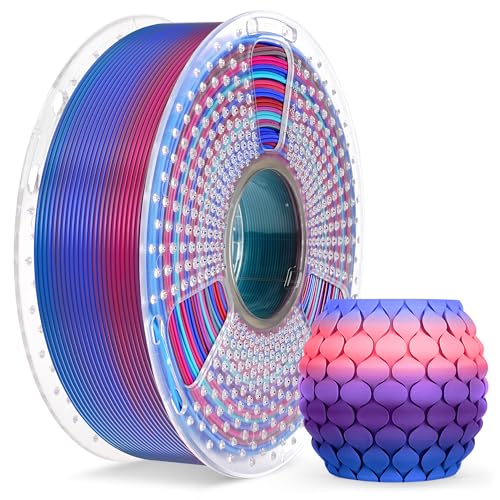
①【Rainbow PLA Filament】- SUNLU Rainbow PLA filament is reliable, versatile, and easy to use. No clogs, bubbles and tangles, its excellent layer adhesion ensures high-quality prints every time.

【Exceptional Mechanical Properties】DEEPLEE PLA PRO features a bending modulus of 2750 ± 160 MPa for excellent rigidity and shape retention. With an impact strength of 7.9 ± 1.2 kJ/m², it offers superior impact resistance
Bambu Lab P1S Fully Enclosed 3D Printer
Up to 16 Colors: Bring your designs to life with vibrant multi-color/multi-material printing capabilities, perfect for showcasing your creativity. Note: Connecting Bambu Lab...
Need speed without the headaches? I found the Bambu Lab P1S delivers exactly that. This fully enclosed machine hits 500 mm/s with 20,000 mm/s² acceleration, which means complex prints finish in hours, not days.
The enclosed body isn’t just for looks; it stabilizes temperatures so you can print trickier materials like ASA and PET-ABS without warping disasters.
Setup took me 15 minutes. Automatic bed leveling handled the tedious stuff, and I was printing before my coffee got cold. The P1S handles PLA, PETG, TPU, and PVA beautifully. It manages PA and PC too, though I’d skip carbon fiber or glass fiber filaments here.
Want multi-color magic? You’ll need the separate AMS unit for up to 16 colors. Without it, you’re stuck with single-material prints. That’s my main gripe, honestly.
Who’s this for? Beginners wanting pro results, makers tired of slow printers, anyone printing engineering filaments in a compact footprint. Skip it if you need built-in multi-color or abrasive composites.
Verdict: Fast, friendly, and frustratingly close to perfect.
Best For: Beginners seeking professional-quality results, makers frustrated with slow printers, and anyone needing to print engineering filaments like ASA and PET-ABS in a compact, fully enclosed footprint.
Pros:
- Blazing 500 mm/s print speed with 20,000 mm/s² acceleration dramatically reduces print times for complex designs
- Fully enclosed design stabilizes temperatures, enabling reliable printing of advanced filaments without warping
- 15-minute setup with automatic bed leveling makes it genuinely beginner-friendly and ready to use out of the box
Cons:
- Multi-color printing up to 16 colors requires purchasing a separate AMS unit
- Not compatible with carbon fiber or glass fiber reinforced polymers, limiting material options for abrasive applications
- Without the AMS accessory, users are restricted to single-material prints only
Recommended Products

Large Size & High-speed Printing: The X-PLUS4 has a large print size of 12 x 12 x 11in, which allows you to print multiple models at the same time, significantly increasing printing efficiency. The X-PLUS4 Inheriting the high speed Core XY structure of X-PLUS3, making it ideal for both professionals and beginners seeking faster and more efficient printing.

70℃ High-temperature Hot Air Circulation: Equipped with a 400W PTC heater and dual axial fans,it heats up quickly to reduce warping,shrinkage,and layer lines
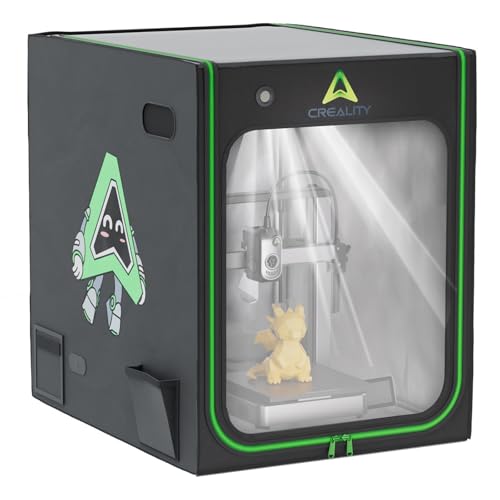
Built-in LED Light, Maximized Visibility: The LED light built into the 3d printer enclosure can illuminate the interior, making the printing process clearly visible in dim environments; Equipped with a large transparent viewing window, you can monitor the printing process in real time no matter day or night
FLASHFORGE Adventurer 5M 3D Printer,Support Multi Materials, High Precision

Unparalleled Speed: With Core XY All Metal Structure, Flashforge Adventurer 5M Can realize Max 600mm/s travel speed and 20000mm/s² acceleration, More than 70% shorter time...
Who’s the FLASHFORGE Adventurer 5M really for?
Families, beginners, and anyone who wants speed without headaches. I love that this thing hits 600 mm/s but still feels approachable, not intimidating.
Core specs and capabilities
You’ve got a 220x220x220 mm build volume, which covers most household projects nicely. The real win: material support. PLA, PETG, ABS, ASA, plus carbon fiber variants (PLA-CF, ASA-CF, PETG-CF). That 0.25 mm nozzle option lets me squeeze out detail work when I’m feeling ambitious, or swap to 0.8 mm when I just need bulk fast.
Printing performance and quality enhancements
The 32 mm³/s flow rate keeps up with that blistering speed. Dual cooling fans prevent the dreaded stringing mess, and vibration compensation actually works. I printed a robot figure at 400 mm/s; layers stayed clean, corners sharp. The PEI platform releases prints like magic, no scraping required.
Real talk: the leveling is actually one-click automatic. No paper tests, no swearing.
User experience
The Core XY metal structure feels solid, not toy-like. Remote monitoring through Flash Maker app (camera kit sold separately, naturally) means I check prints from my couch.
Verdict
Not the biggest build volume out there. For speed-hungry households who want variety without complexity, though, this hits the sweet spot. Kids can use it; I actually trust it.
Best For: Families, beginners, and speed-focused home users who want fast, high-quality 3D printing across multiple materials without dealing with complex setup or calibration.
Pros:
- Exceptional speed and acceleration (600 mm/s, 20,000 mm/s²) paired with effective vibration compensation and dual cooling for clean, detailed prints even at high speeds
- Hassle-free user experience with true one-click automatic leveling, easy-release dual-sided PEI platform, and intuitive remote monitoring via Flash Maker app
- Extensive multi-material support including standard filaments (PLA, PETG, ABS, ASA) and carbon fiber variants, with versatile nozzle options (0.25–0.8 mm) for different project needs
Cons:
- Camera kit required separately for full remote monitoring capabilities
- Build volume of 220x220x220 mm, while adequate for most household projects, limits larger-scale prints compared to competitors
- All-metal Core XY structure prioritizes rigidity and speed but may produce more operational noise than enclosed or dampened alternatives in shared living spaces
Recommended Products
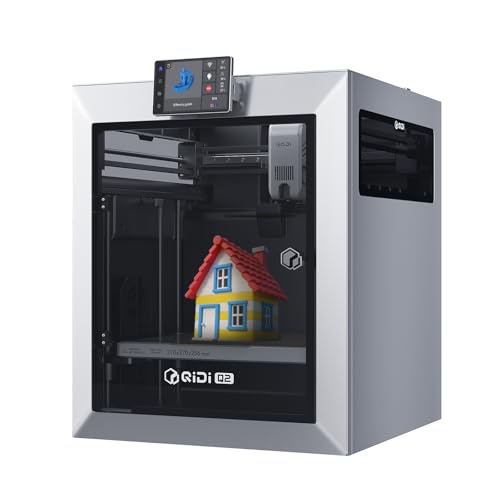
[Why Choose QIDI Q2?] QIDI Q2 redefines your first 3D printer—easy to use yet truly professional. For beginners, makers, educators, and engineers. One printer covers entry-to-expert projects so you create faster with reliable results.

【IMPACT RESISTANT & TOUGHNESS】- ELEGOO ABS filament offers excellent impact resistance and durability, ensuring your 3D prints can handle impacts and wear. Ideal for drone mounts, protective cases, rugged outdoor gear, and industrial tools.

【IMPACT RESISTANT & TOUGHNESS】- ELEGOO ABS filament offers excellent impact resistance and durability, ensuring your 3D prints can handle impacts and wear. Ideal for drone mounts, protective cases, rugged outdoor gear, and industrial tools.
FLASHFORGE AD5M Pro 3D Printer (High Speed)

Versatile 3D Printer & Quiet Printing: AD5M Pro is a versatile tool that can be used for parent-child bonding activities, household repairs, and creative teaching. Its fully...
Looking for raw speed without the noise? I’ve found your match. The FLASHFORGE AD5M Pro delivers 600 mm/s printing while keeping things surprisingly civilized at just 50 dB, standard. Pop it into silent mode and you’ll barely notice it’s running.
This isn’t just fast, it’s flexible. The 280°C direct-drive extruder handles everything from squishy TPU to carbon fiber blends. Those quick-swap nozzles (0.25mm to 0.8mm) let me switch from fine detail to chunky structural prints in minutes.
Fully enclosed with HEPA13 plus activated carbon filtration, it traps 99% of particulates and VOCs. I appreciate that for my home office, no fumes, no dust clouds.
Setup? One-click auto-leveling actually works. The Orca-Flashforge slicer and Flash Maker app let me queue files and monitor prints remotely.
For schools, hobbyists, or small businesses needing speed without sacrificing safety, this black workhorse hits a sweet spot. Verdict: if you outgrew the Adventurer 5M and crave professional pace, upgrade here.
Best For: Schools, hobbyists, and small businesses that need high-speed 3D printing with professional-grade safety features and quiet operation for home or classroom environments.
Pros:
- 600 mm/s high-speed printing with low noise (50 dB standard, plus optional silent mode)
- Fully enclosed with HEPA13 and activated carbon filtration removing 99% of particulates and VOCs
- Versatile 280°C direct-drive extruder with quick-swap nozzles (0.25–0.8 mm) supporting diverse filaments including TPU and carbon fiber blends
Cons:
- Limited to 280°C maximum temperature, which may restrict some high-temp engineering filaments
- Enclosed design may limit build volume accessibility compared to open-frame printers
- Reliance on proprietary Orca-Flashforge slicer and Flash Maker app may reduce flexibility for users preferring open-source workflows
Recommended Products

【Triple-Layer Filtration for Toxic Fumes & Particles】Engineered specifically for 3D printer emissions—not a generic air purifier. The 3D printer filtration system uses a pre-filter to trap large dust, a HEPA H13 filter to capture 99.97% of ultrafine particles from PLA/PETG/ABS/ASA/Nylon, and a thick activated carbon bed to adsorb VOCs and chemical odors like styrene (ABS/ASA) and caprolactam (Nylon). Keeps your workspace air clean and safe.

Large Storage Volume -Filament Dry Box Inner Size: 9.29*6.49*9.13 inch. Comgrow dryer box can store 2 rolls of 1kg spools, compatible with PLA ABS SILK filament. Works perfectly with all standard filament diameters 1.75mm/2.85mm.

Official Creality Filament Storage Box: Our filament storage's dual-tiered design accommodates up to 10 rolls of 1kg filaments, making it easy to say goodbye to a cluttered creative space. Keep filaments and UV sensitive resin neatly stored in one place
Factors to Consider When Choosing an Enclosed 3D Printer
I won’t sugarcoat it, flashy marketing never saved a 12-hour print from thermal drift or layer splitting. You’ll want rock-solid temperature control (think ABS and nylon, not just basic PLA), whisper-quiet fans that won’t wake your household, and safety locks that actually snap shut.
Cheap acrylic flexes, steel doesn’t, so check the frame before you buy unless you enjoy spaghetti sculptures.
Recommended Products
Versatile 3D Printer & Quiet Printing: AD5M Pro is a versatile tool that can be used for parent-child bonding activities, household repairs, and creative teaching. Its fully enclosed design allows you fast and easy use while enjoying the process. Standard mode: 50dB; an additional low-speed silent mode to ensure uninterrupted focus during work or study.

High Print Quality: Low shrinkage, Solve the problem of warping and blistering, improve the print quality. Uniform line diameter, pure color. High quality filament creates delicate artistic work
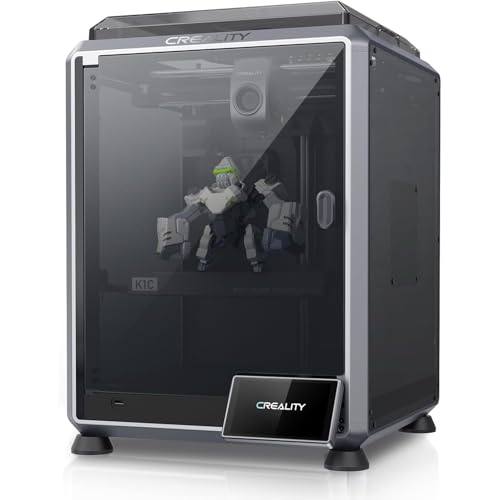
【CoreXY, 12X Faster Performance】The Creality K1C 3D Printer utilizes an advanced CoreXY system with 600mm/s printing speed and 20000mm/s² acceleration, offering up to 12 times faster performance than standard 3D printers while maintaining top-quality results.
Temperature Control Stability
Why does temperature stability matter so much in an enclosed printer? It keeps your prints from warping, cracking, or failing halfway through. I’ve seen too many ABS prints turn into sad, curled messes because the chamber couldn’t hold steady heat.
Look for a well-sealed chamber with smart cooling. It controls heat buildup during long prints and prevents nasty thermal gradients, hot spots and cold zones, that ruin layer adhesion.
Dual-filtration systems, HEPA13 plus activated carbon, help too. They stop particulates from messing with temperature sensors.
Core XY or all-metal frames? I prefer them. They cut vibrations that throw off heat distribution.
And if you’re running 280°C extruders, insulation matters. Without it, you’re bleeding heat and fighting inconsistent nozzle temps.
Stable temps mean reliable prints. Period.
Material Compatibility Range
Because I print everything from prototype brackets to flexible gaskets, material compatibility is where I draw the line between “useful tool” and “expensive paperweight.” An enclosed printer isn’t automatically a filament champion.
I check three things before I buy. First, high-temperature nozzles (200°C or hotter) unlock filaments beyond basic PLA. Second, does it actually handle carbon fiber? Some models proudly list PLA-CF and PETG-CF, others quietly warn you away. Third, chamber stability matters. ABS and ASA warp like angry origami without consistent heat.
Moisture-sensitive filaments drive me nuts, so I hunt for humidity control or filament drying features. PA and PC blends demand it.
My personal preference? Skip machines stuck in PLA-PETG land unless you’re strictly prototyping. For engineering parts, I want ASA, carbon fiber, and maybe nylon. What’s your go-to material?
Noise Reduction Levels
How loud is loud enough to drive you nuts at 2 AM? I’ve run printers overnight, and trust me, the wrong machine turns your workspace into a sleep-stealing nightmare.
What Actually Quiets These Things Down
Enclosed chambers help a ton. Manufacturers now advertise laptop-typing noise levels, and some actually deliver. I look for direct-drive extruders and step-servo motors that adjust torque on the fly, cutting vibration before it becomes that high-pitched whine we all dread.
Speed vs. Silence Tradeoffs
Core-XY setups running fast? Without vibration compensation, they’re mechanical jackhammers. The better enclosed models pair speed with quality cooling, so you don’t sacrifice sanity for throughput.
Quick Wins Most People Miss
Auto-leveling rocks because it kills those repetitive, grindy startup movements. And yeah, HEPA filtration doesn’t help acoustics directly, but well-sealed chambers do dampen sound leakage.
Safety Features Included
Once you’ve got the noise under control, the next thing I worry about is what I’m actually breathing in while these machines run.
Filtration That Actually Works
I look for dual filtration systems: HEPA13 plus activated carbon. The HEPA filter catches those ultrafine particulates floating around, and the carbon layer tackles VOCs, the smelly chemical vapors from melted plastic. It’s not optional for me if I’m printing ABS or ASA in a small room.
Temperature Control and Hands-Off Features
The enclosure itself keeps heat stable, which prevents warping and reduces fire risk with fussy materials. I’m also a fan of auto-leveling and auto-calibration. Fewer manual adjustments mean fewer chances I’ll burn my fingers on a hot nozzle or crash the bed.
Remote Peace of Mind
Built-in cameras and app alerts let me peek at prints without hovering. I get safety notifications if something goes wrong, which means I can actually leave the room.
Build Quality Durability
A solid frame is the backbone of any printer I actually trust to run overnight. Look for rigid joints and metal construction, because vibrations ruin prints and cheap frames flex like crazy during high-speed moves.
Frame Design Matters
CoreXY setups with all-metal construction minimize flex and deliver precise motion control. I’ve watched flimsy enclosures rattle themselves apart: it’s not pretty.
Environmental Stability
Full enclosures with dual filtration, that’s HEPA13 and activated carbon, maintain steady temperatures while keeping particulates and VOCs out of your lungs. Your prints stay consistent, and so does your health.
Surface and Setup
Dual-sided PEI beds give reliable adhesion and clean part removal. Add auto bed leveling, and you’ve got repeatability without constant babysitting.
My Take
Spend more upfront on build quality, or regret it later.