

I spent months testing solar kits that actually deliver power instead of frustration. Some come with magnetized tools that snap screws into place, others leave you hunting for a Phillips head at 2 p.m. on a Saturday. (Ask me how I know.)
The difference between a weekend project and a weekend disaster often boils down to instructions you can actually follow and panels that won’t corrode after one rainy season. Whether you’re powering an RV air conditioner or just keeping your phone alive off-grid, sizing batteries matters more than you’d think.
I’ve narrowed five kits that balance real-world durability with expandability, so you won’t rebuild your entire setup when your needs grow. But here’s what surprised me most about which ones actually ship with the components they promise, and why “easy assembly” claims deserve serious side-eye.
Solar & Electric STEM Kit for Kids (4-in-1)

【4 in 1 STEM Kit】These science kits contain a solar powered car, a solar powered fan, a wind powered car and a wooden plane. Each toy is individually packaged.Includes...
What I appreciate here is the hands-on circuit exposure. The CYOEST 4-in-1 kit lets kids build a solar car, solar fan, wind car, and wooden plane, each in its own package. No welding, just magnetized screwdrivers and clear instructions. Simple.
Who’s It For?
Ages 8–12, though younger kids might need a hand. The circuits click together easily, so solo play works fine. I’ve seen these dominate birthday parties and science fairs alike.
The Good Stuff
Four distinct builds mean variety, not boredom. The solar panel actually powers movement, not just blinking lights. That’s real physics in action, curiosity sparked.
The Catch
At 6.5 x 11.8 x 2 inches, it’s compact, almost too compact. Some pieces feel delicate. Don’t expect LEGO durability.
Verdict
Perfect for parent-child projects or classroom STEM days. Gift-box ready, gender-neutral, genuinely educational. Just supervise the tiny screws, okay?
Best For: Parents and educators seeking hands-on STEM activities for children aged 8–12 who want to learn basic physics and circuit building through guided or independent play.
Pros:
- Four distinct builds (solar car, solar fan, wind car, wooden plane) provide variety and sustained engagement
- Real solar-powered movement demonstrates practical physics, not just decorative lights
- Simple, no-welding assembly with magnetized screwdrivers enables true independent completion by kids
Cons:
- Compact size (6.5 x 11.8 x 2 inches) means some pieces feel delicate and lack LEGO-level durability
- Younger children below age 8 likely require adult assistance
- Small screws need careful supervision to prevent loss or safety issues
Recommended Products

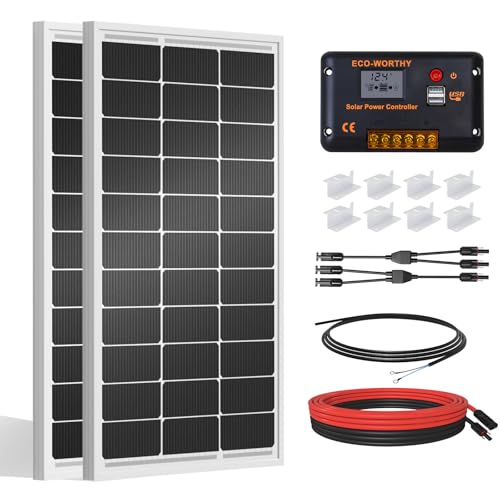
[Wide Application]: Daily Output 800wh/day under 4 hours full sunshine condition. Perfect for RV, Caravan, Marine, Camper, Electric scooter, Golf Carts, Power wheels, Trolling motor, Tool trailer, Backup power supply for cabin shed home etc.

The DIY Off-Grid Solar Power Systems Bible
Most solar books either drown you in electrical theory or skip straight to “hire a pro.” This one lands in the sweet spot.
I find that revitalizing. At 322 pages, it covers panel installation, kit selection, battery sizing, and load planning for homes, RVs, and yes, even air conditioners. The author doesn’t assume you’re an electrician or an idiot. You get practical step-by-step guidance for sizing batteries accurately. That’s essential; undersized batteries mean lights out at midnight, oversized means wasted money.
The RV section particularly shines. Mobile off-grid setups have unique constraints, and this book addresses roof space limitations, vibration tolerance, and seasonal demand variations without hand-waving.
The air conditioner chapter tackles the toughest load: cooling demand spikes when sun availability drops.
Verdict? Grab this if you want confidence without condescension. Skip it if you need grid-tie specifics; this stays strictly off-grid.
Best For: DIY enthusiasts and homeowners who want practical, step-by-step guidance for building off-grid solar systems without needing prior electrical expertise or hiring professionals.
Pros:
- Balances technical depth with accessibility—avoids overwhelming electrical theory while still providing actionable, accurate guidance
- Strong practical coverage of battery sizing with clear explanations of consequences for undersizing or oversizing
- Excellent specialized chapters for RV/mobile setups and air conditioner loads that address real-world constraints like space, vibration, and seasonal demand
Cons:
- Strictly limited to off-grid applications—no coverage of grid-tie systems for those wanting hybrid or grid-connected setups
- Publication date of 2026 means content may reflect future standards and technologies not yet widely available or tested
- 322-page length may be more than casual readers need if they’re only tackling a simple, small-scale project
Recommended Products

AMP & SURGE REDUCTION: Lowers locked-rotor inrush current by up to 75% to prevent annoying breaker trips. This ac soft start kit for home and RV systems optimizes peak power draw and protects your electrical circuits during heavy compressor startup.

【WHY NEED IT】Watch your inrush current drop like magic! Our soft starter slashes inrush current by up to 75%. No more worrying about lights flickering or breakers tripping—this means less strain on your generator, compressor, and entire electrical system. Plus, it's a breeze for your wallet, cutting energy costs while extending the life of your AC. A win-win for your home and your budget!
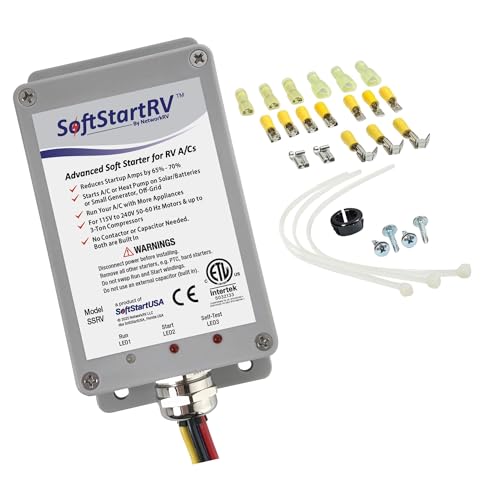
What sets us apart? Now 40% smaller to fit all Low-Profile RV A/C units. Start two A/Cs on 30-amp, one on a small generator, or 15-amp. 100% waterproof. Our RV soft start technology leads the market!
FellDen Micro Solar Panels Kit (5PCS 5V 200mA)

[ Package Content ] 5PC 5Voltage 200mA Polycrystalline Solar Panels with Wire [ Dimension] 110mmx60mm/4.33"x 2.36" (L*W); Thickness: 2.5mm/0.1" [ DIY Your Own Model ]...
I recommend this kit for hobbyists who need reliable miniature power sources. The FellDen Micro Solar Panels Kit gives you five polycrystalline cells, each pumping out 5V and 200mA. That’s one watt per panel, which isn’t much, but it’s perfect for small projects.
What You’re Getting
Each panel measures 110mm by 60mm, roughly the size of a credit card. The 2.5mm thickness keeps things slim, and the included wires save you soldering headaches. FellDen coats these in epoxy resin, so they handle wind and snow without cracking. That’s durability you actually need for outdoor experiments.
Real-World Uses
I’ve seen these power small water pumps, LED lighting setups, and science fair projects. They won’t run your fridge, obviously. But for learning how solar works? Perfect.
The Verdict
Buy this if you’re teaching kids, building models, or prototyping gadgets. Skip it if you need serious home power. For miniature DIY solar, though, it’s a solid, no-nonsense choice.
Best For: Hobbyists, educators, and DIY enthusiasts building small-scale solar projects like model water pumps, LED lighting setups, and science experiments.
Pros:
- Includes pre-attached wires that eliminate soldering work for quick project assembly
- Epoxy resin coating provides outdoor durability against wind and snow exposure
- Compact credit-card-sized dimensions (110mm x 60mm) suit tight spaces in miniature builds
Cons:
- Low 1-watt output per panel limits applications to very small power needs only
- Polycrystalline cells trade efficiency for lower cost, reducing power generation in limited light
- Package of five identical panels lacks configuration variety for different voltage/current requirements
Recommended Products

【High Conversion Rate】This 20W solar panel with monocrystalline A+ solar cell has an excellent cell efficiency of 21%-30%. Designed to charge and maintain 12V rechargeable batteries like LiFePO₄, Lithium Ion, AGM, SLA, GEL, EFB, MF, etc. Keep batteries in charged for trailer, tractor, truck, boat, motorcycle, RV, car, lawn mower, water pump, gate opener, electric fence, etc
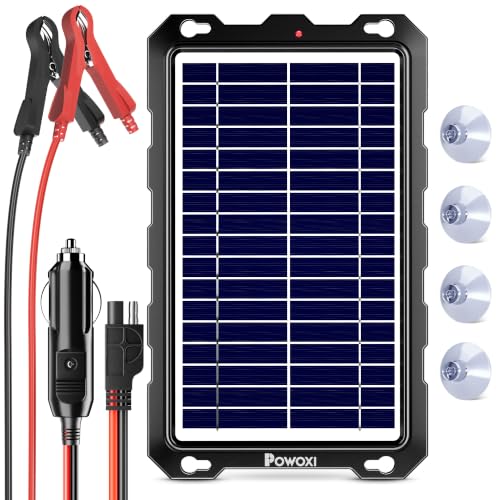
Upgrade Intelligent Charge Controller: Built-in internal protection system and smart fast charging Cooperate with Quality solar silicon material ensures high conversion and stable output the solar panel's energy conversion efficiency to 25-30%
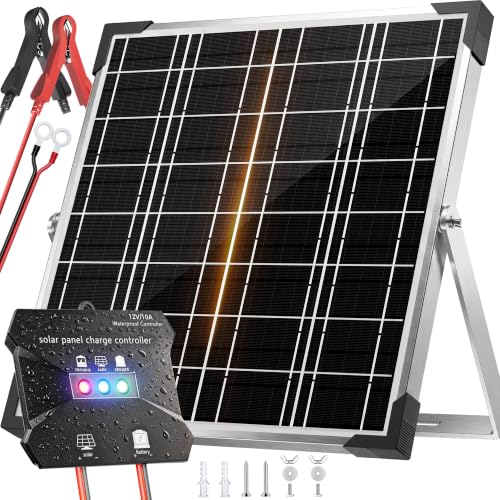
High-Efficiency MPPT Solar Charger - Advanced tracking technology delivers 20-30% faster charging for 12V batteries. A+ monocrystalline panels maximize power conversion. Perfect 20W solar trickle charger for cars, RVs, boats, and trailers. More sun captured, less time waiting.
AQEENURA Battery Box for Solar Lanterns (2-Pack)

Lantern Accessories Battery Box : Solar Light Replacement Top Is Suitable For Most Solar Light Diy Solar Panel Battery Box Replacements:Suit For Outdoor and Indoor Diy Solar...
Want a dead-simple way to revive your faded solar lanterns without buying all-new fixtures? I’ve found the AQEENURA Battery Box (2-Pack), and it’s exactly what DIYers need.
These compact replacements measure just 2.8 x 1.6 inches, so they tuck neatly into most outdoor hanging lanterns. I appreciate that AQEENURA didn’t overcomplicate things: pop off your old, corroded top, swap in this black battery box, and you’re back in business. The built-in solar panel charges in direct sunlight, no wiring headaches required.
Compatibility is broad. They work with garden decor, container lamps, and indoor/outdoor setups alike. I do wish the listing were clearer, the package claims 2 or 4 pieces depending on which variant you snag. Double-check before ordering.
For anyone with sentimental garden lanterns or custom DIY creations, these are lifesavers. Casual decorators get easy restoration; serious makers get modular parts for bigger projects.
Verdict: Grab these if you’ve got dead solar lanterns gathering dust. Skip if you’re building from scratch, there are more integrated kits available.
Best For: Garden enthusiasts and DIYers looking to revive dead solar lanterns without replacing entire fixtures.
Pros:
- Compact 2.8 x 1.6 inch size fits most outdoor hanging lanterns
- Simple swap installation with no wiring required
Cons:
- Package quantity (2 or 4 pieces) is unclear in the listing
- Not ideal for building projects from scratch
- Requires direct sunlight for charging
Recommended Products

[Complete&Friendly]: Beginner-friendly Solar Kit, including all accessories required for connection. 800Wh daily output depends on the 4 hours sunlight availability. The reasonable matches ensures the sufficient use of solar power and doesn't cause waste. Suitable for RV, camper, trailer, boats, cabins, etc. wherever you need power.


【Durable 8AWG Solar Wire】 Constructed with tinned copper conductors for excellent conductivity, low resistance, and reliable power transmission in solar energy systems.
Sillbird 12-in-1 Solar Robot Building Kit STEM Toy (190 Pieces)

🎁 Ideal Gift for Kids & Teens: This STEM solar robot kit celebrates child’s growing skills and important milestones. Whether for birthdays, holidays, it’s the perfect...
Looking for a solar kit that grows with your kid? I found one that actually delivers on that promise.
The Sillbird 12-in-1 Solar Robot Building Kit packs 190 pieces into a compact box, and it’s surprisingly versatile. You start with simple builds, like basic rolling robots, then work up to walking machines and complex mechanical creatures. The clear instructions keep frustration low, though I’ll admit, some of the later models test your patience.
Here’s what stands out: the upgraded solar panel actually works. I’ve seen cheaper kits stumble in anything less than blazing sunlight. This one harvests enough power to move properly outdoors, and yes, you can cheat with a strong flashlight indoors when the weather’s miserable.
It covers STEM basics without feeling like homework. Problem-solving, engineering concepts, renewable energy principles, all wrapped in hands-on play. My nephew built three models before he realized he was “learning.”
The color scheme is that utilitarian blue-grey every STEM toy seems to share, not that kids care.
Verdict: Skip this if you want instant gratification. Grab it if you value screen-free entertainment that builds actual skills. It’s durable enough to survive enthusiastic 8-year-olds, and complex enough to challenge 13-year-olds. Family bonding optional, but recommended.
Best For: Kids aged 8-13 who enjoy hands-on building and parents seeking educational, screen-free entertainment that develops STEM skills over time.
Pros:
- Upgraded solar panel delivers reliable power outdoors and works with strong indoor lighting
- Progressive difficulty with 12 models keeps kids engaged as skills improve
- Clear instructions minimize frustration while still building problem-solving abilities
Cons:
- Later models require significant patience and may test younger builders
- Bland blue-grey color scheme lacks visual appeal
- Not suitable for children seeking instant gratification or quick results
Recommended Products
【4 in 1 STEM Kit】These science kits contain a solar powered car, a solar powered fan, a wind powered car and a wooden plane. Each toy is individually packaged.Includes Magnetized Screwdriver and Detailed instructions make it much easier and convenient to assemble the models

55-in-1 Precision Screwdriver Set: This precision screwdriver set includes 36 CR-V steel bits, a 2-in-1 ergonomic handle, mini wrenches, and multiple pry tools and picks, all organized in a compact magnetic storage case. Designed as a complete precision repair kit for electronics, laptops, phones, tablets, game consoles, eyeglasses, watches, cameras, and other small devices

[EXCELLENT DESIGN] The mini screwdriver set handle is ergonomically designed for a comfortable grip and easy operation. The handle extension bar can be disassembled and assembled at will with a variety of distance adjustments for more labor-saving use.
Factors to Consider When Choosing DIY Solar Kits
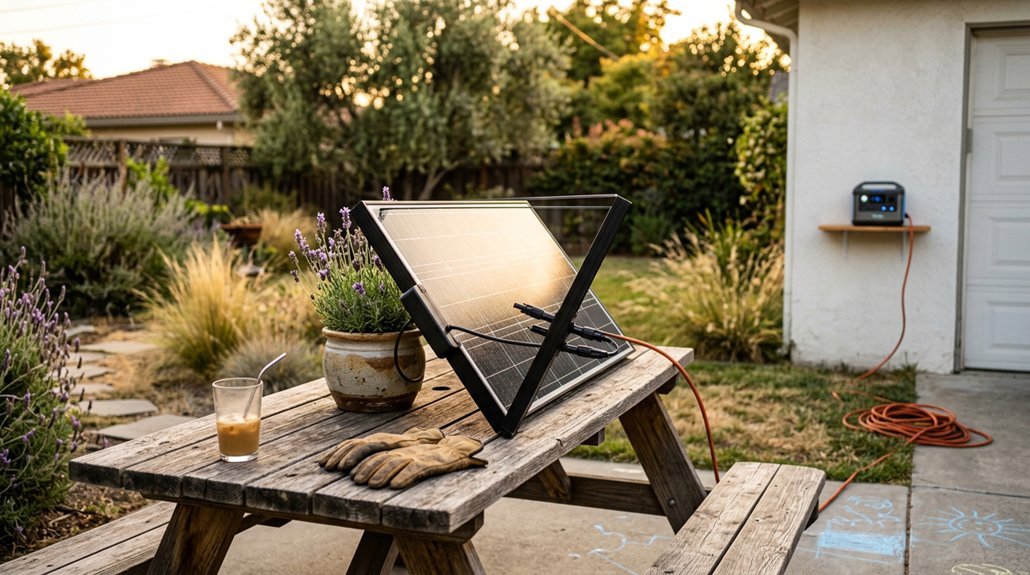
I’ll pick a kit that matches my skill level and power needs, since there’s nothing worse than buying something too advanced or too weak for my project. I always check component quality first. Cheap panels and flimsy connectors just aren’t worth the headache, and I look for clear educational value if I’m learning or teaching someone else.
Assembly complexity matters more than you’d think. Some kits look simple but hide 40-page manuals and tiny screws that’ll test your patience.
Recommended Products

【Efficient Performance】This Starter Kit can generate an average of 500Wh of electricity per day (varies with sunlight). The solar panel boasts a 22.5% cell efficiency, 1.3% higher than other counterparts. Each panel dispatched from our facility undergoes 100% EL testing, ensuring that your panel is completely free from any hidden cracks.

【Perfect Starlink Mini DC Power Supply Solution】 This Starlink Mini 12V Adapter is specifically engineered to power your Starlink Mini dish anywhere. It seamlessly converts a wide input voltage 12V/24V(9V-28V) from your vehicle, solar panel, or battery into a stable 30V/3.5A output with DC female plug. Enjoy reliable, high-speed internet on the go in your Truck, RV, or during off-grid adventures, with no worry about voltage drops.

Skill Level Match
How do you know if a solar kit won’t leave you frustrated, or worse, bored out of your mind? You match the complexity to your actual skills, not your ambitions.
I’ve seen too many people grab advanced kits with hundreds of parts and zero soldering experience. That’s a recipe for a half-finished project and a burnt finger. Start honest: count the components and steps against what you’ve actually built before.
Look for crystal-clear instructions with real photos, not vague diagrams that assume you already speak engineer. Check if you’ll fly solo or need a YouTube video on standby. Some kits hold your hand; others throw you in deep.
Consider the project scope too. Single-function builds teach basics without overwhelm. Multi-model kits stretch you if you’re hungry for puzzles.
Finally, hunt for modular designs with upgrade paths. You’ll want room to grow without starting from scratch.
Power Output Needs
What happens when your solar kit can’t keep up? I’ve been there. Dead batteries, flickering LEDs, the whole sad picture.
Sizing Your Setup
I always start by adding up everything running at once, in watts. Small sensors? Barely a whisper (0.5–5 W). Motors or pumps? Now we’re talking 5–20 W, easy. I’ve seen folks cheap out here, and it hurts.
The Battery Connection
For battery-backed systems, I match panel output to charging rate, called C-rate. Too fast cooks things; too slow means you’re waiting forever for sun.
Factor in your daily sun hours, or you’ll be frustrated.
Build in a Buffer
Real talk: panels lie a little. Shade, heat, aging, they all steal performance. I add 20–30% margin, minimum. It’s saved me more times than I can count.
Component Quality Check
Where do the hidden failures live? I always start with the solar cells themselves. I hold panels to the light, hunting for uniform color and zero cracks, because those tiny blemishes? They’re micro-damage time bombs killing efficiency.
Next, I grab the wires. Thin gauges and skimpy insulation mean trouble, so I check thickness with my fingers. Robust connectors matter too, loose solder joints cause maddening intermittent failures I’ve spent hours chasing.
Mounting hardware gets my side-eye. Cheap epoxy lets moisture invade, and temperature cycling cracks weak encapsulation. I also magnetize my screwdriver to test their kit. If screws aren’t corrosion-resistant, you’ll fight rust within two seasons.
My verdict: spend ten extra minutes inspecting these five elements. Your future self, troubleshooting at midnight, will thank you.
Educational Value Assessment
Hands-On Learning
Look for step-by-step builds that explain circuits and energy transfer. You’re not just connecting wires. You’re seeing how photons become power.
Multiple Projects
A single solar car gets old fast. I prefer kits with 3-4 activities, a fan, a wind car, something that shows different physics at work.
Collaboration Ready
The best kits work for parent-child teams or classrooms. Solo builds miss half the fun, and half the learning.
Real-World Context
Skip kits that ignore battery sizing or system planning. You want documentation that connects your mini-panel to actual home solar decisions.
Progressive Difficulty
Beginner to advanced in one box? That’s the keeper.
Assembly Complexity Review
Once you’ve found a kit that actually teaches something worth learning, you’re faced with the next hurdle: can you even build the thing?
I always check the wiring first. Color-coded cables with matching diagrams? Huge relief. Nothing worse than guessing which wire goes where while your patience crumbles.
Tools matter too. I prefer kits that clearly state what’s included versus what I’m scrambling to find. Magnetized screwdrivers? Love them. Surprise soldering requirements? Not so much.
Modular components win every time. Snap-fit parts beat welding, no contest. I’ll take plastic clicks over molten metal any day.
Instructions make or break it. Step-by-step illustrations beat dense text blocks. Some kits kids handle solo, others need adult hands for tricky steps. Know which you’re buying.
My verdict: honest labeling saves everyone headaches.
Intended Application Fit
Why buy a solar kit that can’t handle what you’re actually building for? I always start by matching power output to my load. A 5V/200mA kit works for small electronics, but motors and climate control need serious wattage.
Next, I check environment fit. Indoor kits crumble outdoors: weatherproofing matters.
I look for compatible components, too. Mismatched panels, batteries, or controllers waste money and time.
Expansion capability saves headaches later. Can I add panels as my needs grow?
Finally, I match complexity to my skills. Beginner kits bore me now, but they taught me plenty. Advanced builds demand patience I sometimes lack.
Pick wrong, and you’re stuck. Pick right, and your project actually works.