

I’ve cut brackets, signs, and weird one-off parts on tables that cost less than a used truck, and I’ve learned this: cheap frames shake, slow software kills momentum, and the wrong voltage setup means you’re rewiring your shop at midnight.
For small shops in 2026, the game isn’t about buying the biggest table. It’s about matching your actual work to a machine that won’t fight you.
The seven tables worth your time range from portable 2×2 units you can wheel outside for exhaust, to 4×4 rigs with bundled cutters and replaceable slats that save you from grinding torch dives into the frame. Some run on 110V for garage startups, others demand 220V but cut cleaner at higher speeds.
I’ve got opinions on which delivers real value, which cuts corners you’ll regret, and which one I’d buy tomorrow if my current rig died. The details matter more than the marketing.
Winona Plasma Cut Green Coolant (1 Quart)

PROTECTS AGAINST RUST & CORROSION: Formulated for CNC plasma tables and water-table cutting systems. Use on ferrous and non-ferrous metals. Reduces flash rust on cut parts...
Who’s this for?
If you’re running a CNC plasma table day in and day out, you know the headaches: rusted slats, stuck-on slag, warped thin metal. I’ve dealt with all of it. That’s why I keep Winona Plasma Cut Green Coolant on hand. It’s not flashy, but it works.
What It Actually Does
This stuff prevents flash rust on finished parts and stops your slat bed from corroding. I’ve seen tables rot out prematurely from plain water, this extends machine life considerably.
The slag release agents are the real star: molten metal balls up and drops instead of welding itself to your table. Cleaning takes half the time.
Thermal Control & Cut Quality
It absorbs heat to prevent thin parts from warping, and cuts come out cleaner with smoother edges. Less grinding afterward, which means more profit per job.
The Verdict
It’s worth every penny for small shops doing regular production.
Best For: Professional CNC plasma table operators and small fabrication shops running regular production who need to prevent rust, reduce slag adhesion, and improve cut quality.
Pros:
- Superior rust inhibition extends slat and machine life by preventing corrosion from water and oxidation
- Advanced slag release agents cause molten metal to ball up and drop to tank bottom, dramatically reducing cleaning time and labor
- Prevents warping of thin metal parts while producing cleaner cuts with smoother edges, reducing need for secondary grinding
Cons:
- Value proposition heavily dependent on regular production volume
- One quart size may require frequent replenishment for high-volume daily operations
Recommended Products

ALL-IN-ONE HI-END TECHNOLOGY PLASMA CUTTING MACHINE SET: Redefine your metal crafting experience with the Eastwood Versa Cut 4X4 CNC Plasma Table and Plasma Cutting Machine Torch Set. Crafted for those who demand perfection and a user-friendly metal fabrication experience. This all-in-one powerhouse brings a new level of control and versatility to your workshop or home garage. A fusion of precision, efficiency, and cutting-edge technology in one bundle.

Drag-Cut Control & Manual Versatility: Rest the torch tip directly on sheet metal to eliminate standoff fatigue. Perfect for hand-tracing rulers, custom HVAC ducting layouts, and intricate metal art scaling before moving to automated runs.

Sturdy, Carbon Steel Construction - The 250 pound capacity allows you to plasma cut or weld heavy plate steel. As an extra safety feature, the slag catch tray helps you to not worry about pieces falling to the floor.
Eastwood Versa-Cut 4’x4′ CNC Plasma Table with 40A Cutter
ALL-IN-ONE HI-END TECHNOLOGY PLASMA CUTTING MACHINE SET: Redefine your metal crafting experience with the Eastwood Versa Cut 4X4 CNC Plasma Table and Plasma Cutting Machine...
Looking for a plasma table that won’t force you to become a computer programmer? I found the Eastwood Versa-Cut 4’x4′ CNC Plasma Table with 40A Cutter, and it’s refreshingly straightforward.
What I Like
This all-in-one bundle combines the table and torch, so you’re not hunting compatible parts.
The built-in controller runs everything; no laptop balancing act required. I plug my USB drive straight in, load my design, and cut. Preloaded shapes mean I can start immediately, which matters when I’ve got paying jobs waiting.
Precision and Build
Robust stepper motors deliver accurate cuts with real longevity. The torch travels 49.2 inches on X-axis and 43.3 on Y-axis, giving me room for detailed fabrication without sacrificing accuracy.
The Verdict
Eastwood backs this with lifetime tech support and responds within 24 hours. For hobbyists graduating to small business work, or pros wanting a reliable second table, this hits the sweet spot of capability and simplicity.
Best For: Hobbyists transitioning to small business work and professionals seeking a reliable, easy-to-use second plasma table that doesn’t require external computers or programming knowledge.
Pros:
- All-in-one design with built-in CNC controller and USB input eliminates need for external laptop or software expertise
- Preloaded shapes and intuitive interface enable immediate startup for beginners and quick job turnaround
- Lifetime tech support with 24-hour response backed by Eastwood’s established reputation for quality tools
Cons:
- 40A cutter and 4’x4′ work area may limit capability for thicker materials or larger industrial projects
- No mention of THC (torch height control) or advanced features found in higher-end CNC plasma tables
- Stepper motors, while accurate, may not match the speed and performance of servo-driven systems on premium tables
Recommended Products
![ANDELI 65 Amp Plasma Cutter [CNC Enabled][ Non-HF],1.06" Max Cut | Blowback Pilot Arc, 110V/220V, 4.05" Large LED Display, FPT60 Torch, 2T/4T, Intelligent Post-Flow, Air Pressure Detection](https://m.media-amazon.com/images/I/51HzSS1IgqL._SL500_.jpg)
【Large Digital Display】The upgraded LED interface clearly displays key parameters such as air pressure, voltage, current, and working status in real time, allowing users to monitor machine performance and make timely adjustments for more efficient operation. If an issue occurs, the screen shows an error code to help quickly identify the problem and simplify troubleshooting.

[CNC Ready With Straight Torch] Equipped with a straight plasma torch, this plasma cutter is specifically designed for CNC table use, ensuring precise, consistent, and repeatable cuts. It features both a 2-pin arc voltage output (1:1 ratio) and a 5-pin CNC interface, allowing easy integration with most CNC systems and making it a reliable choice for automated metal cutting tasks.
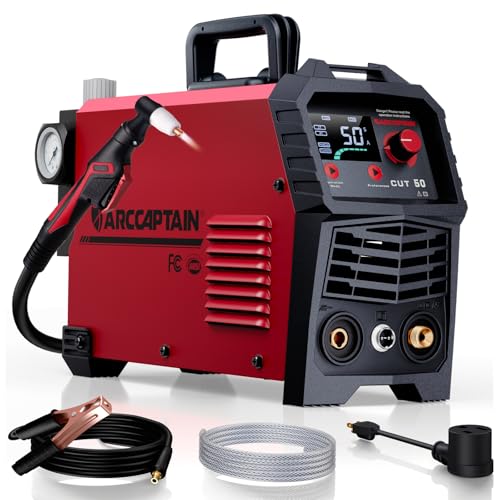
【Powerful Cutting Ability】Switch effortlessly between 110V and 220V for home or workshop use. Achieve professional 1/2" clean cuts on steel, aluminum, and copper with advanced LGBT technology. Perfect for DIY projects and heavy-duty tasks. Recommended maximum cutting thickness: 12mm @ 35A / 110V / 55 PSl; 18mm @ 50A / 220V / 75 PSI. Note: Requires compressed air (compressor sold separately).
Metrixpio Portable Plasma Cutting Table with Wheels
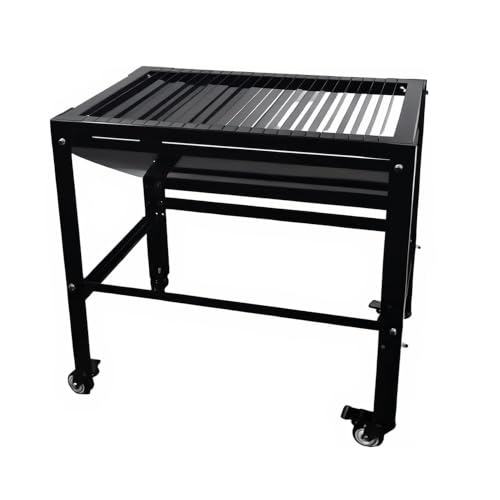
Optimized for Precision Plasma Cutting: Our CNC plasma table features 23 removable dividers to prevent spark splashing, ensuring clean, accurate cuts for both industrial and...
Which small shop owner doesn’t need a table that moves when you want, then locks down solid for clean cuts?
I found the Metrixpio JIYIM7AZ-4Q82 delivers exactly that balance. Its replaceable wheels roll smooth across concrete, then those fixed feet clamp down like they mean business. No wobble, no drift, just steady steel.
The 23 removable dividers caught my attention immediately. They actually stop sparks from spraying everywhere, which means less cleanup and fewer scorch marks on your floor. For precision plasma cutting, that containment matters more than you’d think.
Here’s where it gets interesting. This isn’t just a plasma table. I’ve used it as a bandsaw station and a CNC cart when floor space got tight.
The high-quality metal frame handles heavy workloads without complaining, no deformation even after months of abuse.
The black finish looks professional too. Not flashy, just solid.
Verdict: Grab this if you’re tight on space and need flexibility. Skip it if you want a dedicated, permanent cutting station. For garage fabricators and mobile pros, it’s a practical win.
Best For: Garage fabricators and mobile professionals who need a versatile, space-saving workstation that can quickly shift between plasma cutting, bandsaw operations, and CNC cart duties while maintaining stability during precision work.
Pros:
- Replaceable wheels and fixed feet provide excellent mobility and rock-solid stability when locked down
- 23 removable dividers effectively contain sparks and splatter, reducing cleanup and floor damage
- Versatile design functions as plasma cutting table, bandsaw table, and CNC plasma cutter cart for maximum workshop flexibility
Cons:
- Not ideal for those seeking a dedicated, permanent cutting station
- Removable dividers require setup and reconfiguration when switching between use cases
- Black finish, while professional, offers no color options for workshop customization preferences
Recommended Products
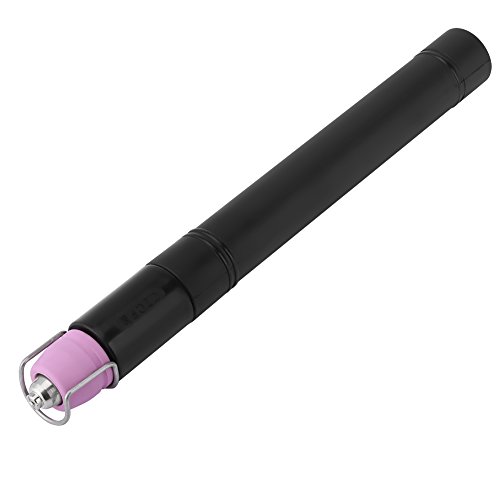
Excellent Design: This Arc AIR Plasma Cutter Straight Torch Body is brand new and high quality product to ensure a long time use

60amps output current, suitable for Bestarc BTC500XP BTC650XP cutting machine

20pcs Plasma Tips Nozzle Extended Ref No: 18866L
LOTOS Apex LTP6300DCNC 63A CNC Drag-Cut Blowback Plasma Cutter 110V/220V
Drag-Cut Control & Manual Versatility: Rest the torch tip directly on sheet metal to eliminate standoff fatigue. Perfect for hand-tracing rulers, custom HVAC ducting layouts,...
Need a plasma cutter that won’t fry your laptop mid-cut? I’ve got you covered. The LOTOS Apex LTP6300DCNC uses non-HF blowback pilot arc ignition, which means low electromagnetic interference startup. Your CNC controls, laptops, and sensitive electronics stay safe while you work.
This 63A beast delivers 3/4-inch clean cuts and 1-inch severance on structural steel, stainless, aluminum, even copper. I love the drag-cut feature: rest the torch tip directly on the sheet metal to reduce hand fatigue during long HVAC duct layouts or intricate metal art sizing before automated runs.
Dual-voltage auto-sensing (110V/220V) makes shop relocation painless. The pre-installed rear port outputs THC and ARC OK signals, so integration with commercial or DIY CNC tables takes minutes, not hours. You’ll need 70 PSI at roughly 4 CFM for consistent performance.
Minimal slag means easy cleanup. Replacement parts compatibility with LOTOS DC6309 drag and NCON series keeps maintenance simple. For small shops wanting CNC-ready power without electromagnetic headaches, this brown workhorse hits the sweet spot between manual flexibility and automated precision.
Best For: Small fabrication shops, HVAC contractors, and metal artists who need a dual-voltage plasma cutter that offers both manual drag-cutting precision and CNC automation compatibility without electromagnetic interference risks.
Pros:
- Non-HF blowback pilot arc ignition eliminates electromagnetic interference with CNC controls, laptops, and sensitive electronics
- Drag-cut control reduces hand fatigue by allowing the torch tip to rest directly on sheet metal during intricate layouts
- Pre-installed rear ports output THC and ARC OK signals for quick integration with commercial or DIY CNC tables
Cons:
- Requires consistent compressed air supply of 70 PSI at approximately 4 CFM for operation
- 63A output limits clean cuts to 3/4 inch, restricting efficient production cutting on materials near the maximum capacity
- Replacement part compatibility limited to LOTOS DC6309 drag and NCON series components, restricting third-party sourcing options
Recommended Products

Stable L-Shaped Welded Steel Base for Superior Strength: Engineered with a robust L-shaped base made of heavy-gauge welded steel, this table ensures exceptional durability and balance, preventing tipping and supporting up to 30 pounds for meals, laptops, or medical supplies.

【Multi Function One Design】BIZUM 27.6x15.8 inches side table, featuring a desktop adjustable from 0° to 70°, caters to your daily routines, whether you're reading, writing, eating or using a laptop. The anti-slip edge keeps your items from sliding off, and the cup holder ensures your drinks stay secure. It can be used as a computer desk, laptop table, children's study desk, drafting table, and hospital bed table. Note: When using the bed on the left side, the flip function is unavailable

Effortless Mobility: Rolling Overbed Table with Wheels. Experience seamless movement with our rolling overbed table with wheels. This bedside table with wheels glides effortlessly into place and away, thanks to its smooth-rolling, locking swivel casters. It's the perfect movable desk or rolling side table for any setting.
Baileigh CNC Plasma Cutting Table (PT-22)

Runs on 110V power with 6A, 60HZ, and 24" x 24" cutting area (3/4" mild steel capacity) Comes fully assembled with correct alignment (no need to spend hours building) You can...
Who’s got time to build a CNC table from scratch? Not me, and probably not you either. That’s exactly why I appreciate the Baileigh PT-22. It shows up fully assembled with proper alignment dialed in, so you can cut metal within hours, not weekends.
The Practical Stuff
The 24″ x 24″ cutting area handles up to 3/4″ mild steel, which covers most small business jobs (signs, brackets, art pieces). I like that it runs on standard 110V power, drawing just 6 amps. No electrician needed, no 220V headache.
Controls & Movement
Baileigh enclosed all the electronics, motor controllers included. No loose wires dangling around your workspace. The handheld panel with its jog dial feels intuitive for positioning. Dual stepper motors drive the Y-axis, single motor on the X, all riding an industrial cable track for smooth movement.
Torch Flexibility
Two torch holders matter more than you’d think. You can run automated cuts or switch to handheld torches for quick one-offs without reconfiguring everything.
My Take
Perfect for shops wanting professional results without the DIY build frustration.
Best For: Small shops and businesses needing professional CNC plasma cutting capabilities without the time investment of building and aligning a table from scratch.
Pros:
- Arrives fully assembled with proper alignment, enabling immediate use within hours instead of spending days on construction and calibration
- Operates on standard 110V/6A household power, eliminating the need for costly electrical upgrades or professional electrician services
- Dual torch holders accommodate both automated and handheld torches, providing flexibility for production runs and quick custom jobs without reconfiguration
Cons:
- Limited 24″ x 24″ cutting area may not accommodate larger industrial or high-volume production applications
- Single X-axis stepper motor drive could potentially limit cutting force or speed compared to dual-drive systems on competitive models
Recommended Products

PROTECTS AGAINST RUST & CORROSION: Formulated for CNC plasma tables and water-table cutting systems. Use on ferrous and non-ferrous metals. Reduces flash rust on cut parts while protecting slats, tanks, and associated equipment.
PROTECTS AGAINST RUST & CORROSION: Formulated for CNC plasma tables and water-table cutting systems. Use on ferrous and non-ferrous metals. Reduces flash rust on cut parts while protecting slats, tanks, and associated equipment.

DESIGNED FOR PRECISION PLASMA CUTTING: Formulated for CNC plasma cutting applications where consistent cutting conditions and repeatable results are critical to production efficiency. Use on ferrous and non-ferrous metals.
Eastwood Versa Cut 2×2 CNC Table with Machine Torch

✅ Complete CNC plasma cutting system including table, plasma cutter, machine torch, and HD consumables ✅ 2' x 2' cutting capacity ideal for brackets, panels, signage, and...
You’re running tight on space and want professional cuts without eating your entire garage, right? I get it. That’s exactly why I keep pointing small shop owners toward the Eastwood Versa Cut 2×2.
This isn’t some stripped-down toy. You’re getting a complete system: the 2×2 table, a 60-amp CNC plasma cutter, a dedicated machine torch, and an HD consumables kit.
That machine torch matters. It stays stable during automated cuts, so your brackets and panels come out clean every single time.
The HD consumables? They extend tip life and keep cut quality consistent. Less downtime swapping parts, more time actually fabricating.
At 2×2, it handles signage, small fabrication components, and repair parts without demanding your whole workspace. The 60-amp output slices through conductive metals fast enough for real production work.
I particularly like that Eastwood bundles everything. No hunting compatible torches or guessing which consumables fit.
Verdict: Perfect for hobbyists graduating to business use, or established shops needing a compact secondary table. Not for heavy industrial throughput, obviously. But for professional results in tight quarters? This delivers.
Best For: Small shop owners, hobbyists transitioning to business use, and established shops needing a compact secondary table for professional plasma cutting in limited workspace.
Pros:
- Complete bundled system with dedicated machine torch and HD consumables eliminates compatibility guesswork and reduces downtime
- 60-amp CNC plasma cutter delivers fast, clean, repeatable cuts on conductive metals suitable for real production work
- Compact 2×2 footprint fits tight spaces while handling brackets, panels, signage, and fabrication components
Cons:
- 2×2 cutting capacity limits workpiece size compared to larger industrial tables
- 60-amp output insufficient for heavy industrial throughput or thick material cutting
- Fixed table size may require part repositioning for larger projects
Biosplot 32″ Plasma Cutting Table with Replaceable Slats

DIMENSIONS: 32"H x 21"W x 30" L. This slatted-top, steel cutting table is the place to support your workpiece while plasma cutting or welding. The dimensions are designed to...
Looking for something that won’t eat up your whole garage? I found the Biosplot 32″ Plasma Cutting Table, and honestly, it’s a breath of fresh air for cramped shops.
At just 30 inches long and 21 inches wide, this little beast fits where bigger tables can’t. Don’t let the size fool you, though. That alloy steel frame handles 250 pounds easy, and those 23 replaceable slats? Brilliant design. When you burn through one, swap it out instead of replacing the whole surface.
The slatted top lets sparks and arcs fall through safely, so you’re not fighting slag buildup mid-cut. Biosplot throws in a fireproof welding blanket too. Floor protection matters, trust me. I’ve seen too many concrete scars from dropped slag.
Setup’s a snap with the included manual. No engineering degree required.
Who’s this for?
- Hobbyists with limited space
- Mobile welders needing portability
- Small shops wanting dedicated plasma support without the CNC price tag
The catch: No automation here. You’re guiding the torch by hand, so precision depends on your steady hand.
Contact their support if anything’s off, they actually respond.
Verdict: Perfect starter table, or secondary station for quick jobs.
Best For: Hobbyists, mobile welders, and small shop owners who need a compact, affordable plasma cutting and welding support table for manual operations in limited workspace environments.
Pros:
- Compact 30″ x 21″ footprint fits cramped shops and garages without sacrificing 250-pound load capacity
- 23 replaceable slats extend table lifespan and reduce maintenance costs compared to solid-surface alternatives
- Includes fireproof welding blanket for floor protection and enhanced safety during cutting operations
Cons:
- Manual torch guidance only—no CNC automation, so precision depends entirely on operator skill
- 32″ height may require adjustment for taller users during extended cutting sessions
- Limited to plasma cutting and gas torch work; not designed for heavy-duty fabrication or machining tasks
Recommended Products

[110V Home-Friendly Cutting] Designed for standard 110V household power, this plasma cutter is a practical choice for users who do not have access to 220V outlets. It is easy to set up and beginner-friendly. Recommended cutting capacity: 5/16"(8mm) clean cut at 35A 110V 45 PSI; up to 9/16"(14mm) maximum cut at 45A 110V 50 PSI. Dry compressed air is required. Recommended breaker: 40A at 110V. Suitable for alloy steel, copper, aluminum, and other conductive metals.

NON-HIGH FREQUENCY: The ''blow-back'' start system offers a remarkably smooth and interference-free initiation of the engine. This method is inherently safe for operators and bystanders, posing minimal risk to human health. Furthermore, it operates harmoniously with surrounding electrical machinery, preventing potential disruptions.

[Powerful Cutting Ability] Dual voltage 110/220V good for home, workshop and hardware shop use. Professional performance 1/2" clean cuts on Iron, Steel aluminum and copper with Inverter IGBT Technology. Very powerful for DIY and heavy duty project. The Maximum cutting thickness is recommended to 1/2" @35A 110V 50PSI; 2/3" @50A 220V 65PSI. Dry and compressed air is required. Power breaker up to 60A@110V 35A; Up to 50A@220V 50A.
Factors to Consider When Choosing a CNC Plasma Table for Small Business
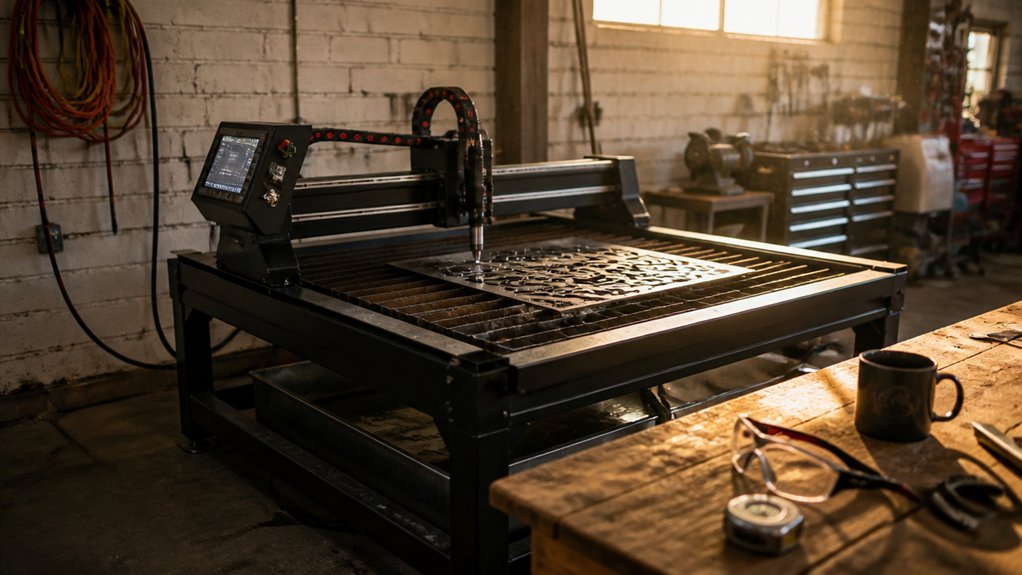
I’ve spent years testing these machines in cramped garages and busy fab shops, so I know the specs that actually matter when you’re trying to turn a profit. You can’t just chase the biggest cutting bed or the flashiest software. You need to balance cutting area dimensions against your real workload, weigh power requirements options against your shop’s electrical capacity, and decide if mobility versus stability fits your workflow.
Build quality standards separate the three-year wonders from the decade-long workhorses. Software integration compatibility determines whether you’ll spend your evenings fighting crashes or finishing jobs early.
Recommended Products

Standard length 13Ft long plasma cutting torch

PT31 Plasma Torch: standard length: 16ft; air pressure: 4.5-5.5bar; duty cycle for 60% with 30A

Wide Compatibility: Compatible with CUT60, CUT60SP, CUT50DP, CUT50P, CUT45, and CUT50 models.
Cutting Area Dimensions
How much table do you actually need? This question trips up more small shops than you’d think. I’ve seen folks buy massive 4′ x 8′ units when they mostly cut brackets and signs, wasting money and floor space.
Common cutting areas run from compact 2′ x 2′ setups to beefier 4′ x 4′ or larger. Your choice directly limits part size without repositioning, which matters because re-fixturing eats time and introduces errors.
Here’s my take: match the table to your typical job, not your occasional nightmare project. Limited shop space? Optimize for your bread-and-butter parts to reduce scrap and setups.
Cutting lots of oversized or hollow components? Consider modular tables that expand. Growing beats replacing.
Power Requirements Options
Where exactly does your shop’s power situation stand? I’ve seen too many small business owners overlook this, and it bites them later.
Single-Phase vs. Dual-Voltage
Many tables now auto-sense 110/120V or 220/240V inputs. That’s a lifesaver if you’re running a garage shop with basic wiring. Lower-end systems on 110V typically handle around 60A, good for light to moderate cutting. Need thicker steel? You’ll want 220V, 240V for industrial-grade capacity and faster torch speeds.
Integrated Systems
Some units pack everything internally: no external laptop, no bulky control hardware hogging outlets. That simplifies your power distribution and cleans up the floor.
The Catch
Controllers, plasma cutters, and motion motors running simultaneously can spike your draw. Check your breaker capacity before you commit. Nobody wants mid-cut shutdowns, trust me.
Mobility Versus Stability
Because I’ve dragged equipment across three different shop locations, I can tell you that mobility and stability aren’t just specs on a sheet, they’re daily realities that’ll either save your back or ruin your cut quality.
Portable tables with replaceable wheels or casters let you chase jobs across town or just roll aside when your shop needs reconfiguring. But here’s the catch: all that movability means nothing if your frame wobbles mid-cut.
I prefer locking wheels, honestly. They give you the best of both worlds, roll where you need, then lock down for vibration-free precision. Fixed heavy-duty tables? Great for accuracy, terrible when you need floor space for that oversized project.
Compact designs maneuver beautifully in tight corners, though you’ll wrestle with clamping larger stock. Check those integrated footings and braces before you buy, flimsy mobility components bend, and bent frames make garbage cuts.
Build Quality Standards
Why does build quality matter more than a flashy spec sheet? Because I’ve watched cheap tables warp mid-cut, ruining expensive metal and wasting entire afternoons.
Frame Integrity
I always check for thick, welded steel frames that won’t flex when plasma hits thick plate. Rigid support keeps your cuts accurate year after year.
Assembly Reality
Fully assembled tables save headaches. I’ve fought with bolt-together kits that never quite square up. Pre-built means pre-tested.
Protected Electronics
Sparks fly, dust settles. Integrated cable routing and sealed cabinets keep your control box alive. Replaceable slats? Non-negotiable. They wear out, swap fast, you’re cutting again.
Stability Features
Locking casters or solid anchors prevent drift. I’ve seen 0.020″ shifts ruin tight-tolerance parts.
My Take
Buy once, cry once. A beefy table outlasts three flimsy alternatives.
Software Integration Compatibility
A solid frame keeps your cuts straight, but software keeps you cutting at all. I always check file format support first. Can it handle DXF and NC files without headaches? That’s non-negotiable for me.
Connectivity matters too. Built-in USB or network ports let you load patterns fast, no laptop tethered to the machine. I love tables with offline storage for quick jobs.
The controller interface needs to be intuitive. Clear diagnostics save you when something goes wrong mid-run. Nothing kills a deadline like cryptic error codes.
For shops with automation, verify CNC signals and THC/ARC OK interfaces play nice with your existing PLCs. Repeatable cuts depend on it.
Finally, demand updateable firmware. Your CAM workflow will evolve. Your table should keep up.