

Compact or powerful, portable or precise, affordable or built to last. I’ve tested every drill press on this list, and each one solves a different woodworking headache. Some will surprise you.
WEN 2.3-Amp 8-Inch 5-Speed Cast Iron Benchtop Drill Press (4206T)
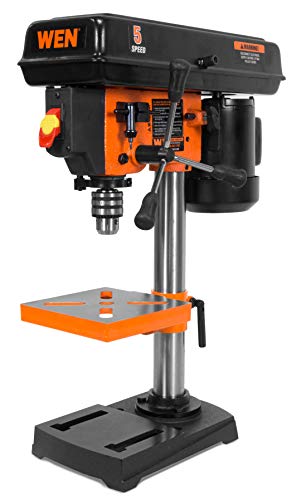
Features a 2.3A induction motor, an 8-inch swing, and a 2-inch spindle travel Includes a 1/2-inch keyed chuck and onboard key storage Operates at 5 different speeds: 750,...
When I’m helping a beginner woodworker set up their first shop, I always ask the same question: how much space are you actually working with?
The WEN 4206T is my go-to answer for cramped corners. At just 23 inches tall with a 7-by-11-inch base, it’ll squeeze onto almost any workbench.
That cast iron body keeps it steady without the wobble you get from flimsy competitors.
Don’t let the size fool you. The 2.3-amp motor handles softwoods and hardwoods alike through five speeds (750 to 3200 RPM).
I’ve drilled everything from delicate 1/8-inch pilot holes to beefy 1/2-inch bores without complaining.
The worktable tilts 45 degrees both ways. That’s flexibility I didn’t appreciate until I needed angled mortises.
Limitations? The 8-inch swing and 2-inch spindle travel won’t handle thick stock or wide boards. You’re not building furniture legs here.
Bottom line: Perfect for beginners, hobbyists, and anyone prioritizing space over capacity.
Best For: Hobbyist woodworkers and beginners with limited shop space who need a compact, reliable drill press for light to medium-duty projects.
Pros:
- Compact cast iron design fits cramped workbenches while maintaining stability
- Five-speed motor (750–3200 RPM) handles diverse materials and bit sizes
- 45-degree beveling worktable in both directions enables angled drilling
Cons:
- 8-inch swing limits capacity for wide boards or large workpieces
- 2-inch spindle travel restricts drilling depth in thick stock
- Keyed chuck requires keeping track of the key for bit changes
Recommended Products
Features a 2.3A induction motor, an 8-inch swing, and a 2-inch spindle travel
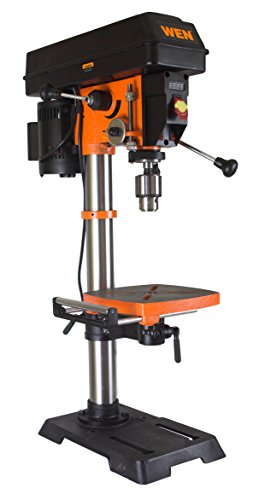
Features a 6.2-amp induction motor, a 12-inch swing, and a 3-1/8-inch spindle travel

【Variable Control for Versatile Drilling】Adjustable speed settings (0-2200/3300/5000 RPM) handle multiple materials. Perfect for wood (10mm max), steel (5mm max), plastic, and PCB projects
Dremel Drill Press Rotary Tool Workstation (220-01)

Articulating Mini Drill Press Stand: Drills perpendicular and angled holes in 15-degree increments, up to 90 degrees horizontal Drill Press Tool Holder: The Dremel tool...
Who’s the Dremel Drill Press Rotary Tool Workstation (220-01) really for?
I think it’s for hobbyists who already own a compatible Dremel rotary tool (models 4300, 4000, 3000, 200, 100, 8250, 8240, or 8220) and want precision without buying a full-size press. You’re not getting a standalone machine here, you’re getting a clever stand that turns your existing tool into something more.
The articulating head tilts in 15-degree increments up to a full 90 degrees horizontal. That means angled holes, sure, but also horizontal polishing and grinding when you lock it sideways.
The 2-inch drill depth won’t handle deep mortises, but for small joinery and electronics projects, it does the job.
Here’s what stands out:
- Telescopic height adjusts from 16 to 29 inches for weird angles and tight spaces
- Four clamping points and a metal base keep things steady (finally, no wobble!)
- Cord storage clips, because tangled cords drive me nuts
- Inch and metric markings, plus a depth stop for consistent repeat drilling
My verdict? If you’re a model maker, jewelry crafter, or electronics tinkerer already invested in the Dremel ecosystem, this workstation’s fantastic value. Woodworkers needing serious capacity should look elsewhere. The 2-inch depth limits you, no question. But for detail work at this price? I get it.
Best For: Hobbyists, model makers, jewelry crafters, and electronics tinkerers who already own a compatible Dremel rotary tool and need precision drilling, polishing, or grinding capabilities without investing in a full-size drill press.
Pros:
- Articulating head tilts in 15-degree increments up to 90 degrees horizontal, enabling both angled holes and horizontal polishing, sanding, and grinding applications
- Telescopic height adjustment (16 to 29 inches) and four clamping points on a sturdy metal base provide excellent flexibility and stability for detailed work
- Depth stop with inch and metric markings, plus cord storage clips, make repeat drilling precise and workspace organization effortless
Cons:
- Limited 2-inch drill depth restricts use for deep joinery or serious woodworking projects requiring greater capacity
- Not a standalone machine—requires ownership of a compatible Dremel rotary tool (4300, 4000, 3000, 200, 100, 8250, 8240, or 8220) to function
- Horizontal locking position and incremental angle adjustments may not offer the fine-tuned positioning flexibility that some precision users need for specialized applications
Recommended Products

Product 1: Features a 2.3A induction motor, an 8-inch swing, and a 2-inch spindle travel
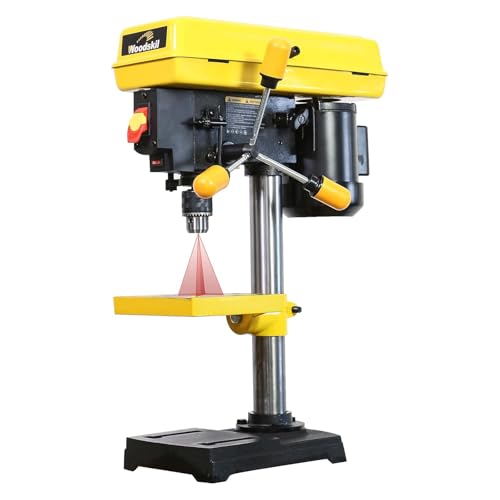
8-INCH DRILL PRESS: Class IIIA 2.5mW laser, 120VAC, 1/3HP 2.3 Amp induction motor, 1/2-inch keyed chuck, 8-inch swing, 2-inch spindle stroke

1/2in chuck capacity with 1/2in maximum drilling capacity
DeWalt 10″ Drill Press (7.0 AMP Motor)
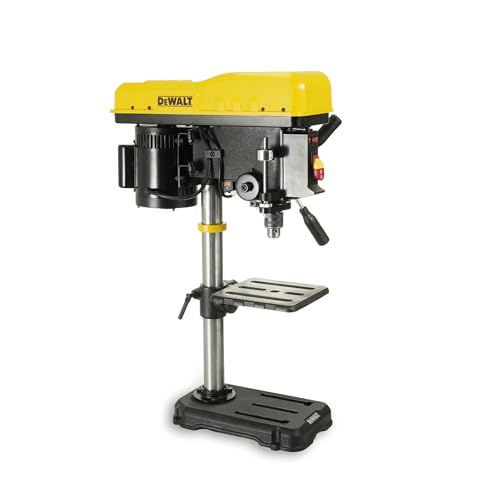
Powerful 7.0 Amp Motor for Tough Delivers consistent drilling performance through wood, metal, and plastic with dependable power ideal for workshops, garages, and job sites....
I’ve got a soft spot for a drill press that doesn’t make me fight it. The DeWalt 10″ Drill Press, model DXDP2502 from Rexon Industrial Corporation, delivers exactly that experience.
Power and Speed Range
This yellow workhorse packs a 7.0 Amp motor with five speeds spinning from 610 to 2,800 RPM. I’ll flip between settings depending on whether I’m boring through soft pine or harder maple, matching my bit size and material without guesswork.
Depth and Stability
That 3.5″ spindle travel matters when I’m drilling deeper holes in thicker stock. No more stopping to reset my workpiece.
The cast iron table and base? They soak up vibration like a sponge, keeping my holes straight and my frustration low.
Visibility
The integrated LED worklight isn’t flashy, but it’s saved me from off-center plunge cuts more times than I’ll admit. Dewalt knows we don’t all have shops flooded with natural light.
Verdict
If you want proven stability without paying pro-shop prices, this one’s calling your name.
Best For: DIY enthusiasts and home woodworkers who want stable, accurate drilling without investing in pro-shop equipment.
Pros:
- 3.5″ spindle travel enables deeper cuts in thicker materials without repositioning workpieces
- Heavy-duty cast iron table and base significantly reduce vibration for smooth, precise holes
- Integrated LED worklight improves visibility and helps prevent off-center drilling in low-light conditions
Cons:
- Only 5 speed settings may limit fine-tuning for specialized applications
- 10″ size may be too small for larger-scale projects or industrial use
- Manufactured by Rexon Industrial Corporation rather than directly by DeWalt, which may concern brand purists
Recommended Products

Powerful Drill Press: Swing: 10 in. 3.2A induction motor ensures plenty of power to drill through various materials, such as metal, wood, etc. It meets your processing and DIY needs.
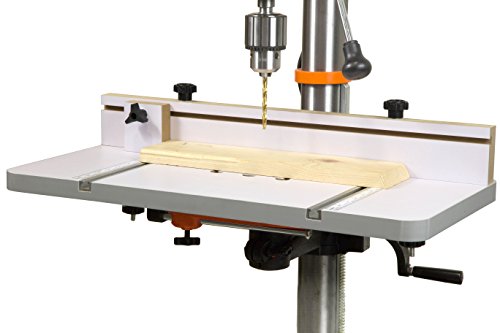
Expand your workspace by 275 square inches (23-7/8 inch width, 11-7/8 inch depth)

Expanded Work Support: This drill press table adds a 23-5/8 x 15 x 1 in MDF surface over an existing cast-iron table, providing more room to support and position wood workpieces during drilling
Milescraft DrillMate Portable Drilling Guide & Jig

Versatile drilling capabilities. Suitable for straight or angled drilling, drilling on the edge of a board, on walls or on round stock. Attaches to all 3/8" and 1/2" cordless...
The Milescraft DrillMate Portable Drilling Guide & Jig is a game-changer for woodworkers who need precision without a benchtop drill press. I love how this thing clamps onto my cordless drill and suddenly I’m drilling dead-straight holes, angled holes, whatever I need. It’s the Milescraft 1318 model, and it fits any 3/8″ or 1/2″ drill you own.
Here’s what makes it tick. You get four angle settings: 45°, 60°, 75°, and 90°, with a readout so you’re not eyeballing anything. The base has centering channels for round stock up to 3 inches, which means pipe, dowels, chair legs, they’re all fair game. Edge drilling? Check. And that 3/8″ chuck with key keeps bits locked in tight.
Look, I won’t pretend it’s a full drill press, and honestly, it shouldn’t be in this article. The portability wins, though. I throw it in my bag and head to a job site. For DIYers and carpenters with tight shops, it’s incredibly practical.
My verdict: If you’re set on a true drill press, keep scrolling. If you need something that travels and still delivers precision, this is your tool.
Best For: Woodworkers, DIYers, and carpenters who need portable precision drilling for straight or angled holes without investing in a benchtop drill press.
Pros:
- Four preset angle settings (45°, 60°, 75°, 90°) with accurate readout enable precise angled and straight drilling without guesswork
- Centering channels and edge drilling support accommodate round stock up to 3 inches in diameter, making it versatile for dowels, pipe, and furniture legs
- Lightweight, portable design attaches to standard 3/8″ and 1/2″ cordless drills for job site mobility and use in tight shop spaces
Cons:
- Not a substitute for a full benchtop drill press in terms of stability and drilling capacity
- Included 3/8″ chuck limits maximum bit size compared to larger drill press chucks
- Requires a compatible cordless drill to function, adding setup complexity versus a standalone drill press
Recommended Products
Articulating Mini Drill Press Stand: Drills perpendicular and angled holes in 15-degree increments, up to 90 degrees horizontal

Sturdy metal head fits most Dremel style rotary tools

Upgraded Structure: Solid metal structure with 3 metal axis, 2 liner bearings and place motor to the more reasonable position with pendant plane bracket to reduce the vibration ensure the drilling accuracy
NovelLife Precision Mini Drill Press Benchtop Driller Machine B10 Upgraded
Upgraded Structure: Solid metal structure with 3 metal axis, 2 liner bearings and place motor to the more reasonable position with pendant plane bracket to reduce the...
Looking for a drill press that won’t swallow your workbench whole? I’ve found your match. The NovelLife Precision Mini Drill Press B10 Upgraded measures just 5.9 x 4.7 x 8.7 inches, yet it packs a serious punch for small-scale work.
What makes it rock-solid
This isn’t some flimsy plastic toy. NovelLife upgraded the structure with solid metal, three metal axes, two linear bearings, and a motor mounted on a pendant plane bracket. Translation? Less vibration, straighter holes, and you won’t feel like you’re wrestling a paint shaker.
It runs quietly too, perfect for apartment workshops (your neighbors will thank you).
Speed and power
The 795 DC motor hits 7,000 RPM max, adjustable via a 24V power supply. I love having that control. The B10 chuck handles 0.6–6 mm bits, and it’ll chew through wood, plastic, resin, even aluminum.
The expandability factor
Two base slots let you add a mini bench vise or CNC sliding table. It already comes with a flat table vice (2-inch capacity) and ten HSS twist bits.
Verdict
For precision drilling on tiny projects, watches, phone repair, or jewelry? Brilliant. For heavy furniture builds? Look elsewhere. NovelLife built this for makers who value accuracy over brute force.
Best For: Makers, hobbyists, and DIY enthusiasts who need precise drilling for small-scale projects like jewelry, watch repair, phone repair, crafts, and light materials in compact workshop spaces.
Pros:
- Compact 5.9 x 4.7 x 8.7 inch footprint with solid metal upgraded structure, three metal axes, two linear bearings, and pendant plane bracket motor mounting that minimizes vibration for accurate drilling
- Adjustable 7,000 RPM speed control via 24V power supply with expandable base slots for mini bench vise or CNC sliding table accessories
- Low-noise 795 DC motor suitable for home and apartment workshops, includes flat table vice and 10 HSS twist drill bits for immediate use
Cons:
- Limited to soft materials (wood, plastic, resin, aluminum) and cannot handle heavy-duty furniture builds or harder metals
- B10 chuck restricts bit range to 0.6–6 mm, limiting versatility for larger diameter drilling needs
- 40 mm maximum drilling stroke may be insufficient for thicker workpieces or deeper hole requirements
Recommended Products

Right Angle Attachment: Enhance the versatility of your rotary tool with this Dremel right angle attachment. Get into hard-to-reach areas for drilling, grinding or cutting on wood, metal or plastic; add it to your Dremel accessories kit
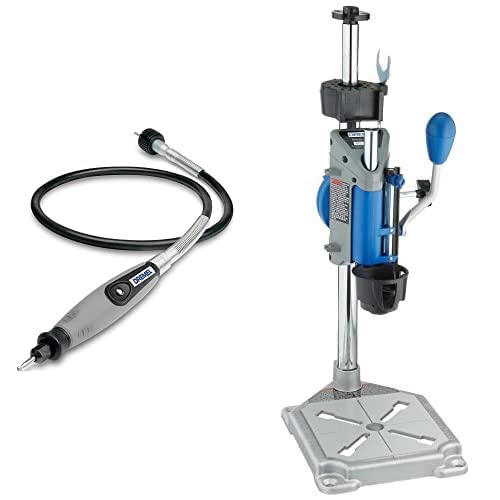
Tight spots, nooks, and corners - They're all easily within reach when you add the 225 flex-shaft attachment to your Dremel rotary tool
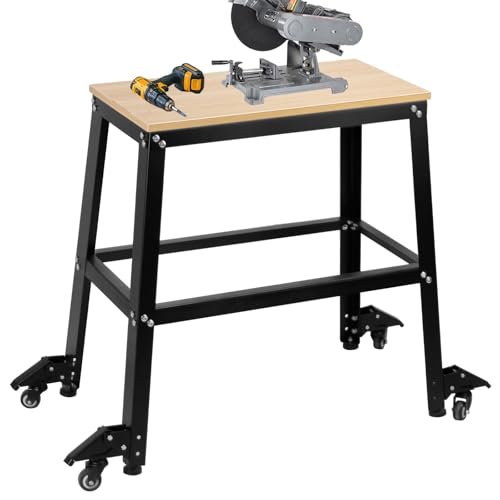
Storage Shelf:Features a 27.6" x 13.8" storage space to hold various tools and accessories, helping you maintain a clean and organized workshop.
WEN DPA2513 Drill Press Table with Fence and Stop Block

Expand your drill press workspace; compatible with the entire WEN Drill Press series Spacious table measures in at 23-7/8 x 11-7/8 x 1 inches Unique design provides clearance...
Want to double your workspace without buying a new drill press? I grabbed the WEN DPA2513 table, and it’s been a game-changer for my shop.
This 24-by-12-inch platform bolts onto any WEN drill press in the series. At nearly 24 inches wide, it gives you room to maneuver boards that’d hang off a standard table like sad overhangs. The inch-thick surface feels solid, not chintzy.
The fence slides where you need it, and the stop block locks in for repeatable hole spacing. I love the onboard rulers: no more fumbling with a tape measure mid-project. The rulers show both imperial measurements, which keeps me honest.
Best design trick? The cutout for your height-adjustment crank. I’ve owned aftermarket tables that block the crank entirely; you have to loosen bolts to raise or lower the head. Not here. WEN actually thought this through.
Who’s this for? WEN owners wanting precision without a full upgrade. If you drill shelf pin holes or batch out parts, the fence and stop block save serious time.
Verdict: Skip it if you own a non-WEN press, it’s not universal. But for the home woodworker already in the WEN ecosystem? This table stretches your dollar further than it has any right to.
Best For: Home woodworkers who already own a WEN drill press and want to expand their workspace with precision drilling features without purchasing an entirely new machine.
Pros:
- Height-adjustment crank cutout eliminates the need to loosen bolts when raising or lowering the drill press head
- Onboard rulers with imperial measurements enable quick, precise positioning without fumbling for a tape measure
- Adjustable fence and locking stop block enable repeatable, uniform hole spacing ideal for batch work like shelf pin holes
Cons:
- Not universal—only compatible with WEN drill press series, excluding owners of other brands
- Single-color tabletop (black/orange only) may not match all shop aesthetics or preferences
- 1-inch thickness may limit maximum drilling depth compared to thinner aftermarket alternatives
Recommended Products

Exceptional Drilling Performance: Powered by a robust 2.5A induction motor, this benchtop drill press delivers superior power and stability, ensuring top-notch performance even during extended drilling sessions.


CHANGE SPEED WITHOUT TOUCHING A BELT — Move the speed lever while the motor runs to set any spindle speed from 530 to 3,100 RPM. The digital readout shows actual spindle RPM, so you can match the speed to each bit and material in seconds.
Drills and Drill Presses Shop Manual

Used Book in Good Condition
Wondering which drill press won’t let you down? I’ve got the answer, and it’s not even a machine.
I picked up the *Drills and Drill Presses Shop Manual* from Fox Chapel Publishing, and honestly, I’m annoyed I didn’t grab it sooner. This 104-page paperback, published back in 2010, packs serious value.
It’s illustrated cover to cover, which matters when you’re staring at a confusing depth-stop mechanism at 10 PM.
What’s Inside That Actually Helps
The manual puts tool information right at your fingertips: setup tricks, maintenance schedules, and troubleshooting that saves you from ruined workpieces. No fluff, just practical guidance.
The Physical Reality
Used copies usually come in good condition. The paperback binding means it flattens on your bench, though the 2010 publication date shows in some photos.
Who Needs This?
Beginners, grab it immediately. Seasoned woodworkers, you’ll still find nuggets you forgot. Professionals, it’s a solid shop reference when your phone’s dead.
My Verdict
This manual prevents expensive mistakes. I keep mine by my drill press, spine cracked, pages marked. It won’t drill holes for you, but it’ll stop you from drilling really bad ones.
Best For: Beginners needing practical drill press guidance, seasoned woodworkers seeking forgotten tricks, and professionals wanting a reliable offline shop reference.
Pros:
- Illustrated cover-to-cover with practical setup tricks, maintenance schedules, and troubleshooting that prevents ruined workpieces
- Used copies available in good condition with paperback binding that flattens easily on workbenches
- Compact 104-page format keeps essential tool information immediately accessible without fluff
Cons:
- 2010 publication date shows in some photos, making certain visual references feel dated
- Requires purchasing used copies as it may lack current availability from primary retailers
- Being a paperback manual, it cannot actively demonstrate techniques like video or digital formats can
Recommended Products
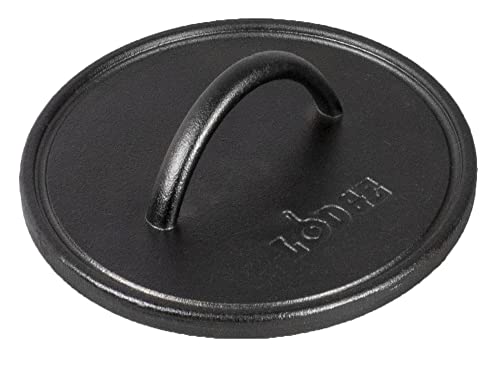
YOUR NEW GO-TO PRESS: The Lodge Cast Iron Grill Press is the perfect kitchen tool for beginners, home cooks and chefs. The sturdy piece is perfect for smash burgers or for grilling steaks or chicken. Put American cast iron to work in your home and keep authentically good food in the family.

Unleash the force with our 0.68HP, 4.2A electric motor. Power through tasks effortlessly with reliability.

Product 1: Features a 2.3A induction motor, an 8-inch swing, and a 2-inch spindle travel
Factors to Consider When Choosing a Drill Press for Woodworking

I’ll walk you through what actually matters when I’m picking a drill press for my shop, because specs on paper don’t always match real-world performance. Power requirements and swing capacity are where I start: too little horsepower and you’ll stall out on hardwoods, while swing (that’s twice the distance from spindle to column, by the way) decides whether I can drill a hole in the center of a 16-inch bowl or not.
After that, I obsess over speed settings, spindle travel, and table adjustability. Multiple speeds let me match the bit to the material, longer travel means fewer resets for deep holes, and a table that tilts and cranks up and down saves my back and my patience.
Recommended Products

Spacious & Compatible Size: Enjoy a 23.63 in x 11.73 in drill press table that easily holds a wide range of workpieces for both home and workshop projects
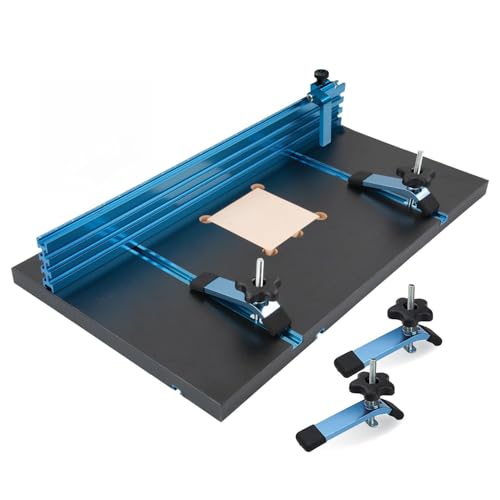
COMPLETE DRILL PRESS TABLE KIT: Our drill press table and fence kit is equipped with a complete set: T-track fence system, T-track hold down clamps, Fence flip stops and L-shaped brackets, designed for woodworking, plastic and metal applications.

Grip woods, metals, plastics and more
Power Requirements
For most of us woodworking enthusiasts, a motor between 1/2 and 1 HP (that’s 370 to 745 watts, if you’re comparing specs) hits the sweet spot for benchtop models. I wouldn’t go lower: you’ll bog down in maple or oak, and nobody wants to babysit a stalled bit.
Speed control matters just as much as raw power. I always look for variable or multiple fixed speeds. Matching your speed to the bit size and wood hardness prevents burning and tearout. Small bits need high RPM, large Forstner bits need to crawl.
Spindle travel is another hidden power factor, really. More depth means fewer stops to reposition your workpiece. I aim for at least 2.5 inches; less than that, and I’m fighting the machine on thicker stock.
My verdict: prioritize torque and speed range over maximum RPM. Your hardwoods will thank you.
Swing Capacity
Why does swing capacity trip up so many woodworkers? They grab a shiny press, get it home, and suddenly can’t drill the center of a wide tabletop. I’ve been there, and it stinks.
Swing capacity measures the maximum workpiece diameter you can drill: double the distance from spindle to column. For me, 12 inches handles most boards, but I prefer 15 to 17 inches for shelving and tabletops. You won’t reposition the piece mid-project.
Here’s the catch: bigger swing means heavier weight and more bench space. My 17-inch floor model stays put. My buddy’s 10-inch benchtop? He carries it to job sites.
Check spindle travel and table clearance too. A wide swing won’t help if you can’t drill through thick stock without hitting the base. I learned that the hard way on a 4-inch post.
Speed Settings
How fast should a drill press actually spin? It depends on what I’m cutting and with what bit. I always look for a machine with a wide speed range, roughly 500 to 3,200 RPM or higher. That spread lets me handle everything from big Forstner bits in hard maple to tiny brad-point bits in soft pine.
Lower speeds, about 500 to 1,000 RPM, keep larger bits from overheating and grabbing. Higher speeds above 2,000 RPM give me cleaner entry and exit holes with small bits. I’m not a fan of single-speed presses; they’re a pain.
I prefer quantized setups, typically 5 or 6 speeds. They’re predictable, repeatable, and I don’t have to guess. Belt-driven systems shift pulley ratios to change RPMs, which I find simple and reliable. No extra motors needed.
Better control over heat and chip formation means less burning and longer bit life. That’s worth paying for.
Spindle Travel
What separates a drill press that merely pokes holes from one that actually gets the job done? Spindle travel, plain and simple.
Why Spindle Travel Matters
Spindle travel is how far the chuck drops, and it directly caps your maximum drilling depth in one pass. Most benchtop models give you about 2 inches, while beefier floor models push past 3 inches. That extra inch isn’t trivial: it means boring through thicker stock without flipping your workpiece halfway through. Annoying, right?
What to Actually Check
I always pair spindle travel with table height and quill travel before buying. You need full clearance through your material without crashing into the base.
Also, consistent travel across speed ranges keeps hole depths accurate when you swap bit sizes or hit harder grain. Trust me, re-drilling a shelf pin hole because your press choked halfway through? Not fun.
Table Adjustability
Where does a drill press earn its keep once the bit starts spinning? Right on the table, honestly. If the table stinks, your holes stink. Simple as that.
Height and tilt matter most. I always check how smoothly a table cranks up and down. Smooth adjustments save time. Tilt capability, usually up to 45 degrees, lets me drill angled holes without wrestling the workpiece into weird positions.
Size and support. Bigger tables handle panels better. Small tables? You’re juggling extra supports, and I hate juggling.
The little details that count. Rulers stamped into the table surface help me repeat setups fast. Integrated fences and stop blocks? Huge for batch work. No more measuring every single piece.
For hobbyists, basic adjustability works. For pros, demand smooth cranks, solid tilt locks, and onboard measuring. You’ll thank yourself.
Construction Material
Once I’ve got the table sorted, I start kicking the tires on what everything’s actually made of. Construction material isn’t sexy, but it dictates whether your drill press stays precise or turns into a vibrating mess.
Cast iron’s my gold standard for bases and tables. The weight dampens vibrations, so holes stay true. Steel frames hold up under heavy use.
Aluminum? Lightweight, sure, but I’ve seen it flex under pressure compared to iron.
Here is what I prioritize:
- Cast iron table for stability and accuracy
- Steel or cast iron frame for longevity
- Solid metal joints, not wobbly attachments
Plastic components? Hard pass for serious work. You want mass where it counts. A heavy machine stays put, drills cleaner, and won’t wander mid-cut. Spend more here: you will not regret it.
Workspace Footprint
How much bench space can you realistically sacrifice before you’re tripping over your own workpiece? I ask myself this constantly in my cramped shop.
I favor benchtop models with bases around 7 by 11 inches and 6.5-inch square tables for tight corners. Sure, you lose capacity: an 8-inch swing and 2-inch travel limits what you can drill without repositioning. But cast iron construction keeps vibration down even in small packages.
Look for integrated features that maximize utility without spreading out: onboard tilting tables (45 degrees beats shimming scrap wood), built-in key storage, and adjustable fences. These details matter when every square inch counts.
Verdict: Compact drill presses suit apartment woodworkers and garage tinkerers best. If you’ve got room, floor models offer more, but honestly, I’d rather sacrifice a little reach than sacrifice my entire workbench.
Accessories Compatibility
A drill press without compatible accessories is just an expensive paperweight that spins, and I’ve learned that the hard way.
Chucks and Bits
I always check chuck size first. A 1/2″ chuck handles most bits you’ll actually use, and verify your drill bit shanks fit from 3/32″ to 1/2″. Anything else? Frustration city.
Fences and Guides
Precision matters. I want fences with clear inch or metric scales for repeatable drilling. No guessing, no ruined workpieces.
Table Gear
Check your table’s T-slot spacing and dimensions before buying miter gauges, vises, or extension tables. Mismatched slots mean wobbly setups.
Spacing and Height
Optional tables and jigs must clear your quill and chuck. Measure twice, or you’ll hear metal crash into metal.
Depth and Alignment
Depth gauges, stop blocks, and laser guides should integrate cleanly with the existing rail system. Consistent depth control separates pros from guessers.