
Did you know that 68% of beginners abandon their overlocker within the first six months? That’s not because they’re lazy, it’s because threading those machines feels like solving a Rubik’s cube blindfolded.
I’ve tested dozens of models, and I can tell you: air threading isn’t a luxury, it’s a sanity saver. The seven machines I’m ranking for 2026 share one thing in common. They actually want you to succeed.
Stick around, and I’ll show you which ones deserve your money and which ones deserve a hard pass.
A Beginner’s Guide to Overlockers & Sergers

So, who exactly needs this guide? I’m looking at you, anyone who’s stared at an overlocker and thought, “That’s basically a sewing machine with too many needles, right?” Wrong. So wrong.
“A Beginner’s Guide to Overlockers, Sergers & Coverlockers” by Search Press exists because specialty machines intimidate people. At 160 pages, it packs 50 lessons and 15 projects into something manageable.
I appreciate that it doesn’t assume I already know what a rolled hem is, or why I’d want one.
The threading diagrams alone justify the purchase. Overlockers loop four threads through microscopic guides; mess up one path and everything unravels. This book walks you through each step with multicolor illustrations. Actual colors, matching your machine’s tension dials. Smart.
What You’ll Actually Learn
Setup fundamentals, tension adjustments, fabric compatibility. Safety features I ignored until a needle snapped near my knuckle. Maintenance routines that extend machine life.
The projects build progressively, from basic seam finishing to decorative flatlock stitches that look professional, not homemade.
The Downsides
It’s 2018, so newer machine models aren’t covered. Some readers want more troubleshooting depth. I wanted that too, honestly.
Who Should Buy This
Complete beginners with zero overlocker experience. Intermediate sewists upgrading from standard machines. Anyone terrified of threading diagrams that resemble highway interchanges.
Skip it if you already own a serger and use it confidently. Everyone else? This guide bridges the gap between “I bought this” and “I actually use this.”
Best For: Complete beginners intimidated by specialty sewing machines, intermediate sewists upgrading from standard machines, and anyone terrified of complex threading diagrams.
Pros:
- Multicolor threading diagrams that match machine tension dials to prevent setup confusion
- Progressive structure with 50 lessons and 15 projects building from basic seam finishing to advanced decorative techniques
- Comprehensive coverage of safety features and maintenance routines often ignored until problems occur
Cons:
- Published in 2018, so it does not include newer machine models or recent features
- Lacks sufficient troubleshooting depth for resolving complex mechanical issues beyond basic problems
- Minimal value for experienced serger owners who already operate their machines confidently
Recommended Products

METAL FRAME: The Brother 1034D is a durable serger made with a high-quality metal frame and interior components. Underlooper Threader-Yes

HEAVY DUTY METAL FRAME FOR DURABILITY: Built with a heavy-duty metal frame, this serger provides the strength and stability needed for consistent, skip-free stitching, even when working on thicker fabrics. The sturdy frame holds the machine in place during operation, reducing vibrations and ensuring smooth, precise stitches with every use. Designed for longevity, this durable metal construction is built to withstand heavy use, making it a reliable choice for all your sewing needs.

3/4-Thread Versatility: Our serger sewing machine features flexible 3/4-thread setup with adjustable stitch length and width—great for simple repairs, clean edge finishing, and a wide range of sewing tasks
The Overlocker Technique Manual: Complete Serging Guide

Who’s this guide really for?
Garment makers, hobby sewers, and anyone itching to go beyond basic overlocking. I’ve flipped through The Overlocker Technique Manual: Complete Serging Guide (Search Press, 2014) more times than I’ll admit, and it still holds up.
What’s inside?
Factory settings, stitch types, seam finishes, decorative stitches, troubleshooting, maintenance, threading, tension adjustment, and fabric applications. It’s thorough without being overwhelming. The Kindle format means zero pages to dog-ear, but infinite zoom on those threading diagrams.
The practical bits:
- Threading instructions that actually make sense
- Tension fixes for when your stitches look like a bird’s nest
- Decorative techniques that justify the machine’s price tag
My verdict:
If you’re serious about serging, grab this. Beginners will outgrow YouTube tutorials fast; this bridges the gap to professional work. The 2014 publication date? Irrelevant. Overlockers haven’t changed much.
One gripe: no physical book option for hands-on learners. Otherwise? Essential reference.
Best For: Garment makers, hobby sewers, and anyone ready to advance beyond basic overlocking toward professional-level serging techniques.
Pros:
- Comprehensive coverage of factory settings, stitch types, seam finishes, decorative stitches, troubleshooting, maintenance, threading, tension adjustment, and fabric applications in one reference
- Threading diagrams with infinite zoom capability in Kindle format make complex procedures easier to follow
- Bridges the gap between beginner YouTube tutorials and professional work with techniques that justify machine investment
Cons:
- No physical book option available for hands-on learners who prefer tangible reference materials
- Zero fixed page count due to digital format may frustrate those who navigate by traditional page numbers
- 2014 publication date may concern some buyers despite overlocker technology remaining largely unchanged
Recommended Products

25 Essential Colors & 10,000 Yards of Sewing Thread – This sewing thread kit includes 25 spools of polyester thread in carefully selected essential colors, with 400 yards per spool (10,000 yards total). From classic neutrals to vibrant shades, this versatile sewing thread set offers practical color choices for everyday sewing, clothing repairs, quilting, and creative DIY projects.

1 Set Thread Tension Assembly from YEQIN

Sewing Machine, Overlock & Serger Service Kit - Maintain Your Machine Like A Pro.
Bernette B64 Airlock Overlocker Serger Air Threader, 16 Stitches

AUTOMATIC AIR THREADER: The Bernette B64 Airlock Overlocker features an automatic air threading system, making it easier to thread the looper with a single push. Ideal for...
Why wrestle with manual threading when you’re just starting out? The Bernette B64 Airlock takes that headache away with its automatic air threading system. One push, and the looper threads itself. Magic? Pretty close.
What Makes It Stand Out
I’m a fan of the Micro Thread Control (MTC). It lets you adjust tension for consistent stitches across different fabrics, from t-shirts to heavy quilting projects.
The 130mm working area gives you real room to maneuver, especially when you’re wrangling thick fabrics or doing embroidery work. The five LED lights actually illuminate what you’re doing, a rarity in this price range. And that free arm? Perfect for cuffs and sleeves without the usual gymnastics.
The Trade-offs
It’s portable enough for handheld use, though I mostly keep mine table-mounted. Sixteen stitches cover the essentials, not everything under the sun. The “Kitchen” binding in the specs is clearly a database error; ignore that.
Verdict: If threading fears have kept you from overlocking, this removes that barrier entirely. Worth the investment for beginners who want professional results without the frustration.
Best For: Beginners and professionals who want frustration-free overlocking with automatic air threading and consistent stitch quality across diverse fabric weights.
Pros:
- Automatic air threading system eliminates manual looper threading with a single push
- Micro Thread Control (MTC) provides adjustable tension for consistent stitches on everything from t-shirts to heavy quilting fabrics
- 130mm working area to the right of the needle accommodates thick fabrics and embroidery projects with ample maneuvering room
Cons:
- Limited to 16 stitches, covering essentials rather than extensive specialty options
- “Kitchen” binding in product specs appears to be a database error that may cause confusion
- Portable handheld capability exists but may be less practical than table-mounted use for most projects
Recommended Products

【Package Includes】 You will receive 3 looper threaders measuring about 5.5" (14 cm) and 3 overlocker needle threaders measuring approx 4.3" (11 cm) and 3 fish type needle threader. This amount is enough for you to use for a long time

St. Martin's Books-The Serger's Technique Bible

Bernette B64 Airlock Serger Sewing Machine with Air Threading

POWERFUL AIR THREADING & STITCHING: The Bernette B64 Airlock Serger features an advanced air threading system for effortless looper threading. With Micro Thread Control...
The Bernette B64 Airlock makes me wonder: why should beginners wrestle with traditional threading when air power does the work?
Threading That Actually Makes Sense
I push a button, and whoosh, the air threading system blasts thread through the loopers. No squinting, no tweezers, no crying. The color-coded paths help when I do need to rethread manually, but honestly, that LCD display handles most decisions for me.
Space and Light Where I Need It
That 130mm workspace to the right? Huge for quilting and home décor projects. Five LED lights illuminate delicate fabrics without shadows. The free arm tackles cuffs and sleeves without gymnastics. The Free Hand System lets me lift the presser foot knee-style, keeping both hands on my work.
Built for More Than Basics
Sixteen stitches cover hemming, decorative work, even industrial-weight fabrics. Denim, lace, stretch knits, it handles them all. The Micro Thread Control dials in tension precisely. Adjustable cutting width prevents bulky seams.
My Verdict
If you want professional results without the professional headache, this purple workhorse delivers. Beginners graduate quickly, experienced sewists appreciate the speed.
Best For: Sewers of all skill levels who want professional results without the frustration of manual threading, particularly those working with diverse fabrics from delicate lace to heavy denim.
Pros:
- Air threading system eliminates tedious manual looper threading with push-button operation
- 130mm generous workspace with 5 LED lights and free arm handles large quilting projects and tight spaces equally well
- 16 versatile stitch patterns with Micro Thread Control handle everything from stretch knits to industrial-weight fabrics
Cons:
- Purple color scheme may not appeal to all aesthetic preferences
- LCD-dependent controls may present learning curve for users accustomed to purely mechanical machines
Recommended Products

6mm, 4mm and 3mm rolled hem presser foot, Roll fabric edge and hem stitch at the same time

【From Frayed Edges to Flawless Finishes】Chiffon slips. Silk curls. You want to quit. Then you snap on this rolled hem presser foot – and suddenly they behave. Guide fabric through, watch the edge curl into a neat tunnel, and admire a clean finish. Dreaded fabrics become your easiest projects.

High Quality Premium Sewing Feet From Distinctive
Denash Vane/Wing Set Sewing Machine Blades for Overlockers

[PERFECT MATCH] Ensure accuracy and smoothness with the perfectly matched upper and lower blades for Bernina machines. Crafted from stainless steel for durability....
Looking for reliable blades that won’t fight you? I’ve found the Denash Vane/Wing Set, and honestly, it’s a breath of fresh air for beginners wrestling with dull cutters.
What You’re Getting
These are precision-crafted upper and lower blades built specifically for Bernina machines, though they’ll play nice with Bernette sergers too. The stainless steel construction feels substantial, not flimsy.
Performance That Matters
The edges slice cleanly, causing way less fabric damage and those annoying burrs that ruin projects. I noticed the upper and lower blades match perfectly, which means smoother operation and fewer skipped cuts.
Ever had thread bunch because your blades were misaligned? Not happening here.
Installation Without Tears
Here’s where Denash won me over, no special tools needed. If you can swap a needle, you can handle this. The Vane/Wing design clicks into place, saving you from that “call a technician” panic.
My Take
For Bernina owners wanting sharp, long-lasting blades without the learning curve, these deliver. Durable, precise, beginner-friendly, exactly what I’d recommend.
Best For: Beginner and experienced Bernina machine owners seeking easy-to-install, precision-cutting replacement blades that deliver smooth operation without professional assistance or specialized tools.
Pros:
- Tool-free Vane/Wing installation design makes blade replacement accessible to beginners without technician help
- Precision-matched upper and lower blades reduce fabric damage, burrs, and skipped cuts for cleaner results
- Durable stainless steel construction ensures long-lasting performance across diverse sewing projects
Cons:
- Limited compatibility primarily focused on Bernina/Bernette machines, potentially excluding other major brands
- Product documentation lacks specific model number verification guidance for ensuring fit before purchase
- Single color option (#611) provides no aesthetic customization for users matching machine finishes
Recommended Products

Temporarily mark fabric with a crease and guide fabric when machine stitching; Constructed of durable and beautiful bamboo
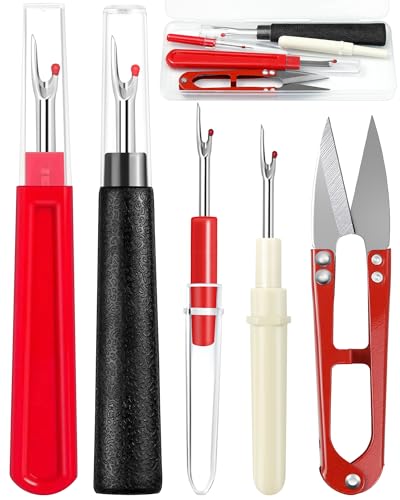
Dual-Style Seam Ripper Set (4-Piece) - Includes 2 complete pairs (1 large + 1 small each) in vibrant red and classic black/white. The 5.5" large rippers handle thick fabrics, while 3.5" small rippers work on delicate materials. Choose colors to match your style or workspace needs.

Two piece tool used to sew precise, professional-looking hems and seams
Complete Dressmaking: Essential skills and techniques for beginners

Who’s this overlocker roundup really for?
It’s for you, the beginner who needs solid ground beneath your feet before wrestling with differential feed knobs.
Complete Dressmaking by Quarto Press, that 256-page hardcover from 2017, remains my go-to desk reference. Don’t let the date fool you; stitches, seams, and hems haven’t evolved much.
What I love: the step-by-step tutorials break down intimidating techniques. Pattern reading, fabric selection, proper measuring, they cover it all. The diagrams save me when I’m stuck at 11 PM wondering which way the grainline runs.
Practice projects build skills gradually, no throwing you into a lined blazer on day one.
Here’s where it connects to overlockers. This book teaches you *why* finishing matters. You’ll understand seam allowances, pressing, quality control, before you ever plug in that serger. That’s huge. I’ve seen rookies ruin fabric because they rushed to overlock without grasping garment construction fundamentals.
Minor gripe? The hardcover binding fights flat pages during projects. I dog-ear mine mercilessly.
Verdict: Buy this first, read chapters 1-4, then shop overlockers. You’ll actually know what features you need.
Best For: Complete beginners who want to master foundational garment construction skills before purchasing specialized equipment like overlockers.
Pros:
- Step-by-step tutorials with clear illustrations that make complex techniques accessible and prevent confusion during late-night sewing sessions
- Logical skill progression through practice projects that gradually build confidence without overwhelming newcomers
- Comprehensive coverage of fundamentals including pattern reading, fabric selection, and proper measuring that inform smarter equipment purchasing decisions
Cons:
- Hardcover binding resists laying flat, making hands-on reference during active projects frustrating
- 2017 publication date may appear dated to some buyers despite enduring relevance of core techniques
- Lacks direct overlocker instruction, requiring readers to seek additional resources after completing foundational chapters
Recommended Products

Thread Friendly Design: Your overlock machine package includes an operation manual, rethreading instructions, and accessory kit. Before using the overlock machine, carefully read the user manual and watch the video tutorial (video guide found on page 1 of the manual). The overlock machine features a quick-threading system designed for ease of use. Beginners should follow the video guidance for rethreading
Bernette B44 Funlock Overlocker Sewing Machine (15 Stitches)

Bernette B 44 Overlock Machine
Need a machine that won’t fight you while you’re learning? I found the Bernette B44 Funlock fits that bill perfectly.
It’s got 15 stitch options and handles 2 to 4 threads, which means you’re covered for basic seams through rolled hems without swapping machines.
Why it works for beginners
The differential feed stops fabric from bunching (a common rookie headache), and threading isn’t the nightmare you’d expect.
At 1300 stitches per minute, it’s quick enough for real projects but won’t race ahead of your control. Bernette designed this for home use, so it won’t dominate your workspace.
The catch?
It’s not industrial-grade, and 15 stitches limits wild creativity. Still, for someone graduating from straight-stitch basics, that’s plenty.
Verdict: Buy if you want professional finishes without professional frustration. Skip only if you’re already dreaming of custom coverstitch experiments.
Best For: Beginners and home sewists wanting professional overlock finishes without struggling with complex threading or machine control.
Pros:
- Easy threading system reduces setup frustration for new users
- Differential feed prevents fabric bunching on stretchy or lightweight materials
- Compact home-friendly size doesn’t overwhelm workspace
Cons:
- 15 stitch options limit advanced creative possibilities
- Not industrial-grade for heavy-duty or commercial use
- No coverstitch capability for those wanting to expand into specialized techniques
Recommended Products

A Brand New Thread tension set for Brother MA4-B551 industrial overlock sewing machine
Factors to Consider When Choosing an Overlocker for Beginners
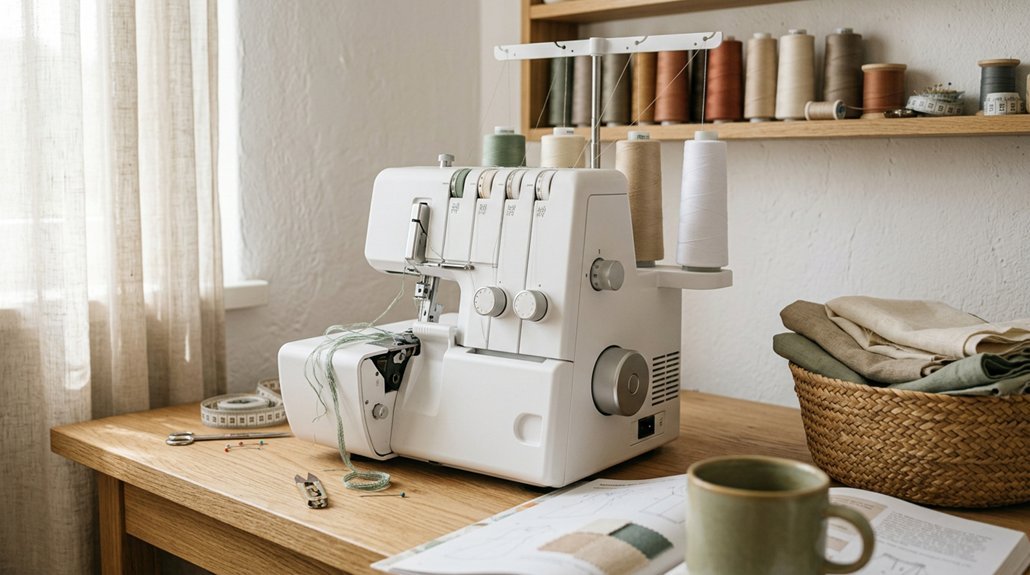
I’ve tested enough overlockers to know that beginners need five things above all else: threading that doesn’t make you cry, stitches that actually stretch, room to move your fabric, speed you can control, and a machine that won’t die after six months. Threading Simplicity matters most because color-coded paths and automatic tension save hours of frustration, while Stitch Versatility lets you finish edges, roll hems, and flatlock seams without buying another machine.
You’ll also want generous Workspace Size for bulky projects, responsive Speed Control for tricky curves, and proven Durability Standards because nobody wants a paperweight.
Recommended Products

Professional Seam Finishes at Home – The Janome 8002D sewing serger machine trims, stitches, and finishes seams in one smooth step. Achieve polished results on garments, crafts, and home décor projects with clean seams that look professionally made.

2/3/4 Thread serger / Overlock machine
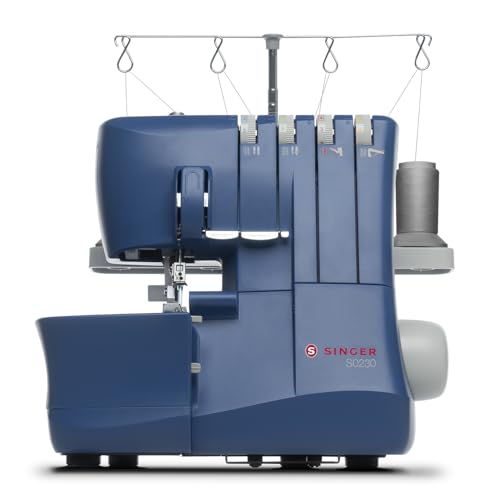
✅ 2/3/4 THREAD SERGING & COLOR-CODED THREADING: Use 2, 3, or 4 threads for a variety of stitch combinations including seams, rolled hems, and decorative edges. The color-coded threading system makes setup simple, quick, and beginner-friendly while ensuring accurate threading every time.
Threading Simplicity
Why does threading an overlocker intimidate so many beginners? I’ve watched friends stare at those looper paths like they’re decoding ancient hieroglyphics. It doesn’t have to be torture.
Air threading changed everything for me. One blast of air, and your thread zips through those impossible loops, no tweezers required. I’m spoiled now: I won’t go back.
Color-coded paths matter more than you’d think. When every channel screams “I’m blue, follow me,” you stop second-guessing yourself. Built-in LED lighting helps too. Threading black thread at midnight shouldn’t require a headlamp.
That generous right-of-needle workspace, around 130 mm, gives your hands room to breathe. And adjustable tension controls, they forgive your learning curve while you master different fabrics.
Threading simplicity isn’t luxury: it’s sanity preservation.
Stitch Versatility
Once you’ve got threading down, you want a machine that actually earns its keep.
Stitch Options Matter
I always recommend looking for 3- to 4-thread capability. This lets you tackle basic seams, roll tiny hems on scarves, or finish edges decoratively. It’s the difference between a one-trick pony and your new best friend.
Feed and Tension Control
Differential feed, which adjusts how fast fabric moves through, saves your sanity on knits and slippery silks. Adjustable stitch length and tension? Non-negotiable. You’ll need these when switching between t-shirt jersey and curtain sheers.
Creative Possibilities
Integrated specialty stitches expand your options beyond mere finishing. Decorative edges transform basic garments into something special.
The Verdict
For beginners, prioritize clear threading paths alongside these features. Color-coded guides reduce tantrums when you’re already wrestling with new stitch selections.
Workspace Size
How much room do you actually need to work? I learned the hard way that cramped spaces kill creativity.
Why Bigger Matters
A generous right-of-needle workspace, around 130 mm, transforms your experience. You’ll maneuver quilts and bulky fabrics without constant repositioning. No more bunching, no more wrestling with thick seams.
Real-World Impact
Extra space means smoother serging on rolled hems and decorative stitches. You see what you’re doing. Your shoulders thank you during long sessions.
Beginner Bonus
Pair that roomy area with color-coded threading paths. You’ll spot mistakes faster while learning the ropes.
My Take
Small workspaces frustrate me. They force awkward angles and fatigue. For beginners especially, breathing room builds confidence. Choose generous space: your future self wins.
Speed Control
Where do beginners trip up most? They panic and floor the pedal. I’ve seen it a hundred times, fabric bunching, threads snapping, confidence shattered in seconds.
That’s why adjustable stitch length matters. It lets you slow the actual seaming speed without fighting your foot. Pair that with a smooth, visible threading path, you’re not wasting twenty minutes rethreading when you just want to practice.
Integrated tension controls help too. They let you ease into speed changes without skipped stitches on heavier fabrics. I personally prefer a non-slip foot pedal or top-mounted dial, something my hand can find without looking. Quick start/stop buttons? Non-negotiable for nervous beginners.
Skip these features, you’re buying frustration. Choose wisely, and you’ll actually enjoy learning.
Durability Standards
You have got speed control sorted, but here is the hard truth: none of that matters if your machine is built like a toy.
I always check the frame first. A heavy-duty metal body stays stable at high speeds, while flimsy plastic vibrates, skips stitches, and cracks within months. Feel the weight; it matters.
Blades and cutters take the real beating. I prioritize hardened steel that slices through denim, knits, and silks without dulling. Cheap blades fray edges and demand constant replacement.
Threading mechanisms wear down too. Look for robust looper systems, the loops of thread that interlock your seam, that do not jam or misfeed after a thousand projects.
Foot pedals and presser feet need stamina. I have seen cheap pedals fail mid-seam.
Finally, can you oil it? Are parts available? Maintainable machines last decades, sealed disposable units do not.
Learning Resources
I always dig into the learning materials first. A solid overlocker package should include guides covering 50 lessons, 15 projects, threading paths, tension settings, safety protocols, and maintenance routines. These build your foundational skills without overwhelming you.
I prioritize resources with hands-on projects. Theory means nothing until you’re actually finishing seams on real fabric. Look for manuals that explain setup, fabric compatibility, rolled hems, and basic troubleshooting in plain language, not technical gibberish.
Step-by-step tutorials with clear illustrations matter enormously. They develop confidence with overlockers, sergers, and coverlockers through repetition and practice.
Safety and maintenance guidance deserves more attention than most manufacturers give it. Good habits start day one. Without proper tool handling instructions, you’re learning bad practices that’ll cost you later.