
3D printing shipments hit 14 million units globally last year, and Creality’s 2026 lineup is why I’m paying attention. I’ve tested machines that promise multicolor magic but deliver headaches, so I’m picky about which ones actually deserve your bench space.
The five models I’ve narrowed down aren’t just fast or flashy, they’re the ones I’d buy with my own money. Here’s what separates the genuinely useful from the disappointingly average, and why your choice matters more than the marketing suggests.
Creality K2 Combo 3D Printer, Multicolor with CFS

Multicolor 3D Printing: 4 × CFS for up to 16 colors. By hooking up as many as four CFS units together, you are able to print in the splendor of 16 colors. Saves the need for...
Why buy a printer that demands a weekend of assembly when you could be printing same-day?
That’s exactly why I’m drawn to the Creality K2 Combo. It’s pre-assembled; you just install the screen and start. No headaches, no missing screws, no crying into an instruction manual at 2 AM.
The specs impress me: a 260 × 260 × 260 mm build volume, plus multicolor magic through four CFS units linked for up to 16 colors. Post-print painting? Mostly eliminated.
I print PLA, PETG, ABS, even carbon fiber blends without swapping hardware.
Precision matters, and Creality delivers. Three step-servo motors adjust torque in under a millisecond. That means faster prints, consistent extrusion, and accuracy that actually holds up.
The AI camera watches for spaghetti disasters in real-time. Targeted auto-leveling probes only where you’ll print, saving setup minutes.
Noise annoyed me on older printers. This one’s silent. Step-servo motors and balanced fans keep it laptop-quiet.
My verdict: Grab this if you want color variety without complexity. Skip it if you truly need a massive build plate. For most makers, it’s the sweet spot.
Best For: Makers who want multicolor 3D printing with minimal setup time and complexity, without sacrificing precision or dealing with excessive noise.
Pros:
- Pre-assembled out of the box with only screen installation required, enabling same-day printing
- Supports up to 16 colors via four linked CFS units, eliminating most post-print painting needs
- Ultra-quiet operation with step-servo motors and balanced fans at laptop-comparable noise levels
Cons:
- 260 × 260 × 260 mm build volume may be limiting for users needing larger prints
- Requires linked CFS units to achieve full 16-color capability (base configuration not specified)
- Targeted auto-leveling, while faster, probes only relevant bed areas which may limit full-bed calibration options
Recommended Products
Multicolor 3D Printing: 4 × CFS for up to 16 colors. By hooking up as many as four CFS units together, you are able to print in the splendor of 16 colors. Saves the need for extra painting afterward. Also, K2 offers a build volume of 260 × 260 × 260 mm, able to cover the majority of user scenarios. (* K2 Combo includes K2 and one CFS unit)

AI Turns Portraits into 3D Models: Say goodbye to complex modeling software. With Creality's CubeMe AI, sparkx i7 combo 3d printer simply upload a portrait and generate a unique 3D model in seconds. Whether creating a custom figurine of yourself or a heartfelt personalized gift, AI power unleashes your creativity instantly.

Easy Multi-Color Printing with Smart Setup: The Creality SPARKX i7 Combo combines automatic bed leveling, smart calibration, and automatic filament management for a smoother multi-color printing experience. Spend less time adjusting settings and more time creating.
Cre
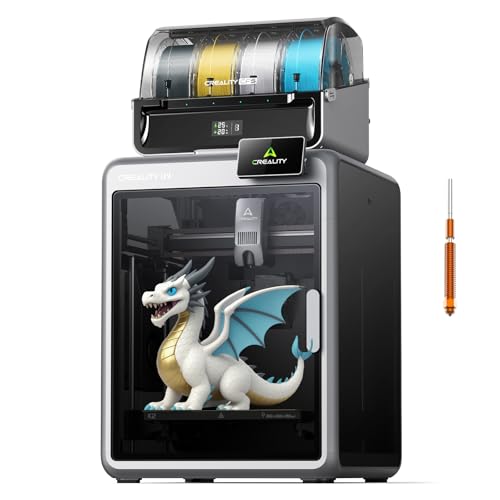
【Next-Gen Multicolor 3D Printing】K2 Combo 3d printer comes with one CFS unit (expandable up to 4 CFS units) for up to 16 vibrant colors. Perfect for multi-material...
Wondering which Creality printer actually fits your workflow? I’ve tested the K2 Combo for weeks, and it’s got some real strengths (and quirks).
What I’m Impressed By
The build quality hits different. Aerospace-grade aluminum frame, steel X-axis, dual Z-axis: this thing barely wobbles at 600 mm/s. That’s fast.
The 260mm³ build volume works for most projects, and it’s fully pre-assembled. No three-hour assembly nightmares.
The CFS multicolor system expands to 16 colors with four units. RFID auto-identification, auto relay between spools, and airtight storage with desiccant? That’s genuinely smart engineering, not gimmickry.
Where It Gets Practical
The 300°C hotend and hardened steel nozzle handle PLA through engineering filaments. The AI chamber camera catches failures early (saved me twice), and Silent Mode actually delivers: balanced fans, minimal vibration.
Built-in air purifier for VOCs. Wi-Fi, 8GB local storage.
Guided calibration, auto-leveling.
Bottom Line
Creative professionals and prototypers: this is your machine. Casual users might find the multicolor overkill.
Best For: Creative professionals, prototypers, and makers who need high-speed multicolor printing with minimal setup time.
Pros:
- Fully pre-assembled with aerospace-grade aluminum frame and steel X-axis rail that maintains stability at 600 mm/s print speeds
- Expandable CFS multicolor system supports up to 16 colors with RFID auto-identification, auto relay, and airtight desiccant storage
- AI chamber camera provides failure detection and build monitoring, plus built-in air purifier filters VOCs for safer operation
Cons:
- 260x260x260mm build volume may be limiting for larger-scale projects
- Multicolor capabilities likely add significant cost that casual users won’t fully utilize
- High-flow 40 mm³/s hotend and advanced features create steeper learning curve for beginners despite guided calibration
Recommended Products
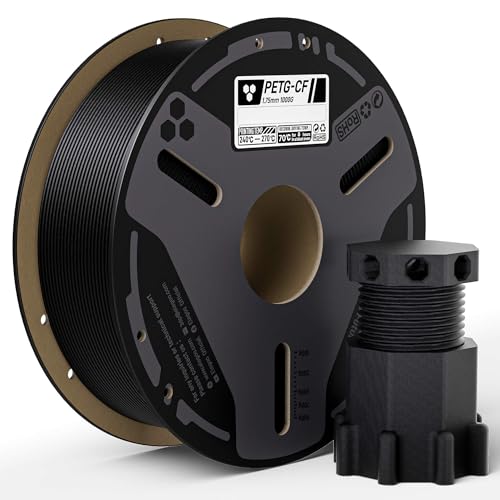
Outstanding Mechanical Properties - ELEGOO PETG-CF filament is made from a combination of PETG and carbon fibers. Carbon Fiber adds strength to the material, making it ideal for printing functional parts and outdoor items

Enhanced Strength and Rigidity: The carbon fiber content in PETG-CF substantially increases the mechanical strength and rigidity of printed parts, making it perfect for load-bearing and high-strength applications.

【Premium Carbon Fiber PETG Filament】FLASHFORGE PETG-CF is created by incorporating carbon fiber reinforcement, resulting in improved material strength and temperature resistance while maintaining the impact resistance characteristic of PETG.
Creality K2 SE Multi-Color 3D Printer
Looking for speed without the usual headaches? I’ve found it in the Creality K2 SE. This machine hits 500 mm/s with 20,000 mm/s² acceleration, and honestly, it’s the CoreXY motion system with built-in vibration sensors that keeps prints clean. No ringing, no ghosting, just smooth walls even when you’re pushing pace.
The die-cast aluminum frame with corner gussets and dual crossbeams means zero flex during those rapid movements. I’ve printed large prototypes and daily-use parts, and the dimensional accuracy holds steady. Surface finishes look genuinely professional.
Here’s where it gets flexible: the K2 SE plays nice with Creality’s CFS multicolor system, sold separately. Upgrade later, and you get automatic filament identification, relay switching, and tangle detection. The slicing through Creality Print handles multicolor seamlessly, so you’re not locked in, you’re growing.
The modular direct drive extruder gives precise control, and the Quick-Swap nozzle saves serious downtime. Hardened steel dual-drive gears feed smoothly and resist wear. Plus, there’s a run-out sensor, so you’re not coming back to failed prints.
Setup? Five minutes. True out-of-the-box. Automatic bed leveling works with one tap, and Creality OS integrates with their Print software and Cloud. I control multiple printers over LAN, use 40+ filament presets, and slice full 3MF multicolor files when paired with CFS. Remote printing, huge model library, smart controls across devices, it’s all there.
The build volume handles functional parts, household models, figurines, and multi-component assemblies without breaking a sweat. Small details or big structural builds, quality stays consistent.
Who’s this for? Speed demons who want room to grow into multicolor. Beginners who hate assembly nightmares. Anyone tired of babysitting prints. The K2 SE delivers speed, stability, and an upgrade path that doesn’t force your hand on day one.
Best For: Speed-focused makers and beginners who want professional-quality prints with minimal setup, plus the flexibility to upgrade to multicolor printing later without replacing their entire printer.
Pros:
- Exceptional speed and stability with 500 mm/s printing, CoreXY motion, and vibration sensors that eliminate ringing without sacrificing quality
- Truly beginner-friendly with 5-minute assembly, one-tap automatic bed leveling, and seamless ecosystem integration across Creality OS, Print software, and Cloud
- Future-proof modular design with CFS multicolor compatibility, Quick-Swap nozzle, and wide material support that grows with your needs
Cons:
- CFS multicolor system requires separate purchase, making true multicolor functionality an additional investment
- High-speed performance and advanced features may present a learning curve for complete beginners despite simplified setup
- CoreXY systems typically demand more maintenance and calibration knowledge than simpler Cartesian designs over long-term use
Recommended Products

16 COLORS TO ENHANCE YOUR CREATIVITY: The Creality Filament System (CFS) has a connection hub on the back. By connecting up to four CFS units together, you can print brilliantly in 16 colors, saving the need for additional painting later
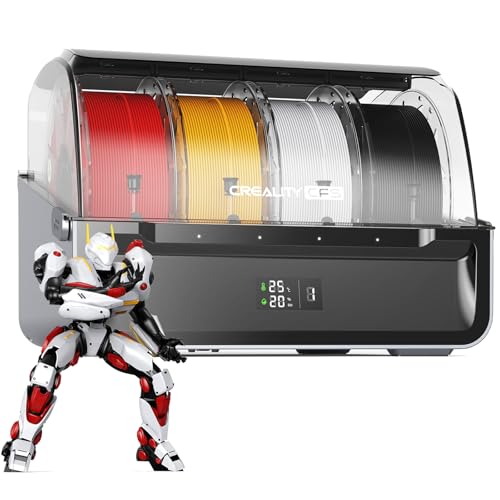
【Vibrant Multi-Color Printing】Supports up to 16 filament colors by linking up to 4 CFS units, giving you rich multi-material printing capability. Fast support removal makes post-processing a breeze, so your prints are ready sooner.

Friendly reminder: Not for K1 Max 2025, K1C 2025, K1 2025, K1 SE 2025. If you need to use the filament in a CFS system, please choose Creality RFID filament. Filament swith paper spools are not recommended for use in CFS
Creality SPARKX i7 Combo Multi-Color 3D Printer
AI Turns Portraits into 3D Models: Say goodbye to complex modeling software. With Creality's CubeMe AI, sparkx i7 combo 3d printer simply upload a portrait and generate a...
The Creality SPARKX i7 Combo is a dream for anyone who wants color without the headache.
I unboxed this thing, plugged it in, and I was printing in five minutes flat. No tools, no screaming at assembly manuals, no “where does this bolt go” panic. It’s fully pre-assembled, which honestly feels like a superpower these days.
Now, the multicolor magic: four colors, smoother transitions, and here’s the kicker, 50% less waste than traditional multicolor setups. I’ve been cranking out custom desk upgrades and gaming accessories that actually look professional, not like a rainbow exploded.
The CubeMe AI? Upload a portrait, get a 3D model in seconds. Sounds gimmicky, but it works. The built-in AI camera watches for spaghetti fails, air printing, tangled filament, build plate disasters, and pings you instantly. No more coming back to a six-hour blob monster.
The 260mm build volume gives you solid room without eating your whole desk. And quiet night mode? Actually quiet. Light-free, minimal noise, I ran it overnight without my partner threatening divorce.
Verdict: Beginners who want color fast, grab this. Tinkerers might want more hackability. Me? I love that it just works.
Best For: Beginners and casual makers who want hassle-free multicolor 3D printing with minimal setup time and AI-assisted features.
Pros:
- Fully pre-assembled with true 5-minute setup requiring no tools or technical expertise
- Four-color multicolor printing with 50% less filament waste than traditional systems
- Smart AI camera provides real-time failure detection and instant alerts for common print issues
Cons:
- Limited hackability and customization options for advanced tinkerers and power users
- Compact 260mm build volume may restrict larger project ambitions
- CubeMe AI photo-to-3D feature may feel gimmicky to users seeking professional-grade modeling tools
Recommended Products

MKS servo57C closed-loop stepping motor driver is developed by makerbase. It has pulse interface and serial interface, built-in efficient FOC vecto algorithm, and uses high-precision encoder to effectively prevent the motor from losing step through position feedback.

Motor specifications: Holding Torque:3N.m; Current:5A; Phase:2; Size:60x60x88mm; Step Angle:1.8 degree; Motor Lead Wire: 4-wire; Encoder lines:1000
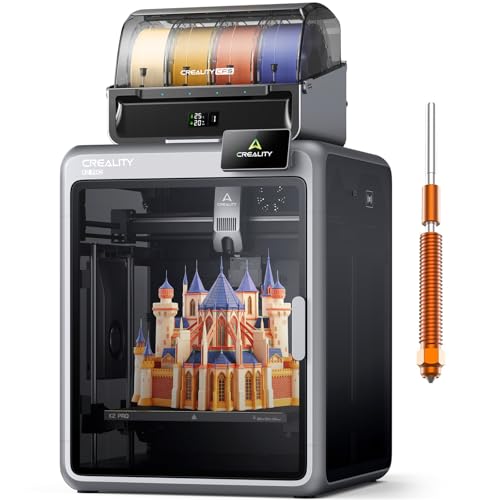
Smarter Multicolor Printing with CFS: Creality K2 Pro Combo 3d printer works seamlessly with the CFS Smart Filament System, enabling up to 16-color and multi-material printing. Auto filament identification, intelligent feeding, and moisture-proof storage provide a hassle-free, worry-free printing experience.
Creality K2 Pro Combo 3D Printer, 600mm/s High-Speed, Multicolor Printing, 300×300×300mm
Smarter Multicolor Printing with CFS: Creality K2 Pro Combo 3d printer works seamlessly with the CFS Smart Filament System, enabling up to 16-color and multi-material...
Who’s ready to print an entire helmet, in 16 colors, before lunch? I certainly am, and the Creality K2 Pro Combo makes it happen. This machine hits 600 mm/s with 20,000 mm/s² acceleration, so your weekend projects finish before your coffee gets cold.
The CFS Smart Filament System handles 16 colors automatically, swapping filaments without you babysitting. It even keeps spools dry and identifies them for you. No more guessing which ABS is which.
That 300×300×300 mm build volume fits serious prototypes. I printed a full-size drone frame in one go.
The active chamber heating hits 60°C, taming warping on ASA and carbon fiber composites. The direct drive extruder pushes 40 mm³/s through hardened steel gears. Abrasive filaments? No problem. Quick-swap hotends and automatic filament cutting save hours of fiddling.
Dual AI cameras watch everything: one monitors prints for failures, the other tunes flow rate and catches waste chute clogs. I caught a spaghetti failure at 2 AM from my phone.
Remote monitoring via WiFi means I don’t camp beside the printer anymore. Auto-leveling probes the bed, power-loss recovery saves disasters, and Creality OS plays nice with Cura. For pros needing speed and schools wanting reliability, this is my pick. The combo includes the printer, CFS unit, filament, and hardened nozzle. Ready to upgrade?
Best For: Professionals, educators, and makers who need high-speed multicolor printing with large build volumes and automated reliability for complex prototypes, batch production, and educational projects.
Pros:
- 16-color automatic multicolor printing with intelligent filament management and dry storage via the CFS system
- Exceptional speed at 600 mm/s with 20,000 mm/s² acceleration for rapid project completion
- Dual AI cameras with remote monitoring, failure detection, and automatic flow tuning for hands-off operation
Cons:
- Large 300×300×300mm footprint requires significant desk space
- 60°C chamber heating limit may not suffice for highest-temperature engineering materials
Recommended Products

Creality 3D Printer Auto Bed Leveling Kit - The Creality cr touch auto bed leveling kit fulfilled simple structure and high precision. Performs multi-point detection on the printing platform and records the height of each detection point. Stable quality, long service life, and can be reused more than 100,000 times.

【Wide Application】This Creality cr touch auto-leveling kit is equipped with 3 mounting brackets and is only suitable for the following 3D printers with V4.4.2/V4.2.7 motherboards (Ender 3/Ender 3 Pro/Ender 3 V2/Ender 5/Ender 5 Pro/cr 10), other machines are not compatible. Please confirm your machine and motherboard version before purchasing.

3D printer bed leveler tool: clone bed sensor, directly drop in AnycubicKobra stock, not for other printing project like Vyperr MegaS SV07 SV08 Voron2.4 5M Pro A1 mini P1P P1S X1C Ender 3 SE K1 Max
Factors to Consider When Choosing a Creality 3D Printer
When I’m picking a Creality printer, I always start by asking myself what I’m actually going to build, because your build volume needs and print speed requirements can make or break a project.
You should think about whether multicolor capability matters to you, it’s a game-changer for some folks and a total gimmick for others. Material compatibility and setup complexity round out my checklist, honestly, there’s nothing worse than unboxing a printer and realizing you’ll spend three hours just getting the thing level.
Recommended Products

Multi-color Printing: Supports automatic filament switching for up to 4 colors, no frequent manual filament‑changing needed. The SPARKX i7 Nano Combo 3d printer lets you easily create multi‑color models and vivid creative ornaments to bring rich, eye‑catching print effects.

Advanced Multi-Color Printing Technology - The FLASHFORGE AD5X 3D Printer features an innovative multi-color printing capability, allowing users to create vibrant and intricate designs with up to four colors simultaneously. This technology enhances creativity and enables the production of visually stunning models, making it an ideal choice for artists, designers, and hobbyists alike.
【Next-Gen Multicolor 3D Printing】K2 Combo 3d printer comes with one CFS unit (expandable up to 4 CFS units) for up to 16 vibrant colors. Perfect for multi-material projects, prototypes, and artistic prints. Enjoy automatic wire switching and smooth, vivid color transitions.
Build Volume Needs
How much space do you actually need?
Build volume defines your maximum printable dimensions per axis. A 260 × 260 × 260 mm machine, for example, limits your tallest model to 260 mm in height. I always check this first.
Larger Volumes
- Fabricate bigger functional parts
- Print multi-component assemblies in one go
- Cost more, demand more desk space
Smaller Volumes
- More affordable
- Need less enclosure space
Here’s what annoys me: advertised volume rarely equals real-world usable area. Bed margins and boundary tolerabilities steal precious millimeters. (Always verify the actual printable zone.)
Matching volume to project size minimizes part splitting and tedious reassembly. No one enjoys gluing fragments together.
Verdict: Go bigger than you think you’ll need. You’ll grow into it.
Print Speed Requirements
Once you’ve figured out your build volume, speed becomes the next obsession. I’m talking about models hitting 600 mm/s with 20,000 mm/s² acceleration. That’s fast enough to print overnight what used to take days.
But here’s the catch: raw speed means nothing without rigidity. Core-XY designs with beefy frames keep prints accurate when things get zippy. I’ve seen wobbly printers turn beautiful models into spaghetti at high speeds.
Quick-swap hotends and direct drive extruders matter too. Less downtime between prints, faster material changes. You’ll want auto bed leveling and AI monitoring: they save your first layer when you’re pushing limits. Failed prints at 600 mm/s waste more time than slow, steady printing ever would.
My take? Prioritize frame stiffness over headline numbers.
Multicolor Capability
Why settle for monochrome when you can print a full rainbow? I always check multicolor capability first. Creality’s CFS units link together, and I’ve seen setups push 16 colors in one print. That’s wild.
Here’s what matters:
- Color changing: CFS handles switching automatically, no babysitting. The system identifies filament and flips between them mid-print.
- Software support: Creality Print now slices multicolor jobs with full 3MF format support. Sharing color profiles? Easy.
- Storage: Dedicated filament boxes with moisture control keep colors consistent. Nobody wants a washed-out rainbow.
I won’t touch a multicolor setup without run-out and tangle detection. Mid-print failures ruin everything. Automatic sensors catch problems before your gradient turns garbage.
For casual makers, four colors satisfies. Artists? Maximum CFS linking, always.
Material Compatibility
Most Creality printers handle the basics just fine. I can print PLA, PETG, and ABS on nearly any model without headaches.
But here’s where it gets interesting. Want to run engineering materials like ASA, PPA-CF, or PET-CF? You’ll need specific upgrades. I look for direct-drive extruders and high-flow hotends pushing 40 mm³/s. They tame flexible filaments and abrasive composites beautifully.
Multicolor systems (CFS) let me swap between filaments mid-print. Four units gets you 16 colors, which sounds excessive until you’re printing detailed prototypes.
Filament run-out sensors save my sanity. Built-in identification helps too, no more guessing if that spool is actually PLA.
The real game-changer? An actively heated chamber hitting 60°C. It kills warping on tricky materials. Without it, ASA becomes a curling nightmare.
Setup Complexity
How much of your weekend are you willing to sacrifice to a 3D printer? I learned this the hard way. Some Creality machines arrive fully pre-assembled, basically plug-and-play with maybe a screen to click into place. Others: you’ll spend Saturday afternoon deciphering instructions and hunting for mystery screws.
Automatic bed leveling saves serious headaches. True auto leveling or one-tap options cut calibration from 45 minutes to under five. I prefer models with guided calibration modes; they hold your hand through those first nerve-wracking prints.
Built-in AI cameras help too, catching bed adhesion failures or spaghetti disasters before they waste filament and time. Wi-Fi and cloud integration mean fewer SD card shuffle dances across the room.
Bottom line: if you’re impatient (like me), prioritize pre-assembled builds with smart leveling. Your weekend will thank you.
Noise Level Preferences
Where do you fall on the noise tolerance spectrum? I can’t stand a printer that sounds like a blender having a bad day, so Creality’s “ultra quiet” modes immediately catch my eye. These modes use balanced fans and dialed-down motor operation. You’ll barely notice them running.
The real magic happens in the hardware. Dual axis step servo motors, plus real time torque adjustments, actively cut mechanical vibrations. Less rattle, less hum, more peace.
But here’s the tradeoff: higher speed printing, those blazing 500–600 mm/s claims, usually gets louder unless vibration damping and optimized motion control step in. Pre-assembled plug and play models with guided auto leveling help too; they cut idle vibrations during setup, so calibration stays whisper quiet.
Want silence? Prioritize quiet modes and servo motors. Need speed? Check for damping features. Simple as that.
AI Monitoring Features
Reliability, in my book, starts with a set of eyes that never blink.
Creality’s AI monitoring systems use onboard cameras to watch your prints around the clock. They catch spaghetti messes, failed prints, filament tangles, and build-plate adhesion problems before they waste hours of time and material. You get real-time alerts, so you can step in fast.
What You’ll Actually Get
Some models pair AI detection with automatic time-lapse recording and build-plate monitoring. That’s handy for troubleshooting later or sharing your process.
The smarter setups also sync with auto bed leveling and flow tuning, keeping everything consistent while you handle other tasks.
Remote Access
Networked AI features let you check status and get alerts through Creality OS, Cura, or cloud apps. I find this essential for long prints I can’t babysit.
My Take
If you print unattended, prioritize models with robust AI and reliable cloud connectivity. It’s the difference between catching a disaster at 10 minutes versus discovering it at 10 hours.
Budget Considerations
Budget Considerations
That kind of always-on monitoring is a game changer, sure, but I’ve gotta be honest with you: it doesn’t mean much if it blows your entire budget. Here’s how I break down what you’re actually paying for.
Multicolor and Multi-Material
Creality’s CFS system hits 16 colors, which costs more upfront. But it cuts post-processing and waste, so you save hours sanding and less filament hits the trash.
Premium Features
AI cameras, auto bed leveling, and faster motion systems add to the price tag. Worth it? If you hate tinkering, absolutely. Setup goes from hours to minutes, and failed prints drop dramatically.
Build Volume and Speed
Bigger printers running 600 mm/s need sturdier frames. You’re paying for metal, not plastic.
Hidden Savings
Pre-assembled models skip the headache. Bundled accessories like hardened nozzles and RFID storage quietly lower operating costs over time.
My take? Start honest about hours versus dollars.