
I put this together because simple, hands-on play helps kids learn and stay curious. Play dough lets them explore textures, colors, and ideas without loud screens or fuss. I wanted a go-to list of ideas that are easy to pull off with things you already have, sprinkle in tiny lessons, and keep mess manageable.
If you’re a parent, caregiver, or teacher who wants activities that feel fun but teach at the same time, this is for you. These ideas fit busy days, weekend afternoons, and quiet indoor hours. They work for toddlers just learning to roll and older kids who want a challenge.
Inside you’ll find 27 play dough DIY ideas that are fun and educational. You’ll see shapes and letters formed with simple tools, colors mixed to learn hues, and tiny stories told with dough characters. Each idea helps with fine motor, early math, or language skills, all while staying playful and hands-on. What you’ll get is a mix of quick wins and longer projects that teach counting, letters, and shapes.
Each idea is set up with what you need, how to start, and a quick tweak to fit your kid’s age. You can use cookie cutters, rolling pins, or just your hands. If you have paper cups, beads, or buttons, you can add counting, sorting, and pattern games. It’s all about small steps and easy wins. Tools and tips come with each idea to keep things simple.
These activities are designed for real life. They fit small spaces and short attention spans. You can do one in 10 to 15 minutes, or stretch it into a longer project with a story and a snack break. I also point out simple swaps to keep things fresh without extra shopping. Space and time saver tips help you adapt on busy days.
Ready to dive in? I hope these ideas spark curiosity and give you practical tools to make learning feel natural. Grab a mat, some dough, and whatever you have on hand, and start exploring. Your kids will practice shapes, counting, letters, and teamwork while you cheer them on.
1. Rainbow Swirl Play Dough

Rainbow Swirl Play Dough is a treat for the eyes and the hands. It is easy to make at home and a simple way to learn colors and how they mix. Gather the basics: flour, salt, water, and a pinch of cream of tartar. Mix until a soft dough forms, then split it into several pieces.
Add gel food coloring to each piece. Knead until the colors shine bright and true. If you want softer tones, add a tiny amount of water and knead again. Here is why this matters: you control the shade, and kids learn how color changes when you blend.
Next, roll the colored bits into ropes and press them together. Twist and squeeze to create a marbled swirl. The result is a stunning, kid-safe mess that stays mostly on the dough. Use the swirl to spark a quick chat about primary colors, shade shifts, and how light colors differ from dark ones.
– Use gel food coloring for richer hues.
– Store in an airtight container to keep the dough soft.
– If it gets sticky, dust with a little flour and knead again.
Next steps: invite kids to form letters, animals, or patterns with the swirled dough. It’s fun, practical, and a gentle dose of hands-on science.
2. Edible Chocolate Play Dough

Want a play activity that also doubles as a snack? Edible Chocolate Play Dough is the solution. This kid-safe dough uses cocoa powder, peanut butter, and powdered sugar. To start, mix equal parts peanut butter and powdered sugar. Stir in cocoa powder a little at a time until the mix feels soft and easy to shape.
Here is why it works for learning and fun. Your child will smell the cocoa and feel different textures as they roll, pinch, and mold. They practice hand control and fine motor skills with every press. And when play stops, a tasty bite awaits—great for a quick, calm transition from play to snack time.
What you need
– 1 cup peanut butter
– 1 cup powdered sugar
– 2–3 tablespoons cocoa powder
– Optional splash of water to adjust texture
How to make
– In a bowl, blend peanut butter and powdered sugar until smooth.
– Add cocoa powder gradually and mix until the dough is evenly colored.
– Knead by hand for a minute or two until it’s soft and pliable.
– If it feels dry, add a tiny amount of water or a touch more peanut butter.
Play ideas and pairings
– Use cookie cutters to make fun shapes.
– Roll into small balls and press flat for mini cookies.
– Pair with fruit slices like banana rounds or strawberry halves for a playful snack break.
Safety and storage
– Watch for peanut allergies before using this dough.
– Store in an airtight container in the fridge for up to 3 days.
– Have napkins handy for any finger-licking moments.
Next steps: set up a quick play station, then enjoy the mix of learning and tasting.
3. Scented Play Dough

Scented Play Dough adds a new layer to play time. Smell becomes a tool for focus, calm, and curiosity. You mix in essential oils or natural extracts to your dough and invite a mini science lesson with every squeeze.
Here is why it helps. A soft scent can relax. A bright scent can wake the senses. Kids notice the aroma before they touch. That makes your sessions more engaging.
Here is how to do it.
– Make your usual dough. Use flour, salt, water, oil, and a little color.
– Add scent. Start with 2 drops per cup. Stir well. Test by rubbing a pinch on your wrist and smelling. Add tiny drops until you like the level.
– Pick scents. Lemon for energy, lavender for calm, vanilla for cozy, peppermint for focus.
– Check safety first. Ask about allergies. For very young kids, keep scents light. Do a quick sniff test on a small piece.
– Store smart. Keep dough in an airtight container to hold the scent between uses.
Next steps. Use scented dough for mini scent lessons. Have kids name the aromas, predict how they feel after each scent, and mix two scents to make new ideas.
Tips to keep it fresh: knead gently and add a drop of water if it dries.
@media(max-width:480px){
4. Glow-in-the-Dark Play Dough
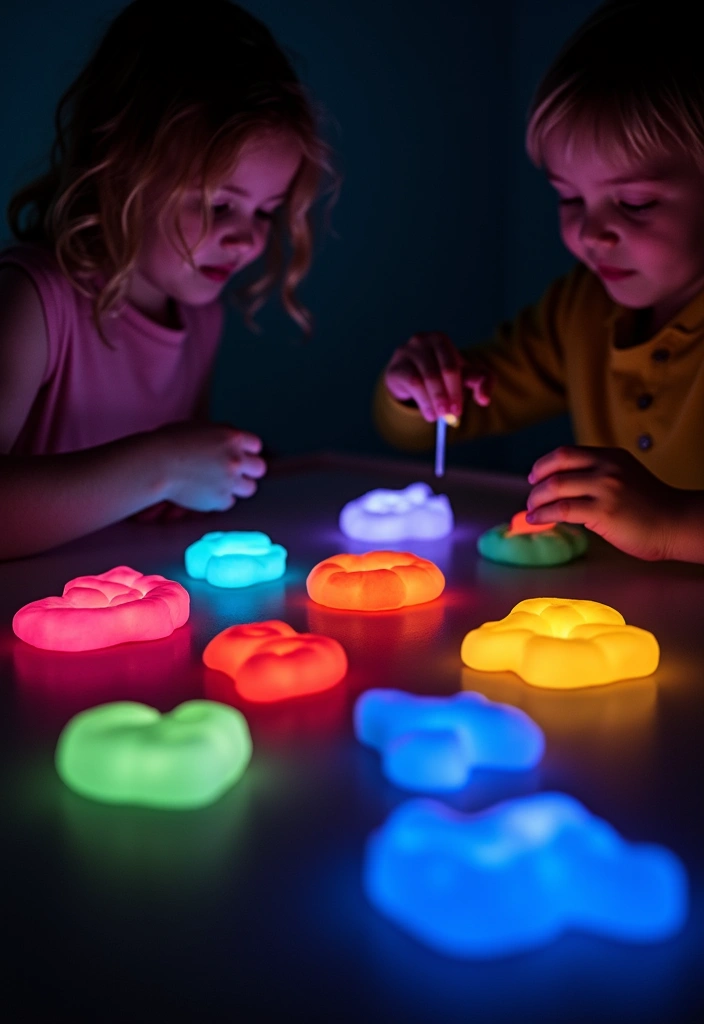
Glow-in-the-Dark Play Dough makes after-dark play feel magical. Charge it with light, and it glows when the room goes dim. Here is how you can make it and use it safely.
– Materials and setup
– 2 cups flour
– 1 cup water
– 1/2 cup salt
– 1 tablespoon oil
– Glow powder or pigment (choose a non-toxic, kid-safe option)
– A sturdy bowl, a spoon, a clean kneading surface
– Steps
1. Mix flour and salt in the bowl.
2. Stir in water, oil, and the glow powder until a dough forms.
3. Knead 2–3 minutes until smooth and evenly colored.
4. Charge under a bright light for 2–5 minutes, then go dark and watch the glow.
– Play ideas
– Shape animals, letters, or tiny buildings.
– Create a night scene on a dark tray or plate.
– Make patterns that catch light and glow longer.
– Glow tips
– For a stronger glow, give the dough a longer charge under bright light.
– A blacklight can boost brightness in a quiet play space.
– Safety tip
Safety tip: Ensure the glow powder is non-toxic and safe for children.
– Quick science and care
– The glow comes from light absorption and emission. The dough stores light and releases it slowly.
– Store dough in an airtight container to keep it soft.
@media(max-width:480px){
5. Nature Play Dough

Are you looking for a hands-on activity that blends play with learning outside? Try Nature Play Dough. This activity lets kids feel textures, smell scents, and see colors in their own dough.
Here is why it works. Natural materials from leaves, flowers, and twigs make the dough look special. The mix boosts curiosity and strengthens small hands through kneading. It also teaches about the environment in a fun way.
Next steps:
– Gather materials: Leaves, petals, pine needles, small twigs, seeds. Pick items that are safe and clean. Have a basket ready.
– Start with dough: Use your favorite homemade play dough recipe. You can add a few drops of food coloring if you like.
– Mix in nature: Let kids knead bits of nature into the dough. Press leaves to make imprints. Squeeze twigs to scent the air.
– Play ideas: Press leaf stamps into the dough for leaf shapes. Build mini scenes like a tiny park or forest.
– Talk and explore: Name textures: soft moss, rough bark, and describe scents. Compare how different materials feel.
– Safety and cleanup: Supervise young children. Check for small pieces. Wash hands after. Store dough in an airtight container.
This simple, outdoor craft connects children with the world around them and sparks open-ended exploration.
6. Play Dough Math Activities

Want math to feel real for your kid? Try Play Dough Math Activities. This method blends sensory play with core math ideas. Your child touches and shapes while counting, comparing sizes, and spotting patterns. Numbers become tangible when they live in dough you roll, pinch, and stack. It helps math move from pages to everyday play, turning numbers into stories your child can act out.
– Roll dough into small balls to count with your child.
– Use cookie cutters to shape figures and explore geometry with your child.
– Add or remove pieces to show simple sums with your child.
– Form dough numbers and build expressions like 3 plus 2 equals 5 with your child.
– Line up dough marks on a strip to practice counting steps with your child.
– Challenge your child to make a specific number of items.
Here is why it works: sensory details keep attention, and quick challenges build confidence. You can mix math talk into the activity by naming what you see. Keep the pace light and playful, and let curiosity lead the way.
Tips for success: set up a small, tidy math station, store dough so it stays soft, and snap a photo of every finished idea. Short sessions, about 10 to 15 minutes, work best. This approach complements classroom math and gives your child a hands-on way to feel numbers.
@media(max-width:480px){
7. Play Dough Alphabet Game

Here is a fun way to teach letters with a Play Dough Alphabet Game. You want a hands-on activity that turns learning into play. This approach builds reading skills and fine motor control at once. It also keeps kids curious and focused.
Here is how to set it up:
– Make a batch of homemade play dough in several colors.
– Keep cookie cutters handy to create letter shapes.
– Roll and press with your fingers, then trace the shapes to reinforce recognition.
Next steps:
– As each letter forms, say its sound aloud.
– Try to think of a word that starts with that letter.
– Encourage kids to compare upper and lower case forms.
Tips for success:
– Keep sessions short. A 5 to 10 minute play works well.
– Add a light challenge, like forming a letter before the timer rings.
– Use the letters to build simple words on the table.
Extra fun:
– Create a scavenger hunt by hiding objects that start with different letters around the room.
– Use the letters they made as props for short stories.
– Set up a mini alphabet wall by posting the letters next to the real shapes.
This approach makes learning practical and enjoyable. It helps reading and gives small hands a good workout.
@media (max-width: 600px) {
.visual-quiz-iframe { min-height: 995px !important; height: 1100px !important; }
}
8. Play Dough Sensory Bins
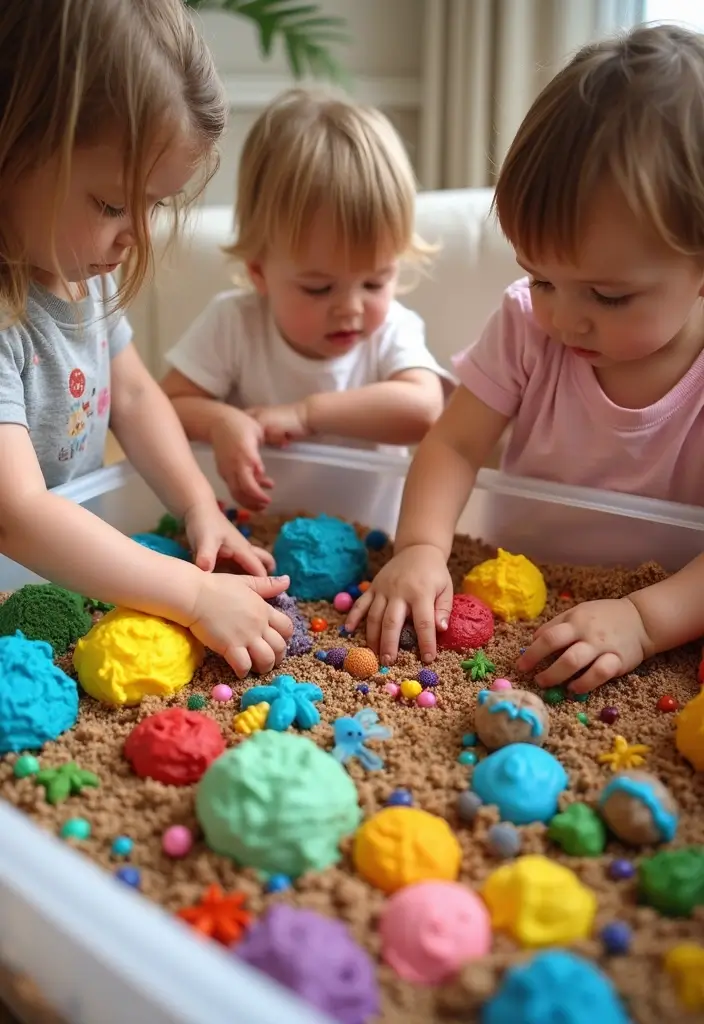
Want a hands-on activity that keeps kids busy and curious? A play dough sensory bin hits that need. You fill a shallow bin with soft dough and hide small treasures for touch, sight, and color to guide exploration. It builds fine motor skills and invites calm, focused play.
What you get
– Kids explore textures, colors, and shapes.
– They practice pinching, rolling, and scooping as they play.
– The setup invites imagination and steady attention.
What you need
– Homemade or store-bought play dough
– A shallow bin or tray
– Small items: beads, buttons, shells, leaves, tiny figurines
– Simple tools: scoops, rollers, molds
– Optional extras: scent drops or different textures for variety
Set up steps
– Spread a base layer of dough in the bin.
– Tuck in discovery items for touching and sorting.
– Add tools to spark manipulation and play.
– Add a simple label or card to describe the theme if you like.
Theme ideas
– Ocean life: blue dough with small boats and fish figurines
– Garden: green dough with pretend bugs and flowers
– Forest creatures: brown dough with wood-toned toys and leaves
Tips for success
– Keep parts age-appropriate and supervise small pieces.
– Place a mat or tray under the bin to catch scraps.
– Rotate items every few days to renew interest.
Why it helps
It strengthens hand muscles through pinching and rolling. It also helps kids focus, calm down, and express ideas through play. Next steps: try a new theme this weekend and see what your child loves most.
@media(max-width:480px){
9. Play Dough Ice Cream Shop
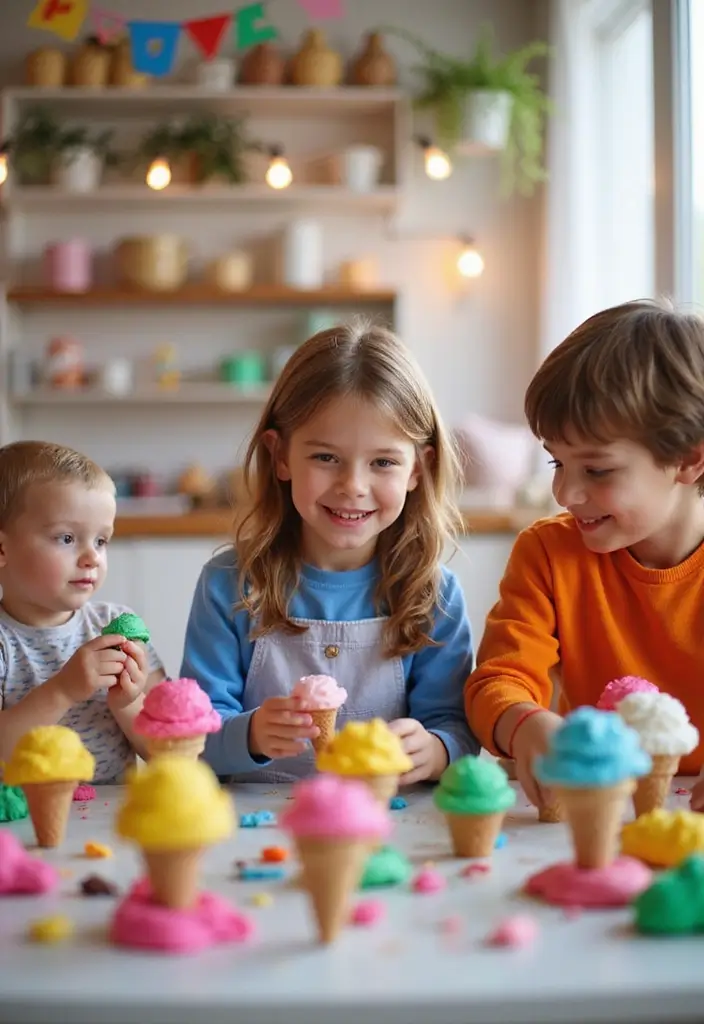
Play Dough Ice Cream Shop is a favorite way to mix creative play with learning. If you want a simple, engaging activity that builds counting and social skills, this is a great choice.
Kids press colorful play dough into cone shapes and roll scoops in bright colors. They stack scoops high and pretend to serve to friends. Real cones or plastic ones add realism.
This setup sparks imagination and helps kids talk, share, and take turns. It also gives you chances to practice math in a fun way.
Here is how to set it up.
– Gather colored play dough in several colors.
– Have cone props or small real cones.
– Shape scoops from dough.
– Use a tray to keep the shop tidy.
How to play.
– Kids create scoops and place them on a cone.
– Count the scoops as they stack them.
– Take turns serving each other and saying flavor names.
– Use simple menus or cards to label flavors.
Extra Fun items.
– Label the flavors to add a literacy twist.
– Create a kid-friendly menu for quick orders.
– Add pretend money or price tags for basic math.
This playful setup lasts long and builds fine motor skills and teamwork.
It is simple and repeatable.
@media(max-width:480px){
10. Play Dough Science Experiments

Here is why Play Dough Science Experiments work for curious kids. They turn ideas into action. Your child can touch, mix, and see changes happen quickly. With simple supplies, you can set up a small lab in the kitchen or classroom.
Keep it simple and let curiosity guide you as you go.
– Color chemistry with dough. Use several colors to stand for elements. Let your child knead, blend, and observe. Talk about how mixing makes new colors and how pieces join to form a bigger picture.
– Model the solar system. Build dough planets and place them in order. Show orbits with string. It helps kids picture space and scale.
– Texture and density ideas. Compare doughs that feel rough or smooth. Float small beads in a thin layer to discuss density and buoyancy.
– Mini volcano. Shape a crater, add baking soda, and pour in safe vinegar for fizz. Watch bubbles rise. It shows a quick chemical reaction.
– Science prompts. Ask questions as you go. How does the dough change when you add water? What if you add salt? Let kids predict first.
Try one idea this week and note what your kid notices.
@media(max-width:480px){
11. Sensory Path with Play Dough Shapes
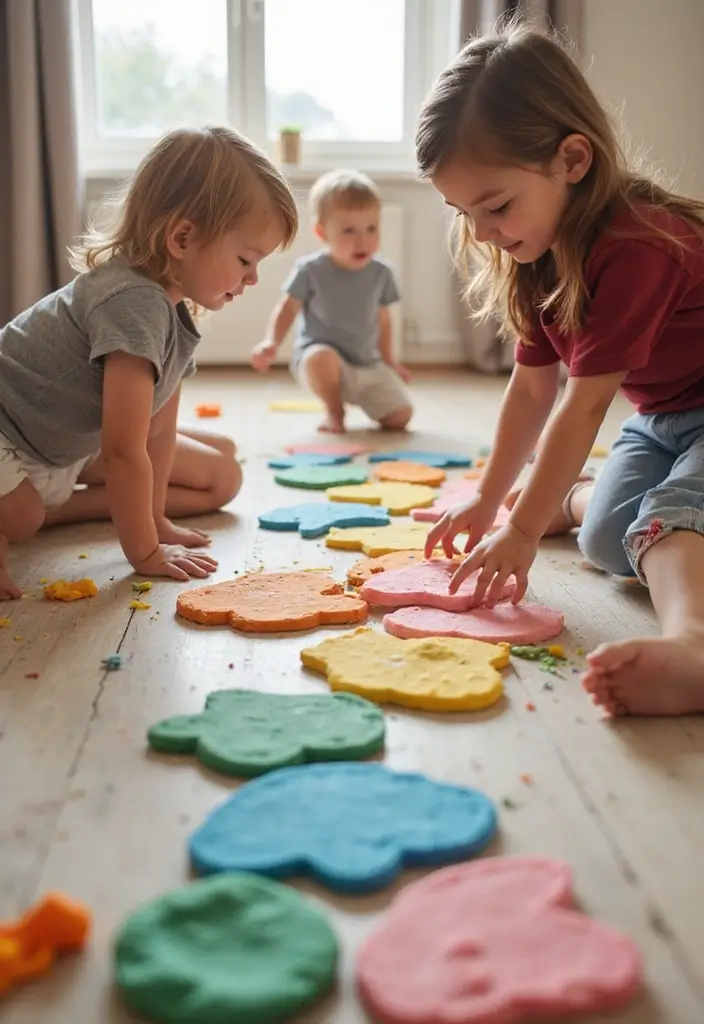
Sensory Path with Play Dough Shapes
You want learning that moves with your kids. A sensory path using play dough shapes does that. It blends sight, touch, and motion in one simple game.
Materials
– Play dough in a few colors
– A flat floor space or mat
– Tape to outline shapes
– Optional: shape cutters or letters
Set up
– Roll dough into simple shapes and letters
– Place them in a line or curved path on the floor
– Tape each shape in place so it stays put
How to play
– Step from shape to shape while naming what you touch
– Younger kids focus on shapes and colors; older kids can spell or sound out letters
– Change the pace by walking, hopping, or tiptoeing
Variations
– Color code: red circle first, blue square second
– Add numbers or short words on cards that match the shapes
– Make it a small obstacle course with safe turns and pauses
Benefits
– Builds gross motor skills with stepping and hopping
– Reinforces shape and letter recognition through movement
– Promotes sensory awareness of texture and color
Tips
– Keep it short at first and grow it over time
– Supervise younger kids and clean up after
– Move indoors or outdoors to fit your space
Next steps
– Start with one kid, a short path, and two colors
– Add shapes, letters, and more turns as you see interest
12. Play Dough Weather Station

Looking for a simple, fun way to teach weather at home? A Play Dough Weather Station brings meteorology to the table. You build clouds, sun, and rain with soft dough, then talk about the day’s weather.
Gather these supplies: colored play dough (blue, white, gray, yellow, orange), a flat tray, a small paper chart, and a marker. Keep everything on one surface so it’s easy to see.
Make the weather items. Roll white and gray clouds. Form a round yellow sun with rays. Pinch blue drops for rain or a thin blue ribbon for a rain shower. Twist a few strips to show wind. You can add tiny white pieces for snow if you like.
Set the pieces on a blue mat so they look like a sky. Each day, your child chooses a piece to “report” the weather and writes a quick note on the chart. For example: “sunny and warm” or “cloudy with light rain.”
Use the chat to explain why. The sun warms the ground. Rain helps plants grow. Wind moves leaves. Clouds can hide the sun. These ideas stay simple and real.
Tip: tuck dough in an airtight box so it stays soft. This activity is easy and a good starter for weather talks.
13. Play Dough Storytelling
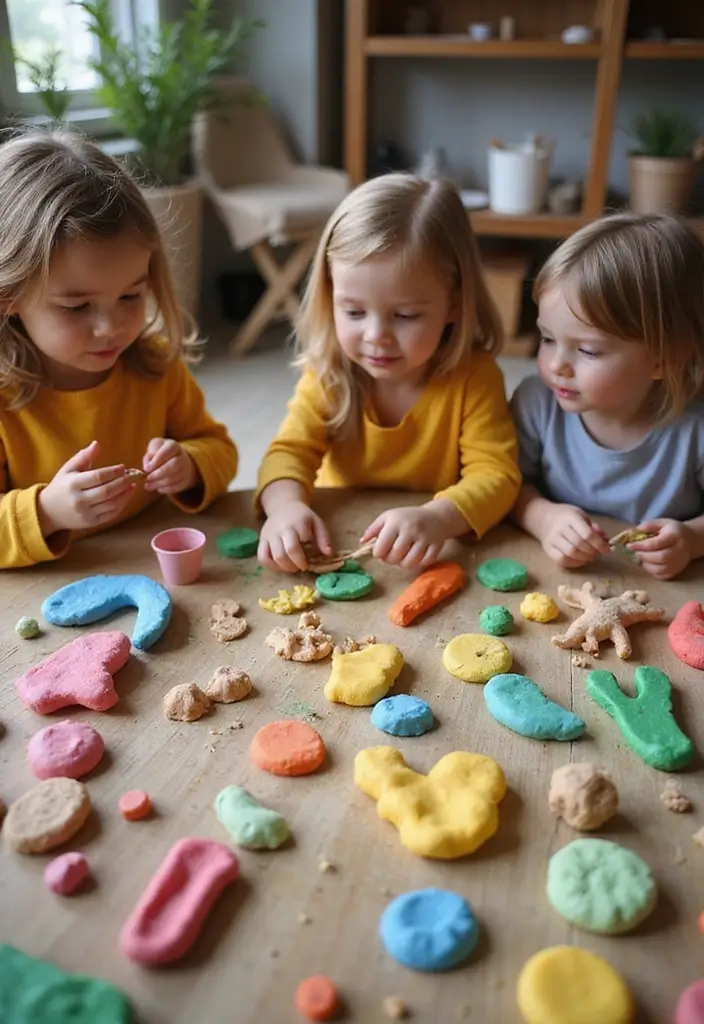
Here is why you should try Play Dough Storytelling. It helps kids think on the fly and talk with confidence.
– Start with a story or a new world. Your child molds characters, animals, and places with a few colors of play dough.
– Set up on a clean table. Keep it simple at first; add more pieces as the tale grows.
– Narrate as you build. Your child can tell the tale while shaping the figures or guiding them into place.
– Use questions to guide thinking. What happened first? How did the character feel? What comes next?
– Make a dough story map. Press dough figures onto paper to show the sequence of events.
Extra ideas:
– Add a tiny puppet show. Let the dough figures act in front of a mini audience.
– Create a plot map by lining up the shapes to show the story steps.
Tips for smooth sessions:
– If the story stalls, pause and reshape the scene. Keep it short and friendly.
– End with a quick recap in one or two sentences.
Keep it easy at first and grow the story as your child gains confidence. You can do this once a week to build practice.
Try a short 15 minute session, then switch the focus next time.
This hands-on storytelling helps children express themselves and build speaking skills in a playful, concrete way.
@media(max-width:480px){
14. Play Dough City Building
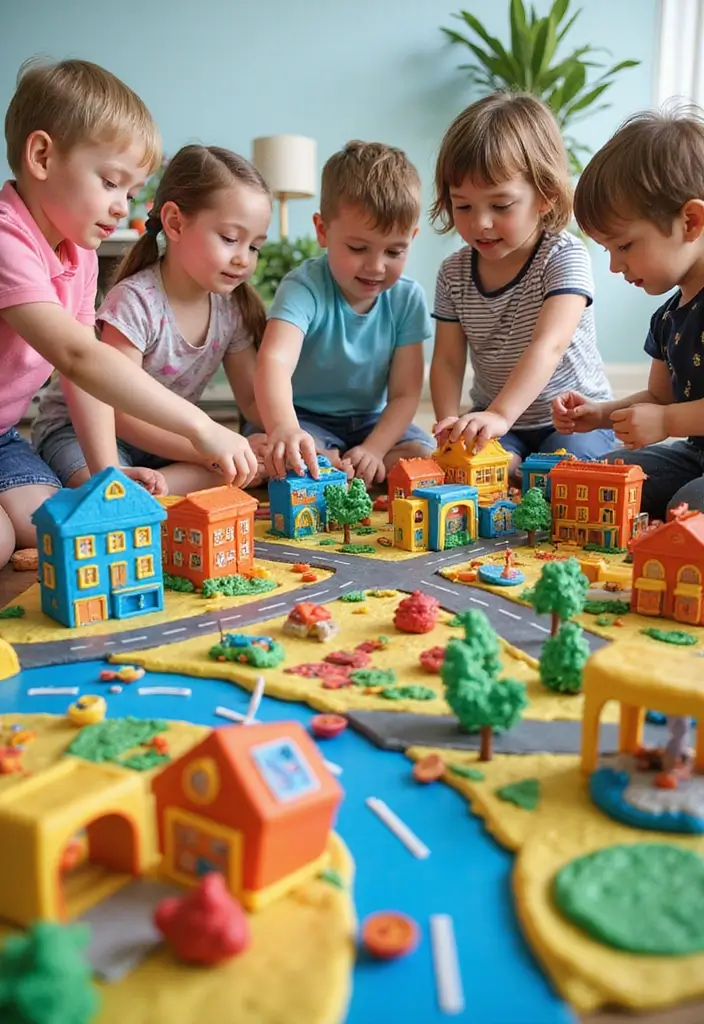
Play Dough City Building is a hands-on way to mix art with planning. You give kids colors, shapes, and space, and they design a town. It builds how they see space and how people move.
Here is how you set it up and teach with it.
– Materials: several colors of play dough, a sturdy base like a cardboard sheet, a plastic knife or tool, and toothpicks for bridges and beams.
– Build roads first by rolling dough into long strips and laying them out as a grid.
– Add buildings by stacking dough to make towers or simple houses.
– Create parks and services by placing green patches for parks, blue for water, and red for stations or schools.
– Add details with toothpicks to create bridges and towers.
Next steps: plan how the town would grow. Name neighborhood areas. Compare your mock city with a real city and note what helps it work.
Tip for groups: assign roles, set a time limit, and share space. Remind kids to listen, swap ideas, and give quick updates.
Why it helps: teamwork, planning, and real-world thinking grow as you play.
It’s a safe, fun way to learn together.
@media(max-width:480px){
15. Play Dough Animal Kingdom
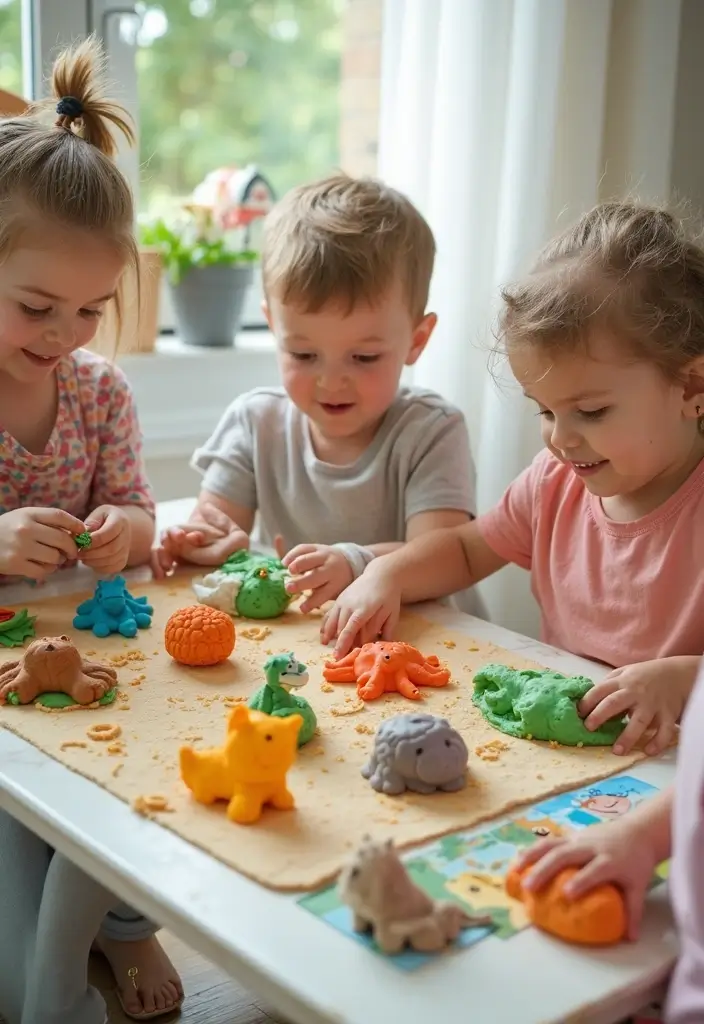
Play Dough Animal Kingdom is a quick way to blend hands on fun with animal learning. You give kids bright play dough and a simple mission: recreate animals and learn how they live.
Here is how to begin:
– Choose a few colors of dough.
– Show simple animal pictures for ideas.
– Let kids pinch, roll, and shape. Use small tools or cookie cutters if you want quick forms.
Next, turn play into science. As you build, talk about habitats, diets, and features. A panda loves bamboo, so think forests. A camel thrives in the desert. A fish needs water. Ask questions that invite observation: How does the shape help the animal move? What would it eat?
Extra Tip:
– Create mini habitats with different dough textures. Use blue for water, green for forests, tan for deserts.
– Add a short story. Name each animal and give it a tiny scene to live in.
This activity sparks curiosity and builds basic biology ideas. It also strengthens fine motor skills as little hands work with dough. Best of all, you get a playful session that leaves space for questions and new ideas.
Adapt it for different ages. For younger kids, guide the shapes. For older kids, add a quick food chain note.
@media(max-width:480px){
16. Play Dough Garden
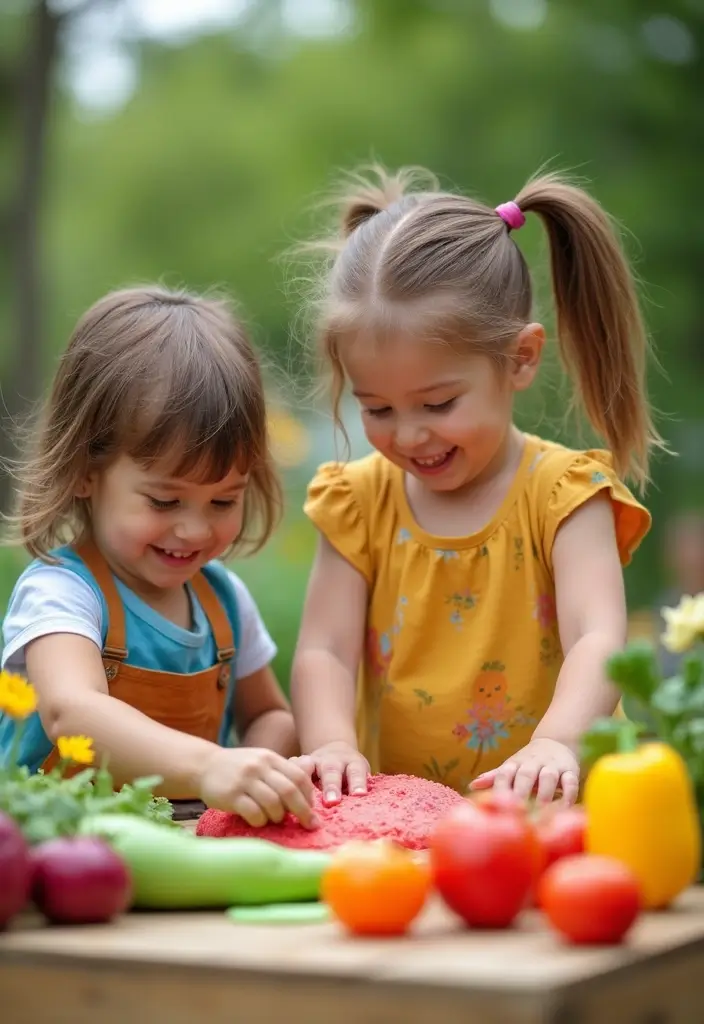
Play Dough Garden
You want a mess-free way to teach kids about growing plants. A play dough garden fits. Your child can shape flowers, vegetables, and tiny greens. It turns nature into a small, colorful scene they can touch and control.
Here is how to use it. Invite your child to build a garden plot. Mold stems, leaves, and blossoms. Create carrots, peppers, or tomatoes with simple rounded shapes. Make a bouquet for a border or a tiny patch of grass. Bright colors help grab attention and spark imagination.
While they build, talk about plant parts and growth. Roots take in water, stems carry nutrients, leaves gather sunlight. Explain how plants need soil, sun, and air to grow. A short chat makes art become basic botany and science.
Extra Ideas
– Use sticks to show stems and leaves.
– Add a small insect or snail to discuss ecosystems.
– Label parts with simple tags near each plant.
Benefits and next steps
This activity boosts creativity, introduces botany basics, and builds care for nature. It’s mess-free and easy to reset for a new garden scene. Try seasonal themes next, like spring flowers or autumn vegetables, and add quick science notes beside each model. Let them narrate what they notice as they work.
17. Play Dough Musical Instruments

Play Dough Musical Instruments
You want a simple way to teach sound and rhythm. This play dough idea turns art into music. Kids build tiny instruments and hear how shapes change sound.
Here is what you need:
– Play dough in a few colors
– Dried beans or rice for sound
– A small stick or straw for a handle
– Lids or small cups for drum shells
– A toothpick to poke holes
Make the maracas:
– Form two hollow dough cups
– Drop a pinch of beans inside one cup and seal with the other
– Attach a stick so you can shake
Make the drums:
– Create two shallow dough bowls
– Put a small amount of beans or rice between them
– Seal rims to make two drum skins
Make a simple flute:
– Roll a long dough tube
– Poke five tiny holes along the tube
How to play:
– Shake and tap in time with the beat
– Change tempo to hear loud and soft sounds
– Hold a mini concert and let each child share
Notes:
– Dough works best when fresh
– Pair this activity with simple sound samples to hear differences in tone
– This setup travels well and fits short class times
– Kids feel proud of their own sound
18. Seasonal Play Dough Activities

Seasonal Play Dough Activities
Year-round play dough helps kids learn as they play. Tie ideas to winter, spring, summer, and fall. Here is why this works. Seasonal themes give kids relevance and rhythm.
– Winter prompts: snowflakes, snowmen, and an igloo in white or light blue dough. Stack bricks to build the igloo. Set cutters and a rolling pin. Let kids describe how winter feels.
– Fall prompts: pumpkins and leaves in orange and brown. Add leaf veins with a toothpick. Talk about why leaves change. Add sticks or needles for texture.
– Spring prompts: flowers and caterpillars brighten the dough. Make stems green and petals bright. Create a garden with bees. Chat about new life after rain.
– Summer prompts: suns, seashells, boats fit a sunny scene. Add blue for water and yellow for sun. Compare warm days to cool rooms. Try shells and a sprinkle of sand for texture.
– Extra ideas: add a mild scent like vanilla for winter or citrus for spring. Talk about the season traits as you play.
Next steps: set up a small seasonal station and rotate themes every few weeks. Keep the setup simple and safe for little hands.
Keep the ideas simple and let kids lead the play.
@media(max-width:480px){
19. Play Dough Robot Building
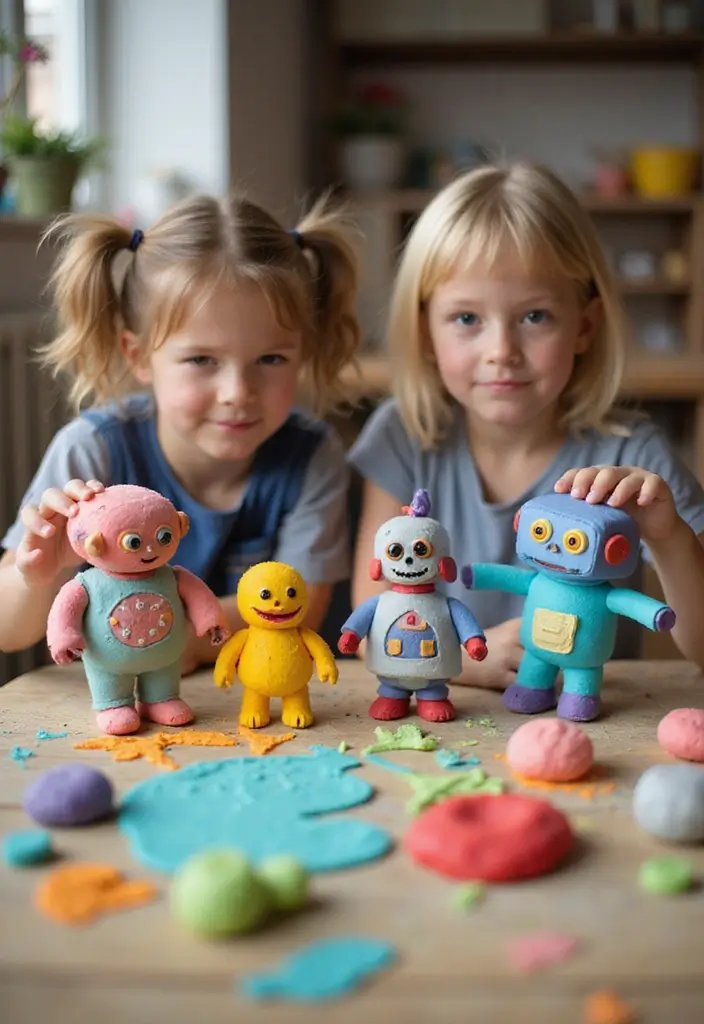
Play Dough Robot Building is a hands on way to mix tech ideas with fun. You feel the dough squish under your fingers. You hear a soft squeak as you roll shapes. This activity grows curiosity about how things work and makes kids think on their feet. Use this to practice planning, teamwork, and explaining what you make. It also builds fine motor skills as your hands shape the dough. Here is why this works for learning.
– Plan your robot with a quick idea and color set.
– Build the body by rolling spheres and tubes of play dough.
– Add limbs and gadgets using toothpicks, bottle caps, beads, or buttons.
– Explain the tech by sharing simple machines that help your robot move.
– Tell a story and give your robot a name and a job.
– Make a mini show where your child explains how it works.
– Keep it safe by using soft dough and supervising toothpicks.
This play dough robot activity turns ideas into a real, shareable build. It invites kids to test, revise, and tell others what they made. Next steps are to try a bigger build or a fun show with friends. You can repeat with a new robot theme next time.
@media(max-width:480px){
@media (max-width: 600px) {
.normal-quiz-iframe { min-height: 570px !important; height: 570px !important; }
}
20. Play Dough Friendship Gifts

Play Dough Friendship Gifts is a warm, hands on way for kids to show they care. You guide them to mold small keepsakes friends will love. Use bright play dough colors to make heart shapes, little tokens, or cute character figures. The act teaches kindness and the joy of giving.
Here is how you do it.
– Gather soft dough, a rolling pin, cookie cutters, and safe markers or small ribbons.
– Pick a friend and a simple idea. A heart, a smiling face, or a tiny flower works well.
– Shape slowly. Let your child press, roll, and pinch. Talk about what each shape means.
– Add a personal touch. Stamp a name, initials, or a short message on the dough.
– Pair with a card. A brief note or a doodled drawing makes the gift feel complete.
– Decorate. Add tiny beads, buttons, or a ribbon to finish.
Next steps: share the story of friendship. Ask, “What do you like best about your friend?” Keep the moment kind and positive. When you give the gift, explain that it was made with care just for them.
Why it helps: kids practice sharing, listening, and empathy. It also boosts fine motor skills and color awareness.
Safety note: supervise younger kids to avoid small parts.
21. Play Dough Superheroes
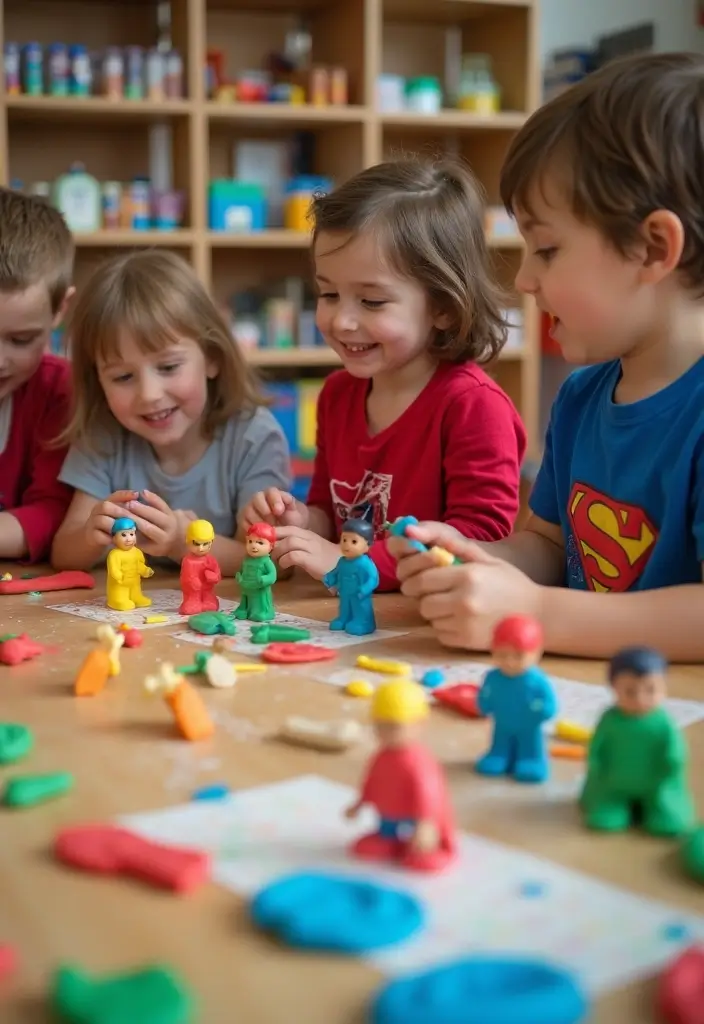
Play Dough Superheroes gives you a quick, kid-friendly way to mix crafting with big ideas. You’ll see imagination soar as your child shapes brave characters and designs their own powers. To start, let them pick a hero or invent someone new with unique abilities. That choice sets the stage for creative play and easy storytelling.
Here is how you Can run the activity:
– Build the hero’s body. Roll, pinch, and smooth until you have a head, torso, arms, and legs.
– Add costumes and gear. Create a cape, mask, or shield in bright colors to show power.
– Name the hero and name the powers. Keep it simple and fun so you can use it in a story later.
Use play time to spark conversation. Ask your child what makes a hero brave. How would their hero help a friend in trouble? Let them narrate quick scenes where the character saves the day. You guide by posing friendly prompts and cheering ideas.
Extra Ideas:
– Build a superhero city with the dough to protect. Let your hero patrol the streets and rescue pretend citizens.
– Talk about hero traits like bravery, kindness, and honesty. Compare actions your heroes take with these traits.
What you’ll need:
– Non-toxic play dough in 2–3 colors
– Simple tools: a rolling pin, plastic knife, bottle cap for a shield
Next steps: set a timer for a short session, then switch to a storytelling prompt. This mix of crafting and talking helps kids practice imagination, storytelling, and social thinking while they play.
22. Play Dough Cooking Class
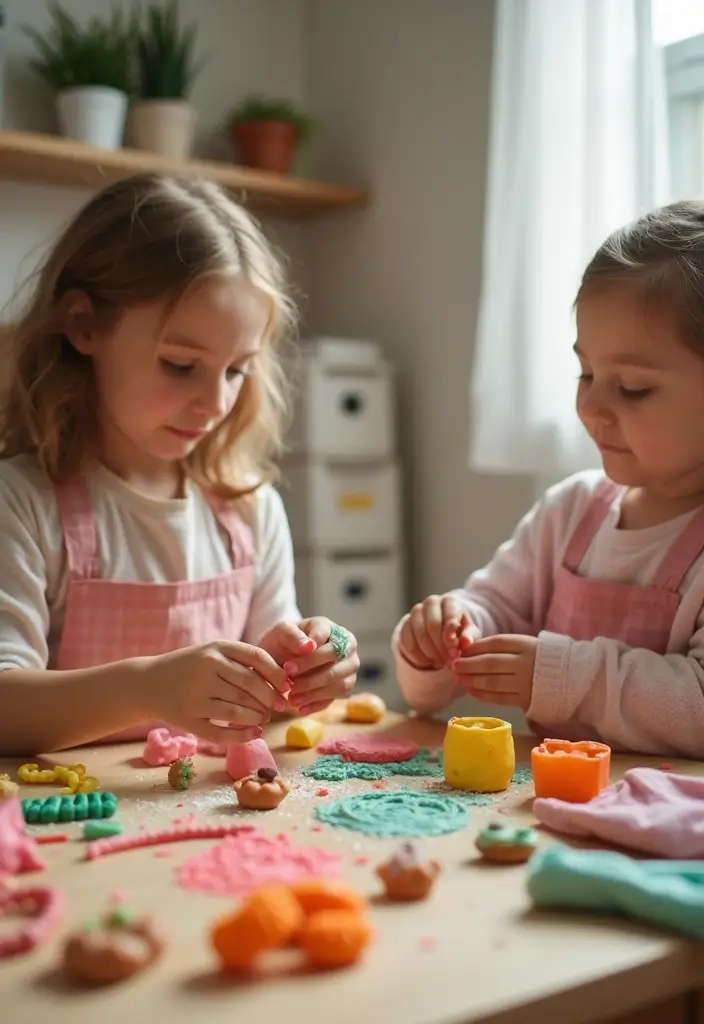
Looking for a mess-free way to teach meals and nutrition? The Play Dough Cooking Class lets kids cook in their own world. They shape pizzas, burgers, and cakes from soft dough. It turns learning about food into a fun game.
Here is why this activity helps: hands-on play builds focus and helps kids think about how food works. They press, roll, and decorate while chatting about tastes, steps, and the food groups. You see ideas click as they pretend to follow a recipe or plan a snack.
– Set up a mini kitchen with safe utensils, plates, and a pretend oven. Keep the surface wipeable so cleanup is quick.
– Shape and chat about ingredients, textures, and how mixing changes a dish. Tie in simple nutrition and portion sizes.
– Play restaurant by making a short menu. Have kids describe items and explain why each one fits a balanced meal.
What you gain: stronger fine motor skills, early math with counting toppings, and clearer talking about meals. It’s creative play that builds confidence in cooking ideas without real heat.
Next steps: add pretend receipts, tasting notes, and a quick cleanup routine. After this, try a real snack time to compare with the pretend dishes.
23. Play Dough Travel Adventures
Play Dough Travel Adventures
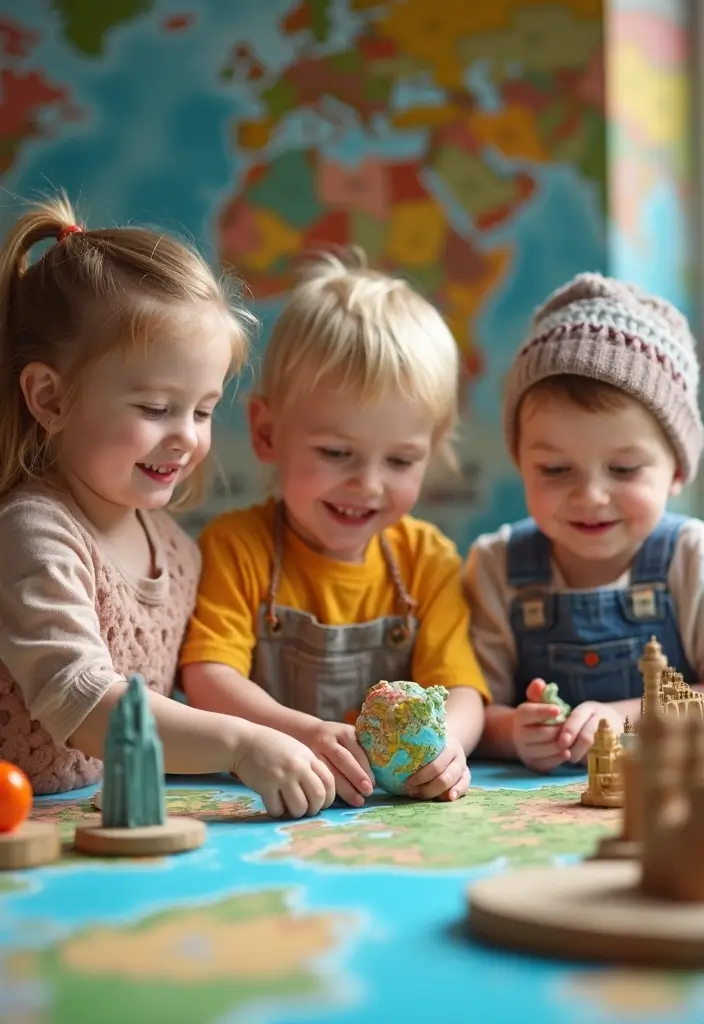
You want your kids to see the world without leaving the room. Play dough helps them travel through sights, sounds, and stories.
Here is why this idea works. It sparks curiosity. It makes geography feel real. It starts honest talk about different ways people live.
Let’s break it down into easy steps.
– Pick a region or country. Keep it simple. A city landmark or a famous symbol makes a strong starting point.
– Mold recognizable structures or items. Think of a tower, a temple roof, a bridge, or a traditional dress.
– Add a dough map. Place pieces on a map towel or tray to show where the region sits.
– Talk about culture as you mold. Mention food, music, colors, and daily life. Ask questions like, What do people wear here? What do they eat?
– Use colors to tell stories. Red, white, and blue for a flag. Green for parks. Yellow for sun and warmth.
Extra ideas:
– Create a travel scene with a tiny dough person moving from place to place.
– Compare two cultures by describing what you made and why.
This activity broadens horizons while keeping play simple, tasty, and educational.
Keep scraps tidy and let kids explain their choices. On days with rain, you can still travel the world this way.
24. Play Dough Color Mixing Station

If you want a clear, hands on way to teach color mixing, try a Play Dough Color Mixing Station. It puts color theory in kids’ hands and sparks creativity.
What you’ll need
– red, blue, yellow play dough in small piles
– green, orange, purple if you have them
– paper plates or small bowls
– a tray or placemat to keep things tidy
– a color chart or printed swatches
– a plastic knife or spoon for mixing
How to set up
Place the dough pots in a row and set the chart nearby. This works on a classroom table or a kitchen counter. Invite kids to pick two colors and knead them together. They watch as new colors appear before their eyes.
What kids learn
They learn that red, blue, and yellow are primary colors. Mixing two primaries makes a secondary color. They compare shades by layering more of one color. This helps them see color theory in a real way.
Tips and variations
– Use a color chart to name the shades they make.
– Talk about warm colors vs cool colors and how they feel.
Keep the station ready for quick drop-ins and let kids build tiny color stories with the shapes they form.
@media(max-width:480px){
25. Play Dough Puppetry
Play Dough Puppetry
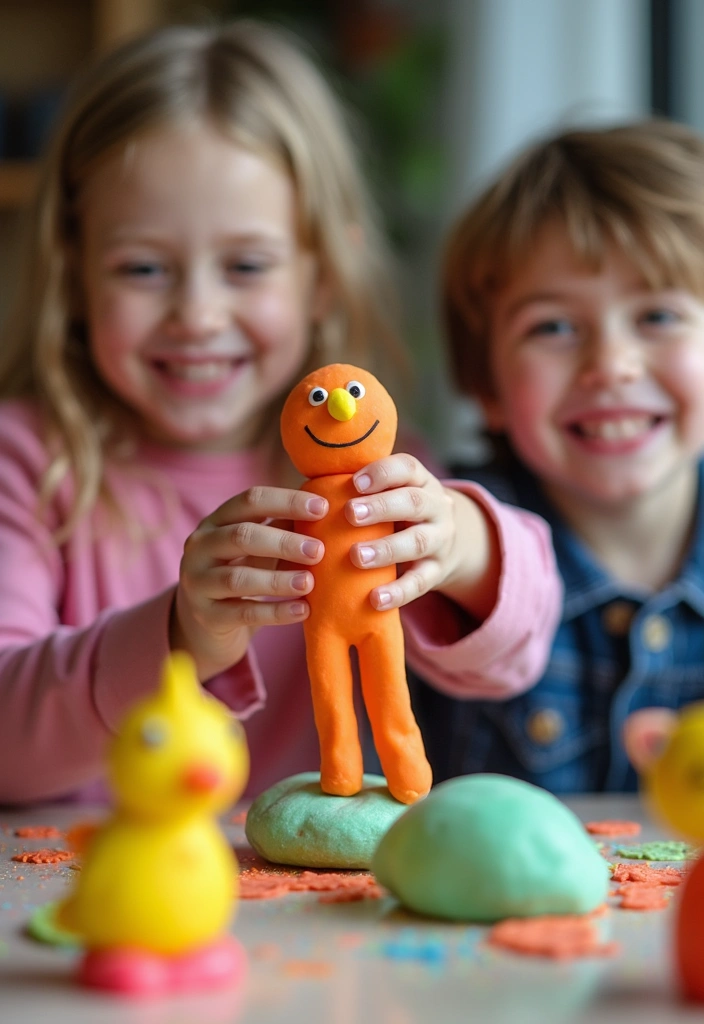
Here is why you should try this. Play dough puppetry lets kids tell stories with their hands and dough. You shape characters, animals, or funny shapes. Then you stage a quick puppet show for family or friends. It sounds simple, yet it builds focus, rhythm, and clear speech.
Next steps: set up a tiny stage and keep a few handy props. Use bright dough colors to make characters stand out. You can draw a simple curtain on a sheet or poster board.
How to run it:
– Create 2-4 characters. Keep shapes small enough to hold.
– Give each figure a voice or a touch of motion.
– Act out a short scene. Pause to describe what happens.
– Let your audience react with questions or cheers.
Extra ideas:
– Use simple props like a cardboard wand, a hat, or a scarf to add flair.
– Talk about story elements as you play: setting, problem, and solution.
This activity builds confidence and a love for stories and theater. It’s fun, educational, and easy to start with common kitchen supplies.
Keep it fresh by swapping scenes or characters. Set a short time for practice, invite a friend to watch, and jot down what kids enjoyed. You can even film a tiny show.
@media(max-width:480px){
26. Play Dough Olympics

– Play Dough Olympics gives you a plan to mix motion with craft.
– You set up several quick stations and a simple scoring sheet.
– Children use dough to meet fun goals at each station.
– Stations include the tallest tower, the fastest car, and the most unique character.
– The rules stay the same to keep things fair and easy.
– This activity strengthens fine motor skills as kids roll, pinch, and press.
– It also builds teamwork when kids cheer for teammates and share tools.
– You can keep the pace light with noncompetitive rounds too.
– Extra ideas are simple: dough medals for winners and short athlete stories.
– Use bright dough colors, rolling pins, and cookie cutters to add texture.
– Plan a 30 to 40 minute session with quick setup and wrap-up.
– Create a small scoring card: 1 point for meeting the goal, 1 for teamwork, 1 for creativity.
– After the games, talk about fair play and cheering for others.
– This activity adapts to home, classroom, or party settings.
– Tips: keep supplies on a tray, use a timer, and rotate roles.
– Capture smiles with a quick photo to remember the fun.
– Remind everyone to clean up together after the event.
– Keep safety in mind and show kindness to all players.
@media(max-width:480px){
27. Play Dough Mosaic Art
Play Dough Mosaic Art
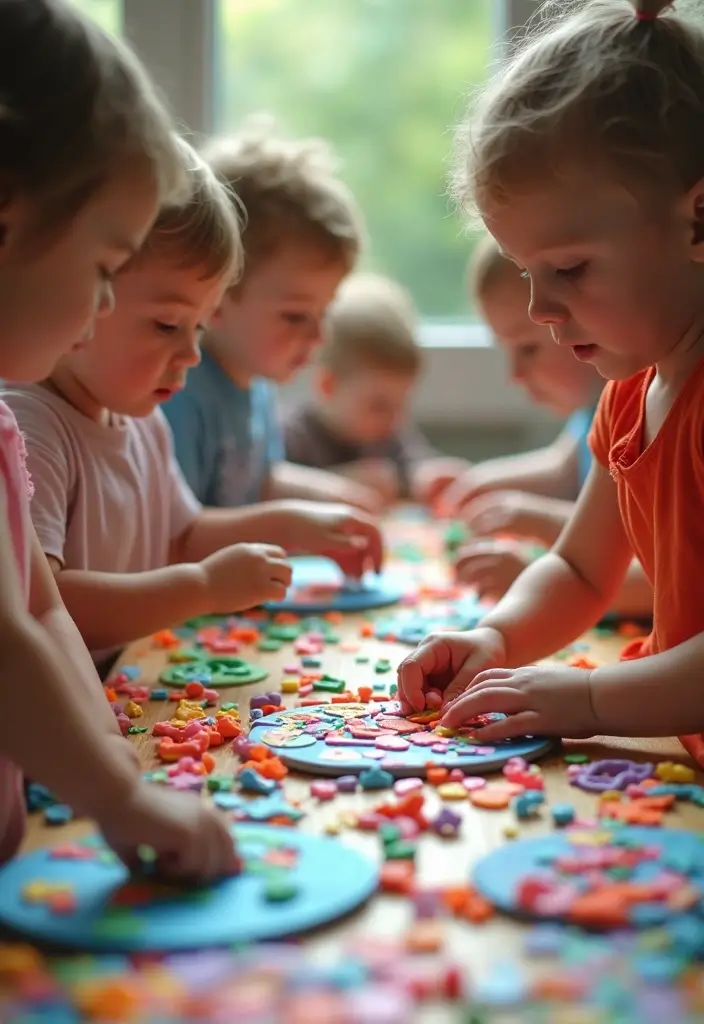
You want a craft that is fun and helps tiny hands get stronger. Play dough mosaic art fits. It blends creativity with fine motor work. Kids pinch and roll small dough bits into tiny tiles, then press them onto a surface to form a picture. The dough feels soft in fingers and the colors shine as they fit together.
Here is why this works. Small pieces train finger control. Laying pieces in a simple grid builds patience. Color choices teach balance and contrast. You can mix warm and cool colors to see how mood shifts in a single image.
Let’s break it down into steps.
– 1) Choose a sturdy base.
– 2) Roll tiny chips, beads, or slabs.
– 3) Place pieces one by one, aiming for a neat edge.
– 4) Step back and adjust for symmetry and color balance.
Next steps. Use templates to guide patterns. You can print simple mosaic outlines and have kids fill them with color chips. Talk about famous mosaics from around the world and compare shapes, spaces, and rhythm.
Stored well, this activity stays fresh. You can change colors, switch the base, or add glitter for sparkle at moments of excitement. It never feels rushed, and kids learn to slow down.
@media(max-width:480px){
Conclusion
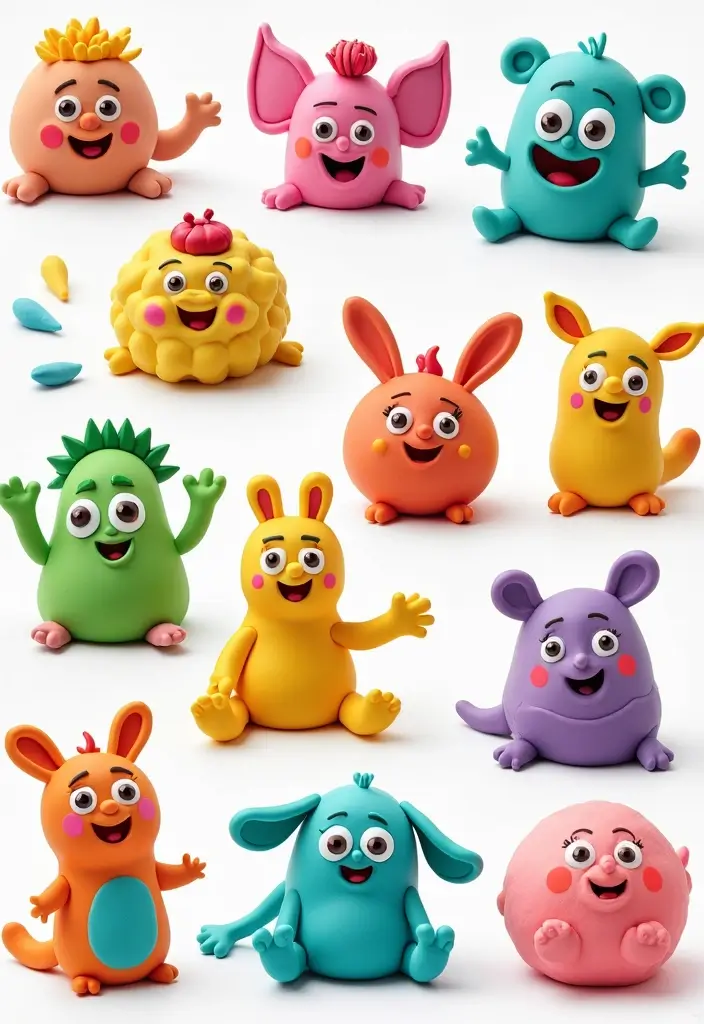
These 27 play dough DIY ideas not only promise hours of fun but also serve as valuable educational experiences!
From building fine motor skills to sparking creativity and critical thinking, play dough activities are versatile tools in early childhood education. Embrace the joy of learning through play and watch your little ones soar in their imaginative worlds. Now it’s your turn—what will you create with play dough today?
Note: We aim to provide accurate product links, but some may occasionally expire or become unavailable. If this happens, please search directly on Amazon for the product or a suitable alternative.
This post contains Amazon affiliate links, meaning I may earn a small commission if you purchase through my links, at no extra cost to you.
Related Topics
play dough diy
sensory play
educational crafts
homemade play dough
creative play ideas
kid-friendly activities
easy recipes
hands-on learning
seasonal crafts
fine motor skills
color mixing
play dough games