
I’ve tested enough brewing kits to know the difference between a weekend project and a kitchen nightmare.
The 2026 lineup has something for everyone, from the iGulu F1’s push-button automation (set it, forget it, drink it) to the BrewDemon’s clever siphon-free valve that saves your floors.
Small spaces? The Pinter 3 fits in an apartment cabinet.
Traditionalists get 5-gallon setups with glass carboys and real heft.
But here’s what nobody tells you: size matters more than style when you’re starting out.
Want to know which kit actually delivers drinkable beer without the headaches?
Mr. Beer 4-Gallon DIY Home Brewing Kit

Easy Home Brew - This all-in-one kit includes everything you need, from fermentation equipment to supplies and ingredients, making it the perfect kit for beer enthusiasts....
If you’re hunting for a home brewing kit that won’t eat up your whole weekend, I think I’ve found your match.
The Mr. Beer 4-Gallon DIY kit gets you brewing in under 30 minutes. Seriously. You just add water to their hopped malt extract, and you’re done with the messy part. No giant pots, no strainers, no specialty gear cluttering your kitchen.
Three to four weeks later, you’re drinking your own beer.
What’s in the box? Everything. Fermentation equipment, supplies, and two complete ingredient packs, Canadian Blonde and Oktoberfest Lager. That’s two batches, four gallons total, right out of the gate.
I love that you can start your second batch immediately while the first ferments. The versatility surprised me, you can craft distinct styles without buying extra refills upfront.
Is it “true” all-grain brewing? No. But does it deliver cold, homemade beer with minimal fuss? Absolutely.
Verdict: Perfect for busy beginners, apartment dwellers, or anyone who values speed over tradition. Skip this if you’re a purist chasing complex recipes.
Best For: Beginners with limited time or space who want quick, easy homemade beer without investing in specialty equipment.
Pros:
- Brews a batch in under 30 minutes with minimal cleanup
- Includes equipment and ingredients for two complete 4-gallon batches
- Requires only common kitchen items—no additional pots, strainers, or gear needed
Cons:
- Uses hopped malt extract rather than traditional all-grain brewing
- Limited to two included styles (Canadian Blonde and Octoberfest Lager) without purchasing additional refills
- 3-4 week wait from brewing to drinking
Recommended Products
Easy Home Brew - This all-in-one kit includes everything you need, from fermentation equipment to supplies and ingredients, making it the perfect kit for beer enthusiasts.

5 Gallon Beer Ingredient Kit
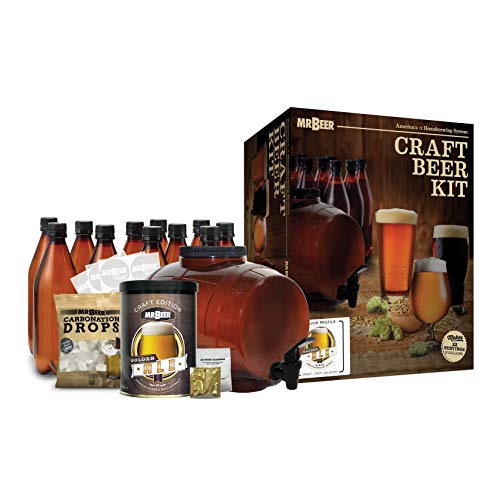
Best beer Kit for Beginners - Our beer kits are designed for the first-time brewer in mind Step-by-Step instructions, simple ingredients and easy to use brewing equipment.
Northern Brewer HomeBrewing Starter Set (Hank’s Hefeweizen)
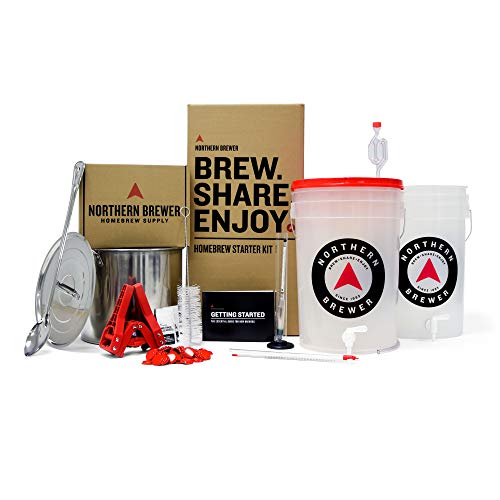
Highest Rated Starter Kit! The Northern Brewer Brew. Share. Enjoy Homebrew Starter Kit is the perfect choice for holiday gifts and beginners, complete with foolproof...
The Northern Brewer Hank’s Hefeweizen Starter Set tackles that fear head-on.
What’s Inside
I love that this kit doesn’t make you hunt for extras. You get a 5-gallon stainless kettle (not cheap aluminum), a 6.5-gallon fermentor with spigot, bottling bucket, bottle filler, capper, plus 60 caps. There’s even a hydrometer and test jar, so you can actually check if fermentation’s working.
The included cleaner/sanitizer? Huge win. Nothing kills a first batch like invisible gunk ruining everything.
The Beer You’ll Make
Hank’s Hefeweizen is a Bavarian-style wheat beer. Expect hazy, deep golden pour with a fluffy white head. The flavor? Soft wheat, clove, ripe banana. Medium-low bitterness, so it won’t punish new drinkers. It’s forgiving, which matters when you’re learning.
How It Compares
Unlike the Mr. Beer kit I covered earlier (smaller batches, simpler process), this Northern Brewer setup commits you to full 5-gallon brews. That’s roughly 50 bottles. More equipment, more bottles to clean, but honestly, way more reward.
Who’s This For?
Beginners who want the real deal without piecing kits together. The foolproof instructions help, though I’ll warn you: 5-gallon brewing demands more space and patience.
Verdict: Want authentic homebrew without the scavenger hunt? This kit delivers.
Best For: Beginners who want an authentic, full-scale homebrewing experience without having to source equipment and ingredients separately.
Pros:
- Complete all-in-one kit with high-quality stainless steel kettle and essential brewing equipment
- Includes testing tools (hydrometer, thermometer) and cleaning supplies for proper fermentation monitoring
- Foolproof instructions and forgiving Hefeweizen recipe ideal for first-time brewers
Cons:
- 5-gallon batch size requires significant storage space and patience
- More equipment to manage and bottles to clean compared to smaller starter kits
- Larger commitment in time and effort than simplified brewing systems like Mr. Beer
Recommended Products

Upgraded 1 Gallon Wine From Fruit Kit

Brewer's Best German Oktoberfest Ingredient Kit

Sufficient Capacity: This alcohol still provides you with a fermentation capacity of 3 gallons. Boiler barrel: 9.8" X 9.8" (25 x 25 cm), condenser: 7.9" X 4.3" (20 x 11 cm), thumper: 7" X 4" (18 x 10 cm), which can ferment up to 11.4 liters of raw materials. Perfect for family-together parties. All parts are made of food-grade materials, including silicone, stainless steel, and copper.
BrewDemon Signature Pro Beer Making Kit with Conical Fermenter (2 Gallon)

NO AIRLOCK OR SIPHON REQUIRED – Our patented conical fermenter traps sediment safely at the bottom for zero mess. Features a unique vent plug to let CO2 escape while...
Why fight with siphons when this kit eliminates them entirely? The BrewDemon Signature Pro comes with a bottle filling valve that means no more awkward tubing, no mess, no fuss. I love that.
The conical fermenter is the real star here. Sediment settles at the bottom point, so your beer stays clearer. That’s pro-level design in a 2-gallon home kit.
You get everything included: quart bottles, the filling valve, no extra jug needed. BrewDemon’s the only 2-gallon kit I’ve found that throws in bottles. That’s value I appreciate.
Brewing takes fifteen minutes on the stove. The One Evil Pilsner recipe, crafted from New Zealand’s Speight’s brewery tradition, delivers light, smooth, refreshing results. Ingredients won’t expire, either. Add honey, apple, whatever secret twist you want.
Who’s this for?
- Apartment brewers wanting compact setup
- Beginners scared of complexity
- Anyone who’s spilled beer siphoning (been there)
Verdict: If you want pro features without pro headaches, this kit’s your answer. I’m recommending it for kitchen brewers who value simplicity that actually works.
Best For: Apartment brewers, beginners intimidated by complex setups, and anyone who has spilled beer while siphoning who want pro-level features without the associated headaches.
Pros:
- No airlock or siphon needed thanks to the included bottle filling valve, eliminating mess and awkward tubing
- Conical fermenter design keeps beer clearer by letting sediment settle at the bottom point
- Everything included: quart bottles, filling valve, and non-perishable ingredients with a 15-minute stove-top brewing time
Cons:
- Limited to 2-gallon batches, which may not satisfy brewers wanting larger production volumes
- Only one recipe style included (One Evil Pilsner), requiring additional purchases for variety
- 2T size specification suggests limited scalability or upgrade path within the same product line
Recommended Products

Professional Brewing Equipment: This home brew kettle set is equipped with a stainless-steel brewing pot, thermometer, ball valve, and other small beer brewing accessories, making it suitable for crafting a variety of beers. From smooth ales to delicious porters and hopped beers, it's the first choice for brewing enthusiasts. With a large 5-gallon capacity, this brew pot is ideal for home beer brewing, cooking, boiling water, dyeing fabrics, or any activity that requires a large volume.

【Standard Size】The 1/2-inch weld-free bulkhead connector fits a 7/8-inch kettle hole, ensuring a hassle-free installation of your brewing equipment. Suitable for homebrew kettles, wort barrels, condensate tanks, and more.
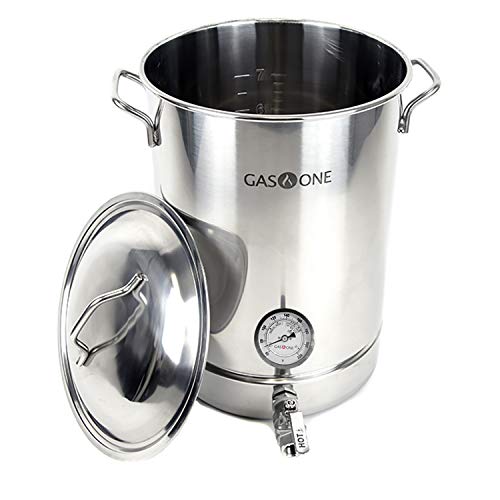
HIGH QUALITY STAINLESS STEEL- Very easy to clean, Long lasting, Safe and durable, Good heat conduction, Sleek look
Craft a Brew Hefeweizen Beer Recipe Kit

BEER INGREDIENT KIT – It’s bad luck to leave a carboy empty. Restock your beer making kit with the home brewing ingredients you need to brew your next beer of the month,...
Looking for a reliable way to restock your home brewery? I’ve found the Craft a Brew Hefeweizen Beer Recipe Kit delivers serious value without cutting corners on quality.
What’s Inside
This kit packs everything you need for a 5-gallon batch, that’s roughly 50 beers. You get dry malt extract, specialty grains, hops, yeast, and a grain steeping bag. No hunting down separate ingredients or guessing at measurements.
The Style
I’m partial to a good Hefeweizen, and this Bavarian wheat beer hits that silky, smooth profile I crave year-round. The banana and clove notes come through clean, not muddled like some cheaper kits.
Build Quality
Craft a Brew assembles these by hand in Orlando, Florida. I appreciate their environmental focus, too. The packaging feels purposeful, not wasteful.
Who’s It For?
This is strictly an ingredient refill, so you’ll need your own equipment. Got a fermenter and basic tools? Perfect. Starting from scratch? Look elsewhere first.
My Take
The ingredients taste fresh, the instructions are clear, and I keep coming back for restocks. For homebrewers who want consistent results, this kit earns its spot in my rotation.
Best For: Homebrewers with existing equipment who want a reliable way to brew a quality German-style Hefeweizen without sourcing ingredients separately.
Pros:
- Complete 5-gallon ingredient kit with fresh, high-quality components eliminates guesswork and shopping hassle
- Delivers authentic Bavarian wheat beer flavor with clean banana and clove notes
- Environmentally conscious packaging and hand-assembled quality from a US-based manufacturer
Cons:
- Equipment not included, making it unsuitable for beginners starting from scratch
- Limited to single beer style (Hefeweizen) with no variety or customization options in the kit
- 5-gallon batch size may be too large for casual brewers or those with limited storage space
Recommended Products

One of the signature brews of Bavaria, Hefeweizen is a medium-bodied, effervescent wheat beer practically exploding with yeast and wheat malt character

HEFEWEIZEN BREW – A great wheat beer to enjoy year round. Our Hefeweizen has a silky smooth mouth feel with tastes of citrus, clove and banana.
BEER INGREDIENT KIT – It’s bad luck to leave a carboy empty. Restock your beer making kit with the home brewing ingredients you need to brew your next beer of the month, including dry malt extract, hops, grains, yeast, and a grain steeping bag.
Pacific Coast IPA Beer Ingredient Kit

Pacific Coast IPA Ingredient Kit IBUs: 63-67 Kit Makes 5 Gallons Difficulty: Easy Ingredient Kit Does Not Contain Alcohol
What makes a great IPA kit for beginners? Balance, mostly. You want hops that punch without overwhelming, and bitterness that’s crisp, not brutal. The Brewers Best Pacific Coast IPA Kit nails this sweet spot.
At 63-67 IBUs, this 5-gallon kit delivers genuine West Coast character: pine, citrus, and that clean, dry finish that made IPAs famous. (IBU means International Bitterness Units, by the way. Higher equals hoppier.) The “Easy” difficulty rating isn’t marketing fluff. I’ve seen first-timers nail this on their initial brew day.
The ingredient quality holds up. You’re getting proper malt extract and fresh hops, not dusty packets from a warehouse. Five gallons means roughly fifty bottles, enough to share, hoard, or embarrass yourself at poker night.
My gripe? The “Multi” color listing tells you nothing. It’s amber. Copper-amber. You’ll figure that out when you brew it.
Verdict: Want classic American IPA without the steep learning curve? This kit’s your gateway drug. Hefeweizen fans looking to branch out, start here. Hopheads seeking punishment, look elsewhere.
Best For: First-time homebrewers and beer enthusiasts transitioning from lighter styles who want a classic West Coast IPA experience without technical complexity.
Pros:
- Beginner-friendly “Easy” difficulty rating with genuine IPA character (63-67 IBUs)
- Quality fresh ingredients including proper malt extract and hops
- 5-gallon yield produces ~50 bottles for sharing or personal stock
Cons:
- “Multi” color listing is uninformative (actual color is copper-amber)
- IBU range may disappoint experienced hopheads seeking extreme bitterness
- Requires additional equipment (not included) to complete brewing process
Recommended Products
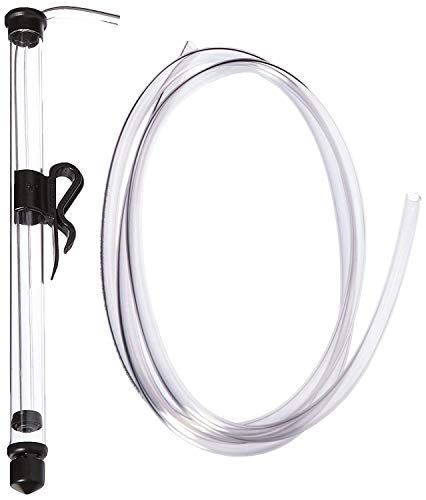
14" LONG MINI AUTO SIPHON: Will fit into openings as small as 1" or 25mm. Please Measure your container to confirm fitment in Height and size of the opening - Designed for small batch brewing: The Fermtech Auto-Siphon Mini is the ideal tool for transferring liquids in small batches, such as beer, tea, or kombucha. It’s great for use with wine accessories, a wine-making kit, or a fermentation kit. Its compact size is ideal for hobbyists or anyone working with limited quantities. The siphon ensures smooth liquid movement between containers, minimizing spills and reducing waste during brewing, bottling, or fermentation tasks.

EFFICIENT & EASY SIPHONING FOR HOME BREWING – The Fermtech Mini 14" Deluxe Siphoning Kit makes transferring your home brew effortless! This complete siphon kit includes a high-quality siphon tube, brewing auto siphon, and food-grade hose for a smooth, mess-free transfer of wine, beer, mead, or other craft beverages. A must-have for bottling and brewing equipment!
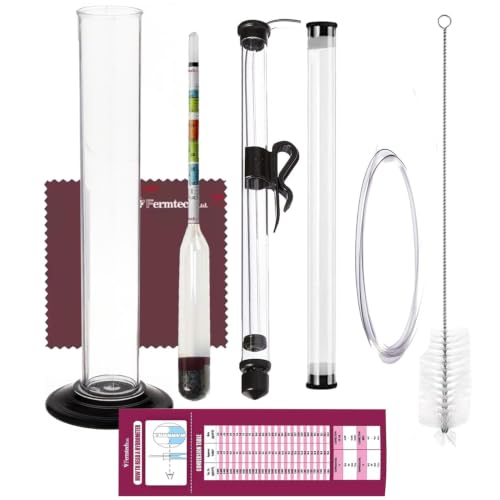
Home Brewing Kit: This complete Fermtech kit includes 1 Mini Auto Siphon (14"), 6 feet of food-safe tubing with clamp, 1 Glass Triple Scale Hydrometer, 1 Clear Plastic Test Jar (100 ml), 1 Stainless Steel Cleaning Brush, 1 Microfiber Cloth, 1 Durable Storage Case, and an Instruction Sheet with Conversion Chart, everything needed for smooth liquid transfer and accurate testing.
VEVOR 8 Gallon Stainless Steel Home Brewing Kit

Large Capacity Brewing: The VEVOR electric brewing system features an 8 gal / 30L kettle can mash up to 5 kg of malt per batch—ideal for home gatherings or small craft...
You’ll want something bigger, eventually.
That’s where the VEVOR 8 Gallon Stainless Steel Home Brewing Kit steps in. I’m talking about an 8 gallon / 30 liter kettle that handles up to 5 kg of malt per batch. Lagers, IPAs, ales, porters, stouts: it brews them all.
The high-power mash and boil design heats fast, and electronic controls with precise sensors let me dial in exact temperatures. No guesswork, no scorched wort.
The 304 stainless steel kettle, at 0.5 mm wall thickness, resists deformation. Its smooth, seamless interior wipes clean easily, and residue buildup stays minimal. I watch my brew through the glass lid, route tubes through the hollow midsection, and drain cooled wort from the bottom spigot.
Compact enough for kitchens, garages, basements, or patios. Silver finish, straightforward setup.
Who’s this for? Beginners ready to skip small-batch frustration, and intermediate brewers wanting precise control without custom builds.
Verdict: solid value, real capacity, electronics that actually work.
Best For: Beginners ready to skip small-batch frustration and intermediate brewers wanting precise temperature control without building a custom system.
Pros:
- 8 gallon capacity with electronic temperature controls and precise sensors eliminates guesswork during mashing
- 304 stainless steel construction with seamless interior resists deformation and cleans easily
- Compact, versatile design fits kitchens, garages, or patios with convenient glass lid, tube routing, and bottom spigot
Cons:
- 0.5 mm wall thickness is relatively thin compared to premium brewing kettles
- 5 kg malt maximum may limit grain bills for high-gravity or larger batches
- No mention of built-in pump, recirculation, or advanced automation features found in higher-end systems
Recommended Products

Large Capacity Brewing: The VEVOR electric brewing system features an 8 gal / 30L kettle can mash up to 5 kg of malt per batch—ideal for home gatherings or small craft batches. Brew diverse beers like lager, IPA, ale, porter, or stout for true brewing freedom

MAKE YOUR OWN BEER – Be more than a beer drinker; be a beer maker! This craft beer kit turns beer lovers into beer brewers and gives you all the independence, experience, and fun that comes with brewing your own home beer.
Craft A Brew American Pale Ale Beer Making Kit
MAKE YOUR OWN BEER – Be more than a beer drinker; be a beer maker! This craft beer kit turns beer lovers into beer brewers and gives you all the independence, experience,...
Who’s this kit really for?
I’d say this one’s for the curious beginner who wants to dip a toe into homebrewing without drowning in equipment. The Craft A Brew American Pale Ale kit keeps things simple at one gallon, which means you’re not stuck with five gallons of mediocre beer if something goes wrong.
What You’re Getting
Everything arrives hand-assembled in Orlando, Florida, with quality ingredients and a guide that actually teaches you the process. The American Pale Ale itself delivers that crisp, hoppy bitterness you’d expect, light on malt but plenty patriotic (they call it “BREW-S-A,” which I’ll let slide).
The Reality Check
Here’s the thing: one gallon brews roughly ten bottles. That’s perfect for experimenting, but you’ll outgrow it fast if you catch the brewing bug. The “elegant design” they’re proud of? It looks nice on your counter, sure. But function matters more than form when you’re sanitizing equipment at midnight.
My Take
I appreciate the environmentally sustainable angle, and the kit genuinely converts beer lovers into brewers. Just know you’ll probably want to upgrade within a year if you love it.
Best For: Curious beginners who want a low-risk introduction to homebrewing without committing to large batches or expensive equipment.
Pros:
- Complete one-gallon starter kit with quality ingredients and educational guide, making it easy for first-timers to learn the brewing process
- Small batch size minimizes waste if mistakes happen and allows for affordable experimentation
- Hand-assembled, environmentally sustainable design offers accessible, responsible entry into homebrewing
Cons:
- One-gallon yield (roughly ten bottles) quickly becomes limiting for anyone who develops serious interest in brewing
- “Elegant design” prioritizes aesthetics over practical functionality during late-night brewing and sanitization sessions
- Kit is essentially a temporary stepping stone—most users will need to upgrade within a year if they enjoy the hobby
Recommended Products

Complete Home Brewing Kit for Beginners: This wine making kit provides everything you need for wine making. No complicated steps or fresh fruit required, simply pour in one 64 oz bottle + one 46 oz bottle of juice to perfectly fill the 1-gallon fermenter. A clear step-by-step guide makes this an easy and enjoyable home brewing kit for anyone

New to mead (honey wine) making? No worries; Our mead making kit includes a step-by-step guide that walks you through the entire process

Brewer's Best American Cream Ale
HIVEVINE Wine & Mead Making Kit with Glass Carboy

𝗔𝗟𝗟-𝗜𝗡-𝗢𝗡𝗘 𝗪𝗜𝗡𝗘 & 𝗠𝗘𝗔𝗗 𝗠𝗔𝗞𝗜𝗡𝗚 𝗞𝗜𝗧 Brew your favorite wine or mead at home effortlessly! This...
The HIVEVINE kit isn’t actually a beer brewer, and I’m going to be straight with you about that right now.
I’m still including it because, honestly, if you’re browsing beer kits, you might want to branch out. This thing makes mead and wine, and it’s pretty fantastic at both.
What You’re Getting
The glass carboy (that’s the big glass jug where fermentation happens) comes with a fermenter bucket, hydrometer (it measures sugar content, so you know when it’s done), siphon, and airlock.
It’s premium stuff, reusable, and built to last. No flimsy plastic that cracks after two batches.
The Experience
HiveVine hands you a step-by-step handbook. I found it genuinely easy, not “easy if you’ve already brewed ten batches” easy. You add ingredients, seal it up, and wait.
That’s fermentation for you: patience, not wizardry.
Why It Belongs Here
Here’s my thinking: maybe you want beer. Or maybe, like me, you want options. Mead, fruit wine, traditional grape wine, whatever. You control everything that goes in, no weird preservatives. It inspires real creativity.
Gift potential? Through the roof. Birthdays, holidays, your cousin who won’t stop talking about “craft beverages.”
Verdict: grab this if you want versatility, or pair it with a beer kit and dominate every category.
Best For: Home brewers who want to expand beyond beer into mead and wine making, or anyone seeking a versatile, beginner-friendly fermentation kit with premium reusable equipment.
Pros:
- Includes high-quality, durable glass carboy and reusable components built for long-term use
- Step-by-step handbook makes fermentation genuinely accessible for complete beginners
- Versatile enough to produce mead, fruit wine, or traditional grape wine with full ingredient control
Cons:
- Not designed for beer brewing, limiting appeal for those strictly wanting a beer kit
- Requires patience for fermentation process with no shortcut options
- “Just add ingredients” claim means you must source and purchase all ingredients separately
Recommended Products
Highest Rated Starter Kit! The Northern Brewer Brew. Share. Enjoy Homebrew Starter Kit is the perfect choice for holiday gifts and beginners, complete with foolproof instructions.

Brew Kettle is made from Commercial Quality Stainless Steel, Fully Polished.
Brew Kettle is made from Commercial Quality Stainless Steel, Fully Polished.
iGulu F1 Automated Home Brewing & Fermenter System

[ONE MACHINE, ENDLESS DRINKS]: Craft beer, wine, cider, mead, kombucha, kefir, hard seltzer, sparkling cocktails, cold brew and far more, all from one countertop machine....
Want a brewery that actually thinks for you? The iGulu F1 Automated Home Brewing & Fermenter System delivers exactly that, and I’m genuinely impressed by how thoroughly it removes the guesswork from brewing.
What Makes It Different
Unlike basic starter kits or manual brew buckets, this matte black unit handles everything through Fermentech Control, a built-in system managing temperature (35–104°F), pressure (0–24 PSI), and timing automatically.
You scan an RFID card from iGulu’s kits, hit one button, and walk away. No mashing worries, no thermometer checks, no “did I mess up the hops?” anxiety.
The beverage range surprised me. Beer and cider, sure, but also wine, mead, kombucha, kefir, hard seltzer, even cold brew. That’s versatility I didn’t expect from a single machine.
Real-World Benefits
Freshness lasts up to 30 days in the sealed, pressure-controlled chamber, thanks to an optional CO2 setup and built-in air pump. Natural carbonation happens automatically.
Cleanup actually works because the parts come apart, a rare feature in automated brewing gear.
The Verdict
For beginners terrified of sanitation mistakes, this removes every hurdle.
For experienced brewers, RFID simplicity might feel like training wheels, though custom recipes unlock genuine experimentation. I’d recommend this for busy professionals who want craft results without the hobby commitment, or anyone who’s ruined a batch and sworn off brewing forever.
Best For: Busy professionals and brewing beginners who want craft-quality beer, wine, cider, kombucha, and more without the time commitment, technical knowledge, or cleanup hassle of traditional homebrewing.
Pros:
- Fully automated Fermentech Control eliminates guesswork by managing temperature, pressure, and timing with zero experience required
- RFID one-touch brewing with scan-and-go simplicity, plus flexibility for custom recipes as skills grow
- 30-day freshness in sealed, pressure-controlled chamber with natural carbonation and genuinely removable parts for easy cleanup
Cons:
- RFID simplicity may feel restrictive or like “training wheels” for experienced brewers seeking hands-on control
- Requires proprietary iGulu kits for easiest operation, potentially limiting ingredient sourcing freedom
- Matte black single-color option and countertop footprint may not suit all kitchen aesthetics or spaces
Recommended Products
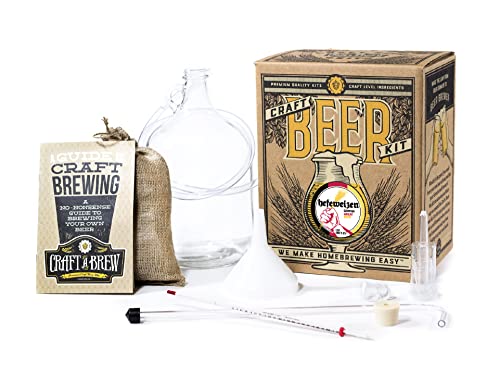
MAKE YOUR OWN BEER – Be more than a beer drinker; be a beer maker! This craft beer kit turns beer lovers into beer brewers and gives you all the independence, experience, and fun that comes with brewing your own home beer.

Beer Making Kit: The My Brew Supply Bavarian Hefeweizen Beer Extract Kit includes all the ingredients you'll need to brew your own beer! This bundle includes 6 lbs Bavarian Wheat Dry Malt Extract, 1 oz German Hallertau Mittelfruh Pellet Hops, German Wheat Ale Yeast, Priming Sugar, Bottle Caps, Grain Bag(s), and Brewing Procedures.

Brewer's Best Dunkelweizen Ingredient Kit
Pinter 3 All-in-One Home Brewing Equipment (Rich Red)

FRESH BEER BREWED AT HOME: Perfect your brewing at home with the Pinter 3, a sleek, all-in-one brewing product that's like a mini keg sized for your fridge (35cm long)....
I’m always looking for gear that doesn’t demand a whole garage to operate, and Pinter’s 35 cm frame fits right where my leftovers go. This Rich Red polymer body weighs next to nothing, yet it holds everything you need for craft beer at home.
The brewing process takes 7–10 days, which feels reasonable. I ferment at room temperature first, then slide the whole unit into my fridge to condition at 0–4°C. The app walks me through each step, no guessing required.
Here’s where it gets interesting: the Active Pour Tap lets me control pressure from high to zero, so I can pour fast or slow depending on my mood. Those haptic textured dials actually help when my hands are wet.
The patent-pending Hopper tech is the standout feature. I can add fresh hops during brewing with select styles, IPAs, lagers, ales, creating that just-hopped sensory experience you can’t bottle. Pinter Packs deliver ingredients straight to my door.
Verdict: Perfect for apartment dwellers who want draft beer without the draft system. Not for batch brewers who need volume.
Best For: Apartment dwellers who want draft beer without the draft system.
Pros:
- Compact, fridge-friendly 35 cm polymer body fits in small spaces
- Active Pour Tap with haptic textured dials enables precise pressure and flow control, even with wet hands
- Patent-pending Hopper tech allows fresh hopping during brewing for enhanced sensory experience
Cons:
- 7–10 day brewing process requires patience
- Limited batch volume compared to traditional home brewing systems
- Beer style selection dependent on availability of Pinter Packs and app ecosystem
Recommended Products

SIMPLIFY BOTTLING : The Fermtech Auto-Siphon streamlines the process of transferring your homemade beverages, such as wine, beer, mead, and kombucha, for hassle-free bottling.


EASY AND EFFICIENT LIQUID TRANSFER: Fermtech's Regular 24" Auto Siphon ensures smooth and effortless liquid transfer for wine, beer, mead, and home brew enthusiasts. With its auto-start feature, this racking cane removes the need for manual siphoning, making it an excellent tool for efficient bottling, racking, and moving your brews from one container to another.
Factors to Consider When Choosing a Home Beer Brewing Kit
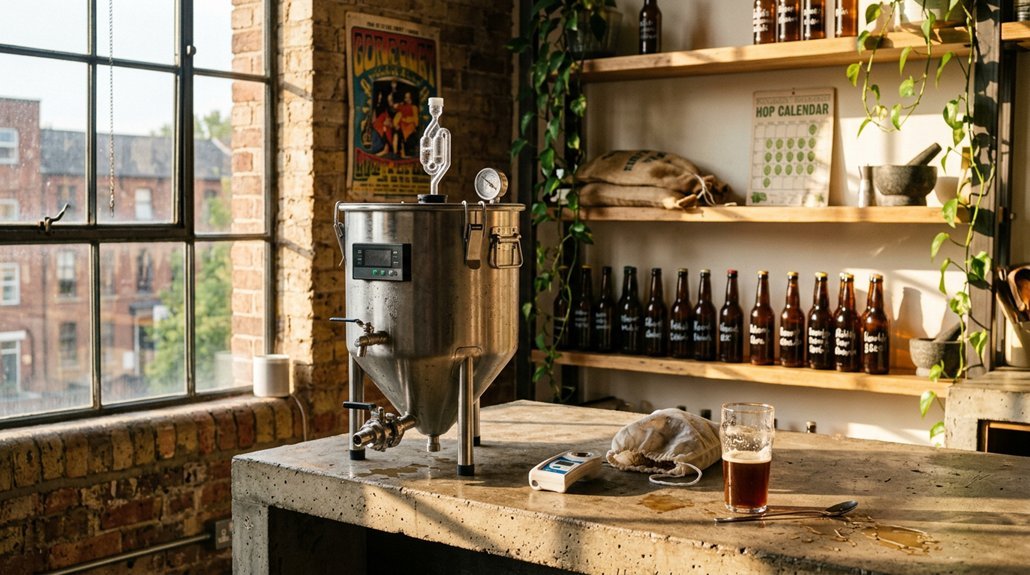
I’ll pick a home brewing kit by weighing five things that actually matter: how much beer it’ll crank out, whether it’s built for newbies or demands some know-how, how many hours you’ll sink into each batch, what hardware’s actually in the box, and if the ingredients are fresh and varied or just basic and boring.
I’ve learned the hard way that a cheap kit with stale malt extract wastes more money than it saves, while an oversized system for a small apartment is just a headache waiting to happen. Let’s break down what each factor means for your setup and your sanity.
Kit Size and Capacity
How much beer do you actually want sitting around your house?
Kit size determines everything. You’ll find options from 1 gallon to 8 gallons, and that choice shapes your entire brewing life.
The Numbers
A 5-gallon kit yields roughly 50 twelve-ounce bottles. A 1-gallon kit?
About 8 to 10 beers. That’s the difference between a party and a quiet Tuesday.
Space Reality Check
Larger kits demand more counter space, more shelf space for fermenting, more storage for finished bottles. I learned this the hard way with my first 5-gallon setup crowding my apartment kitchen.
My Take
If you’re experimenting or short on space, start small. Want to brew regularly without constant supply runs?
Go bigger. Higher capacity means fewer ingredient orders, less hassle.
Brewing Experience Level Required
I’ve watched friends panic-buy elaborate setups, then abandon them in closets. Don’t be that person. Match your kit to your actual experience level, not your ambition.
For Complete Newbies
I recommend all-in-one kits with step-by-step instructions. These systems handle the thinking for you. Automated or semi-automated options, RFID or one-touch brewing, take guesswork out of the equation. No-siphon designs and conical fermenters cut down on mess and handling steps.
Start with 1-gallon or 5-gallon batches, depending how much beer you actually want sitting around.
For Adventurous Beginners
You can handle more complexity. Look for straightforward kits with room to grow. You’ll learn faster with slightly more hands-on equipment.
Skip the Advanced Gear
Kits demanding extra equipment and technical steps? Hard pass for first-timers. The learning curve steepens fast, and frustration kills hobbies.
What’s your comfort level, honestly?
Time Investment for Brewing
When does convenience matter most? For me, it’s active brewing time versus the waiting game.
Most kits take under 30 minutes of hands-on prep. That sounds quick, right? But here’s the catch: you’re still waiting 2–4 weeks total. Fermentation and conditioning can’t be rushed.
I’ve seen options advertising 15–20 minute stove-top sessions, while others demand several hours just to get vessels ready. End-to-end, expect 1–2 days of actual brewing plus 2–3 weeks for primary fermentation, then more conditioning.
Pre-measured ingredients help, I’ll give them that. They trim active time nicely. But you’ve still gotta wait for flavors to mature, no matter what. Patience isn’t optional.
Included Equipment and Components
While you’re waiting those long weeks for fermentation to finish, you might as well make sure you’ve got the right gear from day one.
I always check exactly what’s in the box before I buy. Fermenters, kettles, hydrometers, airlocks, siphons, bottling gear, cleaning supplies: the kit should list everything. Some kits throw in bottles and cappers, others leave you scrambling. That’s annoying.
I look for features that cut down on mess and waste. Conical fermenters let you dump yeast without siphoning, and filling valves save you from tubing nightmares. Small details, big difference.
Don’t forget specialty accessories. Thermometers, tubing, spigots, siphon-free transfer: these make brewing smoother. Check if ingredients come ready-to-use or you’ll shell out more cash later. Nobody likes surprise expenses.
Verdict: beginners need completeness; experienced brewers want upgrade-friendly gear.
Ingredient Quality and Variety
Ingredient quality is the make-or-break factor for how your beer actually tastes in the glass. High-grade malt, hops, and yeast deliver clearer flavor profiles, malty, hoppy, or fruity, that cheap kits simply can’t match.
Variety matters. Kits with diverse malts and yeasts let you brew Hefeweizen one month, IPA the next. I always check for shelf-stable components, nobody wants rushed brew days because ingredients expire Tuesday.
The extract trap: Pre-mixed kits simplify your first batch but lock you into someone else’s recipe. All-grain options cost more upfront but reward you with real control.
Labeling is non-negotiable. Vague “mystery hops” drive me nuts. Specific names, Cascade, Maris Otter, tell you exactly what style you’ll get.
Want flexibility? Prioritize variety and transparent sourcing.
Equipment Durability and Materials
Equipment durability separates weekend brewers from lifers. I’ve learned this the hard way, trust me.
What Actually Holds Up
Stainless steel and high-grade plastics dominate the best kits for good reason. 304 stainless kettles with thick walls? They’re workhorses. No warping, no hot spots wrecking your mash. I’ve watched cheap aluminum bend like a soda can.
Glass carboys look pretty, but one slippery move and you’re mopping seven gallons of wort. Ask me how I know. Premium siphons won’t leach weird flavors, though.
The Detail Work That Matters
Conical fermenters cut sediment, which helps later. (You’ll thank me.)
Check those spigots, lids, valves. Corrosion-resistant fittings, tightly fitted. Leaky hardware ruins brew days, period.
My Take
Weekend dabblers, decent plastic works. Lifers, spring for steel. Your future self, nursing that 2030 barleywine, will appreciate it.
Ease of Cleaning and Maintenance
The cleanup, I’ll be honest, can make or break your love of brewing faster than a bad batch ever will. I’ve scrubbed enough sticky fermenters to know: smooth, seamless interiors matter. Stainless steel or quality plastic resists gunk buildup, saving you serious elbow grease.
Conical fermenters, where yeast collects in a pointed bottom, eliminate messy siphoning. Bottle-filling valves do the same. Fewer transfers mean fewer things to wash, period.
I always check if parts are dishwasher-safe. Hand-washing valves and gaskets gets old fast. Kits with detachable components and minimal pieces disassemble quickly, so you’re not fishing through hardware between batches.
One overlooked plus: non-perishable ingredients. No spoiled malt extract means less emergency cleaning of sticky, fermented messes. Trust me, you’ll thank yourself later.
Cost and Overall Value
Once you’ve got a kit that’s easy to clean, you’ll want to make sure you’re actually getting your money’s worth.
I always start by comparing batch sizes. A 1-gallon kit looks cheap upfront, but you’re brewing barely six bottles. A 5-gallon kit costs more initially, yet your cost per beer drops dramatically. Do the math.
Next, check what’s actually in the box. Some kits include fermenters, kettles, even hydrometers; others leave you buying essentials separately. That “bargain” kit? It adds up fast.
Higher prices often mean built-in features like conical fermenters, which save you from buying upgrades later. I also weigh time-to-drink: quicker kits deliver faster gratification, and that’s real value for impatient beginners.
Don’t ignore ongoing costs. Refills and replacement ingredients hit your wallet repeatedly. Calculate the first year, not just day one.