
Goldilocks knew the frustration of “just right,” and I’m right there with her when it comes to decoupage paper. Too thin? It tears. Too thick? It bubbles.
After ruining more vintage dressers than I care to admit, I’ve finally cracked the code on what actually works in 2026. The five options below aren’t just popular, they’re the papers I keep reordering, each solving a specific headache you probably share.
Vintage Botanical Scrapbook Paper Set (120 Sheets)
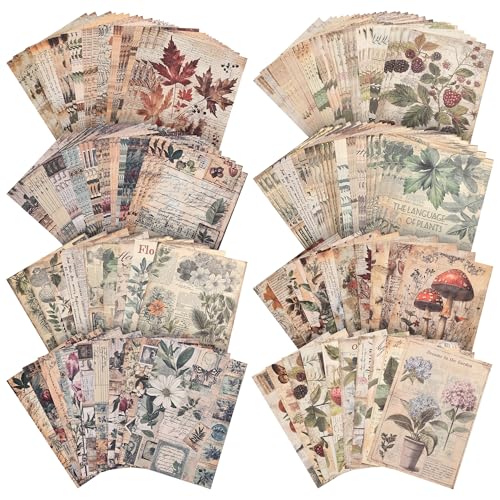
🎨 Exquisite Vintage Botanical Collection - Timeless Nature-Inspired Designs Each of our 120 premium A5 sheets (4 themes × 30 sheets) features hand-drawn,...
someone already did the hard work. The emmoolife Vintage Botanical Scrapbook Paper Set comes with 120 sheets of pre-aged, hand-drawn illustrations. I don’t have to stain, stamp, or distress anything myself.
Why It Works for Decoupage
The four themes give real variety: fruits, florals, botanicals, and enchanted forest scenes. Each A5 sheet feels like it came straight from a 19th-century naturalist’s journal. The foxing spots, tea stains, and faded edges aren’t random; they’re placed with actual care.
The paper itself handles glue well. I’ve layered it onto wood and canvas without tearing or bubbling. It supports light watercolor touches too, which matters when I’m blending edges.
The Catch?
At 30 sheets per theme, I sometimes wish I had more of my favorites. The A5 size limits larger projects, so I plan accordingly.
Verdict
Grab this if you want authentic vintage looks without the mess of DIY aging. Skip it if you need oversized sheets or plain backgrounds.
Best For: Crafters who want authentic vintage botanical aesthetics without the time and mess of DIY aging techniques.
Pros:
- Pre-aged designs with thoughtful details like foxing spots, tea stains, and faded edges eliminate manual distressing work
- Paper quality holds up well to glue application on various surfaces without tearing or bubbling
- Four distinct themes provide versatile options for different project styles and moods
Cons:
- Limited to 30 sheets per theme, which may run out quickly for favorite designs
- A5 size restricts use for larger projects requiring bigger paper dimensions
Recommended Products
🎨 Exquisite Vintage Botanical Collection - Timeless Nature-Inspired Designs Each of our 120 premium A5 sheets (4 themes × 30 sheets) features hand-drawn, 19th-century-style illustrations of fruits, flowers, plants and forest scenes. The designs mimic antique botanical journals with delicate details like faded edges, subtle tea stains, and handwritten-style script accents that evoke the charm of Victorian-era correspondence.

VINTAGE DESIGN: Beautifully aged, coffee-dyed paper sheets featuring detailed botanical mushroom illustrations perfect for vintage-style crafting projects

NatNarr 30 Pack Decoupage Napkins, 30 Styles Floral Paper Napkins

Package Includes: This set features 30 unique napkin designs, perfect for craft enthusiasts looking for a variety of patterns to inspire their DIY projects and decoupage...
For crafters who want variety without buying thirty separate packs, this NatNarr bundle delivers.
Let me break down why I’m keeping these in my craft room. The FSC-certified paper feels substantial in my hands, not that flimsy stuff that tears mid-project. Each napkin unfolds to 13 inches square, giving me real estate to work with, yet they store compactly when folded.
Thirty unique floral designs? That’s a game-changer. I’ve cycled through classic roses, contemporary abstracts, and everything between. No more project fatigue from repeating the same pattern.
The prints stay vibrant, too; I’ve tested this on a wine bottle that’s been sitting in direct window light for months. No fading yet.
Here’s where they shine: versatility. I decoupaged shells last weekend, moved to scrapbook pages Monday, and I’m eyeing a photo frame refresh for Friday. The paper resists warping better than standard napkins, though you’ll still want to seal properly.
My gripe? Some designs lean traditional; if you’re ultra-modern, maybe skip this. But for mixed media? Perfect.
Who needs this: beginners building stash, gift-makers wanting options, anyone tired of single-design packs. Who doesn’t: minimalists, strict contemporary aesthetes.
Verdict: grab it for variety, stay for durability.
Best For: Crafters who want variety in their projects without purchasing multiple packs, including beginners building their stash, gift-makers needing options, and mixed media artists who appreciate both classic and contemporary floral designs.
Pros:
- 30 unique floral designs eliminate project fatigue and provide extensive creative variety
- FSC-certified, thick paper resists tearing, warping, and fading better than standard napkins
- Large 13-inch unfolded size offers substantial working area while storing compactly when folded
Cons:
- Some designs lean traditional, which may not appeal to those with ultra-modern aesthetics
- Requires proper sealing to prevent warping despite improved resistance
- Not ideal for minimalists or strict contemporary design enthusiasts
Recommended Products

ELEGANT CHINOISERIE DESIGN: Features intricate vintage-style floral and oriental-inspired artwork printed on premium A4 sheets (8.3 x 11.7 inches), ideal for classic and luxury décor projects.

Discover a new way to decorate your furniture and decor pieces with our Redesign Decoupage Decor Tissue Paper

【Versatile for Creative Projects】16 sheets 4.1x5.8 inch forest fairy style scrapbook pape perfect for crafting cards, scrapbooks, art journals, and DIY decor. Easily cut, fold, or layer with compact storage convenience
SIBLYMONA Vintage Floral Rice Paper for Crafts (200Pcs)

1. 【Vintage Aesthetic with Abundant Variety - 200 Unique Sheets】Immerse yourself in creativity with our "Yesterday's Story" collection. This pack includes 200 distinct...
The SIBLYMONA set is perfect for vintage-loving crafters who want variety without hunting down individual sheets. I’m talking 200 distinct antique-looking papers, split between two moods: Faded Memories (earthy, nostalgic) and Purple Dreams (soft, romantic).
What makes it work: The rice paper itself. It’s lightweight, tears cleanly, and drinks up Mod Podge without bubbling or warping. I’ve layered these on boxes, furniture, even glass jars, and the floral motifs stay crisp.
The permeability matters here: glue seeps through evenly, so you don’t get those annoying dry pockets.
Size reality check: Two dimensions (5.7″ x 4.1″ and 3.4″ x 5.1″) cover most project bases. Not huge, but that’s the point. These are detail sheets, not background wrappers.
The catch? 200 sheets in a bag this compact means you’ll want to organize them yourself. I spent twenty minutes sorting by theme.
Worth it? Absolutely. For junk journals, card making, or upcycling beginners who need room to experiment and mess up, this pack removes the pressure of “wasting” expensive paper.
Best For: Vintage-loving crafters from beginners to experienced who want abundant variety for junk journals, card making, scrapbooking, and furniture upcycling without the pressure of wasting expensive individual sheets.
Pros:
- 200 distinct antique-looking designs across two cohesive themes provide exceptional variety and value for experimentation
- Lightweight rice paper with excellent permeability absorbs glues and Mod Podge evenly without bubbling, warping, or dry pockets
- Clean tearing and easy manipulation make it ideal for layering on diverse surfaces including boxes, furniture, and glass jars
Cons:
- Compact bag packaging requires self-organization; users must spend time sorting 200 sheets by theme
- Smaller sheet sizes (5.7″ x 4.1″ and 3.4″ x 5.1″) serve as detail accents rather than full background coverage
- Two fixed size options may limit flexibility for projects requiring custom or larger dimensions
Recommended Products

Package Includes: This set features 30 unique napkin designs, perfect for craft enthusiasts looking for a variety of patterns to inspire their DIY projects and decoupage creations

Floral Fruit Artwork: Features assorted botanical flowers and fruit themed prints with vintage inspired detail, bringing a fresh garden look to decoupage crafts, scrapbook pages, handmade cards, trays and seasonal table decor.

30-COUNT DECORATIVE PAPER NAPKINS: Features 15 unique floral designs with 2 napkins per design. Assorted patterns supply ample inspiration for your DIY crafts and decoupage artwork.
Crtiin Large Vintage Floral Decoupage Paper (10 Sheets)
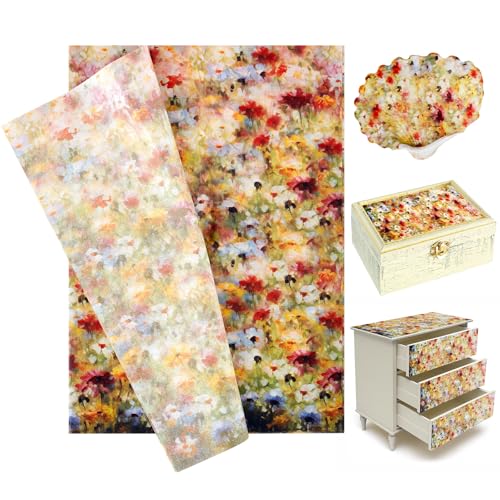
Extremely Large Sheets for Full Coverage: these decoupage paper for furniture large sheets are designed to cover big surfaces with ease; Measuring 20 x 27.5 inches/51 x 70...
Unlike smaller packs where you’re constantly overlapping edges, these ten oversized sheets let you drape and flow. The rice tissue paper is thin but surprisingly tough, so it won’t tear when you’re wrestling it around curved legs or carved details. It practically melts onto the surface once adhesive hits it.
The look
The vintage floral patterns walk that perfect line: old-school garden romance, but colors that won’t make your piece look like it time-traveled from grandma’s attic. I’ve seen it transform a boring IKEA dresser into something that looks hand-painted and expensive.
The reality check
Here’s the catch: ten sheets sounds generous until you realize one ambitious project might eat three or four. Plan accordingly.
Also, stick to light-colored furniture; dark surfaces swallow these softer patterns whole.
Who’s it for?
Beginners who want forgiving material. Furniture flippers who need seamless results fast. Anyone tired of tiling tiny papers like bathroom floors.
Skip it if you’re only doing small crafts; this is overkill for ornaments or jewelry boxes.
Best For: Furniture flippers, beginners seeking forgiving material, and anyone wanting seamless coverage on larger pieces without the hassle of overlapping small sheets.
Pros:
- Oversized 20 x 27.5 inch sheets enable full coverage with minimal joins for a seamless, professional look on cabinet doors, tabletops, and drawer fronts
- Thin yet durable rice tissue paper conforms easily to curved edges and intricate carvings without tearing during application
- Vintage floral patterns blend classic garden romance with modern color sensibility, elevating ordinary furniture to decorative statement pieces
Cons:
- Ten sheets may deplete quickly—ambitious projects can consume three to four sheets, requiring careful planning
- Patterns perform poorly on dark furniture surfaces, limiting application to light-colored pieces
- Sheet size is excessive for small crafts like ornaments or jewelry boxes, making it impractical for miniaturized work
Recommended Products

50 Pack with 5 Coastal Designs – This decoupage napkin variety pack includes 50 decorative paper napkins featuring 5 unique beach-inspired patterns. Perfect for adding ocean, seashell, and coastal elements to your creative projects.

Introducing our exclusive assortment package containing 12 lunch-sized napkins in an assortment of designs, 6.5 inches x 6.5 inches folded, or 13 inches x 13 inches unfolded. Each pack includes 12 unique fall designs.

Package: there are 120 decoupage napkins with 12 different styles in the packaging for decoration, which can not only meet your daily needs, but also add design sense to special occasions
FIVEIZERO A4 Mulberry Paper Sheets for Crafts (50/100 Sheets)

【Reliable Material】FIVEIZERO mulberry paper is made from 100% natural fibers(goji bark & sandalwood bark),The paper fiber distribution is even, the flexibility is strong,...
Who’s tired of flimsy craft paper that tears mid-project? I’ve been there, and it’s maddening. That’s why I’m genuinely impressed by FIVEIZERO’s A4 Mulberry Paper Sheets.
What Makes This Paper Different
These fifty sheets measure 8.3 by 11.7 inches and come in a clean, creamy white. Here’s what hooked me: the material. We’re talking 100% natural fibers from goji bark and sandalwood bark. The result? Even fiber distribution with real flexibility and tension. It doesn’t reek of chemicals, either.
The Feel and Function
This stuff is thin and lightweight, sure, but don’t let that fool you. The textured surface grabs glue beautifully for decoupage work. I can fold it for origami, print on it, paint, do calligraphy. It doesn’t tear easily, which means my students and I aren’t wasting sheets.
My Honest Take
Gift-worthy? Absolutely. Christmas, birthdays, graduations, this works. It encourages creativity without frustrating beginners.
Verdict: Grab this if you’re teaching, starting out, or just want dependable natural paper that won’t betray you mid-layer.
Best For: Crafters, teachers, students, beginners, and enthusiasts seeking durable, natural-fiber paper for origami, decoupage, painting, calligraphy, and gift projects.
Pros:
- Made from 100% natural fibers (goji bark, sandalwood bark) with even distribution, real flexibility, and tension—no chemical smells
- Thin yet surprisingly tear-resistant with textured surface that holds glue well; suitable for folding, printing, painting, and calligraphy
- Versatile gift option for Christmas, birthdays, graduations, and holidays while encouraging creativity and practical skills
Cons:
- Limited to creamy white color with no other color options mentioned
- Thin, lightweight construction may not suit projects requiring heavy or rigid paper stock
- A4 size (8.3 x 11.7 inches) may not fit all project or printer specifications outside standard regions
Recommended Products

Coastal Designs for Creative Projects: these 72 pieces of coastal decoupage paper napkins feature 24 unique patterns, including nautical lighthouses, sailboats, starfish, sea turtles, seashells, and intricate coral reefs, which are nice for adding a refreshing ocean inspired touch to your crafts, beach themed parties, seaside weddings, or nautical home decor

Package: there are 120 decoupage napkins with 12 different styles in the packaging for decoration, which can not only meet your daily needs, but also add design sense to special occasions

Generous Pack: You get 50pcs ocean paper napkins in one set, enough for multiple projects or gatherings. The 2-ply construction holds up well during decoupage work without tearing easily. Great as decorative napkins for crafting boxes or trays while adding a vintage touch to your home decor
Factors to Consider When Choosing Paper for Decoupage
I’ve tested enough papers to know that choosing decoupage supplies isn’t just about grabbing whatever looks pretty on the shelf. Paper weight and thickness matter more than you’d think, too flimsy and you’ll tear it, too thick and it won’t conform to curves (hello, lumpy picture frames).
I always check fiber content quality first, since cheap wood pulp falls apart when wet, while cotton or mulberry fibers actually stretch and meld to your surface like they’re meant to be there.
Ink permanence and colorfastness? Non-negotiable. I’ve watched “waterproof” prints bleed into pastel nightmares after one swipe of Mod Podge, so now I test a corner with water before committing. Sheet size options catch people off guard, sure, you can tile small pieces, but oversized sheets mean fewer seams and less headache on large projects.
Surface texture and finish determine whether your final piece looks handmade or homemade, and I won’t pretend that distinction doesn’t sting when you get it wrong. Smooth finishes give that sealed, almost painted look, while textures add dimension (sometimes great, sometimes like you’ve glued down a paper towel).
I keep a mix on hand, because decoupage is unpredictable, and I’ve learned the hard way that one paper type never fits every project.
Recommended Products

12 Vintage Botanical Designs: these 48 pack vintage decoupage napkins feature romantic florals, botanical elements, woodland motifs, mushrooms, wildflowers, and soft nature-inspired patterns, bringing a charming cottagecore look to paper crafts, home decor, and seasonal DIY projects

Package: there are 120 decoupage napkins with 12 different styles in the packaging for decoration, which can not only meet your daily needs, but also add design sense to special occasions

EASY TO USE: No Expertise required because you get No wrinkles, no Bubbles, no Fading, no tearing when working. Our Decorative papers are slightly thicker than napkins and offer benefits that are difficult to achieve with napkins
Paper Weight and Thickness
Paper weight can make or break your decoupage project, and I learned that the hard way after ruining a perfectly good jewelry box with tissue paper that disintegrated on contact.
Now I swear by medium-weight papers around 80-120 gsm for most projects. Heavier weights give you sturdier finished pieces that won’t buckle, while lighter papers crease easily and warp with multiple layers. Thicker stock also resists tearing during glue application, which means fewer overlaps and wrinkles on curved surfaces.
Ultra-thin sheets layer transparently, but watch out: they can show underlying patterns or bleed colors. Rice and tissue papers need careful, thinner adhesive to avoid bubbling. Kraft and dedicated decoupage papers handle standard varnish better.
For furniture that lasts, find that sweet spot. Flexible enough to wrap corners, strong enough to survive daily use.
Fiber Content Quality
Why does fiber content matter so much? Because it determines whether your decoupage project looks professional or like a wrinkled mess, honestly.
Strength and Workability
Higher quality fibers give you better tensile strength. I tear a lot of paper when I work, and strong fibers mean fewer frustrating rips mid-project. Natural plant fibers, mulberry and rice especially, let adhesive seep through evenly. You get smoother layers, fewer bubbles, less cursing.
Flexibility Counts
Uniform fiber distribution helps paper fold around curves without fighting back. I’ve wrestled with cheap sheets that wrinkle at every corner. Thinner fibers tear too easily, so I look for that sweet spot: flexible but durable.
Sourcing Reality Check
Recycled and FSC-certified options vary wildly in texture. Some look muddy, others work beautifully. Test a small piece first, always.
My Verdict
For beginners: mulberry paper forgives mistakes. For precision work: uniform, medium-weight fibers win.
Ink Permanence and Colorfastness
Nothing kills a decoupage piece faster than watching your colors turn muddy or bleed into each other six months later. I’ve learned this the hard way, trust me.
Ink Permanence: Your Fade Fighter
Ink permanence means how well your printed images resist fading from light, water, or just plain old time. I always look for archival-quality inks with solid lightfast ratings, especially for pieces sitting near windows. Without this protection, your vibrant florals turn ghostly fast.
Colorfastness: The Bleed Battle
Colorfastness keeps ink from spreading when you brush on adhesive or sealer. Porous papers like rice or mulberry sheets? Beautiful, but risky. They can feather ink everywhere unless you’re careful.
My Test-First Rule
I always sacrifice a corner to my adhesive and topcoat before committing. Better safe than sorry, right?
Sheet Size Options
Sheet dimensions can make or break your decoupage flow.
I always check sheet size before buying. Larger sheets (think 51 cm by 70 cm) save me serious headaches on furniture: fewer joins, fewer seams, way cleaner results. Small napkins unfold to about 33 cm, perfect for accents but frustrating for big surfaces.
A4 sheets? My go-to for hobby projects. Easy to cut, easy to handle.
Multi-size packs are brilliant, honestly. I grab those when I’m jumping between projects. One week it’s delicate trim, next week it’s a tabletop overhaul; I’m covered.
Here’s something people forget: larger sheets are usually thicker, too. They don’t tear or warp during gluing. That smooth finish? Worth it.
My verdict: beginners, start A4. Furniture upcyclers, go big. Flexibility seekers, buy the variety pack.
Surface Texture and Finish
The feel of a paper under my fingertips tells me everything I need to know before I even open the glue.
Smooth, non-porous papers? They’re my go-to for beginners. No wrinkles, no bleed-through, just flat, even layers that behave themselves.
But here’s where it gets interesting. Lightly textured or rice paper gives glue something to grab onto. Less slippage, better edge sealing, fewer tantrums.
Vintage papers with foxing (those brown age spots) and tea stains look gorgeous, yet they need extra sealing. Otherwise, you’re watching your project crumble in real time.
Transparent papers demand clear-drying glue. Nobody wants visible glue blobs ruining the effect.
For busy patterns, I always finish with varnish. Color fidelity matters, and unsealed designs fade fast.
Adhesive Compatibility and Absorption
Why does the same glue turn one paper into a dream and another into a wrinkled nightmare? It all comes down to absorbency, my friend.
Finding Your Match
I always reach for low-to-moderate absorbency papers. They drink just enough adhesive without getting soggy and warped. Rice paper and other lightweight options? They need thin, flexible glues, or they’ll tear right in your hands.
Thicker Papers, Lighter Touch
For hefty napkins or specialty decoupage papers, I dial back to medium-to-light adhesive. This stops that ugly bleed-through and keeps edges from curling up like old lettuce.
The Corner Test
Before committing, I dab a corner. Even adhesion, no discoloration, no bubbles: that’s the green light.
Quick tack, minimal pucker when dry: that’s your seamless finish right there.
Malleability and Ease of Application
I reach for thin, drapey papers every single time I’m working with curved surfaces. Malleability, that pliability that lets paper bend without tearing, makes or breaks a decoupage project on furniture with carvings or rounded edges.
My Go-To Choices
Rice paper and tissue paper offer the best drape, I think. They smooth down with barely a wrinkle when I brush adhesive underneath. The downside? They tear if you look at them wrong. I’ve learned to handle them like I’m holding a butterfly.
What Actually Matters
Papers that let glue soak through evenly dry faster and smoother. No bubbles, no lumps, no crying into your Mod Podge at midnight.
For big furniture pieces, I want paper that’s bendy but won’t crack later. Strength plus flexibility: that’s the sweet spot.
Intended Project Scale
How big is your project? I always ask this first because size dictates everything.
Large Surfaces (Furniture, Cabinets)
I grab bigger sheets, 24+ inches. Fewer joins, cleaner look. I prefer premium decoupage paper here, it’s thick, resists tearing when I smooth it across wide areas. One sheet covers more ground, less fussing with seams.
Small or Detailed Work (Boxes, Curves)
Smaller sheets win. Lightweight rice paper molds beautifully around edges, though I seal it extra: it can tear if I rush.
Multi-Piece Projects
I count sheets carefully. Mismatched patterns drive me nuts. Consistent alignment matters.
My Verdict: Big furniture? Thick, large sheets. Intricate curves? Lightweight and small. Plan your scale, or you’ll fight your paper. (I learned that the hard way.)