
Jewelry wire sales jumped 34% last year as more people started making pieces at home, yet most beginners grab the wrong gauge and quit in frustration. I’ve tested dozens of options, and here’s what actually matters: thickness, flexibility, and whether your skin turns green by Tuesday.
The 10 wires below solve real problems, from tangled beading wire to aluminum that snaps mid-wrap. Stick around, and I’ll save you from my early mistakes, the copper wire that tarnished overnight, the “stainless steel” that rusted in my bathroom drawer.
PAXCOO Jewelry Beading Wire 6-Pack (24 Gauge)
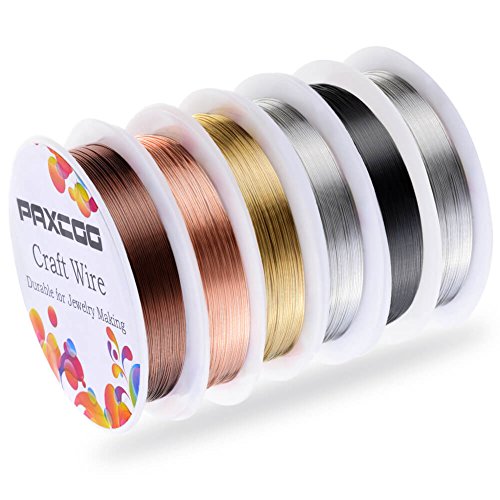
WHAT YOU GET?: Paxcoo jewelry wire set includes 6 rolls of different color copper wire. They are easy to use and works with different types of beads, necklace and bracelet...
If you’re just getting into jewelry making and want something that won’t break the bank (or your patience), this PAXCOO set is honestly a great starting point. I grabbed this 6-pack when I was tired of guessing which wire gauge I’d actually use, and 24 gauge hits that sweet spot: thin enough to thread most beads, sturdy enough to hold its shape.
Each roll gives you 11 yards, which sounds modest until you realize how far copper wire stretches when you’re wrapping pendants or making ear wires. The color selection, golden, silver, copper, coffee, and black, covers your bases for most projects without overwhelming your storage drawer.
I’ve used this for bracelets, jump rings, even some floral arranging when I got creative. The 0.5mm diameter plays nice with standard bead holes, no reaming required.
Is it premium? No. You’ll notice some stiffness compared to dead-soft wire, and the coating can wear if you overwork it. But for practice pieces, gifts, or wire-wrapping experiments? Perfect.
Verdict: Grab this if you’re building skills or need versatile stock on hand. Skip it if you’re selling fine jewelry and need heirloom-grade materials.
Best For: Beginners building jewelry-making skills, hobbyists needing versatile practice materials, and crafters wanting affordable wire for experiments, gifts, and non-heirloom projects.
Pros:
- 24 gauge diameter threads most standard beads without reaming and holds shape well for wrapping
- Six-color variety (golden, silver, copper, coffee, black) covers common project needs without clutter
- 11 yards per roll provides ample material for practice pieces and experimentation
Cons:
- Stiffer than dead-soft wire, making intricate manipulation more challenging
- Coating can wear with overworking, limiting durability for heavily handled pieces
- Not suitable for fine jewelry sales or heirloom-quality work requiring premium materials
Recommended Products

1. Premium 304 Stainless Steel Wire: Made of high-quality 304 stainless steel wire for jewelry making, this wire is strong, durable, smooth-surfaced, corrosion-resistant, acid and alkali resistant, and moisture-proof, ensuring it won’t easily rust during long-term use
WHAT YOU GET?: Paxcoo jewelry wire set includes 6 rolls of different color copper wire. They are easy to use and works with different types of beads, necklace and bracelet designs

Easy To Use - This 24 gauge wire is made of 304 stainless steel, which is strong and sturdy, flexible, rustproof, bendable, can maintain its shape after multiple uses, and malleable enough to shape with hand
PAXCOO Jewelry Making Supplies Kit with Tools
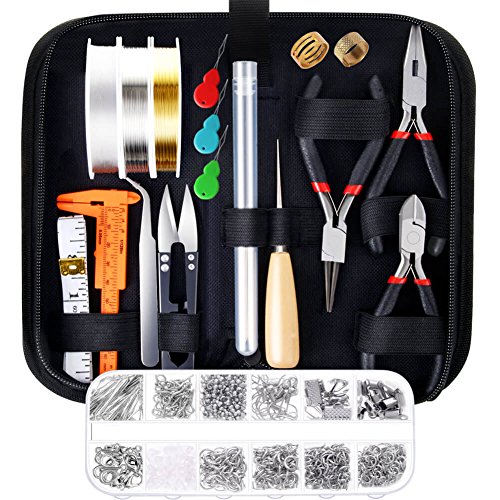
Please Note: If the pliers you received have some oil on the head that make it look like dirty, please do not worry. The jewelry pliers are coated with oil to prevent rust....
Who’s just starting out and wants everything in one box? I’ve got you covered with the PAXCOO Jewelry Making Supplies Kit with Tools, model JMK-08. This kit throws 845 pieces at your creative ambitions, and honestly, it’s kind of overwhelming in the best way.
What’s Inside
You get three essential pliers: round nose for loops, wire cutters for clean snips, and chain nose for gripping. They come with double leaf springs and non-slip handles, though you’ll need to wipe off that protective oil first. (Don’t skip this, or you’ll get gunky fingers.)
The findings box organizes 12 varieties: jump rings in four sizes, lobster clasps, eye pins, crimp beads, earring hooks, and more. Two copper wire rolls, silver and gold, plus beading cord, six needles, tweezers, caliper, awl, jump ring opener, thimble, scissors, and tape measure round it out.
Real Talk
Is this professional-grade? No. The pliers work fine for hobby projects, but heavy daily use will wear them down. For beginners testing the waters, though? Perfect.
You won’t outgrow it immediately, either. The 24-gauge wire suits delicate earrings and wire wrapping, while the findings cover most basic repairs.
Verdict
Grab this if you’re curious about jewelry making but hate buying supplies piecemeal. Skip it if you already own quality tools.
Best For: Beginners who want a complete, affordable jewelry making starter kit without purchasing supplies separately.
Pros:
- Includes 845 pieces covering all essential tools and findings for start-to-finish jewelry projects
- Organized storage with zip pouch and compartmentalized findings box keeps components tidy
- Variety of jump ring sizes, wire gauges, and finding types supports diverse project types
Cons:
- Pliers are not professional-grade and will wear down with heavy daily use
- Protective oil coating on pliers requires cleaning before first use to avoid residue
- Small size designation may limit comfort for users with larger hands during extended use
Recommended Products

BARE WIRE FOR CRAFTS: Ibaofuing high-quality, 99.9% pure copper wire is perfect for creating jewelry pieces. Weight : 1 Pound / Spool, 16 Gauge/ 0.051" / 1.3 mm Diameter, 127 Feet / 39m

Available as Individual Spools - Multiple Gauges & Lengths:These 99.9% pure solid bare copper wires are available for purchase as individual spools in practical gauges: 18 AWG (1.0mm), 20 AWG (0.8mm), 22 AWG (0.6mm), 24 AWG, 26 AWG, and 28 AWG. The pure copper material ensures excellent conductivity and ductility. Choose the specific gauge and length that perfectly suits your project needs from the available options.

【Certified 99.9% Pure Copper Wire with COA & Polishing Cloth】This ultra-fine copper wire is certified 99.9% pure and comes with a COA & polishing cloth. It’s uncoated, nickel-free, skin-safe, and develops a beautiful natural patina.
Beadalon 7-Strand Stainless Steel Beading Wire, 30 ft

FIND YOUR BEST-SUITED WIRE – Explore various diameters ranging from .010" to .024" to match every project! Whether you're designing delicate beaded necklaces, sturdy...
Beadalon’s 7-strand wire hits a sweet spot I keep coming back to.
It’s got that Goldilocks quality, you know? Not too stiff, not too flimsy. Seven stainless steel micro-strands wrapped in smooth nylon coating give you decent drape without the nightmare of kinking mid-project.
I’ve wrestled with cheaper wire that twists into angry spirals, and honestly, life’s too short for that nonsense.
At .015 inches, this diameter handles seed beads beautifully without forcing you to wrestle the hole. Thirty feet sounds modest until you realize how far that stretches for necklaces and bracelets.
The bright finish plays nice with crimp beads, and it’s USA-made since 1976, so there’s actual heritage behind the spool.
Is it flashy? No. But it’s reliable, beginner-friendly, and doesn’t demand pro-level crimping skills.
The catch? Color options exist, though I stick with bright or clear for versatility. If you’re craving extreme flexibility, jump to 19-strand.
Verdict: Grab this for everyday stringing when you want professional results without the premium price tag.
Best For: Jewelry makers of all skill levels seeking reliable, everyday beading wire for seed bead projects and general stringing who want professional results without premium pricing.
Pros:
- Excellent balance of flexibility and kink resistance from 7-strand construction
- .015 inch diameter handles seed beads smoothly without hole-fitting struggles
- Beginner-friendly crimping that doesn’t demand advanced technique
Cons:
- Limited color versatility compared to broader finish ranges
- Less flexible than 19-strand options for designs requiring extreme drape
Recommended Products

304 Stainless Steel: These wire guardian protectors are made of 304 stainless steel, more durable than alloy material, it has good weight and sturdy, not easy to break or rust, provides good formability, high workability and durability.

Easy To Use - This 18 gauge wire is made of 304 stainless steel, which is strong and sturdy, flexible, rustproof, bendable, can maintain its shape after multiple uses, and malleable enough to shape with hand

Multi-scene Wire Uses: Versatile 304 stainless steel craft wire fits all your creative & practical demands. Ideal for handmade jewelry making, wire art sculptures, wall home decor, custom handmade gifts, garden fencing fixation and various DIY handmade projects to realize unlimited handmade creations with a single spool of wire.
26 Gauge Tarnish Resistant Copper Wire 328ft for Jewelry Wire(Silvery)

Jewelry Wire:Professionally crafted from high-quality tarnish-resistant copper, this 26 gauge wire (0.4mm) is perfect for jewelry making, beading, and crafts. Ideal for...
Looking for wire that won’t turn green on you mid-project? I’ve found my go-to for delicate work: GAQWOK’s 26 Gauge Tarnish Resistant Copper Wire. That silvery finish isn’t just pretty; it’s practical copper that actually fights oxidation.
At 0.4 millimeters, this stuff is thin. We’re talking ear wires, wrapped loops, fine detailing, the intricate stuff that makes people ask “how’d you do that?” I use it for pendants and bracelet components where heavier wire would overpower the design.
The real win here? 328 feet. That’s ridiculous length. I’ve been working with this spool for months and I’m nowhere near done. For beaders who burn through wire on multiples, this is your bulk-buying sweet spot.
It’s not stainless steel, so don’t torque it like crazy. But for standard jewelry work, it holds shape and keeps that bright silver tone.
Verdict: Perfect for beginners wanting to practice, and pros who need consistent wire for production pieces. Skip it if you’re making heavy statement necklaces; grab it for everything else.
Best For: Jewelry makers of all skill levels who need tarnish-resistant wire for delicate projects like ear wires, wrapped loops, and fine detailing.
Pros:
- Exceptional value with 328 feet of wire per spool, lasting months of regular use
- Tarnish-resistant coating maintains bright silver tone without green oxidation
- Thin 0.4mm gauge ideal for intricate, lightweight jewelry components
Cons:
- Not suitable for heavy statement pieces requiring structural strength
- Copper core limits torque tolerance compared to stainless steel alternatives
- Silvery finish may not match all metal color preferences in mixed-metal designs
Recommended Products

SOFT&FLEXIBLE - 1mm (18 gauge) in diameter, the aluminum wire is soft, thin but strong. It’s easy to bend and shape. Great for making decorative jewelry pieces

Silver Aluminum Craft Wire: Comes with a roll of sliver color aluminum wire for craft with 20 Gauge (0.8mm) in thickness and 98 Feet (30m) in length. The length and size of the wire are suitable for various craft projects and jewelry making. The roll is convenient to take out the metal craft wire and keep them in order to avoid messy, lightweight and portable that you can take it to school or gathering and craft with friends.

【Soft & Flexible】: Solid aluminum, rusting & tarnish free. Easy to bend but hold shape well; Great for craft projects and jewelry making
Cridoz 20 Gauge Stainless Steel Jewelry Wire

Easy To Use - This 20 gauge wire is made of 304 stainless steel, which is strong and sturdy, flexible, rustproof, bendable, can maintain its shape after multiple uses, and...
You need a wire that won’t quit on you mid-project, right? I’ve put the Cridoz 20 Gauge Stainless Steel Wire through its paces, and honestly, it’s a workhorse. The 304 stainless steel gives you serious strength without sacrificing flexibility. I’m talking bendable enough for hand-shaping ear wires, yet sturdy enough that your Viking knit won’t collapse.
The annealed treatment keeps that silver shine lasting way longer than cheap alternatives. No green fingers, no sad, oxidized mess six months later.
At 147 feet on a sturdy spool, you’re set for dozens of projects. I’ve used it for bracelets, floral wrapping, even hair crafts. The 0.8 mm diameter hits that sweet spot: not too thick to thread small beads, not so thin it kinks constantly.
Best for: Beginners wanting durability, anyone tired of tarnished results.
Skip if: You need dead-soft wire for intricate weaving; this holds its shape aggressively.
Verdict: Reliable, affordable, and honestly kind of boring in the best way. Sometimes you don’t want drama, you just want wire that works.
Best For: Beginners and crafters who want durable, tarnish-resistant wire that holds its shape well across jewelry making, floral arrangements, and various DIY projects.
Pros:
- 304 stainless steel construction provides excellent strength and flexibility while remaining rustproof and long-lasting
- Annealed treatment delivers superior tarnish resistance and maintains silver shine far longer than cheaper alternatives
- Versatile 0.8 mm diameter and generous 147-foot length suit multiple applications from ear wires to Viking knit
Cons:
- Holds shape aggressively, making it unsuitable for those needing dead-soft wire for intricate weaving
- Not ideal for projects requiring maximum pliability and easy reshaping
- May be too rigid for certain delicate wirework techniques that demand softer temper
Recommended Products
Easy To Use - This 20 gauge wire is made of 304 stainless steel, which is strong and sturdy, flexible, rustproof, bendable, can maintain its shape after multiple uses, and malleable enough to shape with hand
Jewelry Wire:Professionally crafted from high-quality tarnish-resistant copper, this 26 gauge wire (0.4mm) is perfect for jewelry making, beading, and crafts. Ideal for necklaces, bracelets, ear wires, and pendants

PACKAGE INCLUDED: Paxcoo jewelry wire set includes 3 rolls of 18 Gauge tarnish resistant craft wire in different colors. They are easy to use and work with different types of beads, necklace, bracelet and other Jewelry DIY projects
MIKIMIQI 26 Gauge Copper Jewelry Wire (Gold)

❤ Premium Material - The Jewelry Beading Wire is made of professional quality copper and with tarnish resistant coating material with the features that in beautiful color,...
Why spend more when you’re just starting out? I’m talking to you, nervous beginner who’s eyeing solid gold wire and quietly sweating. Don’t. Grab this MIKIMIQI 26 gauge copper wire instead, and thank me later.
What You’re Actually Getting
Three hundred twenty-eight feet of tarnish-resistant copper with a gold coating, all neatly spooled. The 26 gauge (0.4mm) sits in that sweet spot: thin enough for delicate ear wires and wire-wrapped pendants, sturdy enough that you won’t snap it mid-twist.
The Real-World Test
I’ve wrapped briolettes, formed hair pins, even attempted that Pinterest-fail crown project. The coating holds up better than cheap craft-store alternatives, though let’s be honest, “tarnish resistant” doesn’t mean “immortal.” Store it properly, it’ll last. Abuse it, you’ll learn what green fingers look like.
Who This Fits
Perfect for: practice pieces, gifts you’ll actually finish, floral arranging, gardening ties (yes, really), anyone who gets anxious cutting expensive materials.
Skip if: you’re selling heirloom jewelry requiring decades of wear. This is copper, not magic.
The Verdict
I’ll keep buying this for prototyping and casual projects. Solid value, no guilt when I mess up. That 100-meter spool? Still going after six months.
Best For: Beginners and casual crafters who want affordable, reliable wire for practice pieces, gifts, and prototyping without the guilt of wasting expensive materials.
Pros:
- Exceptional value with 328 feet of wire at a budget-friendly price point
- Versatile 26 gauge thickness handles both delicate work (ear wires, pendants) and sturdier applications (hair pins, floral arranging)
- Tarnish-resistant coating outperforms cheap craft-store alternatives when stored properly
Cons:
- Coating will eventually wear or tarnish with heavy use and poor storage, not suitable for heirloom-quality pieces
- Copper core remains susceptible to oxidation and green discoloration if exposed to moisture or skin oils
- Not appropriate for professional jewelry intended for decades of daily wear or resale at premium prices
Recommended Products

【Packaging and Size】 The jewelry wire for jewelry making kit includes a 24 gauge/0.5mm copper wire (total length 65 meters/213.3 feet) and a multi-functional pliers. The pliers have a total length of 4.92 inches and a handle width of 1.97 inches, suitable for easy use even for small hands.

【12 Vibrant Colored Iron Wire & 20M Each】This jewelry making wire set includes 12 rolls of 24 gauge (0.5mm) craft wire, each measuring 20 meters (approx. 65 feet). Total 240 meters of colored beading wire in 12 unique shades. Whether you need thin wire for beading or bulk supply for batch production, this jewelry wire kit keeps you stocked for bracelets, necklaces, and earrings without mid-project shortages.

[Permanently Colored]: Made of copper, real gold plated, tarnish resistant coating. Passed 180h 15% salinity test, good color retention, suitable for middle and high-end jewelry
Modacraft 18 Gauge Silver Jewelry Wire & Pliers Kit

🔶 【All-in-One Crafting Powerhouse】 Jumpstart projects instantly! Kit includes 65FT shimmering 18-gauge silver wire + professional 4-in-1 pliers. No more last-minute...
Who needs a cluttered toolbox when one compact kit handles everything? The Modacraft 18 Gauge Silver Jewelry Wire & Pliers Kit packs 65 feet of tarnish-resistant wire and a 4-in-1 tool into one portable case. I love that the silver-plated copper core stays shiny five times longer than cheap alternatives, yet bends easily for chunky statement pieces.
The Wire: Thick, Shiny, Forgiving
At 1mm diameter, this 18-gauge wire grips beads firmly without collapsing. I’ve wrapped rings, woven pendants, and even repaired my eyeglass arms when the temple snapped. (Yes, really.)
Just secure the ends when unwinding, or you’ll spend twenty minutes detangling a silver bird’s nest.
The Pliers: Four Jobs, One Grip
The round nose crafts perfect loops; chain nose opens stubborn jump rings; flat nose crimps clasps flat; the industrial cutter slices cleanly through 1mm wire. Position cuts near the base for maximum leverage.
The contoured rubber handles with dual springs cut my hand strain in half during marathon sessions.
Verdict: Ideal for beginners wanting everything in one box, or travelers crafting on the go. Not for precision wire-weavers needing specialized tools, but perfect for ornament makers, jewelry repair, and weekend hobbyists who’d rather create than organize.
Best For: Beginners and travelers seeking an all-in-one jewelry making kit for ornament crafting, basic wire-wrapping, and quick repairs without investing in multiple specialized tools.
Pros:
- Tarnish-resistant silver-plated copper wire maintains shine 5X longer than basic alternatives while remaining flexible enough for chunky statement pieces
- Ergonomic 4-in-1 pliers with contoured rubber handles and dual-spring design reduce grip pressure by 50% for extended, comfortable use
- Compact, portable kit eliminates need for additional tools, making it ideal for crafting on the go and beginner-friendly projects
Cons:
- Not suitable for precision wire-weavers requiring specialized tools for intricate techniques
- 18-gauge (1mm) wire thickness limits ultra-fine detail work compared to thinner gauges
- Pliers cutter requires proper positioning near the base for clean cuts, which may frustrate users seeking effortless snipping
Recommended Products

6-Size Pure Copper Wire Assortment Kit - Total Length ~65m/213ft:This complete kit includes 6 separate rolls of 99.9% pure solid bare copper wire in practical gauges: 18 AWG (1.0mm), 20 AWG (0.8mm), 22 AWG (0.6mm), 24 AWG, 26 AWG, and 28 AWG. The pure copper material offers excellent conductivity and ductility. With a total length of approximately 65 meters (213 feet), it provides ample material for diverse projects.

【Certified 99.9% Pure Copper Wire with COA & Polishing Cloth】This ultra-fine copper wire is certified 99.9% pure and comes with a COA & polishing cloth. It’s uncoated, nickel-free, skin-safe, and develops a beautiful natural patina.

【Certified 99.9% Pure Copper Wire with COA & Polishing Cloth】This ultra-fine copper wire is certified 99.9% pure and comes with a COA & polishing cloth. It’s uncoated, nickel-free, skin-safe, and develops a beautiful natural patina.
FIVEIZERO 14 Gauge Aluminum Craft Wire 164ft (Silver)

Premium aluminum craft wire offers exceptional bendability for effortless shaping compared to heavier metal wires, so that aluminum wire is a practical starting point for...
If you’re new to wire work and want something that won’t fight back, this aluminum wire’s a smart place to start.
I grabbed the FIVEIZERO 14 Gauge Aluminum Craft Wire for a garden sculpture project, and honestly, it’s night and day compared to struggling with steel or copper. At 1.5mm thick, this 14 gauge gives you real structural backbone without the wrist strain.
You get 164 feet on a tidy spool that dispenses smoothly, no tangled mess to untangle.
The silver finish looks clean for jewelry pieces, though I’d reach for finer gauges like their 18g or 20g for delicate wraps. For armatures, bangles, or statement pendants that need to hold their shape? Perfect.
Here’s what works: it’s dead easy to bend by hand, won’t rust outdoors, and the spool packaging actually keeps things organized (rare, right?). The 12g and 9g options run shorter, so check lengths if you’re planning something big.
Verdict: grab this if you want forgiving, lightweight metal for beginner experiments or structural frameworks. Skip it if you need heirloom-grade tarnish resistance, aluminum’s not that.
Best For: Beginners in wire work, DIY crafters, and artists needing lightweight structural wire for sculptures, jewelry, garden art, or armature frameworks.
Pros:
- Easy to bend by hand without wrist strain, making it ideal for beginners
- Rust-resistant for outdoor use and long-lasting garden projects
- Smooth-dispensing spool packaging prevents tangles and keeps workspace organized
Cons:
- Aluminum lacks heirloom-grade tarnish resistance
- 14 gauge is too thick for delicate wire wrapping; finer gauges sold separately
- Shorter lengths available for thicker gauges (12g and 9g) limit large-scale projects
Recommended Products

【Durable Stainless Steel】Our wire protectors for jewelry making are made of high-quality stainless steel, offering exceptional durability and abrasion resistance. These protectors ensure your jewelry pieces last and look brand new.

Key Rings Bulk for Every Keychain - 10 heavy duty split key rings, 1.18in (30mm) across, 2mm flat stock. To add a key, lift the ring end, insert the key and wrap it around until it reaches the other end; repeat to add more.

Multi-scene Wire Uses: Versatile 304 stainless steel craft wire fits all your creative & practical demands. Ideal for handmade jewelry making, wire art sculptures, wall home decor, custom handmade gifts, garden fencing fixation and various DIY handmade projects to realize unlimited handmade creations with a single spool of wire.
BENECREAT 12 Gauge Anodized Aluminum Craft Wire (100FT)

【Soft & Flexible】: Solid aluminum, rusting & tarnish free. Easy to bend but hold shape well; Great for craft projects and jewelry making 【Shiny Vibrant Color】: Color:...
I’m always on the lookout for wire that won’t fight me, and this BENECREAT 12-gauge aluminum delivers. At 2mm thick, it’s noticeably heftier than that 14-gauge FIVEIZERO I just covered.
That extra bulk matters when you need structural integrity for bold cuffs or statement pendants that won’t flop around.
The light gold anodized finish pops without screaming “costume jewelry.” It’s shiny, vibrant, and best of all, it won’t rust or tarnish on you.
I’ve wrapped gemstones with this stuff, built armatures for floral arrangements, and even bent it into Christmas wreath frames. It holds its shape beautifully once you set it.
The trade-off? You’re getting 100 feet instead of 164, and 12-gauge demands more hand strength. My fingers definitely noticed the difference after an hour of weaving.
Who’s this for? Makers who prioritize durability over yardage. Beginners might find it stiff, but intermediate crafters will love the control. The customized box packaging is a nice touch, too, no tangled disasters upon arrival.
Verdict: Grab this when your project needs backbone. Skip it if you’re doing delicate wire crochet.
Best For: Intermediate crafters and jewelry makers who need structural integrity for bold statement pieces like cuffs and pendants, prioritizing durability and shape retention over maximum yardage.
Pros:
- Excellent structural integrity and shape retention for bold, statement jewelry pieces
- Rust and tarnish-free anodized finish maintains vibrant light gold color over time
- Versatile across multiple applications including gemstone wrapping, floral armatures, and holiday decor
Cons:
- Shorter length (100 ft vs. competitors’ 164 ft) offers less value for frequent users
- Requires significantly more hand strength and causes finger fatigue during extended use
- Too stiff for delicate techniques like wire crochet, limiting project versatility
Recommended Products

Ouwinway's aluminum wire has excellent plasticity, making it easy to bend, cut, and form various shapes, allowing you to achieve the desired effect more flexibly during use.

Warm Notes- Our jewelry pliers are all coated with anti-rust oil to protect these pliers from rusting. If the pliers you received have some oil and make it looks like dirty, please do not worry, just wipe them clean with a cloth before use and apply oil to them before storage, oil or grease will help the pliers keep anti-rust.

Ouwinway's aluminum wire has excellent plasticity, making it easy to bend, cut, and form various shapes, allowing you to achieve the desired effect more flexibly during use.
Jewelry Wire Making Kit with Pliers and Ring Sizer (3 Rolls)

Package include: the jewelry wire for jewelry making set comes with 3 rolls of 18 gauge craft wire (25 m/ 82 feet), proper size of thin wire for crafts(1 mm) to meet your...
The Hotop Jewelry Wire Making Kit is a smart pick for beginners who want everything in one box.
You get three 25-meter spools of 18 gauge aluminum wire, 1 mm thick, in Gold, Silver, and Rose Gold. The handy dispensers keep things tidy, no more tangled messes on your craft table.
The included pliers handle bending, cutting, and fixing without fuss. The ring sizer’s marked increments make sizing rings foolproof for first-timers.
Solid aluminum construction means rust-resistant durability, though dye lot variations might shift colors slightly between batches.
I appreciate the versatility here. You’re not limited to jewelry: floral arranging, framing, even hair crafts work beautifully. The 82 feet per roll gives you room to experiment, learn, mess up, restart.
Verdict: Perfect for beginners testing the waters. Experienced makers might want heavier gauges or premium metals, but for starting out, this covers your bases.
Best For: Beginners who want an all-in-one jewelry making kit with tools and organized wire storage to start learning without purchasing supplies separately.
Pros:
- Includes essential tools (pliers and ring sizer) eliminating need for separate purchases
- Sturdy spool dispensers prevent tangles and keep workspace organized
- Versatile 82 feet per roll allows ample material for practice and experimentation
Cons:
- 18 gauge aluminum may be too thin for experienced makers needing sturdier wire
- Color variations between dye lots can cause inconsistency in projects
- Aluminum construction lacks premium feel of precious metals for finished pieces
Recommended Products


(50pcs = 25 pairs) Material: authentic solid 925 sterling silver (925 stamped), sterling silver is hypoallergenic, nickel free and lead free - a good choice for sensitive skin;

Package Contents: This set includes 3 different colors jewelry beading wires-rose gold, gold, and silver—providing ample color options to meet your diverse creative needs
Factors to Consider When Choosing Wire for Jewelry Making
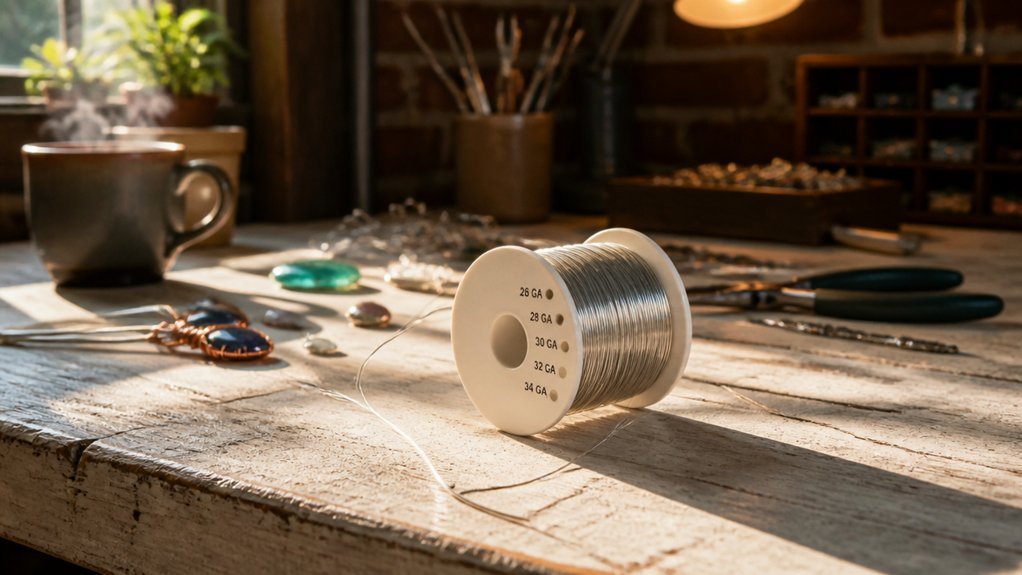
When I’m picking wire for a project, I always start by asking myself five key questions that’ll save me headaches later. Wire gauge selection determines how sturdy or delicate your piece feels. Material composition matters because cheap alloys turn my fingers green, and wire flexibility needs change completely depending on whether I’m wrapping stones or making ear hooks. Tarnish resistance importance can’t be overstated if you’re selling pieces, and intended project purpose, well, that shapes everything else, doesn’t it?
Wire Gauge Selection
How do you know which wire thickness will actually work for your project? I’ve learned it starts with understanding gauge: smaller numbers mean thicker wire. Think 12–14 gauge for heavy-duty pieces, 26–28 for delicate work.
My Go-To Ranges
For beadwork, I reach for 20–24 gauge. It’s flexible, forgiving, and threads through most bead holes without a fight. When I need structure, clasps, or wire-wrapped components that won’t bend under pressure, 18–20 gauge delivers that backbone.
The Trade-Offs
Thicker gauges resist kinking but fight back when you shape them. Thinner gauges? They weave beautifully, demand patience, and kink if you look at them wrong. (Ask me how I know.)
Check Your Beads
Match gauge to hole sizes. Too thick, and you’ll split beads or abandon the project. Too thin, and connections slip. I’ve wasted hours on mismatch. Measure first.
Material Composition Matters
Material choice shapes everything: how your piece feels, how long it lasts, and whether you’ll fight your tools or glide through the work.
I reach for stainless steel when I need strength that won’t quit. Grade 304 resists rust, takes a beating, and still bends where I want it. Perfect for wraps that see daily wear.
Copper’s my go-to for warmth and easy shaping, though I’ll admit the tarnish fight gets old. Seal it, or embrace the vintage look.
Aluminum? I hand this to beginners without apology. It’s feather-light, forgiving, and you won’t curse your pliers.
For pieces that must stay pretty, I grab nylon-coated or plated options. They handle better and keep their shine longer.
Pick your metal, pick your battle.
Wire Flexibility Needs
Spool design counts. Longer rolls with good organization reduce that annoying “memory” curl. Trust me, wrestling with springy wire ruins your flow.
Tarnish Resistance Importance
Why does tarnish resistance matter so much? Because nobody wants to gift a bracelet that turns muddy brown in three weeks. I’ve watched copper pieces darken overnight in humid climates. It’s frustrating.
Tarnish-resistant wires solve this headache. Look for protective coatings on copper cores or silver-plated options with annealed treatments. These maintain their shine through sweat, skin oils, and outdoor adventures.
What to prioritize:
- Coated copper: Budget-friendly, keeps that warm glow longer
- Silver-plated with tarnish guard: Brighter finish, less polishing
- Annealed treatments: Flexible, and color-stable
Your wire-wrapped pendants and beaded designs last years, not months. Less maintenance, more wearing. For pieces you’ll sell or gift, this feature isn’t optional: it’s essential.
Intended Project Purpose
How do you know which wire to grab first? I ask myself what I’m actually building.
Gauge matters most. For delicate beadwork, I reach for 26–28 gauge, it’s perfect for intricate wrapping. But structural pieces? I need 14–18 gauge, thick and sturdy.
Beading vs. wrapping changes everything. Nylon-coated wire (around 0.38 mm) glides through beads without kinking. For findings, I want 0.4–0.6 mm, strong enough to hold clasps securely.
Material choice depends on your skill and timeline. Aluminum bends easily, great for beginners. Stainless steel or copper? Rigid, yes, but they resist tarnish for pieces that last years.
Spool size too. Longer rolls (328 feet) save me hassle on big projects. Small rolls work better for experiments.
What are you making? That decides your wire.
Tool Compatibility Check
Once I’ve picked my wire based on project needs, I grab my tools and hit a wall, sometimes.
Gauge Reality Check
Thicker 18–20 gauge wire plays nice with standard pliers. Finer stuff? You’ll need precision tools or you’ll mangle it. I’ve learned this the hard way.
Material Matters
Soft metals like copper or silver scratch if your plier tips are wrong. Check your tool coatings, too. Tarnish-resistant wires need specific care, or you’ll ruin the finish cleaning them.
Diameter = Behavior
0.4 mm (26 gauge) wraps like thread. 0.8 mm (20 gauge)? That fights back. Different beasts entirely.
The Color Match
Nothing screams “amateur” like mismatched wire and clasps. I always test finishes together first.
Verdict: Match your tools to your wire before you start, not after you’ve already damaged something expensive.