
Did you know that roughly 70% of homemade bracelets fail because the wrong stretch cord snaps or loses elasticity within months? I’ve learned this the hard way, and after testing dozens of options, I’m narrowing down the five cords that actually hold up.
Whether you’re stringing delicate seed beads or chunky statement pieces, the difference between 0.6 mm and 1.0 mm isn’t just numbers, it’s the line between a bracelet that lasts and one that ends up in your junk drawer. Stick around, and I’ll show you exactly which cord matches your project, your skill level, and your patience for restringing.
6 Rolls FIVEIZERO Elastic Bracelet String Cord for Jewelry Making

【Clear Stretchy String for Bracelets】Includes 1 x 0.4/0.5/0.6/0.7/0.8/1mm round transparent crystal elastic string cord. Ideal bead string for clay beads, pony beads...
If you’re the kind of maker who hates guessing which cord thickness will work with your beads, the FIVEIZERO six-pack basically solves that problem before you even start. I’ve found the 0.4mm to 1.0mm range covers nearly every bead type I throw at it, from tiny seed beads to chunky clay pieces.
The heavy-duty elastic plastic rubber holds up better than you’d expect. No yellowing, no fraying, even after months of daily wear and some accidental sun exposure.
I appreciate that the round shape distributes tension evenly; flat elastic always seems to sag or twist on me. Knotting’s a breeze, and the cord hides cleanly inside larger beads. I’ve used the 0.6mm for kandi bracelets and the 1mm for glass bead necklaces, both performed flawlessly.
Who needs this? Beginners who want options without buying six separate rolls, and anyone tired of flat cord that loses its shape. The six-pack format feels generous, not overwhelming.
Best For: Jewelry makers of all skill levels who want a versatile range of elastic cord thicknesses in one convenient pack, especially those frustrated with flat elastic that sags or twists and beginners seeking options without multiple purchases.
Pros:
- Six diameters (0.4–1.0mm) cover virtually any bead type and project need
- Round shape provides even tension distribution and resists sagging better than flat elastic
- Heavy-duty material resists yellowing, fraying, and aging even with daily wear and sun exposure
Cons:
- Assortment pack may include sizes you’ll rarely use depending on your typical projects
- Transparent color limits aesthetic options if you prefer colored or decorative cord
- No specified length per roll, making it difficult to estimate how many projects each size completes
Recommended Products
【Clear Stretchy String for Bracelets】Includes 1 x 0.4/0.5/0.6/0.7/0.8/1mm round transparent crystal elastic string cord. Ideal bead string for clay beads, pony beads bracelet making, friendship bracelet beads, seed beads, crystal beads, letter alphabet beads, number beads, glass beads, kandi beads, clear beads and more.

0.5mm Elastic String: Comes with a roll of 70m/230ft clear elastic string with a diameter of 0.5mm. 0.5mm fits for double stringing the beads, especially when using heavier or large beads and 70m length is enough for bracelets and necklace jewelry making and the roll is lightweight and portable that you can take it to school or gathering and bead with friends.

WIDELY APPLICATIONS : Elastic string for bracelets , beading, DIY crafting, drawstring bags, bracelets, pony bead jewelry, hair ties and party hat straps.
JULIMAIDONG 0.8mm Elastic Bracelet String Cord (200ft)

ELASTIC CABLE QUANTITY MATCHING SALE:JULIMAIDONG Bracelet Elastic Cord comes with a roll of elastic cord in 60M/200ft length, perfect for bracelet making, jewelry making,...
Who needs invisible strength in their jewelry projects? I found my answer with the JULIMAIDONG 0.8mm Elastic Bracelet String Cord. This 200-foot roll of crystal-clear polyester spandex disappears behind your beads, letting the gemstones, glass, or seed beads take center stage.
What Makes It Special
The 0.8mm thickness hits a sweet spot. It’s thin enough to thread through tiny bead holes without a struggle, yet tough enough that I don’t panic when I stretch it. The material wears well over time, and I’ve yet to snap a bracelet during normal use.
Knots tuck neatly inside larger beads, giving that professional, “how’d they do that?” finish.
Real-World Use
I keep this roll in my portable kit for beading parties and school workshops. No tools required, just cut, string, tie, and go. At 60 meters, I’m not constantly reordering either.
My Verdict
Perfect for beginners who want invisible support without the learning curve, and practical enough for seasoned makers tired of fighting thicker cords.
Best For: Jewelry makers of all skill levels who need invisible, durable elastic cord for bracelets, necklaces, and beading projects that lets beads take center stage without visible string interference.
Pros:
- Crystal-clear transparency keeps bead colors and patterns fully visible for professional-looking results
- 0.8mm thickness threads easily through small bead holes while remaining strong enough to resist breaking under normal stretch and wear
- No tools required—simple cut-string-tie process makes it accessible for beginners yet practical for experienced makers
Cons:
- 0.8mm diameter may be too thin for heavier or larger beads that require thicker cord support
- Transparent color offers no decorative contrast option for designs where visible colored string is desired
- Single 200ft roll length may be excessive for casual users with minimal project needs
Recommended Products

Quantity:Bracelet string comes with 4 roll of elastic cord,0.4mm-20 meters,0.6mm-15 meters , 0.8mm-6.5 meters ,1.0mm-4 meters.
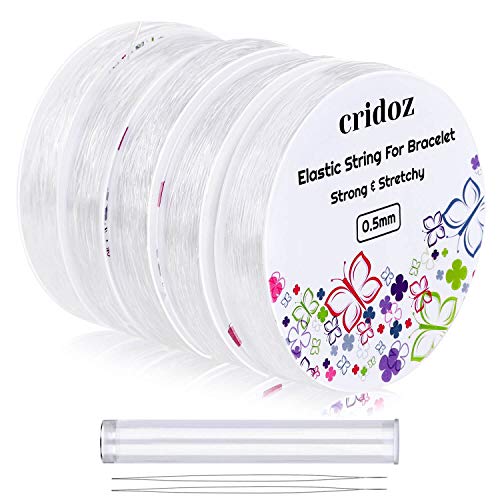
Stretchy String for Bracelets: Cridoz elastic string kit comes with 5 rolls of different sizes clear elastic cord for bracelets and 2 pieces of large eye beading needles, great for seed beads, pony beads, friendship bracelets, Kandi necklace, crafts and jewelry making

HIGHEST QUALITY: Stretch Magic is a strong, durable, non-fraying material, with great elasticity and resiliency. Consistent diameter throughout the entire spool. The perfect stretch cord for making jewelry that's easy to wear and remove!
Paxcoo Elastic Bead Cord for Jewelry Making
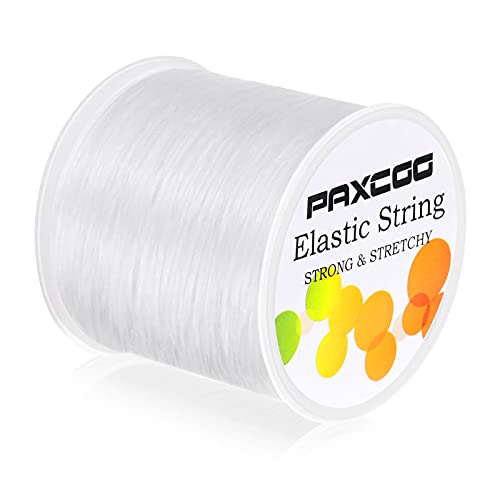
EASY TO TIE KNOTS: The elastic thread for bracelets is very flexible and can be threaded through both small and large beads, and is suitable for beads of all materials. The...
What makes a stretch cord truly versatile? With Paxcoo, I found it comes down to striking that sweet spot between thin, manageable cord and enough heft to handle real beads.
The Sweet Spot Thickness
At 1 mm wide and 0.7 mm thick, this elastic polyester spandex hits a middle ground. It threads through seed beads without swearing (trust me, I’ve gotten frustrated with thicker cords), yet it won’t snap when you load on heavier gemstone or glass beads.
That crystal-looking finish is a nice touch, too: sturdy and actually pretty, not cheap-shiny.
Knotting That Works
I appreciate that knots stay small and strong. You can hide them cleanly among beads, which matters if you’re selling pieces or just hate sloppy finishes.
The Value Reality Check
328 feet per roll means you’re set for ages. However, white only? That limits color-matching if your bead palette runs bold.
My Verdict: I recommend Paxcoo for beginners building skills and anyone prioritizing quantity over color variety. Threading ease plus knot reliability makes this my practical middleweight pick.
Best For: Beginners building jewelry-making skills and anyone prioritizing quantity and reliability over color variety.
Pros:
- Thin enough (1 mm wide, 0.7 mm thick) to thread through seed beads easily while sturdy enough to handle heavier gemstone and glass beads without snapping
- Knots stay small, strong, and easily hidden among beads for clean, professional-looking finishes
- 328 feet per roll provides excellent long-term value for extensive beading projects
Cons:
- Available only in white, limiting color-matching options for bold or varied bead palettes
- Crystal-looking finish may not suit all aesthetic preferences despite being described as sturdy rather than cheap-shiny
- Polyester spandex material may lack the premium feel of natural fiber alternatives for some jewelry makers
Recommended Products

Elastic String Cord: Comes with a roll of 20m/66ft clear elastic string with a diameter of 1mm. 1mm diameter of the cord fits for most bead sizes and 20m length is enough for bracelets and necklace jewelry making and the roll is lightweight and portable that you can take it to school or gathering and bead with friends.

Material: Elastic Thread Spandex Yarns

【Clear Stretchy String for Bracelets】Includes 1 x1mm round transparent crystal elastic string cord. Ideal bead string for clay beads, pony beads bracelet making, friendship bracelet beads, seed beads, crystal beads, letter alphabet beads, number beads, glass beads, kandi beads, clear beads and more.
Stretch Magic Elastic Beading Cord 1mm (25m) for Jewelry Making

HIGHEST QUALITY: Stretch Magic is a strong, durable, non-fraying material, with great elasticity and resiliency. Consistent diameter throughout the entire spool. The perfect...
The Stretch Magic Elastic Beading Cord 1mm is my top pick for anyone who wants professional results without the professional headaches. This spool lasts forever, and the clear polyurethane construction plays nice with literally any bead color or material. Crystals, pearls, gemstones, glass, plastic charms: it handles them all.
Why It Works
The 1mm diameter hits that sweet spot, thick enough for security but slim enough to thread through most bead holes without cursing under your breath. It’s latex-free polymer, so no allergy worries and no that weird rubber smell that cheap cords get.
The surface stays smooth, which matters more than you’d think; rough cords shred your silk thread and your patience.
Knotting feels almost satisfying here. The cord grips itself, and a dab of glue on your double knot (triple for heavy beads, come on) keeps everything locked tight.
The Real Difference
Pepperell’s been at this since 1917, starting with shoelaces and candle wicking before winning the 1970s macramé crowd. That heritage shows. This cord doesn’t fray when you cut it, doesn’t turn cloudy after a few wears, and springs back like it remembers its job.
Who Should Grab This
If you’re selling bracelets or gifting them, this is your workhorse. Beginners love the forgiveness; pros love the consistency.
The only catch: you’ll need to knot, since there’s no clasp option. For me? That’s a feature, not a bug. Fewer hardware failures, cleaner look.
Verdict: Reliable, invisible, and honestly kind of boring in the best way, this cord just works. Stock up.
Best For: Jewelry makers of all skill levels who want a reliable, professional-quality elastic cord for creating bracelets, necklaces, and beaded accessories that need to stretch and return to shape without visible hardware.
Pros:
- Clear polyurethane construction is virtually invisible and compatible with any bead color or material
- Smooth, latex-free surface that doesn’t fray when cut and maintains elasticity over time
- Easy to knot securely with glue for durable, hardware-free closures
Cons:
- Requires knotting skills and glue for closure—no clasp option available
- May need triple knots for heavy beads, adding slight bulk
- 1mm diameter may not fit through beads with very small holes
Recommended Products

0.5mmStrethcy Bracelet String for Seed Letter Beads: QBJAYTY 0.5mm elastic thread is great to string tiny beads, for example, 2mm, 3mm, 4mm seed beads, waist beads, letter beads, glass beads, pony beads, clay beads, to make beautiful bracelets, necklace, anklets, beaded waist chain. This stretchy bead string is crystal clear, well matching different colors of beads.

QBJAYTY Clay Bead String and Scissor--- Are you looking for an ideal elastic string to string your clay beads, pony beads, glass beads, or bracelet charms, and more conveniently, a nice-looking and safe scissor? QBJAYTY elastic string for scissor pack is your best choice for this purpose.
ELASTIC CABLE QUANTITY MATCHING SALE:JULIMAIDONG Bracelet Elastic Cord comes with a roll of elastic cord in 60M/200ft length, perfect for bracelet making, jewelry making, beading, necklace making and other craft projects. And this roll of elastic cord is lightweight and portable, you can take it to school or party and bead with your friends.
Pluralla 4-Roll Elastic Bracelet String for Jewelry Making

🔹 SNAPS BACK, STAYS SNUG: Our 1mm stretchy bracelet string is formulated with high-recovery elastic that springs back to shape after every stretch—so your bracelets stay...
Looking for a stretch cord that won’t quit on you mid-project? I’ve tested the Pluralla 4-Roll Elastic Bracelet String, and honestly, it’s become my go-to bulk option.
What You’re Getting
Four rolls, 660 feet total, that’s a lot of bracelets. You get black, white, and two rainbow spools (1mm thickness). I love having backup colors without reordering constantly.
Material Reality Check
This stuff stretches and actually recovers, unlike cheap cord that turns into a loose mess. The polyester-rubber blend holds knots tight.
I’ve worn test bracelets for weeks, no sagging.
Bead Compatibility
Threads smoothly through pony beads, clay beads, seed beads. No snagging, no fraying mid-project (the worst, right?).
Who This Suits Best
Beginners, classroom crafters, anyone making friendship bracelets in bulk. The color variety sparks creativity without overwhelming choices.
My Verdict
Not fancy, just reliable. If you want premium feel, look elsewhere. For volume crafting that won’t break your budget? This delivers exactly what it promises.
Best For: Beginners, classroom crafters, and anyone making friendship bracelets or jewelry in bulk who needs reliable, affordable stretch cord with versatile color options.
Pros:
- 660 feet of 1mm stretch cord across four rolls (black, white, two rainbow) provides excellent value for high-volume projects
- Polyester-rubber blend delivers consistent stretch and recovery with secure knot-holding that resists sagging over time
- Smooth threading through pony beads, clay beads, and seed beads without snagging or fraying
Cons:
- Lacks premium feel for those seeking higher-end jewelry materials
- Limited to 1mm thickness, which may not suit all bead hole sizes or design preferences
- Basic color selection (no metallics or specialty finishes) may restrict some creative directions
Recommended Products
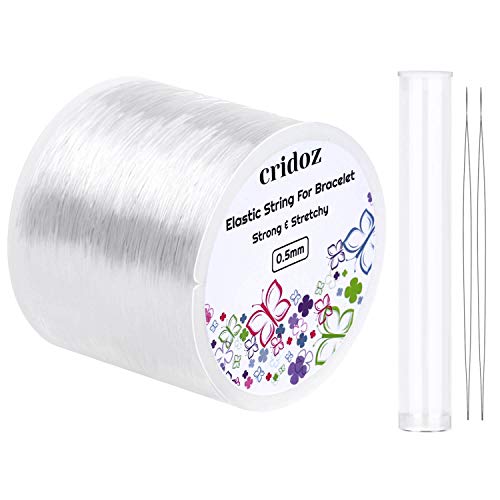
Stretchy String for Bracelets: Cridoz elastic string kit comes with a roll of 0.5 mm clear elastic cord for bracelets and 2 pieces of large eye beading needles, great for seed beads, pony beads, friendship bracelets, Kandi necklace, crafts and jewelry making
EASY TO TIE KNOTS: The elastic thread for bracelets is very flexible and can be threaded through both small and large beads, and is suitable for beads of all materials. The bead string is very simple to tie a knot to secure your bracelets and easily hide the knot among the beads

GREAT VALUE BRACELET MAKING KIT: The package comes with 12 rolls of stretch cord for bracelets in assorted colors that are perfect for seed beads, pony beads, clay beads, bracelets, necklaces, beading, jewelry making and DIY crafts
Factors to Consider When Choosing Stretch Cord for Bracelets
I’ve tested enough stretch cords to know that picking the right one isn’t just about grabbing what’s cheapest. You’ll want to think about cord thickness options, material durability quality, elasticity and stretch, knot security ease, and bead compatibility range, because each factor seriously changes how your bracelet holds up over time.
Let’s break down what actually matters when you’re standing in that craft aisle, staring at fifteen nearly identical spools.
Recommended Products
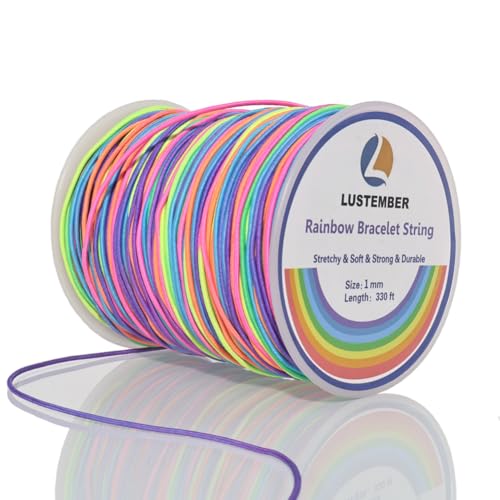
WIDELY APPLICATIONS : Elastic string for bracelets , beading, DIY crafting, drawstring bags, bracelets, pony bead jewelry, hair ties and party hat straps.
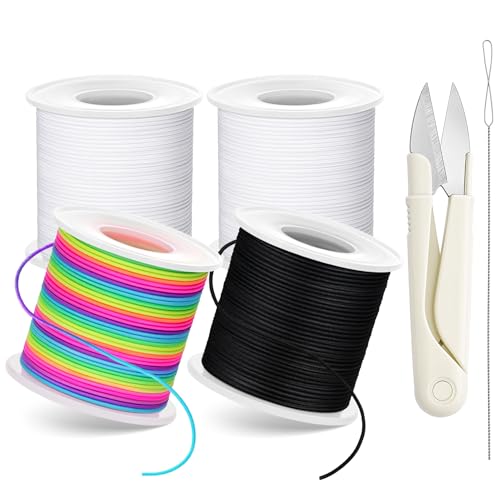
COLOR OPTIONS FOR ENDLESS DESIGNS: This bracelet string kit includes 4 rolls in black, white, rainbow, and an extra white roll, giving you versatile choices for different DIY projects. Each roll measures 165ft, totaling 660ft of elastic string, ideal for bracelet making, beading, and crafting friendship bracelets. The mix of classic and colorful elastic cord helps bring your unique jewelry ideas to life.

【Elastic String】 black &white &Rainbow three classic colors,perfect for beading, bracelets, necklaces, jewelry making and sewing beading, DIY crafting, drawstring bags, bracelets, pony bead jewelry.
Cord Thickness Options
How do you know which cord thickness won’t leave you cursing at your bead mat? I always start by checking my bead holes, because nothing kills momentum like cord that won’t fit.
The Range
Stretch cord runs 0.4 mm to 1.0 mm. I keep 0.4–0.5 mm on hand for seed beads and tiny gemstones. For chunky statement pieces, I grab 0.8–1.0 mm. It holds knots better and feels substantial.
What Actually Matters
Uniform diameter keeps your bracelet from looking lopsided. Thinner cord hides knots inside beads; thicker cord shows more bulk. I dry-fit everything first.
Friction and fraying? Instant dealbreaker.
My Pick
Most bracelet makers need 0.6–0.7 mm. Versatile, reliable, forgiving. Seed bead specialists go thinner; heavy bead hoarders go thicker.
Material Durability Quality
What separates a bracelet that lasts months from one that snaps in a week? Material durability quality, plain and simple.
I always check for elastic polyester spandex, polyurethane, or elastic plastic rubber with high abrasion and aging resistance. These fight fraying and that ugly yellowing that ruins clear beads. Speaking of clear, I favor crystal transparent cords, they keep gemstone and glass colors true without clouding.
Uniform thickness matters too. A cord ranging 0.4–1.0 mm that stays consistent ensures your knots hold and your stretch stays predictable. I get annoyed when cords vary, one weak spot and pop, there goes your work.
Look for smooth cords that pass through seed beads easily and hide knots inside holes. Long-lasting elasticity with good recovery after daily wear? That’s my non-negotiable.
Cheap cord costs more when you rebuild constantly.
Elasticity And Stretch
Why does one bracelet hug your wrist perfectly while another turns into a saggy mess by lunchtime? I’ve learned it all comes down to elasticity, that sweet spot of stretch and recovery.
Elasticity measures how much a cord can stretch under pressure and, crucially, how well it bounces back. Higher elasticity means comfortable wear and less bead sag, but too much stretch creates those annoying beadless gaps over time.
You’ll find cords from 0.4 mm to 1.0 mm diameter, each with different recovery strength. I prefer 0.8 mm for most projects. It offers uniform tension distribution, keeping your beadwork shapely rather than droopy.
Don’t forget durability factors. Sun, moisture, and daily abrasion slowly kill elasticity retention. I always test cords after weather exposure.
A cord that recovers beautifully at day one but dies by month three? Not worth your money.
Knot Security Ease
Great elasticity means nothing if your knot unravels, sending beads skittering across the floor. I always check how well a cord holds its knot before committing to a project.
Medium to high stretch actually helps here. When the cord snaps back to length, it pulls the knot tighter and reduces slip. That’s physics working in your favor.
I pay attention to fracture resistance too. Cheap cords snap at the knot after a few weeks of daily stretching. Quality cords resist that fatigue.
Uniform strand tension matters more than you’d think. Uneven pulls create lopsided knots that loosen over time. I double-knot everything and add a tiny glue dot for security, especially with mixed bead sizes.
Hiding knots inside larger beads keeps things clean. Smaller beads? That’s trickier. Pick your cord diameter accordingly.
Bead Compatibility Range
I’ve learned the hard way that not every cord plays nice with every bead. You need to match diameter to your smallest hole: 0.4–0.5 mm for seed beads, 0.8–1.0 mm for chunky glass or crystal.
Material matters too. Some cords fray instantly threading fine beads, others glide through like butter. I always test a short length first. For knotting inside beads, pick something smooth that won’t snag or bulk up weirdly.
Transparency’s another gotcha. Clear crystal cord keeps gemstone colors true, while color-matched options hide better in dark beads. I’ve ruined pieces using opaque cord that dulled everything.
Check your bead type: sharp gemstone edges slice cheap elastic, clay beads need gentler tension, and crystals demand precise diameter. Wrong pairing means broken bracelets.