
I’ve spent years making sawdust in my garage, and let me tell you: picking the right wood still trips me up sometimes. Softwoods like pine? They’re forgiving when your chisel slips.
Hardwoods like maple and oak? They reward patience with furniture that outlives you. But here’s what nobody tells beginners: moisture content matters more than the species name on the bin. (Ask me about the cherry table that warped into a potato chip last summer.)
Whether you’re carving basswood animals or building cedar planters that actually survive winter, the “best” wood depends on your project, your tools, and how much frustration you’re willing to swallow. So which seven woods actually deserve your money in 2026?
Basswood Carving Blocks 24PCS Whittling Kit for Beginners

[Versatile Sizes for Every Project] Get 24 easy-to-carve blocks in 3 sizes: 20 slim blocks (4"x1"x1") for detailed work, 2 cubes (2"x2"x2") for medium projects, and 2 large...
it’s the training wheels of carving woods, but in the best possible way. I grabbed this Bluvizo 24-piece kit last month, and honestly, I’m impressed by how forgiving the material feels under my knife.
What You’re Actually Getting
Twenty slim sticks (4x1x1 inches), two cubes, and two chunky blocks. The variety matters. I started with the slim pieces for spoon practice, graduated to cubes for small animals, and saved the big blocks for a relief carving that actually worked.
The Quality Check
Every block arrived smooth, knot-free, and ready to go. No sanding, no prep, no splinters hiding to ruin your afternoon. The grain runs even and predictable, which means your knife glides instead of catches.
I painted three ornaments immediately, stained a sign, and left one natural. All took finish beautifully.
Who’s This For?
Beginners, obviously. But I keep reaching for these myself when I want quick practice without fighting grain. The gift packaging feels genuine, not cheap.
My Verdict
If you’re starting out, or just want reliable stock on hand, this kit delivers exactly what it promises.
Best For: Beginners learning to carve, as well as experienced carvers who want reliable, forgiving material for quick practice projects without fighting difficult grain.
Pros:
- No prep required – blocks arrive pre-smoothed, knot-free, and ready to carve immediately without sanding
- Excellent variety – three sizes (slim sticks, cubes, large blocks) allow progression from simple practice to more complex projects
- Takes finish beautifully – smooth, even grain works well with paint, stain, or natural finish
Cons:
- Limited large blocks – only 2 of the 24 pieces are the larger 4x2x2 size, which may run out quickly for bigger projects
- Soft wood limitations – basswood’s forgiving nature means it may not hold fine detail as well as harder woods for advanced work
- Beginner-focused sizing – the 20 slim sticks skew heavily toward smaller projects, which experienced carvers may outgrow quickly
Recommended Products
[Versatile Sizes for Every Project] Get 24 easy-to-carve blocks in 3 sizes: 20 slim blocks (4"x1"x1") for detailed work, 2 cubes (2"x2"x2") for medium projects, and 2 large blocks (4"x2"x2") for bold designs. Whether you're making mini sculptures or statement decor, there's a size for every idea!
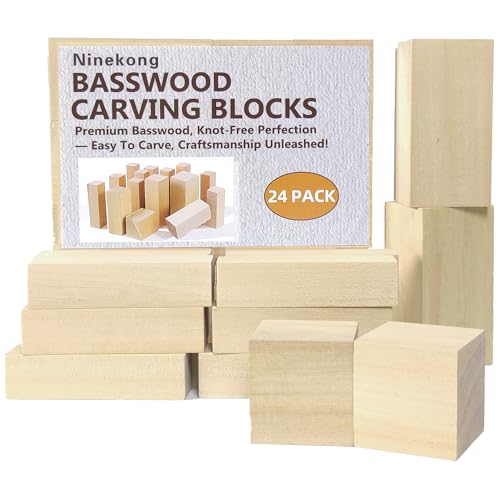
Creative Versatility: This 24-piece carving wood set includes 3 different sizes, offering 20 rectangle blocks (4"x1"x1"), 2 larger rectangles (4"x2"x2"), and 2 cube blocks (2"x2"x2") for a variety of projects.

[Basswood Carving Blocks]-Get creative with this 24-piece carving wood set. Enjoy 24 rectangle blocks (1''x1''x4'').
Woodworking

The multicolor interior isn’t just pretty window dressing, either. Those diagrams pop off the page when you’re squinting at grain patterns at 10 PM.
What You’re Getting
Crooked Media Reads packed 368 pages into this paperback, dropping May 26, 2026. It’s hefty without being coffee-table ridiculous.
I can actually toss it in my shop bag.
Who This Serves
Hobbyists get hand-holding through basic joints.
Professionals? The advanced project sections move fast, assume you own real tools, and don’t waste time explaining what a rabbet is. (It’s a stepped groove, by the way.)
The Verdict
Beginners: grab this, but pair it with YouTube for the visual learners. Seasoned woodworkers: the multicolor layouts speed up reference, though you’ll skip half the intro chapters.
Either way, it’s practical instruction that respects your time.
Best For: Hobbyists and professionals seeking practical woodworking instruction with quick-reference multicolor diagrams, though beginners may need supplemental video resources.
Pros:
- Multicolor interior design makes technical diagrams highly visible and easy to read in workshop lighting conditions
- Balanced 368-page length provides substantial content without being unwieldy or impractical to transport
- Efficient pacing respects reader time, with advanced sections that assume prior knowledge and skip redundant explanations
Cons:
- Beginners may find the visual learning curve steep without supplementary YouTube tutorials
- Advanced project sections move too quickly for readers without established tool collections
- Seasoned woodworkers will find significant portions of introductory chapters skippable, reducing overall value for experienced users
Recommended Products
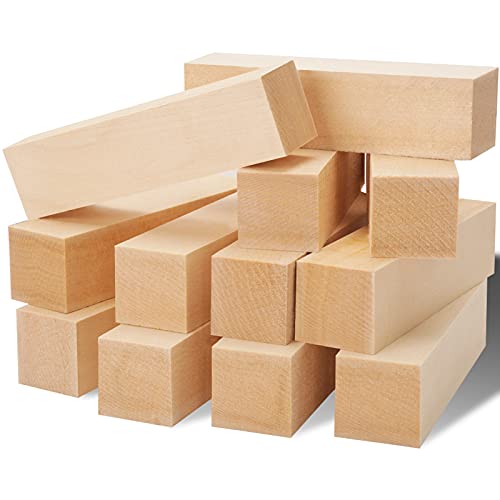
Reliable Carving Wood: These good carving woods unfinished wood blocks are made of quality natural basswood; durable; non-toxic; smooth and polished; neatly cut without burrs; this wood carving wood is a great gift for beginner and professional woodcarvers

Basswood carving blocks 16 Piece Set: this whittling kit has 16 basswood blocks. A great opportunity to get creative as much as you like and create new projects freely!

Package Included: 7 Pieces Basswood Carving Blocks Set,Two Different Size,Are Respectively 6Pcs 4x1x1''(10x2.5x2.5cm) And 1Pcs Larger Block 4x2x2''(10x5x5cm).
HURRICANE 4 Piece Wood Chisel Set for Woodworking

Premium Blades: Drop forged CR-V steel with heat-treated edges ensures sharp precision and long-lasting durability, can be used to make finish or paring cuts on wood...
Who needs a chisel set that won’t break the bank? I’ve found my go-to starter kit in the HURRICANE 4 Piece Wood Chisel Set. You get four sizes, 1/4″ to 1″, that handle most beginner and hobbyist jobs without crying over bent steel.
The blades use drop-forged CR-V steel with heat-treated edges. Translation: they stay sharp longer than you’d expect. The 25° bevel works across soft wood, hard wood, even laminates.
I’ve cut mortises and done paring work with decent results.
The PVC handles feel lightweight, not premium, but they survive mallet hits. Blade guards included, which I appreciate, nobody likes dull edges from drawer rattling.
Beginners, DIYers, weekend warriors: this set fits your life.
Serious hand-tool enthusiasts will outgrow it fast.
Verdict: unbeatable value for learning the basics.
Best For: Beginners, hobbyists, and DIYers seeking an affordable starter chisel set for basic woodworking projects without investing in premium tools.
Pros:
- Drop-forged CR-V steel with heat-treated edges maintains sharpness longer than expected
- 25° bevel handles soft wood, hard wood, and laminates; includes blade guards for edge protection
Cons:
- PVC handles feel lightweight and lack premium quality
- Serious hand-tool enthusiasts will quickly outgrow the set’s capabilities
- Not designed for heavy-duty or professional-grade woodworking demands
Recommended Products

You will get a total of 18 board

Solid Hardwood - Select White Hard Maple

Barrington Hardwoods Domestic Variety Pack (15 Pcs)

💯 Included are 5 Black Walnut 5 Cherry and 5 Hard Maple 3/4" x 2" x 12" ✔️Beautiful Grain 🔥 Perfectly Kiln Dried ✔️ Two sides sanded to 3/4" thickness ❤️...
A pack like this, I’m telling you, solves a real headache for hobbyists who want variety without buying full boards. I’ve stared at lumber yard minimums before, wondering if I really need eight feet of walnut for one small project. You probably have too.
What’s Inside
Barrington sends fifteen pieces, five each of Black Walnut, Hard Maple, and Cherry. Every board measures 3/4″ thick by 2″ wide by 12″ long, kiln-dried and sanded smooth on two faces. That’s project-ready stock, no jointer required.
The Real Appeal
I love comparing the three side by side. Walnut’s chocolate browns, Maple’s pale hardness, Cherry’s reddish warmth, they teach you how different grains behave under your tools.
The 12-inch length fits small cutting boards perfectly. Hand wash only, obviously. Wood and dishwashers don’t mix.
Who This Suits
Beginners testing techniques. Gift-makers needing manageable blanks. Anyone bored with single-species projects.
The Catch
Two inches wide limits your designs. These aren’t table legs, they’re practice pieces and small goods.
I’m grabbing another pack.
Best For: Beginners testing techniques, gift-makers needing manageable blanks, and hobbyists seeking affordable hardwood variety without committing to full lumber yard minimums.
Pros:
- Provides five boards each of Black Walnut, Hard Maple, and Cherry for immediate side-by-side grain comparison and project variety
- Kiln-dried and sanded to project-ready 3/4″ thickness eliminates the need for a jointer or extensive surface preparation
- Compact 12″ x 2″ dimensions make these ideal for small cutting boards and practice pieces
Cons:
- Narrow 2-inch width significantly limits design possibilities and renders pieces unsuitable for larger structural components like table legs
- 12-inch length restricts utility strictly to small goods and prevents use for sizable panels or furniture
- Fixed assortment of five pieces per species prevents customization of wood quantities for specific project needs
Recommended Products

Some of the species we carry are: Walnut, Red Oak, White Oak, Poplar, Cherry, Birch, Soft Maple, Hard Maple, Hickory, Cherry, and Red Grandis. You will get at least 3 different species

[Size Options] - Available in lengths of 2 or 3 feet; nominal thicknesses of ¼, ½, and 1 inch; and nominal widths ranging from 2 to 12 inches.
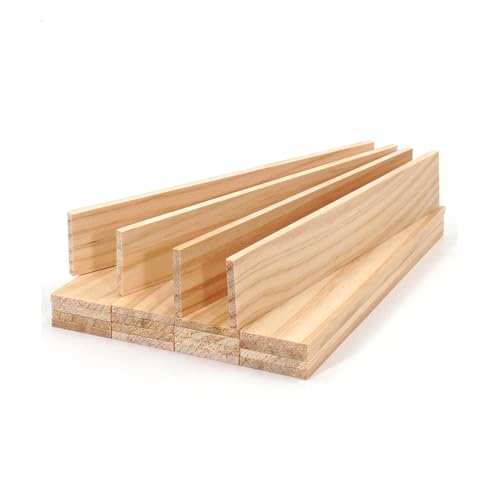
Package Includes: 20 PCS flat wooden dowels for crafts, they are 1 inch (2.5 cm) in width, 1/8 inch (0.32 cm) in thickness, 6 inch (15 cm) in length.
Wood Square Dowel Rods 20PCS 1/2″ x 12″ for Crafts

PACKAGE INCLUDED----20PCS square wooden sticks, each dowel rod is 1/2 inch thick by 1/2 inch wide and 12 inches long. NATURAL PINE WOOD----Our unfinished wood dowel rods are...
Looking for a solid starter wood that won’t fight you every step of the way? I keep reaching for these Coowayze pine dowels, and here’s why.
What You’re Getting
Twenty sticks, each a half-inch square by twelve inches long. That’s enough material for a classroom full of projects or your entire weekend build session.
The pine comes fully sanded, no splinters waiting to ambush your fingers. I appreciate that it’s unfinished, so I choose the final look: paint it, stain it, or let that clean natural grain speak for itself.
Real-World Performance
These cut cleanly with a basic hand saw. No fancy tools required. The square profile stays true, which matters when you’re building frames, miniature furniture, or those shadow box rims that need crisp corners.
I’ve used them for dollhouse tables, kite cross-braces, even wedding centerpieces that actually impressed the relatives.
Who Benefits Most
Teachers love them for STEM projects. Hobbyists love the consistency. Beginners love that forgiving pine grain.
My Take
Not exotic, not flashy, just reliable. Sometimes that’s exactly what your project demands.
Best For: Hobbyists, teachers, students, and DIY beginners who need affordable, easy-to-work-with wood for crafts, STEM projects, and small-scale builds.
Pros:
- Fully sanded smooth finish with no splinters, ready to use straight from the package
- Unfinished pine accepts paint, stain, or natural finish for complete creative control
- Clean, consistent cuts with basic hand tools; square profile stays true for precise corners
Cons:
- Soft pine wood may dent or scratch more easily than harder woods under heavy use
- Limited to 12-inch length, requiring joins or alternative materials for larger projects
- Natural wood grain variation means color and texture may differ slightly between pieces
Recommended Products

Solid Fir Wood Construction for Long-Lasting Durability: Crafted from solid fir wood, our square planter boxes feature a naturally weather-resistant finish that withstands outdoor elements year-round. The rich, unique wood grain adds a warm, rustic charm to any space, making it the durable choice for growing flowers, herbs, vegetables, and succulents, while blending seamlessly with patio, garden, or porch decor.

100% Cedar Wood: Our garden bed is constructed using sustainably sourced cedar wood, known for its durability against the elements.

ACACIA WOOD CONSTRUCTION: The wood bucket planter is expertly crafted from durable Acacia wood; Our barrel planter, with a distinct wood grain, brings a touch of nature to your living space; Good choice for decorating or growing plants in a house or yard
Simple Woodworking Projects for Beginners

Wondering where to start when every board looks the same? I’ve been there, staring at lumber piles like they’re written in another language.
For beginners, softwoods like pine and cedar are your best friends. Pine’s forgiving and easy to cut. You’ll make mistakes, trust me. Cedar smells amazing and resists rot, perfect for outdoor planters or simple boxes.
Hardwoods? Save them for later. Oak and maple look gorgeous, but they’re dense and unforgiving. I tried oak on my first project. Never again.
Start with these: a basic cutting board (pine or poplar), a small shelf, or a simple carved spoon. The 2026 guide “Simple Wood Working Projects” offers 82 pages of patterns that actually work. No fancy joinery, no tools you don’t own.
My verdict: Grab pine, pick one project, and cut something. You’ll learn more from sawdust than reading.
Best For: Complete beginners who want to start woodworking with affordable materials and simple projects without investing in expensive tools or hardwoods.
Pros:
- Uses inexpensive, forgiving softwoods like pine and cedar that are ideal for learning
- Requires no fancy joinery or specialized tools beyond basic equipment
- Includes practical, tested patterns from an 82-page guide with projects that actually work
Cons:
- Not suitable for those wanting to work with premium hardwoods like oak or maple
- Limited to simple projects (cutting boards, shelves, spoons) rather than advanced furniture
- Publication date of 2026 means the physical book is not yet available for immediate purchase
Recommended Products

Carving Wood Blocks 18 piece set: this whittling kit will be a good base for your further projects - it includes 18 different basswood blocks and cubes that you can use for some amazing ideas.

【Carving Wood Blocks】You will get 24 pieces of basswood blocks in 3 sizes, measuring about 20 PCS small rectangle blocks (4''x1''x1''), 2 PCS cuble blocks(2''x2''x2''), 2 PCS large rectangle block(2''x2''x4'') that you can use for some amazing ideas

Basswood Carving Blocks: start your wood carving journey with us because basswood for whittling has almost no grain and is very soft, so it’s a great choice for all wood carvers ages 14 and older.
Titebond Original Wood Glue 4 oz

Industry Standard Wood Glue: Trusted by professionals and hobbyists alike, Titebond Original provides strong initial tack and fast set time to reduce clamp time and speed up...
Why does glue matter as much as the wood itself? Because even the finest oak joint falls apart without the right adhesive. I’ve learned this the hard way.
What Makes It Special
Titebond Original Wood Glue 5062 isn’t fancy, and that’s exactly why I keep reaching for it. This 4 oz bottle (model 75162 from Franklin International) handles everything from furniture repair to weekend modeling projects.
It bonds stronger than the wood itself, which sounds like marketing fluff until you snap a joint and watch the wood fail first.
The Practical Stuff
Cleanup’s a breeze with water while it’s wet. Once dry, it’s solvent-resistant and sands beautifully without gumming up your paper. No special prep, no toxic fumes, no drama.
My Verdict
For beginners: grab this. For pros: you probably already own it. The 4 oz size fits any toolbox without drying out before you finish it.
Best For: Woodworkers of all skill levels who need a reliable, versatile adhesive for furniture repair, assembly, construction, and modeling projects.
Pros:
- Bonds stronger than wood itself, ensuring joints fail before the adhesive does
- Easy water cleanup when wet and excellent sandability when dry without gumming sandpaper
- Solvent-resistant and non-toxic with no special prep required or harsh fumes
Cons:
- Only available in a 4 oz size which may require frequent replacement for larger projects
- Must be used while wet for easy cleanup; dried glue requires more effort to remove
- Single pack packaging offers no quantity discount for users who need multiple bottles
Recommended Products

[24Pcs Complete Set] - Our wood carving kit provides everything you need to start your carving journey: 4pcs whittling knives, 5pcs detail knives, 6pcs basswood blocks, 4style templates, a polishing compound, a leather strop, and a pair of safety gloves. Our wood carving tools set provides a range of tools for both beginners and veterans.

[32Pcs Complete Set] - Our wood carving kit includes everything you need to begin your carving journey: 4pcs whittling knives, 5pcs detail knives, 4style templates, 6pcs basswood blocks, a spoon block and other wood carving tools, providing a range of tools for both beginners and experienced carver.

4” X 1” X 1” SQUARE WOOD DOWEL RODS: Cut exactly to length with even, square sides. Each dowel rod is 4 inches long and 1 inch thick by 1 inch wide. If you need square dowels that are thicker and more heavy-duty, this dowel thickness is perfect for you.
Factors to Consider When Choosing Wood for Woodworking
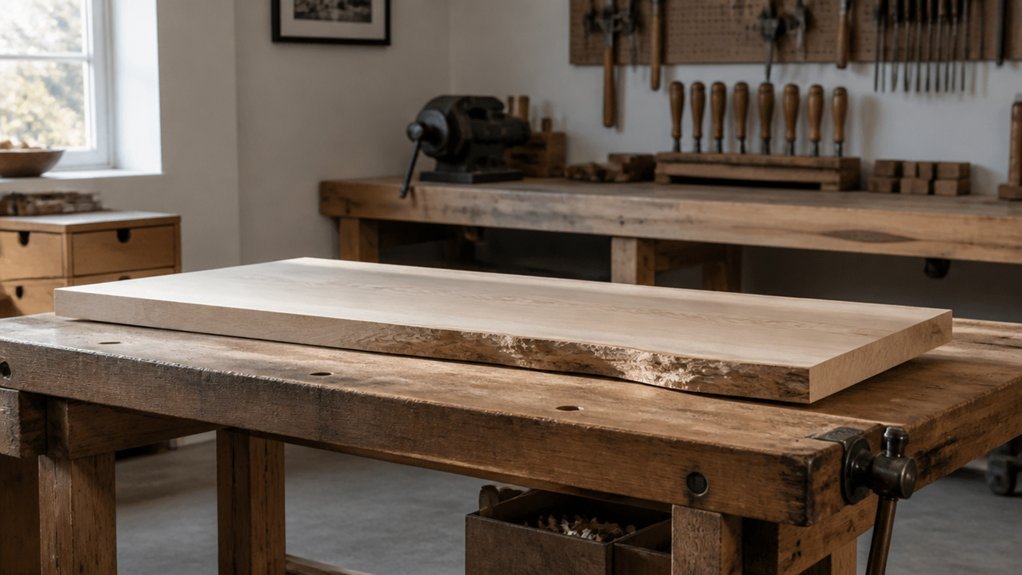
I’ve learned that picking the right wood isn’t just about grabbing whatever looks pretty at the lumber yard. When I’m starting a project, I always check the wood species, how hard and dense it is, the moisture content (wet wood warps, dry wood behaves), which way the grain runs, and whether it’ll stay stable over time.
These five factors, wood species selection, hardness and density, moisture content levels, grain pattern direction, and dimensional stability, make or break your finished piece.
Recommended Products

Solid Hardwood - Select White Hard Maple
💯 Included are 5 Black Walnut 5 Cherry and 5 Hard Maple 3/4" x 2" x 12"

Wood Species Selection
Picking wood isn’t about finding the “best” species, some mythical perfect plank. It’s about matching the wood to your project, your tools, and your patience level.
Softwoods like pine forgive beginners; they carve easy and don’t fight back. Hardwoods such as maple or cherry demand sharper blades and steadier hands, but reward you with finer finishes and pieces that outlast trends.
For carving specifically, I reach for basswood. Its straight grain, light weight, and smooth texture hold detail beautifully without splintering.
Consider workability and splinter resistance, these affect how cleanly your blade shaves and how tight your joints fit. Don’t ignore aesthetics either; color, grain pattern, and figure determine whether your finish pops or falls flat.
Match the species to your skill and vision.
Hardness And Density
When I’m standing in the lumber aisle, running my thumb across a board’s edge, what I’m really doing is testing the story its density tells.
Wood hardness lives on the Janka scale. It measures how many pounds of force it takes to push a steel ball halfway into the wood. Higher numbers mean tougher, more dent-resistant material.
Here’s the practical breakdown:
Dense woods (maple, walnut): resist scratches beautifully, perfect for tables and floors.
Soft woods (pine, cedar): forgiving for beginners, easier to cut and shape.
But there’s a catch. Harder woods chew through your blades faster. You’ll sharpen more often, or you’ll burn through expensive bits.
Match the wood to your project. Building a bookshelf that’ll last decades? Go hard. Whipping up quick shop jigs? Soft saves time and money.
What’s your priority, durability or ease?
Moisture Content Levels
Grab a moisture meter before you commit to any board, because hidden water content will wreck your project faster than a dull blade.
I check every board twice. Wood moisture content, or MC, is simply the percentage of water still inside. For indoor projects, I aim for 6–8% on hardwoods, 7–12% on softwoods. Anything higher invites warping, cracking, and heartbreak six months later.
Fresh-cut “green” wood runs above 20%. That’s trouble. I stick with kiln-dried stock, or properly air-dried pieces.
Each environment has its own equilibrium moisture content, EMC for short, where wood finally settles. Ignore this mismatch, and your tabletop cups, your joints gap, your finish peels.
What’s the fix? Measure, wait, acclimate. Your workshop isn’t the lumberyard. Give boards time to adjust. Buy dry, store dry, build dry. I learned this the expensive way; you shouldn’t have to.
Grain Pattern Direction
Why does one board plane like butter while its neighbor fights back with tear-out and frustration? I’ve learned it’s all about grain direction, and it makes or breaks your workflow.
Straight grain is your best friend. It planes clean, sands smooth, and won’t fight your chisel. Wavy or wild grain? That’s where you’ll wrestle with splintered patches and ruined surfaces.
I always check grain before cutting. Going with the grain, following those fiber lines, prevents that ugly tearing you get when blades dig against the flow. It’s night and day.
When joining boards, matching grain direction matters more than most folks think. Misaligned pieces split unpredictably under stress and scream “amateur job” across glued seams. Plus, consistent grain keeps your project looking unified, not patchwork.
End grain shows your skill, honestly. It cuts tougher, demands sharper tools, but rewards with bold, dramatic patterns. Worth the effort for visible surfaces.
For beginners, I’d grab straight-grained softwoods. You’ll build confidence without the frustration. Experienced woodworkers, embrace figuring grain for showstopping results.
Dimensional Stability
Grain direction isn’t the only thing that’ll mess with your project down the line. Dimensional stability, how much wood shrinks, swells, or warps when humidity changes, matters just as much.
I’ve learned this the hard way. A beautiful table I built from green oak? Twisted into a pretzel within six months. Now I stick with kiln-dried stock at 6-8% moisture content. Hard maple and birch behave better than resin-heavy pine because their density stays uniform throughout.
Tight-grained wood with minimal growth rings moves less across the grain, keeping your joinery tight. I always seal every surface, end grain especially, to slow moisture exchange. Skip this step and you’re asking for gaps, cracks, and wobbly legs.
For stability, I’ll take boring over beautiful every time.
Ease Of Workability
How much does ease of workability really matter? If you’ve ever fought tear-out on gnarly grain or resharpened a plane iron three times in one afternoon, you know the answer. It matters a lot.
Softwoods vs. Hardwoods
I reach for pine when I want easy cuts and smooth routing. Its lower density means less resistance, less sweat. Hardwoods fight back.
The Carving Sweet Spot
Basswood’s my secret weapon for detail work. That fine, even texture lets blades glide without constant stopping to hone edges. Your tools stay sharper longer, and your hands thank you.
What Else to Watch
Moisture content needs to be consistent, or you’ll get catching and tear-out. Straight grain, minimal knots, no surprises. Simple.
Verdict: Beginners, start soft. Experienced makers, match the wood to your patience level that day.
Finish Compatibility
Where does all your careful work go to die? Right under your finish coat. I’ve learned the hard way that wood fights back when you’re sloppy about compatibility.
Pine, that cheap softwood favorite, drinks stain like a thirsty sponge and leaves you with splotchy nightmares. Meanwhile, maple gives you that smooth, even color if you prep it right. Basswood, the carver’s friend, behaves so nicely you’ll forget finishes can be tricky.
Porosity and grain pattern make or break your project. Tight grain? Uniform absorption. Open grain? Prepare for surprises.
Cherry and walnut reward patience, darkening beautifully over time. Other woods? They’ll turn orange on you when you least expect it.
Here’s my rule: seal first, stain second. Skip conditioning and you’ll spot every mistake.
Tool Requirements
Once you’ve got your finish sorted, the real fun begins: picking up your tools and realizing not every wood plays nice with the steel you’ve got.
I learned fast that softwoods like pine demand razor-sharp, durable blades that slice without crushing fibers.
Hardwoods? They eat cheap steel for breakfast. You’ll want high-quality chisels with edge-holding temper, especially for daily mallet work. My go-to setup includes a 25° bevel chisel, the sweet spot for most mortises and surfaces.
Ergonomic handles matter more than you’d think, your hands will thank you after hour three. Don’t skip blade guards. Dinged edges and stitches aren’t fun.
Finally, check compatibility: some woods need tool tuning before cutting clean. Match your steel to your stock, and you’ll save headaches later.