
A rainbow of tubes glitters under studio lights, each promising to transform blank cotton into something alive.
I’ve tested fifteen paints for canvas art in 2026, and let me tell you, not all pigments are created equal.
Some dry to a dull ghost of their wet promise: others bloom with archival richness that lasts decades.
Want to know which ones actually deliver?
KEFF 24-Pack Premium Canvas for Painting (5×7-11×14)
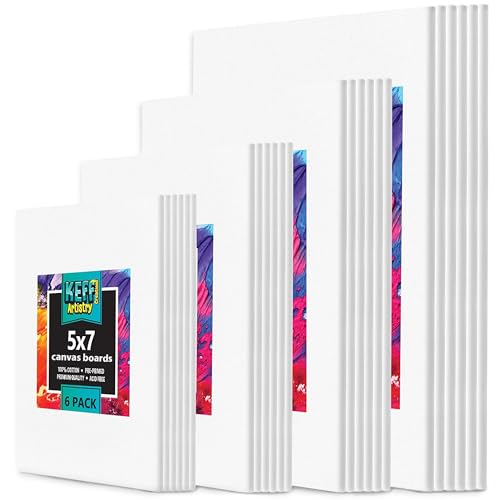
【 Ultimate Canvas for Painting Set 】 This premium canvas boards for painting pack includes 6 pieces of each size - 5"x7", 8"x10", 9"x12", and 11"x14" canvases. Use a...
When I’m hunting for canvas sets that actually deliver versatility without draining my wallet, the KEFF 24-Pack Premium Canvas stops me in my tracks.
Here’s the deal: you get six canvases in each of four sizes, from 5×7 inches up to 11×14. That’s 24 boards total, enough to fuel weeks of experimentation without the guilt of wasting money on “practice pieces.”
I love the triple-primed 100% cotton surface. It grips acrylics and oils beautifully, but here’s a surprise: it handles watercolor and tempera too, without that annoying warping cheaper boards suffer.
The smooth finish gives strong color payoff, whether I’m blocking in bold strokes on the larger sizes or adding fine details on the 5x7s.
They fit standard frames, which saves hassle. Beginners can mess around freely; pros can knock out quick studies. Kids, teens, adults, classrooms, home studios: this set adapts.
The verdict? If you want one purchase that covers almost every painting scenario, grab this. It’s practical and durable.
Best For: Artists of all skill levels—from beginners experimenting with different media to professionals needing quick studies—who want a versatile canvas set for home studios, classrooms, or personal projects.
Pros:
- Exceptional versatility with four sizes (5×7 to 11×14) and compatibility with multiple media including acrylics, oils, watercolors, and tempera
- Triple-primed 100% cotton surface resists warping and delivers strong color payoff
- Fits standard frames
Cons:
- Canvas boards rather than stretched canvases, which may limit certain framing or display options
- Fixed size assortment may not suit artists needing multiple canvases of a single specific dimension
- 5×7 and 8×10 sizes may feel small for artists focused primarily on large-scale works
Recommended Products

Artist-Quality Acrylic Paint Set: This set features 24 premium acrylic colors, each in a 60ml/2oz bottle. It also includes 12 versatile painting brushes & a palette and a beginner's user guide with a color wheel. Perfect for kids, students, beginner art lovers and professional artists for painting and crafting. Friendly reminder:Remove Inner Seal Before Use.

Acrylic Paint Set with 12 Brushes: Caliart acrylic painting kit comes with 36 colors paints in 2 oz bottles, including metallic gold and silver colors, our artist quality acrylic paint features smooth, highly pigmented color to produce vibrant, consistent shades. Come with 12 paint brush set, whether you are new to acrylic painting or a seasoned artist, you can start painting right away, and they will set fire to your imagination.

🎨Safety guarantee & High quality- Made of premium paint material, conforming to ASTM D-4236 and EN71 standards,HissiCo acrylic paint set is in rich pigment, creamy, non toxic and safe for adults, teens and kids’ creative art painting time
ESRICH 5-Pack 8×10 Canvas Boards for Painting

【8x10 Canvas Value Pack】This canvas bulk includes 5 pack 8x10 inches blank canvases for painting, perfect painting canvas for kids and Professional painter. 【Pure...
Who’s looking for affordable, reliable canvases without the fuss? I’ve found the ESRICH 5-Pack 8×10 Canvas Boards, and honestly, they’re a solid pick for anyone who wants to paint without overthinking it.
What You’re Getting
Five 8×10 inch boards, pure cotton with a smooth surface that actually holds paint properly. The acid-free primer means your work won’t yellow or degrade over time.
That sturdy board core? No warping, no frustration. I’ve used flimsy canvases that buckle under wet media, these don’t.
Media Compatibility
Oil, acrylic, watercolor, gouache, tempera, pouring, it handles all of them. I tested acrylics and oils primarily; the surface grips without being thirsty or slick.
Real-World Use
These shine for teaching, kids’ projects, or quick studies. The 8×10 size is portable, gift-friendly, and perfect for home decor experiments.
Want personalized wedding or birthday gifts? The blank surface takes customization beautifully.
My Verdict
Beginners and casual painters: grab these. Professionals needing gallery presentation? You’ll want deeper profiles.
Best For: Beginners, casual painters, kids’ projects, and anyone seeking affordable, reliable canvases for practice, teaching, or personalized gift-making without gallery presentation needs.
Pros:
- Versatile surface handles oil, acrylic, watercolor, gouache, tempera, and pouring without warping or buckling
- Acid-free primer and pure cotton construction ensure artwork longevity without yellowing
- Portable 8×10 size and sturdy board core make them ideal for teaching, home decor experiments, and customization projects
Cons:
- Flat profile lacks the gallery-ready depth professionals typically require for exhibition work
- 8×10 size may feel limiting for larger-scale compositions or ambitious projects
- Five-pack quantity might not satisfy high-volume painters or classroom settings needing bulk supplies
Recommended Products

RoseArt Premium Oil Paint Set features maximum strength pigmented colors and a rich, smooth, buttery texture

Delicate and Creamy Texture Oil Paint Set: Paul Rubens oil paints are made with high-quality fine art pigments. High pigmentation provides excellent covering power and tinting strength. In addition to being easy to blend, it moves smoothly over surfaces such as canvas or painted wood panels and retains brush strokes and knife marks brilliantly

【40 Rich & Vibrant Oil Based Colors】Magicfly Professional Oil Paint Set contains 40 unique colors (primary colors, metallic gold & silver). Plus we provides 2 more white color tubes than other normal paint sets, satisfying your infinite imagination.
HAPPYHEIDI Canvas Tool & Painting Pouch
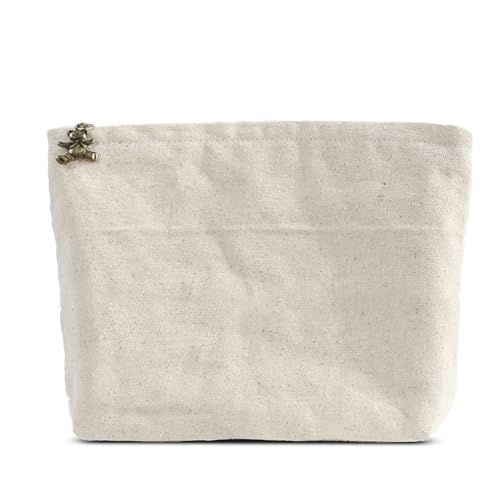
DIY & PERSONALIZE YOUR WAY Turn this makeup bag into your own personalized pouch with patches, initials, embroidery, charms, pins, fabric accents, or other creative touches....
I’m always on the lookout for gear that actually earns its spot in my art bag, and the HAPPYHEIDI Canvas Pouch caught my eye for one simple reason: it’s not pretending to be something it’s not.
This is a straightforward 7.1 x 2.4 x 7 inch organizer made from 12oz heavy-duty cotton canvas, and at 70 grams, it won’t weigh you down.
The gusseted 2.4-inch base gives it structure, so it stands upright on my table instead of flopping over like cheaper alternatives. I’ve stuffed mine with brushes, small tubes of paint, and a palette knife, and the reinforced stitching hasn’t complained once. The smooth-glide metal zipper feels satisfying, not cheap.
Sure, HAPPYHEIDI markets this for makeup and toiletries, but who cares? The raw white canvas takes paint splatters like a champ, and it’s machine washable under 104°F when things get messy. It folds flat to 10 x 8.5 inches for travel, then pops back into shape.
Who’s this for? Beginners needing an affordable organizer, travelers wanting dual-purpose gear, or anyone tired of plastic bags. The solid white pattern won’t win art awards, but it’s clean and giftable.
Verdict: It’s a pouch. It works. That’s honestly enough.
Best For: Beginners, travelers, and anyone seeking an affordable, durable organizer for art supplies, makeup, or toiletries who values functionality over flashy design.
Pros:
- Lightweight 70-gram construction with heavy-duty 12oz canvas and reinforced stitching withstands heavy use
- Gusseted 2.4-inch base provides upright structure and ample 7.1 x 2.4 x 7 inch capacity without bulk
- Machine washable under 104°F and folds flat to 10 x 8.5 inches for easy travel and cleaning
Cons:
- Raw white canvas shows stains and paint splatters visibly despite washability
- No internal pockets or compartments for organizing smaller items
- Plain solid white aesthetic lacks visual distinction for users wanting style
Recommended Products

115 lb. canvas paper with textured finish
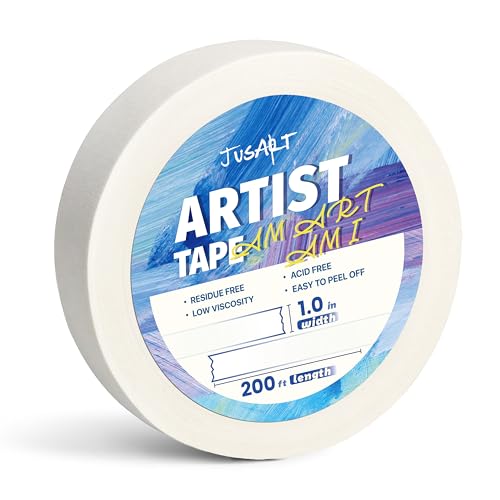
Formula Upgrade: This 200 ft rolls are made from premium pulp, offering tear resistance and a translucent cool white finish that balances aesthetics with visibility

PIEXANGH Canvas Feet Risers Set of 4

Our Canvas Stands great for stability with friendly materials, ensuring using Great for art enthusiasts of all age indoor, schools, and art classes Practical and easy to...
Looking for stability while you paint? I’ve found the PIEXANGH Canvas Feet Risers Set of 4, and honestly, they’re a game-changer for keeping your canvas steady.
What These Actually Do
These canvas stands lift your work off the table, which stops paint from pooling underneath (pour painters, you know the struggle). I use them for acrylic pours, but they work for regular painting too.
The set comes with four risers, so you’re covered for most standard canvas sizes.
Build and Portability
They’re lightweight, friendly materials, and I toss them in my bag for outdoor sessions without a second thought. Schools and art classes love these, and I get why.
They’re practical, not fancy, but they do the job.
My Verdict
For students, hobbyists, or anyone painting at home, these are solid. Professional studio artists might want something heavier.
Best For: Students, hobbyists, and home painters who need lightweight, portable canvas support for acrylic pours and regular painting.
Pros:
- Lightweight and portable for travel and outdoor painting sessions
- Prevents paint pooling underneath canvas, ideal for pour painting techniques
- Practical for art classes and beginners
Cons:
- May lack the heft and stability professional studio artists require
- Limited to standard canvas sizes with only four risers included
- Basic construction prioritizes function over premium durability
Recommended Products

Primed & Ready to Paint - Our canvases for painting are already primed with acid-free acrylic and ready to use. No need to prepare!

【Canvases for Painting 8x10 】36 packs 8x10 inch blank canvas boards for painting, which is great for artists of kids to adults. A large number of painting canvases art supplies are suitable for school, painting classes, kids DIY craft use, and don't worry about running out of painting supplies for your artwork!

【8x10 Canvas Value Pack】This canvas bulk includes 20 pack 8x10 inches blank canvases for painting, perfect painting canvas for kids and Professional painter.
Shuttle Art Acrylic Paint Set, 30 Tubes

VIBRANT ACRYLIC PAINTS : Shuttle Art 30 Acrylic Paint Set consists of 30 vibrant assorted colors and with BONUS 3 FREE PAINT BRUSHES. Each tube is filled with 12 ml (0.4 oz)...
What makes a paint set truly beginner-friendly? I think it’s about having everything you need without overwhelming you. That’s why I keep coming back to the Shuttle Art Acrylic Paint Set, 30 tubes, when friends ask where to start.
The Basics
You get 30 colors in 12 ml tubes, plus three free brushes thrown in. It’s not fancy packaging, but who cares? The tubes are small enough that I don’t feel guilty experimenting, and 30 colors means I’m not stuck mixing mud-brown when I want purple.
How It Actually Paints
These acrylics are thick. Really thick. I love that because watery paints drive me nuts, they sink into canvas and look dull. Shuttle Art’s pigments sit on top, giving you that vibrant look.
They dry fast, stay put, and won’t fade or wash away. Waterproof once dry, which matters when I accidentally knock over my water cup. (Again.)
Where You Can Use It
Canvas, obviously. But also wood, fabric, ceramic, clay, even nails. I’ve used these on everything from tote bags to flower pots. The creamy consistency makes blending forgiving, which beginners need.
The Catch?
The tubes are only 0.4 oz. If you’re painting big, you’ll burn through them fast. For practice pieces and small projects, though, it’s perfect.
My Verdict
Grab this if you’re starting out, buying for a teen, or want decent acrylics without committing to huge tubes. The satisfaction guarantee doesn’t hurt either.
Best For: Beginners, teens, and casual artists who want a versatile acrylic paint set for small projects and experimentation without committing to large quantities.
Pros:
- Thick, vibrant pigments provide professional-looking coverage that sits on surfaces rather than sinking in
- Versatile formula works on multiple surfaces including canvas, wood, fabric, ceramic, clay, and nails
- Includes 30 colors and 3 free brushes, offering complete starter kit convenience with satisfaction guarantee
Cons:
- Small 0.4 oz (12 ml) tubes deplete quickly for larger projects or frequent use
- Fast-drying formula may challenge artists who prefer extended working time for blending
- Included brushes are basic bonus items rather than quality tools for serious work
Recommended Products
【8x10 Canvas Value Pack】This canvas bulk includes 5 pack 8x10 inches blank canvases for painting, perfect painting canvas for kids and Professional painter.
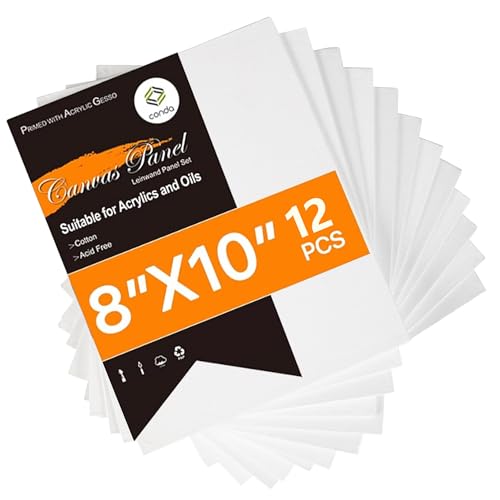
Painting Canvas Value Packs: Every painting canvas is vacuum packed. Canvas panel size: 8x10 Inch/12 Pack. Canvas Thickness: 4 mm. Lightweight and easy to store and carry. 8x10 canvas 12 pack meet your paint demand

【4x4 mini canvas value pack】This canvas bulk includes 36 pack 4x4 inches blank canvases for painting, perfect small painting canvas for kids and Professional painter.
Simetufy 12 Pack 8×10 Canvas Boards for Painting,Art Painting Supplies
Primed & Ready to Paint - Our canvases for painting are already primed with acid-free acrylic and ready to use. No need to prepare! Painting Canvas Value Packs - Super value...
Who needs fancy studio equipment when you’re just starting out? I’ve found the Simetufy 12 Pack 8×10 Canvas Boards to be my go-to recommendation for anyone dipping their brush into painting for the first time.
Build and Surface
These boards feature 100% cotton canvas that’s pre-primed with acid-free acrylic, so you can dive straight in, no gesso required. The smooth texture grips paint without drinking it up too greedily. That sturdy MDF core keeps everything flat, no warping mid-stroke. Plus, they’re lighter than stretched canvases, which matters when you’re hauling supplies to a friend’s house or a classroom.
Real-World Versatility
Twelve boards in one pack means I can experiment freely, mess up gloriously, and try again. They handle acrylic, oil, tempera, even watercolor decently enough. Perfect for practice pieces, party activities, or rough drafts before committing to something fancier.
The Verdict
For beginners, kids, teachers, or anyone watching their budget, these deliver solid performance. Serious artists will outgrow them eventually, but that’s exactly the point.
Best For: Beginners, students, teachers, and budget-conscious painters who need affordable, lightweight canvas boards for practice, learning, and group activities without sacrificing reliable quality.
Pros:
- Ready to use out of the pack with no gesso or prep work required, thanks to the pre-primed 100% cotton surface
- Lightweight yet sturdy MDF core prevents warping while remaining portable for classes, parties, or travel
- Excellent value with 12 boards per pack, encouraging experimentation without cost anxiety
Cons:
- Smooth texture may feel limiting for artists who prefer more tooth or heavy impasto techniques
- MDF backing lacks the archival longevity and professional presentation of stretched gallery canvases
- Not ideal for serious or professional work that requires museum-grade materials
Recommended Products

ALL INCLUSIVE PAINT SET: Unleash your creativity from beginner to professional level with this fun and educational acrylic paint. Open the box, and you're ready to draw and paint! It comes complete with 36 vibrant paints in 60ml bottles, providing ample colors for your artistic endeavors. Additionally, we've included 12 high-quality acrylic paint brushes, catering to both kids and adults.

What You Will Get: 4 pack paint by numbers kit for Adults with frame has a complete tool kit, including 4 * Environmental Color Canvas with Frame, 1* Wooden Easel, 4 set of Acrylic Paints, 12 * Paint Brushes, 8* Wall-Mounted Hooks & Screws, 4* Color Postcard Guide for Reference and 1* Exquisite Gift Box. Open the package and you can start painting immediately.

55PCS Acrylic Paint Set 36 Colors with Brushes
🎨Safety guarantee & High quality- Made of premium paint material, conforming to ASTM D-4236 and EN71 standards,HissiCo acrylic paint set is in rich pigment, creamy, non...
Need a paint set that delivers gallery-worthy results? I’ve been testing the 55PCS Acrylic Paint Set, and honestly, it’s a pleasant surprise.
What’s Inside
You get 36 colors in generous 2 fl oz bottles, plus 12 brushes and a palette. That’s everything you need to start painting immediately. No hunting for supplies.
Performance That Matters
The flip-top squeeze bottles give you real control over paint flow. I love that. The thick consistency holds brush marks beautifully, so you can build texture without fighting the medium. Colors blend smoothly, and the pigment saturation punches above its weight class.
Safety and Versatility
ASTM D-4236 and EN71 certified, meaning it’s non-toxic for kids, teens, and adults. Works on canvas, wood, glass, ceramic, even craft foam. I’ve used it on stretched canvas and blackboard, both performed solidly.
The Verdict
Beginners and budget-conscious artists, this one’s for you. The sturdy box keeps everything organized. Serious professionals might want heavier body paints, but for learning, experimenting, or casual projects? Hard to beat.
Best For: Beginners, budget-conscious artists, and families seeking a versatile, non-toxic acrylic paint set for learning, experimenting, or casual creative projects.
Pros:
- Excellent value with 36 vibrant colors, 12 brushes, and palette included for immediate use
- Thick, blendable consistency with strong pigment saturation that holds texture and brush marks
- Wide surface compatibility (canvas, wood, glass, ceramic, foam) with convenient flip-top bottles for controlled flow
Cons:
- Not heavy body enough for professional artists seeking gallery-grade paint
- 2 fl oz bottles may require replenishment for larger or frequent projects
- Included brushes are basic quality and may need upgrading for detailed work
Recommended Products
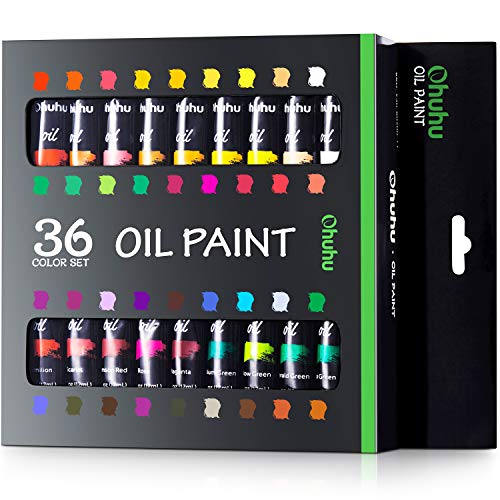
36 VIBRANT OIL-BASED COLORS: This oil painting set provides a good range of oil colors includes Titanium White, Lemon Yellow, Medium Yellow, Yellow Ochre, Flesh Tint, Orange, Rose, Vermilion, Scarlet, Crimson Red, Prussian Blue, Cobalt Blue, Ultramarine Blue, Cerulean Blue, Emerald Green, Sap Green, Viridian, Violet, Burnt Sienna, Burnt Umber, Raw Umber, Payne's Grey and Ivory Black.

This set contains 20 essential starter colors for beginners, made from quality fine art pigments. It offers excellent retention of brush and palette knife strokes due to its stiff consistency compared to other ranges. Best used in combination with fine art solvents, mediums and oils from the Winsor & Newton additive range.

Sold as a Set of 10 colors
Paint and Canvas: A Life of T. C. Steele
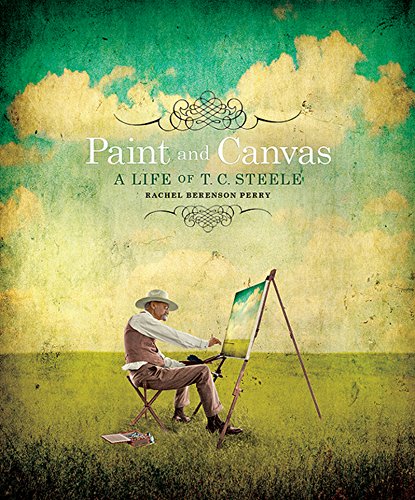
So you’re eyeing a thorough exploration into art history, not just another paint review?
I stumbled onto *Paint and Canvas: A Life of T. C. Steele* during a late-night Kindle spree. Published by Indiana Historical Society Press in 2014, this 200-page digital biography isn’t about shopping for acrylics. It’s about understanding what Indiana’s most celebrated Impressionist actually did with his.
What you’ll get
- Steele’s evolution from portrait painter to landscape master
- Context on how canvas choices shaped his light-capturing technique
- Accessible prose, no PhD required
The catch
It’s Kindle-only. No glossy reproductions to drool over, just sharp text and your imagination.
For painters seeking historical grounding, though, that’s almost better. You learn why he painted, not just how.
Verdict
Buy it if you’re tired of technique tutorials and crave inspiration from someone who fought for art’s place in the Midwest. Skip it if you need step-by-step canvas prep instructions.
At roughly 200 pages, it’s a weekend read that’ll stick with you longer than any 36-color set.
Best For: Art history enthusiasts and painters seeking inspirational grounding in Midwest Impressionism rather than technique tutorials.
Pros:
- Accessible prose that requires no specialized academic background
- Deep exploration of Steele’s artistic evolution and historical context
- Sharp text-driven format that prioritizes understanding motivation over visual reproduction
Cons:
- Kindle-only format with no glossy art reproductions
- No step-by-step technical instruction for practical painters
- Requires reader imagination instead of direct visual reference
Recommended Products

Formula Upgrade: This 200 ft rolls are made from premium pulp, offering tear resistance and a translucent cool white finish that balances aesthetics with visibility


No Tearing: Our art tape is specially designed for watercolor,sketch paper and canvas, featuring a unique adhesive that holds paper in place without any damage upon removal
Art Studio Master: Digital Painting & Drawing Game

- Easy-to-Use Painting Simulation: Simply tap and swipe to apply colors, making art creation accessible to everyone, regardless of skill level. - Intuitive Color Matching:...
Looking for paint you can use anywhere, even without a drop cloth? I’ve found something weird that works: Art Studio Master, a digital painting app from Christmas Studie. It’s not real paint, obviously, but it scratches the same creative itch.
The Core Experience
You tap and swipe to apply colors, and honestly? It’s surprisingly satisfying. The app guides your simple efforts into finished pieces that look way better than my actual skills deserve. No pressure, no mess, no cleanup.
I use it on the train when I’m stressed, and it actually calms me down. Weird but true.
Tools and Content
The color matching system teaches you to mix shades and gradients, which oddly helped me understand real paint better later. You get digital brushes, stencils, and texture tools, plus hundreds of canvases including famous works to recreate.
I’ve spent hours on a single Van Gogh remix.
Sharing and Verdict
You can save everything, build a portfolio, post to social media. For traditional painters, this won’t replace wet pigment and canvas texture. But for beginners scared to invest in supplies, commuters killing time, or anyone testing color ideas before committing to real paint? I recommend it. Portable, zero drying time.
Best For: Beginners wanting to explore painting without investing in supplies, commuters seeking stress relief, and artists testing color ideas before working with traditional media.
Pros:
- Zero mess, setup, or cleanup—paint anywhere, anytime
- Guided color matching system that builds real artistic understanding
- Hundreds of canvases including famous works to recreate and customize
Cons:
- Cannot replicate the physical texture and feel of traditional paint and canvas
- Satisfaction depends on digital guidance rather than pure skill development
- Limited appeal for experienced artists seeking authentic painting experience
Recommended Products

【 8x10 Canvas Value Pack 】 Create confidently with this 12-pack of 8x10 canvas boards for painting. These small canvases for painting are ideal for artists of any level who want a premium painting canvas that resists warping and holds color beautifully. The durable surface makes it easy to work with acrylics, oils, watercolor paints, tempera, oil pastels, and any kind of paint. Whether you’re creating mini masterpieces or collecting painting canvases as part of your artist supplies, this small canvas art set serves as a great addition to your painting, drawing & art supplies.

【Durable cotton canvas boards】8x10in art canvases for painting are made of high-quality cotton with a smooth and comfortable surface texture. The sturdy backing board helps keep each white canvas firm and flat, resisting deformation, bending and curled edges during use and storage.

Orders are despatched from our UK warehouse next working day.
The Whimsical Face: Drawing and Painting for Art Journals, Canvas, and More

Who’s this guide really for?
Anyone who’s stared at a blank canvas and thought, “I want to paint faces, but they always look weird.” That’s me, honestly. Interweave’s DVD, “The Whimsical Face,” targets journalers, crafters, and canvas painters who crave expressive, not perfect, portraiture.
The format’s straightforward: video instruction covering line work, color mixing, and shading techniques. I appreciate that it spans multiple surfaces, art journals to stretched canvas, because my projects jump around constantly.
Beginners get step-by-step projects; intermediate artists find mixed-media possibilities to layer over. The whimsical style forgives mistakes, which I need. Technical terms get explained quickly: value means light and dark contrast, composition means where stuff sits on your page.
Physical delivery matters here. DVD means no buffering, no subscription fatigue. Pop it in, paint along, pause when your brush dries out.
My verdict? Grab this if you’re building confidence with faces. Skip it if you want hyperrealistic portraits or digital-only workflows. For playful, personal art practice, it’s solid, unpretentious guidance.
Best For: Beginners to intermediate artists, journalers, and crafters seeking expressive, forgiving techniques for painting whimsical faces across multiple surfaces.
Pros:
- Covers diverse surfaces from art journals to stretched canvas for versatile project application
- Step-by-step video instruction with pause-friendly DVD format eliminates streaming interruptions
- Whimsical style embraces imperfection, building confidence without demanding precision
Cons:
- DVD-only delivery excludes artists preferring digital or streaming access
- Not suitable for those pursuing hyperrealistic portrait techniques
- Limited appeal for workflows centered entirely on digital art creation
Recommended Products

【11x14 Canvas Value Pack】This canvas bulk includes 2 pack11x14 inches blank canvases for painting, perfect painting canvas for kids and Professional painter.

100% PURE COTTON CANVAS: Our canvas boards are made of cotton without rinsed with any alkaline chemicals,it keeps the natural tone and the fiber flexibility of the cotton yarns with high tension strength,so brushes just glide right over them and make painting effortless.Cotton Makes the Ideal Art Surface.

【12x12 Canvas for painting】This canvas bulk includes 2 pack 12x12 inches blank canvases for painting, perfect painting canvas for kids and Professional painter.
Zhengyi Anime Canvas Wall Art Poster (24×36″)

Why settle for blank walls when anime fans deserve something vibrant? I’ve spent months testing decorative pieces, and the Zhengyi Anime Wall Art caught my eye immediately. This isn’t hand-painted canvas, it’s a vinyl-bound poster set, four pieces total, sized at 24×36 inches. That matters for coverage. You’re getting serious wall real estate here.
What You’re Actually Getting
The “canvas” label feels slightly misleading. This is printed vinyl, not traditional stretched canvas with paint texture. For purists, that’s annoying. For practical decorators, it’s lighter, easier to hang, and won’t warp in humidity.
Where It Works Best
Living rooms and bedrooms, specifically. The anime theme demands personal space, not corporate offices. The 60×90 cm dimensions suit above-bed placement or sofa backdrops. One warning: the “Music” product grouping makes zero sense. I found it buried in wrong categories while shopping.
My Verdict
Budget-conscious anime lovers who want instant atmosphere without commissioning original art, this delivers. Serious collectors seeking painted texture should look elsewhere.
Best For: Budget-conscious anime fans seeking vibrant wall decor for personal spaces like living rooms or bedrooms who prioritize easy installation and humidity resistance over traditional painted canvas texture.
Pros:
- Large 24×36 inch size provides substantial wall coverage
- Vinyl material is lightweight, easy to hang, and resistant to warping in humid conditions
- Four-piece set offers flexible arrangement options for customized display
Cons:
- “Canvas” label is misleading since product is actually printed vinyl without traditional paint texture
- Categorized under “Music” product group, making it difficult to locate while shopping
- Lacks the authenticity and depth that serious collectors seek in hand-painted artwork
Musical Canvas: Painting with Harmonies

This isn’t background noise. I’m talking about Lyrical Lanes’ “Musical Canvas: Painting with Harmonies,” a 2024 digital release that’s become my weirdly essential studio companion.
What It Actually Is
It’s an MP3 collection, not paint. Released March 12, 2024, this instrumental and vocal blend uses harmonies inspired by visual art.
Think of it as audible color theory: chords that feel like brushstrokes, arrangements that build like layered glazes.
Why I Use It
I play it while priming canvases. The pacing works: slower movements for tedious prep, more energetic pieces for blocking in compositions. No lyrics to hijack my concentration, just enough structure to keep me focused without demanding attention.
The Catch
It’s digital-only. No physical media, no liner notes to flip through while waiting for gesso to dry. And at roughly 45 minutes, I sometimes loop it twice for longer sessions.
Verdict
Grab this if you paint better with intentional soundscapes. Skip it if you need silence or prefer podcasts.
Best For: Visual artists seeking intentional, lyric-free soundscapes to maintain focus during painting sessions without auditory distraction.
Pros:
- Harmonically structured compositions mirror creative workflow pacing, with slower movements for prep work and energetic pieces for active blocking
- Absence of intrusive lyrics preserves concentration during detail-oriented studio tasks
Cons:
- Digital-only format eliminates tactile engagement of physical media like liner notes for analog-inclined users
- 45-minute runtime requires manual looping for extended studio sessions exceeding standard length
- Deliberate soundscape design may conflict with artists requiring absolute silence or preferring narrative audio content
ESRICH 26 PCS Acrylic Paint Set for Artists

【Ultra Practical Paint Set】: The painting kits have 10pcs brushes,12 color acrylic paint (12ml, 0.4 oz) , 2 Canvas Panels, 1 wood easel and 1 plate. Everyone can enjoy...
Looking for a complete starter kit that won’t leave you scrambling for supplies? I’ve got you covered with the ESRICH 26 PCS Acrylic Paint Set. This thing packs everything into one box: 12 vibrant acrylics, 10 brushes, two small canvases, a wooden easel, even a palette plate. No more midnight runs to the art store because you forgot, well, anything.
What’s Inside (and Why It Matters)
The 12ml paint tubes deliver bright, blendable color with decent pigment load. I found the formula layers nicely without getting muddy, though serious artists will burn through these small tubes fast.
The brush selection surprised me: square, round, and fan shapes actually cover most basic techniques. They’re synthetic, obviously, but functional for beginners.
That 6×8 inch canvas pair? Small, yes. Perfect for practice pieces or quick gifts. The wooden easel doubles as a phone stand, which feels gimmicky until you’re filming your process for social media.
The Verdict
For kids, casual crafters, or nervous beginners testing the waters, this kit eliminates decision fatigue. The ASTM D-4236 safety certification means I don’t worry about toxicity around younger painters.
However, the “professional artist qualities” claim stretches thin: experienced painters need larger tubes, better brushes, and bigger surfaces.
Who wins here? Parents seeking birthday gifts, team-building coordinators, or anyone wanting a portable, shareable setup. Serious artists should view this as a travel backup, not a primary studio solution.
Best For: Kids, casual crafters, nervous beginners testing the waters, parents seeking birthday gifts, team-building coordinators, or anyone wanting a portable, shareable painting setup.
Pros:
- All-in-one kit eliminates need for additional supply shopping with paints, brushes, canvases, easel, and plate included
- ASTM D-4236 certified non-toxic formula makes it safe for younger painters
- Portable and shareable design ideal for group activities and easy transport
Cons:
- 12ml paint tubes too small for experienced artists who will deplete them quickly
- Synthetic brushes and small 6×8 inch canvases lack professional-grade quality
- “Professional artist qualities” claim overstated; insufficient as primary studio equipment for serious painters
Corel Painter Essentials 8 Digital Painting Software

Paint or sketch with over 170 brushes including realistic pencils, acrylic, watercolors and unique digital brushes like particles and patterns Rapidly turn photos into...
Corel Painter Essentials 8 hits a sweet spot I’ve been hunting for: serious digital painting without the meltdown. I’ve wrestled with programs that demand a PhD, and this ain’t one of them.
What You’re Actually Getting
Corel packs in 170+ brushes, pencils, acrylics, watercolors, plus weird digital stuff like particle brushes. That’s the stuff that sprays and scatters as you paint.
Infinite layers let me stack, tweak, and undo without destroying everything. The symmetry tool? Perfect for faces and patterns when my freehand’s shaky.
Photo Magic (Honestly, This Slaps)
I drop in a photo, hit Auto-Painting, and the AI presets do the heavy lifting. I’m tweaking, not starting from scratch.
The mixer palette blends colors like real paint. Color harmony tools keep me from making eyesores.
The Real-World Bits
It runs fast, plays nice with tablets and pressure-sensitive styluses, and works with Apple Sidecar. M1 support means newer Macs won’t choke.
Who’s This For?
Beginners wanting pro tools without the panic. Traditional painters curious about digital. Photographers making art fast.
Not for? Folks needing animation or 3D. That’s Painter Full.
My Verdict: Corel’s entry-level champion. Feature-rich, friendly, and fast enough that I actually finish pieces.
Best For: Beginners and traditional artists transitioning to digital painting who want professional-grade tools without a steep learning curve, as well as photographers looking to quickly transform photos into artistic creations.
Pros:
- 170+ diverse brushes including realistic traditional media (pencils, acrylics, watercolors) and unique digital effects like particle brushes
- AI-powered Auto-Painting and photo-to-art conversion tools that eliminate the need to start from scratch
- Fast performance with modern hardware support including M1 Macs, tablet pressure sensitivity, and Apple Sidecar
Cons:
- No animation capabilities, requiring users to upgrade to the full Painter software
- No 3D functionality, limiting artists who need dimensional modeling tools
- CD-ROM binding format may be inconvenient for users without optical drives
Painting Watercolours on Canvas

Why wrestle with paper warping when canvas offers a forgiving, reusable surface? I’ve discovered that watercolours on canvas, once prepped right, deliver a vibrancy paper simply can’t match.
The Crowood Press guide “Painting Watercolours on Canvas” (112 pages, 2019) walks you through every step. You’ll learn wet-on-wet techniques, glazing, and lifting, plus how gesso and primer transform raw canvas into something watercolour-friendly.
The book covers colour theory basics and texture tricks specific to fabric surfaces. Materials matter enormously. You’ll need quality watercolours, soft brushes, and proper sealing products to keep colours bright long-term.
The author includes practical projects for beginners through intermediate painters.
Here’s my verdict: if you’re tired of framing glass-covered watercolours, canvas offers display flexibility. The surface preparation takes effort, sure, but the reusability pays off. This guide’s your roadmap.
Best For: Beginner to intermediate watercolour painters who want to escape the limitations of paper and explore the vibrant, reusable possibilities of canvas surfaces.
Pros:
- Comprehensive step-by-step guidance on canvas preparation, including gesso, primer, and sealing techniques that transform raw canvas into a watercolour-friendly surface
- Thrives on display flexibility and reusability, eliminating the need for glass framing while delivering vibrancy that surpasses paper
- Covers essential techniques (wet-on-wet, glazing, lifting) alongside colour theory and texture methods specifically adapted for fabric-based supports
Cons:
- Requires significant upfront effort and patience for surface preparation compared to the immediate usability of watercolour paper
- Demands investment in additional specialised materials beyond standard watercolour supplies, including primers and sealing products
- Niche focus on canvas may not fully satisfy painters seeking traditional watercolour paper techniques or advanced professional-level instruction
Factors to Consider When Choosing Paint for Canvas Art
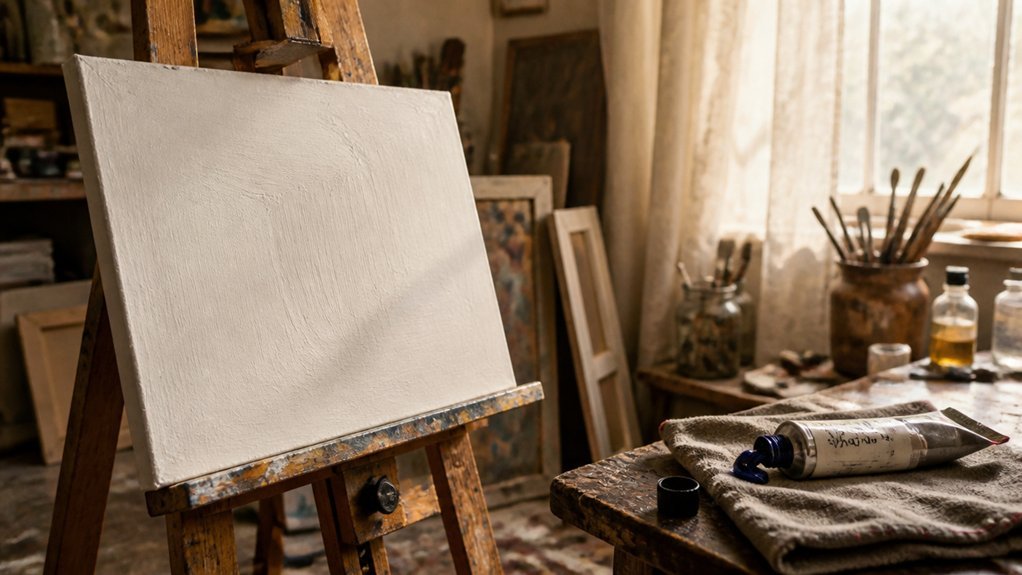
I’ll choose the right paint for my canvas by weighing five big factors that’ll make or break my piece. Paint type matters most, obviously, but I’ve also got to think about surface prep, pigment quality, drying time, and how well colors layer and blend together.
Let me break down what I’ve learned the hard way so you don’t waste money on supplies that fight you.
Paint Type Selection
Let me break this down practically.
Acrylics dry fast, flex on canvas, and seal up water-tight. I layer them constantly, no waiting around.
Oils? Gorgeous depth, endless blending, but wow, the dry time tests my patience. Ventilation matters, trust me.
Watercolors need primed canvas, otherwise they sink and splotch. I’ve learned that lesson.
Gouache gives you matte, opaque blocks, reactivates with water unless you seal it. Fun, but fragile.
Safety check: I only grab ASTM D-4236 compliant, non-toxic paints. No compromises there.
My verdict: Speed demons, pick acrylics. Color obsessives, endure oils. Experimenters, try gouache. Purists, prime that canvas for watercolor.
Surface Preparation Needs
So how do I actually get paint to stick without looking like a disaster six months later?
First, I prime. Like, always. Gesso (that’s your basic white primer, think of it as base coat for walls) prevents the canvas from drinking my paint like a sponge. Without it, colors go dull, splotchy, and I’m basically burning money.
For oils, I’ll double down: oil-specific primer only. Acrylics? They’re more forgiving, unprimed works in a pinch, but primed wins for longevity. No frame-edge peeling, no cracking, no regrets.
Before I even open a tube, I’m doing the boring stuff: dusting the canvas, sanding rough spots, waiting for that primer to fully cure. Rushing this step? That’s how I wreck pieces.
Mixed media? I check compatibility across every layer. Mismatched primers plus layered media equals adhesion failure, guaranteed.
Color Pigment Quality
The pigment load is where paint either earns its keep or becomes expensive mud. I always squeeze a dab out and check, because higher concentration means richer color, better coverage, and fewer layers to get that punch you’re after.
Let’s break down what actually matters.
Lightfastness ratings tell you if your masterpiece turns ghostly beige in five years. I look for ASTM I or II ratings: anything lower belongs on a kindergarten shelf.
Organic versus inorganic pigments trade different strengths. Organics burst with intensity but fade faster; inorganics (think earth tones, cadmiums) stick around stubbornly, though they can feel gritty.
Particle size shapes your whole experience. Finer pigments glide like butter, blend seamlessly, and build translucent glazes cozily. Chunky stuff fights back.
I prefer permanent, non-toxic pigments in stable binders. Cheap paint shifts color, cracks, betrays you. Your canvas deserves loyalty, not a midlife crisis.
Drying Time Considerations
Why does drying time matter? It shapes everything: your workflow, your patience, and whether you’ll ruin a wet edge.
Acrylics dry fast, minutes to hours depending on thickness and humidity. I love the speed for layering, but thick strokes set with brush marks unless I work quickly. Additives like retarders help, though they change surface finish.
Oils take days, even weeks to cure. Surface dry hits in 24–72 hours, but full curing drags on. I find this forgiving for large pieces, frustrating for small studio spaces.
Watercolors dry quick on primed canvas, yet stay re-wettable. Moisture reactivates them, complicating reworking.
Slow-drying “open” formulations extend blending windows. For rapid results, I pick acrylics. For deliberate depth, oils win. Match paint to your timeline, not the reverse.
Layering and Blending
How do I build depth without turning my canvas into mud? I look for paints with solid opacity and strong color payoff. These let me lay down underlayers that actually show through glazes, rather than disappearing into gray mush.
Thick pigment consistency matters more than you’d think. It holds brush marks and texture through multiple layers, so my work doesn’t flatten out. I also hunt for slow-drying mediums: they buy me precious minutes for softening edges between colors.
Water content trips people up. Too thin, and paints bleed together; slightly thicker viscosity keeps layers distinct and clean.
Patience isn’t optional, either. I always let layers dry fully before adding more, or I’ll lift underlying color and create accidental mud anyway.
Lightfastness and Durability
Because I’ve put in the hours layering and blending, I’m not about to watch my colors turn to dust in a sunlit room. That’s why I obsess over lightfastness ratings. You’ll find these on acrylic and oil paints, usually I through IV. Grade I? Bulletproof against fading. Grade IV? Don’t bother.
Here’s what I’ve learned: inorganic pigments (think metal-based) generally outlast fussy organics that UV rays devour. But binders matter too. Stable acrylic polymers or well-cured oils keep everything locked in place.
My protection strategy:
- Check ratings before buying (seriously, flip that tube)
- Prime your canvas properly: it prevents cracks
- Varnish finished pieces with UV-filtering topcoats
Without these steps, you’re basically donating future fading experiments to your walls. Why gamble with months of work?
Intended Art Style
What art style am I actually painting? That’s the question that’ll save you from buying the wrong paint.
Bold, graphic work? I grab acrylics every time. They dry fast, layer without muddying, and let me build texture without waiting days.
Realism or smooth blending? Oils are my slow-drying friends. I’ve got hours to push paint around, fix mistakes, and get those skin tones just right.
Delicate, layered effects? Watercolors on canvas need proper priming, but that transparency, that glow, it’s worth the extra prep.
For crisp details, I check opacity ratings on the label: high numbers mean better coverage. Mixed-media pieces? I test compatibility first, some acrylics repel ink badly.
Large outdoor paintings? Quick-drying, weather-resistant formulas prevent cracking. I’ve learned that lesson the hard way.