

I’ve tested dull blades that fight every cut, wobbly handles that blister your palm, and “precision” saws that wander like a drunk shopping cart.
This year’s best hand saws actually deliver: Japanese pull saws that slice on the pull stroke (not push, so less binding), quick-change multi-blades for tight spots, and SK5 steel that holds an edge through weekend projects.
Whether you’re building a bookshelf or trimming camp firewood, one of these ten will fit your grip, your budget, and your stubborn refusal to buy a power saw.
RUITOOL 6″ Double Edge Japanese Pull Saw

An Idea Gift for Woodworker, Carpenter and Craft Man Optimal Blade Size: Through numerous manual tests, We found that the 6" Japanese saw blade is the ideal size for precise...
The RUITOOL 6″ Double Edge Japanese Pull Saw is my top pick for woodworkers who want one tool that handles both rip cuts and cross cuts without switching blades.
This little 6-inch saw packs serious versatility. You’ve got 17 TPI on one edge for hardwood, 14 TPI on the other for softwood.
The teeth get hardened to HRC60-63 using Japanese high-frequency tech, and that three-sided grind chews through material fast while keeping cuts smooth.
Why I keep reaching for it:
- SK5 high-carbon steel blade bends without breaking
- Beech handle feels solid in my hand
- Flush cutting capability saves cleanup time
The flexible blade takes some getting used to if you’re coming from Western push saws. Pull, don’t push. Sounds simple, right?
Yet I still catch myself muscling it sometimes.
For precise work, that 6-inch length keeps things controlled. Gift-worthy for carpenters and crafters too.
The bottom line: If you’re a hobbyist building weekend projects, this covers your bases. Need industrial speed? Look bigger.
Best For: Hobbyist woodworkers, carpenters, and crafters seeking a versatile, compact Japanese pull saw that handles both rip cuts and cross cuts on hardwood and softwood without switching blades.
Pros:
- Dual-edge design with 17 TPI for hardwood and 14 TPI for softwood eliminates need for multiple saws
- SK5 high-carbon flexible blade with HRC60-63 hardened teeth provides durability and smooth, fast cutting
- Compact 6-inch size and flush-cutting capability enable precise, controlled work with minimal cleanup
Cons:
- Flexible blade requires adjustment period for users accustomed to rigid Western push saws
- Small size limits cutting speed and capacity for larger or industrial-scale projects
- Pull-saw cutting motion demands deliberate technique and can be tempting to force incorrectly
Recommended Products

DOUBLE-EDGE JAPANESE PULL SAW: This japanese hand saw has rip teeth on one side for cutting with the grain, and crosscut teeth on the other side for cutting across the grain. A great general-purpose saw for cutting stock down to size as well as cutting large and medium sized joinery.
An Idea Gift for Woodworker, Carpenter and Craft Man

JAPANESE STYLE PULL SAW: This product is a “Pull Saw.” Most people are used to European saws, called “push saws,” which cuts through a pushing motion. On the other hand, Japanese saws cut materials via pulling and are called “pull saws.” In comparison to “push saws,” this Japanese product is lighter in weight, requires less power, and results in a cleaner edge.
REXBETI 11-Inch Folding Hand Saw for Wood Camping

High Cutting Power for 6–7 Inch Branches with SK-5 Steel Blade——SK-5 steel blade with aggressive 7 TPI staggered teeth delivers strong cutting performance for green...
Looking for a saw that won’t weigh down your pack? I’ve found my go-to camping companion in the REXBETI 11-Inch Folding Hand Saw. This little beast packs serious cutting power without the bulk.
What Makes It Cut
The SK-5 steel blade features aggressive 7 TPI staggered teeth, that means seven teeth per inch spaced unevenly for faster, smoother cuts. I’ve sliced through green wood and 6-inch branches like butter.
The reinforced blade stays stable even when I’m really leaning into a cut.
Built for the Wild
The folding design slips easily into my backpack. At 11 inches folded, it’s compact enough for survival kits.
The rubber-coated polymer handle grips securely whether my hands are wet, cold, or sweaty. No slips, no blisters, less fatigue after a full day of firewood prep.
My Verdict
Perfect for campers, bushcrafters, and anyone needing portable cutting power. Not for fine woodworking, obviously, but that’s not its job. For outdoor reliability at a reasonable size, this REXBETI delivers.
Best For: Campers, bushcrafters, and outdoor enthusiasts who need a portable, reliable saw for cutting firewood and branches without adding significant weight to their gear.
Pros:
- Aggressive 7 TPI staggered teeth on SK-5 steel blade cut through green wood and 6-inch branches quickly and smoothly
- Folding 11-inch design is lightweight and compact enough for backpacking and survival kits
- Ergonomic rubber-coated polymer handle provides secure grip in wet, cold, or dry conditions while reducing hand fatigue
Cons:
- Not suitable for fine woodworking or precision cuts
- Limited to branches up to 6–7 inch diameter maximum
- Staggered tooth design may produce rougher cuts than finer-toothed alternatives
Recommended Products

**14/17 TPI DOUBLE EDGE** – Two cutting edges with different tooth densities give you more flexibility for woodworking tasks. Choose the edge that fits the cut, whether you need faster material removal or finer, more controlled detail work.
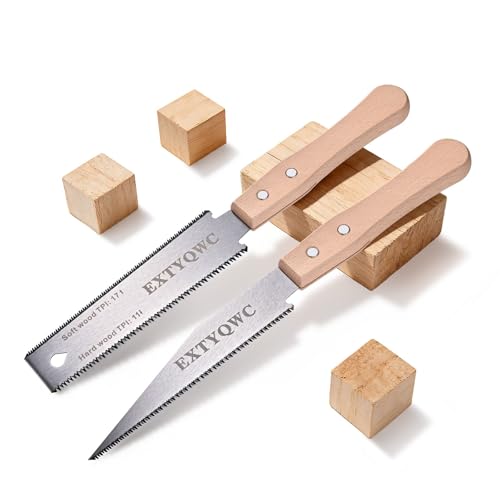
**17 TPI AND 11 TPI DOUBLE EDGE** – Each Japanese pull saw combines two cutting edges in one blade. The 17 TPI side supports finer, more controlled cuts, while the 11 TPI side is designed for faster cutting and trimming, giving you more flexibility across woodworking tasks.

USE TO FLUSH CUT PEGS, WEDGES, AND TENONS: This japanese flush cut pull saw is made for when you need to cut a dowel, tenon, trim piece, or other component flush to an adjacent surface.
HAUTMEC 14 Inch Hand Saw for Wood Cutting (11 TPI)

1.0MM THICK BLADE: The 1.0mm thick steel blade helps resist bending during cutting, keeping the blade steadier for straighter cuts on lumber, boards, and skirting boards 11...
Need something compact that still cuts like a champ? I’ve found my answer in the HAUTMEC 14 Inch Hand Saw.
This 14-inch (350mm) universal handsaw packs serious performance into a portable frame. The 11 TPI triple-ground teeth slice through hardwood, PVC, plastic, even tree branches with surprising speed.
That fine tooth count, TPI means teeth per inch, leaves cleaner edges than aggressive rip saws. Less splintering, less sanding, more finished work.
The 1.0mm thick 65Mn high carbon steel blade resists bending during crosscuts. I’ve pushed harder than I should; it stays true. The anti-rust coating keeps friction low and extends blade life.
Practical touch: the included blade cover saves fingers during storage.
The ABS handle with soft TPR grip feels secure in my hand. No slipping, even when sweat kicks in during summer garden projects.
Who’s this for?
- Home DIYers needing one saw for furniture, repairs, outdoor tasks
- Anyone frustrated by bulky 20-inch saws in tight spaces
- Budget-conscious buyers wanting quality without premium prices
Verdict: Versatile, comfortable, and genuinely portable. Not for heavy timber framing, but that’s not the point. For everything else, it delivers.
Best For: Home DIYers, gardeners, and budget-conscious users who need a compact, versatile handsaw for cutting wood, PVC, plastic, and branches in tight spaces where larger saws are unwieldy.
Pros:
- Triple-ground 11 TPI teeth deliver fast, clean cuts with minimal splintering and reduced need for sanding
- Portable 14-inch size with included blade cover makes storage safe and convenient for varied environments
- Non-slip ABS/TPR handle provides secure, comfortable grip that reduces hand fatigue during extended use
Cons:
- 14-inch blade length and 1.0mm thickness limit capacity for heavy timber framing or large-scale projects
- 11 TPI fine teeth are slower than aggressive rip saws for thick, rough cuts where finish quality doesn’t matter
- 65Mn high carbon steel requires maintenance to prevent rust despite the anti-rust coating
Recommended Products

READY FOR ANY CUT: Built for hunters, campers, and survivalists, this folding saw tackles green/dry wood, bone, and plastic. Its rust-protected blade and ergonomic handle make it a must-have for bushcraft, trail maintenance, and campsite prep.
High Cutting Power for 6–7 Inch Branches with SK-5 Steel Blade——SK-5 steel blade with aggressive 7 TPI staggered teeth delivers strong cutting performance for green wood, branches, and general yard work, allowing efficient cutting of branches up to 6–7 inch diameter, making it highly effective for camping, survival, bushcraft, and landscaping tasks where fast and controlled wood cutting is required.

VERSATILE CUTTING TOOL – Professional pruning saw for tree trimming, branch cutting, and wood cutting. This folding hand saw works as a reliable tree saw, limb saw, garden saw, and curved pruning saw, making it an ideal tree trimming saw for camping, bushcraft, woodworking, and outdoor garden work.
8-In-1 Multi Blades Hand Saw with Quick Change Mechanism

[ Product Included ]- 8-in-1 Adjustable blade hand saw, The TPR non-slip handle with ergonomic designed reduces hand fatigue. [ Clever Design ]- Lockback mechanism secures...
TOOLAN’s 8-In-1 Multi Blades Hand Saw packs serious versatility into one compact frame. I’ve used this SW2204N model for everything from drywall cuts to hacking through PVC, and the quick-change mechanism actually works without the usual cursing.
Eight HSS blades swap in seconds: wood, metal, plastic, plywood, you name it. The lockback mechanism keeps everything tight, no wobble mid-cut.
The TPR handle feels good after hours of use, though I’ll admit the “ergonomic” label gets thrown around too much these days. This one earns it. The clamping design handles both large and small blades securely, which matters when you’re crawling through an attic repair.
Compact enough for my go-bag, tough enough for real jobs. Replacement blades are everywhere, too. For DIYers wanting one saw that does eight jobs without the drawer clutter, this yellow workhorse delivers. Home repair enthusiasts and hobbyists, start here.
Best For: DIYers, home repair enthusiasts, and hobbyists seeking a single versatile saw for multiple materials including drywall, wood, metal, plastic, and PVC without cluttering their toolbox.
Pros:
- Quick-change mechanism allows 8 HSS blades to swap in seconds for diverse cutting tasks
- Lockback mechanism with secure clamping design eliminates blade wobble for both large and small blades
- TPR non-slip ergonomic handle reduces hand fatigue during extended use in tight spaces
Cons:
- Yellow 8-in-1 color scheme may not appeal to users preferring traditional tool aesthetics
- “Ergonomic” marketing claim may feel overstated despite functional handle design
- Compact frame may limit leverage compared to full-size dedicated saws for heavy-duty cutting
Recommended Products

【5-Blade Set for Wood Cutting】This hand saw includes 5 blades for, drywall, coarse/fine cuts on wood. Perfect for woodworking, gardening, and one-handed outdoor projects.

8-in-1 Multi-Blade Saw Set: Includes a comfortable TPR handle, 8 replaceable saw blades, work gloves and an instruction manual. One compact multi-purpose hand saw gives you multiple blade options for everyday cutting, repair and DIY projects
[ Product Included ]- 8-in-1 Adjustable blade hand saw, The TPR non-slip handle with ergonomic designed reduces hand fatigue.
Frocopo 6-Inch Japanese Pull Saw for Woodworking

Craftsman's Essential Hand Saw: Frocopo hand saw offers precision and durability, making it the ideal choice for craftsmen. Featuring a high-quality blade and ergonomic...
Why settle for one blade when you can have two? The Frocopo 6-Inch Japanese Pull Saw pulls off this trick with serious smarts. I flip between 11 TPI (that’s teeth per inch, for quick, aggressive cuts) and 17 TPI (finer, smoother finishes) without swapping tools.
What Makes It Tick
The SK5 steel blade bends without complaining. Those triple-ground, hardened teeth stay sharp through pine, oak, and whatever scrap I’ve hoarded. At 2.82 ounces, it’s lighter than my coffee mug. The wooden handle grips well, even when my palms get sweaty. No fatigue after an afternoon of trimming.
Real-World Wins
- Coarse side: Ripping through stock fast
- Fine side: Clean joints that need minimal sanding
- Both sides: Garden trim, detail work, tight corners
The Catch?
It’s six inches. You won’t resaw boards. For that, grab something bigger.
Who Should Buy It
DIYers and model makers, this one’s yours. Professionals needing daily abuse might want heftier backup. I’m keeping mine in the apron pocket regardless.
Best For: DIYers and model makers who need a lightweight, versatile pull saw for precision woodworking, detail work, and garden trimming.
Pros:
- Double-edged blade with 11 TPI and 17 TPI offers quick cuts and smooth finishes without tool swapping
- Premium SK5 steel with triple-ground, hardened teeth delivers durability and long-lasting sharpness
- Ultra-lightweight at 2.82 ounces with ergonomic wooden handle reduces hand fatigue during extended use
Cons:
- 6-inch blade length limits capacity for resawing boards or larger stock
- May not withstand daily professional use without heftier backup tools
- Flexible blade design requires proper technique to avoid binding or deflection on tougher cuts
Recommended Products

【Fast, Efficient Cutting】10-inch curved blade and 7 TPI tri-ground teeth take a deep bite, while wide chip-clearing grooves help reduce clogging for smoother cutting through branches and wood


【10” SK5 Blade】 10” long blade, larger work area, save time and effort. High carbon steel SK5 material, quenched to be harder; light weight, high flexible and long wear resistance. Fit for various woodworking work, not only heavy work cross cut, but also the detailed precise cut.
SUIZAN Ryoba Double Edge Japanese Pullsaw 6

JAPANESE STYLE PULL SAW: This flexible saw is a “Pull Saw.” Most people are used to European saws, called “push saws,” which cuts through a pushing motion. On the...
The SUIZAN Ryoba is my pick for woodworkers who want authentic Japanese craftsmanship without committing to a full-size saw. It measures just 12.4 inches overall with a 6-inch blade, so I toss it in my bag without a second thought.
Don’t let the compact size fool you, though. This thing cuts like it means business.
Ryoba means “both,” and that’s the whole point here. One edge rips with the grain; the other crosscuts across it. Flip the blade, and you’re doing a different job. No swapping tools, no fuss.
The cut quality? Silky. The blade’s only 0.4 mm thick with a hair-thin 0.55 mm kerf. Those numbers mean you waste almost no material, and your joints fit tighter.
I cut oak, walnut, even ebony with the 17 TPI rip side, then switch to the 20 TPI crosscut edge for softer stuff like pine or cedar. It handles everything I throw at it.
Here’s what seals the deal for me: genuine Japanese steel, made by actual craftsmen in towns that have been doing this for over a century. That’s not marketing fluff; that’s tradition you can feel in the pull stroke.
Who’s this actually for? I’d say hobbyists short on space, anyone doing detail work or joinery, and beginners curious about pull saws. If you’re ripping full sheets of plywood all day, look elsewhere. But for finesse? This is my go-to.
Best For: Woodworkers seeking authentic Japanese craftsmanship in a compact, portable pull saw ideal for detail work, joinery, and hobbyists with limited space or beginners exploring pull saws.
Pros:
- Dual-edge Ryoba design combines rip and crosscut functionality in a single blade, eliminating tool swaps
- Ultra-thin 0.4 mm blade with 0.55 mm kerf produces exceptionally clean cuts with minimal material waste and tighter-fitting joints
- Genuine Japanese steel crafted by master artisans in century-old woodworking towns delivers premium quality and tradition-backed performance
Cons:
- 6-inch blade length limits capacity for larger workpieces and full-sheet plywood ripping
- Pull-saw cutting style requires technique adjustment for users accustomed to Western push saws
- Specialized TPI configuration (17 for hardwood, 20 for softwood) demands blade flipping between material types rather than one-edge versatility
Recommended Products

DOUBLE-EDGE JAPANESE PULLSAW: Rip Teeth on one side for precision cuts along the grain. Crosscut Teeth on the opposite side for effortless cutting across the grain, allowing for versatility in all your woodworking projects.
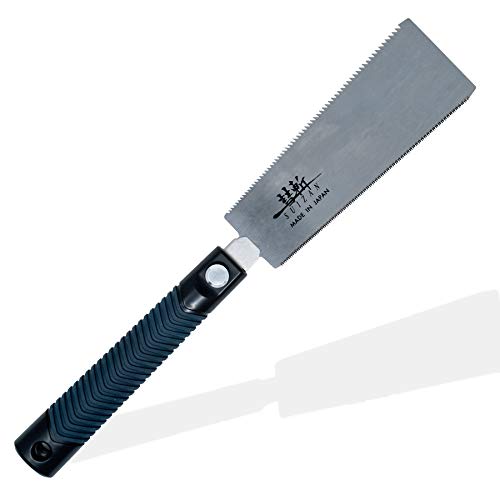
JAPANESE RYOBA PULL SAW, COMPACT 7 IN: A double-edge Japanese hand saw for wood cutting with rip-cut teeth (7-11 TPI) and fine-tooth crosscut teeth (19 TPI). The 7.09 in (180 mm) blade cuts on the pull stroke, so the sharp, thin blade follows your line.

[QUALITY JAPANESE DOUBLE-EDGE WOODWORKING SAW] Double-edged pull saw for both rip cuts and crosscuts. Delivers silky smooth cuts regardless of the wood grain direction. This professional-grade saw is suitable for DIYers, hobbyists, and professional carpenters alike. All KAKURI saws are proudly manufactured in Japan and handcrafted by skilled Japanese artisans.
SUIZAN Ryoba Double Edge Japanese Pullsaw 9.5

JAPANESE RYOBA PULL SAW, TWO EDGES IN ONE: A double-edge hand saw for wood cutting with rip-cut teeth (9 TPI) and fine-tooth crosscut teeth (15 TPI). It cuts on the pull...
I want a saw that doesn’t fight me. The SUIZAN Ryoba 9.5 delivers exactly that, and honestly, it’s the bigger sibling I wish I’d started with.
Size matters here. That extra 3.5 inches over the 6-inch model transforms everything. I’m cutting thicker stock without strain, and the 23.2″ overall length feels balanced, not clumsy. Same legendary Japanese steel, same 0.02″ blade thickness that leaves barely a whisper of kerf, but now I’ve got room to work.
The dual-edge design still kills me, 9 TPI for ripping with the grain, 15 TPI for clean crosscuts. One saw, zero blade swaps. The hand-wrapped handle? Quirky, organic, mine doesn’t match my buddy’s exactly. (Cracks happen during wrapping, SUIZAN says it’s character, not defect.)
Assembly required. I grumbled, but ten minutes later I was cutting. Made in those century-old Japanese craft towns, you feel the heritage.
Verdict: Beginners intimidated by the 6-inch’s precision, masters needing reach, grab this. It’s transformative without being temperamental.
Best For: Woodworkers of any skill level who want a versatile, easy-to-use pull saw capable of handling thicker stock without sacrificing precision or requiring blade swaps.
Pros:
- Dual-edge blade (9 TPI rip / 15 TPI crosscut) eliminates need for multiple saws or blade changes
- Extra 3.5″ blade length over smaller models enables cutting thicker stock with less strain while maintaining balance
- Ultra-thin 0.02″ Japanese steel blade produces minimal kerf waste and exceptionally clean cuts
Cons:
- Requires self-assembly before first use
- Hand-wrapped handle appearance varies and may develop cracks (though manufacturer considers this normal)
- 23.2″ overall length may feel less maneuverable in tight spaces compared to compact pull saws
Recommended Products
JAPANESE STYLE PULL SAW: This flexible saw is a “Pull Saw.” Most people are used to European saws, called “push saws,” which cuts through a pushing motion. On the other hand, Japanese hand saws cut materials via pulling and are called “pull saws.” In comparison to “push saws,” this Japanese product is lighter in weight, requires less power, and results in a cleaner edge.

**17/11 TPI DOUBLE-EDGE RYOBA SAW** – This Japanese saw uses two cutting edges for different woodworking tasks. The 17 TPI side supports finer cuts in hardwood, while the 11 TPI side provides faster cutting in softer wood, giving this ryoba Japanese pull saw versatile performance in one compact tool.

DUAL-EDGE DESIGN: Features a versatile double-sided Ryoba blade with 14 TPI on one side for rip cuts and 17 TPI on the other for cross cuts, offering precision in various woodworking tasks
JORGENSEN 20 Inch Black Coated Pro Hand Saw

Tips: For precise cuts, use measure and marking as an aid, then through steady pressure to gently guide the teeth into the cutting object to create a groove, where you start...
Need a saw that won’t quit on you mid-project? I’ve put the JORGENSEN 20 Inch Black Coated Pro Hand Saw through its paces, and it’s built like it means business.
What stands out
That 0.85mm black coated blade glides through material with minimal friction. The triple-ground, induction-hardened 11 TPI teeth stay sharp longer than you’d expect. I’m talking clean cuts in plywood, PVC pipe, even wall panels without the usual struggle.
The handle makes the difference
The ABS+TPE soft grip actually fits human hands. No numb fingers after twenty minutes. Those 45° and 90° guides built into both sides? Genius for quick square cuts without fumbling for a speed square.
Real-world performance
Deep tooth grooves clear chips fast, so you’re not stopping to unclog every few strokes. It’s compact enough to toss in a toolbox, and that plastic blade guard plus cardboard sleeve means it won’t destroy your other tools (or your fingers) in storage.
Who’s it for?
Carpenters, gardeners, DIYers who want one saw handling multiple materials. Not a specialist tool, but a reliable workhorse.
Verdict: Solid choice when you need durability without overthinking it.
Best For: Carpenters, gardeners, and DIYers seeking one reliable, versatile hand saw that handles multiple materials including wood, PVC pipe, plywood, and wall panels without needing specialized tools.
Pros:
- Black coated 0.85mm blade with triple-ground, induction-hardened 11 TPI teeth delivers low-friction cutting, long-lasting sharpness, and clean results across diverse materials
- Ergonomic ABS+TPE soft grip handle with built-in 45° and 90° guides reduces hand fatigue and enables accurate square cuts without additional tools
- Deep tooth grooves enable fast chip removal for uninterrupted cutting, while included plastic blade guard and cardboard sleeve protect the blade and user during storage
Cons:
- 11 TPI fine-cut configuration may cut slower than aggressive rip saws on thick, soft wood or demolition tasks where speed matters more than finish quality
- 20-inch length and generalist design may not replace specialized saws for precise joinery, curved cuts, or tight-space work
- Orange color scheme and plastic-dominated construction may appeal less to professionals prioritizing premium metal handles or classic woodworking aesthetics
Recommended Products

INNOVATIVE FOLDING DESIGN: Folds completely flat while staying assembled, preventing loss of parts and ensuring easy transport

【Extra-Long Blade】The hand saw for tree cutting is full size nearly 30.7 inches and folding size 14 inches.Pruning saws for tree trimming is equipped with heavy duty rugged 14" long blade, the working speed is six times faster than the normal size saw.14" blade of pruning saw is ideal for cutting 7" - 10" diameter Green/D ry branches.

VERSATILE CUTTING TOOL – Professional pruning saw for tree trimming, branch cutting, and wood cutting. This folding hand saw works as a reliable tree saw, limb saw, garden saw, and curved pruning saw, making it an ideal tree trimming saw for camping, bushcraft, woodworking, and outdoor garden work.
GARTOL Japanese Pull Saw for Wood Cutting (2-Piece)
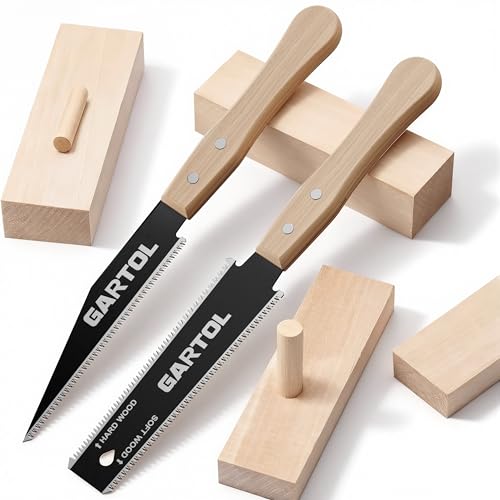
Precision Woodworking Tools: This 2-piece Japanese hand saw set includes a 6-inch flush cut saw and a double-edged Ryoba saw, designed for fine woodworking, furniture making,...
Looking for a versatile starter set that won’t break the bank? I’ve found one that punches well above its weight.
The GARTOL Japanese Pull Saw (2-Piece) gives you two distinct tools: a 6-inch flush cut saw for tight trimming jobs, and a double-edged Ryoba saw with coarse and fine teeth. The SK5 steel blades flex where you need them. They stay sharp through project after project.
I particularly like the wooden handles. They’re shaped in the classic Japanese style, with an anti-slip grip that actually works when my palms get sweaty. After a few hours of cutting, my hands don’t ache, which matters more than you’d think.
Here’s what each saw handles:
- Flush cut saw: trimming dowels, plugs, anything flush to a surface
- Ryoba: rip cuts, crosscuts, joinery work
Both tackle hardwood and softwood equally well. The set’s compact, lightweight, and fits in any toolbox. I’ve used mine indoors for furniture making and outside for pruning. The blades handle it all without complaint.
For DIYers building skills, this set covers your bases. Professionals might want dedicated saws eventually, but honestly? I keep reaching for these. They’re that reliable.
Verdict: beginners and budget-conscious makers, this one’s your best starting point.
Best For: Beginners, DIY enthusiasts, and budget-conscious makers looking for a versatile, reliable starter set that delivers professional-quality results without a premium price tag
Pros:
- Exceptional value with two distinct saws (flush cut and Ryoba) covering wide range of cutting applications
- Ergonomic Japanese-style wooden handles with anti-slip grip reduce hand fatigue during extended use
- Premium SK5 steel blades maintain sharpness and flexibility across repeated projects with both hardwood and softwood
Cons:
- May eventually need dedicated saws for professionals seeking specialized performance
- Medium size may not suit users requiring full-size tools for heavy-duty applications
- 6-inch flush cut blade length limits reach in deeper cutting situations
Recommended Products

1.3-in-1 Multifunctional Design:3-in-1 hand saw kitergonomic TPR non-slip handleoffers a steady grip even with sweaty hands or work gloves for,DIY and yard cuttingSay goodbye to piles of single-function saws. This 3-in-1 hand saw kit comes with 3 different blades to handle various daily cutting tasks. Designed with an ergonomic TPR non-slip handle, it reduces vibration and hand fatigue during long work. It offers a steady grip even with sweaty hands or work gloves for safer, effortless DIY and yard cutting.
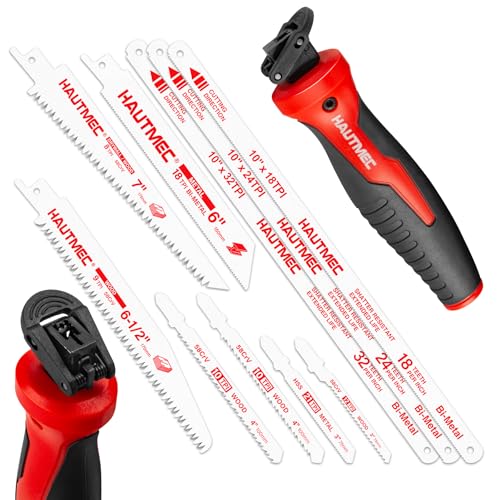
【MULTI-PURPOSE CUTTING SYSTEM】Includes 10 interchangeable blades designed for cutting wood, metal, plastic, drywall, PVC, branches, and other materials. One versatile hand saw replaces multiple cutting tools, making it ideal for DIY projects, home repairs, remodeling, camping, woodworking, and emergency use

High Quality Saw Blades: PECHAM 24pcs oscillating saw blades are made of High Carbon Steel and Stainless Steel, Tougher and thicker than most. The saw blades are coated with electrophoretic black finish which protects against corrosion. It's featured high heat resistant material, wear resistance, tough and long-lasting, easy cutting and long service life.
IRWIN Tools ProTouch Coping Saw (2014400), Blue & Yellow

High-speed steel coping saw blades cut through most materials with ease A Flat-Bar frame and DuraSteel pins on this coping saw provide durable use This coping saw has an...
What makes a coping saw worth your time?
For me, it’s control and finesse. The IRWIN ProTouch Coping Saw delivers both.
Frame and Reach
I like the 5-1/2″ flat-bar frame. It stays rigid when I push through curves.
Those DuraSteel pins? They don’t loosen like cheaper saws I’ve battled.
The Blade
The 17-point, 6-1/2″ high-speed steel blade bites cleanly through wood, plastic, even light metal.
At 17 teeth per inch, it’s fine enough for detailed coping joints.
The Handle Problem, Solved
The ProTouch grip actually fits my hand. No numbness after twenty minutes of trim work.
(I’ve thrown away saws for less.)
Real Talk
It’s not fancy. It just works for baseboard corners, dovetail waste, or violin makers who need tight radius cuts.
Verdict
| For | Maybe Skip |
|---|---|
| DIY trim installers | Production shops wanting quick blade swaps |
| Hobbyists needing one reliable coping saw | Those wanting a rotating blade |
I reach for mine weekly.
Best For: DIY trim installers, hobbyists, and woodworkers seeking an affordable, reliable coping saw for detailed cuts in wood, plastic, and light metal.
Pros:
- Rigid 5-1/2″ flat-bar frame with DuraSteel pins that stay tight during use
- ProTouch ergonomic handle reduces hand fatigue during extended work sessions
- 17-point high-speed steel blade delivers clean, precise cuts for detailed joinery
Cons:
- Blade cannot rotate, limiting flexibility for certain angled cuts
- Not designed for quick blade swaps needed in production environments
- 5-1/2″ frame depth may restrict access in deeper workpieces
Recommended Products

10-Inch Hand Saw for Tree Trimming: Designed as a folding pruning saw for routine yard work, the 10-inch blade provides a full cutting stroke for trimming tree branches, removing unwanted limbs, and clearing woody garden debris. It gives homeowners and gardeners a controlled manual option for branch cutting, tree care, and seasonal pruning.

[2-Piece Professional Set for Versatile Projects] Get two essential cutting tools in one purchase: a 6-inch flush cut blade for precise trimming of dowels and joints, plus a double-edged ryoba for both rip and cross cuts. Perfect for furniture making, home repairs, and craft projects.

【Fast, Efficient Cutting】10-inch curved blade and 7 TPI tri-ground teeth take a deep bite, while wide chip-clearing grooves help reduce clogging for smoother cutting through branches and wood
Factors to Consider When Choosing a Hand Saw for Woodworking
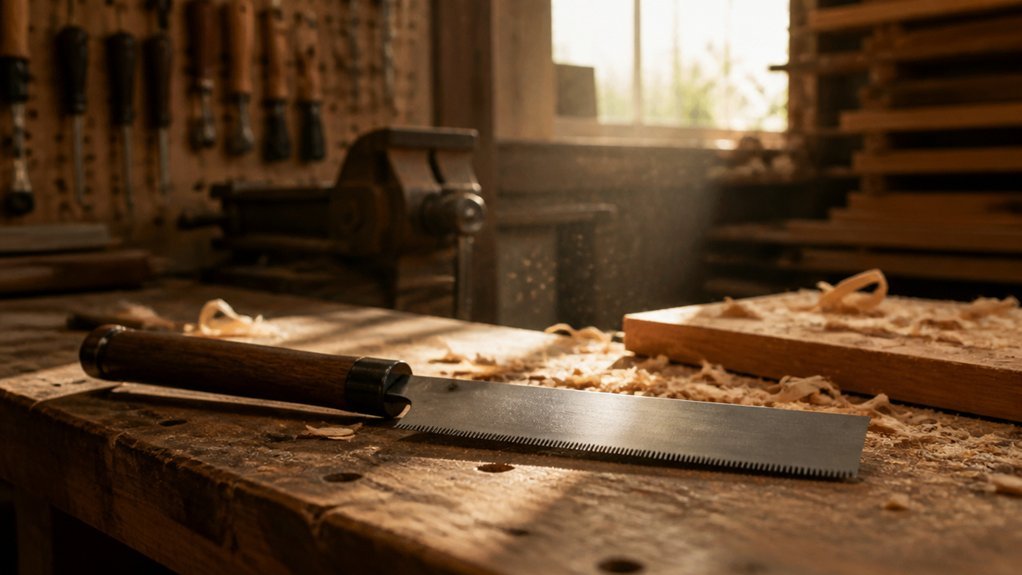
I’ve tested enough hand saws to know that blade material quality and tooth count selection make or break your cuts. Pay attention to handle ergonomics too, because a sore grip ruins an otherwise perfect afternoon in the shop.
You’ll want to match the saw type style to your projects, weighing cutting versatility against specialized performance for the cleanest results.
Blade Material Quality
Because I’m the one who’ll be pushing that saw back and forth for hours, I care a lot about what’s in the blade. SK5 high-carbon steel, common in Japanese and outdoor saws, gives me the hardness and edge retention I need for clean cuts that don’t dull halfway through a project.
I look for triple-ground or multi-tooth configurations. They balance speed with smoothness. Thin blades, around 0.4–0.5 mm, reduce friction for finer work, while thicker ones handle rougher jobs without flexing.
Double-edged ryoba designs? Brilliant, one blade does rip and cross-cut. Rust-resistant coatings matter too, especially in my humid shop. Cheap steel wastes my time and money.
Tooth Count Selection
How do I know which tooth count I’ll actually need before I’m halfway through a board and regretting my choice? I’ve learned the hard way that TPI, teeth per inch, makes or breaks your cut.
Hardwoods demand higher TPI. I reach for 17 TPI on oak or maple to stop tear-out and get glass-smooth edges. Softwoods? Give me 11–14 TPI for speed, even if the surface looks a bit rough.
Mixed-tooth designs save my sanity. Triple-ground or dual-pitch blades let me rip fast on one stroke, then flip for finer work. Variable-tooth saws, double-edged with different TPIs, handle both rip and crosscuts without swapping tools.
One catch: thinner blades with high TPI bend if I push too hard. Match your aggression to the steel, and you’ll never regret the cut.
Handle Ergonomics
Why does the nicest blade on earth feel useless if I can’t hold onto it? I’ve learned the hard way that handle ergonomics make or break a saw.
Grip Material Matters
Wooden handles feel classic and warm, but rubber-coated or composite options conform to my hand better. They distribute pressure evenly, so my palm doesn’t scream after ten minutes. TPR and rubber grips are absolute lifesavers when I’m sweating in summer or cutting damp, green wood.
Balance and Control
Thick, well-balanced handles give me real leverage. Poor balance kills my wrists during long rip cuts. Non-slip textures keep the blade tracking straight, especially on demanding pushes.
My Verdict
If you’ve got smaller hands, skip bulky handles. Big mitts? Avoid cramped grips. Test before you buy. Your hands will thank you.
Saw Type Style
What separates a frustrating afternoon from a satisfying build? I’ve found it’s often the saw type style I’m reaching for.
Pull vs. Push: The Core Difference
Pull saws cut on the pull stroke, not the push. They feel lighter, glide easier, and leave cleaner edges. Push saws? More muscle, more tear-out, more sanding later. No thanks.
My Go-To Recommendations
For versatility, I grab a ryoba: rip teeth on one edge, cross-cut on the other. Two saws in one blade.
For hardwood trim or delicate work, I want fine teeth, 11–17 TPI. Coarse teeth tear out beautiful maple. Why ruin good wood?
Blade thickness matters too. Thinner blades (0.4–0.5 mm) mean less waste, but they’ll wander if your hands shake.
The Verdict
Japanese pull saws win for effortless precision. Push saws suit rough carpentry. Match the style to your task, and you’ll actually enjoy cutting.
Cutting Versatility
Where do I even start when I’m staring at wall-to-wall hand saws? I look for cutting versatility first, because nobody wants five saws cluttering their bench.
TPI and Double-Edged Designs
Different TPI on each side means I get fast rough cuts and clean finish work in one tool. Double-edged or Ryoba-style blades let me rip and crosscut without swapping anything. That’s huge.
Teeth and Materials
Triple-ground teeth, oscillating TPI like 11 fine versus 17 coarse, change everything for hardwood versus softwood. SK5 high-carbon steel blades stay stiff, resist bending, and survive abuse.
Kerf Width
Thinner kerfs cut faster with less effort. Thicker ones waste wood and tire my arm.
My Take
Grab a double-edged Japanese pull saw if you want maximum flexibility. Single-purpose saws? Skip them unless you specialize.
Portability Storage
A hand saw that lives in my truck beats one collecting dust in the garage, so I always think about portability before I buy.
Folding or compact designs are game-changers. I can toss a folding saw into my backpack for trail repairs or camping projects without a second thought. Lightweight blades paired with ergonomic handles save my shoulders during long hauls between job sites.
For storage, folding blades and quick-change mechanisms shrink the footprint dramatically. I keep mine in a slim case; no more drawer-clutter or nicked teeth. Thinner blades and shorter overall lengths travel easier, though they sacrifice some cutting depth.
I also prioritize rust-resistant coatings like SK5 steel. Nothing kills a workday faster than a seized blade in humid weather. For mobile woodworkers, these details aren’t optional, they’re essential.