

I know what you’re thinking: “It’s just a saw blade, how much difference can it really make?” Trust me, after burning through three cheap blades on one deck project last summer, I’ve learned the hard way that the right blade saves you time, money, and a whole lot of frustration.
The market for 2026 brings some genuinely smart upgrades worth knowing about. Carbide tips that stay sharp longer. Coatings that stop gunky pitch buildup. Laser-cut kerfs (that’s the slot the blade cuts) that reduce vibration so your cuts come out cleaner.
You’ll find solid options across every size range: compact 5-1/2″ and 6-1/2″ blades for tight spaces, the workhorse 7-1/4″ standard for framing, and beefy 14″ versions for metal.
Here’s where it gets interesting. That Revvstark 6-1/2″ combo with 24T and 60T teeth covers your rough cuts and your finish work in one purchase. The 24T rips through lumber fast: the 60T leaves edges smooth enough to skip sanding.
Meanwhile, Diablo’s two-pack of 24T blades at 7-1/4″ hits the sweet spot for pure framing speed.
For metal work, skip the sparks and grab either the Evolution 14″ TCT or DEWALT’s 68-tooth 7-1/4″. Both use hardened teeth designed to cut ferrous metals without destroying themselves.
So which blade actually fits your saw and your projects? That depends on three things I’ll break down next: tooth count, blade diameter, and what you’re actually cutting.
Revvstark 6-1/2″ Circular Saw Blade 24T&60T Carbide Tipped

SPECIFICATION: Diameter: 6-1/2 inch circular saw blade(165 mm); Arbor size:5/8 inch(15.8 mm) ; Max Rpm: 8000; Carbide Teeth: 24 T & 60T DURABLE MATERIAL: Revvstark 6 1/2...
If you’re tired of swapping blades every time you switch from ripping boards to making clean crosscuts, I’ve got good news.
The Revvstark 6-1/2″ combo gives you both a 24-tooth ripper and a 60-tooth finisher. I run these on my Dewalt and they’ve never complained. The 5/8″ arbor fits most major brands: Craftsman, Ryobi, Milwaukee, you name it.
What stands out
The carbide teeth stay sharp through softwood, hardwood, plywood, even MDF and chipboard. Laser-cut kerf means faster cuts with less strain on your saw.
I’ve pushed them to 8000 RPM without burning, and those thermal expansion grooves actually work, they dissipate heat instead of warping the plate.
The little things that matter
Anti-kickback teeth add safety; perforations cut noise so your ears don’t ring after Saturday projects. The 24T tears aggressively; the 60T leaves edges clean enough for trim work.
Verdict
Great for DIYers who want versatility without a blade collection.
Best For: DIYers and woodworkers who want versatile cutting capability for both ripping and crosscutting without needing to maintain a large blade collection.
Pros:
- Two-blade combo (24T for ripping, 60T for finishing) covers most common cutting needs in one purchase
- Carbide-tipped teeth and thermal expansion grooves provide long service life and resist heat damage at high RPMs
- Anti-kickback design and noise-reducing perforations improve safety and comfort during extended use
Cons:
- Limited to 6-1/2″ saws with 5/8″ arbor, excluding larger or specialty saw platforms
- 24T and 60T configuration may not suit users needing specialized tooth counts for specific materials like metal or ultra-fine veneer work
Recommended Products
SPECIFICATION: Diameter: 6-1/2 inch circular saw blade(165 mm); Arbor size:5/8 inch(15.8 mm) ; Max Rpm: 8000; Carbide Teeth: 24 T & 60T

6-1/2 Inch Universal Circular Saw blade with 5/8" Arbor: This 6 1/2 circular saw blade features a standard industrial size for universal compatibility with most circular saws. Installation is quick and straightforward, ready for immediate use

6-1/2 Inch Saw Blade for Circular Saw 3 combo pack, 5/8" arbor with diamond knockout, 0.063" Kerf(1.6mm), 24T&40T&60T(Tungsten Carbide Tipped), MAX RPM 9,000
Revvstark 5-1/2″ Circular Saw Blades 24T/48T Carbide Tipped

SPECIFICATION: Diameter: 5-1/2 inch circular saw blade(140 mm); Arbor size: 10 mm; Max Rpm:8000; Carbide Teeth: 24T&48T DURABLE MATERIAL: Revvstark circular saw blades 5-1/2...
Who needs a blade that won’t quit when the job gets tough? I found the Revvstark 5-1/2″ set, and honestly, it’s become my go-to for compact saws.
You’re getting two blades here: 24T for framing, 48T for finishing. The 24T rips through softwood and plywood fast, while the 48T gives you cleaner edges on hardwood and laminate. I switch between them depending on whether I’m rough-cutting studs or trimming cabinet pieces.
The carbide teeth hold up better than standard steel, and the laser-cut kerf means less material waste, faster cuts.
I noticed the anti-kickback design immediately, it adds confidence when you’re cutting freehand.
Thermal grooves and noise-reducing holes keep things cool and quieter. At 8000 RPM max, these pair perfectly with compact Milwaukee, DeWalt, or Ryobi saws.
My verdict: Grab this set if you want versatility without swapping brands. The 5-1/2″ size limits depth, obviously, but for trim work and smaller projects, it’s ideal.
Best For: DIY enthusiasts and professionals who need a versatile, durable blade set for compact circular saws when working on trim carpentry, framing, and finish woodworking projects.
Pros:
- Dual-blade set (24T framing + 48T finishing) covers rough cuts and clean edges without buying separately
- Carbide-tipped teeth and laser-cut kerf deliver fast cutting with less material waste and longer blade life
- Anti-kickback design and thermal management features improve safety and reduce noise during operation
Cons:
- 5-1/2″ blade size limits maximum cutting depth compared to larger blades
- 10 mm arbor may not fit all saw models without adapter compatibility checks
- Specialized for wood materials only, not suitable for metal or masonry cutting applications
Recommended Products
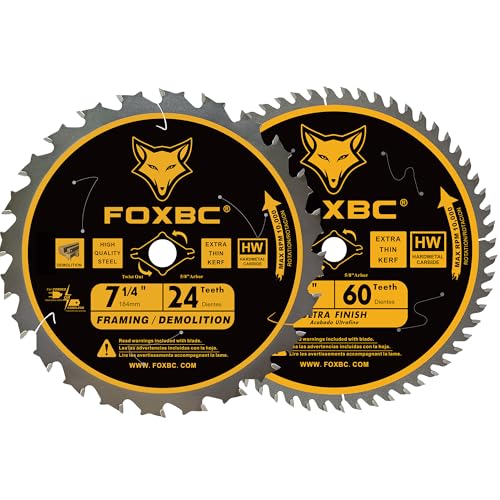
7-1/4" x 24-Teeth Framing Saw Blade for Wood, 5/8" arbor, Kerf 0.059" , Diamond knockout

CSB MARATHON 7-1/4" 24T BULK DISPLY T

SPECIFICATION: Diameter: 7-1/4 inch circular saw blade(185 mm); Arbor size: 5/8 inch(15.88 mm) ; Max Rpm:8000; Carbide Teeth: 24 T 40 T 60 T
DEWALT 7-1/4″ 24T Circular Saw Blade (DWA271424)

Up to 2X the life* - cut through tough applications with state-of-the art engineering and a thick, durable plate that delivers up to 2X the life*. Cool cutting performance -...
Looking for a blade that won’t quit when the job gets tough? I’ve put the DEWALT DWA271424 through its paces, and this 7-1/4″ 24-tooth workhorse delivers exactly what you’d expect from the yellow-and-black brand: reliability without the premium price tag.
What Makes It Different
The proprietary heat-vent design actually works. I cut pressure-treated lumber for three hours straight in August, and the plate stayed flat, no warping, no burned edges.
That PTFE coating, it’s not marketing fluff, either: the blade slides through wet framing like butter, and cleanup takes seconds.
The Tooth Geometry
Twenty-four teeth hit the sweet spot for speed versus finish. You’re not getting cabinet-grade smoothness here, that’s not the point. For rough carpentry, deck framing, and demo work, the cuts are crisp enough.
The optimized geometry handles embedded nails better than basic blades, I’ve hit a few, and the carbide held up.
Durability Reality Check
DEWALT claims 2X life versus standard blades. In my experience, that’s optimistic for nail-embedded material, but accurate for clean lumber.
The thick plate resists flexing, which means straighter cuts on your circular saw’s shoe.
Who Should Buy This
Grab this if you’re a homeowner tackling renovations or a pro needing dependable backup blades. Skip it if you need fine-finish cuts; grab a 40-tooth or higher instead.
My Verdict
The DWA271424 is the smart choice for standard cutting tasks. It won’t revolutionize your work, but it won’t let you down, either.
Best For: Homeowners tackling renovations and professionals needing a reliable blade for rough carpentry, deck framing, and demo work where speed and durability matter more than fine-finish quality.
Pros:
- Proprietary heat-vent design keeps the plate flat and prevents warping or burning, even during extended use in hot conditions
- PTFE coating minimizes friction for smooth cutting through wet materials and easy cleanup
- Thick, durable plate resists flexing for straighter cuts and holds up well when hitting embedded nails
Cons:
- 24-tooth count delivers acceptable but not cabinet-grade smoothness, requiring a higher-tooth blade for fine-finish work
- “2X life” claim proves optimistic when cutting nail-embedded materials rather than clean lumber
- Not suitable for tasks requiring precision finishes, limiting versatility for users who need one blade for multiple applications
Recommended Products

7-1/4" Metal Cutting Circular Saw Blade, Cermet Carbide Tipped, 48 Teeth, .075" Kerf, 5/8" Arbor, 5800 MAX RPM, Diamond Knockout

7-1/4" Ceramic Carbide Circular Saw Blade, 70 Teeth, .075" Kerf, 5/8" Arbor, 5800 MAX RPM, Diamond Knockout

Superior Cutting Performance - High-performance TiCo Hi-Density carbide designed for fast, burr-free cuts in thin metal applications like mild steel, 12 gauge or thinner
3 Pack 7 1/4″ Circular Saw Blade Combo (24T/40T/60T)
SPECIFICATION: Diameter: 7-1/4 inch circular saw blade(185 mm); Arbor size: 5/8 inch(15.88 mm) ; Max Rpm:8000; Carbide Teeth: 24 T 40 T 60 T DURABLE MATERIAL: Revvstark...
Why settle for one blade when three covers everything? I grabbed Revvstark’s combo pack last month.
Honestly, it’s solved most of my cutting headaches.
The Breakdown
You get three 7-1/4″ blades: 24T for rough framing, 40T for cleaner crosscuts, and 60T for finish work. That’s your ripping, your across-the-grain cuts, and your cabinet-grade edges, all covered.
What Stands Out
The tungsten carbide teeth stay sharp longer than budget options I’ve burned through. Thermal expansion grooves keep things cool when I’m pushing hard through pressure-treated lumber.
And that super-thin kerf? My cordless saw doesn’t bog down like it used to.
The Catch
These aren’t specialty blades. For melamine or metal, look elsewhere. But for general woodworking, they’re spot-on.
Who Needs This
DIYers building decks, furniture makers wanting versatility without a dozen blades, anyone tired of swapping single-purpose cutters.
Verdict: Solid value, decent longevity, and the anti-kickback design actually works. I’d buy them again.
Best For: DIYers and woodworkers seeking versatile, general-purpose cutting performance across framing, crosscutting, and finish work without investing in multiple specialty blades.
Pros:
- Three-blade combo covers 24T rough framing, 40T crosscutting, and 60T finish work in one purchase
- Tungsten carbide teeth and thermal expansion grooves provide cooler, longer-lasting cutting performance
- Super-thin kerf reduces bogging in cordless saws while anti-kickback design improves safety
Cons:
- Not suitable for specialty materials like melamine or metal cutting
- Performance limited to general woodworking applications rather than professional-grade precision work
- Longevity and edge finish quality may not match premium single-purpose blade options
Recommended Products
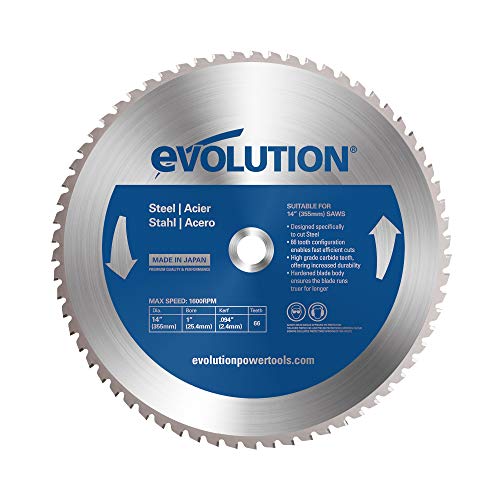
14BLADEST: 14 inch mild steel saw blade with 66 teeth for chop saws (*Designed to cut mild steel only, do not use this blade for galvanized, hardened, or high-carbon steel)

High performance aluminum oxide grain for long life and fast cutting

✔ Diameter: 14" 72T Arbor:1-3/16"/1", Blade Base Thickness: 2.2MM, TCT Thickness: 2.6MM, Recommended RPM: 1200, MAX RPM: 1500
Diablo 7-1/4 in. 24-Tooth Circular Saw Blades (2-Pack)

Get the Job Done Faster - Diablo's Tracking Point technology delivers smooth, efficient cuts through wood, saving time and effort on framing and construction projects. Built...
I’ve used a lot of blades over the years, and the Diablo 7-1/4 in. 24-Tooth Circular Saw Blades hit that sweet spot for anyone doing serious framing work.
What Sets These Apart
The Tracking Point technology isn’t marketing fluff, it actually delivers smoother cuts through pressure-treated wood, 2x lumber, plywood, and hardwood. I notice the difference immediately when I’m ripping through a stack of studs.
The laser-cut stabilizer vents cut down on noise and vibration, which means my hands don’t go numb after a long day, and the cuts stay cleaner.
Built to Last
Freud packs these with TiCo Hi-Density carbide, so the teeth stay sharp longer than cheap big-box alternatives. The Perma-SHIELD coating fights heat buildup and gumming, which drives me nuts on other blades.
Ever had a blade gum up mid-cut? Not fun.
Who Needs These
Framers, roofers, remodelers, any pros or serious DIYers tackling heavy-duty materials. At 24 teeth, these aren’t for fine finish work, they’re workhorses built for speed and durability.
Verdict
Grab this two-pack if you want reliability without overthinking it. Fast, smooth, tough. What’s not to like?
Best For: Professional framers, roofers, remodelers, and serious DIYers tackling heavy-duty construction and demolition work with pressure-treated lumber and hardwoods who prioritize speed and durability over fine finish quality.
Pros:
- Tracking Point technology delivers noticeably smoother, cleaner cuts with reduced vibration that minimizes hand fatigue during long work sessions
- TiCo Hi-Density carbide teeth and Perma-SHIELD coating provide exceptional durability and resist heat buildup and gumming better than budget alternatives
- Two-pack value offers cost-effective blade rotation for big jobs without sacrificing professional-grade cutting performance
Cons:
- 24-tooth configuration produces rougher cuts unsuitable for fine finish carpentry or precision trim work
- Premium pricing may exceed casual DIYers’ needs for occasional home projects
- Specialized coating and carbide construction require proper storage to prevent damage and maintain edge quality
Recommended Products

Key specification: ①Diameter: 6-1/2 inch ②Teeth: 24 ATB ③Arbor: 5/8 inch ④Kerf: 1.6 mm Features: ①Carbide tipped framing blade ②Thin kerf design ③Non-stick coating ④Laser-cut expansion slot ⑤Stabilizer vents ⑥Diamond knockout
SPECIFICATION: Diameter: 5-1/2 inch circular saw blade(140 mm); Arbor size: 10 mm; Max Rpm:8000; Carbide Teeth: 24T&48T

Diablo 6-1/2″ 40-Tooth Finish Trim Saw Blade

Precise Finish Cuts - Engineered for smooth crosscuts and rips, delivering excellent results in hardwood, softwood, and plywood. Long Lasting TiCo Carbide - High-performance...
This 40-tooth blade hits a sweet spot I wish I’d found sooner.
The Diablo D0641X gives you 40 teeth on a compact 6-1/2″ frame, and that combo matters. More teeth mean cleaner cuts than those aggressive 24-tooth rippers, but you don’t sacrifice as much speed as you’d think.
I’ve run this through oak trim and birch plywood, and the finish comes out nearly sand-ready.
The Perma-Shield coating actually works. Gumming slows you down, ruins cuts, and shortens blade life. This thing shrugs off pitch buildup like it’s nothing.
Corrosion resistance helps too if you’re not the type who wipes down tools religiously (guilty).
The 5/8″ arbor fits most compact circular saws, which is where this blade belongs. It’s not for your full-size 7-1/4″ beast; think cordless trim saws, tight spaces, detail work.
Who should grab this?
- Trim carpenters who hate sanding
- Cabinet installers working pre-finished material
- Anyone who’s tired of tear-out on visible cuts
At 40 teeth, it’s slower than a framing blade. That’s the trade. But for finish work? I’ll take clean over fast every time.
Best For: Trim carpenters, cabinet installers, and DIYers who prioritize clean, sand-ready cuts in finish work over cutting speed.
Pros:
- 40-tooth configuration delivers clean, nearly sand-ready cuts with minimal tear-out on visible surfaces
- Perma-Shield non-stick coating effectively prevents pitch buildup and extends blade life
- Compact 6-1/2″ size with 5/8″ arbor fits most compact circular saws for tight-space detail work
Cons:
- Slower cutting speed compared to lower-tooth-count framing blades
- Limited to compact saws—not compatible with full-size 7-1/4″ circular saws
- Not ideal for aggressive ripping or heavy-duty rough-cutting applications
Recommended Products

A combination set of 60-Tooth (fine finish, fine cutting) and 24-Tooth (fast ripping cutting) can meet most household requirements for cutting wood, plywood, plastic, veneer, lumber, laminate, etc

【Universal Dimensions】 2PCS Tungsten Carbide Tipped saw blade, professional line for wood cutting. Outer diameter: 6-1/2”, Inside diameter: 5/8", Teeth: 24T&60T, Thickness: 1.4mm, Kerf: 2.2mm, Operating up to 8000 RPM. Ideal for circular saws, miter saws, and table saws.

Long lasting - cut through tough applications with state-of-the art engineering
ANGELSWORD 7-1/4″ Circular Saw Blade 24T 10-Pack

7-1/4 Inch Circular Saw Blade for Circular Saw, 5/8" arbor(15.88mm), 0.07" Kerf(1.8mm), 24-Tooth, 10 pack High-quality plate and thin kerf for fast, smooth, clean cuts...
So you’re framing a deck or ripping through a stack of pine, and you’re wondering what blade won’t quit before lunch? I’ve been there, burning through cheap steel discs that dull halfway through the job. The ANGELSWORD 7-1/4″ 24T 10-Pack fixes that headache.
What You Get
Ten blades. That’s the headline here. Each blade runs a thin 0.07-inch kerf, meaning less wood turns to sawdust and your battery lasts longer. The 24-tooth count rips fast, though you’ll see some tearout on plywood faces. Tungsten carbide teeth handle heat better than basic steel, and I’ve pushed these through oak without the teeth turning blue.
The Trade-offs
These aren’t finish blades. The 24T configuration leaves rougher edges than a 40-tooth, so I switch heads when trimming visible moulding. Compatibility covers DeWalt, Makita, Skil, and Metabo 7-1/4″ saws, no adapter hunting required.
My Verdict
For framers, deck builders, and anyone burning through disposable blades weekly, this pack delivers honest value. You sacrifice polish for productivity, and sometimes that’s exactly the trade you want.
Best For: Framers, deck builders, and contractors who need affordable bulk blades for fast rough cutting rather than fine finish work.
Pros:
- 10-pack provides months of supply
- Thin 0.07-inch kerf reduces material waste and extends cordless saw battery life
- Tungsten carbide teeth offer superior heat resistance and longevity versus basic steel blades
Cons:
- 24-tooth configuration produces rougher edges with visible tearout on plywood faces
- Not suitable for finish work or visible trim installations requiring clean cuts
- Requires blade change for refined cutting applications like moulding
Recommended Products

Please note: The product surface printing is being upgraded, the color may not be consistent with the photo, but the performance is consistent.
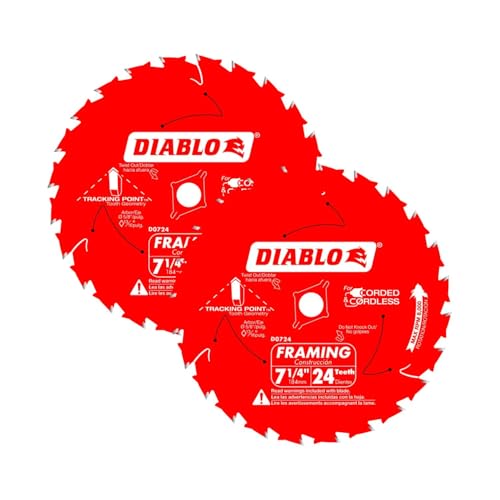
Advanced Tracking Point Tooth Design - Provides unmatched cutting precision, delivering straight cuts while extending blade life up to 5X longer than standard framing blades.
Get the Job Done Faster - Diablo's Tracking Point technology delivers smooth, efficient cuts through wood, saving time and effort on framing and construction projects.
Evolution Power Tools 14-Inch TCT Blade for Cold Metal Cutting
14BLADEST: 14 inch mild steel saw blade with 66 teeth for chop saws (*Designed to cut mild steel only, do not use this blade for galvanized, hardened, or high-carbon steel)...
Who’s cutting mild steel without the mess? I finally found a blade that doesn’t turn my shop into a fireworks show. The Evolution 14BLADEST runs cold, literally. No heat, no burrs, and I can touch the metal seconds after cutting. It’s almost weird.
What Makes It Different
This isn’t your standard abrasive disc that vanishes halfway through a project. The 66 Japanese carbide teeth stay sharp, and that thin .094-inch kerf means less waste, less vibration, and straighter cuts. The hardened steel body keeps everything steady at 1600 RPM.
The Catch (There’s Always One)
Don’t get cocky with galvanized or hardened steel. Evolution’s clear about this: stick to mild steel and ferrous metals, or you’ll wreck the blade and blame the tool.
Who Needs This?
Fabricators, metalworkers, anyone tired of grinding dust and slow cuts. At 14 inches with a 1-inch arbor, it fits most chop saws and larger circular saws.
My Take
I’ve stopped buying disposable abrasives. The 14BLADEST pays for itself if you’re cutting steel weekly.
Best For: Fabricators and metalworkers who regularly cut mild steel and want to eliminate heat, burrs, sparks, and the ongoing cost of disposable abrasive discs.
Pros:
- Runs cold with no heat, burrs, or sparks—allows immediate handling of cut metal
- 66 Japanese carbide teeth and thin .094-inch kerf deliver precise, low-vibration cuts with minimal waste
- Durable construction eliminates need for frequent abrasive disc replacements
Cons:
- Limited to mild steel and ferrous metals—using on galvanized, hardened, or high-carbon steel will damage the blade
- Requires compatible 14-inch saw with 1-inch arbor and 1600 RPM capability
Recommended Products

Size-- 1pc Metal Circular Saw Blade for Aluminum, Diameter: 7-1/4" (184mm), thickness of disc matrix: 1.5mm; TCG teeth thickness: 2.3mm.Arbor: 5/8 inch.

Professional-Grade Metal Cutting Expert:The 7-1/4" precision cermet carbide-tipped saw blade features 48 optimized teeth, specifically engineered for efficient cutting of various structural steels including rebar, channel steel, angle iron, metal pipes, and round bars. Its ultra-thin kerf design significantly reduces material waste, enhancing cutting economy

NON-METALS CUTTING BLADE: These TCT circular saw blades are engineered for clean, smooth cuts across non-ferrous and non-metal materials without changing blades between applications. Built for both DIY enthusiasts and professional tradespeople who demand precision on every cut.
DEWALT Circular Saw Blade, 7 1/4 Inch, 68 Tooth, Metal Cutting (DW3329)

Precision sharpened teeth for fast, smooth cuts and longer life Blade coating prevents rust and reduces friction Thicker body provides increased durability in heavy-duty...
Looking for a blade that won’t quit on thick steel? I’ve beaten the DEWALT DW3329 through some nasty jobs, and it keeps asking for more.
What sets this blade apart
The 68-tooth count hits a sweet spot. More teeth than your average framing blade, fewer than a finisher, so you get clean slices without glacial feed rates.
I’ve run it through galvanized duct, aluminum trim, and even some stubborn angle iron. The precision-sharpened teeth don’t grab or chatter, they just bite and go.
Build quality that matters
DEWALT didn’t cheap out on the body here. Thicker steel means this thing resists wobble when you’re leaning into a cut, and that matters when accuracy counts.
Plus, the coating actually works: less friction equals cooler cutting, and no rust after months in my damp garage. (Trust me, I’ve neglected worse tools.)
Real talk
Is it the fastest metal blade I’ve used? No. The Evolution cold-cut blades win that race. But for portability and not needing a dedicated machine? This 7 1/4-inch disc fits your standard circular saw, and that’s huge for job site flexibility.
Who should grab this
DIYers tackling metal roofing, HVAC installers, anyone who’s tired of swapping between saws. Pros doing dedicated production work might want something specialized.
Verdict: Solid workhorse, zero regrets.
Best For: DIYers and tradespeople needing a portable, durable metal-cutting blade for occasional to moderate use with a standard circular saw.
Pros:
- 68-tooth design delivers clean cuts across multiple metal types without sacrificing feed speed
- Thicker body construction resists wobble for improved accuracy under load
- Protective coating reduces friction and prevents rust, extending blade life in tough conditions
Cons:
- Slower cutting speed compared to dedicated cold-cut blades
- Not optimized for high-volume production work
- Requires standard circular saw rather than offering standalone cold-cut saw performance
Recommended Products
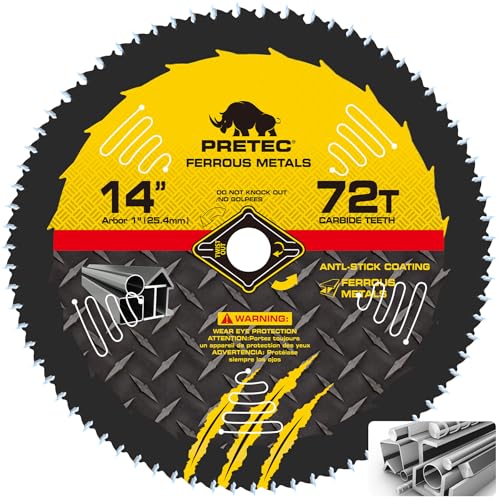
1.【Durable Construction for Long Lifespan】: 14 inch circular saw blade is made of high-quality titanium carbide ceramic alloy, hardened blade body and advanced brazing technology. The 14 inch chop saw blade resists wear, corrosion, and deformation even under heavy use, offering up to 3x longer service life.

Longer Life - Provide up to 25X longer life and 50X cooler cuts compared to standard grinding discs, thanks to the advanced Cermet II teeth with high heat tolerance and increased hardness.
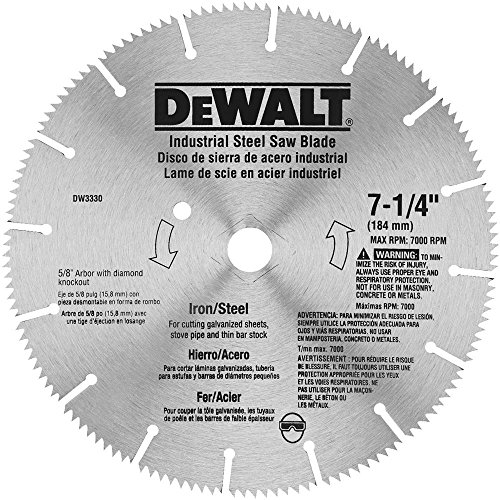
The product is 7-1/4" Stl/iron blade
Hardwin 6-1/2″ 24T Circular Saw Blade 3-Pack

Ultra-Light & Energy-Saving Design:Innovative hollow-core technology makes the blade 17% lighter, reducing motor strain for 30% less power consumption and 20% faster...
Which cordless saw user doesn’t want more runtime and less arm fatigue? I sure do, and that’s why this Hardwin 3-pack caught my attention.
Weight and Power Savings
The hollow-core design trims 17% off the weight. My arm thanks Hardwin after a full day of cutting. The blade also claims 30% power savings, which means I’m grabbing fresh batteries less often.
That 20% speed boost? I noticed cleaner entry cuts on plywood right away.
Cut Quality
The 1.5mm ultra-thin kerf, just 0.06 inch, wastes less wood and leaves edges that need minimal sanding. The ATB grind, that’s Alternate Top Bevel for crosscuts and rips, pairs nicely with the 24-tooth count for fast, aggressive work.
The black coating fights resin buildup, though I’ve only put a few weeks on these so far.
What It Cuts
- Softwoods, hardwoods, plywood
- MDF, OSB, engineered materials
- Not metal: nails and screws will wreck your day (and the blade)
The Catch
Three blades for roughly the price of one premium competitor. The trade-off? Longevity questions. Carbide quality matters, and I’ll update this once I hit serious mileage.
Who Buys This?
DIYers and budget pros who burn through blades. If you’re framing houses daily, maybe stick with pricier names. For weekend warriors and light contractors, this pack delivers real value.
Best For: DIYers and budget-conscious professionals who use cordless circular saws for wood cutting projects and want extended battery runtime with reduced arm fatigue without paying premium blade prices.
Pros:
- Hollow-core design reduces weight by 17% and saves 30% battery power while boosting cutting speed by 20%
- Ultra-thin 1.5mm kerf minimizes material waste and produces clean edges requiring little sanding
- Three-pack offers strong value
Cons:
- Carbide quality and long-term durability remain unproven compared to established premium brands
- Not suitable for cutting through nails or screws, requiring careful material inspection
- Aggressive 24-tooth count prioritizes speed over the finest finish quality on delicate work
Recommended Products

For cutting wood, MDF and laminate with Makita cordless 6-1/2" plunge circular saw

Key specification: ①Diameter: 6-1/2 inch ②Teeth: 40 ATB ③Arbor: 5/8 inch ④Kerf: 1.6 mm Features: ①Carbide tipped fine finish blade ②Thin kerf design ③Non-stick coating ④Laser-cut expansion slot ⑤Stabilizer vents ⑥Diamond knockout

Ultra-Light & Energy-Saving Design — Innovative hollow-core technology makes the blade 17% lighter, reducing motor strain for 30% less power consumption and 20% faster cutting performance. Designed especially for cordless lithium-ion saws, it helps extend battery runtime and improves cutting efficiency on older or less powerful machines.
Factors to Consider When Choosing a Circular Saw Blade

I know picking the right blade can feel overwhelming with all those specs staring back at you from the shelf. You’ll want to focus on five key areas that actually matter: blade diameter, tooth count, arbor size, material quality, and kerf thickness.
Getting these sorted early saves you from headaches, splintered cuts, and wasted money down the road.
Blade Diameter Selection
How do you pick the right blade size without overthinking it? I match the blade to what my saw can actually handle, then figure out what I’m cutting.
The Reality of Blade Sizes
Most of us choose between 6-1/2″ and 7-1/4″ diameters. The 7-1/4″ cuts deeper, plain and simple. That extra inch matters when I’m ripping through 2x lumber.
But here’s the thing: that bigger blade needs a bigger saw with matching arbor size. I learned this the hard way once.
What Actually Matters
Cut depth: 6-1/2″ gives me about 2-1/8″ depth; 7-1/4″ pushes closer to 2-1/2″.
Saw compatibility: my compact saw’s throat capacity limits me to smaller diameters.
Blade life: larger diameters spread wear across more surface, so they last longer.
For framing, I grab 7-1/4″. For tight spaces or overhead work, 6-1/2″ saves my wrists. Match your saw, match your job, done.
Tooth Count Options
Once you’ve got your blade diameter sorted, the next thing that’ll actually change how your cuts look is tooth count.
More teeth means smoother cuts, but there’s a trade-off. A 24T blade rips through framing lumber fast, leaving rough edges you won’t care about on studs. Flip to 40T or 60T for plywood trim work, and you’ll get finish-quality edges that need barely any sanding.
Here’s what actually matters:
- 24T: Fast, aggressive, perfect for construction sites
- 40T-60T: Slower, cleaner, worth the wait for visible cuts
- Ultrathin kerf: Saves battery life on cordless saws, less sawdust
I keep a mixed set handy (24T/40T/60T) because swapping blades beats wrestling a 24T through delicate crosscuts. Look for tungsten carbide tips whatever you pick, they’ll outlast cheaper steel by months.
My go-to: 40T for general DIY, 60T when I’m showing off.
Arbor Size Compatibility
Why does a blade wobble and chew up your cut? Nine times out of ten, you’ve got an arbor size mismatch. The arbor is that center hole in your blade, and it absolutely must match your saw’s shaft. Most blades come in 5/8 inch or 10 millimeter bores. Get this wrong, and you’re looking at vibration, burned wood, and genuinely dangerous kickback.
I always double-check both numbers before mounting anything. Some blades include adapter bushings for flexibility, though I find direct fits more stable. Reducer rings work in a pinch, but they add another failure point.
My advice: Keep a cheap caliper handy. Measure your saw’s arbor once, write it down, and never guess. A proper seat means true rotation, clean cuts, and fingers intact.
Material Composition Quality
What separates a blade I’ll reach for every time from one that gathers dust in a drawer? Material composition, plain and simple.
Tooth Material: The Real Workhorse
I always check what’s on the teeth first. Tungsten carbide tips? That’s my go-to. They laugh at heat and abrasion that would chew up high-speed steel in minutes. I’ve pushed carbide through nail-embedded studs and it keeps biting.
High-speed steel? Fine for softwoods, but it dulls fast when things get ugly.
Body Construction Matters
Premium alloy steel bodies resist bending, so your cuts stay true. I’ve watched cheap blades wobble mid-cut, ruining expensive plywood. No thanks.
Coatings That Actually Help
Perma-Shield or PTFE coatings cut friction and gunk buildup. Less heat, less cleaning, more cutting.
Thermal expansion grooves? They’re lifesavers on long jobs, keeping everything stable when the blade heats up.
Kerf Thickness Considerations
How much wood are you throwing away with every single cut? That’s kerf thickness talking, and it matters more than you’d think.
Thin Is In (Usually)
I’m a fan of ultra-thin kerfs, around 0.06 inches. They slice cleaner, faster, and waste less material. You’ll notice the difference on big projects.
That said, some blades hit 0.07 inches to stay durable. It’s a trade-off.
Power Play
Here’s something practical: thinner kerfs need less muscle. On cordless saws, I’ve seen battery life stretch noticeably. Less resistance, more cuts per charge.
Precision Counts
A consistent kerf keeps your blade tracking straight. I’ve watched blades wobble and deflect, ruining cuts. Frustrating.
My Take
Go thin for most work, but don’t obsess over tenths of an inch. Balance matters, and I’ll admit, some thin blades flex too much under pressure.
Heat Management Features
Ever burned your hand on a blade right after a long cut? I have. That’s why I obsess over heat management features now.
Thermal expansion grooves are my favorite. They’re those little slits in the blade body that let heat escape so your blade doesn’t turn into a warped frisbee. Ultra-thin kerf designs help too, since less material removal means less friction. Simple physics, really.
I also look for perforations or vent patterns. They improve airflow, which keeps things cooler and, bonus, cuts down on that screaming noise.
Carbide teeth with coatings like TiCo or Perma-Shield? Worth every penny. They stay sharper longer. And don’t skimp on plate thickness. A robust body distributes heat evenly instead of taco-ing mid-cut.
Application-Specific Design
Why grab any blade off the shelf when your project’s success hinges on matching the tool to the task? I learned this the hard way, burning through a finish-grade blade on rough framing. Never again.
Tooth Count Matters
I grab 24-tooth blades for speed on framing jobs, tearing through lumber fast. For cabinetry, I switch to 60-tooth blades, trading speed for glass-smooth edges. Fewer teeth cut faster but rougher, more teeth cut slower but cleaner.
Kerf Width
Ultra-thin kerfs slice easier, bogging down my saw less. Standard kerfs feel more stable, though they waste more wood and demand more power.
Tooth Geometry and Coatings
ATB carbide teeth with TiCo coatings stay sharp longer on hardwoods. The alternating bevels shear cleanly across grain.
Thermal expansion grooves? They keep the blade flat when I’m pushing hard through pressure-treated lumber.
Pick what fits your actual work, not what looks impressive in the package.