
Let’s call tile cutting the “character-building” part of any renovation. I’ve tested enough manual cutters to know which ones actually save your sanity versus the ones that’ll have you questioning your life choices at 2 AM.
This guide cuts through the noise. Literally. You’ll find seven standouts for 2026 that handle everything from delicate ceramic to stubborn porcelain without the drama. Different jobs, different tools, one honest breakdown, and I promise you won’t waste money on the wrong machine.
Seeutek 14″ Manual Tile Cutter for Porcelain & Ceramic
Who needs a tile cutter that won’t break the bank or their back? I found the Seeutek 14″ Manual Tile Cutter, and honestly, it’s a solid pick for weekend warriors and budget-minded pros alike.
The Build
This blue workhorse packs double rails, which means less wobble and straighter cuts. The ergonomic curved handle actually fits my hand without cramping after ten tiles. Tungsten carbide wheel, that’s just fancy talk for “really hard metal that stays sharp,” scores cleanly through ceramic and porcelain up to 0.6 inches thick.
Why I Like It
No dust. No ear-splitting noise. Just smooth, manual operation with ball bearings that glide like butter. It handles floor tiles, polished stone, anything between 1.38 inches and 14 inches wide. Portable, no setup hassle, and there’s a backup wheel included.
The Verdict
Perfect for DIYers tackling bathrooms or kitchens. Industrial users might want something beefier.
Best For: DIY homeowners and budget-conscious professionals who need a portable, quiet manual tile cutter for ceramic, porcelain, and stone tile projects up to 14 inches wide.
Pros:
- Double-rail design and ball bearings provide stability and smooth, precise cuts with minimal wobble
- Manual operation produces no dust or noise, making it ideal for indoor home renovation work
- Includes extra tungsten carbide cutting wheel and requires no installation, offering immediate out-of-box usability
Cons:
- Limited to tiles between 1.38–14 inches wide and 0.24–0.60 inches thick, excluding smaller mosaics or very large format tiles
- Manual cutting requires more physical effort and skill than electric alternatives, potentially slowing larger projects
- May lack the durability and power needed for heavy-duty industrial or commercial-scale tiling applications
Recommended Products

【PREMIUM ALUMINIUM FRAME】- The frame of this tile cutter hand tool is made of high-leverage aluminium, compact, strong and durable. The solid rail makes cutting work more accurate and suitable for long-term use. Non-slip rubber thick base.

Powerful Performance: This 48-inch tile cutting machine is designed to swiftly and effortlessly tackle your home renovation projects. Maximum cutting length: 48.0'' / 1200 mm, Cutting thickness: 0.2'' -0.6'' / 4-15 mm. Cuttable tile types: wall tiles, polished tiles. Non-cuttable tile types: marble, granite, uneven surface tiles, microcrystalline stone (0.5-3 mm surface crystal layer)

2-in-1 Cutting & Breaking:This 2-in-1 glass tile cutter combines a precision glass cutter and breaking pliers into one convenient tool, eliminating the need to switch between separate tools. Score the material with the detachable tungsten carbide cutting head, then use the built-in breaking pliers with the T-handle pressure system to apply even force for clean, accurate breaks with reduced chipping.
14 Inch Professional Manual Tile Cutter with Tungsten Carbide Wheel

Perfect Tile Cutter: Our tile cutter is equipped with a sharp blade.To ensure smooth and effortless cutting.Its powerful cutting capability and professional labor-saving...
Need a cutter that won’t quit on porcelain? I’ve been using the TILER 8103E-2, and it’s become my go-to for bathroom floors and kitchen backsplashes. That tungsten carbide wheel? It’s genuinely impressive: stays sharp through dozens of cuts, leaves clean edges with barely any chipping, and I haven’t replaced it once this year.
What stands out
The high-precision caliper upfront makes angle cuts surprisingly manageable. I’m talking custom corners, L-shapes, around outlets; the adjustment dial clicks into place and stays put.
The labor-saving pull rod with its crossbar design gives you that smooth, controlled motion beginners actually need. Non-slip grip, stable base: no more tile slippage disasters.
The reality check
Skip this one for large-format tiles. Maxes at 14 inches long and 12mm thick.
Practice on scrap first; score in one clean motion with moderate, consistent pressure. The manual’s worth reading.
For DIY renovators and weekend warriors tackling standard porcelain, this delivers pro-level durability without the pro-level learning curve.
Best For: DIY renovators and weekend warriors tackling standard porcelain bathroom floors and kitchen backsplashes who want pro-level durability without a steep learning curve.
Pros:
- Tungsten carbide cutting wheel stays sharp through dozens of cuts, leaving clean edges with minimal chipping and rarely needing replacement
- High-precision front caliper with secure angle adjustment dial enables precise custom cuts including corners, L-shapes, and outlet cutouts
- Labor-saving pull rod with crossbar design provides smooth, controlled motion that beginners can easily master, plus non-slip grip and stable base prevent tile slippage
Cons:
- Maximum 14-inch length and 12mm thickness capacity excludes large-format tiles
- Requires practice on scrap tiles to master scoring technique with consistent, moderate pressure
- Manual tile cutter operation demands reading the user manual for proper technique and has inherent learning curve despite beginner-friendly design
Recommended Products

Tile Cutter Tool - Professional tile cutter can be used for various household and industrial projects. The premium alloy material with better toughness ensures that it can withstand the demands of cutting different types of tiles. Min cutting width: 1.38" (35mm). Cutting thickness: 0.24" - 0.60" (6mm - 15mm). Allow you to make clean and precise cuts on ceramic, porcelain, and other types of floor tiles.
Perfect Tile Cutter: Our tile cutter is equipped with a sharp blade.To ensure smooth and effortless cutting.Its powerful cutting capability and professional labor-saving design make it your ideal choice.

Tile Cutter Tool - Professional tile cutter can be used for various household and industrial projects. The premium alloy material with better toughness ensures that it can withstand the demands of cutting different types of tiles. Min cutting width: 1.38" (35mm). Cutting thickness: 0.24" - 0.60" (6mm - 15mm). Allow you to make clean and precise cuts on ceramic, porcelain, and other types of floor tiles.
VEVOR 48″ Manual Tile Cutter with Infrared Positioning
Powerful Performance: This 48-inch tile cutting machine is designed to swiftly and effortlessly tackle your home renovation projects. Maximum cutting length: 48.0'' / 1200...
Looking for a cutter that handles big jobs without hogging your entire workspace? I’ve found the VEVOR 48″ Manual Tile Cutter surprisingly compact for its reach. That 48-inch capacity tackles large format tiles, yet the folding support legs swing flat for storage. Smart.
The infrared positioning system is genuinely useful, not gimmicky. I line up cuts faster than with traditional sight methods, especially on polished tiles where precision matters. The ball-bearing sliding head glides smoothly, no jerky scoring that ruins expensive material.
Construction impresses me: heavy-duty aluminum base, corrosion-resistant steel rails, and a tungsten carbide wheel that keeps its edge. The curved handle with rubber grip saves my palms during marathon renovation weekends.
Limitations exist. Skip this for marble, granite, or microcrystalline stone, that 0.5–3mm crystal layer chips badly. Stick to wall tiles and standard polished materials.
Who should buy?
- Professional tilers needing portable large-format capability
- DIYers tackling bathroom renovations with 24″×48″ porcelain
- Anyone frustrated with wobbly scoring on budget cutters
Beginners appreciate the angle adjustment rulers and fixed positioning, pros respect the build quality.
My take: Solid middle-ground choice. Not the absolute best, but reliable workhorse territory.
Best For: Professional tilers and DIYers who need a portable, reliable large-format tile cutter for wall tiles and polished porcelain up to 48 inches, without breaking the budget on premium equipment.
Pros:
- Infrared positioning system enables faster, more accurate alignment than traditional sight methods, especially on polished tiles
- Compact storage design with 180-degree folding support legs that maintain full 48-inch cutting capacity
- Durable construction with heavy-duty aluminum base, corrosion-resistant steel rails, and long-lasting tungsten carbide cutting wheel
Cons:
- Cannot cut marble, granite, microcrystalline stone, or any tile with uneven surfaces, significantly limiting material versatility
- 0.2–0.6 inch (4–15mm) thickness range excludes thicker stone or specialty tiles common in higher-end installations
- Not suitable for materials with thin crystal surface layers (0.5–3mm), which chip and fracture during scoring
Recommended Products

For cutting wall and floor tiles with score and snap tile cutters

Product Name : Tile Cutter Wheel

Vevor 24 Inch Manual Tile Cutter with Laser

Premium Aluminium Frame: The frame of this tile cutter hand tool is made of high-leverage aluminium, compact, strong and durable. The solid rails make cutting work more...
Why pay premium prices when you’re tackling mid-sized renovation jobs? I’ve found the Vevor 24 Inch Manual Tile Cutter with Laser hits that sweet spot. It’s become my go-to recommendation for homeowners who need serious capability without the serious hit to their wallet.
Build and Frame
The premium aluminum frame feels solid in my hands, not flimsy like some budget options I’ve tested. The solid rails actually stay parallel, which means your cuts stay straight through hundreds of tiles.
That non-slip rubber base? It grips concrete, plywood, whatever I’ve thrown it on. No creeping mid-score.
Cutting Performance
Here’s where this Vevor shines for its size class. The alloy cutter wheel bites clean through 6-15mm tiles, and the cutting width ranges from 35-600mm. I’ve cut everything from small mosaic borders to full 24-inch porcelain planks.
The laser positioning, while not as fancy as infrared systems (like on Vevor’s 48-inch model), gives you a visible red line that stays accurate once calibrated. Two fixed screws lock those rails down tight; no wobble, no drift.
Those moveable support tables? Game-changer for larger format tiles. Without them, you’re supporting half the tile with your knee.
Real-World Handling
The ergonomic rubber handle doesn’t kill my palm after a day’s work. Is it perfect? No. I sometimes miss the infrared’s precision in bright sunlight. But for indoor kitchen and bathroom jobs, the laser works fine.
Who Should Buy This
Get this if you’re a DIYer with periodic medium projects or a contractor needing a portable backup. Skip it if you’re exclusively doing large commercial floors, where that 48-inch Vevor earns its keep.
Verdict: Best value pick for 24-inch capacity. Solid accuracy, durable enough.
Best For: DIY homeowners tackling mid-sized renovation projects and contractors needing a portable, accurate backup cutter for tiles up to 24 inches.
Pros:
- Solid aluminum frame with parallel rails and non-slip base delivers stable, accurate cuts without wobbling or creeping
- Versatile 35-600mm cutting width and movable support tables handle everything from mosaic borders to full format porcelain planks
- Ergonomic rubber handle and laser positioning system provide comfortable, precise operation
Cons:
- Laser guide can be difficult to see in bright sunlight compared to infrared systems
- 24-inch capacity limits use for large commercial flooring projects requiring bigger tiles
- 6-15mm maximum cutting thickness excludes some thicker natural stone or quarry tile applications
Recommended Products
Premium Aluminium Frame: The frame of this tile cutter hand tool is made of high-leverage aluminium, compact, strong and durable. The solid rails make cutting work more accurate and suitable for long-term use. Non-slip rubber thick base.

Green Laser Guide - SHIJING tile cutter 48 inch is equipped with a unique green laser guide, which provides clear light for precise alignment and cutting of tiles and stones, reducing errors and improving cutting accuracy. The laser guide is also known as a tile cutter guide, as it helps to mark the cutting line on the tile or stone surface for precise cuts
Tile Cutter Tool - Professional tile cutter can be used for various household and industrial projects. The premium alloy material with better toughness ensures that it can withstand the demands of cutting different types of tiles. Min cutting width: 1.38" (35mm). Cutting thickness: 0.24" - 0.60" (6mm - 15mm). Allow you to make clean and precise cuts on ceramic, porcelain, and other types of floor tiles.
Auto Dynasty 35 Inch Manual Tile Cutter

【Overall Dimension】Length 43" (109.3cm); Width 7.87" (20cm). Please confirm your size before ordering. 【Fast & Effortless Tile Cutting】Streamline your home or...
What makes a tile cutter worth your workshop space? For me, it’s reach without the wobble, and the Auto Dynasty 35 Inch delivers exactly that.
This beast stretches to 43 inches overall with a 35.4-inch max cut, swallowing large format tiles that smaller cutters simply can’t handle. The aluminum base plate and double solid rails keep everything rigid, no bending even when I’m leaning into thicker porcelain.
I love the ball-bearing slide, it’s buttery smooth, and the tungsten carbide wheel scores clean. The reinforced breaking area actually works, no more cracked edges ruining my day. Anti-skid feet and that wide steel base mean zero drama on my garage floor.
Setup? Two minutes. Attach the scale, pop on the handle, done. The anti-pinch device is a nice touch, I’ve pinched myself on cheaper units more than I care to admit.
Who should buy this? Flooring contractors tackling big residential jobs, or serious DIYers with the space to store it. At 43 inches, it’s not apartment-friendly.
Verdict: If you cut 24-inch-plus tiles regularly, this pays for itself fast. For occasional small jobs, it’s overkill.
Best For: Flooring contractors and serious DIYers who regularly cut large format tiles (24 inches and up) and have adequate workshop space to store a 43-inch tool.
Pros:
- Rigid aluminum base plate and double solid rails prevent bending or wobble, even with thick porcelain tiles
- Ball-bearing sliding bar and replaceable tungsten carbide wheel deliver smooth, clean scoring action
- Reinforced breaking area produces clean breaks without cracked edges
Cons:
- At 43 inches long, it requires significant storage space and is unsuitable for small apartments or cramped workshops
- Overkill for occasional small tile jobs or users who rarely cut tiles larger than 24 inches
- Maximum tile thickness of 0.55 inches limits use with some thicker stone or specialty tiles
Recommended Products

Heavy Duty Construction: The frame of the tile cutter tools hand tool is made of heavy all-steel material, compact, strong, and durable. The solid rail makes cutting work more accurate and suitable for long-term use. Friendly Reminder: This product is suitable for smooth, standard tiles and not for mosaic tiles with uneven surfaces.
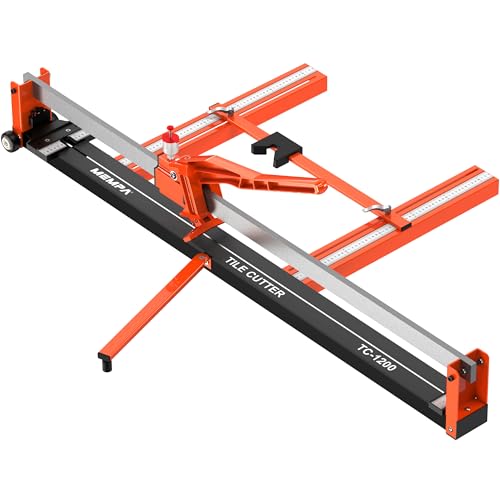
SHARP WHEEL, SEALED RAIL : The tungsten carbide wheel scores clean and sharp for chip-free results, while a sealed rail roller keeps dust out for smooth, long-lasting performance. An included oil bottle helps maintain optimal rail movement.

SHARP WHEEL, SEALED RAIL : The tungsten carbide wheel scores clean and sharp for chip-free results, while a sealed rail roller keeps dust out for smooth, long-lasting performance. An included oil bottle helps maintain optimal rail movement.
QEP Handheld Tile Cutter for Ceramic Wall Tile up to 1/4″ Thick

Recommended for manually scoring and cutting ceramic wall tiles up to 6" x 6" and 1/4" thick Heavy-duty, rust-resistant chrome-plated steel for durability Designed with a...
Who’s this little guy best for?
You’re tackling a small backsplash repair, maybe a few 4×4 ceramic tiles around an outlet. You don’t want to haul out the big cutter, or rent anything. That’s where this QEP handheld tool shines.
It’s tiny, I mean literally palm-sized. The chrome-plated steel body resists rust (handy if you’re messy like me), and that tungsten carbide wheel scores clean lines through tiles up to 6×6 inches.
Just mark, press, snap. No water, no electricity, no drama.
The catch? 1/4 inch thickness max. Try porcelain or floor tile and you’ll curse your life choices.
The verdict: Weekend warriors doing light wall work, grab this. Pros needing speed or versatility, keep scrolling.
Best For: DIYers and weekend warriors tackling small ceramic wall tile repairs or backsplash projects up to 6×6 inches who want a portable, no-setup cutting solution without hauling out large equipment.
Pros:
- Palm-sized, portable design requires no water, electricity, or setup—ideal for quick, on-the-spot repairs
- Rust-resistant chrome-plated steel construction and tungsten carbide scoring wheel ensure clean, accurate cuts and long-term durability
- Simple mark-press-snap operation makes it accessible for beginners with minimal learning curve
Cons:
- Strictly limited to ceramic wall tiles 1/4 inch thick or less—unsuitable for porcelain, floor tile, or thicker materials
- Maximum 6×6 inch tile capacity restricts use to small-format tiles only
- Manual operation lacks the speed and efficiency needed for professional or high-volume projects
Recommended Products

Heavy Duty Construction: The frame of the tile cutter tools hand tool is made of heavy all-steel material, compact, strong, and durable. The solid rail makes cutting work more accurate and suitable for long-term use.

Make sure the thickness of the glass is larger than 1/16" (1.5mm), otherwise the pliers do not work. Max Cutting Thickness: approx 3/8" (9.5mm)

Fine-grained, high-intensity diamond particles ensure smooth and precise tile cutting without chipping, delivering a flawless finish every time.
SHIJING 48-inch Manual Tile Cutter with Laser Guide

Unique Laser Guidance System– The 48-inch tile cutter features a unique laser guide that projects a clear cutting line onto tiles or stone surfaces, enabling precise...
Need a cutter that handles the big stuff without the big price tag? I’ve got you covered with the SHIJING 48-inch Manual Tile Cutter, model E302-1200A. This red workhorse stretches four feet long, which means it tackles large-format tiles that smaller cutters simply can’t touch.
What sets this apart? That laser guidance system projects a crisp cutting line right onto your tile or stone surface. No more squinting at pencil marks that smudge halfway through the job.
The double-layer aluminum plate keeps everything stable, so you’re not fighting wobble on those lengthy cuts. The split-handle platen adjusts for thinner tiles, handling thickness from 0.23 to 0.67 inches.
The tungsten carbide wheel slices through ceramic, porcelain, marble, granite, you name it, and it’s rated for 30,000 meters of cutting life. That’s serious mileage.
Solid aluminum feet give you the support you need when you’re pushing through dense materials. Whether you’re laying subway tiles or wrestling mosaic sheets, this cutter delivers.
My verdict: Perfect for contractors tackling diverse jobs or serious DIYers upgrading from entry-level tools. The laser alone saves enough headaches to justify the investment.
Best For: Contractors and serious DIYers who need to cut large-format tiles and hard materials like porcelain, marble, and granite without investing in expensive powered equipment.
Pros:
- Laser guidance system projects a clear cutting line for precise alignment without relying on pencil marks
- Double-layer aluminum plate and solid aluminum feet provide excellent stability for lengthy, accurate cuts
- Tungsten carbide cutting wheel handles diverse materials (ceramic, porcelain, marble, granite) with 30,000+ meters of rated lifespan
Cons:
- Manual operation requires physical effort, especially on dense materials like granite
- No specific weight or portability information provided, suggesting it may be heavy to transport
- Fixed 48-inch length may be cumbersome for small workspaces or unnecessary for users primarily cutting standard smaller tiles
Recommended Products

Multipurpose cutter for most large format tile including ceramic and porcelain

👍14" MANUAL TILE CUTTER: This tile cutter from TILER makes fast and easy work of your home and industrial improvement project. Thousands of times tested for its durability and precision cuts up to 14 inches(350mm) through ceramic, porcelain, and all types of tiles up to 0.47 inches thickness. It is ideal for both beginners and professional installers who are looking for an easy-cutting, no-dust, and no-noise tile cutter.

Factors to Consider When Choosing a Manual Tile Cutter
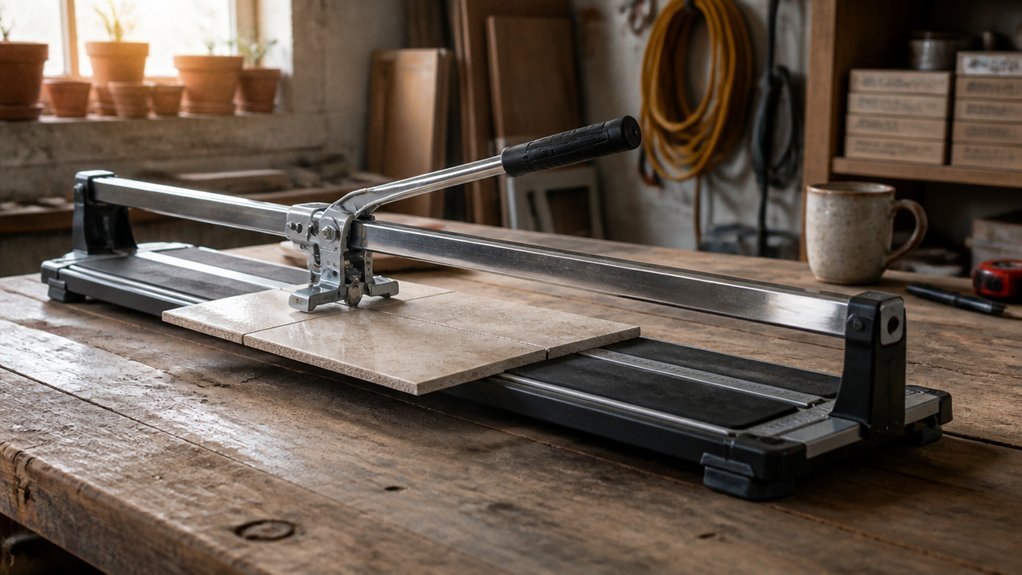
I know you’re itching to grab the first cutter that looks tough, but hold up, because I’ve learned the hard way that specs matter more than muscle. Tile size capacity and cutting thickness range determine whether you’re snapping 4-inch mosaics or wrestling 24-inch porcelain slabs, while rail system stability and blade wheel quality separate clean breaks from jagged disasters.
Precision alignment features, like laser guides or adjustable fences, save your sanity when you’re on hour three of a bathroom remodel and every cut counts.
Recommended Products

Designed for cutting ceramic and porcelain tiles.

For cutting floor and wall tile with score and snap manual tile cutters

INCLUDE: (1) 22x6x6mm scoring wheel with 114 degree wide cut angle. Comes complete with (1) locking nut, (1) flat head hexagon socket screw, and (1) 4mm hex wrench for quick and easy installation.
Tile Size Capacity
How do you know if a cutter can actually handle your tile? I always check the maximum cutting length first. Most manual cutters range from 14 inches to 48 inches, and trust me, trying to cut a 24-inch tile on a 16-inch bed is a recipe for disaster.
Rail length matters too. It determines how far your tile sits from the cutting wheel, which affects stability. I’ve seen tiles wobble because the rail couldn’t support the width properly.
Manufacturers often list recommended sizes, like 12–14 inches, to minimize chipping. Pay attention to this. For those massive porcelain slabs everyone’s buying now, you’ll need specialized long-bed cutters. Nothing’s more frustrating than tile overhang throwing off your score line.
Match your cutter to your actual projects, not just your dreams.
Cutting Thickness Range
Why does thickness matter so much? Because a cutter that can’t handle your tile’s depth is basically a paperweight with delusions of grandeur.
Most manual tile cutters handle 0.2 to 0.6 inches, roughly 4 to 15 mm. That’s your sweet spot for standard ceramic and porcelain. But here’s where it gets tricky. Some models cap out at 0.47 inches (12 mm), while others stretch to 0.6 inches.
If you’re working with thick stone or heavy-duty tiles, that extra range saves you from buying a second tool. Check the specs carefully. Exceed the limit and you’ll get chipped edges, incomplete breaks, and a whole lot of frustration.
I always match the cutter’s maximum to my thickest common tile. Better to have headroom than headaches.
Rail System Stability
When I’m scoring a long tile, there’s nothing worse than feeling the cutter head wobble halfway through. That wobble almost always comes down to the rail system.
I always look for a double or dual rail setup. It simply tracks straighter than single-rail designs, keeping that wheel locked in place from start to finish. Stainless or reinforced rails with tight machining matter too: loose rails develop play, and suddenly your cuts drift.
Fixed rails with two screws or brackets beat adjustable ones that loosen over time. And corrosion-resistant construction? Essential. Rust warps rails, plain and simple.
For smooth action, I prefer sliding heads with ball bearings. Less friction means fewer surprises mid-cut.
Bottom line: skip the wobbly single-rail models. Your sanity and your tiles will thank you.
Blade Wheel Quality
The cutting wheel is where the rubber meets the road, or rather, where carbide meets porcelain. I always look for tungsten carbide, it’s simply tougher and stays sharper longer than standard steel. Cheap wheels dull fast, leaving you with ragged edges and uneven snaps.
What matters most:
- Material: Tungsten carbide handles porcelain and stone without chipping.
- Smooth action: Better wheels glide without catching, minimizing burrs.
- Replaceability: Wheels wear out. I prefer cutters that include a spare wheel in the box.
A quality wheel cuts cleaner at maximum thickness, where inferior blades struggle and wander. Lateral drift ruins tiles, so robust mounting matters too.
My take: Don’t cheap out here. A dull wheel wastes expensive tile and your patience.
Precision Alignment Features
Even the sharpest blade won’t save you if your tile’s sitting crooked when you score it. I’ve learned that precision alignment features separate frustrating guesswork from clean, professional cuts.
Visual Guides
Infrared or laser positioning systems project straight lines onto your tile, so you see exactly where the cut lands. No more squinting at pencil marks that smudge halfway through.
Measurement Tools
Front-facing calipers and adjustable rulers let me lock in exact widths and angles before I commit. Scale accuracy matters: blurry, worn markings cost you time and tile.
Stability Features
Split-handle or movable platens grip thinner tiles firmly, preventing that maddening drift mid-score. Dual rails keep the cutting head steady, too.
Bottom line? If you’re cutting expensive porcelain or doing repetitive work, these features aren’t optional luxuries, they’re sanity savers.
Ergonomic Handle Design
Why does my hand cramp halfway through a bathroom reno? It’s almost always the handle. I’ve learned that curved, ergonomic designs aren’t just marketing fluff: they genuinely reduce hand fatigue during marathon cutting sessions.
The shape matters more than you’d think. A comfortable grip lets me push and pull smoothly (no jerky motions that ruin expensive tile). Look for non-slip surfaces too: damp basement jobs get slippery fast.
Here’s what separates decent cutters from great ones:
- Curved handles that fit your palm naturally
- Textured rubber or foam grips for control
- Balanced weight so your wrist doesn’t scream after hour three
The best designs let me adjust pressure mid-cut without losing accuracy. That’s crucial for glass mosaics or thick porcelain.
My verdict: if you’re doing more than one room, prioritize ergonomics. Your hands will thank you tomorrow morning.
Base Material Durability
Once I’ve got a handle I actually want to hold, my eyes drop to the base. It’s the foundation everything else rides on, and I don’t mess around here.
What I look for:
Material matters. Aluminum resists corrosion and won’t warp after years in a damp garage. I’ve seen steel bases rust from tile slurry alone.
Rails and chassis. A double-rail design beats single-rail every time. Less flex means straighter cuts on porcelain planks. Simple physics.
Stability features. Rubber feet or non-slip surfaces keep the cutter planted when I’m pushing hard. No one wants a sliding base on a $20 tile.
Heavy-duty plates. Thick base plates don’t bend under pressure. For large format tiles, this isn’t optional: it’s essential.
Hardware counts. Stainless or coated fasteners fight corrosion. Cheap screws seize up, and suddenly you’re fighting your tools, not your tiles.
Bottom line: flimsy bases ruin cuts. I pay for solid construction.
Application Versatility
How many times have I grabbed a cutter for a quick backsplash job, only to realize it can’t handle the 24-inch floor tile I needed for the bathroom the next day?
That’s why I always check cutting length first. Look for 14 to 48 inches of capacity, and don’t ignore thickness: 0.2 inches for wall tiles, up to 0.6 for heavy porcelain.
Here’s what actually expands your options:
- Infrared or laser guides: These keep long cuts straight across any tile size
- Adjustable angles and calipers: You’ll get diagonal cuts, bevels, and custom shapes without switching tools
- Double-rail or reinforced rails: Wide tiles wobble less, so edges stay clean
- Anti-slip bases and smooth scoring wheels: Safer, more consistent results across materials
My verdict? If you tackle mixed projects, prioritize 36+ inches length with angle adjustment. Specialists can go smaller.