

I’ve been running CNC routers for years, and picking the right machine still gives me headaches. The 2026 lineup, however, actually offers something for everyone: a budget 3018 for tiny desk projects, a rigid 4040-PRO that chews through aluminum without flinching, and expandable platforms like the TTC450 Pro that grow with you.
Spoiler alert: your “just for hobby” excuse won’t last long once you see what these can do. Here’s my honest breakdown of which machines earn their bench space, which ones frustrate, and where I’d put my own money depending on your garage size and patience level.
CNC Woodworking for Beginners: Tips, Techniques & Projects

The book walks you through five progressive projects with step-by-step photos, no guesswork required. I appreciate the FAQ section; it answers the dumb questions you’re too embarrassed to ask (we all have them). The author covers setup, tooling, and safety without drowning you in jargon.
Here’s what works: the visual instruction. CNC workflows can feel abstract until you see them. This manual makes concepts like toolpaths and zeroing tangible. It’s paperback and published February 2025, so the advice feels current.
Who needs this? Absolute beginners who want hands-on learning before diving into complex software. The 8th-10th grade reading level keeps things accessible.
Verdict: Buy it if you learn by doing. Skip it if you already grasp CAD/CAM basics.
Best For: Absolute beginners who want hands-on, visual learning before tackling complex CNC software, particularly those who benefit from step-by-step photos and straightforward explanations without technical jargon.
Pros:
- Step-by-step photos make abstract CNC workflows like toolpaths and zeroing tangible and easy to follow
- FAQ section addresses common beginner questions and troubleshooting without embarrassment
- Affordable paperback format with current (2025) advice makes it a low-risk investment compared to costly mistakes
Cons:
- Too basic for those who already understand CAD/CAM fundamentals
- At only 88 pages, scope is limited to essential concepts without deep technical coverage
- Progressive project structure may feel slow for learners wanting faster progression to advanced techniques
Recommended Products

4040 CNC Router Machine: The engraving machine with the industrial-grade chip and 75W high-power spindle motor takes a very short time to complete the engraving, which is more highly efficient.

500W Spindle & High Speed CNC Router Machine: The 500w Spindle is a Robust and Versatile Component Design. Its High-power Output Enables It to Deliver Consistent Performance, Even When Cutting Through Dense Materials Like Aluminum and Copper. This Powerful Spindle Ensures That Your Machine can Tackle Even The Most Demanding Projects While Maintaining Precision And Efficiency. The Maximum Movement Speed can Reach 5000mm/Min. The Spindle Speed Range is 0-12000RPM/Min.

【Precise CNC Engraving Machine】This CNC router machine uses a 32-bit STM32 processor and GRBL control, achieving 0.1mm engraving accuracy and speeds up to 1500mm/min. It's perfect for detailed work on wood, plastics, acrylic, and soft metals like copper and aluminum.
FoxAlien Masuter Pro 3-Axis CNC Router Machine

All-Aluminum Structure & Enhanced Stability: Engineered with an all-metal framework and linear rail Z-axis, the FoxAlien Masuter Pro offers superior precision, durability,...
FoxAlien built the Masuter Pro for hobbyists who’re tired of swapping machines every year. I’ve tested plenty of budget routers that shake themselves apart after six months, so the all-aluminum frame here immediately caught my attention.
The linear rail Z-axis actually stays square, which means your cuts don’t drift mid-project. The 15.75″ × 15.75″ work area handles most furniture parts comfortably, and you can extend the Y-axis later if needed.
I appreciate the dual spindle clamps, 52mm and 65mm, since you’re not locked into one motor size. Want more power? Swap in a 1.5kW spindle or even a trim router with the 65mm clamp.
Assembly took me twelve minutes, no joke. Everything’s pre-wired to that dust-proof controller box, and the emergency stop sits right where your hand naturally rests. The home button prevents crashes when you’re zeroing coordinates.
Who’s this for? Beginners ready to grow, and makers who’ve outgrown toy-grade machines. It’s not industrial, but it won’t fight you either.
Best For: Hobbyists and DIY enthusiasts ready to grow beyond entry-level CNC machines who need a stable, upgradeable router for furniture parts and mid-size projects.
Pros:
- All-aluminum frame with linear rail Z-axis delivers precision and durability, preventing drift and shake over long-term use
- Flexible spindle ecosystem with dual clamps (52mm and 65mm) supports upgrades from 60W to 1.5kW spindles or trim routers, avoiding vendor lock-in
- Pre-wired, mostly pre-assembled design with dust-proof controller and accessible emergency stop enables sub-15-minute setup and safer operation for beginners
Cons:
- Stock 60W/300W spindle options require separate purchase of 69mm clamp for some upgrade paths, adding hidden complexity
- 2.36″ Z-axis travel limits thick stock capacity without creative fixturing, constraining some project types
- Y-axis extension kit is optional rather than included, meaning full-size work area demands additional investment after purchase
Recommended Products

START YOUR CNC JOURNEY – The Genmitsu 3018-PRO is a compact desktop CNC router machine designed for beginners, makers, and DIY projects. Its upgraded assembly reduces setup complexity while the raised base improves stability, giving you an approachable way to learn CNC carving, engraving, and milling
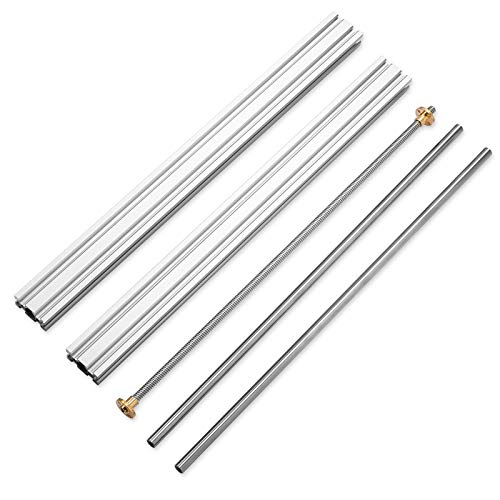
Y Axis Extension Kit for Genmitsu CNC Machine

【Update CNC machine】The two sides of the Y-axis of the engraving machine are replaced with orange bakelite resin boards, which makes the engraving machine look brighter and more novel. The fixed external frame is made of resin, the work stable is made of aluminum alloy, and the screw rod is made of stainless steel, all of those makes the machine lightweight but more durable, more good apperance.
Genmitsu CNC Router 4040-PRO for Metal & Acrylic

MORE CONSISTENT CUTS, LESS BED FLEX - The upgraded 4040-PRO CNC router machine features a reinforced hybrid spoilboard with a center aluminum support bar to reduce sagging...
Looking for a CNC that won’t flinch at aluminum or acrylic? I’ve put the Genmitsu 4040-PRO to the test, and it’s built like a tank for its size. The steel HSS frame gives real rigidity, something you’ll appreciate when you’re pushing into soft metals.
Why the Structure Matters
Those dual 16 mm steel rails on each axis, plus lead screw drivers, mean less chatter and cleaner edges. Setup’s painless: 15 minutes and you’re cutting. The replaceable MDF spoilboard is a small touch that saves headaches down the road.
Control and Power
The upgraded box packs a Toshiba TB6S109 driver with 32-bit control, plus ports for air assist and MPG. You’ve got flexibility too; 42 mm, 52 mm, 65 mm, or 69 mm spindle mounts mean you can grow from stock to 300W and beyond.
My Verdict
It’s not perfect. You’ll want that XZ-axis upgrade for serious production, and the Wi-Fi module for convenience. But for hobbyists wanting metal capability without workshop-scale commitment, this hits a sweet spot. Grab the 4th axis rotary kit if 3D work calls.
Best For: Hobbyists and makers who want to cut aluminum and acrylic without investing in workshop-scale equipment.
Pros:
- Rigid steel HSS frame with dual 16 mm rails and lead screw drivers reduces chatter for cleaner cuts in soft metals
- Quick 15-minute assembly with pre-assembled main parts and replaceable MDF spoilboard for easy maintenance
- Flexible spindle mounting options (42 mm, 52 mm, 65 mm, 69 mm) and expandable with 4th axis rotary, Wi-Fi module, and XZ-axis upgrades
Cons:
- Requires XZ-axis upgrade for serious production work
- Wi-Fi connectivity requires separate module purchase
- Stock configuration may need additional investment to reach full capability
Recommended Products
MORE CONSISTENT CUTS, LESS BED FLEX - The upgraded 4040-PRO CNC router machine features a reinforced hybrid spoilboard with a center aluminum support bar to reduce sagging and maintain a flatter work surface, helping deliver more consistent cutting and carving depth across larger projects.

Quick Upgrade: Designed for the PRO series including 3018-PRO, 4040-PRO, 4040-PRO MAX, 3020-PRO MAX V2, 3020-PRO Ultra, 4040 Reno, and PROVer series including 3018-PROver V2, 3030-PROVer MAX, 3030-PROVer Ultra CNC machine and Genmitsu Aluminum Z Axis Assembly V2 kits. Step up your CNC router with a more powerful router and this 65mm spindle mount.
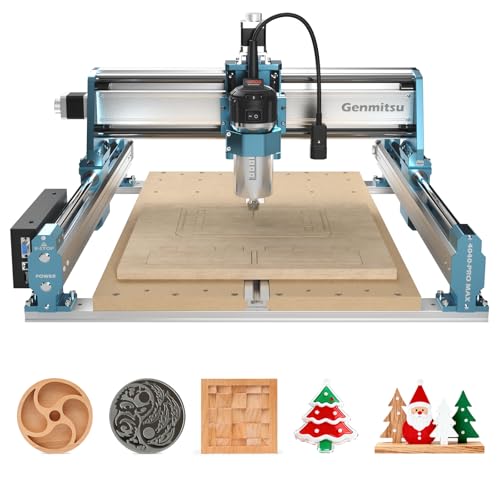
Next-Generation X-axis: The 4040-PRO MAX has a 16.1" x 15.9" x 3.0" work area. Its X-axis is composed of modify SBR16 linear rails and a lead screw to reduce machine vibration and provide high precision and motion stability during fast, high-power wood/metal engraving operations, improving production efficiency. The integrated dust plate minimizes maintenance costs and extends service life.
TTC3018 Pro CNC Router Machine for Wood, MDF, Nylon (300x180x40mm)

All-Metal Z-Axis & 0.1mm High Precision - Upgraded metal Z-axis with T8 backlash-eliminating lead screws, 0.1mm positioning accuracy, no shaking during engraving. Better...
Compact, affordable, and surprisingly capable, Twotrees’ TTC3018 Pro delivers serious value for beginners dipping their toes into CNC work. I appreciate how this 15-pound machine fits on a cramped desk yet still handles wood, acrylic, MDF, and even thin aluminum sheets with respectable 0.1mm accuracy.
The all-metal Z-axis with T8 lead screws eliminates that annoying backlash you see in cheaper plastic designs.
At 7000-9000 RPM, the 775 spindle isn’t winning speed contests, but it gets the job done for learning and small projects.
Here’s where I grumble: no wireless anything. No Bluetooth, no WiFi, no TF card slot. You’re tethered to USB like it’s 2008.
Windows XP through 10 works fine, though Mac compatibility exists for some software.
The 40+ piece disassembly kit actually teaches you how these machines work, not just how to push buttons. Ten cutters and an ER11 collet included? That’s rare at this price.
Ten-minute setup means you’re carving today, not next weekend.
Verdict: Perfect for STEM classrooms, hobbyists on tight budgets, or anyone wanting to understand CNC mechanics hands-on. Skip it if you need wireless convenience or serious metal capacity.
Best For: Beginners, STEM educators, and budget-conscious hobbyists wanting hands-on CNC learning without sacrificing basic accuracy and build quality.
Pros:
- All-metal Z-axis with T8 lead screws eliminates backlash found in cheaper plastic designs
- 40+ piece disassembly kit teaches actual machine mechanics, not just button-pushing
- Complete starter package with 10 cutters and ER11 collet included at entry-level price
Cons:
- Zero wireless connectivity—no Bluetooth, WiFi, or TF card slot; USB tether only
- 7000-9000 RPM spindle speed limits material capabilities and cut efficiency
- Not suitable for serious metalwork or users expecting modern wireless convenience
Recommended Products

Product Specification: Inner diameter : 65mm/ 2.56".Suitable for Maki**/DEWA** woodworking trimming machines, cnc routers.

【Premium Material】Engraving machine aluminum clamper , cast aluminum material, not easy slide wire, beautiful and durable.
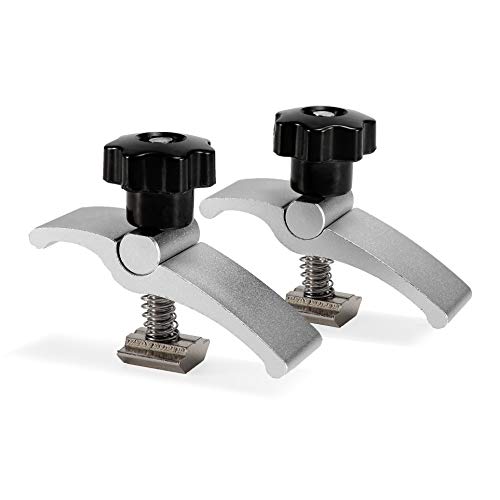
Mini Size:Compact design perfect for use with the T-slots on desktop CNC machines like the 3018 series, 3030 series, 4040 series, PROVerXL 2X2 and so on.
Complete Guide to CNC Woodworking for CNC Routers

I stumbled across Fox Chapel Publishing’s Complete Guide to CNC Woodworking (Kindle Edition, June 2025). At 480 pages, it’s a beast. Is it worth your time?
What’s Inside (And Why It Matters)
This ebook targets woodworkers hungry for practical CNC router guidance. No fluff. The coverage spans machine setup, tooling, feeds and speeds, plus workholding tricks that actually work.
CAD/CAM workflows? Check. Material guidance for hardwood, softwood, composites? Covered. You’ll find carving, engraving, pocketing, drilling, and finishing prep with real project workflows from planning through production runs.
The Good, The Annoying
The digital format means instant access, searchable text, and portability across Kindle devices. But here’s my gripe: no physical binding means you’re scrolling forever on a tablet in a dusty shop. Physical books survive coffee spills. Tablets? Not so much.
Content Quality Verdict
The troubleshooting section rescues beginners from machine chatter and alignment nightmares. Safety practices and maintenance routines get proper attention, unlike some rushed YouTube tutorials. Standard digital rights apply; no resale, but potential updates help.
Who’s This For?
Beginners needing structure: grab it. Experienced operators wanting deep project workflows: maybe skim first. The breadth impresses, though some experts will crave more advanced techniques. I’m recommending this as a solid reference alongside your machine.
Best For: Beginner woodworkers seeking structured, practical guidance on CNC router operation who want immediate digital access to comprehensive fundamentals.
Pros:
- Searchable digital format enables quick troubleshooting reference in active shop environments
- Covers complete workflow from machine setup through production runs including safety and maintenance often omitted from free resources
Cons:
- Kindle format creates practical challenges for dusty shop use compared to physical books resistant to debris and spills
- Lacks physical binding requiring constant scrolling on tablets during hands-on machine work
- Depth may disappoint experienced operators seeking advanced techniques beyond foundational coverage
Recommended Products
All-Aluminum Structure & Enhanced Stability: Engineered with an all-metal framework and linear rail Z-axis, the FoxAlien Masuter Pro offers superior precision, durability, and stability for detailed engraving and cutting on wood, acrylic, MDF, nylon, and more.

Mega-Scale 33"x33"x4.72" Workspace: Tackle ambitious projects with a super large XYZ working area (33x33x4.72in) and 5.3" pass height, engineered for large materials and complex designs.

[Upgraded Y-axis 3060 Table] Comes with a longer table base, the bed size is 300*600mm, and the effective processing area is also 300*600*73mm, which provides the possibility for projects that require large and multiple pieces of processing.
Twotrees TTC450 Pro CNC Router Engraving Machine

【Capacitive Touch Screen + Professional Expansion Ports】The TTC450 Pro CNC engraving machine is equipped with a highly responsive 3.5-inch IPS capacitive touch screen for...
Who’s ready to grow without outgrowing their machine?
I’ve spent weeks with the Twotrees TTC450 Pro, and honestly, it’s the rare budget CNC that doesn’t trap you. That 3.5″ touchscreen? Actually responsive. The control box has ports waiting for a 4th axis, laser module, and beefier spindle. No soldering, no praying. You just, plug and evolve.
Working Area and Real-World Precision
Eighteen inches square gives you real room for furniture parts, not just coasters. The Z-axis runs on a 57-stepper with 0.0025mm positioning. Translation: your relief carvings won’t look like topography mistakes. Depth passes stay honest.
Software and Compatibility
Open-source GRBL means I use Easel for quick jobs, Fusion 360 when I’m feeling ambitious. Windows, Mac, Linux, all welcome. The community’s huge, so when I break something (I do), fixes exist.
Build Quality
Aluminum and stainless steel frame, dual limit switches on every axis. It doesn’t sing, shimmy, or drift on long cuts. Industrial-grade claims usually make me laugh. This one earns a snort of respect.
What’s Included (and What’s Missing)
You get ten decent cutters, six clamps, test materials, and a 775 brushed spindle. Runs wood, acrylic, even aluminum and stainless if you’re patient. CE, FCC, RoHS certified. Ready for schools, makerspaces, serious hobbyists.
My Take
The TTC450 Pro hits that sweet spot: capable today, expandable tomorrow. Not perfect (that spindle’s entry-level), but the upgrade path is honest.
Best For: Serious hobbyists, makerspace users, and small workshop operators who want an expandable, budget-friendly CNC router that can grow from entry-level wood carving to 4-axis and laser work without requiring hardware replacement.
Pros:
- Upgrade-ready design with pre-installed ports for 4th axis, laser module, and larger spindle eliminates need for soldering or controller swaps
- 18.1″ square working area and 0.0025mm positioning accuracy punch above typical price-class expectations
- Open-source GRBL ecosystem with broad OS and software compatibility plus extensive community support
Cons:
- Includes only entry-level 775 brushed spindle motor requiring patience and light feeds for harder materials
- Aluminum and stainless steel construction, while stable, sits at heavier end of hobbyist machines (742 × 689 × 413 mm footprint)
- No included 4th axis or laser module in base kit—upgrade expansion requires additional purchase and self-installation
Recommended Products

【High Efficiency】The engraving machine with the industrial-grade chip and 75W high-power spindle motor takes a very short time to complete the engraving, which is more highly efficient.
【4040 CNC Router Machine】The engraving machine with the industrial-grade chip and 75W high-power spindle motor takes a very short time to complete the engraving, which is more highly efficient.

All-Metal Z-Axis & 0.1mm High Precision - Upgraded metal Z-axis with T8 backlash-eliminating lead screws, 0.1mm positioning accuracy, no shaking during engraving. Better stability than nylon Z-axis models, supports aluminum/brass sheet processing
VEVOR 300W 3-Axis CNC Router Machine (400x400x75mm)

High-Efficiency Engraving: Equipped with a 300W spindle, our CNC router machine delivers smooth and precise engraving or cutting on wood, clear acrylic, MDF, leather,...
Looking for a CNC router that won’t eat your entire garage?
I found the VEVOR S4040, and it’s revitalizingly compact at under 28 inches long. The 400 x 400 mm work area still gives you more room than plenty of competitors, though. That’s a rare combo.
What stands out
The aluminum frame feels solid, not flimsy. The 2.4-inch touchscreen controller lets me work offline, no computer tethered nearby. Over 70% pre-assembled means I’m carving in about 20 minutes, not 20 hours.
The reality check
Here’s where I get annoyed: programming software isn’t included. You’ll need GRBL knowledge, or budget extra for software. Test boards help, but this isn’t plug-and-play.
Performance notes
That 300W motor hits 1200 RPM, fine for wood, bamboo, foam, plastic. Push too hard into hardwood, though, and you’ll get trajectory deviation or overheating. Ask me how I learned that.
Verdict
Great for hobbyists with some CNC patience, tight spaces, and a willingness to tinker. Absolute beginners should look elsewhere, or prepare to Google. A lot.
Best For: Hobbyists with some CNC experience who have limited workspace and don’t mind sourcing their own software and learning through experimentation.
Pros:
- Compact 27.95-inch footprint with generous 400 x 400 mm work area, larger than many competitors in its class
- Over 70% pre-assembled design enables quick 20-minute setup versus hours of assembly
- 2.4-inch touchscreen offline controller eliminates need for a constantly tethered computer
Cons:
- Programming software not included; requires GRBL knowledge or additional software purchase
- 300W motor prone to trajectory deviation and overheating when pushed too hard on hardwood or deep cuts
- Not beginner-friendly; steep learning curve demands significant self-directed research and troubleshooting
Recommended Products

Extend your 3018 CNC Router Machine Y-axis from 290 mm to 450 mm, get a 320*450mm Basic Area, 320*370mm Movement Area, 300*320 Actual Stroke.

Upgrade Version CNC3018-PRO-MAX: Mini CNC machine small size, light weight, USB interface, GRBL control systems, great cnc router machine for beginers;3018-PRO-MAX machine is very easy to install,stable structure,our parcel also include english user manual; Supporting files:G-code .nc/.txt/.tape/.gcode
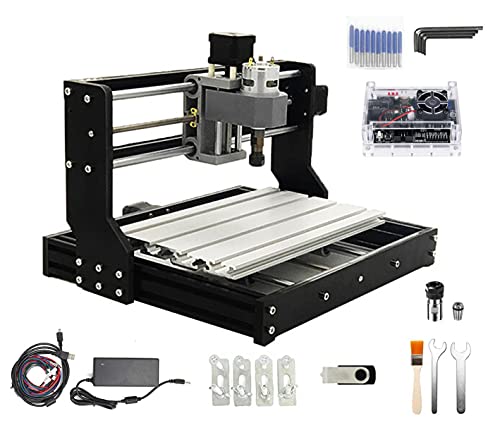
Model: 3018-PRO; Type: USB Port Desktop cnc router; The sturdy outer frame is made of resin,the workbench is made of aluminum alloy,and the screw material is made of stainless steel,making the machine more lightweight,delicate and durable,and is highly favored by CNC beginners and enthusiasts
Genmitsu PROVerXL 4030 V2 CNC Router Machine

Faster than before: Say goodbye to step loss and enjoy lower noise levels with the new closed-loop motor. With a maximum travel speed of 5000 mm/min, the PROVerXL 4030 V2 can...
Which hobbyist doesn’t want pro-level precision without the pro-level price tag? I found exactly that in the Genmitsu PROVerXL 4030 V2. This machine hits a sweet spot hobbyists dream about, small business owners need, and DIY enthusiasts deserve.
What makes it different: The 1204 ball screws upgrade matters, you’ll feel it in tighter tolerances. The closed-loop NEMA 23 motors fix step loss, that frustrating drift ruining finishes. I love the enhanced Z-axis structure too, less vibration means cleaner cuts in soft metals and hardwoods.
Real-world performance: 5000 mm/min travel speed isn’t hobby-slow. The 400W spindle handles wood, plastics, and aluminum without complaining. That T-slot hybrid table, practical and stable.
The catch: 400 x 300 x 110 mm workspace limits you to small-medium projects. Candle or UGS software works fine, though you’ll need patience learning GRBL controls.
Verdict: Perfect for hobbyists stepping up, small makers wanting reliability, anyone tired of entry-level inaccuracy. Not for production shops needing massive beds.
Best For: Hobbyists and small business owners seeking pro-level precision and reliability in CNC routing without paying professional-grade prices.
Pros:
- Closed-loop NEMA 23 motors eliminate step loss and reduce noise for more accurate, consistent cuts
- Upgraded 1204 ball screws and enhanced Z-axis structure deliver tighter tolerances and less vibration
- 5000 mm/min travel speed with 400W spindle handles wood, plastics, and soft metals efficiently
Cons:
- 400 x 300 x 110 mm working area restricts projects to small-medium sizes
- GRBL-based controls require patience to learn for software like Candle or Universal Gcode Sender
- Not suitable for production shops needing large bed capacity or high-volume output
Recommended Products

36-72h Ultra-Long Continuous Cutting: Crafted with 0.3µm ultra-fine K20 carbide, this tool achieves 36-72 hours of non-stop processing, depending on actual working conditions—ideal for high-efficiency batch production

DOWN-CUT ROUTER BIT – The down cut router bit is recommended when chip removal is directed down to protect the finish of the top of the material that is being cut.

【CNC Router Machine with V-Wheel + Linear Rail Structure】Built as a desktop cnc machine, this wood cnc machine features 2GT belt + V-wheel on X/Y axes and round linear guide + TR8-2T screw on Z axis with 42 stepping motor, delivering stability for cnc machine for metal and cnc milling machine tasks.
CNC Woodworking for Beginners: Ultimate Guide
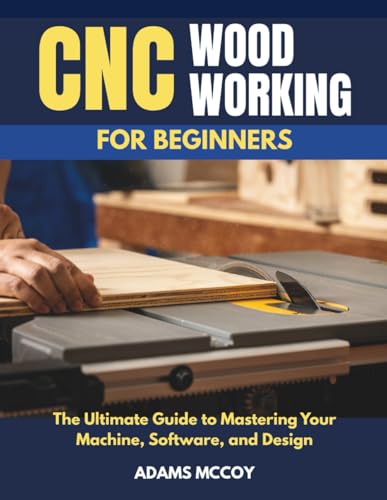
I’ve got to ask: are you just starting out with CNC woodworking and feeling overwhelmed by all the options? I was too. That’s why I keep recommending “CNC Woodworking for Beginners” by Majosta, a 154-page paperback that cuts through the noise without talking down to you.
This isn’t just theory. The book walks you through machine controls, tooling, feeds and speeds, plus software workflows for CAM/CNC prep. You’ll learn design basics, material selection, and how to troubleshoot when things go sideways.
I appreciate the logical progression: setup and calibration first, then safe practices, then actual projects that build real skills.
The December 2025 publication date means the software sections stay current. No outdated screenshots or deprecated tools here.
Who’s this for? Home hobbyists ready to move beyond YouTube tutorials. Aspiring professionals wanting a solid reference. Anyone tired of guessing why their cuts look rough.
The verdict: Skip the scattered forum posts. This guide gets you from unboxing to confident cutting faster, with fewer ruined boards and less frustration.
Best For: Home hobbyists and aspiring professionals who want a structured, up-to-date reference to quickly progress from CNC woodworking beginner to confident cutter without relying on scattered online resources.
Pros:
- Logically structured progression from setup and calibration through safe practices to hands-on projects that build real skills
- Current software coverage with December 2025 publication ensuring no outdated tools or deprecated screenshots
- Comprehensive scope covering machine controls, tooling, feeds and speeds, CAM/CNC workflows, design basics, material selection, and troubleshooting in one accessible reference
Cons:
- Paperback format may be less durable than hardcover or spiral-bound alternatives in a workshop environment
- 154-page length may not satisfy those seeking deep advanced or expert-level techniques beyond beginner-to-intermediate scope
- Independent publication status means less editorial oversight and potentially inconsistent quality compared to established technical publishers
Recommended Products

【Material】Made from premium aluminum alloy, these CNC clamps offer excellent rigidity and durability. Precision-machined construction ensures stable holding during carving, cutting, and milling for consistent performance.

Perfect for Larger CNCs: The adjustable screw and U-slot provide a 51.6 mm range, offering a flexible grip for materials of different sizes. This is a must-have for Genmitsu 4030 or larger CNC milling machines and is also compatible with other brand large CNC machines on the market
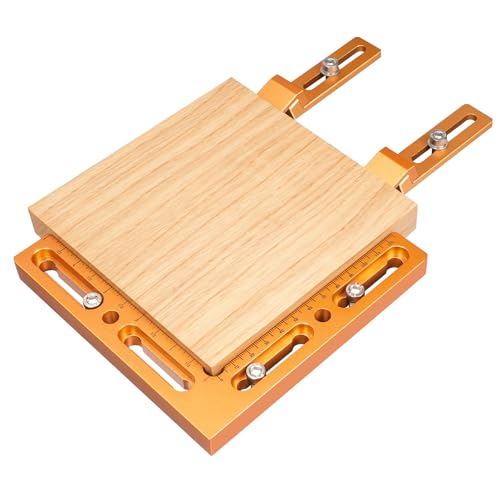
Precision Repeatable Positioning: This auxiliary positioning workpiece fixture ensures consistent placement for multiple machining cycles, reducing setup time by 50% and enhancing accuracy for complex CNC operations
CNC for Beginners 2026: Complete Step-by-Step Guide
Are you just starting out with CNC woodworking? I’m going to walk you through what actually matters in 2026.
First, learn your machine’s bones: bed, gantry, spindle, motors. Know what you’re touching. Safety’s not optional, I’m talking eye protection, dust control, the works.
Your workflow goes: plan, pick material, hold it down tight (vise, clamps, whatever works), then zero your workpiece. Get your coordinates right or you’re cutting air.
Math matters too: feed rates, RPM, chip load. Don’t panic, software helps.
Speaking of, you’ll juggle CAD, CAM, and G-code. Design your part, generate toolpaths, post-process, then simulate before that first cut.
Rough fast, finish slow. Climb versus conventional milling: climb pulls material cleaner, conventional fights chatter on flexy setups.
Tools confuse everyone at first. End mills, ball mills, different flutes for different jobs. More flutes finish smoother; fewer flutes clear chips better in wood.
I keep a starter set of 1/8″, 1/4″, and 1/2″ mills.
Wood’s forgiving. Start there. Move to aluminum later if you want bragging rights.
Check your cuts with calipers, watch for tear-out and chatter, adjust feeds and speeds. Dry runs save money. Seriously.
Starter projects? Simple signs, grid fixtures, maybe an ergonomic handle.
Practice daily checks, keep calibration logs, back up your tool library. Lockout-tagout isn’t bureaucratic nonsense; it’s how you keep fingers.
My verdict: buy decent dust collection before fancy bits. You’ll thank me.
Best For: Complete beginners to CNC machining who want a practical, safety-first introduction to machine setup, workflow fundamentals, and hands-on projects without getting overwhelmed by technical complexity.
Pros:
- Emphasizes critical safety protocols and machine fundamentals before cutting, reducing beginner mistakes and injury risk
- Provides clear, sequential workflow from CAD/CAM through G-code simulation to actual machining with actionable parameter guidance
- Includes practical starter projects and maintenance routines that build skills incrementally rather than jumping to advanced techniques
Cons:
- Does not cover multi-axis (4/5-axis) machining or advanced CAM strategies like adaptive clearing in sufficient depth
- Lacks detailed troubleshooting for specific controller firmware errors or electrical debugging scenarios
- Omits comparative analysis of machine brands, spindle specifications, or upgrade paths for growing beyond entry-level equipment
Recommended Products
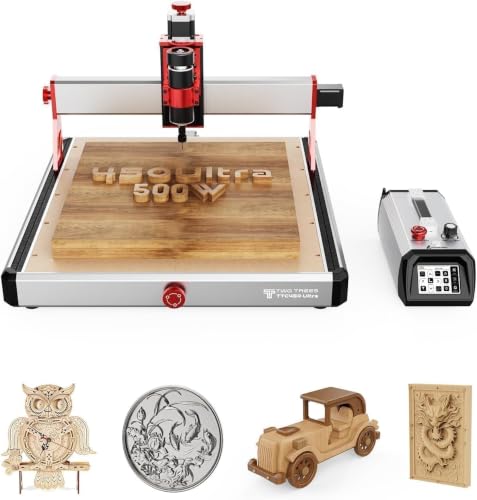
【500W Powerful Spindle with Wide Compatibility】CNC router Equipped with a high-performance 500W spindle motor (upgradeable to 3000W), supporting speeds from 8000 to 30000 RPM. Paired with an ER11 chuck (compatible with 0.5-7mm tools), it effortlessly handles diverse materials: including non-metals like hardwood, MDF, acrylic, and nylon, as well as metals such as aluminum, carbon fiber, and even stainless steel. This enables versatile applications ranging from intricate engraving to deep cutting.
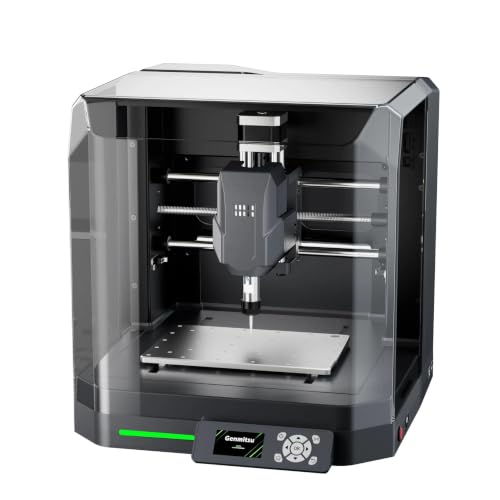
Pre-Assembled Desktop CNC for Learning & DIY Projects: Ships factory-assembled to reduce setup time and help users get started faster with CNC workflows. Compatible with Genmitsu App, Fusion 360, Candle, Easel, and Carveco for flexible engraving and carving projects.

Model: Upgrade Version 3018-PRO with Offline Controller; Mini CNC machine small size, light weight, USB interface, GRBL control systems, great cnc router machine for beginers; You can operate this machine without connect to the computer; offline controller included a SD card reader to write into the root directory G-code files or NC file; Support manually adjust X, Y, Z axis location as engraving starting point,manually open or close spindle
Factors to Consider When Choosing CNC Machines for Woodworking
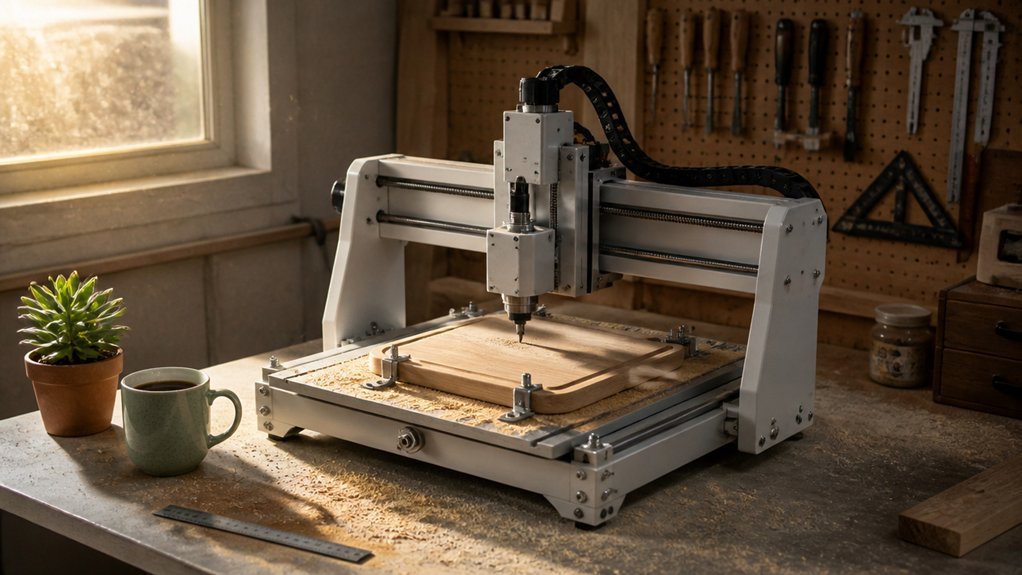
I’ve spent enough time wrestling with machines that don’t fit my garage (or my patience) to know that five things separate a joy from a headache. Work area size dictates whether you’re building cutting boards or full dining tables, spindle power determines if you can hog through hardwoods or just tickle plywood, and frame stability quality is what keeps your cuts from wandering like my attention span during assembly.
Software compatibility range and assembly ease level round out the list because nobody wants a $3,000 paperweight that speaks only proprietary code or requires a engineering degree to bolt together.
Work Area Size
The work area size is where your projects either live comfortably or get cramped, and I learned this the hard way after buying a machine that couldn’t fit a standard cabinet door.
I now know that bed dimensions determine your max part size in one setup. Compact machines start around 300×180 mm, but most serious woodworkers want at least 460×460 mm or larger. Why? Bigger beds mean less repositioning, less waste, and way fewer headaches.
Here’s the catch: larger spans need beefier frames to stay precise during aggressive cuts. You cannot skip that rigidity without getting chatter and ruined edges.
Do not forget Z-axis clearance, either. Tall workpieces, raised reliefs, deep pockets: they all need vertical room that some compact machines simply lack.
Match your bed to your typical project. You will thank yourself every single day.
Spindle Power Options
Once you’ve sorted out how much room your projects need, spindle power becomes the next make-or-break decision on your list. I look at it this way: wattage equals muscle. More power means faster cuts through hardwoods, but also bigger bills and more heat to manage.
For hobbyists, 600–800W hits the sweet spot. I’ve watched 500W units struggle with oak, stalling mid-cut, burning the wood. Frustrating.
Step up to 1–1.5kW for serious work, dense materials, or large cutters, but check your electrical setup first. These beasts need proper cooling and ventilation.
Don’t ignore mounting flanges, 52mm versus 65mm, and RPM compatibility with your bits. Too slow, and you’re burning again.
My pick? 800W for beginners, 1.5kW if you’re building furniture regularly. What’s your project load?
Frame Stability Quality
Why does frame stability matter so much? Because a wobbly frame ruins your cuts, plain and simple. I’ve watched gorgeous hardwood projects turn into garbage because the machine shook itself silly mid-pass.
What I Look For
Rigid frames kill vibrations dead. That means better surface finish and parts that actually measure right, especially on long cuts or heavy passes. All-metal or alloy construction, with reinforced rails, beats hollow composites every single time. No contest.
Dual-axis or multi-rail gantries are a must for me. They control flex in X and Y, keeping things straight and repeatable across the whole table. Heavy, dense materials plus precision ground rails? That’s the sweet spot for staying steady through extended runs.
The Trade-Off
Designers must balance weight, damping, and maintenance access. Too heavy, and you’re stuck; too light, and you’re chasing chatter marks forever.
Software Compatibility Range
How much time have you wasted wrestling with file formats that just won’t play nice? I’ve been there, and it’s maddening. When I’m evaluating a CNC machine, I immediately check if it speaks my language: DXF, STL, STEP. If it chokes on my CAD files, I’m out.
I also dig into CAM compatibility. Fusion 360, VCarve, Easel, these are my daily drivers. The machine needs to play well with them, whether it’s running GRBL firmware or something proprietary.
Open-source control interfaces matter too. GRBL or Mach3/64 give me flexibility to tweak workflows and keep the machine relevant longer. Don’t overlook offline versus online control. I prefer offline controllers when my shop Wi-Fi acts up.
Finally, I peek at the community. Bigger ecosystems mean more tutorials, faster bug fixes, and plugins that actually work for woodworking.
Assembly Ease Level
Getting your software sorted is one thing, but none of it matters if you’re still building the machine three weekends later. I’ve wrestled with CNC kits that felt like IKEA furniture designed by engineers who hate woodworkers. You want pre-assembled main parts and quick setup routines. Some models I’ve tested go from box to cutting in 10–15 minutes. Others? You’ll need a free afternoon and patience.
Look for pre-wired components and plug-and-play controller connections. They slash troubleshooting time dramatically. All-metal or rigid frame constructions, like aluminum or steel HSS frames, keep everything square without endless alignment tweaks.
Don’t skip the manual quality check. Detailed, step-by-step guides with clear photos save hours of head-scratching. And consider future you: optional upgrades or extendable axes let you expand without tearing the whole thing apart.