

I used to think all spray foam was basically the same stuff in a different can, until I tried insulating my garage ceiling and ended up with half-hardened goop dripping into my eyes.
Turns out, density, expansion rate, and whether you need open-cell versus closed-cell can make or break a weekend project.
Closed-cell packs more R-value per inch and blocks moisture, open-cell breathes better and costs less.
Some kits come with pro-grade guns that don’t jam mid-squeeze.
Others cheap out and leave you scrambling for acetone at 9 PM.
Coverage numbers lie, too.
Manufacturers love quoting ideal conditions, 70 degrees, low humidity, perfect technique.
Real basements are 58 degrees and dusty.
So I tested five standout kits for 2026, balancing honest coverage, hardware quality, and whether you’re sealing gaps or doing whole walls.
The right choice depends on your square footage, your patience for cleanup, and how much you hate wearing respirators.
Spoiler: you still need the respirator.
Spray Foam Insulation Set (18 Pack, High Density)
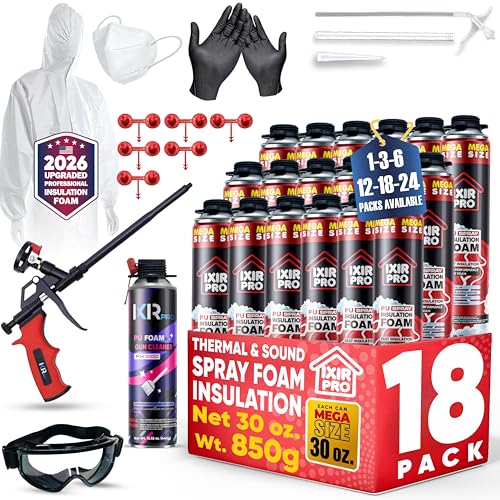
MEGA SIZE SPRAY FOAM INSULATION: Covers up to 23 board feet (based on standard application thickness); actual yield may vary depending on temperature, humidity, and...
What stands out immediately is the density. This ixirpro set packs 18 cans of closed-cell, high-density foam, and I’m genuinely impressed by how stiff it cures.
You’re looking at R-value 5.6 per inch (that’s solid thermal resistance, by the way), plus a K-value of 0.025 W/m·K for the technically curious.
Coverage and handling
Each can covers up to 23 board feet, though humidity and temperature will mess with your yield. I’ve learned: shake thoroughly, keep the gun 25-30 cm back, and don’t skip the curing cycle before trimming.
The quick-dry feature saves patience, which I lack. You’ll need ixirpro’s foam gun, sold separately, which annoys me slightly.
Where it works
Glass, concrete, brick, RVs, boats, drywall, even automobile bodies, this stuff bonds practically everywhere. Indoor, outdoor, floors, ceilings, weird corners in your shed? It’s game.
Verdict
Perfect for serious DIYers tackling large projects. Skip it if you want one small crack filled.
Best For: Serious DIYers tackling large-scale insulation projects across diverse indoor and outdoor surfaces who need high-density, stiff-curing foam with solid thermal performance.
Pros:
- High-density closed-cell foam cures stiff and durable with excellent R-value 5.6 per inch for strong thermal insulation
- Bonds to exceptionally wide range of materials including glass, concrete, brick, RVs, boats, and automobile bodies
- Quick-drying formula allows fast trimming and molding after hardening, saving project time
Cons:
- Requires separately purchased ixirpro spray foam gun
- Coverage yield varies significantly with temperature and humidity, making quantity planning unpredictable
- 18-pack mega size is overkill for small repairs or single crack fills
Recommended Products

COMPLETE DIY SPRAY FOAM KIT: Includes 12 cans of high-density closed-cell spray foam, spray gun, adjustable nozzle, gun cleaner, disposable foam straws, protective gloves, safety goggles, and coverall suit. A convenient all-in-one solution for home repair, maintenance, renovation, and insulation projects.

HIGH-DENSITY CLOSED CELL INSULATION: Neox spray foam insulation uses a high-density polyurethane closed-cell structure to create a continuous insulating layer that helps reduce air leakage and unwanted heat transfer. This closed cell spray foam is ideal for homeowners, DIY users, and professionals handling targeted insulation projects.

AIRTIGHT COVERAGE FOR MULTIPLE SURFACES: This diy spray foam insulation kit fills cracks, gaps, and wall junctures. Ideal for rim joists, crawl spaces, roof rafters, and around ducts to seal against air and moisture intrusion.
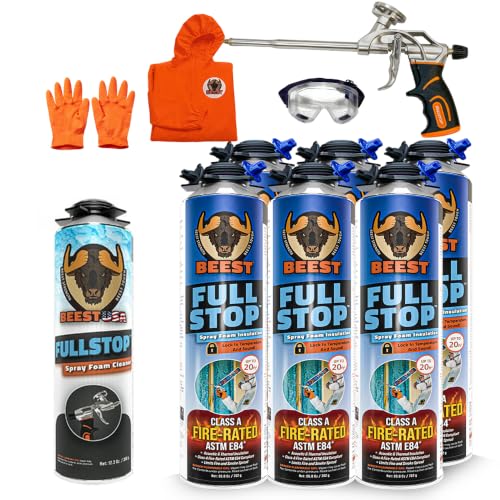
BEEST Spray Foam Insulation Kit 240 Board ft

CLASS A SURFACE-BURNING PERFORMANCE + HIGH R-VALUE: BEEST FullStop was tested to ASTM E84 and achieved a Flame Spread Index of 0 and Smoke Developed Index of 120, meeting...
Why are you juggling multiple cans and separate purchases for that garage project? I stopped doing that when I found the BEEST Spray Foam Insulation Kit. You get 240 board feet of coverage, 12 cans, a heavy-duty spray gun, solvent cleaner, plus gloves, goggles, and a coverall. Everything’s in one box. Ready to go.
The Smart Hybrid Design
This isn’t standard open-cell or closed-cell, it’s both. The outer skin is closed-cell: tough, moisture-resistant, high R-value. The core is open-cell: expands well, flexible, better coverage. That combo fills gaps and cracks at 68–77°F, bonding strong to wood, metal, drywall, concrete.
The R-value hits 8.24 at 2″ thickness, and it’s Class A fire-rated per ASTM E84. I like that 2″ layer for blocking air leaks, moisture, and condensation. It works in basements, roofs, sheds, garages. Year-round comfort, less heat gain in summer, less heat loss in winter.
Support That Shows Up
Petra makes this, it’s a family-owned American company. Their customer care runs 24/7. I’ve called worse support lines at 2 PM on a Tuesday.
My Take
Moderate DIYer with a medium space to seal? This kit’s my practical pick. The hybrid formulation saves you from buying the wrong foam type. The accessories mean no extra runs to the hardware store. The blue foam (model B-BNDL-SFI-12PK, color: blue, size: 12 pack) goes on smooth if you prep right.
Best For: Moderate DIYers looking for a complete, ready-to-use insulation kit for medium-sized spaces like garages, basements, sheds, and roofs who want the performance benefits of both closed-cell and open-cell foam without making separate purchases.
Pros:
- All-in-one kit with 12 cans, spray gun, cleaner, gloves, goggles, and coverall eliminates extra hardware store trips
- Hybrid closed-cell/open-cell design delivers moisture resistance, high R-value (8.24 at 2″), and flexible expansion in one product
- 24/7 USA-based customer support from a family-owned American manufacturer
Cons:
- Requires 68–77°F application temperature range for proper expansion and curing
- Limited to ~240 board feet coverage, which may be insufficient for larger projects without purchasing additional kits
Recommended Products
CLASS A SURFACE-BURNING PERFORMANCE + HIGH R-VALUE: BEEST FullStop was tested to ASTM E84 and achieved a Flame Spread Index of 0 and Smoke Developed Index of 120, meeting Class A surface-burning criteria. Delivers strong thermal insulation performance with an R-Value of 8.24 at 2" thickness.
CLASS A SURFACE-BURNING PERFORMANCE + HIGH R-VALUE: BEEST FullStop was tested to ASTM E84 and achieved a Flame Spread Index of 0 and Smoke Developed Index of 120, meeting Class A surface-burning criteria. Delivers strong thermal insulation performance with an R-Value of 8.24 at 2" thickness.

COMPLETE 12-PACK SPRAY FOAM INSULATION KIT: Includes 18 x 26.46 oz (750 g) closed cell spray foam cans, 1 x 15.52 oz (440 g) foam gun cleaner, 1 spray foam gun, 18 red nozzles (1–2), 3 foam gun tips (2 short, 1 long), 10 can nozzles, protective suit, safety glasses and 12 gloves.
Magic Chems Spray Foam Insulation Kit (18 Pack)

SPRAY FOAM INSULATION KIT INCLUDES: 18 Pcs Closed Cell Spray Foam Insulation Kit (25.4 oz. - 750 ml), 1 Foam Gun Cleaner (9.9 oz./500 ml), 1 Teflon Coated Spray Insulation...
I’m picking this one for anyone who’s got a long checklist and zero patience for multiple store runs.
The Magic Chems Spray Foam Insulation Kit (18 Pack) basically throws the whole hardware store at you. Eighteen cans of closed-cell polyurethane foam (25.4 oz each), a Teflon-coated gun, multiple nozzle lengths, and, blessedly, a full safety kit: coveralls, goggles, gloves, mask. Plus cleaner for the gun.
You won’t be that person frantically googling “how to unclog spray foam gun” at midnight.
Closed-cell means tiny trapped bubbles that block air and moisture. Great for crawl spaces, RVs, basements, rim joists, even boats.
It cures in 24 hours, so plan ahead. The sweet spot is 25-30 cm from your surface; too close and you’ll blast the foam everywhere, too far and it lands like splattery pancakes.
At roughly 500+ liters of foam, this covers serious territory.
Downsides? You’re committed to 18 cans. No dabbling. But for a whole-house draft hunt or that container workshop project? This is my bulk pick.
Best For: Property owners, contractors, and DIY enthusiasts tackling large-scale insulation projects such as whole-house air sealing, container workshops, RV renovations, or basement and crawl space upgrades who want a complete, all-in-one kit without additional supply runs.
Pros:
- Comprehensive kit includes 18 cans of foam plus all necessary application tools, safety equipment, and gun cleaner—no additional purchases required
- Closed-cell formulation provides superior air and moisture barrier, energy efficiency, and sound dampening across diverse indoor and outdoor applications
- High-volume coverage (~500+ liters) delivers excellent value for extensive multi-area projects versus individual can purchases
Cons:
- Requires significant upfront commitment to 18 cans with no option for smaller trial quantities
- 24-hour full curing time necessitates project planning and delays trimming or finishing work
- Safety gear and chemical nature of polyurethane foam demand proper handling, ventilation, and adherence to protective equipment protocols
Recommended Products

AWF 1000 Foam Gun: Designed for use with Great Stuff PRO and other professional-grade spray foam and foam cleaner cans

AWF 1200 Foam Gun: Designed for use with Great Stuff PRO and other professional-grade spray foam and foam cleaner cans

PRO-GRADE PU FOAM GUN CLEANING: Effectively dissolves and removes uncured polyurethane foam from applicator guns and nozzles. Keeps your equipment in top condition and extends tool lifespan. Perfect for both professionals and DIY enthusiasts.
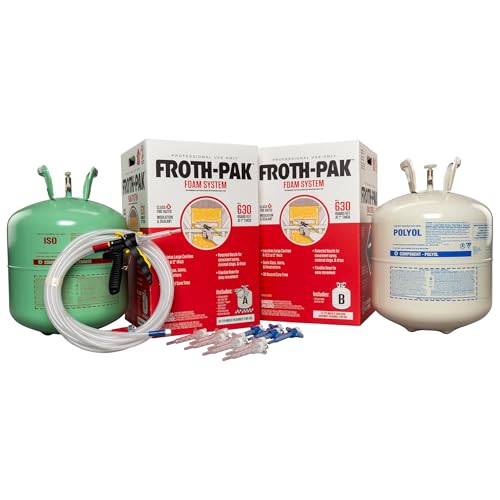
Vega Bond V600 Spray Foam Insulation Kit (600 Sq Ft)
AIRTIGHT COVERAGE FOR MULTIPLE SURFACES: This diy spray foam insulation kit fills cracks, gaps, and wall junctures. Ideal for rim joists, crawl spaces, roof rafters, and...
The Vega Bond V600 stands out when you’re tackling medium-sized insulation jobs without calling in the pros. This two-part, closed-cell kit covers 600 square feet at one inch thick, which hits a sweet spot that spray cans simply can’t touch.
What I Really Like About the V600
I appreciate how versatile this off-yellow foam proves in practice. It fills cracks, gaps, and wall junctures while creating an airtight seal against both air and moisture intrusion. Rim joists, crawl spaces, roof rafters, ductwork surrounds, this stuff handles them all.
At R-7 per inch, the thermal resistance builds a firm barrier that actually lasts. The expansion happens fast. Too fast if you’re sloppy, so pace yourself. I’ve found it performs equally well on basement concrete, roof decks, subfloors, and exposed foundations.
The Temperature Catch
Here’s where I get mildly annoyed. You must store and use this kit at 75°F to 85°F for at least 24 hours beforehand. Skip this step, and your yield and application quality suffer noticeably.
My Verdict
For attic spaces, wall cavities, and crawl areas in small renovation jobs, the V600 beats buying endless cans. It’s DIY-friendly without being DIY-cheap, if that makes sense.
Best For: DIY homeowners tackling medium-sized insulation projects such as attics, crawl spaces, rim joists, and wall cavities who want professional-grade closed-cell foam without hiring contractors.
Pros:
- Covers up to 600 sq ft at 1 inch thickness, making it far more efficient than spray cans for small renovation jobs
- Creates an airtight, moisture-resistant seal with R-7 thermal resistance per inch that lasts
- Versatile application across multiple surfaces including concrete, roof decks, subfloors, and ductwork surrounds
Cons:
- Requires strict temperature control: must be stored and used at 75°F–85°F for 24 hours prior or yield and quality suffer
- Fast expansion demands careful pacing during application to avoid waste and uneven coverage
- Two-part kit requires proper handling and setup, making it less convenient than simple spray cans for very quick fixes
Recommended Products

CLASS A SURFACE-BURNING PERFORMANCE + HIGH R-VALUE: BEEST FullStop was tested to ASTM E84 and achieved a Flame Spread Index of 0 and Smoke Developed Index of 120, meeting Class A surface-burning criteria. Delivers strong thermal insulation performance with an R-Value of 8.24 at 2" thickness.

FILLS SMALL HOLES, GAPS & CRACKS: Ideal for insulating and preventing drafts

CLASS A SURFACE-BURNING PERFORMANCE + HIGH R-VALUE: BEEST FullStop was tested to ASTM E84 and achieved a Flame Spread Index of 0 and Smoke Developed Index of 120, meeting Class A surface-burning criteria. Delivers strong thermal insulation performance with an R-Value of 8.24 at 2" thickness.
Loctite Tite Foam Big Gaps Sealant (12 fl oz)

FILLS GAPS UP TO 3 INCHES: Our high-density polyurethane foam expands to fill and seal large gaps up to 3 inches wide without sagging, slumping, or pulling away SUPERIOR...
Oddly specific, isn’t it? I mean, who measures foam in fluid ounces anymore?
But here’s the thing: this 12 fl oz can from Loctite packs serious punch.
It expands to fill gaps up to three inches wide, which covers most DIY disasters I’ve created.
The high-density formula bonds to wood, concrete, and even PVC. (Yes, finally, something that sticks to my mistakes.)
It’s UV resistant and flexible, so it won’t crack when your house settles.
Perfect for small jobs. For big projects? You’ll need twelve cans.
Annoying, but effective. I always keep one handy for emergencies. You should too.
Best For: Homeowners and DIY enthusiasts tackling small sealing, insulating, and gap-filling projects around the house.
Pros:
- Expands to fill gaps up to 3 inches wide, covering a wide range of repair needs
- Bonds to multiple surfaces including wood, concrete, brick, stone, metal, and PVC
- UV resistant and flexible to withstand building movement without cracking
Cons:
- 12 fl oz can size is small, requiring multiple cans for larger projects
- Limited to smaller jobs despite “Big Gaps” name suggesting broader use
- Single-pack option makes stocking up less convenient for frequent use
Recommended Products
USA Manufactured: Proudly made in the USA; Note: Customer signature required

POWERFUL FORMULA: Akfix 800C is formulated to remove uncured polyurethane foam. It helps clean foam residue after insulation, sealing, mounting, and gap-filling applications without overcomplicating the job.
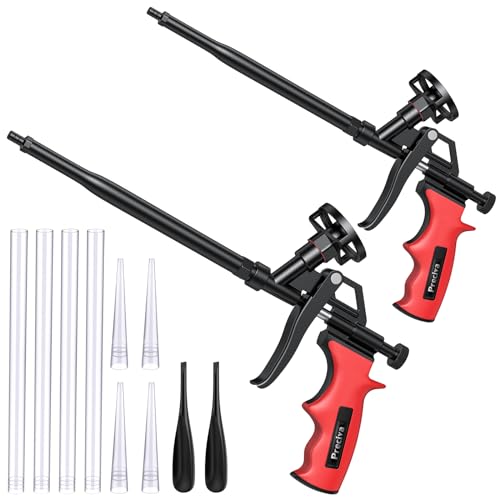
【2PCS Upgrade Foam Gun】 Are you tired of cheaply made foam guns that break after one use? We got you covered with professional Foam Gun! The foam gun is made of perfluorocarbon,non-stick coated basket, needle and ball valve promote unrestricted flow of the foam gun applicator, suitable for balcony doors and windows, bathtub and air conditioning hole.Ideal for filling, sealing and insulating small gaps
Factors to Consider When Choosing DIY Spray Foam Insulation
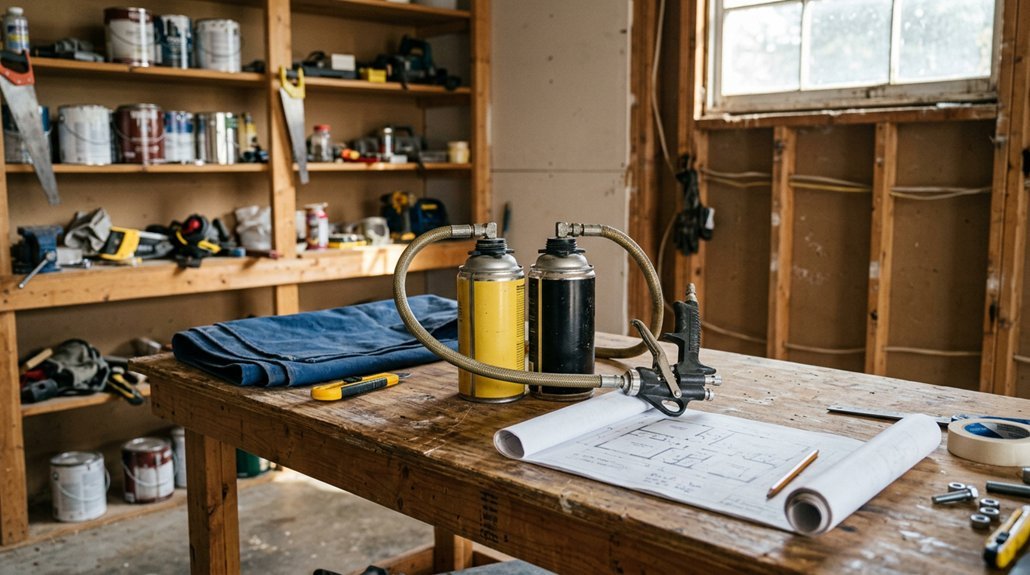
I know you’re itching to grab the first kit that promises easy installation, but I’ve learned the hard way that matching the right foam to your actual project saves both money and headaches. Before you checkout, you’ll want to weigh coverage area against your square footage, understand that R-value determines how well the foam blocks heat flow, and decide whether you need closed-cell (denser, better for exterior) or open-cell (flexible, great for interior sound dampening).
Don’t ignore application temperature limits and curing times either, unless you enjoy watching wet foam slump off your walls at 40 degrees or waiting three days before you can trim it.
Recommended Products
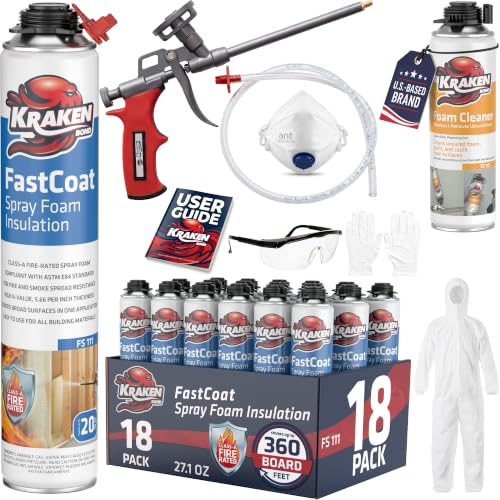
CLASS-A FIRE RATED & HIGH-EFFICIENCY INSULATION: Kraken Bond Spray Foam Insulation Kit is Class-A Fire Rated and meets fire safety standards, including ASTM E84, ensuring enhanced fire resistance for safer applications. It also delivers superior thermal performance (R-Value 5.66/inch) and acoustic insulation, making it ideal for attics, walls, and crawl spaces—perfect for both DIYers and professionals seeking reliable, safe results.

CLASS-A FIRE RATED & HIGH-EFFICIENCY INSULATION: Kraken Bond Spray Foam Insulation Kit is Class-A Fire Rated and meets fire safety standards, including ASTM E84, ensuring enhanced fire resistance for safer applications. It also delivers superior thermal performance (R-Value 5.66/inch) and acoustic insulation, making it ideal for attics, walls, and crawl spaces—perfect for both DIYers and professionals seeking reliable, safe results.

Advanced Polyurethane Insulation: Stanley Thermal & Sound Insulation Spray Foam is a cutting-edge polyurethane-based solution for superior heat and sound insulation in various applications, from buildings to vehicles.
Coverage Area Needs
Board feet is the honest measurement here: length x width x thickness, all in inches, divided by 144.
I convert everything before buying. Manufacturers list coverage in board feet, square feet, or total area. I match that to my actual project size so I don’t end up short mid-job or overstocked.
Watch the thickness stipulation. Many kits assume one inch of depth. I need two inches? I halve the stated coverage. Simple math, but easy to overlook.
Bigger projects demand bigger packs, like 240 board feet or 600 square foot kits. The per-unit cost drops noticeably. For quick fixes, I grab smaller packs.
Real talk: temperature, humidity, and surface type steal yield. I plan for practical coverage ranges, not maximum claims.
I also insist on included accessories, guns, cleaners, and protective gear. Without them, consistent coverage gets messy fast.
R-Value Performance
How much does R-value really matter when I’m standing in the aisle staring at two kits with different numbers? It matters more than I’d like, honestly. R-value measures thermal resistance per inch. Higher means better insulation. One kit lists R-5.6 per inch, another hits R-7. I’m reaching for the R-7 almost every time.
Here’s the thing though: thickness multiplies that number. I can’t just spray a thin layer and call it done. If I need serious protection, I build up proper depth. Most kits specify around 1 inch per pass, sometimes more. I follow that guidance strictly.
Watch out for temperature and humidity messing with my results. I’ve learned they impact the actual performance. For me, checking application conditions beforehand saves serious headaches later.
Closed Vs Open Cell
R-value numbers are only half the fight, though. The real choice is closed-cell versus open-cell, and trust me, this matters more than most kits advertise.
Closed-cell foam packs R-6 to R-8 per inch and adds serious structural rigidity. It’s dense, acts as its own vapor barrier, and keeps moisture out. Downside? It’s pricier, needs solid substrate support, and won’t forgive shaky framing.
Open-cell expands like crazy, filling weird gaps with ease. At R-3.5 to R-4 per inch, it’s less insulating but breathes better, trapping sound rather than moisture. You’ll pay less, but you might need a separate vapor barrier in humid zones.
Application Temperature
When am I supposed to spray this stuff, anyway?
I’ve learned the hard way that temperature matters more than you’d think. Most kits want 68–77°F for optimal results, and they mean it.
Too hot or too cold, and you waste money. Higher temps speed up curing; drop below the range, and you’re waiting forever for the foam to set. Some brands go further, demanding 75–85°F for storage and application. That’s a narrow window.
Temperature also changes how the foam behaves. Hotter mix flows differently, affects your spray distance, and alters the pattern. I’ve seen guys struggle with viscosity issues because they ignored this.
Check your kit’s requirements before you start. Your yield, adhesion, and sanity depend on it.
Curing Time Requirements
Why does curing time catch so many people off guard? I’ll tell you: most folks spray foam and expect to trim it like drywall an hour later. Nope.
What You’re Really Waiting For
Curing time means how long until that gooey foam becomes solid enough to handle. I’ve seen kits range from a few hours to a full day. Some let you poke at the surface skin sooner, but full cure? That’s often 24 hours.
The Weather Factor
Temperature and humidity mess with this big time. Hot, dry day? Faster cure. Cold, damp basement? Grab a coffee, it’s gonna wait.
This stuff matters because rush trimming wrecks your final density and rigidity. Weak foam means weak insulation.
My advice: Read the label twice. Budget a full day before finishing work. Your stiffness, adhesion, and R-value depend on patience here.
Surface Compatibility
Where exactly are you planning to stick this stuff?
I ask because surface compatibility isn’t universal, and I’ve learned that the hard way. Most DIY kits handle wood, metal, drywall, concrete, even glass or PVC, but always verify your specific combo. Adhesion strength varies by formulation. Some bond aggressively to framing and sheathing; others prioritize that closed-cell moisture barrier instead.
Temperature matters too. Too cold, and your yield plummets, or the foam cures weird and crumbly. Check those specs, seriously.
Indoor, outdoor, basements, attics, funky crawl spaces with weird angles, most kits adapt fine. But prep counts: clean surfaces, maybe a compatible primer. Some products excel at gap-filling irregular shapes, expanding into cracks while sealing air and moisture.
Match the kit to your actual project, not your wishful thinking.
Kit Contents Included
Three things separate a smooth Saturday project from a frustrating mess: what’s actually in the box, how much of it you’ve got, and whether you’ve got the right tools to clean up afterward.
Most kits give you spray cans and a gun, but that’s bare bones. I’d rather pay extra for bundles with cleaning solvent, replacement nozzles (short and long tips really matter), and a dedicated foam gun cleaner. Those extras save your equipment.
Don’t skip the safety package either. Goggles, gloves, coveralls. Basic stuff, but I’ve seen kits that make you buy it separately. Rude.
Check the coverage too. Board feet listed on the box tells you if you’re buying enough for your attic or just a closet.
Finally, grab one with a decent user guide. You’ll thank me at 2 PM when the foam starts expanding.
Fire Safety Ratings
Peace of mind matters when you’re spraying flammable chemicals in your attic, so let’s talk fire safety without putting you to sleep.
I always check for Class A or ASTM E84 certification first. These ratings mean less smoke and slower flame spread. Pretty important, right?
Don’t just glance at the label. Higher R-value per inch often pairs with better density and formulation, which changes how the foam behaves in a fire.
Some kits use hybrid closed-cell/open-cell blends. They balance insulation with fire resistance, but performance varies.
Watch for required ignition barriers or extra protective coatings. Building codes aren’t suggestions.
Here’s what trips people up: gaps, voids, or poorly cured foam create highways for flames and smoke. Your technique matters as much as the kit you buy.
I prefer kits with clear curing instructions and explicit fire ratings. Skip vague claims.