
Choosing wood for hand carving is like picking teammates for a pickup game: you want reliability, not surprises that’ll bench your project. I’ve worked with everything from buttery basswood to stubborn rosewood, and I’ll tell you straight, some species belong in your tool roll while others fight back.
This guide breaks down 13 woods I actually use in 2026, comparing grain tightness, how your blade glides, and whether you’ll finish smiling or sanding forever. Curious which one split my favorite chisel?
That story comes next.
Basswood Carving Blocks 24PCS Whittling Wood Kit

[Versatile Sizes for Every Project] Get 24 easy-to-carve blocks in 3 sizes: 20 slim blocks (4"x1"x1") for detailed work, 2 cubes (2"x2"x2") for medium projects, and 2 large...
I’ve carved enough basswood to know that not all blocks are created equal, and this 24-piece kit from Bluvizo hits a sweet spot for anyone just starting out, or anyone tired of fighting with gnarly, unpredictable wood.
What You Actually Get
The mix matters here. Twenty slim 4x1x1 blocks give you plenty of practice material without waste. Two 2x2x2 cubes let you try small sculptures or ornaments. Two chunky 4x2x2 blocks handle bigger ambitions.
I like this ratio. Too many kits dump identical pieces on you; these three sizes match how carvers actually work.
The Wood Itself
Hand-selected, 100% natural basswood with fine, even texture. No cracks, no knots, no splinters waiting to ruin your afternoon. It’s soft enough for beginners pushing tools for the first time, yet holds detail when you graduate to finer work.
Arrives pre-smoothed. Seriously, you can start carving immediately. Paint it, stain it, leave it natural; the surface takes anything.
Who’s This For?
Newbies building confidence. Classroom teachers. Weekend hobbyists. Anyone who’s snapped a blade on cheap pine and muttered things they regret. Gift-ready packaging, too, if you’re feeling generous.
Not thrilled? Bluvizo asks you to contact them first. Fair enough.
Best For: Beginners, classroom teachers, weekend hobbyists, and anyone seeking reliable, easy-to-carve basswood without knots or cracks.
Pros:
- Thoughtful size variety (20 slim blocks, 2 cubes, 2 large blocks) matches how carvers actually work and reduces waste
- Arrives pre-smoothed and ready to carve immediately with no sanding required
- Soft, even-grained basswood holds detail well while remaining forgiving for new tool users
Cons:
- Limited to only three block sizes, which may not suit specialized or advanced projects
- Only 2 cubes and 2 large blocks, so less material for ambitious sculptural work
- Soft basswood may dent or damage more easily than harder woods during handling or shipping
Recommended Products
[Versatile Sizes for Every Project] Get 24 easy-to-carve blocks in 3 sizes: 20 slim blocks (4"x1"x1") for detailed work, 2 cubes (2"x2"x2") for medium projects, and 2 large blocks (4"x2"x2") for bold designs. Whether you're making mini sculptures or statement decor, there's a size for every idea!

Carving Wood Blocks 18 piece set: this whittling kit will be a good base for your further projects - it includes 18 different basswood blocks and cubes that you can use for some amazing ideas.

[Basswood Carving Blocks]-Get creative with this 19-piece carving wood set, featuring 3 different sizes for versatility. Enjoy 12 rectangle blocks (1''x1''x4''), 6 cube blocks (2''x2''x4''), and 1 rectangle block (2''x2''x4'').
Hand Carving Your Own Walking Stick: Step-by-Step Instructions

This guide’s for anyone who’s tired of mass-produced hiking poles and wants something that actually fits your hand.
I picked up Fox Chapel Publishing’s “Hand Carving Your Own Walking Stick” (72 pages, paperback, 2017) after ruining three cheap store-bought canes. The book delivers exactly what the subtitle promises: step-by-step instructions for artisan-quality sticks, canes, and staffs.
You’ll learn carving, shaping, detailing, and finishing from start to finish. The realistic snake projects? Intimidating at first, honestly. But the author breaks them into manageable chunks. Each technique builds on the last, so you’re not jumping from beginner to expert overnight.
Here’s what works for me:
- Clear photos showing hand positioning (crucial for safety)
- Finishing techniques that actually prevent splintering
- Projects scaled for different skill levels
The 72-page format keeps things tight. No fluff, just instruction. Is it the only carving book you’ll ever need? Probably not for advanced work. Does it get you carving something functional this weekend? Absolutely.
For my money, pairing this guide with soft basswood for practice, then moving to hardwoods for your final stick, makes the most sense.
Best For: Hobbyists and DIY enthusiasts who want to carve functional, handmade walking sticks, canes, or staffs with professional-looking results.
Pros:
- Concise, fluff-free 72-page format with clear step-by-step photos showing proper hand positioning for safe carving
- Finishing techniques and realistic snake detailing projects that build progressively across skill levels
- Tight instruction structure that enables beginners to complete a functional project quickly
Cons:
- 72-page length may leave advanced carvers wanting more depth for complex projects
- Specialized scope limits utility to walking stick/cane/staff projects only
- Realistic snake projects may be intimidating for absolute beginners despite chunking approach
Recommended Products

Carving Spoon Blank from Different Woods: Use wood carving blocks to carve four unique spoons, each showcasing the distinctive properties and characteristics of the wood.

Premium Wood for Carving: Crafted from high-quality European walnut, these carving blocks offer endless options for creativity.

Ideal European Walnut Quality: experience the art of carving with our Wood for Carving, made from European walnut; These blocks provide endless creative possibilities, giving both beginners and seasoned artisans a smooth and rewarding crafting experience
BlueRica Hand Carved Wood Cross Coconut Shell Necklace

Length: 18 Inches - the length of an item is measured from end to end, including the clasp. To measure your neck size, use a flexible tape measure or cord and wrap it around...
Looking for hand-carved jewelry that actually means something?
I’ve worn plenty of mass-produced necklaces, and honestly, most feel forgettable. The BlueRica Hand Carved Wood Cross Coconut Shell Necklace stands out because someone actually carved that pendant by hand. Each cross measures roughly 1 inch by 1.25 inches, and no two are identical.
That’s the point.
What You’re Getting
The 18-inch strand combines 5mm brown coconut shell beads with genuine puka shells, all polished and drilled for smooth wear. The lobster clasp secures easily, no fumbling required.
At 18 inches total length, it sits comfortably at collarbone level for most adults. (Pro tip: measure your neck base with a flexible tape, then add two inches for breathing room.)
Real-World Wear
It’s lightweight, durable, and surprisingly low-maintenance. Mild soap and water, or a quick wipe with a soft cloth, keeps it presentable.
No special storage rituals needed.
Who This Suits
Perfect for anyone wanting wearable art without pretension. The 100% satisfaction guarantee removes purchase anxiety, though display packaging isn’t included, so don’t expect gift-box presentation.
Verdict
You get genuine handwork and natural materials. That’s rare.
Best For: Anyone seeking affordable, meaningful hand-carved jewelry with natural materials who values unique, lightweight everyday wear over mass-produced accessories.
Pros:
- Genuine hand-carved wooden cross pendant ensures each piece is one-of-a-kind
- Durable, lightweight construction with easy soap-and-water maintenance
- 100% satisfaction guarantee provides risk-free purchase confidence
Cons:
- No display packaging included, limiting immediate gift-giving presentation
- Fixed 18-inch length may not suit all neck sizes or layering preferences
- Natural material variations mean cross appearance differs from product photos
Recommended Products

[24Pcs Complete Set] - Our wood carving kit provides everything you need to start your carving journey: 4pcs whittling knives, 5pcs detail knives, 6pcs basswood blocks, 4style templates, a polishing compound, a leather strop, and a pair of safety gloves. Our wood carving tools set provides a range of tools for both beginners and veterans.

Premium Blades: Drop forged CR-V steel with heat-treated edges ensures sharp precision and long-lasting durability, can be used to make finish or paring cuts on wood surfaces, as well as cut mortises

[32Pcs Complete Set] - Our wood carving kit includes everything you need to begin your carving journey: 4pcs whittling knives, 5pcs detail knives, 4style templates, 6pcs basswood blocks, a spoon block and other wood carving tools, providing a range of tools for both beginners and experienced carver.
Whittling for Beginners: Step-by-Step Projects to Carve from Wood

The book assumes you own basic whittling tools, nothing fancy, and walks you through shaping and smoothing techniques that build real confidence. I picked up Callisto’s 166-page paperback, published late 2022, and found it refreshingly direct. No pretension, just projects.
Here’s what works: the step-by-step format actually holds your hand without treating you like a child. Each project layers skills naturally. You start with simple cuts, progress to smoothing and detailing, and suddenly you’ve got a repertoire of carvings to show off.
The variety matters. Some books stick you with spatulas, this one branches into small figures and functional pieces. That keeps me engaged; I’m not carving the same thing forty times.
Who’s this for? Absolute beginners, obviously, but also anyone who’s stalled after buying tools and never started. At 166 pages, it’s substantial without overwhelming. The English instructions are clean, no translation weirdness.
My gripe? It came out in 2022, so some references feel slightly dated. Not a dealbreaker.
Verdict: Grab this if you want structured practice. Prefer total creative freedom? Look elsewhere.
Best For: Absolute beginners and stalled hobbyists who own basic whittling tools and want structured, confidence-building practice through guided projects.
Pros:
- Step-by-step format layers skills naturally from simple cuts to detailed finishing
- Project variety includes small figures and functional pieces, not just repetitive items
- Clean, direct English instructions without pretension or translation issues
Cons:
- Assumes ownership of basic tools without guidance on acquiring them
- Some references feel slightly dated given its 2022 publication date
- Structured format offers limited creative freedom for those wanting open-ended exploration
Recommended Products

[Wood Carving Kit Deluxe Edition] Everything you need to start carving: 4 knives, 4 chisels, 7 basswood blocks, spoon blank, polishing compound, leather strop, sharpening stone, gloves, sandpaper, templates, and guide. All stored in a portable PU leather case—perfect for beginners and pros.

Package Included: 7 Pieces Basswood Carving Blocks Set,Two Different Size,Are Respectively 6Pcs 4x1x1''(10x2.5x2.5cm) And 1Pcs Larger Block 4x2x2''(10x5x5cm).

The Beginner’s Handbook of Woodcarving (Dover Crafts)

I’ll start with a confession: I’m a sucker for a book that doesn’t assume I already own a workshop full of tools.
The Beginner’s Handbook of Woodcarving gets this. Dover’s 258-page guide covers line carving, relief carving, and carving in the round, plus a solid bird carving section. It’s reissued from 2011, so the advice holds up.
What I actually like:
- Project patterns you can actually follow (not just pretty pictures)
- Step-by-step instruction that doesn’t talk down to you
- Multiple carving styles in one place
The Kindle format means you can’t scribble in margins, but you also aren’t lugging a textbook outside. Fair trade.
Is it perfect? No. Some photos show their age.
For someone wondering if basswood or butternut suits their first relief project, this bridges the gap between “what wood?” and “what technique?”
Verdict: Grab it if you want structured practice across styles without buying four separate books. Skip it if you need glossy, modern photography. It’s practical, not flashy, and that suits me fine.
Best For: Beginners seeking structured, practical instruction across multiple woodcarving styles without needing extensive prior tool collection or experience.
Pros:
- Includes usable project patterns rather than decorative reference images
- Covers four distinct carving methods in a single volume
- Step-by-step guidance that respects reader intelligence without being condescending
Cons:
- Kindle format eliminates ability to annotate directly in margins
- Photographs appear dated and lack modern production quality
- Digital format may be less practical for workshop reference compared to physical book
Recommended Products

Wood Carving Chisel Fine and Deep Line Carving: our wood carving chisel is going to be great for achieving fine details on your carving. Its form allows you to get nice deep lines effortlessly!

[Quality Materials Made of SK2 carbon steel, harder than SK5, can easily make hollow carving, chip carving, relief carving; arc wood handle, powerful grip, will not cause blister
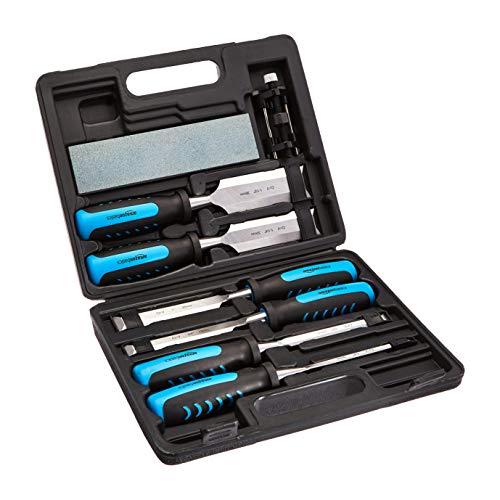
8-piece wood carving chisel set includes 6x chisels 1/4 inch (6mm), 1/2 inch (13mm), 3/4 inch (19mm), 1 inch (25mm), 1-1/4 inch (32mm) and 1-1/2 inch (38mm), 1x honing guide and 1x sharpening stone (120/240 grit)
TIMESETL 17-Piece Wood Carving Tools Set with Whetstone and Case
[Quality Materials Made of SK2 carbon steel, harder than SK5, can easily make hollow carving, chip carving, relief carving; arc wood handle, powerful grip, will not cause...
Who’s this set really for?
I’d say it’s for beginners who want everything in one box, or carvers like me who need a compact kit for travel. The TIMESETL 17-piece set packs SK2 carbon steel blades, harder than the common SK5 stuff, into palm-sized tools at just 5.5 inches long. Twelve shapes cover your basics: four angled chisels, three gouges, two straights, plus rounded, parting, and pinpoint tools. Safety caps keep my fingers intact when I’m grabbing tools fast.
The arc wood handles? They actually work. I carved for two hours straight, no blisters.
The included whetstones (320 and 400 grits, various shapes) mean you can keep edges sharp without buying extras. Four stones in weird shapes, so you’ll figure out which curves match which blades.
The reusable case, 6 by 3.5 by 2 inches, fits in a backpack. I’ve used these on basswood, soap, and even pumpkins. Plastic and clay work fine too.
Verdict: Grab this if you want portable, affordable variety. Skip it if you need full-size tools for heavy projects.
Best For: Beginners seeking an all-in-one starter kit and experienced carvers needing a compact, travel-friendly set for light to medium projects.
Pros:
- SK2 carbon steel blades are harder than common SK5 steel, offering better edge retention and durability
- Arc wood handles provide comfortable, blister-free grip even during extended carving sessions
- Includes four whetstones in various shapes (320 and 600 grit) for convenient sharpening without additional purchases
Cons:
- 5.5-inch palm-sized tools are too small for heavy-duty or large-scale woodworking projects
- Four whetstones in unconventional shapes require trial and error to match with appropriate blade curves
- Limited to light applications; not suitable for carvers needing full-size professional tools
Recommended Products

Basswood carving blocks 16 Piece Set: this whittling kit has 16 basswood blocks. A great opportunity to get creative as much as you like and create new projects freely!

Basswood Carving Blocks for All Skill Levels: These basswood blocks are handpicked to provide the best carving experience, making them suitable for both beginners and professionals.

Basswood Carving Blocks 7 Pieces Set: Our wood carving kit features 7 good pieces of basswood, offering a wide range of possibilities for your wood carving projects.
SakerNeo 25-Piece Wood Carving Tool Kit

***18+ Only - Age Verification Required 25-PREMIUM WOOD CARVING TOOLS FOR EVERY PROJECT:This comprehensive wood carving kit includes 3 chisels, 8 whittling knives, 5 detail...
Looking for a carving kit that truly grows with you? I’ve found the SakerNeo 25-Piece Deluxe Wood Carving Kit genuinely impressive for its sheer breadth without overwhelming newcomers.
What’s Inside
You get 3 chisels, 8 whittling knives, 5 detail knives, plus a scriber, hammer, marking knife, sharpening stone, polishing paste, leather strop, and safety gloves. That’s 25 pieces versus the TIMESETL’s 17, and the difference matters.
The Mo.V alloy stainless steel blades come pre-sharpened and resist corrosion beautifully. I appreciate the air-pressure assembly; it feels solid, not wobbly.
Build Quality That Surprises
The walnut handles have this varnished, non-slip grip that actually works when your palms get sweaty. (Trust me, they will.)
The upgraded leather strop includes a handle and table mount hole, which sounds minor until you’re trying to sharpen at an awkward angle.
Portability Done Right
The thick leather roll bag features double-layer compartments, handheld and shoulder straps. Everything stays organized, protected, and genuinely portable.
I’ve tossed this in my truck for weekend carving sessions without worry.
Who’s This For?
Beginners get safety gloves and comprehensive tools. Professionals appreciate the deformation-resistant blades that stay sharp longer.
Spoon carving, stone carving, detailed craftwork: it handles all of it.
My verdict? Skip the TIMESETL if you want room to grow. The SakerNeo eliminates that frustrating “I need another tool” moment six months in.
Best For: Serious hobbyists and beginners who want a comprehensive, growth-oriented wood carving kit that eliminates the need for additional tool purchases down the line, whether they’re working on wood carving, spoon carving, stone carving, or detailed craftwork.
Pros:
- Comprehensive 25-piece set includes all essential tools (chisels, whittling knives, detail knives, sharpening accessories, safety gloves) with no need for additional purchases later
- High-quality Mo.V alloy stainless steel blades with air-pressure assembly are pre-sharpened, corrosion-resistant, and stay sharp longer
- Thick leather roll bag with double-layer compartments, handheld and shoulder straps provides excellent portability, protection, and organization
Cons:
- Walnut handles may become slippery in sweaty palms despite varnished non-slip grip
- 18+ age restriction with required age verification limits accessibility for younger aspiring carvers
Recommended Products

Wood Name: East Indian Rosewood, Indian Rosewood, Sonokeling

Dark chocolate brown

Exotic Wood Pen Blanks Set: You will receive 10 pack wood blanks, there are 5 types, including black walnut, cherry wood, zebra wood, beech wood, chicken wing wood, each wood grain is unique, matching rich set can meet your various craft needs
IYARA CRAFT Rustic Elephant Jewelry Box in Teak Wood

Rustic Elephant Jewelry Box 4x6: Expertly crafted from genuine teak wood, this jewelry box features a stunning hand-carved design of a mother and father elephant family,...
Teak’s tight grain and natural oils make it perfect for intricate carvings that last. I’ve seen cheap jewelry boxes fall apart in months, but real teak? It’s different.
Why This Box Stands Out
The IYARA CRAFT Rustic Elephant Jewelry Box 4×6 shows what hand carving can achieve. Skilled artisans carved every detail of the mother and father elephant family. The traditional antique finish gives it timeless charm, while the genuine teak wood keeps it durable. You’re not buying factory stamped junk, you’re getting a unique piece.
Who It’s Actually For
This box stores jewelry, keepsakes, trinkets. Beyond that, it protects small treasures and looks beautiful in any room. I gift this to women who appreciate fine craftsmanship, it works for birthdays, anniversaries, holidays. Meaningful and practical.
The Verdict
It combines beauty, tradition, functionality. Sure, you could buy mass-produced plastic. But why? Easy_Company backs the IYARA CRAFT brand, and the teak color matches that rustic vibe perfectly. For anyone wanting carved wood that ages gracefully, this elephant family delivers.
Best For: Women who appreciate fine craftsmanship and want a meaningful, practical gift for storing jewelry and keepsakes that adds rustic elegance to any room.
Pros:
- Hand-carved mother and father elephant family design by skilled artisans makes each piece unique
- Genuine teak wood with natural oils and tight grain ensures durability and longevity
- Traditional antique finish provides timeless charm that ages gracefully
Cons:
- May exceed budget options for simple storage needs
- Not suitable for those preferring modern or minimalist aesthetic over rustic carved designs
- Handmade nature means slight variations exist; no two pieces are identical
Recommended Products

Material: Wood carving knives are made of quality carbon steel and electrolytic coating, wood whittling kit features a razor-sharp stainless steel blade,knife blade is sharp and easy to use,which will ensure longevity, suit for variety of wood carving projects

√ Heat Treated - Made from heat-treated, chrome vanadium steel alloy with a ground finish and narrow side bevels.

Wood Carving Kit 23Pcs: Our wood carving kit provides everything that beginner or professional needs, 4 large carving knives, 5 small detail knives, 9 basswood blocks, polishing compound, leather strop, gloves, and an instruction manual. And all knives are organized in a portable bag for convenience.
The Art of Carving & Whittling: Wood & Stone

I’m always skeptical of guidebooks that promise to teach you everything, so when I picked up *The Art of Carving & Whittling: Wood & Stone*, I expected another dry manual. I was wrong. This 223-page Kindle edition, released March 17, 2026, actually delivers something rare: a genuinely approachable entry point that doesn’t talk down to hobbyists or bore seasoned artisans.
The digital format works surprisingly well for self-guided learning. You can zoom in on technique photos, bookmark tricky sections, and learn at your own pace. No physical heft, no shelf space, just 223 pages of practical instruction waiting on your device.
What sets this apart? It covers both wood and stone carving in one volume, which saves you from buying separate beginner books. The scope stays focused: basic cuts, tool selection, and safety fundamentals. No fluff about carving elaborate chess sets you’ll never attempt.
Is it comprehensive? No, and that’s the point. This is your starter kit, not your encyclopedia. For anyone testing whether carving clicks, this is exactly what you need.
Best For: Absolute beginners testing whether wood or stone carving suits their interests before investing in specialized equipment or advanced instruction.
Pros:
- Digital format enables zooming on technique details, bookmarking, and flexible self-paced learning
- Combines wood and stone carving fundamentals in one volume, eliminating need for separate starter books
- Stays focused on practical basics (cuts, tools, safety) without overwhelming aspirational projects
Cons:
- 223-page scope deliberately limited—serves as starter kit rather than comprehensive reference
- Kindle-only availability excludes readers who prefer physical books for workshop use
- Published 2026, so lacks established track record of reader success or longevity in craft community
Recommended Products
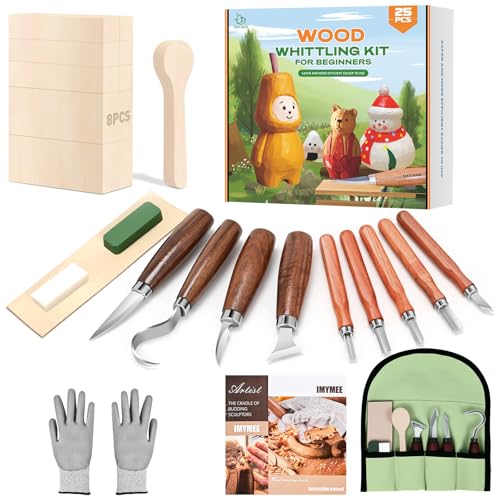
[Wood Carving Kit Deluxe Edition] IMYMEE wood carving set provides everything for beginners or professional needs: 4 carving knives, 5 carving chisels, 8 basswood blocks, 1 spoon block, 1 polishing compound, 1 leather strop, 1 gloves and an instruction manual.All knives come in a storage bag for easy carrying.
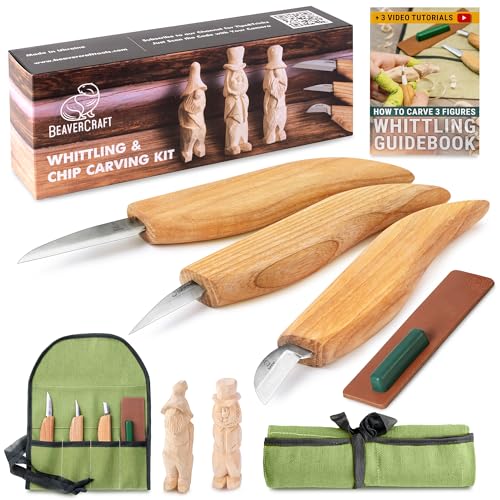
Wood Carving Kit Essentials: This carving set includes everything you need–a detail knife, chip carving knife, roughing knife, leather strop, polishing compound, canvas tool roll, and a step-by-step guide.

The Whittling design is for whittler or woodcarver beginner who loves woodworking and funny wood carving. You love wood whittling and carving? Then you'll love this too!
Dicunoy 12 PCS Wood Carving Tools Set
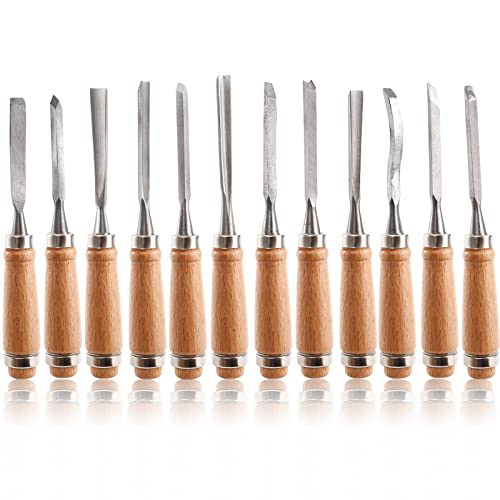
Specifications - 12 pcs wood carving chisel with an easy carrying leather bag. Enough variety of the tips in different 12 sizes-deep gouge, medium gouge, shallow gouge,...
Who’s this set really for?
Honestly? Anyone who’s serious about carving. I’ve seen beginners grab this, and pros keep it as a backup. The Dicunoy 12 PCS set covers all the bases: deep gouges, shallow gouges, straight chisels, angled knives, even a pinpoint tool for detail work. That’s twelve distinct shapes, which means you’re not improvising with the wrong blade.
The leather carrying case feels surprisingly decent, not that cheap vinyl nonsense. Tools come pre-sharpened (a relief, since factory edges usually stink), and the wooden handles with steel hoops actually absorb impact without splitting.
I’ve hammered these harder than I should admit.
Kids can use them, adults should. The full-size design means real control, not toy-like fumbling.
Gift-worthy? Absolutely. Birthdays, Father’s Day, that cousin who won’t stop talking about “getting into woodworking.” This set actually gets them started instead of gathering dust.
My only gripe: you’ll want to strop these regularly. They hold an edge reasonably well, but soft woods gum them up fast.
Verdict: solid starter kit, respectable backup for veterans.
Best For: Serious beginner carvers and hobbyists seeking a versatile full-size set that also serves as reliable backup for professionals.
Pros:
- Pre-sharpened tools with durable wooden handles and steel hoops that absorb impact without splitting
- Comprehensive 12-piece variety (deep/shallow gouges, straight/angled chisels, pinpoint tool) eliminates improvising with wrong blades
- Quality leather carrying case and gift-ready presentation suitable for birthdays, Father’s Day, or woodworking enthusiasts
Cons:
- Requires frequent stropping as soft woods gum up edges quickly
- Edge retention moderate compared to premium alternatives
- May need resharpening sooner than expected under heavy use
Recommended Products
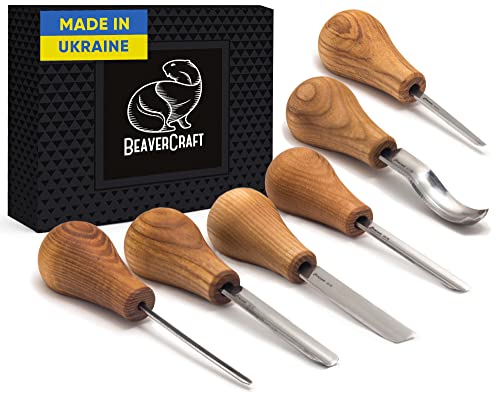
Wood Carving Gouges Chisels Kit Built for Comfort: Featuring lightweight Ashwood handles, these palm tools are ergonomically shaped to fit comfortably in your hand, allowing for extended carving sessions without fatigue.

Long Bent Gouge: BeaverCraft gouge works perfectly for spoons and bowls, helping you cut deep recesses, hollow shapes, and carve smooth, rounded surfaces.
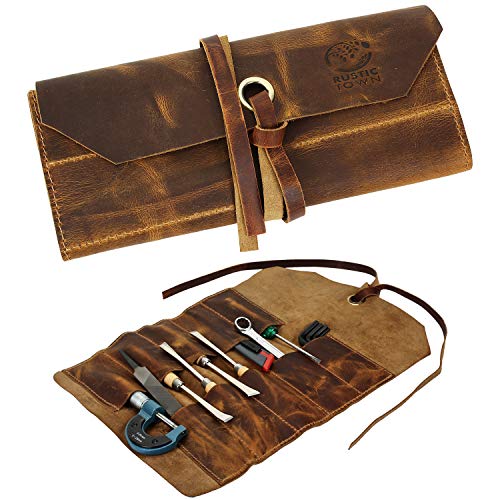
⭕ U.S.A. SELLER❗❗❗MADE WITH HIGH-QUALITY LEATHER: The Tool Roll is handcrafted using the highest quality Grain Leather. The Full Grain Leather is super soft to the touch, durable, attractive, and attains a unique patina after time and use. It’s the best way to store your tools with due care and respect.
Swedish Carving Techniques (Fine Woodworking)

The book targets practical woodworkers who want real skill-building, not glossy coffee-table fluff.
I grabbed the Kindle edition of *Swedish Carving Techniques* back in 2014, and I’m still referencing it. Taunton Press packs 144 pages of pure instruction: axe work, knife grips, and spoon carving fundamentals that actually transfer to your hands.
The revised edition cleans up earlier gaps. The digital format means I zoom in on grain direction photos at 2 AM without waking anyone. No physical heft, but also no shelf space sacrificed.
What works: The technique-centered approach assumes you’re holding tools, not just reading about them. The Swedish tradition emphasizes efficiency, controlled cuts, and reading wood fiber. These skills matter regardless of whether you’re carving basswood or birch.
The catch: Kindle formatting occasionally cramps detailed diagrams on smaller screens. I prefer my tablet for this one.
Verdict: Beginners wanting structured progression, grab it. Collectors seeking pretty pictures, look elsewhere.
Best For: Practical woodworkers seeking hands-on skill development in Swedish carving techniques who prioritize instructional content over visual aesthetics.
Pros:
- Technique-centered approach emphasizes active tool use rather than passive reading
- Revised edition provides updated, refined content with improved clarity
- Digital format enables convenient zoom functionality for detailed grain direction photos
Cons:
- Kindle formatting occasionally compresses detailed diagrams on smaller screens
- Lacks glossy coffee-table appeal for collectors seeking visual presentation
- Requires tablet-sized device for optimal diagram viewing experience
BeaverCraft Cut Resistant Gloves Level 5 (L)

Cut-Resistant Gloves for Hand Protection: Designed to safeguard your hands during various tasks, BeaverCraft safety gloves allow you to work without the fear of cuts or...
What makes these gloves worth your money? I found that Level 5 cut resistance actually means something here. BeaverCraft’s CRG model uses high-density polyethylene woven with polyester and spandex, creating a shield that breathes.
No sweaty palms, no stiff fingers, just protection that moves with you.
I tested these during detailed chip carving and rough whittling alike. The dexterity surprised me. You can feel the wood grain through the fabric, which matters when you’re working tight curves.
They’re machine washable too, because nothing ruins a workshop day like hand-washing gear.
The Fit Question
Sized from small to large, they accommodate different hand shapes. I wear a large comfortably, though I’d suggest checking their sizing chart before buying. The snug fit prevents slippage without cutting circulation.
Beyond the Bench
Food prep? Garden pruning? These pull double duty. I’ve used mine for kitchen knife work and weeding rose bushes. The 100% food-safe rating means no chemical worries near your dinner.
Verdict
Beginners get confidence. Experienced carvers get backup. Your thumbs will thank you.
Best For: Beginners and experienced carvers, food prep enthusiasts, and gardeners seeking versatile hand protection that maintains dexterity across multiple tasks.
Pros:
- Level 5 cut resistance with breathable, flexible fabric that allows you to feel wood grain and work tight curves without sweaty palms or stiff fingers
- Machine washable for easy cleaning and maintenance in workshop or kitchen environments
- True multi-purpose design with 100% food-safe rating for seamless transition between carving, food prep, and gardening tasks
Cons:
- Sizing may run tricky despite availability in S/M/L, requiring careful consultation of the sizing chart before purchase for proper snug fit
- Large size reference in product name may create confusion since fit depends on individual hand shape and chart verification is needed
- No mention of specific durability lifespan or warranty coverage for long-term cut resistance performance after repeated washing and heavy use
A Manual for Wood Carving

Ever wonder who this book’s really for? I’ll tell you: it’s for anyone who’s tired of YouTube tutorials that skip the basics. “A Manual for Wood Carving” by Old Hand Books (Read Books imprint, 2017) doesn’t mess around with fluff.
At 214 pages, this illustrated paperback packs sequential lessons that actually build your skills. The illustrations aren’t decoration, they’re instruction. You follow the pictures and suddenly your knife angles make sense.
Beginners love the hand-holding through tool selection and grain direction. Intermediates? You’ll find projects that stretch your abilities without drowning you in jargon. The binding’s paperback, so yeah, it’ll wear if you drag it to the workshop daily. Treat it decent and it holds up fine.
What works: progressive difficulty, clear diagrams, no assumptions about prior knowledge. What grates: some techniques feel dated. Skip the power tool sections if you want modern methods.
Verdict: Hobbyists starting out, grab this. Seasoned carvers, you’ve probably seen this material elsewhere.
Best For: Beginners and intermediate hobbyists seeking a structured, illustration-driven foundation in traditional wood carving techniques without relying on digital tutorials.
Pros:
- Progressive lesson structure that systematically builds skills from basics to more challenging projects
- Clear, instructional illustrations that effectively demonstrate knife angles and technique mechanics
- Assumes no prior knowledge, making it accessible for complete newcomers to wood carving
Cons:
- Some techniques feel dated compared to contemporary carving methods
- Power tool sections may disappoint those seeking modern, mechanized approaches
- Paperback binding is vulnerable to wear with frequent workshop use
Factors to Consider When Choosing Wood for Hand Carving
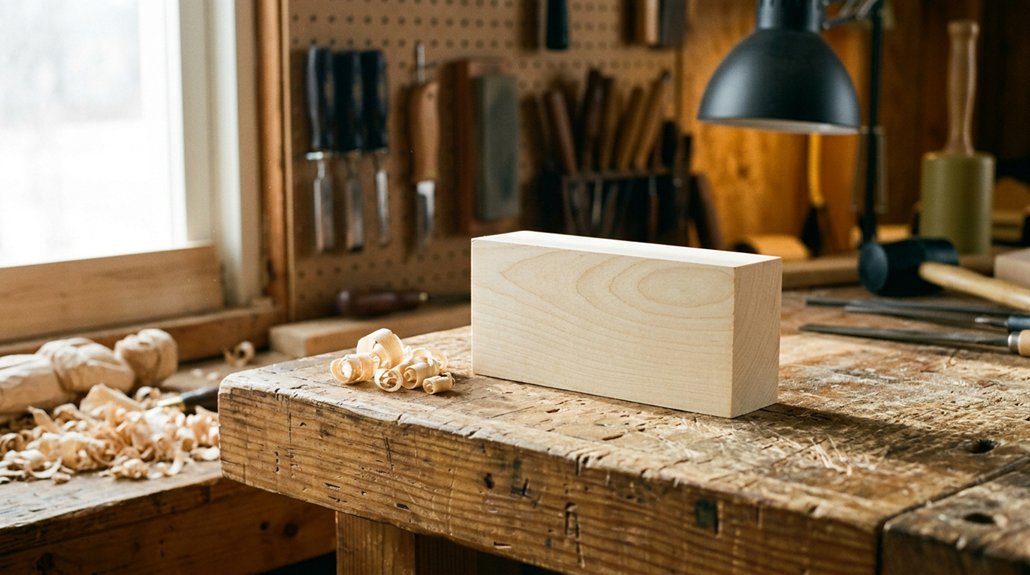
When I’m picking wood for a project, I don’t just grab whatever looks pretty. I run through a mental checklist that saves me hours of frustration later.
Wood hardness level determines whether my tools glide through or fight me every stroke. Grain structure pattern affects how cleanly my cuts finish: tight, straight grain equals happy carving. Moisture content balance matters more than you’d think. Wet wood warps, dry wood cracks, neither’s fun.
I also insist on knot-free quality because knots are nature’s cruel joke on detailed work. Overall workability rating, which combines all these factors, ultimately decides whether a piece becomes a joy or a chore.
Wood Hardness Level
Three numbers matter most when I’m picking wood for a project: the Janka rating, my patience level, and how recently I sharpened my gouges.
The Janka scale measures how much force it takes to embed a steel ball halfway into the wood. Higher numbers mean tougher carving, lower numbers mean easier cutting. Simple enough, right?
Soft woods (low Janka)
Carve like butter, leave pretty shavings, but they’re gentle on tools because they’re actually gentle on everything, including detail edges that’ll wear down faster.
Hard woods (high Janka)
Keep crisp profiles longer, fight back against sloppy technique, and punish dull blades with chip-out and frustration.
My sweet spot? Mid-range basswood or tulip poplar: forgiving enough for learning, firm enough for details. Save the rock-hard exotic stuff until you’ve got quality gouges and the sharpening habit down. Match the wood to your tools, your hands, and your ambition.
Grain Structure Pattern
Hardness tells you how much the wood fights back, but grain structure decides whether your blade glides through or gets ambushed mid-cut.
I always check grain direction first. Straight, uniform grain, like in basswood or butternut, lets me carve clean curves without surprise tear-out. Interlocked or wavy grain, found in mahogany or some oaks, fights my tools, causes chipping, and sends cuts wandering off course.
Open-grain species, such as pine, soak up finish unevenly and tear out more readily. Closed-grain woods, like maple, hold crisp detail and finish smoothly. Medullary rays add pretty flecks but demand careful tool paths.
Cut with the grain whenever possible. Across-grain cuts risk burning and splintering. For beginners, I recommend straight-grained basswood. For detail work, tight-grained boxwood wins every time.
Moisture Content Balance
Dry wood is stable wood. That’s why I always check moisture content before I start carving.
The Sweet Spot
Most softwoods need 6–12% moisture, while hardwoods prefer 8–12%. Go outside these ranges and you’re asking for trouble: warping, splitting, surface checking. I’ve learned this the hard way.
Why Balance Matters
Uneven moisture means your finished piece moves as seasons change. Not fun. I match the wood’s moisture to where it’ll live, not where I carved it.
Getting There
Air-drying works, but you need equilibrium moisture content first. Then store it somewhere stable.
Kiln-dried wood offers predictability, but here’s the thing: you still must acclimate it (leave it in your shop!) before detailed work. Skip this step, and you’ll fight your material the whole way.
My Take: Control the moisture, control the outcome.
Knot-Free Quality
Once I’ve got the moisture sorted, I turn my attention to what’s actually in the wood: knots.
I hate knots. They’re troublemakers.
Knot-free wood gives me smoother cuts and cleaner grain visibility because there’s no tear-out or splintering where the grain goes haywire. Without knots, I don’t fight unpredictable grain shifts that catch my tools. That means better control whether you’re just starting out or you’ve been carving for years.
The density stays consistent throughout, so my gouge meets predictable resistance from end to end. Finishing becomes simpler too. Paint, stain, or oil absorbs evenly across the surface. No dark spots, no weird blotches.
For detailed work, knot-free stock eliminates the annoying dance of carving around obstacles. I work faster, I work happier.
Skip the knots. You’ll thank yourself later.
Workability Rating
How do I know if a wood will actually cooperate when my knife hits it? I check its workability rating. This score tells me how smoothly a species carves, how fast it dulls my blade, and whether it’ll tear out or chip.
I love basswood here. It’s soft, the grain stays straight, and my knife glides through without fighting me. Harder woods? They punish my tools and test my patience.
What kills workability? Interlocking grain, density spikes, and irregular fibers that send my cut wandering. Uniform, straight growth fixes this.
I also care about finish potential. A wood that carves cleanly, and looks polished after? That’s my winner.
Verdict: Beginners, stick with basswood. Experienced carvers, experiment with harder species, but know you’ll sharpen more often.
Sanding Ease Factor
Why does sanding matter so much to me? Because I hate fighting my material. Softer woods like basswood sand like butter, giving me smooth surfaces with less elbow grease and finer dust that doesn’t choke my shop vac. Hardwoods? They fight back.
Grain structure changes everything. Uniform, straight grain means minimal tear-out and consistent results. Interlocked grain, found in woods like mahogany, tears and frustrates. I avoid it for detailed work.
Defects slow you down. Knots, cracks, and resin pockets clog sandpaper fast, creating gummy swarf that ruins my rhythm.
Clean, fine-textured woods with small, even grain accept finer grits earlier, skipping tedious intermediate steps.
My shortcut: I pre-sand blanks when possible. It saves time and gives me better control during carving.
For beginners, basswood wins. For patient pros, tight-grained maple works beautifully.
Finish Compatibility
After I’ve got a piece sanded smooth, I turn my attention to the real test: how it’ll take a finish.
I love basswood for this reason: it’s a soft hardwood that carves easy and sands to a glassy surface, so my oil or varnish goes on like butter. No fuss, no streaks.
Tight-grained woods are my go-to. Closed grain means finishes bite right in. Open-grained species? They’ll drink your stain unevenly unless you seal them first. Annoying extra step.
Here’s where I get cranky: oily hardwoods. Teak, rosewood, sure they’re gorgeous, but their natural oils fight paint and varnish. Specialty primers, solvents, more money, more waiting. Who needs that?
Moisture content matters too. Wet wood cracks your finish later. I always check that my piece is evenly dried before sealing.
My verdict: beginners, stick with basswood. Patient pros, prep those oily exotics properly.
Tool Wear Impact
What really separates a relaxing afternoon carve from a chore: tool wear.
I’ve learned this the hard way. Softer woods like basswood treat my blades kindly, letting me carve for hours before touching up an edge. Harder stuff, maple or hickory, chews through steel fast, demanding constant attention.
Density matters too. Even-grained woods give steady contact, slow wear on my fine gouges. Knots and wild grain, they’re trouble, spot-wearing edges where you least want it.
Steel choice plays a role. My high-carbon tools stay sharp longest on soft woods, but resinous or tannin-heavy species need extra polishing, gumming up the works.
My verdict? Beginners, stick with basswood, your tools and sanity will thank you. Experienced carvers, harder woods reward skill, just budget time for sharpening.