
Carving with a Dremel is like choosing dance partners: some woods glide effortlessly, others step on your toes.
I’ve spent years testing basswood against maple, pine against oak, and I’m still surprised by how wrong my first picks were.
Here’s why your wood choice matters more than any fancy bit set you’ll buy.
Dremel 729-01 11-Piece Carving/Engraving Accessory Micro Kit
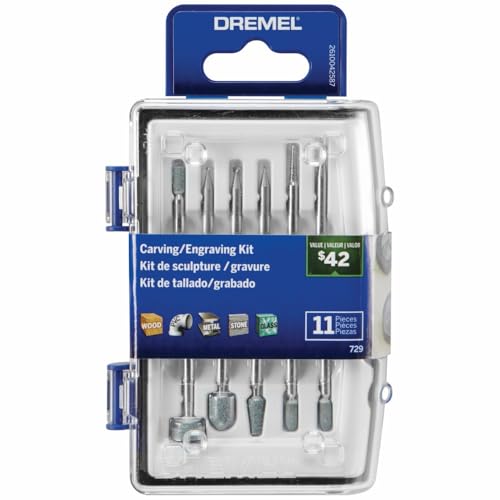
Turn your Dremel rotary tool into a versatile carving machine with the 11-piece carving & engraving micro Dremel tool accessories kit Dremel tool kit includes a reusable...
If you’re just discovering what your Dremel can actually do, the 729-01 kit is where I’d point you first.
This 11-piece micro kit transforms your rotary tool into a carving and engraving setup. I’ve used it on wood, obviously. But it’ll tackle steel, glass, stone, ceramic, and plastic too.
What’s Inside
The engraving lineup covers your fine detail work: four bits ranging from 1/32″ to 3/32″ widths. Need precision? The 105 and 108 bits handle hairline grooves.
The diamond wheel points, those 7103 and 7134s, grind through harder materials without complaining much.
The five silicon carbide grinding stones round out the kit. Sizes span 1/8″ to 13/32″, so you’ve got options for shaping versus smoothing.
Real Talk
The reusable case keeps me from losing bits in my shop’s black hole of drawers. Is it perfect? No. I’d love more engraving bits included. But this covers bases most beginners don’t know exist.
My Verdict
Grab this if you’re testing Dremel carving waters. Serious engravers will outgrow it, but it’s my default recommendation for anyone wondering where to start.
Best For: Beginners looking to explore carving and engraving with their Dremel rotary tool without investing in a large, expensive accessory collection.
Pros:
- Versatile material compatibility, handling everything from soft woods to hard materials like steel, glass, and stone
- Reusable storage case keeps organized and prevents losing small bits in workshop clutter
- Cost-effective entry point that covers essential carving, engraving, and grinding functions in one kit
Cons:
- Limited engraving bit selection may leave users wanting more variety for detailed work
- Kit will eventually be outgrown by serious engravers who need more specialized or extensive accessories
- Silicon carbide grinding stones, while versatile, may wear faster on very hard materials compared to premium alternatives
Recommended Products
Turn your Dremel rotary tool into a versatile carving machine with the 11-piece carving & engraving micro Dremel tool accessories kit

【Carbide Burr Set】: These carving bits are made from Tungsten Carbide Steel for long life , sturdy and durable. Shank Diameter: 1/8'' , Total Length:45-50mm, Cutting Diameter: 1/4''. 1/8'' shank fits most small rotary tools with three jaw chuck

Practical engraving drill bits: the package comes with 5 pieces wood carving and engraving drill accessories, and 10 pieces HSS carbide rotary burr bits, enough for you to use, and help you to make kinds of crafts without breaking the wood, to bring you smooth effect
Tungsten Carbide Rotary Burr Set for Dremel (10PCS)
【Carbide Burr Set】: These carving bits are made from Tungsten Carbide Steel for long life , sturdy and durable. Shank Diameter: 1/8'' , Total Length:45-50mm, Cutting...
Who’s this burr set really for?
I’d say grab the FOTYBEI Tungsten Carbide Rotary Burr Set if you’re ready to move past those flimsy bits that dull after one project. Ten pieces, all double-cut carbide with HRC70 hardness, basically that means they stay sharp way longer than standard steel.
The 1/8″ shank fits my Dremel 3000 perfectly, no adapter hassles. Cutting diameter runs 1/4″ across the set, total length between 45-50 mm, so you’ve got real reach into grooves and recesses.
I especially like the crossed groove pattern: it chews through pine and basswood fast, skips the clogging you get with single-cut burrs.
What works, what doesn’t
Works: wood, plastic, aluminum, even light steel. The case keeps them organized (finally, no drawer chaos).
Annoying: not much, though I’d love size labeling on the shanks.
My verdict
Casual carver? Maybe overkill. But for anyone doing regular relief work, model engineering, or mixed material projects, this set delivers serious value. The “hot knife through butter” claim? Pretty fair, actually.
Best For: Regular relief workers, model engineers, and DIY enthusiasts who need durable, long-lasting carbide burrs for wood, plastic, aluminum, and light steel projects.
Pros:
- HRC70 tungsten carbide construction stays sharp significantly longer than standard steel bits
- Double-cut crossed groove design cuts efficiently through soft materials without clogging
- 1/8″ shank fits most rotary tools including Dremel without adapters
Cons:
- No size labeling on the shanks makes bit identification inconvenient
- 1/4″ cutting diameter and 45-50mm length may be overkill for casual or occasional users
- Limited to relatively low-density materials; not suitable for heavy-duty steel work
Recommended Products

3mm cylindrical shank compatible with Dremel 1/8"(3.175mm) shank bits compatible with Dremel rotary tool rasp file accessories wood carving bits compatible with Dremel flex shaft.

The 20pcs double cut tungsten carbide burr bits set compatible with Dremel metal grinding bits compatible with Hardell Milwaukee DeWALT angle or straight air or electric die grinder or drill.

Complete Tool Set: Includes 10 different rotary burr profiles with 6mm cutting heads and 3mm shanks, compatible with handheld electric or pneumatic tools operating at speeds between 6000-50000 revolutions per minute for various metalworking and crafting applications
Engraving Router Bit Set, 20 PCS HSS Rotary Burr Bits

1. Professional Kit - Made from high quality high speed steel for a long life and extraordinarily precise cuts the first time, saving you time and money. (20 different shapes...
This 20-piece HSS set’s the one I’d grab when I’m juggling lots of different projects. I’m talking dollhouse furniture one day, model trains the next, maybe a resin pendant if I’m feeling fancy. With twenty distinct shapes, I’m not stuck improvising some weird bevel with the wrong bit.
The titanium-coated high-speed steel wears like iron, cuts fast, and doesn’t turn into a chew toy after three sessions. That 1/8-inch shank fits standard Dremel collets, no adapter hunting required.
Wood, plastic, ABS, PVC, acrylic, resin, this pack handles all of it. Carving, engraving, grooving, hollowing, chamfering, whatever. I’ll admit, the brand name “shengbenhao” makes me twitch a little. Sounds like someone sneezed during a spelling bee.
Still, the storage case keeps bits organized. Three-month satisfaction guarantee, so they’re at least pretending to care. These are workhorses, not thoroughbreds.
Verdict: Beginners, hobbyists, anyone building a toolkit from scratch, this is your starter pack. Serious carvers chasing mirror finishes? Keep walking.
Best For: Beginners, hobbyists, and anyone building a DIY toolkit from scratch who needs an affordable, versatile starter set for carving, engraving, and shaping across multiple materials like wood, plastic, and resin.
Pros:
- 20 distinct bit shapes provide versatility for a wide range of tasks without improvisation
- Titanium-coated HSS construction offers durability, fast cutting, and long wear life
- Standard 1/8-inch shank fits common rotary tools like Dremel without needing adapters
Cons:
- Brand name “shengbenhao” lacks recognition and may signal questionable quality control
- Three-month satisfaction guarantee is shorter than many competitors offer
- Not precise enough for serious carvers needing mirror-finish results on detailed work
Recommended Products

Turn your rotary tool into a powerful rotary grinder with Dremel's silicon carbide grinding stones

【HIGH QUALITY MATERIALS】Rotary grinding head made of high-quality corundum(head) and metal(mandrel).More durable and wear-resistant.

Material: 20mm Silicon Carbide Grinding Stones with 1/8" shank, designed for precision grinding.
Power Carving Manual: Tools, Techniques & Projects (2nd Edition)

Power Carving Manual, The Best of Woodcarving
The buyer’s guide alone saved me from buying three wrong bits last spring. It breaks down rotary tools, burr types, and speed settings without talking down to you. Want to carve feathers? There’s a project. Need to understand grain direction under power? Covered in the first chapter.
The physical stuff
It’s a slim paperback, 0.5 liters of portable knowledge. Black cover, lies flat when you break the spine, which you’ll want to do.
Bottom line
Got a Dremel and no clue? This bridges the gap. Already experienced? The 22 projects still spark ideas. My only gripe, some photos could be larger. Still, I reach for it weekly.
Best For: Woodworkers and hobbyists who want to master power carving techniques and tools, from complete beginners with a Dremel to experienced carvers seeking fresh project ideas.
Pros:
- Comprehensive buyer’s guide prevents costly tool purchasing mistakes
- 22 diverse projects with step-by-step photos cover techniques from basic to advanced
- Portable paperback format lies flat for practical workshop use
Cons:
- Some project photos are smaller than ideal for detail reference
- Requires breaking the spine to lay flat properly
- Limited to 168 pages may leave some topics less deeply covered than specialists want
Recommended Products

COMPLETE 10-PIECE ASSORTMENT: Features a versatile range of shapes including ball, cylindrical, tapered, and club profiles to handle intricate carving, hollowing, and detailed engraving tasks.

Package contains: you will receive 10 pieces wood carving and engraving drill accessories, as well as 10 pieces HSS carbide rotary burr bits in 10 shapes for faster wood removal, these practical tools help you make kinds of crafts without breaking the wood, and you can easily work with woods more efficiently while leaving a smoother finish

High-Speed Double-Cut Geometry: Engineered with a precision cross-line groove configuration, our double-cut design ensures ultra-fast material removal, instant chip clearance, and a radically smoother finish than aggressive single-cut variants. Experience less chatter, diminished vibrations, and maximum control over intricate projects, delivering professional results with less user fatigue.
How to Use a Dremel Tool for Beginners
Wondering if a Dremel’s right for you? I’ve been there, and I’ll walk you through getting started without the headaches I had.
Setup First, Always
I grab my safety glasses first: non-negotiable. Then I pick my accessory: burrs for carving, cutoff wheels for slicing, sanding drums for smoothing. Low speed for plastics and details, crank it up for tough wood.
I always test on scrap wood first; saved me from ruining a project countless times.
Basic Moves That Matter
For cutting, I let the tool do the work: no forcing, steady hands, shallow passes. When I carve, I work with the grain, removing small amounts.
Relief carving (patterns raised from flat wood) builds confidence fast.
The Real Secret
Practice on cheap pine before touching expensive cherry. Unplug when changing bits; I learned that the annoying way. Ventilation matters too: that dust piles up quick.
Best For: DIY enthusiasts and hobbyists seeking an approachable entry point into rotary tool work across wood, metal, and plastic projects.
Pros:
- Quick setup with clear accessory-to-task matching reduces beginner overwhelm
- Progressive technique guidance builds confidence before tackling premium materials
- Strong safety emphasis (eye protection, unplugging bit changes, ventilation) prevents common injuries
Cons:
- No specific speed settings (RPM numbers) provided for different materials
- Limited coverage of Dremel model variations and their power limitations
- Minimal troubleshooting detail for when techniques fail despite correct execution
Recommended Products

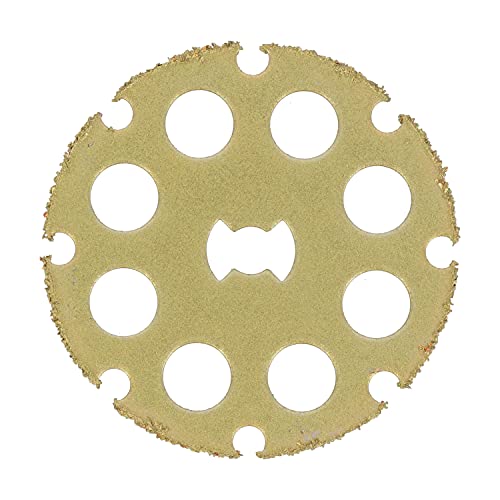
Premium Swiss made Carbide wheel cutting grit for high performance cutting.
The Dremel EZ Lock makes accessory changes easy as pull - twist - release

Dremel Engraver is ideal for personalizing your valuables as well as engraved decorative designs.
Dremel 9953 Flame Tip Rotary Carving Bit

2X faster material removal compared to Dremel 124 3/8” wide ‘flame’ profile allows for concave and v-cuts to be made, and the tip can be used for grooving and for...
If you’re after aggressive material removal without swapping bits every five minutes, I’ve got a favorite. The Dremel 9953 Flame Tip Rotary Carving Bit, a 3/8″ powerhouse, tears through wood, plastic, foam, and rubber like they’re butter left in the sun. Hardened stainless steel teeth deliver 2X faster removal than the older Dremel 124. No more waiting around.
What sets this apart? That flame profile, wider and more versatile than standard cylinders. You carve concave curves and sharp V-cuts without fighting your tool.
Grooving, detailed profiles, aggressive hogging, then smoothing to near-finish, it handles the whole journey.
I’ve abused mine across softwoods and urethane foam. Teeth stay sharp. It’s rated for medium-hard materials, but I’ve pushed it harder (don’t tell Dremel). Pair it with any compatible rotary tool, lock it in, and you’re carving in seconds.
Who needs this? Beginners frustrated with slow progress. Hobbyists carving foam props or wooden spoons. Anyone tired of bit-swapping ballet.
Verdict: Grab the 9953 if you want one bit that roughs and refines. Skip it only if you exclusively work hardened steel. For wood carving, this earns permanent residence in my kit.
Best For: Beginners frustrated with slow progress, hobbyists carving foam props or wooden spoons, and anyone tired of bit-swapping who needs aggressive material removal in wood, plastic, foam, or rubber.
Pros:
- Hardened stainless steel teeth deliver 2X faster material removal compared to the Dremel 124
- 3/8″ flame profile enables versatile cutting of concave curves, V-cuts, and grooves while handling both aggressive hogging and smoothing tasks
- Durable construction maintains sharpness through heavy use on soft to medium-hard materials
Cons:
- Not suitable for hardened steel, stone, or other extremely hard materials
- 3/8″ width may be too large for very fine detailing or narrow grooves
- Aggressive cutting action leaves a surface that still requires final sanding for a smooth finish
Recommended Products

Dremel's versatile and simple-to-use engraving bits make it easy to express your creativity
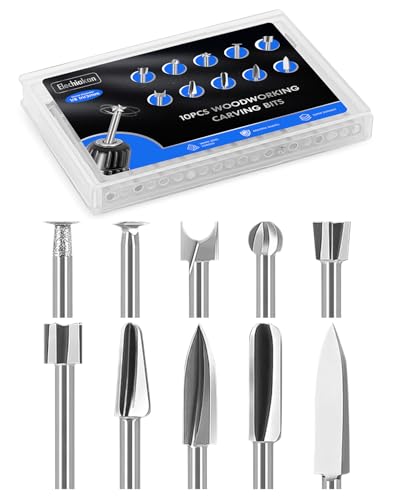
10 Multi-Functional Rotary Tool Bits: Great for DIYers & pros—switch between drill bits for smooth contours, intricate carving, or rough texturing. Tackle any material with precision. Perfect for wood, stone, ceramics, jade and more, these multi-functional for Dremel tool bits handle drilling, shaping, grinding & fine detailing

COMPATIBILITY: Designed to work seamlessly with Dremel rotary tools, featuring a standard 1/8 inch shank for universal fitting
5-Piece HSS Wood Carving Bit Set for Rotary Tool

【Widely Application】:5 different sizes (3mm,4mm,5mm,6mm,8mm) meets your different working need. Widely use on various kinds woods for DIY crafts, wood carving,...
Who’s looking for an affordable entry point into rotary tool carving?
I’ve found the shengbenhao 5 Piece HSS Set hits that sweet spot between price and performance. You get five tricuspid bits, sized 3mm through 8mm, that carve clean V slots and curves without tearing grain.
High Speed Steel means these hold an edge longer than cheap carbon steel, though they won’t last forever under heavy use. The 1/8 inch shank fits most rotary tools I’ve tried, and the three blade design pushes chips out fast, so you’re not burning wood.
It’s exactly perfect for beginners testing these waters.
Best For: Budget-conscious beginners and hobbyists seeking an affordable entry point into rotary tool wood carving who want clean, precise results on V-slots, curves, and detailed woodworking projects without investing in premium bits.
Pros:
- Excellent value with five versatile sizes (3mm–8mm) covering most common carving needs in one set
- Tricuspid three-blade design enables fast chip discharge, preventing wood burn and leaving smooth, clean finishes
- 1/8″ universal shank fits most rotary tools, drills, and die grinders with simple, beginner-friendly attachment
Cons:
- HSS construction won’t match the longevity of carbide or premium bits under heavy or frequent use
- Limited to softer materials like wood—unsuitable for harder metals or industrial-scale projects
- Lack of incremental sizes between 5mm and 8mm may require additional bits for highly specialized groove work
Recommended Products

High Quality Material - HIDOTOL carbide burr set are made of premium heat-treated tungsten carbide material with high strength, hardness and durability, which is guaranteed to withstand the test of time.

Tungsten carbide - hardness, high strength, and durability. The service life is 8 times longer than that of HSS tool. Pilim double cut carbide rotary burr set can be used on all types of metals, including stainless steel and hardened steel, as well as wood, jade, marble, and bone.

Size information: 1/4 inch shank dia, 5/8 in cutting length, 2-3/8" total length
Wood Carving Drill Bits Set for Dremel Rotary Tool (5Pcs)
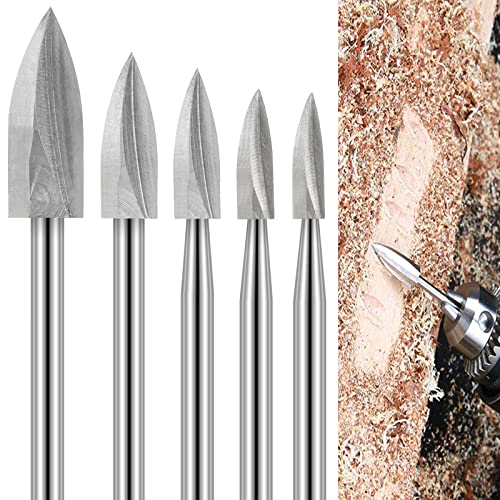
【Widely Application】:5 different sizes (3mm,4mm,5mm,6mm,8mm) meets your different working need. Widely use on various kinds woods for DIY crafts, wood carving,...
The Wood Carving Drill Bits Set stands out for anyone who wants versatility without complexity.
I reach for these five bits, 3mm to 8mm, whenever I need options without the headache. The 1/8″ shank pops right into my Dremel, no fuss, no adapters.
Why These Bits Work
The high-speed steel holds up. I’ve snapped cheaper bits; these don’t quit.
The tricuspid design, three cutting edges, centers itself. No wandering, no ugly scratches.
Chip clearance? Automatic. The three-blade shape flings debris sideways. Deep grooves, V-slots, curves, lines, all smooth. No torn grain.
Real Talk
Beginner or pro, you’re covered. Pet houses, root carving, micro sculpture, these handle it. The 100% guarantee helps me sleep. Bad bit? They replace it.
My gripe? Only five sizes. Sometimes I need something between 5mm and 6mm. (I improvise.)
Verdict
Grab these if you want reliable carving bits. Serious detail work? You’ll outgrow them. For most of us, they’re exactly right.
Best For: Hobbyists, DIYers, and professionals seeking reliable, easy-to-use wood carving bits for rotary tools without needing specialized equipment or extensive experience.
Pros:
- Versatile 3mm-8mm size range handles most common carving tasks from detail work to broader grooves
- Tricuspid three-blade design self-centers and clears chips automatically for clean, precise cuts
- 1/8″ universal shank fits Dremel and most rotary tools without adapters or complicated setup
Cons:
- Limited to only five fixed sizes with no intermediate options for precise sizing needs
- High-speed steel material lacks the edge retention and durability of premium carbide alternatives
- Best suited for general carving rather than fine detail work that demands higher precision bits
Recommended Products

【Materials】Rotary grinding stone sets are made of 60 grit premium aluminum oxide, durable and sharp cutting

Turn your rotary tool into a powerful rotary grinder with Dremel's silicon carbide grinding stones

The information below is per-pack only
20Pcs HSS Wood Engraving Router Bits Set

【More Choices, More Uses】A great carving bits set to meet your different needs. 20 Different shape engraving bit of the most commonly used types. To fit different...
Looking for a bit set that won’t quit on you mid-project? I’ve put the APORO 20Pcs HSS Wood Engraving Router Bits Set through its paces, and it’s become my go-to for detailed Dremel work.
The variety here impresses me: 20 distinct shapes handle engraving, chamfering, grooving, and hollowing without constant bit swaps. Each burr features a 1/8″ (3 mm) shank, 1.53 inches long, paired with a titanium-coated high-speed steel build that actually resists wear and heat.
Compatibility wins big points. These pop right into my Dremel, plus WEN and Apollo grinders, no fuss. I’ve carved dollhouse furniture, model train details, and even messed around with acrylic and PVC.
The mini storage case keeps everything organized, too.
Here’s what frustrates me with budget sets: bits dull fast, heat builds, precision dies. APORO’s HSS construction with titanium coating fixes that. Twenty-four-hour customer support doesn’t hurt either.
Verdict: Beginners get versatility without breaking the bank. Detail enthusiasts gain precise control. Hardcore woodworkers might want premium carbide eventually, but for daily Dremel carving? This set delivers serious value.
Best For: Hobbyists, beginners, and detail-oriented crafters seeking an affordable, versatile rotary bit set for DIY woodworking, model building, and engraving on wood, plastics, and acrylics using Dremel or compatible rotary tools.
Pros:
- 20 distinct shapes in one set eliminate frequent bit swaps, covering engraving, chamfering, grooving, and hollowing with versatile material compatibility across wood, ABS, acrylic, and PVC
- Titanium-coated HSS construction provides meaningful durability, heat resistance, and wear resistance that outperforms typical budget alternatives at this price point
- Broad compatibility with major rotary tool brands (Dremel, WEN, Apollo) and included mini storage case with responsive 24-hour customer support add practical convenience
Cons:
- HSS construction, even titanium-coated, lacks the longevity and cutting performance of premium carbide bits for heavy-duty or professional-grade applications
- 1/8″ (3 mm) shank size limits compatibility with rotary tools requiring larger shanks and may introduce slight runout compared to precision-machined premium alternatives
- No included guide or labeling system for the 20 shapes forces users to visually identify burrs, potentially slowing workflow for beginners still learning bit applications
Recommended Products
【Widely Application】:5 different sizes (3mm,4mm,5mm,6mm,8mm) meets your different working need. Widely use on various kinds woods for DIY crafts, wood carving,...
Carving Patterns: Birds, Animals, Fish (Schiffer Book)

I’ll tell you straight, this pattern book belongs in every Dremel carver’s workshop. Frank C. Russell’s “Carving Patterns: Birds, Animals, Fish” packs 128 illustrated pages into a practical paperback format that won’t hog your bench space.
Russell comes from Stonegate Woodcarving School, and it shows. His patterns cover exactly what the title promises: birds, animals, fish. No fluff, no filler, just solid starting points you can trace, modify, or scale to your project.
Here’s why it works for rotary tool carvers. The Schiffer Book for Carvers series maintains consistent quality I’ve come to trust. At 128 pages, it’s substantial without overwhelming. The paperback binding lies flat (well, mostly flat) while you work.
Is it dated? Published 2006, sure. But woodcarving patterns don’t expire like milk. The fundamentals translate perfectly to Dremel work since Russell’s designs account for detail work rotary tools excel at.
Beginners gain structure; experienced carvers save design time. My gripe: I’d love spiral binding for true flat reference.
Verdict: Buy it if you want ready-to-use patterns without digital hunting. Skip if you exclusively design original work, though honestly, even then you’ll grab ideas here.
Best For: Dremel and rotary tool carvers of all skill levels seeking ready-to-use, traceable patterns for birds, animals, and fish without spending time on digital design hunting.
Pros:
- 128 illustrated pages of solid, no-filler patterns that work especially well for detail-oriented rotary tool work
- Practical paperback format that’s substantial without overwhelming bench space
Cons:
- Standard paperback binding doesn’t lie completely flat for easy reference while working
- Published in 2006, which may deter those seeking the latest releases despite timeless pattern relevance
- No spiral binding option available for true flat reference during carving sessions
Recommended Products

Engrave, decorate, or personalize a wide variety of materials - from metal to plastic to wood and leather using the Dremel 290 Engraver
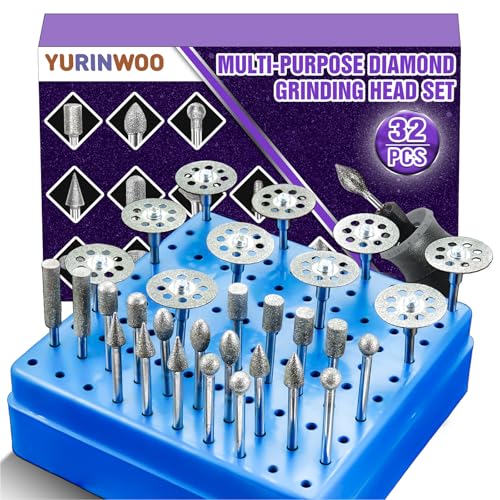
【120Grit Diamond Grinding Bits】Made of diamond particles, thick, durable, wear-resistance and impact resistance, sturdy enough for fine detail work, greatly reducing the need for frequent grinding bit changes

Dremel durable diamond wheel points are ideal for quick and easy material removal in hard materials
Factors to Consider When Choosing Wood for Carving With Dremel
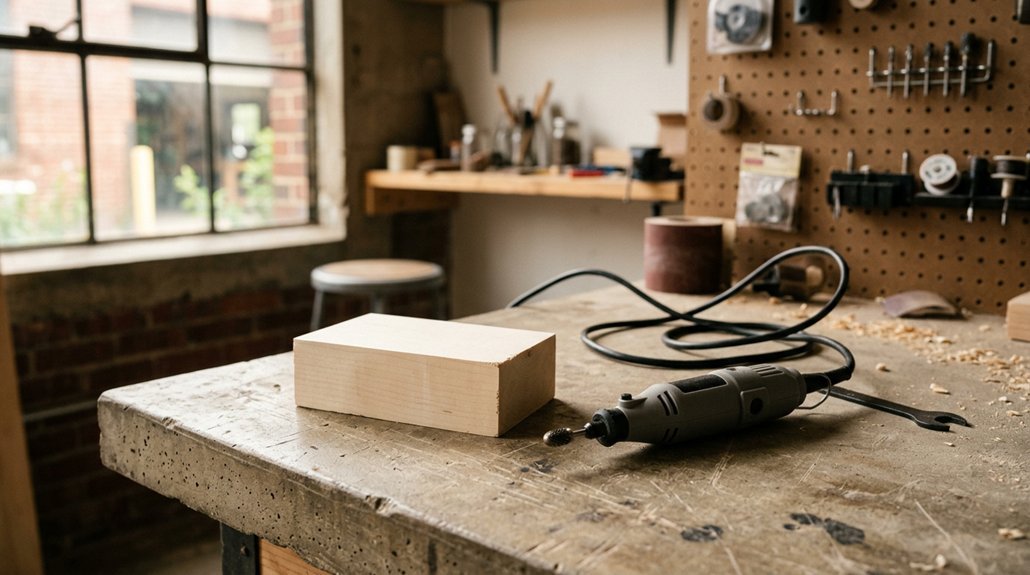
I’ll pick the right wood for my Dremel carvings by weighing five practical factors that make or break a project. Wood hardness, grain pattern, moisture content, bit compatibility, and how well details hold their shape: these aren’t just specs on a chart, they’re the difference between a smooth afternoon of carving and a frustrating fight with splinters and chipped edges.
Let me walk you through what I’ve learned matters most, so you can skip the trial-and-error I suffered through (and save your stash of expensive bits from an early grave).
Wood Hardness Level
Why does hardness matter so much when you’re picking wood for Dremel carving? It completely changes how your tool performs and how frustrated you’ll get.
I always check the Janka scale first. It’s a simple hardness test that tells you exactly what you’re dealing with.
Soft woods are forgiving. Basswood and pine let me use aggressive bits without fighting the grain. Cuts come out cleaner, and my tool stays sharp longer.
Hard woods demand respect. Oak and maple? I’ve learned to slow way down and keep bits razor-sharp. Otherwise I get splintering and heat buildup fast.
Super dense species are tricky. Hickory and ebony need tiny cutters and patient, controlled passes. Bog down the tool and you’re stuck.
Beginners, stick with soft woods. Detail-oriented carvers, you’ll want the density, just prepare for a slower, hotter battle.
Grain Structure Pattern
After you figure out hardness, grain structure is what makes or breaks your carve. I always check grain direction first thing, because long, straight grain gives me cleaner cuts with way less tear-out. Interlocked or funky grain? That’s where I start fighting the wood.
Open grain softwoods cut easy, sure, but they fuzz up on me and need extra sanding. Tight-grained hardwoods put up more resistance, yet they hold razor-sharp detail once I dial in my speed and support.
Here’s what I watch for:
- Straight grain: smooth passes, minimal cleanup
- Interlocked grain: unpredictable tear-out, ugh
- Figure and rays: pretty, but they fight uniform texture
Perpendicular cuts across grain risk chipping, so I angle my bit when I can. Grain orientation isn’t glamorous, but ignoring it ruins details fast.
Moisture Content Percentage
How much water is hiding in your wood? Trust me, I learned this the hard way: moisture content makes or breaks your Dremel carving.
I aim for 6% to 12% moisture, with 6–8% being my sweet spot for crisp detail. Air-dried wood at that lower range just cuts cleaner.
Softer woods like pine? They’ll tolerate more moisture, but expect gummed bits and slower speeds. Hardwoods like maple demand drier stock, or you’ll fight tear-out everywhere.
Green wood above 20% is basically my enemy. It clogs bits, dulls blades fast, and leaves those ugly burn marks nobody wants.
I always check with a moisture meter first. It’s saved me hours of frustration.
Equilibrated wood, 8-12%, gives predictable results and smoother finishes. Worth the wait.
Workability With Bits
Once I’ve got my moisture meter reading where I want it, I turn my attention to the real test: how’s this wood going to play with my bits?
I reach for soft woods like pine and basswood when I want easy carving. They cut cleaner, and I don’t have to push my bits hard. Hardwoods such as oak or maple fight back. They wear down my burrs faster, so I slow my Dremel and sharpen more often.
Dense woods with silica get my bits scorching hot, dulling edges quicker than I’d like. Open-grain woods such as ash clog everything up, I clean my bits constantly. Resinous pines gum up my cutters too.
My verdict: beginners should stick with basswood. More patient carvers can tackle hardwoods, budget for more bits.
Detail Retention Ability
I grab my Dremel and start pushing for those tiny details, the real test begins: will this wood hold my lines or betray me?
Softer woods like basswood and pine are my go-to for crisp details. Their uniform grain and low density mean less tear-out, so my tiny lines actually stay put.
Hardwoods like maple and cherry? They’ll hold intricate reliefs, but I need sharper bits and slower feeds, or I’m fighting the tool.
Open-grain woods like oak frustrate me, tear-out is real, and I have to think about grain direction constantly. Balsa’s tricky: it carves easy, sure, but aggressive cuts compress or wear away my delicate work.
Pro tip: stabilized, resin-impregnated woods reduce movement and tear-out. Worth the extra cost? For precision work, absolutely.
Dust and Debris
Ever wonder why some carving sessions end with me looking like a powdered donut while others barely dust my bench? It all comes down to wood species. Hardwoods like maple generate ultra-fine dust that floats everywhere, while softer woods like pine kick out heavier shavings and chunkier sawdust that’s easier to spot and sweep.
Here’s my cleanup hierarchy:
- Fine dust makers (maple, walnut, cherry): Prepare your lungs. I always strap on a respirator and safety glasses because that powder gets *everywhere*.
- Chunky debris ones (pine, basswood, cedar): Less airborne nastiness, but watch your bits! Softer gunk loves clogging burrs, forcing me to stop and clean more often.
Pro tip: I lightly mist my workpiece or sand between passes. Seriously, it cuts dust clouds dramatically. Pair that with a shop vac or dust collection setup hooked near the bit, and you’ll actually see what you’re carving.
Finish Application Compatibility
After dusting off my bench and lungs, I’m staring at raw carvings that need protection, color, or both.
Absorption rates differ wildly. Pine soaks up stain like a sponge, which is great for depth but risky for blotches. Maple? That dense beauty fights back, needing patience and longer cure times.
Ever sanded for hours only to watch your finish spotlight every remaining tool mark? Porosity does that; open-grain woods demand extra prep before varnish or oil touches them.
Watch your end-grain, too: it drinks finish faster than cross-grain, creating uneven color that’ll drive you nuts. Solvent-based topcoats raise fibers, so I always hit cured coats with 320–400 grit between layers.
One last headache: aggressive Dremel cuts heat and scorch soft woods. That burn repels finish, leaving dark patches that won’t match. Match your wood density to your technique, or you’ll fight your finish forever.
Cost and Availability
Where does your budget actually land when you’re staring down a Dremel project?
I’ll tell you straight: softwoods like pine won’t drain your wallet, but hardwoods like oak or maple? They’ll hit harder. Exotic species cost a fortune and sometimes need special ordering, which is annoying when you just want to carve.
Availability matters too. I’ve waited weeks for specific hardwoods, while pine sits ready at any hardware store.
Scrap and reclaimed wood can save cash, but watch out: inconsistent grain and hidden nails will mess up your day.
Here’s my take: buy properly dried wood at 6:12% moisture content. It carves smoother and finishes predictably. Wet wood fights your Dremel every step.
For beginners, start with affordable pine. Serious carvers, invest in quality hardwoods. Budget builders, scout reclaimed options carefully.