
I’ve tested more PVC pipe cutters than I care to admit, and 2026’s lineup actually surprised me. You’ve got Pacmann and LIBRATON pushing 2-1/2″ capacity with ratchet systems that won’t wreck your wrists, while Klein Tools keeps things classic with their 50063 model. TOLESA throws in a 3-gear system that sounds gimmicky until you try it on stubborn Schedule 80 pipe.
But here’s what nobody tells you: blade coating matters more than brand name. SK5 steel with Teflon? That’s where clean cuts happen. Die-cast aluminum bodies versus plastic? Night and day after six months on the job.
The real question is whether you need that deburring tool built in or if you’re fine carrying a separate reamer. I’ll walk you through which cutter fits your actual work, not just your budget.
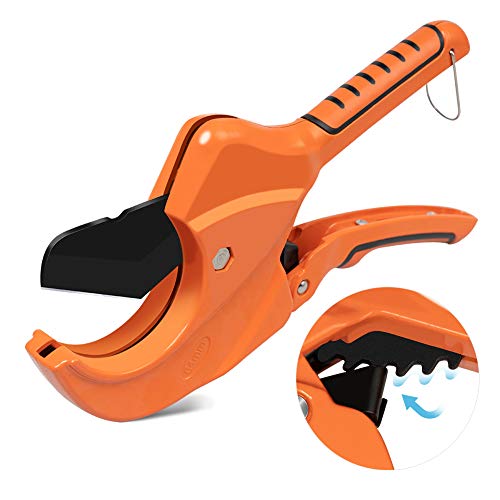
Pacmann PVC Pipe Cutter, Up to 2-1/2
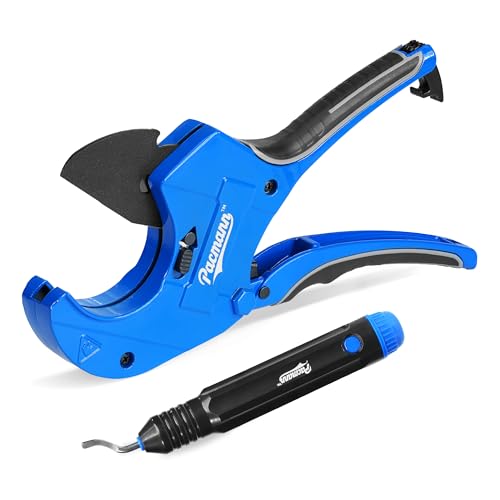
【Heavy Duty & Premium Quality】The Pacmann PVC pipe cutter body is made of durable hardness aluminum alloy steel. The thick 3mm blade used is SK5 material with precision...
Why lug around a massive cutter when something smaller won’t cut it?
I get it, you need serious capacity without the bulk. The Pacmann PVC Pipe Cutter handles up to 2-1/2 inches, which covers most residential and light commercial jobs. I’ve used cutters that claim big diameters but seize up halfway through; this one actually delivers.
What stands out
The aluminum alloy steel body feels solid without being a wrist killer. That SK5 blade, Teflon coated and 3mm thick, bites clean. The ratcheting mechanism means I’m not death-gripping through each stroke, and the arch-angle design actually reduces hand strain. Spring-loaded handles give reliable control, not mushy feedback.
Quick changes, real talk
Swapping blades takes about 10 seconds. Blade life varies wildly by material. PVC chews slower than rubber hose.
The included deburring tool
Nice touch. I hate fishing for a separate reamer.
Who this suits
Home handymen tackling repairs, plumbers who need portability, even vehicle mechanics running air lines. At 5-20 seconds per cut, it keeps pace with pricier options.
What annoys me
That safety lock at the bottom? Secure, but I forget it’s engaged sometimes. Also, no spare blade in the box feels stingy.
Verdict
For heavy-duty cutting without the heavy-duty weight, I’d grab this. Just budget for replacement blades upfront.
Best For: Home handymen, plumbers, electricians, and vehicle mechanics who need portable, heavy-duty cutting capacity up to 2-1/2 inches for PVC, PEX, PPR, and other plastic pipes without excessive weight or bulk.
Pros:
- Ratcheting mechanism and arch-angle design significantly reduce hand strain while cutting, with spring-loaded handles providing reliable control and clean bites through the SK5 Teflon-coated blade
- Quick blade replacement in approximately 10 seconds minimizes downtime on job sites when the consumable blade eventually wears out
- Included deburring tool eliminates the need to carry a separate reamer, streamlining workflow for pipe preparation
Cons:
- Replacement blade not included in the package, requiring an additional purchase upfront to avoid work interruptions
- Safety lock at the bottom, while secure, is easy to forget when engaged and can cause momentary frustration
- Blade life varies considerably by material type, making it difficult to predict when replacement will be needed for different cutting applications
Recommended Products

【Heavy Duty & Premium Quality】The Libraton PVC pipe cutter body is made of durable hardness aluminum alloy steel. The thick 3mm blade used is SK5 material with precision sharped and Teflon coated. Sturdy construction and big size suitable for heavy-duty use.
[High-Quality] This Pipe Cutter is made of high-quality aluminum alloy and manganese steel.Its tough and durable.

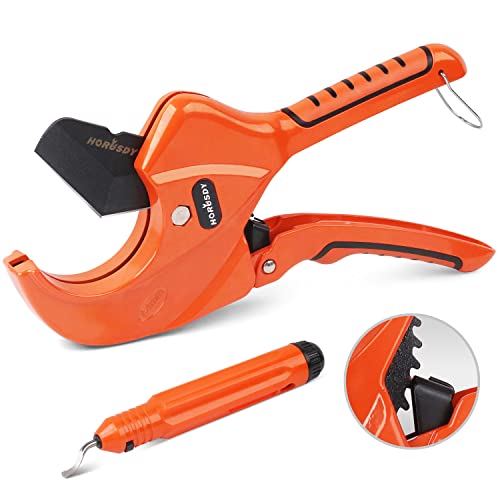
High Performance: The SHALL PVC pipe cutter consists of durable and corrosion resistant die-cast aluminum body and the wear resistant SK5 blade with Teflon coating; The V-shape design at the edge of blade makes the tube cutter easier to penetrate the pipe, causing less damage and keeping the cut neat
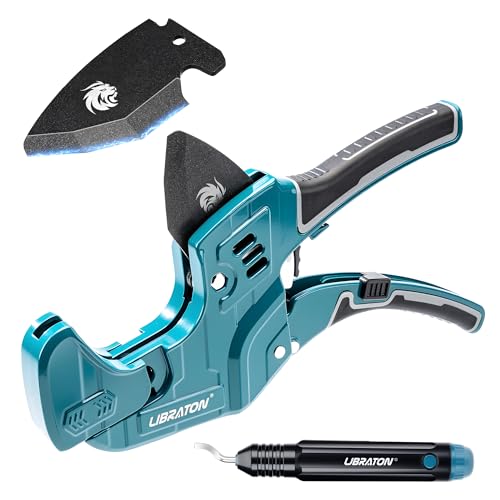
LIBRATON 2-1/2″ Ratchet PVC Pipe Cutter, 2 Adjustable Ranges PVC Cutter
【Industrial-Grade Durability】The blade of the heavy-duty pipe cutter is made of 3CR13 material with a high-quality coating on the surface, offering better impact...
Who needs a cutter that adapts on the fly? I do, and the LIBRATON 2-1/2″ Ratchet PVC Pipe Cutter delivers. Its telescoping head switches between two adjustable ranges.
That means I’m not fumbling with multiple tools when pipe diameters change mid-job.
What sets it apart
The 3CR13 blade cuts through PVC, CPVC, PP-R, PEX, and PE pipe up to 63mm. I appreciate the V-shaped tip; it bites fast and the ratchet mechanism lets me work one-handed.
The included deburring tool actually works, giving me clean, flat cuts without grabbing another gadget.
Real-world performance
There’s replaceable blade? Huge. The coating fights corrosion, too.
For drainage and HVAC jobs, this cutter handles variety without complaining.
My verdict
If you swap pipe sizes constantly, grab this. The two-range system saves time, plain and simple.
Hobbyists might find it overbuilt, but pros will love the durability. I’d pick it over basic cutters for any job requiring flexibility.
Best For: Professionals and tradespeople who frequently work across multiple plastic pipe types and diameters up to 63mm, particularly in drainage and HVAC applications where switching between pipe sizes mid-job is common.
Pros:
- Telescoping dual-range head eliminates need for multiple cutters when pipe diameters change
- Replaceable 3CR13 blade with corrosion-resistant coating extends tool lifespan and reduces long-term costs
- One-handed ratchet operation with V-shaped blade tip enables fast, precise cuts in tight or awkward workspaces
Cons:
- May be overbuilt and unnecessarily complex for hobbyists or occasional DIY users with limited cutting needs
- No mentioned cutting capacity beyond 63mm limits use for larger industrial pipe applications
- Replaceable blade system requires additional purchase and installation process when blade eventually dulls
Recommended Products

[Heavy-duty & Quality] - The PINOZE PVC pipe cutter is made of durable hardness die-cast aluminum and includes a wear-resistant SK5 blade with Teflon coating; The V-blade design allows the tube cutter to penetrate the pipe more easily and more accurately, causing less damage and making a clean cut; Better for heavy-duty use

[Heavy-duty & Quality] - The PINOZE PVC pipe cutter is made of durable hardness die-cast aluminum and includes a wear-resistant SK5 blade with Teflon coating; The V-blade design allows the tube cutter to penetrate the pipe more easily and more accurately, causing less damage and making a clean cut; Better for heavy-duty use

[Heavy-duty & Quality] - The PINOZE PVC pipe cutter is made of durable hardness die-cast aluminum and includes a wear-resistant SK5 blade with Teflon coating; The V-blade design allows the tube cutter to penetrate the pipe more easily and more accurately, causing less damage and making a clean cut; Better for heavy-duty use
Klein Tools PVC Pipe Cutter (50063)

RATCHETING PVC PIPE CUTTER: Ability to cut up to 1-1/4-Inch (31 mm) I.D.; 1-5/8-Inch (41 mm) O.D. pipes VERSATILE CUTTING: Cuts schedule 40/80 PVC CPVC, and PEX LIGHTWEIGHT...
Looking for a cutter that’ll handle the occasional oversized job without wrecking your budget? I’ve found the Klein Tools 50063 hits that sweet spot. It’s not trying to be everything, and honestly, that’s refreshing.
What You’re Getting
This ratcheting cutter handles up to 1-1/4-inch inside diameter (that’s 31mm) or 1-5/8-inch outside diameter pipes. Think Schedule 40, Schedule 80, CPVC, even PEX. The ratcheting blade bites in stages, so you’re not wresting anything.
The Design Details
The soft-molded handles feel genuinely comfortable during longer jobs, not that plasticky grip that digs into your palm. One-handed operation means I can hold the pipe steady with my other hand.
When I’m done, the latch keeps it closed; no blade surprises in my toolbox.
The blade retraction works by pulling the handles apart, simple and mechanical, no springs to fail later.
My Verdict
This isn’t the biggest cutter here. But for residential plumbing, irrigation fixes, and most DIY projects? It’s the one I actually reach for. Lightweight and reliable.
Best For: Homeowners, DIY enthusiasts, and residential plumbers who need a reliable cutter for occasional PVC, CPVC, and PEX jobs up to 1-1/4-inch diameter.
Pros:
- Comfortable soft-molded handles reduce hand fatigue during extended use
- Ratcheting mechanism enables clean, controlled cuts with minimal effort
- Secure blade latch and simple mechanical retraction ensure safe storage and long-term durability
Cons:
- Limited to 1-1/4-inch maximum capacity, unsuitable for larger commercial or industrial pipes
- Manual handle-pull retraction requires deliberate action compared to spring-loaded alternatives
- Not designed for heavy-duty daily professional use
Recommended Products

PROFESSIONAL PIPE DEBURRING TOOL: The Professional DEB4 Plastic Pipe Deburring Tool is the pinnacle of craftsmanship, meticulously designed to ensure precision and quality in every plumbing project you undertake. You get a perfect and smooth chamfer every time you use it. Elevate your work to a new level of excellence

【 9-in-1 Versatile PVC Pipe Reamer Tool Set 】 This all-in-one pvc pipe reamer includes 9 size options from 0.5" to 4", plus a precision hand pvc deburring tool for fine edge finishing. Ideal for both chamfering and detailed trimming in one complete set.

FREE-SPINNING BLADE: Provides smooth pipe and copper reaming for clean, professional finishes on metal surfaces and edges
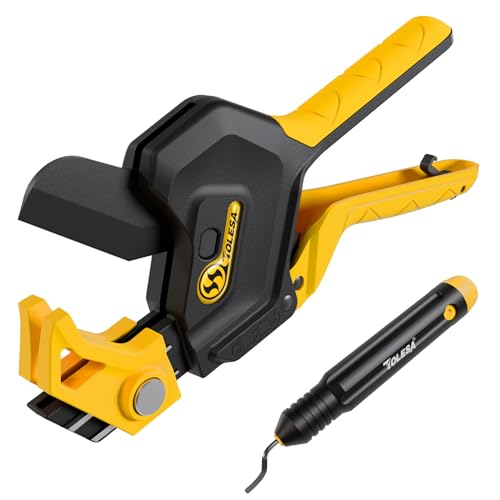
TOLESA 3-Gear PVC Pipe Cutter (2-1/2″ Max)
【3-Size Adjustable Heavy-Duty PVC Pipe Cutter】Features a 3-gear sliding button for quick adjustments to fit PVC, CPVC, and PEX pipes of different diameters (up to...
Need something that handles the bigger jobs without wrecking your wrists? I’ve got you covered with the TOLESA 3-Gear PVC Pipe Cutter.
This beast tackles pipes up to 2-1/2 inches, that’s PVC, CPVC, PEX, PP-R, PE, ABS, even rubber hoses. The three-gear sliding button lets you dial in the perfect setting fast, no fiddling around. Die-cast aluminum housing feels solid in my hand, not some flimsy plastic toy.
The SK5 steel blade wears a Teflon coating for smooth slicing, and that V-shaped edge delivers burr-free cuts every time. The ratchet mechanism multiplies your force, one-handed operation even when I’m tired.
For thin pipes, I rotate and score first to prevent cracks, works like a charm. Not perfect for everything, but when you need reach and power, this delivers.
Best For: DIYers and professional contractors who need to cut large-diameter plastic pipes and rubber hoses up to 2-1/2 inches with minimal wrist strain and precise, burr-free results.
Pros:
- Ratchet mechanism enables true one-handed operation with multiplied cutting force, reducing fatigue during repetitive tasks
- Three-gear sliding button allows quick diameter adjustments without time-consuming fiddling
- V-shaped SK5 steel blade with Teflon coating consistently delivers smooth, burr-free cuts that minimize pipe damage
Cons:
- Requires scoring technique for thin pipes to prevent cracking, adding extra steps for certain materials
- 2-1/2″ maximum capacity limits use on larger industrial piping applications
- Die-cast aluminum housing, while durable, may add weight compared to all-plastic alternatives for users prioritizing lightweight tools
Recommended Products

RATCHETING PVC PIPE CUTTER: Cuts up to 2-Inch ID and 2-3/8-Inch OD pipes

REPLACEMENT BLADE: For Klein Tools 1-1/4-Inch Ratcheting PVC Pipe Cutter

REPLACEMENT BLADE: For Klein Tools 1-1/4-Inch Precision Ratcheting PVC Pipe Cutter
SHALL PVC Pipe Cutter up to 2-1/2
High Performance: The SHALL PVC pipe cutter consists of durable and corrosion resistant die-cast aluminum body and the wear resistant SK5 blade with Teflon coating; The...
The SHALL PVC Pipe Cutter is my top pick for pros who need serious capacity without the bulk of a full-sized tool.
What Makes It Special
I love how SHALL packs 2-1/2 inch cutting power into a ratchet-driven frame that won’t wear out your hands. The die-cast aluminum body keeps weight down while fighting corrosion.
That SK5 blade with Teflon coating? It slices through PVC, PPR, PEX, PE, and CPVC like butter. The V-shaped edge actually matters here: it bites cleaner, so you get fewer burrs and less reaming work after.
Real-World Handling
The bi-material handle with ABS spray coating feels secure even when my palms get sweaty. Ratchet drive means one-handed cuts on stubborn pipes, no wrestling required.
That side safety lock? Engages with one thumb, stays put in my toolbox.
The Verdict
For contractors juggling multiple pipe types daily, this hits the sweet spot. Homeowners with big irrigation projects should grab it too.
Best For: Professional contractors and homeowners tackling large-scale irrigation projects who need to cut PVC, PPR, PEX, PE, and CPVC pipes up to 2-1/2 inches with minimal hand fatigue.
Pros:
- Ratchet drive technology enables effortless one-handed cutting on stubborn pipes, reducing operator strain during extended use
- SK5 blade with Teflon coating and V-shaped edge delivers clean, burr-free cuts that minimize post-cut reaming work
- Lightweight die-cast aluminum body resists corrosion while maintaining durability for professional job site conditions
Cons:
- 2-1/2 inch capacity ceiling may require supplemental tools for larger diameter pipe jobs
- Ratchet mechanism with multiple moving parts could require more maintenance than simple scissor-style cutters
Recommended Products

CLOSE QUARTERS TUBING CUTTER: Specially designed for use in tight spaces and on small diameter metal surfaces, a must-have in any plumber's tool kit
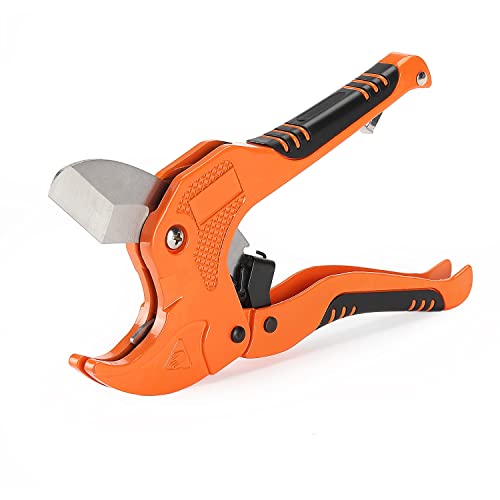
Bates ratchet-type pipe cutter is made of manganese steel with high hardness, good toughness, strength, and durability. It also features a ratchet mechanism that makes cutting through pipes quick and easy - perfect for anyone who wants to get the job done fast.

【Premium Quality】:DOMINOX-We are a factory specializing in the design and production of cutting tools. In our responsibility to customers and confidence in products. If there is any problem with item, please don`t worry and Dominox will always be here to help solve the problem.
Factors to Consider When Choosing a PVC Pipe Cutter
I’ve tested enough PVC cutters to know that picking the right one isn’t just about grabbing the cheapest tool on the shelf. You’ll want to weigh cutting capacity against blade material quality, since a high-carbon steel blade that stays sharp beats a bigger jaw that chews through pipe like a hungry beaver.
Handle ergonomics matter more than you’d think on long jobs, and I’d never buy a cutter without a smooth ratchet mechanism and solid safety features. Your hands will thank you later.
Recommended Products
High Quality: Durable PVC pipe cutter is made of manganese steel and premium aluminum alloy, boasting high hardness, toughness, strength, and durability, and is resistant to rust.

Wide Applications: VEVOR 2-1/2" PVC pipe cutter is perfect for cutting various types of plastic pipes such as PVC, CPVC, PP-R, PEX, PE, and rubber hoses. The ratcheting drive design significantly reduces the effort required to cut pipes. It boasts a powerful bite force, making the cutting process much easier. An essential cutting tool for home DIY enthusiasts, plumbers, electricians, and automotive mechanics.
【Industrial-Grade Durability】The blade of the heavy-duty pipe cutter is made of 3CR13 material with a high-quality coating on the surface, offering better impact resistance and corrosion resistance. The replaceable blade extends the service life of the PVC cutter.
Cutting Capacity
Why does cutting capacity matter so much? Because grabbing a cutter that can’t handle your pipe wastes time, money, and patience.
Most quality cutters handle 1-1/4″ to 2-1/2″ outer diameter. That’s your sweet spot for residential PVC, CPVC, even PEX. I always check the max before buying, nothing worse than discovering your tool chokes on 2-inch schedule 40.
Some models offer telescoping heads or dual adjustment ranges. Handy when you’re jumping between 3/4-inch repairs and 2-inch main lines.
The geometry matters too: weak blade strength means struggling at the upper limit, even if the specs claim otherwise. Push past the rated capacity? You’ll score incomplete cuts, trash your tool, or worse.
Match the cutter to your actual needs, not just your biggest occasional job.
Blade Material Quality
Once you’ve matched the cutter to your pipe size, you need to look hard at what’s actually doing the cutting. Blade material makes or breaks your experience, trust me.
I always check for SK5 steel first. It’s hard, it lasts, and it won’t quit on you mid-project. Some brands cheap out here, don’t let them.
Coatings and edges matter too. A Teflon-coated blade glides through PVC like butter, cutting friction and saving your wrists during repetitive work. Look for a V-shaped edge as well: it bites faster and cleaner than flat blades, no question.
Hardened, wear-resistant steel keeps that edge sharp across PVC, CPVC, even PEX. And here’s a pro tip: replaceable blades extend your tool’s life indefinitely. Why toss a good frame when you can swap the cutter head?
Skip the replaceable option, and you’re buying a whole new tool in six months.
Handle Ergonomics
How many cuts does it take before your hand starts cramping? I hit my limit around twenty, and that’s when I learned handle ergonomics matter more than you’d think.
Grip and Material
I always look for bi-material or molded handles. They give your thumb natural placement and better tactile feedback, so you feel the cut happening instead of guessing. Non-slip surfaces are non-negotiable for me, especially when my palms get sweaty mid-job.
Spring-Loaded Handles
Spring-loaded designs keep the tool open and ready, reducing that annoying slip when you’re bearing down. I’ve found they maintain consistent pressure without me white-knuckling the grip.
Geometry Matters
The handle shape should let you align pipes easily without twisting your wrist. I’ve used cutters that force overreaching, and my forearm pays for it. Good geometry adapts across diameters without awkward angles.
Ratchet Mechanism
Where do you turn when a standard cutter just won’t bite through that thick Schedule 80 pipe? I reach for a ratchet mechanism every time.
Here’s why it matters: instead of crushing your hand with one massive squeeze, a ratchet cutter lets you bite off a little at a time. The gear system advances the blade with each squeeze, so you’re trading brute force for patience. On thick-walled pipe, that difference saves your wrists.
I love that most ratchet designs work one-handed. Tight crawlspace? No problem. Need your other hand to steady the pipe? You’ve got it.
Look for quick-release functions too. Nothing annoys me more than fighting a stuck blade between cuts. A sturdy housing keeps everything aligned, which means cleaner cuts and less frustration.
For big jobs, ratcheting saves time and your hands.
Safety Features
Why risk a trip to the ER when a few smart features can keep your fingers intact? I always check for a safety lock first. It prevents accidental cuts when the tool’s rattling around in your toolbox. Trust me, I’ve nicked myself on unsecured blades before. Not fun.
One-handed designs with ergonomic grips reduce hand strain while keeping control. I prefer ratchet mechanisms because they let me apply steady pressure without white-knuckling the handle.
Deburring tools matter more than you’d think. Those sharp edges left on PVC? They’re pinch point nightmares. Clean cuts mean fewer injuries.
Replaceable blades are essential too. A dull blade slips, and slips send you to urgent care. I replace mine at the first sign of resistance.
Look for consistent blade alignment. Misaligned cutters wobble, and wobble equals accidents.
Portability Weight
The weight of your cutter can make or break a long workday. I always check this first, honestly. Lighter models slip into tight spaces and spare my hands during marathon cutting sessions.
For portable jobs, ounces matter. I haul tools across sites constantly, and every pound adds up fast.
Here’s the trade-off: heavier cutters pack bigger blades and beefier frames. They feel stable, almost planted. But I’m not lugging that around for quick fixes.
When I’m working overhead or squeezing into crawl spaces, I grab something compact and single-hand friendly. Look for ergonomic grips, too. Non-slip handles save you when you’re sweaty, rushed, and balancing on a ladder.
Bottom line: prioritize weight for mobility jobs, accept heft only when precision cutting stationary pipe.
Deburring Accessory
How often do you grab a second tool after every single cut? I used to do that constantly, and it drove me nuts.
A built-in deburring accessory fixes this headache. These tools remove burrs, those annoying rough edges left after cutting, giving you smoother, flatter pipe ends. You’ll get cleaner joints and fewer leaks, since rough edges wreck seals.
Look for cutters with integrated deburrers or included accessories. Dedicated plastic deburrers outperform generic metal ones, especially on thicker pipe. I’ve found this feature cuts my finishing time in half, no more fumbling for a knife or file.
My recommendation: Prioritize this feature if you do frequent plumbing work. Casual DIYers can skip it, but pros should insist on it.