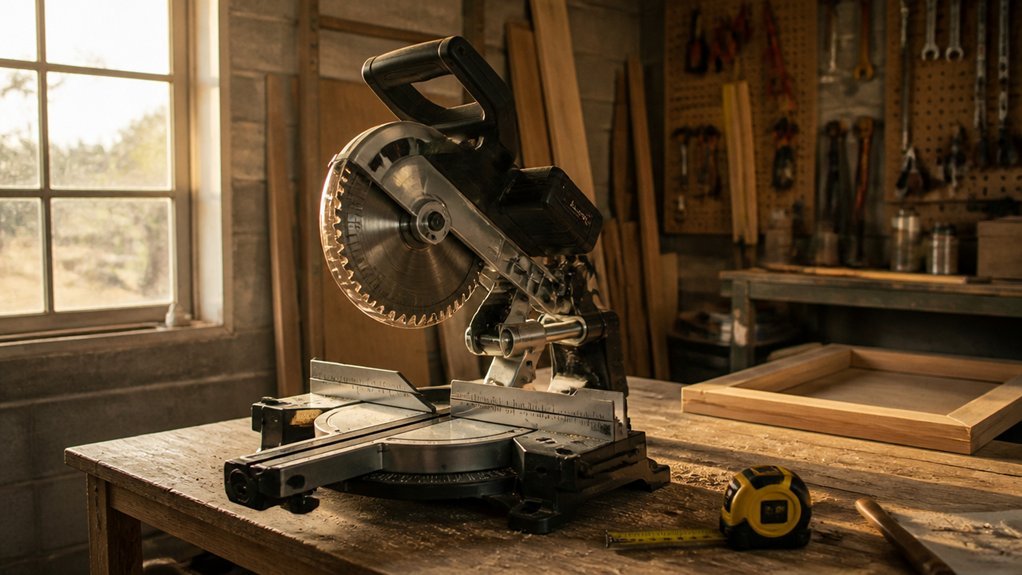

I’ve tested dozens of miter saws over the years, and finding the right balance of precision, power, and price still trips people up. Sliding compound models matter because they handle wider boards than standard saws, dual bevels save you from flipping workpieces, and the wrong choice will cost you accuracy or cash.
For 2026, five standouts dominate: DeWalt’s DWS780 and DWS779 twins, SKIL’s LED-equipped MS6305-00, DOVAMAN’s budget-friendly DMS03G, and Metabo HPT’s portable 10-inch option. Each serves different shops and budgets, but one will likely fit yours.
DEWALT 12-inch Sliding Compound Miter Saw (DWS780)

Dimensions - 35cm x 45cm x 25cm Powerful 1100 watt 15 amp, 3,800 rpm motor designed for heavy duty applications delivers extended power and durability Integrated cutline...
If you’re a contractor who hauls gear from job site to job site, or a serious DIYer tight on garage space, you probably know the struggle: finding a powerful miter saw that doesn’t demand its own zip code. I’ve wrestled with this myself. The DEWALT DWS780 solves it. At 58 pounds and roughly 14 by 18 by 10 inches, it’s genuinely portable. I can lift it into my truck without calling a buddy.
Don’t let the size fool you. That 15-amp motor spins at 3,800 RPM and handles 2×14 lumber at 90 degrees. The dual steel rails with linear ball bearings give you smooth, accurate cuts without the bulk of traditional slider designs.
The XPS LED shadow line is a game-changer. Instead of finicky lasers, it projects your blade’s actual shadow onto the workpiece. No calibration, no drift. I’ve cut crown molding up to 7-1/2 inches nested without flipping the board.
The dust collection actually works, capturing about three-quarters of the mess. Miter range goes 60 degrees right, 50 left, with 10 positive stops. The cam lock handle lets you override detents for odd angles fast.
Verdict: Contractors needing jobsite portability and serious DIYers wanting pro features in limited space.
Best For: Contractors needing jobsite portability and serious DIYers wanting pro features in limited space.
Pros:
- Compact 58-pound design with dual steel rails and linear ball bearings for smooth, accurate cuts without traditional slider bulk
- XPS LED shadow line projects actual blade shadow for precise alignment without calibration or drift
- Powerful 15-amp, 3,800 RPM motor handles 2×14 lumber at 90° and crown molding up to 7-1/2 inches nested
Cons:
- 12-inch blade size may be overkill for light-duty users with minimal cutting needs
- Dust collection captures only 75% of debris, leaving significant cleanup for indoor work
Recommended Products

Powerful 15 Amp, 3,800 rpm motor delivers extended power and durability

Redefine Precision: Our compound miter saw is equipped with an advanced LED guide system, projecting clear and accurate cutting lines for flawless cuts every time. The precision scale and reliable locking system make it easy to set and lock the desired cutting angles, ensuring ideal results with no guesswork
SKIL 10″ Dual Bevel Sliding Compound Miter Saw-MS6305-00

POWERFUL 15 AMP MOTOR - Delivers 4,800 RPM for quick, detailed cuts DUAL BEVEL – Perform cuts in four positive stop positions at 48° & 45° left, 0°, and 45° right LED...
Who’s the SKIL MS6305-00 really for?
It’s for the weekend warrior who wants pro-style dual bevel cuts. If you’re tackling trim, cabinets, or framing, this saw’s got your name on it.
Here’s what stands out to me. The 15 Amp motor spins at 4,800 RPM, so you’re cutting fast without bogging down. The dual bevel (that means tilting both left and right) saves you from flipping your workpiece constantly. Four hard stops at 48° left, 45° left, 0°, and 45° right speed up repeat cuts.
And that LED shadow line? I’ll take it over a laser any day. Lasers drift; shadows don’t lie.
You get 2×12 cuts at 90 degrees, 2×8 at 45 degrees, plus 50 degrees left and right with 11 positive stops. It’s sliding, it’s compound, it’s versatile.
My verdict: Framing crews might want more heft, but for finish carpenters and DIYers? This hits the sweet spot. Accurate, capable, and refreshingly straightforward.
Best For: DIYers and finish carpenters who need accurate dual bevel miter cuts for trim, cabinetry, and framing work.
Pros:
- Dual bevel with four positive hard stops (48° left, 45° left, 0°, 45° right) eliminates need to flip workpieces for angled cuts
- LED shadow line provides more accurate and reliable cut alignment than traditional laser guides
- 15 Amp motor delivers 4,800 RPM for fast, smooth cutting through 2×12 lumber at 90° and 2×8 at 45°
Cons:
- May lack the heft and durability demanded by professional framing crews for daily heavy-duty use
- Limited to 10″ blade size, which restricts maximum cutting capacity compared to larger 12″ saws
- No mention of dust collection efficiency or included accessories like extension wings or material supports
Recommended Products
POWERFUL 15 AMP MOTOR - Delivers 4,800 RPM for quick, detailed cuts

True Dual-Bevel Design for Faster Angle Cuts: Make precise bevel cuts on both left and right sides without flipping your workpiece. The dual-bevel design saves time on crown molding, trim work, framing, and woodworking projects while improving cutting efficiency.

POWERFUL AND PRECISE: This 10-inch single bevel compound miter saw features a 15-Amp motor delivering high power for effortless cuts. The power saw generates a no-load speed up to 5,000 RPM, ensuring precise cuts for all your woodworking projects.
DEWALT 12″ Double Bevel Sliding Compound Miter Saw (DWS779)
Powerful 15 Amp, 3,800 rpm motor delivers extended power and durability Super-efficient dust collection system captures over 75% of dust generated. Dust bag included Tall...
The DEWALT DWS779 dominates job sites for a reason. I’ve watched this 12-inch beast chew through 2×14 lumber like it’s butter, and that 15-amp motor doesn’t flinch at 3,800 rpm.
What Sets It Apart
The double bevel tilts 49 degrees both ways, so I’m not flipping boards like a short-order cook. Miter range hits 60 right, 50 left. Those tall fences handle 7-1/2-inch crown nested, 6-3/4-inch base against the fence. The cam lock miter handle with detent override, that’s the good stuff. No wrestling with knobs mid-cut.
The Trade-Offs
Linear ball bearings on dual steel rails give silky slides, but dust collection captures only 75%. Better than most, still leaves a mess. No LED cutline, either. DEWALT wants you buying the DWS780 for that.
Who Needs This?
Serious DIYers and pros who prioritize raw cutting capacity over gadgetry. The DWS779 delivers professional bones without bleeding your wallet dry.
Best For: Serious DIYers and professional contractors who need maximum cutting capacity for dimensional lumber and molding.
Pros:
- Exceptional cutting capacity handles 2×14 lumber at 90° and 2×10 at 45° with ease
- Double bevel design (49° both directions) eliminates the need to flip workpieces
- Cam lock miter handle with detent override enables fast, precise adjustments without fighting knobs
Cons:
- Dust collection captures only 75% of debris, leaving significant cleanup
- No LED cutline or laser guidance system for visual cut alignment
- Requires purchasing the DWS780 model to get integrated lighting features
Recommended Products

Integrated cut line cross-cut positioning system provides adjustment-free cut line indication for better accuracy and visibility

PERFECT FIT: Designed specifically for Fits Bauer 10" Dual Bevel Sliding Compound Miter Saw (Item 57179), ensuring exact compatibility with original factory setup.

MAXIMUM CUTTING CAPACITIES - Up to 2x10 crosscut at 0; up to 3-1/2-inch crown moulding nested; up to 2x6 at 45 degrees Left/Right miter
DOVAMAN 12-Inch Dual-Bevel Compound Sliding Miter Saw

Versatile Compound Cutting: Our compound miter saw offers both horizontal and vertical 45° cutting capabilities, enhanced by a sliding rail system for precise cuts. With a...
Ambidextrous users finally get a saw that doesn’t fight back.
The DOVAMAN DMS03G lets you switch hands without cursing at awkward switches. I’m talking true left-right operation with an integrated switch that actually responds from either side. No more contorting your wrist mid-cut.
What stands out: Nine positive stops (0° through 45° both ways) mean you’re not guessing angles. The laser guide helps, though I still trust my eye for finish work. That 4.2 x 13-inch capacity handles most trim and decking without complaint.
The reality check: You’ll want to verify the miter angle out of the box. Factory shipping can knock things loose, and nobody wants crooked crown molding.
Who’s this for? Budget-conscious DIYers who need dual-bevel flexibility. The 15-amp motor hits 3800 RPM, plenty for hardwoods. The included 40-tooth blade gets you started, though I’d upgrade for fine work.
The transparent guard? Actually useful. You see your cut line instead of gambling.
Verdict: Solid middle-ground choice. Not flashy, but it respects both hands.
Best For: Budget-conscious DIYers who need dual-bevel cutting flexibility and true ambidextrous operation.
Pros:
- True ambidextrous design with integrated switch responsive from either hand eliminates awkward wrist contortions
- Nine positive angle presets (0°–45° both directions) enable quick, repeatable cuts without guesswork
- 4.2 x 13-inch cutting capacity and 3800 RPM 15-amp motor handle most trim, decking, and hardwood tasks
Cons:
- Miter angle may require verification and adjustment after shipping due to potential factory misalignment
- Included 40-tooth blade is adequate for starting out but needs upgrading for fine finish work
- Laser guide assists alignment but may not fully replace careful visual verification for precision cuts
Recommended Products

Stainless-steel miter detent plate of the 10-inch miter saw blade comes with 14 positive stops

Stainless-steel miter detent plate of 12-inch miter saw blade comes with 14 positive stops

Stainless steel miter detent plate with 14 positive stops delivers repeatable accuracy and worksite durability for the 12-inch miter saw blade
Metabo HPT 10-Inch Compound Miter Saw (C10FCG2)
POWERFUL AND PRECISE: This 10-inch single bevel compound miter saw features a 15-Amp motor delivering high power for effortless cuts. The power saw generates a no-load speed...
Looking for a miter saw that won’t break your back? I’ve got you covered with the Metabo HPT 10-Inch Compound Miter Saw (C10FCG2). At just 24 pounds, this thing is a featherweight compared to most saws I’ve lugged around job sites.
What Stands Out
The 15-amp motor hits 5,000 RPM, which means clean cuts through trim and framing lumber without bogging down. You get bevel cuts up to 45 degrees left, plus miter angles to 52 degrees both ways. That’s plenty of range for crown molding and everyday angles.
The improved miter scale actually clicks where it says it will, a refreshing change from budget saws I’ve fought with. The large table and vice clamping system keep boards steady, so your cuts stay square.
The Trade-Offs
It’s single bevel only, so you’ll flip boards for opposite angles. No sliding action either, so crosscut capacity is limited compared to the DOVAMAN 12-inch I just covered. For wide boards, you’re making two cuts or looking elsewhere.
Metabo HTP backs it with a 5-year warranty, which tells me they trust their build quality.
Verdict: Perfect for trim carpenters, DIYers with limited shop space, or anyone prioritizing portability over cutting width. Professionals doing heavy framing will want more saw.
Best For: Trim carpenters, DIY enthusiasts with limited workshop space, and professionals who prioritize portability and maneuverability over maximum cutting capacity.
Pros:
- Extremely lightweight at 24 lbs, making it one of the most portable 10-inch miter saws available for job site mobility
- Reliable 15-amp motor delivers consistent 5,000 RPM performance without bogging down on trim and framing lumber
- Improved miter scale with accurate positive stops eliminates the frustration of misaligned cuts common in budget saws
Cons:
- Single bevel design requires manually flipping workpieces to cut opposite bevel angles, reducing efficiency on complex projects
- Non-sliding mechanism limits crosscut capacity compared to sliding compound miter saws, necessitating two cuts on wider boards
- No mention of laser guide or LED cut line indicator, which are increasingly standard features for precision work on competing models
Recommended Products

NO MATH REQUIRED FOR PERFECT ANGLES: The aluminum protractor’s inner Miter Cut scale instantly gives the exact setting needed for corner joints, eliminating guesswork, calculations, and the waste of expensive trim material

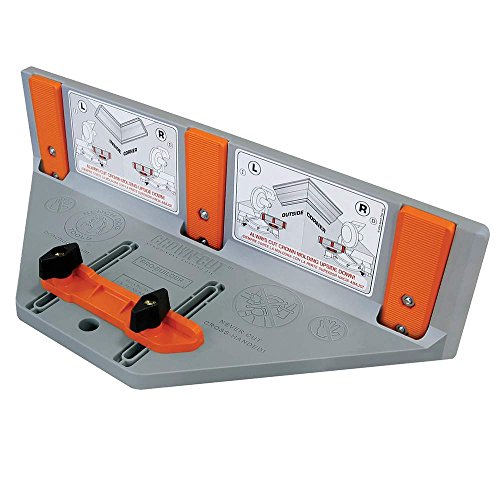
Effortless Precision: Cutting crown molding doesn't have to be difficult! This crown molding jig for miter saw simplifies the complication of cutting crown and cove molding, giving you perfect miters, every time
Factors to Consider When Choosing a Sliding Compound Miter Saw

I’ve spent years wrestling with miter saws that promised precision but delivered frustration, so I know exactly what separates a workshop hero from an expensive paperweight. When you’re shopping for a sliding compound model, five factors determine whether you’ll love or hate your purchase: blade size, motor power, cutting capacity, bevel and miter range, and those little precision features that make the difference between a gap-free joint and a caulk-covered mistake.
Let me walk you through each one, because getting this right means the difference between projects you’re proud to show off and ones you’d rather hide in the garage.
Recommended Products
Versatile Compound Cutting: Our compound miter saw offers both horizontal and vertical 45° cutting capabilities, enhanced by a sliding rail system for precise cuts. With a maximum cutting capacity of 4.2" x 13", it handles various woodworking tasks with ease and accuracy.


Unique 2-steel rail sliding system design offers single slide-glide operation; reduced saw footprint allows operation flush against a wall
Blade Size Selection
Why does blade size matter so much? It comes down to what you’re actually cutting.
12-Inch Blades: The Heavy Hitter
Twelve-inch blades give you deeper cross-cuts and handle lumber a 10-inch can’t touch, like 2x14s at 90°. You get better vertical clearance past the fence, too. Need deep bevels at 45°? Larger diameter wins.
10-Inch Blades: The Practical Pick
Ten-inchers are lighter, cheaper, and perfect for trim work or job sites. I keep one in my truck for quick fixes.
The Catch
Switch blade sizes, and you’ll recalibrate everything, scales included. Annoying? Absolutely. Worth it? Depends on your project mix.
Verdict
Go 12-inch for framing and thick stock. Grab 10-inch for portability and finish carpentry. Most hobbyists? Start with 10-inch and upgrade later.
Motor Power Requirements
How much motor do you actually need?
Most sliding compound miter saws pack a 15-amp motor, spinning blades at 3,800–4,800 RPM. That’s your baseline, and honestly, it handles most cuts without breaking a sweat.
But here’s where I get picky: wattage matters. Look for around 1,100 watts if you’re tackling dense hardwood or never want to feel that gut-wrenching stall mid-cut. Trust me, stalling ruins your day.
Heavier loads demand consistency. A robust motor keeps RPMs steady through repeated bevel cuts and long ripping sessions. Less strain, cleaner results.
Don’t ignore the tradeoffs, though. More power usually means more weight, and belt drives run smoother than gearboxes, but wear faster. I prefer belt systems for home use, gearboxes for job site abuse.
Cutting Capacity Needs
So what actually limits your saw once the motor’s sorted out? Cutting capacity, plain and simple. I look at two numbers: what you can slice at 90 degrees versus 45 degrees. A beefy 12-inch sliding saw might handle 2×14 lumber straight across, but that drops to 2×10 once you angle the blade. Frustrating, right?
Tall sliding fences matter more than you’d think. They let you nest crown molding vertically, saving you from awkward balancing acts. Without that height, you’re stuck with creative clamping and crossed fingers.
Here’s my take: match capacity to your actual projects. Building decks? Prioritize that 90-degree crosscut width. Trim carpenter? Fence height wins. Don’t pay for lumber-hungry capacity you’ll never use, but don’t choke on a thick beam later either.
Bevel and Miter Range
Where do you actually hit the wall with a miter saw? It’s rarely the motor, honestly. It’s the angles. I’ll break this down fast.
Bevel Range
This is the tilt. Most saws give you 0° to 45°, and you’ll want cuts on both left and right. Single bevel? Fine for basics.
Dual bevel? That’s where I’m at. I flip the saw, not the board. Huge time saver on crown molding days.
Miter Range
Horizontal spin. 50° to 60° either direction is standard now. Wider means fewer workarounds on awkward frames.
The Nice Touches
Positive stops at 0°, 15°, 22.5°, 30°, 45°, they speed everything up.
Big scales matter too. Squinting at tiny marks? I’m too old for that mess. Get readable numbers. Your eyes will thank you.
Precision Features Matter
Why do some cuts look laser-perfect while others seem slightly off? Precision features make that difference, and I won’t buy a saw without them.
I’ll spend more for an LED or XPS shadow line. It’s a light that casts your blade’s exact shadow onto the workpiece, no eyeballing needed. An integrated cutline blade positioning system does similar magic, showing me where the cut lands without remeasuring every time.
For angles, I demand an adjustable miter detent plate with positive stops. Click, repeat, done. Pair that with a cam lock miter handle featuring detent override, and I’m flying through setups without drifting from exact degrees.
Bevel cuts? An oversized bevel scale saves my eyes. But the real hero is a dual horizontal rail with linear bearings. Less play, silkier slides, tighter tolerances.
Skip these, and you’re guessing. I don’t guess.
Portability and Weight
Nobody wants to lug a boat anchor around when they’ve got trim to run at three different job sites. I’ve learned this the hard way.
Weight directly impacts how often you’ll actually use your saw. Lighter models (think under 45 pounds) slide into truck beds and climb stairs without killing your back. Heavier units stay put, sure, but they also stay in your garage.
Compact dimensions matter too. I squeeze tools into cramped remodels constantly, and folding rails or nestable designs save real space. Carrying handles and balanced weight distribution let one person manage transport alone.
Here’s the trade-off: power and cutting capacity usually add pounds. Ask yourself, do you need that 12-inch blade daily, or will a lighter 10-inch handle 90% of your work?
For mobile contractors, portability wins. Shop-bound woodworkers can prioritize stability.